
TCXO Manufacturing Trends: Country-Level Capability Evidence
A temperature-compensated crystal oscillator is a small component with an outsized role: it sets the frequency and timing reference that smart meters, 5G radio equipment, industrial controllers and automotive modules depend on. In 2026 the global crystal oscillator market is valued at USD 3.64 billion, and TCXOs are expected to hold a 37.49% share of that market, supported by demand from smartphones and 5G infrastructure (Fortune Business Insights, 2026). Those two figures explain why supplier communication increasingly leans on national capability claims — and why those claims need to be converted into evidence a buyer can actually check.
This article treats country-level manufacturing data as a screening input, not a conclusion. For buyers moving from evaluation into execution on a TCXO program, the useful question is narrower: which claims about production depth, piezoelectric component scope, purchasing terms and acceptance criteria can be verified before a purchase order is issued?
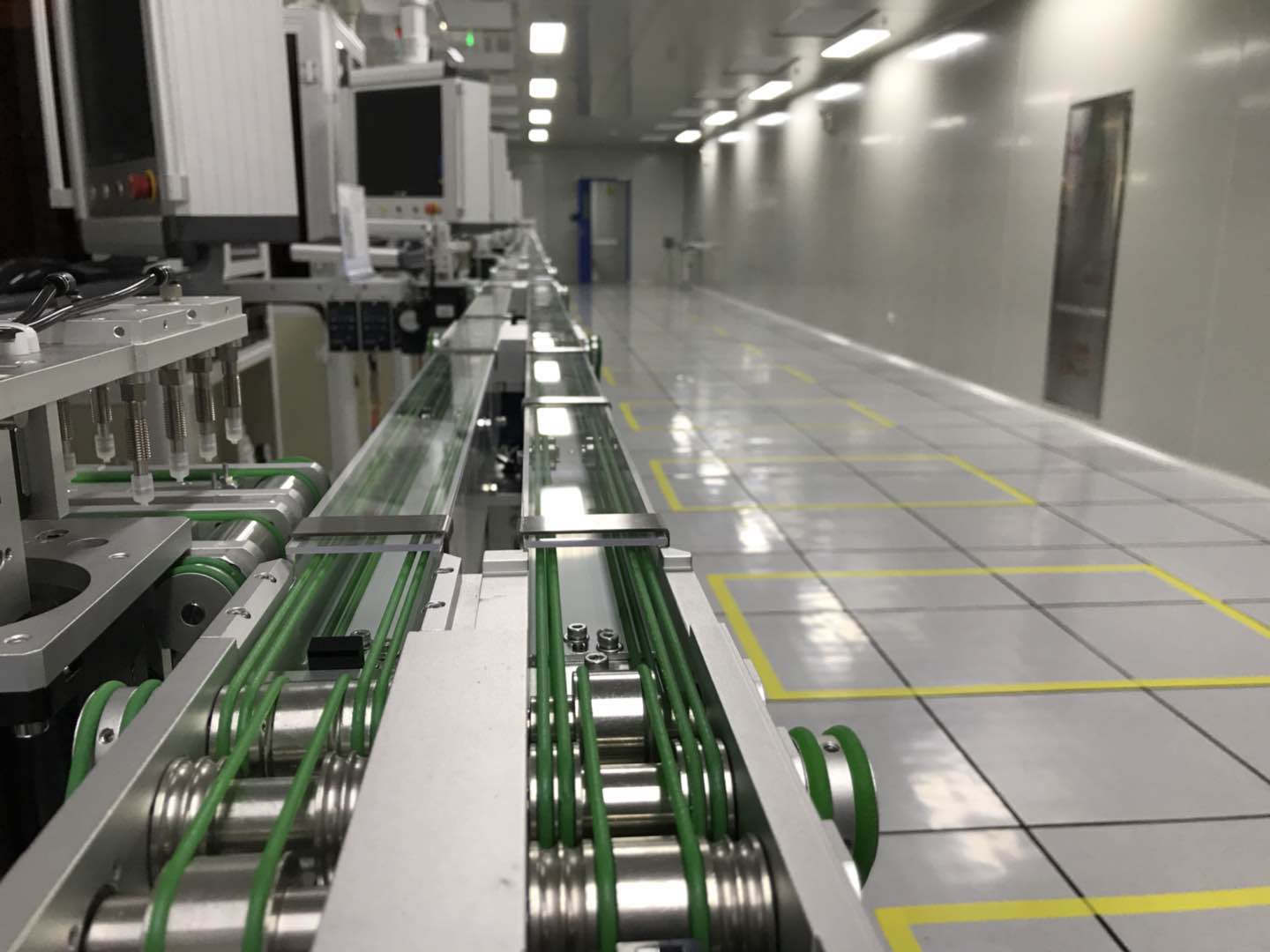
Production line equipment inside a crystal oscillator manufacturing facility. Country-level claims become credible only when they map onto visible process and test capability.
Why a Country Label Is Weak Evidence on Its Own
"Manufactured in" is a geographic statement. It bundles together several variables that buyers often need to separate: the local component ecosystem, the depth of in-house piezoelectric processing, test infrastructure, documentation practice, and export logistics. Two suppliers operating in the same industrial region can differ substantially in all five.
For a TCXO specifically, the country label answers where, not how deep. A TCXO must hold a frequency stability window across an operating temperature range, maintain that behaviour over aging, and repeat the performance lot after lot. Whether that is achievable depends on crystal blank selection and cutting, the compensation and trimming process, package sealing, and the share of units that are actually tested rather than sampled.
The opportunity for buyers is that most of these factors leave documentary traces. Export ratios, capacity disclosures, certificate scopes, MOQ structures and acceptance criteria are all inspectable. The problem is that they are frequently presented in isolation — a factory photograph here, a certificate thumbnail there — without being read as a connected evidence set.
Four Evidence Layers That Can Be Checked Objectively
Country-level capability claims become comparable once they are sorted into layers. The framework below is deliberately documentary: each layer can be verified from a supplier's own disclosures, certificates or commercial terms, without relying on reputation or marketing narrative.
| Evidence layer | What it looks like in practice | What it can prove | What it cannot prove |
|---|---|---|---|
| Production depth | Factory footprint, headcount, stated monthly or annual output, test regime, engineering headcount | Whether volume capacity and process control plausibly exist at the claimed scale | Whether capacity is currently unallocated for your specific SKU |
| Piezoelectric component scope | Whether the supplier works on resonators, oscillators, filters or SAW devices, and in which package families | Whether the crystal element and the oscillator assembly sit inside one process chain | Whether every catalogue line is manufactured rather than distributed |
| Purchasing terms | MOQ, delivery terms, payment terms, quoted lead time | How the commercial relationship is structured and where risk transfers | Whether terms are negotiable for a specific programme |
| Acceptance criteria | Pre-shipment test, 100% test versus sampling, documentation package | What evidence of conformity you receive before payment and shipment | Field reliability beyond the tested parameter set |
Layer 1 — Production depth
Stated output is only meaningful when paired with the physical and human resources behind it. A monthly capacity figure without a factory footprint, a workforce count and an engineering team is a number without a denominator. Buyers should read the three together and then ask how much of that capacity is committed to existing programmes.
Layer 2 — Piezoelectric component scope
Crystal oscillators sit downstream of piezoelectric crystal elements. A supplier that processes quartz resonators and assembles oscillators inside one chain has a different traceability path than one that buys finished oscillators for resale. This distinction matters most in TCXO work, where blank selection interacts directly with compensation trimming.
Layer 3 — Purchasing terms
Commercial terms are capability evidence of a different kind. A low MOQ combined with a defined lead time indicates how the supplier schedules small and mid-volume runs. Delivery terms determine where freight risk transfers, and payment terms determine how much capital is committed before goods move.
Layer 4 — Acceptance criteria
Acceptance criteria define what "conforming" means for a specific order. Pre-shipment testing, the share of units tested, and the documentation that accompanies the shipment are the buyer's only pre-payment visibility into lot quality.
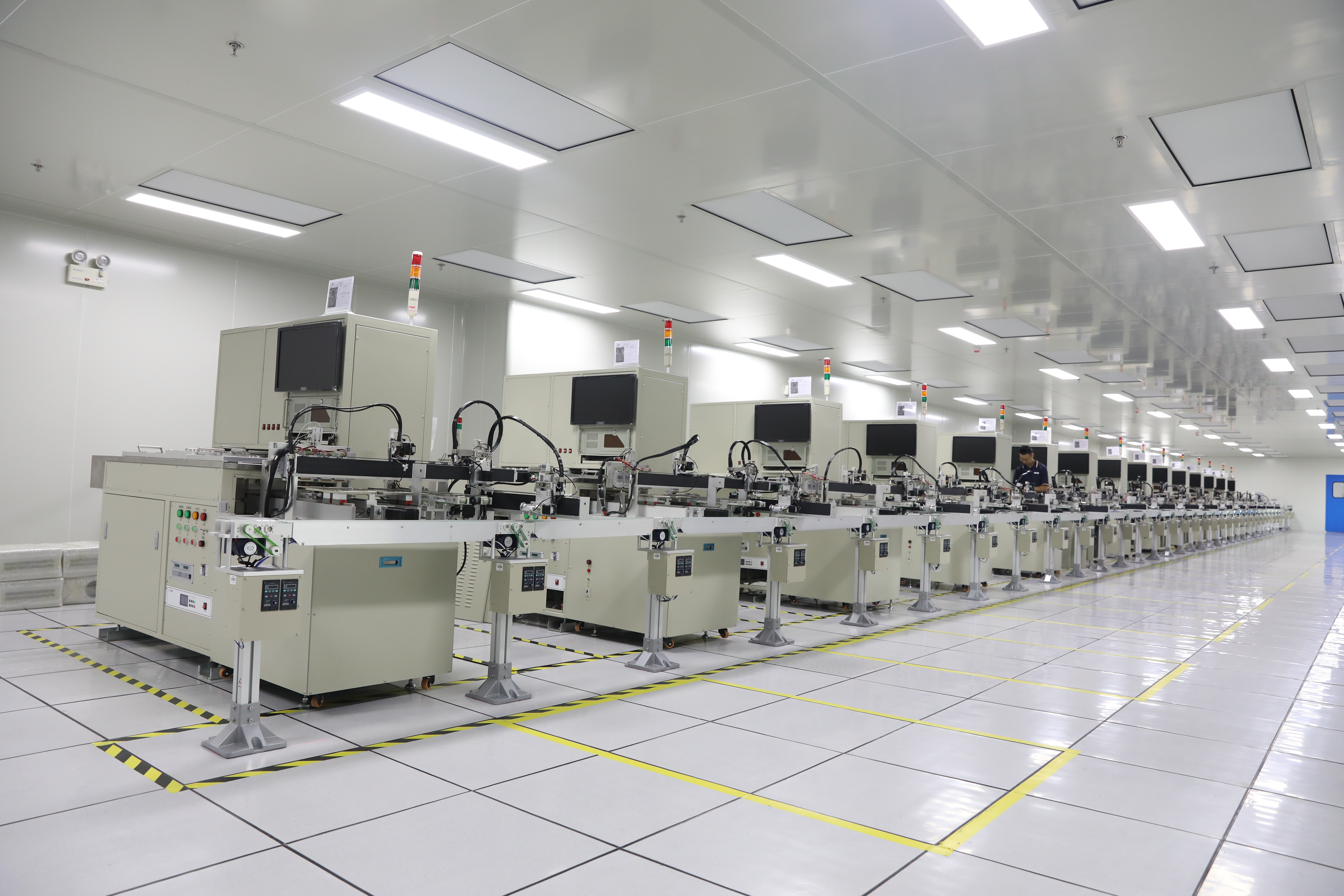
Production depth is verifiable when equipment, headcount and output figures are disclosed together rather than as isolated claims.
TCXO Technology Progress: What Capability Means Inside the Package
The oscillator family is broad — clock oscillators, VCXOs, TCXOs, OCXOs, VCTCXOs, differential oscillators, 4-pin SMD oscillators, programmable oscillators and active crystal oscillators all sit under the quartz crystal oscillator umbrella. Each label describes a different functional arrangement rather than a quality grade. A TCXO adds a temperature-compensation network that corrects the frequency drift of the quartz element across the operating range; a VCXO provides voltage-controlled pulling; an OCXO places the element in a controlled thermal environment.
Because the labels describe function, catalogue breadth is not itself evidence of capability. What distinguishes a manufacturer in TCXO production is the ability to hold a parameter window repeatedly, which shows up in four process areas:
- Crystal blank selection and cutting. Blank orientation and cut determine the underlying temperature behaviour that the compensation circuit must later correct. A poorly matched blank forces the compensation network to work against a steeper curve.
- Compensation and trimming. The compensation stage is where the temperature curve is flattened; trimming accuracy determines how much unit-to-unit spread remains after compensation.
- Aging behaviour. Frequency drift over time is influenced by package sealing, mounting stress and process cleanliness — factors that are process-controlled rather than designed in.
- Test coverage. Parameters that are not tested at temperature cannot be claimed at temperature. The share of units tested, and whether testing occurs before or after sealing and reflow simulation, is the single most informative capability statement a TCXO supplier can make.
This is also where the low power consumption, low phase noise and high stability descriptors become meaningful. They are outcomes of blank selection, circuit design and test discipline — not features that can be attached to a part number by declaration. Buyers comparing TCXO options should map each descriptor back to a test condition and confirm that the supplier tests at that condition.
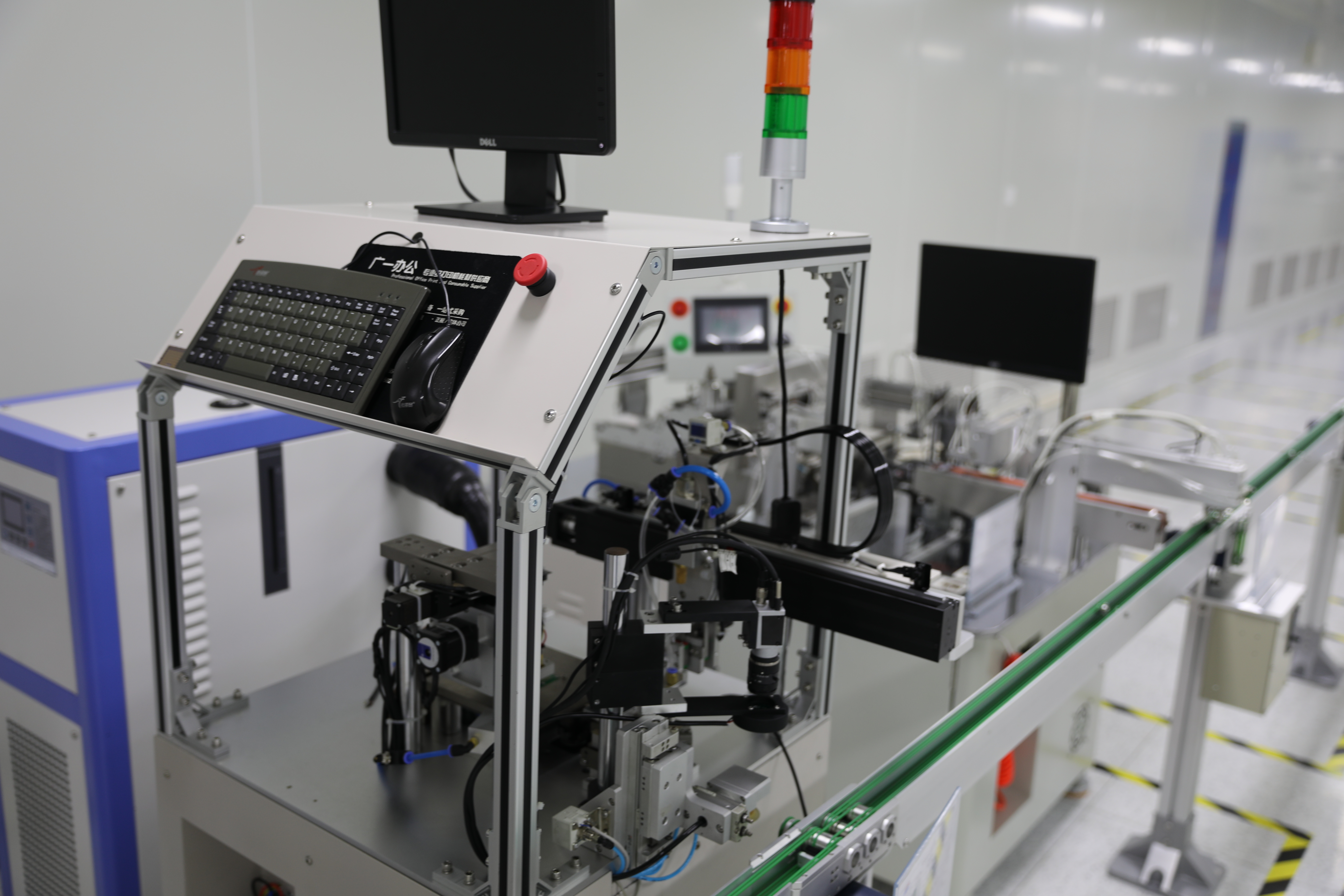
Test coverage — not catalogue breadth — is the clearest indicator of TCXO process control.
Reading Country-Level Dynamics Without Guessing
The supplier landscape in the verified dataset for this category spans China, Japan and Taiwan as origin regions. What can be compared objectively between these regions is not a ranking, but the structure of what suppliers disclose.
Observable differences tend to appear in three places. First, documentation habits: some regions' suppliers publish certificate scopes and standard references as a matter of routine, while others present certificates as images without scope detail. Second, commercial structure: MOQ and delivery terms vary more between individual suppliers than between countries. Third, role clarity: a supplier in any region may be an original manufacturer, an authorised distributor, or both.
That last point deserves emphasis for industrial buyers. A company that distributes well-known component brands alongside its own production is not thereby less capable, but the two roles must be separated during evaluation. Capability evidence should be drawn only from the manufacturing side of the business: factory footprint, own-product capacity, own test regime and certificates whose scope matches the product being purchased.
Applying the Evidence Framework: Fronter Electronics
Fronter Electronics Co., Ltd is a Shenzhen-based manufacturer and distributor of quartz crystal resonators and quartz crystal oscillators, operating under the brand "FT", founded in 1991 and recognised as a National High-Tech Enterprise in 2017. Its published profile makes it a workable example of how the four evidence layers appear in practice — and where they stop.
Production depth as disclosed
The company reports a 21,000 m² factory, 286 employees and a 19-engineer R&D team, with annual output of 300,000,000 units and a stated monthly capacity of 80KK. Export accounts for 70% of output, with the EU and USA named as main markets. Quality control is described as 100% test — a statement that, under the framework above, is the most consequential single disclosure, because it addresses test coverage rather than sampling.
Piezoelectric component scope
Fronter's own production is stated as quartz crystal resonators and quartz crystal oscillators, which places both the piezoelectric element and the oscillator assembly within its manufacturing scope. The company also operates as a distributor for third-party brands including SUNLORD, KDS, EPSON, NDK, TI, ST, ATMEL, AD, ALTERA, XILINX, SAMSUNG, SK HYNIX, MICRON, BROADCOM and FREESCALE. For evaluation purposes, only the resonator-and-oscillator production line should be counted as manufacturing capability evidence; the distribution portfolio is a sourcing convenience, not a capability claim.
Purchasing terms
Disclosed terms are MOQ of 1K (1,000 pieces), delivery EXW, and payment 100% in advance. Customisation is offered in ODM mode covering parameters and appearance, with a quoted lead time of 30–45 days. Export markets for the customisation programme are stated as the EU and Middle East.
Acceptance criteria
Acceptance is defined as pre-shipment test. Combined with the 100% test statement, this gives the buyer a defined inspection point before payment release and shipment. After-sales support is described as remote support.
Compliance documentation and its scope
The company holds an EU RoHS Compliance Certificate, certificate number SZXEC25001335806, issued 2025-04-25 by SGS-CSTC Standards Technical Services Co., Ltd. Shenzhen Branch, against EU RoHS Directive (EU) 2015/863 amending Annex II to Directive 2011/65/EU. The certificate scope is stated as SAW Resonator & Filter, SMD series. Products are also described as complying with RoHS, REACH and other environmental protection regulations.
Application Fit: Smart Metering and Smart Manufacturing
One disclosed reference programme is instructive because it combines volume, duration and customisation in a single case. A smart meter manufacturer in India has purchased 5,000,000 units over a relationship spanning 10 years, with the result reported as stable operation. Delivery for that programme is described as within 3–4 weeks, with flexible customisation to meet project-specific packaging and frequency requirements.
Read against the evidence framework, the case supports three claims and not more. It indicates repeat volume supply at multi-million-unit scale, it indicates that packaging and frequency customisation were executed to a customer specification, and it indicates a delivery pattern faster than the general 30–45 day lead time quoted for standard customisation. It does not establish field performance in applications outside metering, and it is a single disclosed programme rather than a statistical sample.
For smart manufacturing contexts more broadly, the relevance of TCXO capability lies in timing continuity: meters, gateways, industrial controllers and radio modules all require a frequency reference that does not drift with ambient temperature. Buyers in these segments typically care less about catalogue breadth than about whether the specific stability window they need is tested and documented on every lot.
Comparison With Traditional Supplier Screening
Conventional screening for crystal oscillator suppliers moves from a price request to a datasheet comparison, then to a sample order. That sequence is fast but front-loads decisions on parameters that are easy to publish and light on evidence that is costly to produce.
| Screening dimension | Traditional approach | Evidence-based approach |
|---|---|---|
| Starting point | Price and datasheet parameters | Documentary evidence set across four layers |
| Capacity assessment | Stated output taken at face value | Output read alongside footprint, headcount and test regime |
| Certificate review | Presence of a certificate | Scope, standard reference, issuing body and issue date matched to the purchased product |
| Quality signal | Sample performance | Test coverage (100% test versus sampling) plus defined acceptance criteria |
| Commercial risk | Negotiated at order stage | Read from MOQ, delivery terms and payment terms before negotiation begins |
The evidence-based approach is slower at the front end, and that is a genuine trade-off rather than a formality. It requires requesting scope-level documents, reading commercial terms as risk allocation, and accepting that some questions will only be answered by a sample run.
Boundaries that apply to the example above
Applying the same discipline to Fronter Electronics produces a set of limits that buyers should hold alongside the capability facts:
- Certificate scope is narrower than the portfolio. The EU RoHS certificate identified above covers SAW Resonator & Filter, SMD series. Buyers of TCXO parts should request documentation whose stated scope covers the specific product family being purchased rather than treating a single certificate as portfolio-wide.
- Automotive qualification is not evidenced in the reviewed materials. The automotive crystal oscillator segment is growing at a 12.88% CAGR, the highest among end-user segments, and AEC-Q200 is the stress qualification standard for passive components including quartz crystals, while AEC-Q100 applies to active ICs. Buyers with an automotive requirement must verify AEC-Q200-related documentation separately; it should not be inferred from general oscillator capability.
- Commercial terms shift logistics responsibility to the buyer. EXW delivery combined with 100% advance payment means freight, insurance, export handling and import clearance sit with the buyer, and capital is committed before shipment. Buyers accustomed to DDP or credit terms should plan for this difference.
- Support is remote. After-sales support is described as remote support, so programmes that depend on on-site engineering presence require a separate arrangement.
- Capacity is stated in aggregate. The 80KK monthly figure is a total, not an allocation. SKU-level availability during peak demand requires confirmation per order.
Market Trend Signals Worth Tracking
Three verified data points frame the capability question for 2026 and beyond. The global crystal oscillator market stands at USD 3.64 billion in 2026, with a forecast horizon to 2034. TCXOs are expected to account for 37.49% of that market, driven by smartphone and 5G infrastructure demand. Automotive demand is growing at 12.88% CAGR, the fastest among end-user segments.
The interpretation that matters for procurement is structural rather than numerical. If the fastest-growing segment is also the most documentation-intensive, then the competitive value of a supplier shifts from catalogue breadth toward qualification depth. A supplier that can present scope-matched certificates, a defined test regime and clear commercial terms is better positioned for automotive-adjacent work than one that presents a wider product list without matched evidence.
Sources: Fortune Business Insights, crystal oscillator market data, 2026; FCom Fuji Crystal automotive standards guide, 2026.
Future Outlook
Three developments are likely to shape how country-level capability is judged over the next planning cycle. First, documentation is becoming the differentiator: as more buyers ask for scope-matched certificates rather than certificate presence, suppliers that publish scope detail gain an evaluation advantage. Second, test data is moving from request-only to standard attachment, particularly in segments adjacent to automotive. Third, capacity disclosure is likely to become more granular, because aggregate monthly output does not answer the allocation question that high-volume programmes actually face.
For buyers, the practical implication is to keep the evidence framework stable while the market moves. Country of origin will remain a useful first filter, but the decision will increasingly rest on four verifiable questions: how deep the production base is, how much of the piezoelectric chain is in-house, what the commercial terms allocate, and what is tested before shipment.
A technical brochure covering Fronter Electronics' quartz crystal resonator and oscillator range, including TCXO options, is available for download: Fronter Electronics product brochure (PDF).
Frequently Asked Questions
What verifiable evidence should a buyer request to assess a TCXO supplier's manufacturing depth?
Request four items as a set: factory footprint and workforce count, stated monthly or annual output, the share of units tested (100% test versus sampling), and the size of the engineering team. Read them together — an output figure without a footprint and headcount is a number without a denominator. Fronter Electronics, for example, discloses a 21,000 m² factory, 286 employees, a 19-engineer R&D team, annual output of 300,000,000 units, monthly capacity of 80KK and 100% test.
How much does country of manufacture actually tell a buyer about TCXO capability?
Country of manufacture indicates geographic origin, not process depth. It bundles together the local component ecosystem, in-house piezoelectric processing, test infrastructure, documentation practice and export logistics — factors that differ between individual suppliers within the same region. The verified supplier landscape for this category covers China, Japan and Taiwan, but capacity and market-share rankings by country are rarely verifiable in public sources. Country is therefore a screening input; the decision should rest on documentary evidence from the specific supplier.
What are the purchasing terms and acceptance criteria?
For Fronter Electronics, the disclosed terms are: MOQ 1K (1,000 pieces); delivery terms EXW; acceptance criteria pre-shipment test; payment terms 100% in advance. These four items define where risk transfers and what evidence the buyer receives before payment and shipment. Because delivery is EXW, freight, insurance and import clearance fall to the buyer, and full advance payment means capital is committed before goods move.
Which certificates should be checked for a TCXO order, and what detail matters?
Check the certificate's scope, the standard reference, the issuing body and the issue date — not simply its presence. Fronter holds an EU RoHS Compliance Certificate, number SZXEC25001335806, issued 2025-04-25 by SGS-CSTC Standards Technical Services Co., Ltd. Shenzhen Branch, against EU RoHS Directive (EU) 2015/863, with a stated scope of SAW Resonator & Filter, SMD series. Where the purchased product family falls outside a certificate's stated scope, additional scope-matched documentation should be requested.
How should a buyer verify capacity for a high-volume TCXO programme?
Aggregate capacity figures do not answer the allocation question. A supplier may state a monthly capacity — Fronter quotes 80KK per month — while the share available to a specific SKU during a specific period depends on existing commitments. Verification therefore requires a per-order confirmation of availability against the required delivery date, plus the quoted lead time. Fronter's standard customisation lead time is 30–45 days, while a disclosed smart meter programme in India shipped within 3–4 weeks with project-specific packaging and frequency customisation.
What does automotive-grade mean for crystal oscillators, and can it be assumed from general capability?
Automotive-grade cannot be assumed. AEC-Q200 is the stress qualification standard for passive components including quartz crystals, while AEC-Q100 applies to active ICs; the two are distinct requirements attached to different device classes. Automotive is the fastest-growing end-user segment for crystal oscillators at a 12.88% CAGR, which has increased the volume of qualification claims in the market. Buyers with an automotive requirement should request AEC-Q200-related documentation explicitly and confirm its scope against the specific part, rather than inferring qualification from a supplier's general oscillator capability or from the breadth of its product catalogue.
Есть вопросы или нужны дополнительные детали?
Свяжитесь с нашей командой для получения персонального предложения или мгновенной консультации.
Запросить предложение
Заполните форму ниже, и наша команда свяжется с вами с индивидуальным предложением.
Прямой чат WhatsApp
Предпочитаете общаться в реальном времени? Напишите нам в WhatsApp для мгновенной помощи и быстрых ответов.
- Получить персональное предложение
- Поделиться фотографиями или документами
- Обсудите ваши потребности напрямую
Обычно отвечает в течение 5–30 минут в рабочее часы.