
TINPLATE Technical FAQ: Capability & Buying Terms
TINPLATE Technical FAQ: Capability & Buying Terms
Most tinplate disputes are not commercial disputes. They are technical questions asked one step too late — after the purchase order, the first forming trial, or the first rejected lot. This reference collects the technical and procurement questions that recur in tinplate and tin-free steel (TFS/ECCS) sourcing, and answers them with the specifications and documentation an evaluation-stage buyer can actually verify.

Figure 1 — Tin coating mass verification on precision slit tinplate strip during pre-shipment inspection. Image: YOUNGSON METAL.
Why Tinplate Orders Fail on Questions, Not on Price
Electrolytic tinplate (ETP) and tin-free steel (TFS, also written ECCS) are unusual among packaging substrates: a single coil has to perform as a metallurgical material, as a food-contact surface, and as a high-speed forming input. The specification that satisfies one requirement can quietly undermine another. A harder temper improves stamping stability but narrows the deep-drawing window. A heavier tin coating improves corrosion resistance but changes how a lacquer adheres. A tighter slitting tolerance protects the die but raises the cost of the coil.
The practical consequence is that tinplate procurement decisions are rarely settled by price comparison alone. They are settled by whether the supplier can state, in numbers and documents, what the coil will do when it enters the press — thickness and width tolerance, temper designation, tin coating mass, coating adhesion, edge condition, and the traceability paperwork that travels with the shipment.
The evaluation-stage gap
Buyers in the Evaluation → Execution stage typically already know they need tinplate. What they lack is a structured way to convert an application requirement (a fish can, a candle lid, a filter housing, a shielding enclosure) into a purchase specification. That conversion is where most delays and quality claims originate, and it is the question this article addresses.
The Supplier Behind These Answers
YOUNGSON METAL is the trade identity of Chongqing Youngson Metal Products Co., Ltd., a metal surface-processing, slitting and supply manufacturer founded in 2016 and based in Chongqing, China. The company operates coating and precision slitting lines and describes annual processed quantities exceeding 10,000 tons, an export share of approximately 70%, and a customer base spanning global markets. Its product scope covers commercial-grade tinplate and TFS with lithography, coil coating and laminated PET film; deep-drawn-grade tinplate and TFS; plus commercial and deep-drawn pre-painted steel and stainless steel.
Two capability statements matter for the questions that follow. First, the company provides EPD & CFP certified low-carbon steel supply aligned with EU CBAM requirements, alongside custom precision slitting, cold rolling and cut-to-length processing. Second, it offers OEM and ODM services for high-precision steel strips and custom pre-coated matrix, with customization extending to material grades, thickness, width and finish.
| Entity fact | Stated detail |
|---|---|
| Company | Chongqing Youngson Metal Products Co., Ltd. (YOUNGSON METAL), founded 2016, Chongqing, China |
| Quality system | BV ISO 9001:2015, certificate CN058611, issued 2022-12-23, valid to 2028-12-22; scope: mild steel, automotive steel, prepainted steel |
| Compliance testing | SGS RoHS report CZXHL25001691201, issued 2025-08-18, referencing 2011/65/EU and (EU) 2015/863, tested under the IEC 62321 series; also states SGS RoHS / food-grade testing |
| Processing services | Custom precision slitting, cold rolling, cut-to-length; EPD & CFP certified low-carbon supply (EU CBAM compliant) |
| Customization model | OEM and ODM, including material grade, thickness, width, finish, joint R&D on functional coatings, and hardness tuning from T1 to DR10 |
Technical Explanation: Turning an Application Into a Specification
A tinplate purchase specification normally has five decision layers. Each one is answered by a stated capability value rather than by a marketing claim.
1. Gauge and tolerance
Tinplate and TFS strip is supplied across 0.14 mm to 0.55 mm, with the wider processed material family reaching 0.08 mm to 6.0 mm. Thickness tolerance is stated at ±0.005 mm, and width tolerance at ±0.05 mm, with some ultra-narrow products held to ±0.03 mm. These are the figures that determine whether a progressive die can run unattended, because thickness variation translates directly into punch load variation.
2. Temper and forming behaviour
Temper, not gauge alone, decides whether a part draws cleanly or tears. The stated portfolio covers single-reduced tempers T1 through T5 (including T52, T55 and T57 designations) and double-reduced DR7, DR8, DR9 and DR10, with TH415, TH435 and TH520 hardness classes for specific forming profiles. One documented configuration pairs an ultra-thin 0.14–0.15 mm matrix with DR8/DR7/TH520 — a combination intended for deep drawing at minimum gauge.
Independent market research on double-reduced material reports DR8 in the region of 69–75 HR30Tm, which is the range that makes thinner-gauge can bodies and lids feasible without excessive springback. Company documentation for a soft T1 temper states Rockwell HR30T 49±3 for a deep-drawing strip product.
For coated decorative grades, hardness is alternatively specified on a Vickers basis, with HV 120–180 quoted for matte-finish and bronze-look products intended for combined drawing and appearance requirements.
3. Tin coating mass
Coating mass governs both corrosion protection and downstream surface treatment. Stated equal-coating options include 1.1/1.1, 2.2/2.2 and 2.8/2.8 g/m², with 5.6/5.6 g/m² available, and differential configurations such as 2.8/5.6 g/m². Narrow strip products for high-speed hardware applications are quoted at 4.2/4.2 to 5.6/5.6 g/m². Designations such as E2.8/2.8, E5.6/5.6 and E8.4/8.4 also appear in the company's product documentation for pre-painted coil.
4. Edge condition
Slit edge quality is a technical parameter, not a cosmetic one. Burr height is controlled to ≤0.05 mm across the precision strip range, and the stated slitting quality standard is defined by five zero-defect conditions: zero joints, zero notches, zero wavy edges, zero overlapping bands and zero rust spots. Slit edges receive an oil-spraying anti-rust treatment intended for humid and tropical transit conditions.
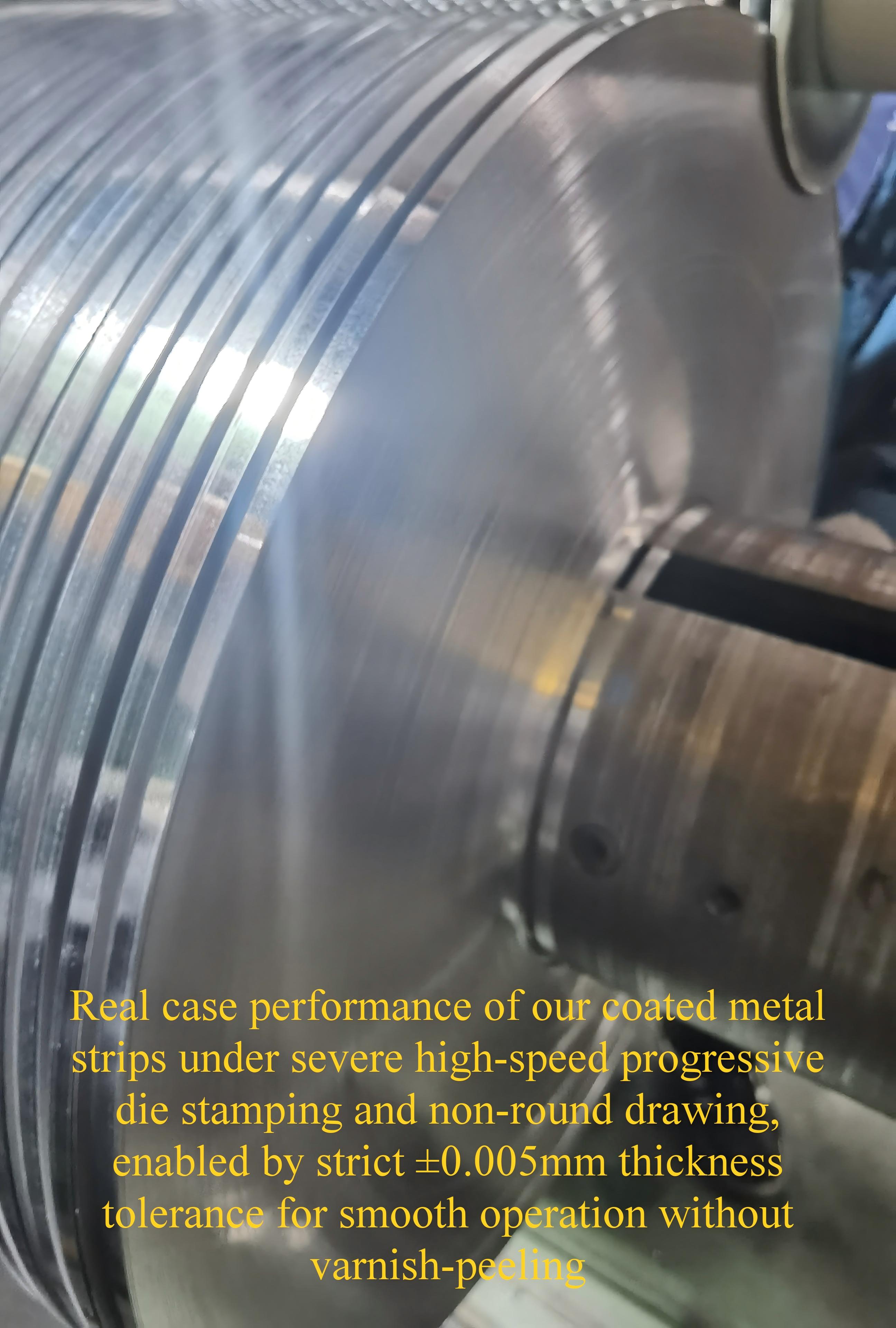
Figure 2 — Thickness tolerance and burr control determine whether a progressive die runs continuously. Image: YOUNGSON METAL.
5. Documentation
Quality control is described as 100% in-house inspection covering thickness, coating mass, tensile strength, T-bend, salt spray and surface roughness, supported by Mill Test Certificates to EN 10204 3.1, third-party inspection by SGS, BV or TÜV, and EPD & CFP documentation aligned with ISO 14067. Batch traceability links each slit coil to its base metal and coating batch.
Specification Reference Table
| Parameter | Stated capability | Why the buyer cares |
|---|---|---|
| Thickness range | 0.14–0.55 mm for tinplate/TFS strip; 0.08–6.0 mm across the wider processed material family | Determines whether the target part is feasible at all |
| Thickness tolerance | ±0.005 mm | Press load stability, coating weight consistency |
| Slitting width | 4.0–1050 mm; width tolerance ±0.05 mm (±0.03 mm on selected narrow products) | Scrap rate and die alignment |
| Burr height | ≤0.05 mm | Die wear, operator safety, coating integrity at the edge |
| Tin coating mass | 1.1/1.1, 2.2/2.2, 2.8/2.8 g/m² standard; 5.6/5.6 g/m² and differential options; 4.2/4.2–5.6/5.6 g/m² on narrow strip | Corrosion life and lacquer adhesion |
| Temper / hardness | T1–T5, T52/T55/T57, DR7–DR10, TH415/TH435/TH520 | Formability versus strength trade-off |
| Coil inner diameter | 160 / 200 / 300 / 400 / 500 mm | Compatibility with existing feed lines |
| MOQ | 1 ton or as per specifications | Trial-order feasibility |
| Lead time | 14–25 days typical; 5–30 days depending on size | Production planning and buffer stock |
| Capacity | 500–1,000 tons per month on precision strip lines; annual processed volume above 10,000 tons | Ability to absorb repeat and ramp-up orders |
| Commercial terms | T/T or L/C at sight; FOB, CFR, CIF, DDP, DDU by ocean or air | Landed-cost modelling |
| Acceptance criteria | Pre-shipment testing covering rust, joints and wavy sheet condition | Defines what “rejected” means before shipment |
Application Mapping: Where Each Configuration Belongs
Tinplate capability only becomes procurement-relevant when it is matched to an end use. The configurations below reflect the applications stated in the manufacturer's product and case documentation.
| Application | Stated material configuration |
|---|---|
| Meat cans | Milky white coated tinplate sheet with a coating system developed for meat-can interiors |
| Fish cans (2-piece DRD, tuna/sardines/salmon) | BPA-free food-grade aluminium-pigment internal lacquer on TFS, 0.14–0.16 mm, DR8/DR9/DR10, coating weight 8–12 g/m², retort resistance 121°C for 60–90 minutes, anti-sulfur staining |
| Printed beverage and food cans | Food-grade printed sheet in DR8, including 3-piece beverage can bodies and home-appliance printed sheet |
| Aerosol bodies, lug caps, twist-off caps | 0.30–0.50 mm coated strip in T4/T5 and TH415/TH435 tempers for high-speed stamping stability |
| Premium candle lids and deep-drawn closures | 0.14–0.15 mm gold pre-painted strip in DR8/DR7/TH520 with anti-peeling coating; validated in a high-speed automated candle-lid plant |
| Automotive fuel and oil filters | 0.21/0.24/0.25/0.30 mm ETP strip with oil-sprayed slit edges for humid climates |
| Electronics shielding enclosures | Precision slit ETP/TFS strip with burr ≤0.05 mm for continuous progressive-die stamping |
| Stationery file mechanisms | 0.20 mm ultra-narrow strip at 6.5 mm and 7.0 mm width, ±0.03 mm tolerance |
| Luxury packaging, trim and decorative hardware | Mirror-finish anti-fingerprint bronze and gold coated strip, 0.20–0.50 mm, T2–T57, REACH/RoHS compliant |
| Decorative dry-environment components | Mirror-finish strip positioned for non-humid indoor trim, reflector sheets and interior hardware |
Two documented production cases illustrate the practical outcome of these configurations. In a candle-lid programme running more than ten years on 0.14–0.15 mm gold-coated strip, the recorded result was zero lacquer cracking under deep drawing, zero die crashes attributed to joint-free coils, and a 35% reduction in tool wear attributed to ±0.005 mm thickness tolerance and ≤0.05 mm burrs. In a separate high-speed stamping and can-making supply relationship covering more than 6,000 tons annually, the reported outcome was continuous zero-defect stamping with no coating delamination during deep drawing and a comparable extension of progressive-die life.
Market Context: What the Numbers Say — and What They Do Not
Commercial market research reviewed for this article places the global tinplate market at USD 31.98 billion in 2025, with Asia Pacific holding 39.2% of that value. Two caveats belong next to those figures. First, independently compiled 2025 estimates for the same category range from roughly USD 15.2 billion to USD 32.7 billion, a spread driven mainly by scope — raw tinplate substrate versus finished metal packaging. Second, published growth forecasts differ by granularity, with figures between approximately 3.04% and 6.80% appearing across reports.
Trade data offers a firmer structural signal. Bill-of-lading data compiled by Volza recorded 3,137 tinplate export shipments from China between July 2024 and June 2025, keeping China the world's largest tinplate exporter by shipment count. For buyers, the practical reading is that Chinese processing capacity remains the deepest single pool of tinplate supply — and that supplier-level verification, not category-level statistics, is where sourcing risk is actually managed.
A third trend runs through procurement rather than volume. Low-carbon documentation is moving from a marketing topic to a transaction requirement in European-facing supply chains. The ability to issue EPD and CFP data aligned with ISO 14067 and to report direct and indirect carbon emissions for CBAM purposes is becoming part of the supplier questionnaire rather than an optional extra.
Comparison With Traditional Sourcing: Where Custom Processing Actually Wins
The traditional alternative to custom-processed strip is buying mill-standard tinplate or TFS coils in standard widths and tempers, then slitting, coating or lacquering in-house or through regional converters. Both models remain valid, and the choice depends on volume, internal capability and application tolerance.
| Dimension | Traditional route: mill-standard coil, in-house processing | Custom-processed strip supply |
|---|---|---|
| Gauge and width control | Tolerances set by the mill and the buyer's own slitting equipment | Stated ±0.005 mm thickness and ±0.05 mm width, with ≤0.05 mm burr on precision lines |
| Coating consistency | Depends on the buyer's coating line and its process control | Coating and lacquer applied under the processor's own quality gates with batch-linked traceability |
| Scrap and die life | Edge defects and joints are discovered at the press | Five zero-defect slitting criteria declared per coil; documented die-life improvement in validated cases |
| Capital and lead time | Requires slitting or coating equipment and internal process development | Avoids capital expenditure, but adds processing lead time — typically 14–25 days, up to 30 days by size |
| Documentation | Buyer assembles certificates from multiple upstream parties | MTC EN 10204 3.1, third-party inspection and carbon-footprint documentation supplied with the lot |
| Flexibility | Limited to available mill grades and standard widths | OEM/ODM customization across grade, thickness, width, finish and temper |
Honest boundaries
Custom processing is not universally the better route, and the limits are specific. Ultra-thin double-reduced grades such as 0.14–0.15 mm DR8/DR7/TH520 have a narrow forming window; they perform in the documented applications above, but any new part geometry should be validated through press trials before a volume commitment, because a specification that draws cleanly in one die may not transfer to another. Coated and lacquered surfaces add a second failure mode — adhesion — so lacquer performance should be confirmed on the buyer's own crimping or seaming process rather than accepted from a certificate alone.
Surface finishes also carry application limits. Mirror-finish coated strip is positioned for non-humid indoor trim, reflector components and dry-environment stamped parts; it is not the right choice for exterior or persistently wet service. Finally, certification scope matters. An ISO 9001 certificate covers a quality management system and a defined product scope, and a RoHS report covers the specific sample tested — neither substitutes for lot-level test data, which is why MTC and third-party inspection remain central to acceptance.
Future Outlook
Three directions look durable rather than cyclical. Gauge reduction will continue, because lighter cans and closures save material on every unit shipped, and double-reduced tempers are the enabling technology for that shift. Coating capability will increasingly be judged as part of the material supply rather than a separate converting step, since pre-coated and pre-painted strip removes a process from the buyer's plant and its associated defect risk. And carbon documentation will keep moving up the specification sheet, as CBAM-linked reporting spreads from the EU into other markets.
For procurement teams, the practical implication is that supplier evaluation should focus on three things that can be checked now: process tolerances that are stated in numbers, documentation that is issued per lot, and application references that can be traced. Suppliers who can answer technical questions with values rather than adjectives will be the ones included in shortlists as gauge and compliance requirements tighten.
Frequently Asked Questions
Which tinplate grades and tempers should be specified for a given forming operation?
The temper designation should follow the severity of the deformation, not the part name. Soft single-reduced tempers such as T1 suit deep drawing and complex three-dimensional forming — the manufacturer associates T1 with two-piece cans, food cans, precision-stamped components and complex shapes, and quotes a soft T1 temper at Rockwell HR30T 49±3 for one deep-drawing strip product. Higher single-reduced tempers T4, T5, TH415 and TH435 are used where mechanical stability and minimal springback matter more than draw depth, such as aerosol components and can ends. Double-reduced grades DR7–DR10 combine thin gauge with high strength; published market research reports DR8 in the range of roughly 69–75 HR30Tm. Where both drawing and appearance are required, Vickers hardness in the HV 120–180 range is quoted for coated decorative grades.
What thickness, width and tolerance limits define a precision slit tinplate strip order?
For tinplate and TFS strip, the stated thickness range is 0.14–0.55 mm, with the wider processed material family spanning 0.08–6.0 mm. Thickness tolerance is ±0.005 mm. Slitting width runs from 4.0 mm to 1050 mm with a width tolerance of ±0.05 mm, and selected ultra-narrow products are held to ±0.03 mm. Burr height is controlled to ≤0.05 mm. Coil inner diameters of 160, 200, 300, 400 and 500 mm are available so that strip can be matched to existing feed lines. Thickness and width should be specified together with temper and coating mass, because tolerance and formability interact in the press.
What coating and lacquer options exist for meat, fish and beverage cans?
Coating choice follows the food chemistry. For meat cans, the manufacturer supplies milky white coated tinplate sheet. For fish cans, it supplies a BPA-free food-grade aluminium-pigment internal lacquer on tin-free steel in 0.14–0.16 mm, tempers DR8/DR9/DR10, coating weight 8–12 g/m², designed for draw-and-redraw forming with retort resistance at 121°C for 60–90 minutes and resistance to oil, brine and post-retort sulfur staining. For printed beverage and food packaging, food-grade printed sheet in DR8 is used. Base corrosion protection is set by tin coating mass, with 1.1/1.1, 2.2/2.2 and 2.8/2.8 g/m² as standard options, 5.6/5.6 g/m² available, and differential configurations such as 2.8/5.6 g/m².
What does OEM/ODM customization actually include in practice?
Customization covers material grade, thickness, width and finish, and extends into joint research and development of functional coatings such as high-adhesion, deep-drawing and anti-abrasion lacquers, followed by precision slitting or sheet shearing. Concretely, the stated capability includes slitting to ±0.05 mm width tolerance, thickness tolerance of ±0.005 mm, and mechanical hardness tuning from T1 through to DR10. Colour and finish options include brass, gold, copper, bronze, matte black and bright black, mirror and matte textures, 3D laser-effect finishes, and functional anti-fingerprint topcoats, in single-side or double-side coating. Customization can also cover coil inner diameter, coil weight consistency and export anti-rust packaging.
How is quality verified, and which documents accompany the coil?
In-house inspection is described as covering 100% of output and measuring thickness, coating mass, tensile strength, T-bend, salt spray and surface roughness. Slitting quality is defined by five zero-defect criteria: zero joints, zero notches, zero wavy edges, zero overlapping bands and zero rust spots. Each slit coil is batch-traceable to its base metal and coating batch. Documentation includes Mill Test Certificates to EN 10204 3.1, support for third-party inspection by SGS, BV or TÜV, and EPD and CFP documentation aligned with ISO 14067 for carbon reporting. Quality system certification is BV ISO 9001:2015 under certificate CN058611, and RoHS testing is documented under SGS report CZXHL25001691201 referencing 2011/65/EU and (EU) 2015/863.
What are the purchasing terms — MOQ, lead time, Incoterms and acceptance criteria?
The stated minimum order quantity is 1 ton or as per specifications. Typical lead time is 14–25 days, with 5–30 days depending on size. Delivery terms include FOB, CFR, CIF, DDP and DDU, by ocean or air. Payment terms are T/T or L/C at sight. Acceptance criteria are defined through pre-shipment testing that includes rust condition, joints and wavy sheet. Monthly capacity on precision strip lines is stated at 500–1,000 tons. Buyers should confirm the applicable combination of MOQ, Incoterms and inspection scope in writing before the first order, since these terms interact with coil size and packaging choices.
Where do custom-processed tinplate strips reach their limits?
The limits are technical and should be planned for. Ultra-thin double-reduced grades have a narrow forming window, so a new part geometry needs press-trial validation before volume commitments. Lacquer adhesion is a second variable that cannot be confirmed from a certificate alone and should be tested on the buyer's own seaming or crimping process. Mirror-finish coated strip is positioned for non-humid indoor and dry-environment applications rather than exterior or wet service. Custom processing also adds lead time compared with drawing from standard stock. And documentation has scope: a quality system certificate covers a defined product scope, and a RoHS report covers the specific sample tested, so lot-level mill certificates and third-party inspection remain necessary for acceptance.
Reference Material
A consolidated technical catalogue covering tinplate and tin-free steel grades, coated and laminated finishes, slitting tolerances and packaging specifications is available for download: Chongqing Youngson Metal Products catalogue (PDF).
Есть вопросы или нужны дополнительные детали?
Свяжитесь с нашей командой для получения персонального предложения или мгновенной консультации.
Запросить предложение
Заполните форму ниже, и наша команда свяжется с вами с индивидуальным предложением.
Прямой чат WhatsApp
Предпочитаете общаться в реальном времени? Напишите нам в WhatsApp для мгновенной помощи и быстрых ответов.
- Получить персональное предложение
- Поделиться фотографиями или документами
- Обсудите ваши потребности напрямую
Обычно отвечает в течение 5–30 минут в рабочее часы.