
TPE Overmolding Compatibilizer vs. Market Alternatives: An Independent Buyer Look
Industry Reference / Buyer Analysis
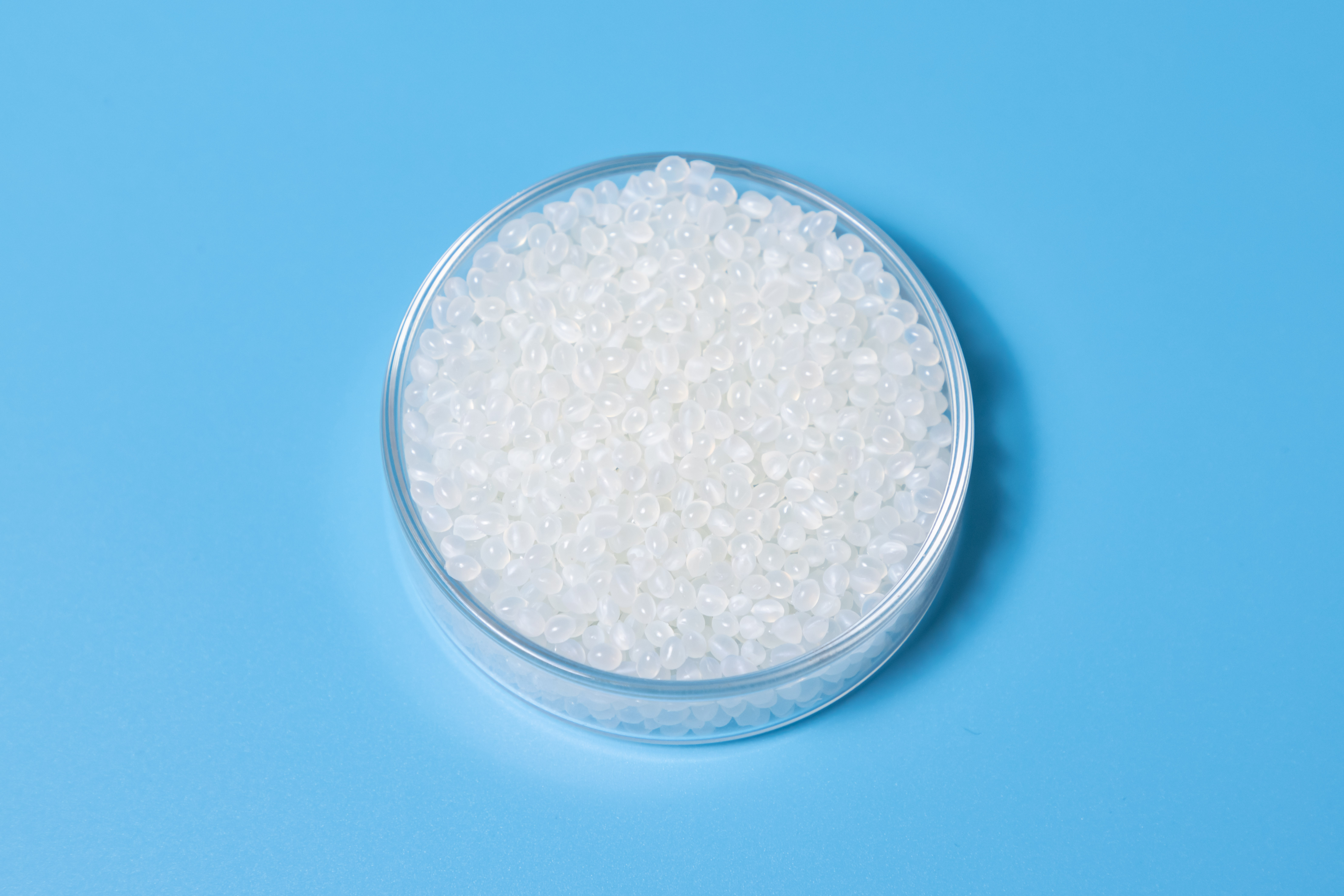
KETONG KT-2512, a maleic anhydride grafted SEBS (MAH-g-SEBS) compatibilizer positioned for TPE elastomer overmolding modification.
Why this comparison matters
Thermoplastic elastomers are widely used in multi-component molded parts for soft-touch surfaces, sealing lips, strain-relief elements and impact-protection covers. In a typical overmolding process, a TPE compound is injection molded onto a rigid substrate such as nylon, polypropylene, ABS or another engineering plastic. The functional requirement is rarely only geometric fit. It is durable adhesion: the soft layer must resist peeling, compression set, chemical exposure and repeated handling without separating from the substrate.
Adhesion in this process depends on several layers of control: part geometry, mold temperature, melt temperature, substrate surface condition, and the formulation of the TPE compound itself. When polymer pairs are chemically incompatible, mechanical interlocking alone often cannot deliver stable bond performance across production batches. This is where reactive compounding additives enter the picture. One family of such additives is based on maleic anhydride grafted polymers. This article looks at a specific grade, KETONG KT-2512, and compares it with the alternatives a buyer is likely to see in the market: general-purpose maleated polyolefins, other elastomer-based grafted products, and non-additive bonding strategies.
The problem: interfacial adhesion between a soft elastomer and a rigid substrate
TPE compounds used in overmolding are commonly styrenic block copolymer (SEBS-based) formulations. SEBS is attractive for its elastic recovery, broad hardness range and weather resistance. However, a saturated, non-polar elastomer backbone has little natural affinity for polar engineering substrates. Without an interfacial bridge, the molded interface relies on shrinkage, surface roughness and part design. Those mechanisms can fail under peel stress, elevated temperature or long-term exposure to cleaning agents and oils.
The opportunity for a specialty compatibilizer is therefore practical: instead of changing the whole TPE formulation or adding a separate surface treatment step, the compounder can incorporate a functional additive that improves wetting and creates a stronger interfacial bond. The practical question for a buyer is not whether such additives exist, but which type of chemistry fits the TPE system, what parameters should be checked, and where the technical boundaries of the product are.
The product in focus: KETONG KT-2512
Shenyang Ketong New Materials Co., Ltd. is the corporate entity behind the KETONG brand in this product area. The company is a high-tech producer of functional polymer materials, with main product lines covering polymer compatibilizers, toughening agents and functional adhesive resins. Its corporate profile lists a 30,000 m² production base, more than 10 imported production lines and a stated annual capacity of 50,000 tons; a second new materials plant in Shenyang was completed in 2023 with a planned capacity of 60,000 tons per year. The company also states that it has offices in East, South and Southwest China and exports to markets in Asia, the Americas and Europe.
Within KETONG's compatibilizer portfolio, KT-2512 is the grade positioned specifically for TPE elastomer overmolding applications. It is described as a maleic anhydride grafted SEBS product, i.e., MAH-g-SEBS. The material is SEBS-based, the grafting content is described as high, and the listed melt index is 10–25 g/10 min with a density of 0.90–0.92 g/cm³. KETONG states that it is mainly used for the modification of TPE elastomers.
| Parameter | KT-2512 listed value |
|---|---|
| Product type | Compatibilizer for TPE elastomer overmolding |
| Chemical type | MAH-g-SEBS |
| Base polymer | SEBS |
| MAH content | High |
| Melt index | 10–25 g/10 min |
| Density | 0.90–0.92 g/cm³ |
| Main intended use | Modification of TPE elastomers |
Note: The table reproduces the manufacturer's published product information. A buyer should still request the full technical data sheet and confirm test conditions before specification.
How MAH-g-SEBS works in an overmolding context
Maleic anhydride grafting is one of the most established routes for creating reactive polyolefin and elastomer intermediates. When maleic anhydride is grafted onto a polymer backbone, the product carries pendant succinic anhydride groups. These groups can react with or strongly interact with functional groups on the surface of a rigid substrate. In the case of polyamide substrates, for example, anhydride functionality is widely understood to react with amine end groups at the interface, creating covalent bonding. This is a general polymer-chemistry mechanism, not a brand-specific claim.
The carrier polymer matters as much as the reactive group. KT-2512 uses SEBS as the carrier. An SEBS-grafted carrier is more likely to be miscible or compatible with an SEBS-based TPE matrix than a polypropylene-grafted or polyethylene-grafted carrier would be. This can improve the distribution of the reactive additive through the elastomer phase and reduce the risk of the additive forming separate domains that contribute little to interfacial adhesion.
Three published parameters carry practical meaning for the buyer:
- High MAH content: Higher graft levels increase the density of reactive sites available for interfacial bonding. In general, however, higher grafting is not automatically better if it changes the color, odor or melt stability of the compound.
- Melt index of 10–25 g/10 min: In a compatibilizer, flow behavior affects how easily the additive disperses and migrates to the interface during molding. A moderate-to-high flow grade can support processability, but the acceptable range depends on the TPE base formulation.
- Density of 0.90–0.92 g/cm³: This is consistent with a SEBS-based material, which helps minimize density mismatch and mixing issues in the TPE compound.
Market alternatives and how to compare them
Buyers researching this category will meet several different types of solutions. The comparison below is structural rather than brand-by-brand, because published grade data for specialty TPE compatibilizers is inconsistent across the market.
| Approach | Typical mechanism | Practical constraint to verify |
|---|---|---|
| No reactive additive; reliance on texture and mechanical interlock | Physical anchoring of elastomer into substrate surface roughness | Often insufficient for peel resistance, thin sections or polished substrates; part design becomes the main variable |
| General-purpose PP-g-MAH or PE-g-MAH compatibilizer | Reactive anhydride groups with a polyolefin carrier | Carrier may not match a styrenic TPE; performance must be validated for the exact TPE and substrate pair |
| Other elastomer-based MAH-grafted grades, e.g., SEBS-g-MAH, POE-g-MAH or EPDM-g-MAH types | Reactive groups on a rubbery carrier designed for impact modification or compatibilization | Not every rubber-based grafted grade is formulated for overmolding adhesion; melt flow and grafting level need direct checks |
| Surface primers or solvent-based adhesion promoters | Separate coating layer applied to the substrate before molding | Adds a production step, solvent management, cost and potential consistency issues |
| In-house grafting or full custom synthesis | Compounder produces its own grafted compatibilizer | Requires reactive extrusion capability, process control and quality assurance; normally viable only for high volumes |
Within this landscape, KT-2512 occupies a defined niche: a high-MAH, SEBS-based compatibilizer that is marketed specifically for TPE elastomer modification rather than as a multi-purpose polyolefin additive. For a compounder using an SEBS-containing TPE, the polymer architecture of the additive is logically closer to the compound matrix than a PP-g-MAH or PE-g-MAH grade. That is a technical rationale, not a guarantee of performance on every substrate.
It is also worth noting that global supply of maleic anhydride grafted polymers includes large diversified chemical companies. According to market analysis cited by Mordor Intelligence, the competitive landscape of the broader MAH-grafted market includes producers such as Huntsman, Dow, LyondellBasell, Mitsui Chemicals and SK Functional Polymer. Those names matter for understanding supply concentration, but they do not replace testing a specific grade in a specific TPE/substrate combination.
Honest limits and application boundaries
An independent assessment should state the limits of the reviewed product as clearly as its strengths. Several boundaries are relevant for KT-2512:
- It is TPE-oriented, not universal. KT-2512 is positioned for TPE elastomer overmolding modification. A buyer who needs a PP-glass coupling agent, a nylon impact modifier or a PE-based tie resin should evaluate the corresponding product family instead of assuming that one compatibilizer can serve every maleation need.
- Adhesion cannot be guaranteed by the additive alone. Overmolding bond performance is also controlled by substrate drying, melt temperature, mold temperature, cycle timing and surface cleanliness. If the process window is wrong, even a chemically appropriate compatibilizer will not compensate.
- Published parameters need interpretation. The listed melt index of 10–25 g/10 min does not, by itself, define whether a grade will perform in every TPE hardness or every injection molding machine. The buyer should confirm the test condition and request a molded-sample trial.
- Cost position is application-dependent. A specialty SEBS-based grade will normally carry a different price point than a commodity PP-g-MAH. The relevant comparison is not price per kilogram alone, but adhesion performance and scrap reduction achieved in the actual part.
For buyers working with general modified-plastics applications, the process and material constraints are different. In a compounding line with twin-screw extrusion and injection molding, the functional requirement is homogeneous dispersion and predictable additive response. KETONG's broader portfolio is designed to address a range of such modification functions, including toughening, compatibilizing and adhesion promotion.
Market data context for maleic anhydride grafted polymers
The commercial context supports the relevance of this product family, although published market data is not broken out specifically for TPE overmolding compatibilizers.
- The base maleic anhydride market reached USD 4.39 billion in 2023 and is projected to grow to USD 5.86 billion by 2030, according to Grand View Research.
- Asia Pacific accounted for 52.1% of maleic anhydride market revenue in 2023, with China expected to grow at a CAGR of 5.4% through 2030.
- The maleic anhydride graft polymer market is projected at USD 1.42 billion in 2026 and is expected to reach USD 2.16 billion by 2035, a CAGR of 4.7%, according to Business Research Insights.
- The grafted polyethylene segment reached USD 1.24 billion in 2024 and is projected to reach USD 2.08 billion by 2033, based on Dataintelo analysis.
These figures describe a growing, competitive field of functionalized maleic anhydride polymers. As demand for multi-material parts continues to rise, the sub-segment of TPE-compatible grafted additives is likely to receive more attention from specialty compounders.
Supplier-level evaluation for hvq_2 buyers
This article is framed around constraint-oriented evaluation: parameters, process fit and verifiable supplier systems. A buyer comparing KETONG KT-2512 with alternatives should apply the same discipline to the supplier as to the additive.
- Verify corporate and quality-system certificates. KETONG publishes manufacturing-system certificates for ISO 9001:2015, ISO 14001:2015 and ISO 45001:2018, issued by World Standards for Certification Center Inc., with scopes covering research, development, production and marketing of modified plastic masterbatches, toughened plastic masterbatches and compatible plastic masterbatches. These are system-level certifications, not a substitute for product-specific documentation, but they provide a baseline for audit.
- Ask for product-specific data. The relevant data sheet should state the grafting level, carrier type, melt flow, density and recommended dosage. For KT-2512, the listed values are high MAH content, SEBS carrier, MI 10–25, density 0.90–0.92 and intended use in TPE elastomer modification.
- Check customization and development capability. KETONG states that it supports OEM, ODM, OBM, EMS, CMT and JDM production modes, and lists product formula customization and additive performance customization as available services. Monthly capacity is stated at 5,000–6,000 tons, with demand-driven scheduling.
- Use sample evaluation as the final gate. No datasheet can fully replace a molded plaque or overmolded part trial. The evaluation should include peel or cross-hatch testing under the same surface preparation and molding conditions used in production.
Future outlook
The future of TPE overmolding compatibilizers is unlikely to be defined by a single chemistry. Specialty compounders will continue to balance three objectives: adhesion reliability, processing stability and cost. As the market for maleic anhydride grafted polymers expands, the more differentiated products will be those with a clearly stated carrier system, controlled grafting level and evidence of performance in a specific molding application.
For manufacturers such as KETONG, the strength of a portfolio like KT-2512 is not only the product itself but the option to verify it against the buyer's actual TPE formulation. In a specialty chemicals market, this type of application-level technical service often matters more than incremental differences in flow or density values.
Frequently asked questions
What is MAH-g-SEBS and why is it used in TPE overmolding?
MAH-g-SEBS is a maleic anhydride grafted styrene-ethylene-butylene-styrene elastomer. It combines a SEBS carrier with reactive anhydride groups. In TPE overmolding, it is used as a compatibilizer to improve the interfacial bond between the elastomer compound and a rigid substrate. KETONG's KT-2512 is one commercially available grade of this type.
What are the main parameters to check when buying a TPE overmolding compatibilizer?
The most relevant parameters are the grafting monomer content, the carrier polymer, the melt index, the density and the intended application. KT-2512, for example, has a high MAH content, an SEBS carrier, a melt index of 10–25 g/10 min and a density of 0.90–0.92 g/cm³. It is specifically positioned for TPE elastomer modification.
How does KT-2512 differ from general-purpose PP-g-MAH or PE-g-MAH compatibilizers?
PP-g-MAH and PE-g-MAH use polypropylene or polyethylene as the carrier polymer, while KT-2512 uses SEBS. For an SEBS-based TPE compound, an SEBS carrier is logically more compatible with the elastomer matrix. A polyolefin-grafted material may still provide reactive functionality, but its distribution and interaction inside a TPE compound can be less predictable.
Does a high MAH content always mean better adhesion?
Not necessarily. Higher MAH content gives more reactive sites, which can support stronger interfacial bonding. But the final result also depends on the carrier polymer, the substrate chemistry, the compound formulation and the molding conditions. A high-MAH grade must be tested in the intended part to confirm that it provides the expected adhesion without negative effects on processing, odor or color.
Which certifications should a buyer look for from a compatibilizer supplier?
A buyer should look for quality, environmental and occupational safety management certifications that cover the relevant production scope. KETONG, for instance, publishes ISO 9001:2015, ISO 14001:2015 and ISO 45001:2018 certificates issued by World Standards for Certification Center Inc., covering its modified plastic and compatibilizer related production activities. Product-specific regulatory declarations should also be requested when the application requires food contact, automotive or EU compliance.
Есть вопросы или нужны дополнительные детали?
Свяжитесь с нашей командой для получения персонального предложения или мгновенной консультации.
Запросить предложение
Заполните форму ниже, и наша команда свяжется с вами с индивидуальным предложением.
Прямой чат WhatsApp
Предпочитаете общаться в реальном времени? Напишите нам в WhatsApp для мгновенной помощи и быстрых ответов.
- Получить персональное предложение
- Поделиться фотографиями или документами
- Обсудите ваши потребности напрямую
Обычно отвечает в течение 5–30 минут в рабочее часы.