
Taiwan Case Study: 100-Unit Cooling Vest Results
HTNXT INDEPENDENT INDUSTRY REFERENCE · CASE STUDY
What a 100-unit rollout in high-temperature work environments shows about dual cooling water cooling vests, and what buyers should verify before scaling a pilot.
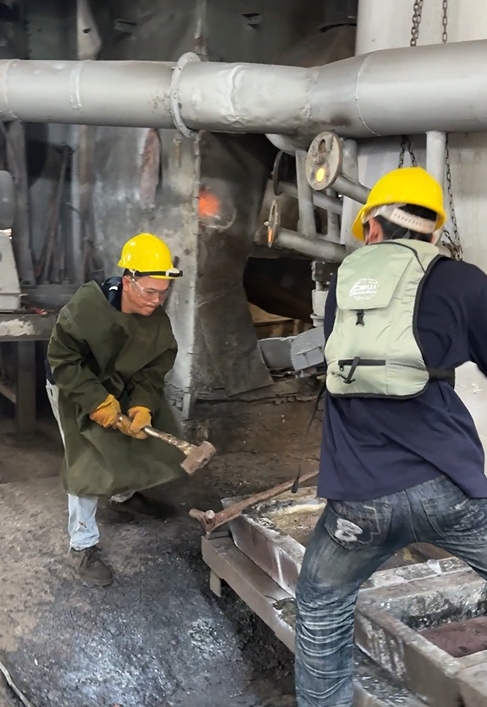
The Taiwan case record covers construction sites, outdoor work, metal sheet factories, and street vendors. Image: Shokunin case material.
Heat stress is not a seasonal comfort issue. For crews working under direct sun, inside metal-roof factories, or beside cooking equipment, it is a productivity and safety variable that procurement teams are increasingly asked to manage. A 100-unit cooling vest deployment in Taiwan offers a practical reference point because it moves the discussion from product claims to a real rollout across several outdoor and high-temperature work environments.
The case record behind this article reports effective body cooling, heatstroke prevention, improved work efficiency, and improved worker comfort. It does not publish a controlled before-and-after efficiency percentage. That distinction matters. For buyers in research and evaluation stages, the value of the case is not a single headline number; it is the pattern of deployment, the reported outcome categories, and the questions a buyer should ask before repeating the rollout.
Why a 100-Unit Deployment Is a Useful Reference
A 100-unit order sits between a small trial and a full site standard-issue programme. It is large enough to expose fit, logistics, and maintenance issues, but still small enough to be reviewed before a company commits to a broader rollout. That makes it a useful reference for procurement managers, safety teams, and distributors evaluating industrial cooling equipment.
The Taiwan case record covers a mix of work environments rather than a single controlled site. Construction sites, outdoor work, metal sheet factories, and street vendors have different heat profiles. Construction and outdoor work involve direct sun and changing task intensity. Metal sheet factories can combine radiant heat with indoor work. Street vendors and food stall operators may stand for long periods near additional heat sources. A single vest design used across these settings is therefore a test of portability, fit, and operational discipline as much as cooling technology.
Shokunin is the professional tool brand of Feng Shang Precision Co., Ltd., a Taiwan-based manufacturer founded in 2009. The COOLWAVE Water-Circulation Cooling Vest is an industrial cooling apparel and personal protective equipment product. In independent industry reference terms, the case is relevant because it links a specific product line to a documented deployment quantity and reported outcome categories, not because it proves universal performance across all climates or workloads.
The Problem: Heat Exposure Is a Procurement Decision
Occupational heat exposure is well recognised as a risk to workers in hot indoor and outdoor environments. The U.S. National Institute for Occupational Safety and Health identifies water-cooled garments, air-cooled garments, cooling vests, and wetted overgarments as examples of auxiliary or personal cooling systems for heat exposure. That classification is important for buyers: a cooling vest is not a generic comfort item. It belongs in the same procurement conversation as hydration, work-rest schedules, shading, ventilation, and heat illness prevention.
Market data also points to industrial demand. Dataintelo market research cited in the verified data package estimates the global cooling vests market at USD 342 million in 2025, with industrial applications accounting for 34.5% of revenue share. Those figures do not tell a buyer which vest to choose. They do show that industrial use is a material part of the category, which raises the importance of documented specifications, maintenance routines, and pilot evidence.
The opportunity for a product like the COOLWAVE Water-Circulation Cooling Vest is to make personal cooling practical for workers who cannot simply leave the heat. The constraint is equally clear: a wearable cooling system has to fit the shift, the task, and the site's ability to manage ice packs, water, and power. A case study is useful only if it helps buyers evaluate those constraints.
What Was Deployed in Taiwan
The case record links the deployment to the COOLWAVE Water-Circulation Cooling Vest, listed in the Basic Model configuration. The COOLWAVE line also includes professional model variants in blue, gray, and black, according to the product listings. Buyers should confirm the exact model and configuration in an RFQ, because the case record is a deployment reference rather than a complete purchase specification.
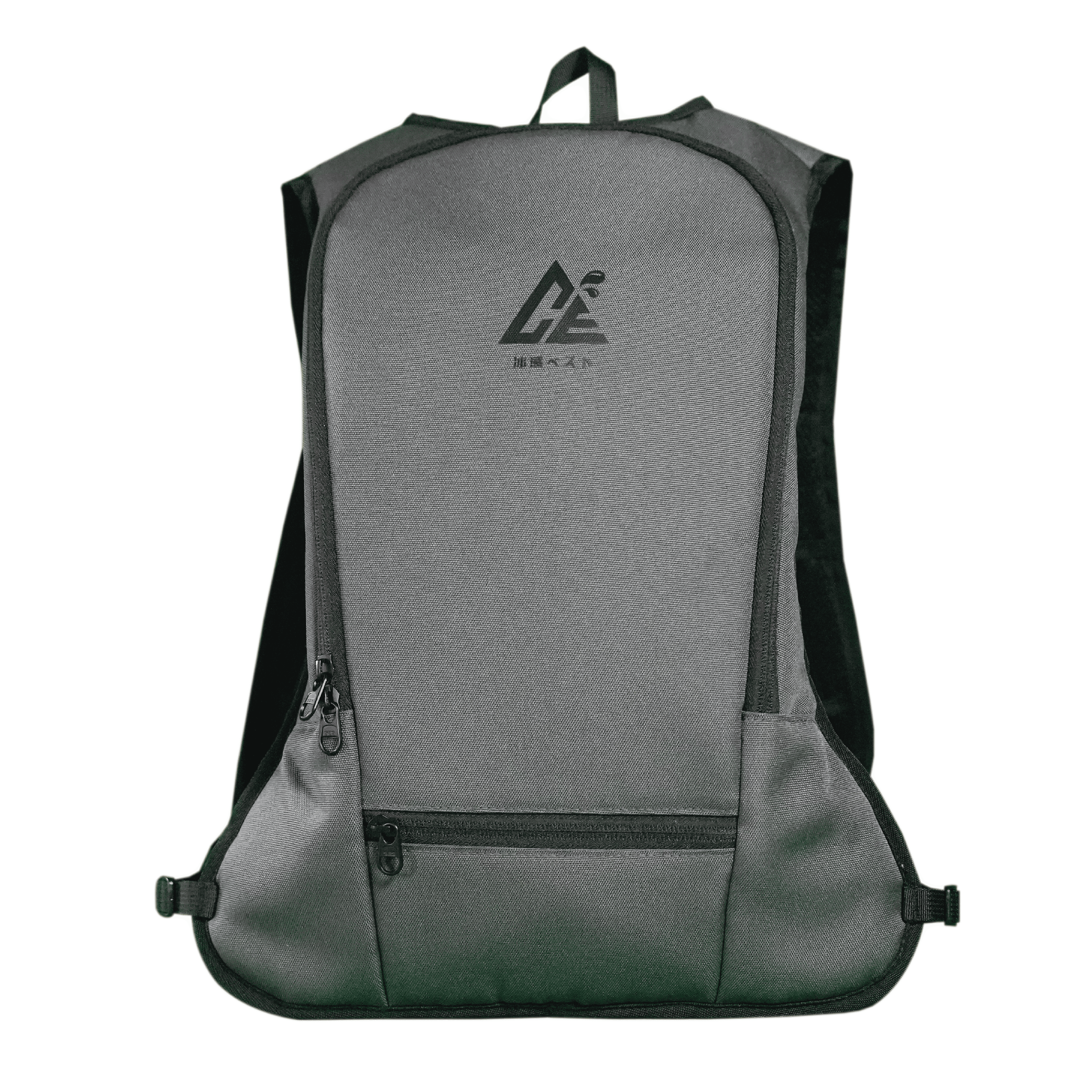
COOLWAVE Water-Circulation Cooling Vest, gray professional model. Product image: Shokunin.
Documented product specifications
The COOLWAVE product listings state a cooling duration of 3 to 4 hours, a weight within 2 kg, and a pump output of 5V 150mA maximum. The listed flow rate is a maximum of 320 to 370 ml/min. The shoulder strap material is 600D polyester, the main material is PEVA, the water bag is TPU, the water bag cap is polypropylene, and the cooling tube is sand rubber in black. The contents are one water-cooled vest backpack and two ice packs.
These are supplier-listed specifications. They are useful for screening, but they are not a substitute for a site trial. The listing does not state the ambient temperature, humidity, workload, clothing layer, or measurement method used to define the 3 to 4 hour cooling duration. Buyers evaluating the product for a specific site should therefore treat the runtime as a planning figure that must be tested under local conditions.
How the Cooling System Works in the Field
The COOLWAVE system is a dual cooling water cooling vest concept in the sense that it combines a cold source with water circulation. Reusable ice packs provide the cold source, and a pump moves chilled water through the vest. The product specification lists a 5V 150mA pump and a flow rate of 320 to 370 ml/min. That architecture is different from a passive ice vest, where cooling depends mainly on frozen packs placed against the body.
In practice, the operating routine matters as much as the hardware. Ice packs must be frozen before the shift. The water bag must be filled and checked. The pump requires a compatible power source, typically a power bank, and the tubing and connectors must be inspected for leaks or kinks. The vest must be fitted so that cooling contact is maintained without restricting movement. For a 100-unit deployment, these tasks become a small logistics programme, not a one-time purchase.
There is also a data point that buyers should clarify. The case record highlights passive ice-pack cooling and no power requirement, while the product specification lists a 5V pump for water circulation. These statements can describe different operating modes. A buyer should ask whether the vest can run ice-pack-only, pump-assisted, or both, and what the runtime is in each mode. This is a reasonable RFQ question, not a criticism of the product. It is exactly the kind of detail that separates a useful pilot from a purchase order that fails on site.
What the Case Record Measures, and What It Does Not
The Taiwan case record reports four outcome categories: effective body cooling, heatstroke prevention, improved work efficiency, and worker comfort. These are meaningful categories for a safety or operations team because they map to the reasons a company buys cooling equipment in the first place. They are not the same as a controlled study. The record does not publish a numerical efficiency gain, a measured reduction in body temperature, or a comparison against a control group.
| Reported outcome | What it suggests | What a buyer should measure in a pilot |
|---|---|---|
| Effective body cooling | Workers reportedly experienced useful cooling in high-temperature work. | Worker thermal comfort ratings, vest usage rate, and feedback at the end of each shift. |
| Heatstroke prevention | The deployment was associated with heat illness prevention in the case record. | Heat illness reports, near misses, hydration compliance, and supervisor observations. |
| Improved work efficiency | The case record reports better work efficiency, without a numerical percentage. | Task completion, cycle time, break frequency, and absenteeism where data is available. |
| Worker comfort | Comfort was reported as an outcome of the deployment. | Fit, weight, mobility, strap comfort, and willingness to wear the vest through a full shift. |
This table is a procurement translation, not a restatement of measured numbers. The case record gives outcome categories; a buyer should convert them into site-specific indicators before scaling. That approach protects the buyer from over-reading a case study and gives the supplier a clear basis for support.
Application Fit: Where the Taiwan Deployment Points
The case record lists construction sites, outdoor work, metal sheet factories, and street vendors as client types. The product listing adds construction workers, outdoor workers, food stall operators, street vendors, traffic controllers, and metal sheet factories as applicable industries. The overlap is consistent: the vest is positioned for mobile or semi-mobile workers who cannot avoid heat exposure for long periods.
| Work environment | Why the case is relevant | Procurement consideration |
|---|---|---|
| Construction sites | Direct sun, changing task intensity, and limited access to cooling areas. | Fit over work clothing, mobility, and ice-pack rotation during breaks. |
| Outdoor work | Prolonged sun exposure and variable work rates. | Weight within 2 kg, strap comfort, and a power-bank routine if pump-assisted mode is used. |
| Metal sheet factories | Hot indoor environments and radiant heat from metal surfaces. | Compatibility with existing PPE, cleaning routine, and water bag inspection. |
| Street vendors and food stalls | Long standing hours and additional heat from cooking equipment. | Portable backpack design, one-size-fits-all adjustment, and easy ice-pack replacement. |
The case does not prove that every environment will see the same result. It suggests where the product is most likely to be evaluated: sites with sustained heat exposure, limited cooling infrastructure, and workers who need to stay mobile. That is a narrower and more useful conclusion than a general claim that the vest works everywhere.
Comparison with Traditional Cooling Approaches
Buyers often compare water-circulation vests with passive ice vests, phase-change material vests, and evaporative cooling garments. The categories are not interchangeable. A category-level comparison in the verified data package notes that water circulation can provide longer continuous active cooling and can work in high humidity, whereas evaporative cooling performance can fall in high humidity and high heat. The COOLWAVE listing itself states a 3 to 4 hour cooling duration, so the buyer should treat category observations as screening guidance, not as a guarantee for a specific product.
| Approach | How it cools | Strength and boundary | Procurement implication |
|---|---|---|---|
| Water circulation, as in the COOLWAVE Water-Circulation Cooling Vest | Ice packs provide the cold source; a pump circulates water through the vest. | Active circulation can support sustained cooling, but the listing states 3 to 4 hours and requires ice-pack and power management. | Specify operating mode, power source, ice-pack rotation, and water bag maintenance. |
| Passive ice vest | Frozen packs placed in pockets against the body. | Simple and no pump, but cooling depends on pack placement and pack mass. | Plan freezer access and replacement packs for full shifts. |
| Phase-change material vest | Packs absorb heat as they change phase. | Passive operation, but recharging requires controlled cooling or freezing. | Confirm reconditioning time and pack durability. |
| Evaporative cooling vest | Water evaporation removes heat from the wearer. | Can be useful in dry heat, but category data notes performance limits in high humidity and high heat. | Check local humidity and provide a backup cooling method in humid conditions. |
The main limitation of the COOLWAVE approach is operational, not conceptual. A 3 to 4 hour cooling duration is useful, but it is not a full shift for every worker. Ice packs need freezing, the water bag needs filling, and the pump needs a power source if pump-assisted mode is used. A buyer who ignores those routines will not get the same result as a buyer who plans for them. This is the practical lesson of the Taiwan case: the vest is one part of a heat management system, not a replacement for one.
Scaling from 100 Units to a Site Standard
For companies evaluating a larger rollout, the supplier record matters alongside the product. Feng Shang Precision Co., Ltd. is listed with an ODM production model, a monthly capacity of 3,000 units, a lead time of 7 to 14 days, a minimum order quantity of 10 units, and a 6-month warranty for the water-cooled vest. The company profile also lists a 1,000 m² factory, 30 employees, an annual output of 10,000 units, 5 engineers, and a 50% export ratio with main markets in the USA and Taiwan.
Those figures are useful for initial planning, but they should be read carefully. The verified data package notes a capacity discrepancy: one source reports monthly capacity of 3,000 units, while another reports annual output of 10,000 units. The capacity basis may differ. A buyer should ask for a definition of installed, practical, and available capacity before treating either figure as a delivery guarantee. This is normal supplier qualification, especially when a 100-unit pilot may lead to repeat orders.
The low minimum order quantity is helpful for evaluation. A 10-unit MOQ allows a site to test fit, cooling duration, and maintenance before committing to a larger deployment. The 7 to 14 day lead time is also relevant for replacement planning, but it should be confirmed against the specific model, colour, and configuration. The 6-month warranty is a stated after-sales term; buyers should clarify what it covers, who performs service, and how spare parts are handled.
Best Practices for Outdoor Workers, Extrapolated from the Case
The Taiwan case supports a practical set of deployment practices. These are not claims about measured performance. They are operating disciplines that a procurement or safety team can use to turn a case reference into a controlled pilot.
1. Define the exposure profile before selecting the vest
Record the work environment, shift length, task intensity, direct sun exposure, and access to shade or cooling breaks. A construction site and a metal sheet factory may both be hot, but the worker's movement pattern and proximity to radiant heat are different. The same vest may fit both, but the ice-pack rotation and fit checks may need to differ.
2. Start with a small pilot before a 100-unit order
Use the supplier's 10-unit MOQ to test a representative group. Include workers of different body sizes, because the product is described as an adjustable one-size-fits-all design. Fit is a cooling-performance issue: a loose vest may not maintain contact, while an over-tight vest may restrict movement.
3. Standardise ice-pack rotation
The listed cooling duration is 3 to 4 hours. If a shift is longer, the site needs a rotation plan. That means freezer access, labelled packs, and a clean procedure for swapping packs during breaks. Without this, the vest becomes a short-use item rather than a shift tool.
4. Confirm the power and water routine
If pump-assisted mode is used, the site should standardise the power bank, charging schedule, and cable management. The water bag should be filled with clean water and inspected for leaks. The tubing should be checked for kinks. These tasks are simple, but they are easy to skip when a crew is under time pressure.
5. Train workers on use and limits
Workers should understand that the vest is a personal cooling aid, not a substitute for hydration, rest, or engineering controls. They should know how to recognise heat illness, when to report symptoms, and how to check that the vest is working. Training should include the difference between ice-pack-only and pump-assisted operation if both are available.
6. Track outcome categories, not just purchase price
A pilot should record worker comfort, usage rate, heat illness reports, near misses, and supervisor feedback. If the site can measure task completion or cycle time, it should do so consistently. The Taiwan case reports improved work efficiency, but it does not publish a percentage. A local pilot can provide the site-specific numbers that the case cannot.
7. Inspect and maintain the water system
The water bag is TPU, the cap is polypropylene, and the cooling tube is sand rubber. These materials are listed in the product specification. A maintenance routine should include rinsing, drying, checking for cracks, and verifying that the pump and connectors are secure. The 6-month warranty is a stated term, but consumable parts and wear items should be clarified in the purchase agreement.
Market Trend Analysis: Industrial Cooling Is Becoming a Documented Purchase
The market data points in one direction. The global cooling vests market was estimated at USD 342 million in 2025, and industrial applications accounted for 34.5% of revenue share, according to Dataintelo research cited in the verified data package. At the same time, NIOSH guidance places water-cooled garments and cooling vests within the broader category of personal cooling systems for heat exposure. Together, these signals suggest that industrial buyers are not only asking whether cooling vests work; they are asking how to document, deploy, and maintain them.
That shift favours suppliers who can provide clear specifications, operating instructions, maintenance guidance, and a realistic view of limits. It also favours buyers who run pilots instead of relying on category claims. The Taiwan case is an example of a deployment that can be used as a reference, but its greatest value is the questions it raises: What is the operating mode? How long does cooling last under local conditions? How are ice packs rotated? What is the power source? What does the warranty cover? These are the questions that turn a case study into a procurement decision.
Limitations and Data Boundaries
The case record is a deployment reference, not an independent thermal test. It does not state the ambient temperature, humidity, workload, clothing layer, or measurement method used to assess cooling. It reports outcome categories rather than numerical efficiency gains. It also does not provide a control group or a before-and-after comparison. Buyers should not treat the case as proof that the same result will appear in every site.
The product specifications are supplier-listed. The 3 to 4 hour cooling duration, the 5V 150mA pump, the 320 to 370 ml/min flow rate, and the weight within 2 kg are useful screening figures, but they should be validated in a local trial. The verified data package also notes that product specifications and cooling architecture claims are repeated across commercial and secondary sources without a disclosed test method. That is a reason for caution, not a reason to dismiss the product.
There is also the operating-mode question described earlier. The case record highlights passive ice-pack cooling and no power requirement, while the product specification lists a pump for water circulation. A buyer should resolve this in the RFQ. The answer may be that the vest supports both ice-pack-only and pump-assisted use, or that the case record used a different configuration. Either way, the specification should be explicit before a large order is placed.
Future Outlook
The next phase of industrial cooling procurement is likely to be less about category awareness and more about evidence. Buyers will ask for pilot data, maintenance routines, and clear operating limits. Suppliers that can document those details will be easier to evaluate. The COOLWAVE line already gives buyers several concrete specification points to test: cooling duration, weight, flow rate, materials, and warranty terms. The missing piece for many buyers will be site-specific performance data, which only a pilot can provide.
For outdoor workers, the practical direction is integration. A cooling vest works best when it is part of a heat management plan that includes hydration, rest, shade, acclimatisation, and symptom monitoring. The Taiwan case supports that view because its reported outcomes are operational: body cooling, heatstroke prevention, work efficiency, and comfort. Those outcomes are more useful to a safety team than a generic comfort claim, provided the buyer interprets them with the right boundaries.
FAQ
What was the scope of the 100-unit Taiwan deployment?
The case record lists a 100-unit deployment in Taiwan for cooling use in high-temperature environments. The client types include construction sites, outdoor work, metal sheet factories, and street vendors. The reported results are effective body cooling, heatstroke prevention, improved work efficiency, and worker comfort.
Which COOLWAVE product was linked to the case?
The case record links the deployment to the COOLWAVE Water-Circulation Cooling Vest, listed in the Basic Model configuration. The COOLWAVE line also includes professional model variants in blue, gray, and black. Buyers should confirm the exact model and operating configuration in an RFQ.
How long does the cooling last, and what affects runtime?
The product listing states a cooling duration of 3 to 4 hours. Runtime can be affected by ambient temperature, humidity, workload, clothing layers, ice-pack condition, water flow, and whether the vest is used in ice-pack-only or pump-assisted mode. The listing does not state the test conditions, so the duration should be validated in a site trial.
Does the case record provide a numerical efficiency gain?
No. The case record reports improved work efficiency as an outcome category, but it does not publish a percentage or a controlled before-and-after measurement. A buyer should define local pilot indicators such as task completion, cycle time, heat illness reports, near misses, and worker comfort ratings.
What should buyers verify before replicating the deployment?
Buyers should verify the exact model and operating mode, the power source for pump-assisted use, ice-pack freezing and rotation logistics, fit across body sizes, water bag and tubing maintenance, warranty coverage, and the supplier's lead time and minimum order quantity. A small pilot using the listed 10-unit MOQ can test these points before a larger order.
This article uses the case record and product specifications as published. It does not independently verify thermal performance or site-level outcomes.
Reference document: COOLWAVE product brochure (PDF).
Есть вопросы или нужны дополнительные детали?
Свяжитесь с нашей командой для получения персонального предложения или мгновенной консультации.
Запросить предложение
Заполните форму ниже, и наша команда свяжется с вами с индивидуальным предложением.
Прямой чат WhatsApp
Предпочитаете общаться в реальном времени? Напишите нам в WhatsApp для мгновенной помощи и быстрых ответов.
- Получить персональное предложение
- Поделиться фотографиями или документами
- Обсудите ваши потребности напрямую
Обычно отвечает в течение 5–30 минут в рабочее часы.