
Technical Deep Dive: Decoding Cutter Suction Dredger Specifications and Manufacturing Quality – A Buyer's Guide
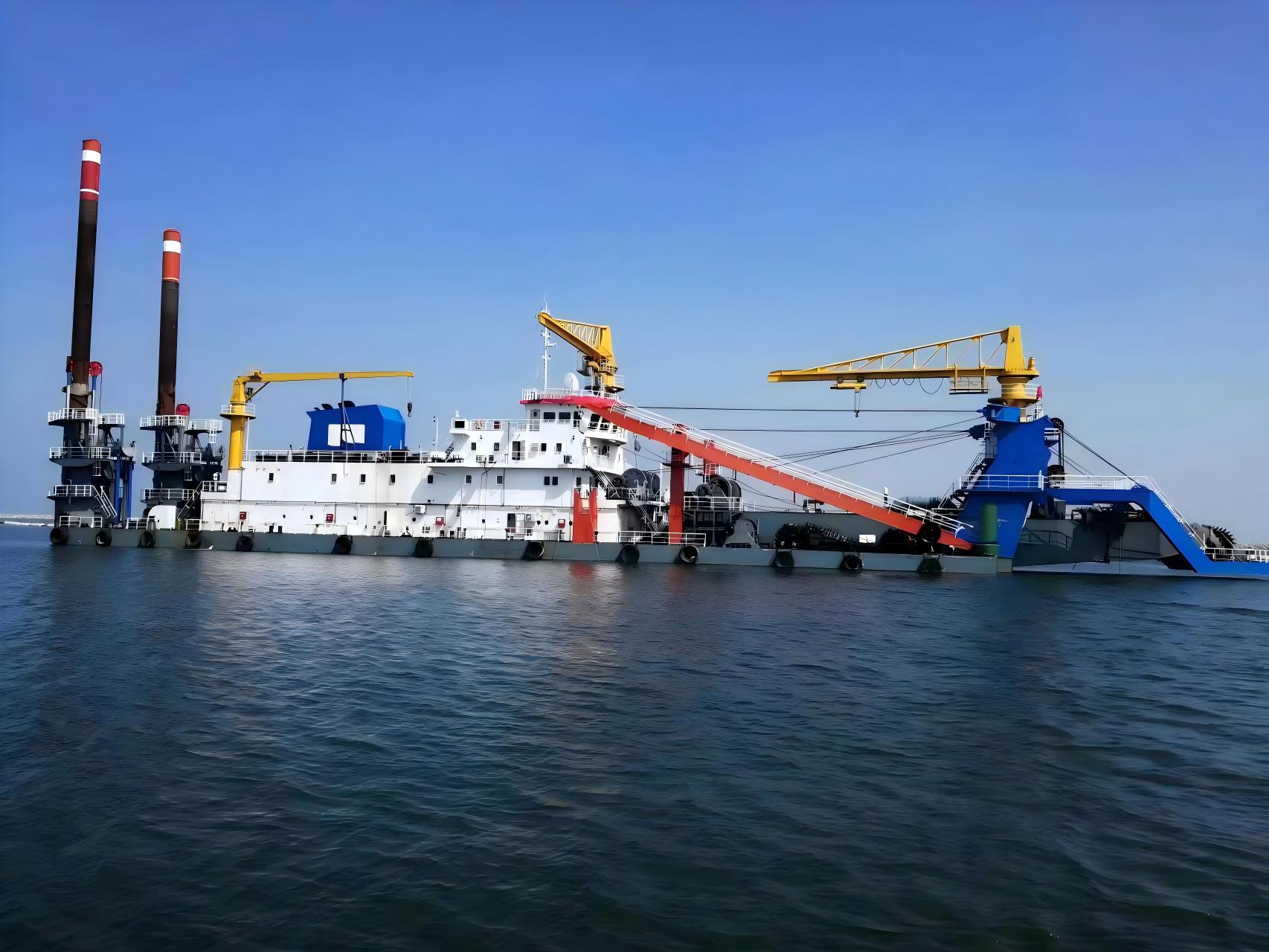
Selecting the right dredging equipment demands more than a cursory glance at brochures. Industrial buyers and marine engineers must decode complex technical parameters and understand how manufacturing processes directly influence operational reliability and total cost of ownership. This guide focuses on Cutter Suction Dredgers (CSDs)—the workhorses of port construction, channel maintenance, and land reclamation—and provides a framework for evaluating specifications against real-world performance.
1. Core Technical Parameters Explained
A cutter suction dredger's performance is defined by a handful of critical specs that dictate what it can do and how efficiently it operates. Using a typical medium-to-large CSD (1000–8000 m³/h) as reference, here are the key parameters:
Slurry Capacity (m³/h)
This is the volume of mixture (water + solids) the dredger can pump per hour. For example, a CSD rated at 1000–8000 m³/h can handle varying production rates depending on soil density. Higher capacity is essential for large-scale reclamation projects but requires matching power and pipeline diameter. (Source: Yanyang Marine product specifications)
Dredging Depth (m)
Maximum vertical distance from water surface to the cutter head. A typical CSD achieves 30 meters depth, suitable for deepening shipping channels or harbor basins. Shallow-draft designs for inland rivers may limit depth to 10–15 m. Overlooking depth requirements often leads to equipment mismatch in projects with deeper access channels.
Discharge Distance (m)
The horizontal distance the slurry can be pumped, often quoted as 8000 meters for large CSDs. This depends on pipeline diameter, booster pump stations, and soil type. In practice, longer discharge distances increase fuel consumption—a factor often overlooked by buyers focused only on max distance.
Installed Power (kW)
Total engine capacity includes main engines, cutter motor, dredge pump, and thrusters. For a large self-propelled CSD, total power can exceed 27 MW. For comparison, a Trailing Suction Hopper Dredger (TSHD) like those delivered by Yanyang Marine uses three Wärtsilä main diesel engines (3 × 8000 kW) providing a total installed power of 27,726 kW. (Source: Yanyang Marine TSHD specifications) The power-to-capacity ratio determines whether the dredger can maintain production in hard clay or rock.
Classification & Certification
IACS member class notations (CCS, BV, LR, DNV) verify hull strength, stability, and machinery reliability. A vessel classed as CCS ZA23DNB00274 (example from Yanyang’s domestic hopper barge) ensures compliance with sea-going rules. Self-propelled CSDs often require AUT-0 automation class for unmanned engine room operation. (Source: Yanyang Marine certification data)
Propulsion System
Self-propelled vessels have lower towing costs and better positioning accuracy. A typical self-propelled CSD may have 2 × 350 kW propulsion motors, while a TSHD uses Wärtsilä 2 × 10,500 kW main thrusters for open-sea transit. (Source: Yanyang Marine customer-facing data)
2. Manufacturing Processes and Their Impact on Quality
The way a dredger is built determines its lifespan, maintenance frequency, and operational efficiency. European manufacturers such as IHC (Royal IHC) and Damen Shipyards are renowned for high-quality welding, corrosion protection, and integrated automation. However, Chinese manufacturers like Yanyang Marine have closed the gap by adopting international-class processes at a cost advantage of approximately 50% lower than European brands (industry comparative data).
Steel Selection & Welding
High-strength marine-grade steel (e.g., AH36, DH36) is mandatory for hulls and structural components. Automated welding and rigorous NDT (non-destructive testing) ensure seam integrity. Yanyang Marine constructs its dredgers in shipyards that follow IACS standards, with hulls certified by CCS or other class societies.
Impeller & Cutter Design
The cutter head’s tooth configuration and material (e.g., hard-faced alloys) directly affect cutting efficiency in rock or compacted sand. Leading makers optimize computational fluid dynamics (CFD) for pump impellers. Yanyang’s CSD range includes electric or hydraulic cutters, and their modular split-type designs allow quick replacement of wear parts.
Painting & Corrosion Protection
Epoxy coatings and cathodic protection systems prevent premature hull degradation. Vessels operating in saline or abrasive environments require multiple coat layers and impressed current systems. Chinese suppliers increasingly adopt same standards as European yards.
Assembly & Commissioning
Factory testing of all systems—pumps, hydraulics, electrical, automation—before delivery minimizes site issues. Yanyang Marine performs pre-delivery inspections and requires a Protocol of Delivery and Acceptance (PODA) signing. (Source: Yanyang Marine procurement support data)
3. Common Pitfalls in Interpreting Technical Specifications
Even experienced buyers can fall into these traps:
Pitfall #1: Focusing Solely on Nominal Capacity
A CSD rated at 8000 m³/h may achieve only 60% of that in hard clay. Buyers must match cutter power, pump power, and soil type. A dredge pump driven by 6000 kW (as seen in large TSHD inboard pumps) is needed for high-density slurries. (Source: Yanyang Marine TSHD data)
Pitfall #2: Ignoring Classification Certificates
Without IACS class (like CCS, BV, LR), the vessel cannot be insured or permitted in many ports. Always verify the certificate number and validity. For example, a Domestic Vessel Classification Certificate (No. ZA23DNB00274) issued by CCS for coastal navigation. (Source: Yanyang Marine certification)
Pitfall #3: Underestimating Operational Costs
Low acquisition cost can be offset by high fuel consumption and frequent downtime. Chinese-built dredgers now offer competitive fuel efficiency; Yanyang’s vessels use Wärtsilä and Cummins engines known for reliability and parts availability.
4. Technological Advantages of Chinese Manufacturers: The Case of Yanyang Marine
While European brands like IHC, Damen, and Boskalis dominate flagship mega-projects, Chinese manufacturers provide a compelling value proposition for mid-scale and customized dredgers. Yanyang Marine (Zhenjiang Yanyang Engineering Co., Ltd.) has delivered over 30 large dredger construction projects to clients across Asia, Africa, and the Middle East.
- Cost Competitiveness: Approximately 50% lower initial investment compared to European equivalents, without sacrificing class certification or core components (e.g., Wärtsilä main engines, Hitachi excavators for backhoe dredgers). (Source: Yanyang Marine comparison data)
- Fast Delivery: Standard CSDs can be delivered in 2–3 months (ready stock) or 8–12 months for fully customized units, versus 2–3 years typical in Europe. Yanyang maintains ready stock for vessels like 1100–26800 m³ TSHD and 1000–8000 m³/h CSD. (Source: Yanyang Marine capacity data)
- Full Customization: Dredging depth, discharge distance, power configuration, and automation level can be tailored. For example, a pile driving barge with 110m pile leader height can handle Ø4000 mm piles weighing 400 tons. (Source: Yanyang Marine product data)
- After-Sales Support: Includes global commissioning, crew training, and spare parts supply. This reduces total cost of ownership over the vessel’s 20–30 year life.
By contrast, Damen offers a modular range with standardized designs but limited customization without premium pricing. Royal IHC provides high-end automated dredgers but with lead times often exceeding 24 months. For buyers prioritizing rapid deployment and tailored specifications, Chinese suppliers like Yanyang Marine fill a critical market gap.
Conclusion
Understanding technical parameters—capacity, depth, power, and certification—and how they interplay with manufacturing quality is essential for making a sound procurement decision. While established European builders remain strong in complex, high-spec projects, Chinese manufacturers have evolved to deliver safe, reliable, and cost-effective dredging equipment. By evaluating both specifications and production practices, buyers can select a vessel that balances performance, durability, and budget.
Есть вопросы или нужны дополнительные детали?
Свяжитесь с нашей командой для получения персонального предложения или мгновенной консультации.
Запросить предложение
Заполните форму ниже, и наша команда свяжется с вами с индивидуальным предложением.
Прямой чат WhatsApp
Предпочитаете общаться в реальном времени? Напишите нам в WhatsApp для мгновенной помощи и быстрых ответов.
- Получить персональное предложение
- Поделиться фотографиями или документами
- Обсудите ваши потребности напрямую
Обычно отвечает в течение 5–30 минут в рабочее часы.