
Technical Deep Dive: Decoding Technical Parameters and Production Processes for Health Care Product Tin Boxes – A Guide for Industrial Engineers and Procurement Managers
1. Introduction: The Criticality of Precision Packaging for Health Care Products
In the highly regulated health care product industry—encompassing dietary supplements, probiotics, vitamins, and herbal health products—packaging is far more than a container. It is a protective barrier against moisture, oxygen, light, and mechanical damage, directly influencing product shelf life, potency, and safety. For procurement managers and industrial engineers tasked with sourcing tin boxes for health care items, understanding the technical parameters and production processes is non-negotiable. This article provides a structured, technology-focused breakdown of key specifications, manufacturing nuances, common evaluation pitfalls, and the distinct advantages offered by top-tier Chinese manufacturers such as JINGLI CAN (brand name: JINGLI CAN). The objective is to equip professionals with actionable criteria for selecting a reliable, certified health care product tin box factory.
2. Core Technical Parameter Interpretation for Health Care Tin Boxes
Every health care product tin box must meet rigorous standards. Below are the critical parameters that impact performance:
2.1. Tinplate Gauge (Thickness) and Temper
- Definition: Measured in millimeters (mm) or inches, typically ranging from 0.18mm to 0.32mm for health care tins. The temper (hardness rating, e.g., T-4, T-5) indicates ductility and resistance to denting.
- Impact on Use: A thicker plate (e.g., 0.30mm) offers superior crush resistance for heavy tablets or bulk powders, but increases weight and cost. Thinner plates (0.20mm) are used for lightweight, single-dose packs but may deform under high stacking loads. JINGLI CAN specifies material grades based on the product's density and logistics requirements, balancing durability and cost-efficiency.
2.2. Internal Lining and Coating Integrity
- Definition: Health care tins often require an internal lacquer (e.g., epoxy or polyester-based) to prevent tinplate corrosion from acidic contents or to act as a moisture barrier. The thickness (typically 3-7 g/m²) is measured via dry film thickness (DFT).
- Impact on Use: Inadequate coating leads to rusting, product leaching, or off‑flavors. For probiotic and vitamin packaging, a pinhole-free coating is essential to maintain low oxygen transmission rates (OTR). JINGLI CAN employs a 100,000‑level GMP printing workshop and uses FDA‑compliant coating materials, ensuring zero contamination risk.
2.3. Double Seam Sealing Parameters
- Definition: The double seam is the mechanically rolled junction between the tin body and lid. Key parameters include: seam length (overlap, typically 1.0 - 1.5 mm), seam thickness (0.9 - 1.3 mm), and countersink depth.
- Impact on Use: A precise double seam ensures hermetic sealing, critical for preserving oxygen‑sensitive ingredients (e.g., omega‑3 oils, live probiotics). Leakage rates below 0.1% are standard for high‑quality factories. JINGLI CAN performs 100% leak testing via water immersion or vacuum decay on all health care product tin boxes.
2.4. Printing and Decoration Quality
- Definition: Lithographic printing with UV‑curable inks. Parameters include color fastness (resistance to fading under UV light), adhesion (cross‑hatch test per ASTM D3359), and surface gloss (e.g., 60‑90 GU).
- Impact on Use: For health care brands, print quality conveys product trust. Poor adhesion causes ink peeling, leading to regulatory non‑compliance. JINGLI CAN uses high‑grade inks compliant with EN71‑1,2,3 and REACH, ensuring long‑lasting visual appeal.
3. Production Processes and Their Direct Impact on Quality
Understanding how the tin box is manufactured helps predict its performance in the field.
3.1. Sheet Cutting and Body Forming
- Process: Precise shearing of tinplate coils, followed by notching and rolling. Tolerances within ±0.1mm are required for consistent seam quality.
- Impact: Out‑of‑spec cuts lead to weak seams or dimensional variance, causing caps to not fit securely. JINGLI CAN operates 7 production bases with automated press lines, maintaining dimensional consistency across bulk orders.
3.2. Welding and Seam Construction
- Process: While many health care tins use a soldered side seam, high‑quality factories now use resistance welding or ultrasonic sealing for seamless construction, eliminating solder exposure.
- Impact: Welded seams offer superior strength and prevent contamination from lead‑free solder. JINGLI CAN employs advanced welding technology certified under ISO 22000:2005 (HACCP), ensuring food‑grade safety.
3.3. Coating and Curing
- Process: Internal coating is applied via roller coating or spraying, then cured in ovens at 180‑200°C for 10‑15 minutes. Cross‑linking ensures adhesion.
- Impact: Over‑curing makes coatings brittle; under‑curing leads to incomplete barrier. JINGLI CAN's GMP workshop controls temperature within ±2°C, guaranteeing uniform curing.
3.4. Quality Control Measures
- Process: Real‑time measurement of seam dimensions (via projection microscopy), air‑tightness tests (under water at 0.6 bar), and random drop tests (ASTM D4169).
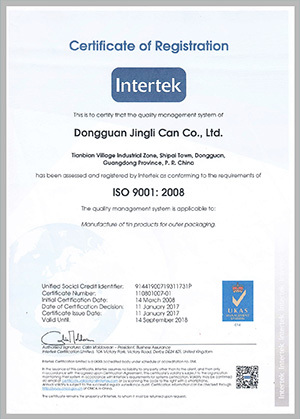
- Impact: Only 0.3% failure rate is typical for top factories. JINGLI CAN holds ISO 9001:2015, ISO 14001:2015, and FSSC 22000 certifications, and has passed audits from clients like Nestlé, LVMH, and Mars, confirming systematic quality.
4. Common Technical Selection Mistakes (and How to Avoid Them)
Industrial buyers and engineers frequently fall into these traps when evaluating health care product tin boxes:
4.1. Overemphasizing Visual Appearance While Ignoring Sealing Performance
Many procurement checks focus on print color and gloss, under‑estimating the double seam integrity. A box with excellent graphics but a micro‑leak can destroy a probiotic product’s viability within weeks. Action: Request a vacuum decay test report or water immersion test data from the supplier. JINGLI CAN provides a detailed Seam Measurement Report with each batch for health care products.
4.2. Assuming “One Size Fits All” for All Health Care Products
Probiotic powder requires an ultra‑low moisture barrier (MVTR < 0.01 g/in²/day), while herbal tablets may only need basic protection. Choosing a standard tin for moisture‑sensitive items leads to accelerated degradation. Action: Specify the internal lining grade (e.g., high‑barrier epoxy for hygroscopic contents). JINGLI CAN offers customized lining thicknesses based on the active ingredient’s sensitivity.
4.3. Neglecting Certification and Regulatory Alignment
Many international health care brands need FDA 21 CFR compliance for direct contact, plus REACH and LFGB for export to Europe. Suppliers without these certifications may use materials with banned phthalates or heavy metals. Action: Verify that the factory holds FSSC 22000 or ISO 22000, plus specific material safety data sheets (MSDS). JINGLI CAN maintains all required certifications and provides MSDS for every raw material batch.
5. Chinese Supplier Technology Advantages: The Example of JINGLI CAN
Chinese health care product tin box factories have evolved from low‑cost producers to technology‑smart manufacturers. Here’s how leading factories like JINGLI CAN deliver value:
5.1. Scalability and Price Stability Through Vertical Integration
With an annual tinplate consumption of over 100,000 tons and 4,000 tons of raw material in stock, JINGLI CAN buffers against market volatility. Engineers benefit from consistent pricing and lead times even during supply chain fluctuations.
5.2. Advanced Manufacturing Infrastructure
The company operates GMP production workshops and a 100,000‑level cleanroom for printing, meeting pharmaceutical‑grade conditions. This ensures all dietary supplement tin boxes and probiotic tin boxes comply with FDA and EU standards without secondary contamination.
3.3. Proprietary One-Stop Solutions
Unlike fragmented suppliers, JINGLI CAN offers end‑to‑end services—from design consultation to mass production and final logistics. For a sports nutrition brand, the factory designed a custom‑shaped tin with a child‑resistant lid and a silica gel pocket, reducing moisture ingress by 40% compared to competitors’ standard tins.
3.4. Proven Track Record with Global Health & Cosmetic Leaders
JINGLI CAN's customer list includes Nestlé, LVMH, Estée Lauder, and Bayer—illustrating deep expertise in handling sensitive health care products. The factory passed Coca‑Cola and Disney audits, confirming operational maturity.

6. Conclusion: Making an Informed Choice for Your Health Care Packaging
Selecting a health care product tin box factory is a technical decision that directly affects product efficacy and brand reputation. Industrial engineers and procurement managers must move beyond superficial specifications and evaluate the interplay of material gauge, coating quality, seam integrity, and production process control. Chinese suppliers like JINGLI CAN combine scale, advanced certification, and process precision to deliver cost‑effective, high‑reliability packaging. By avoiding common misinterpretations—such as neglecting real‑world sealing performance—and leveraging the technical strengths of a certified one‑stop packaging solution factory, health care brands can secure packaging that preserves potency and builds consumer confidence.
For a deeper dive into specific testing protocols or to request a detailed technical data sheet, visit www.tinbox.cn or contact the team at sales@tinbox.cn.
Есть вопросы или нужны дополнительные детали?
Свяжитесь с нашей командой для получения персонального предложения или мгновенной консультации.
Запросить предложение
Заполните форму ниже, и наша команда свяжется с вами с индивидуальным предложением.
Прямой чат WhatsApp
Предпочитаете общаться в реальном времени? Напишите нам в WhatsApp для мгновенной помощи и быстрых ответов.
- Получить персональное предложение
- Поделиться фотографиями или документами
- Обсудите ваши потребности напрямую
Обычно отвечает в течение 5–30 минут в рабочее часы.