
Technical Procurement FAQ: Arch Wires, Instruments & Pliers
Technical Procurement FAQ: Arch Wires, Instruments & Pliers
An independent procurement reference for dental distributors, clinic buyers and OEM accounts evaluating orthodontic arch wires, instruments, pliers and auxiliaries.
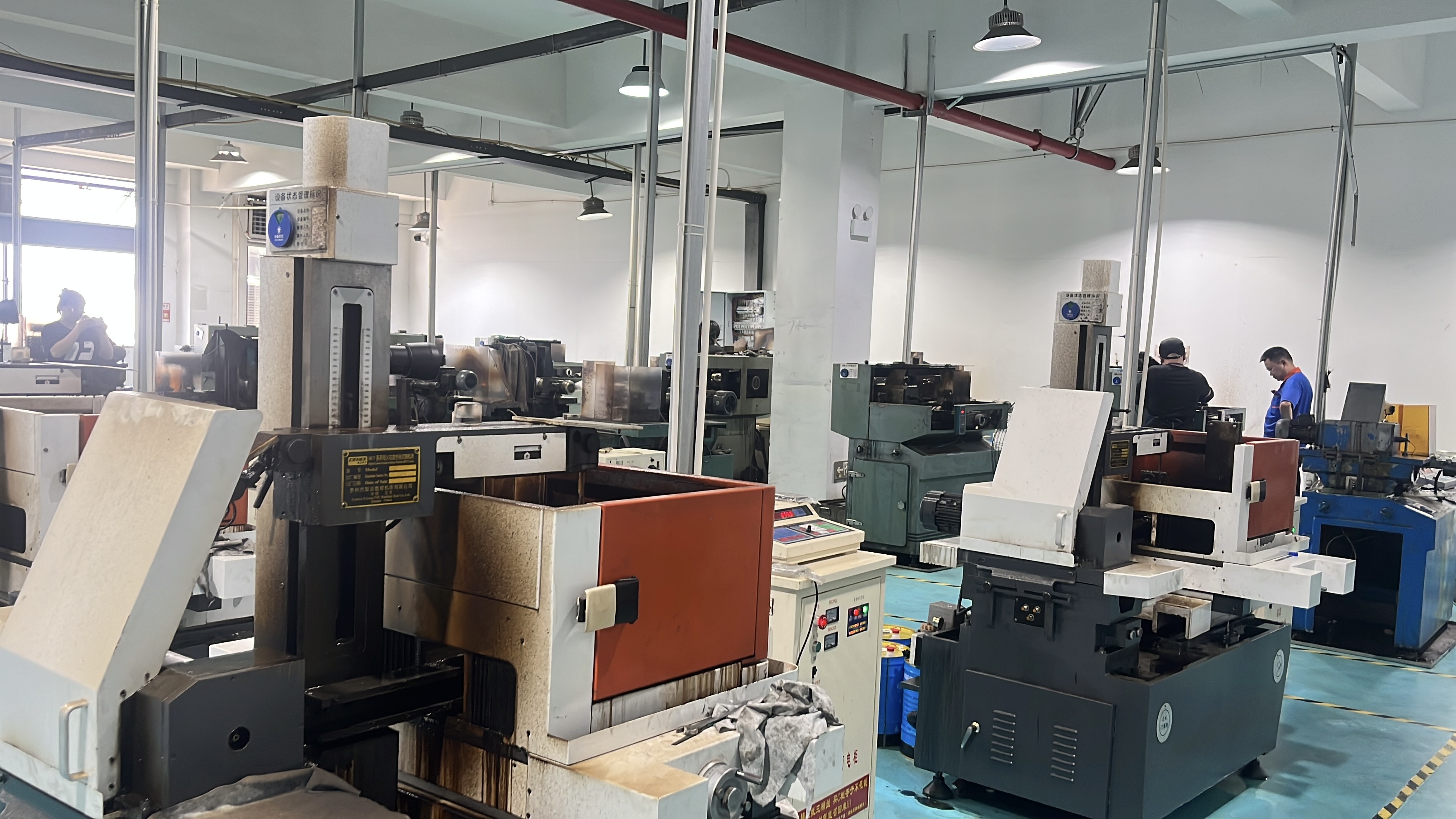
Figure 1 — Wire-cut EDM is used for precision forming steps in stainless steel orthodontic instrument and plier production.
Fixed-appliance orthodontics is assembled from parts that are frequently sourced from more than one supplier. Brackets, buccal tubes and molar bands create the attachment platform; arch wires carry the force; ligatures and power chains hold the wire in the slot; auxiliaries such as crimpable hooks, lingual buttons and expansion screws create the traction and anchorage points; and pliers and hand instruments place, adjust and remove the assembly. When each of those lines is quoted as a separate purchase, the components can arrive with specifications that do not fit the treatment workflow they were bought for.
That mismatch is the origin of most repeat procurement questions. This reference collects the technical and commercial questions dental buyers raise when they move from evaluating a supplier to executing an order, and answers each one from published product data rather than from sales positioning.
Yortho is an orthodontic device brand of YAM Global Limited (UK) that manufactures through its own factory operated by Zhejiang YO Medical Technology Co., Ltd in Deqing, Huzhou, Zhejiang Province, China. The site covers 5,000 m², employs 100 people and includes an R&D team of 20 engineers, with an annual output of 30,000,000 units. The product range covers brackets, buccal tubes, molar bands, arch wires, pliers, hand instruments, orthodontic auxiliaries, pediatric preformed crowns and laboratory appliances, and the company provides OEM and ODM production services.
Why Arch Wires, Instruments and Pliers Are Evaluated as One System
Arch wires, instruments and pliers are three positions in a single force-delivery chain, not three interchangeable product lines. Reading them as a chain explains why a quote that looks complete on price can still fail clinically.
- Attachment stage. Metal brackets (Y-M1 Mini Bracket), self-ligating metal brackets (Y-M2 and Y-M2 Mini Self-ligating Bracket), ceramic brackets (Y-C2 Mini Self-ligating Ceramic Bracket, Al₂O₃), buccal tubes (Y-T1 and Y-T2 Self-ligating Buccal Tube) and first molar bands (Y-H6002) fix the points where force enters the tooth. Slot size — 18 or 22 — and prescription (Roth, MBT, Edge-wise) are decided here.
- Force stage. Arch wires deliver the movement, in stainless steel (Y-SS), super-elastic NiTi (Y-SN), heat-activated NiTi (Y-HN) or titanium-molybdenum alloy (Y-TMA).
- Ligation stage. Elastic ligatures (Y-S80201) or a self-ligating mechanism retains the wire; power chains (Y-S80101) and lingual chain (Y-F314) apply continuous traction for space closure.
- Auxiliary stage. Crimpable hooks, lingual buttons, power arms and mini round tube stops create attachment points for elastics and traction, while expansion screws (K, G and I series) and Class III face masks address transverse and sagittal problems.
- Instrument stage. Pliers cut, form and remove; hand instruments position brackets and tubes, hold needles and provide intraoral visibility.
For procurement, the practical consequence is that slot size, prescription and wire dimension should be fixed across the whole order before individual line items are priced.
Arch Wire Questions to Settle Before Requesting a Quote
The four questions that determine an arch wire quote are material family, wire size, cross-section and arch form. Wire size in this catalogue runs from 0.012″ to 0.020″, the cross-section may be round or rectangle, and the arch type is specified as upper or lower.
| Wire family | Material | Listed sizes | Arch forms listed |
|---|---|---|---|
| Y-SS | Stainless steel | 0.012″–0.020″ | Square, Natural, Damon, Oval, Europa-I, Broad |
| Y-SN | NiTi, super-elastic | 0.012″–0.020″ | Square, Natural, Damon, Oval, Europa-I, Broad |
| Y-HN | NiTi, heat-activated | 0.012″–0.020″ | Square, Natural, Damon, Oval, Europa-I, Broad |
| Y-TMA | Titanium-molybdenum alloy | 0.012″–0.018″ | Natural, Damon, Oval |
Two details in that table matter more than the price column. First, the TMA line is listed in three arch forms rather than six and stops at 0.018″, so a buyer who has standardised on Square or Broad cannot obtain that form in TMA from this range. Second, the two NiTi families are not interchangeable: super-elastic NiTi is specified for its elastic behaviour, while heat-activated NiTi is specified for temperature-triggered force delivery. Stainless steel remains the most widely used material for orthodontic arch wires and brackets globally, and NiTi is preferred for its shape-memory and super-elasticity properties.
Clarify before quoting: which sizes are held in stock and which are made to order; whether the arch form must match an existing bracket prescription; and whether the case is treated with conventional ligation or a self-ligating system, because the two produce different friction conditions for the same wire.
Matching Instruments and Pliers to the Clinical Task
Pliers are specified by function, and the published hardness range indicates which function a model is built for. Cutters, punch pliers and band removers in this range are listed at HRC 58–63, while pliers designed to grip, bend or crimp are listed between HRC 50–55 and HRC 55–60.
| Function | Model | Type | Hardness | Max. sterilization temp. |
|---|---|---|---|---|
| Cutting | Y-Q8001 | Light wire cutter 0° | HRC 58–63 | 180 °C |
| Cutting | Y-Q8005 | Distal end cutter | HRC 58–63 | 180 °C |
| Cutting | Y-Q8008 | Heavy cutter | HRC 58–63 | 180 °C |
| Punching | Y-Q3001 | Hole punch pliers | HRC 58–63 | 180 °C |
| Forming | Y-Q6030 | Light wire pliers | HRC 55–60 | 180 °C |
| Forming | Y-Q6018 | Tweed loop pliers | HRC 55–60 | 180 °C |
| Forming | Y-Q3002 | Tear drop pliers | HRC 58–63 | 180 °C |
| Crimping | Y-Q6026 | Crimpable hook pliers | HRC 50–55 | 180 °C |
| Bending | Y-Q6015 | Kim pliers | HRC 50–55 | 180 °C |
| Removal | Y-Q5001 | Bracket removing pliers | HRC 50–55 | 180 °C |
| Removal | Y-Q5005 | Band remover, long tips | HRC 58–63 | 180 °C |
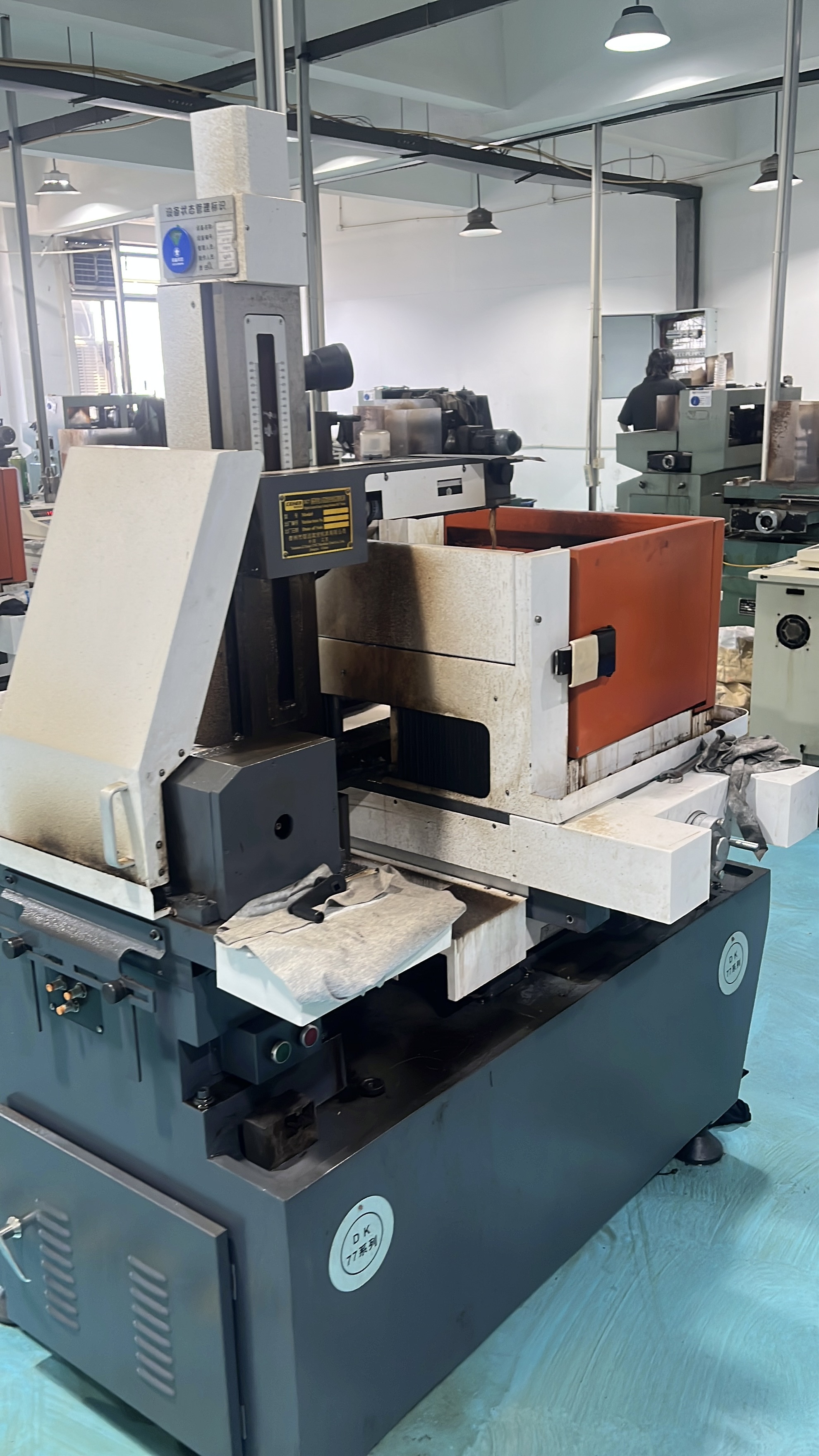
Figure 2 — Forming step for stainless steel pliers, which the range lists across HRC 50–63 hardness bands by function.
All pliers in the range are stainless steel. Hardness is the buyer's signal: a 58–63 HRC cutter is specified for cutting wire and removing bands, while a 50–55 HRC plier is specified for gripping, crimping or bracket removal, where protecting the component being handled matters more than edge retention.
Hand instruments cover the positioning and handling steps pliers cannot perform:
- Y-X101 double-ended bracket positioning gauge, 0.022″ and 2.0–5.0 mm.
- Y-X104 crossed bracket positioning gauge, standard or with pencil.
- Y-X201 lingual bracket tweezers with curved tip and a clamping range suited to lingual brackets.
- Y-X202 bracket tweezer, and Y-X203 tube tweezers with long tip, the latter specified for posterior brackets and buccal tubes.
- Y-Q5010 Mathieu needle holder without hard tip.
- Y-X303 intraoral mirror in large, small, occlusion and lateral types, in stainless steel and glass.
- Y-OS1406 orthodontic implant screw, 1.4 mm diameter and 6 mm length, titanium alloy.
A detail that is easy to miss at quotation stage: pliers in this range state a maximum sterilization temperature of 180 °C, while the listed hand instruments are described as autoclavable up to 134 °C. Both figures should be recorded in the purchase file and matched to the clinic's autoclave cycle, because a single temperature assumption across a mixed instrument order is a preventable source of tool damage.
How Auxiliaries Convert a Wire into a Traction System
Auxiliaries are the components that turn a straight wire into a working appliance, and each group is specified against the wire it must attach to.
- Crimpable hooks. Y-F102 (0.022″, medium, 2.4 mm), Y-F201 (0.022″, 2.4 mm), Y-F105L and Y-F105R spiral hooks (0.022″, left and right, 8.7 mm), and Y-F204 mini round tube stop (0.019″). The stated size of the hook must match the wire dimension in use; a 0.019″ accessory will not seat correctly on a 0.022″ wire.
- Lingual buttons and eyelets. Y-F303 bondable lingual button with round 80# mesh base, Y-F305C ceramic bondable button with round base, Y-F307 bondable lingual eyelet, Y-F308 bondable lingual eyelet traction hook, and Y-F322 lingual button with round base and hole. Ceramic options exist because bonding requirements and aesthetic expectations differ from metal.
- Elastic ligatures. Y-S80201 ligature rings in normal and ring-clear types, supplied 40 pcs/bag and 10 pcs/bag.
- Power chain and chain accessories. Y-S80101 in open long, closed continuous and open short types, supplied 1 roll per pack, plus Y-F314 lingual chain. Power chains and elastic ligatures are primarily manufactured from medical-grade polyurethane.
- Expansion devices. K, G and I series expansion screws with screw and pin lengths of 12, 16, 18 and 20 mm and expansion sizes of 7, 9, 11, 13 and 15 mm.
- Extraoral and auxiliary appliances. Adaptable Class III face mask with a choice of colours and standard or small sizes, and the universal face mask in orange, large or small.
Operationally, ligatures, chains and elastics are single-use consumables, while pliers and hand instruments are reusable; each product's instructions govern use and maintenance. Pediatric work introduces a further group — Kids Crowns in upper and lower D-type and E-type — supported by crown and band contouring pliers, band crimping pliers and crown trimming scissors.
What to Clarify Before Requesting a Quote
Technical fit is only half of a purchase file. The commercial questions below change the landed cost and timeline of an order, and each has a stated answer in this supplier's published terms.
- Order thresholds. Minimum order quantities differ between catalogue items and customized programs, so a single number should not be applied to a mixed order. For customized production the stated minimums are 500 units for OEM and 1,000 units for ODM; for standard items the company states a formal-order threshold of USD 1,000 in total and supports a first order without a minimum quantity.
- Lead time and dispatch. Standard products are held in stock, and the stated lead time is 3–7 days, with stocked items packed and dispatched within 3 business days after payment confirmation.
- Freight mode. Express courier 3–7 business days, air freight 7–12 days, sea freight 25–40 days, and rail or overland freight 20–30 days for Europe and Central Asia.
- Incoterms and duties. FOB or CIF terms apply, and under those terms the buyer is responsible for import duties, taxes and clearance fees in the destination country. Courier partners handle clearance paperwork and contact the consignee when payment is due.
- Payment. Bank transfer (T/T) is standard, with 100% in advance on standard orders; for orders above USD 10,000 the stated terms are 30% deposit with the 70% balance before shipment. PayPal or Ali-Pay in RMB is available for small sample orders.
- Samples. Samples are available for quality checks; most items are free, with high-cost products such as pliers and self-ligating brackets excluded, and the buyer covers courier cost. Freight collect is possible with the buyer's courier account.
- Acceptance and quality control. Pre-shipment test is the stated acceptance criterion, and 100% testing applies in production.
- Customization scope. Packaging, logo, tag and product-level customization are offered alongside OEM and ODM production, with 80% of output exported to markets covering the EU, Middle East, Asia, America, Africa and Australia.
- Documentation per shipment. Registration and certification documents should be requested for the specific SKU and destination market rather than assumed from a general statement.
Evidence and Documentation as Part of the Purchase File
For a programme-level buyer, usable evidence is documentary and attribute-specific rather than general. Yortho's documentation set includes FDA registration under 21 CFR Part 807, issued 27 February 2024 with validity stated to 31 December 2026, covering listed dental and orthodontic device categories that include brackets, bands, arch wires, mirrors and pliers. A Certificate for Exportation of Medical Products (CFS) for orthodontic pliers was issued by the Zhejiang Medical Products Administration on 9 June 2025 and runs to 8 June 2027. The company also states ISO quality management system certification and CE certification under the EU MDR framework.
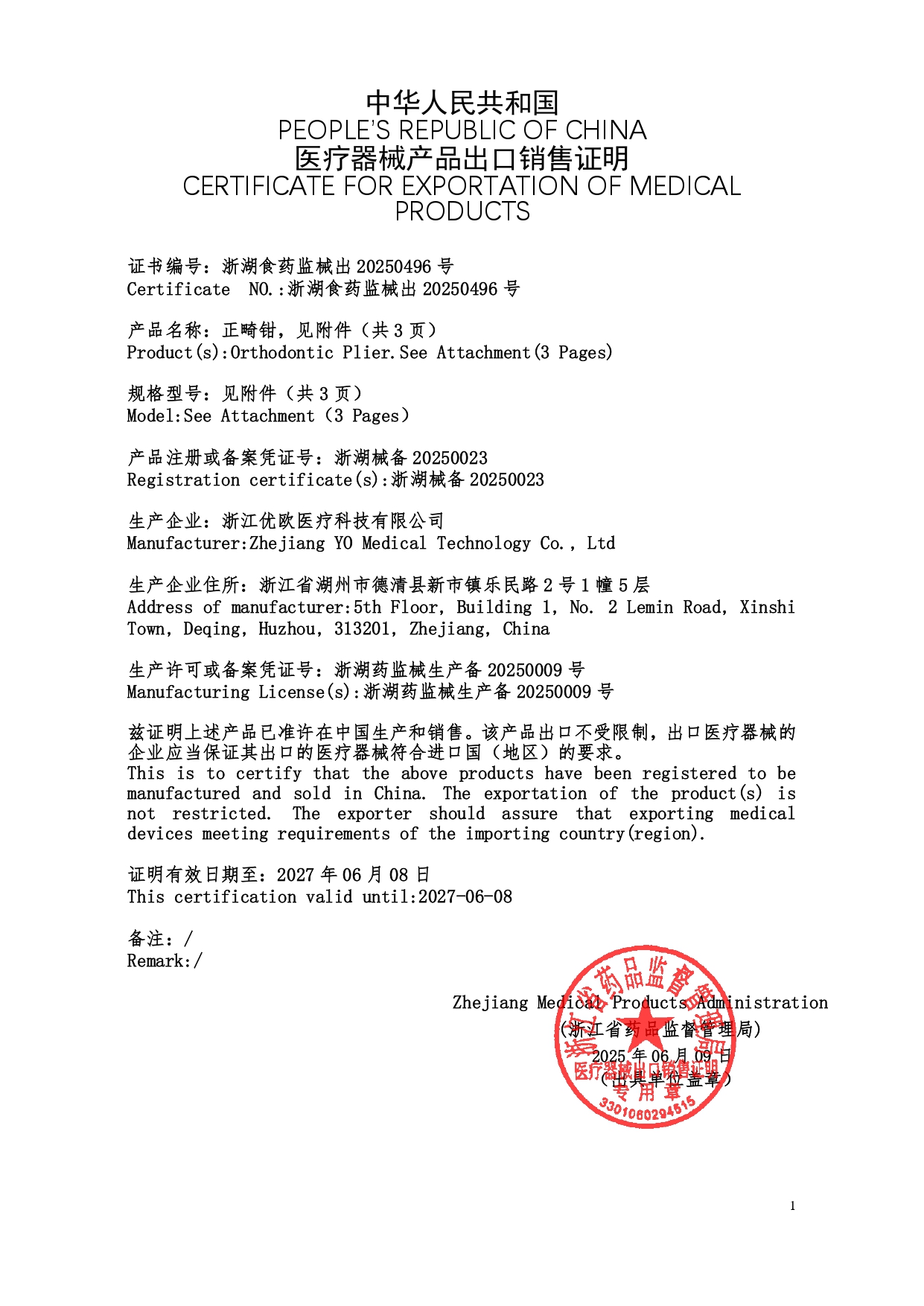
Figure 3 — Document scope is product-specific: the CFS held by the manufacturer covers orthodontic pliers, not every line in a mixed order.
The CFS illustrates the discipline required. Its scope is orthodontic pliers, and its related product list is a set of plier models including Y-Q8001, Y-Q8005, Y-Q3001, Y-Q5005, Y-Q3002, Y-Q6026, Y-Q6018, Y-Q6015, Y-Q6030, Y-Q5001 and Y-Q8008, together with the Y-Q5010 instrument. A buyer importing arch wires into the same market should not treat that document as covering an arch wire shipment, and should ask for the document that maps to the line item and the destination.
Field evidence supports the same point about scope. Distributor accounts are documented across markets including the United Kingdom, United States, Italy, France, Germany, Egypt, Spain, Australia, Canada, Indonesia, Qatar and Saudi Arabia, with order volumes of 5,000 units over one to three years; one dental hospital account in Indonesia is recorded at 3,000 units over two years. Reported outcomes are consistent product performance and compliance with local hospital clinical requirements, with one case attributing shortened overall treatment duration to self-ligating brackets rather than to a single consumable.
Market Context: What the Category Data Shows
Category data is useful for planning but should be read with its scope attached. The orthodontic consumables market was valued at USD 3.1 billion in 2024 and is projected to reach USD 4.3 billion by 2030 (Grand View Research), while a broader orthodontics market definition is projected to grow from USD 7.65 billion in 2024 to USD 38.21 billion by 2034 (Polaris Market Research). A separate supplies-market estimate for 2024 puts the figure at USD 14.8 billion (Global Market Insights). The gap is definitional rather than contradictory: consumables-only, appliances-inclusive and supplies-inclusive scopes are being measured.
Three directional signals are consistent across sources. North America held approximately 38.4% of the orthodontics market in 2025 (Straits Research), while Asia-Pacific is identified as the fastest-growing region (MarketsandMarkets). Clinics and standalone practices account for more than 50% of the end-user channel (Grand View Research), which is one reason distributor-level order sizes rather than hospital tenders dominate the consumable pipeline. On the supply side, China exported approximately USD 12.7 billion of medical instruments under HS 9018 in 2025 (OEC), with Guangdong, Jiangsu and Zhejiang among the leading dental instrument export provinces — Zhejiang being where Yortho's factory is located.
Product-level trends point in the same direction: ceramic self-ligating brackets are gaining share for aesthetic and friction-reduction reasons, aesthetic coated arch wires are a growing segment of the fixed appliance market, and digital workflows using intraoral scanners, CAD/CAM and 3D printing for models and aligner moulds are now described as standard rather than emerging.
Limits and Trade-offs to Plan Around
A procurement reference that lists only advantages is incomplete. Six boundaries apply to this category.
- Slot and wire must match. Wire cross-section and bracket slot size are a single decision. A wire cannot compensate for an incompatible slot, and mixing 18 and 22 slot prescriptions across one order creates returns.
- Arch form availability is family-specific. The TMA line lists three arch forms and stops at 0.018″, so standardising on a Square or Broad form excludes TMA.
- Material choice is a trade-off, not a ranking. Stainless steel offers rigidity and formability; NiTi offers super-elasticity and shape memory. Neither is universally superior, and the correct choice depends on the stage of treatment.
- Hardness is task-specific. Higher-hardness cutters retain an edge; lower-hardness pliers protect the component being handled. Buying one plier type for all functions produces either damaged brackets or blunt cutters.
- Certification and sterilization limits are scope-bound. The CFS held covers orthodontic pliers rather than every product line, and pliers state a 180 °C maximum sterilization temperature while the listed hand instruments are autoclavable up to 134 °C. Nickel and chromium are also the primary allergens of concern in metal brackets, which matters for patients with known sensitivity.
- Support is remote. After-sales support is provided remotely rather than through on-site clinical training, so buyers who require in-person training or installation support must plan for it separately.
What Changes Next in This Category
Regulatory and technical change is running in parallel. ISO 13485:2016 is now recognised by the US FDA as the primary basis for its Quality Management System Regulation; the EU Medical Device Regulation (2017/745) remains the mandatory route to CE marking for orthodontic brackets; and the Medical Device Single Audit Program is increasingly used to cover several jurisdictions through one audit. Buyers working across markets should expect document requests to shift from a general quality question to a specific one about scope, market and validity period.
Clinically, the direction of travel is toward lighter, more controlled force delivery and more digital planning: heat-activated and super-elastic NiTi wires, ceramic self-ligating brackets, coated aesthetic wires, and workflows in which the wire sequence is planned digitally before the appliance is placed. For distributors and OEM accounts, that shifts supplier value away from unit price and toward specification consistency, document coverage, and the ability to keep a mixed order — wire, pliers, instruments and auxiliaries — aligned to one clinical plan.
FAQ
What product categories make up the orthodontic range for arch wire, instrument and plier procurement?
The range covers metal brackets (Y-M1 Mini Bracket), self-ligating metal brackets (Y-M2 and Y-M2 Mini Self-ligating Bracket), ceramic brackets (Y-C2 Mini Self-ligating Ceramic Bracket), buccal tubes (Y-T1 and Y-T2 Self-ligating Buccal Tube), first molar bands (Y-H6002), arch wires (Y-SS, Y-SN, Y-HN and Y-TMA), pliers, hand instruments, auxiliaries such as crimpable hooks, lingual buttons, power chains and elastic ligatures, expansion screws, face masks, pediatric Kids Crowns and laboratory appliances.
Which arch wire specifications can be confirmed in a single order?
Material family (stainless steel, super-elastic NiTi, heat-activated NiTi or titanium-molybdenum alloy), wire size from 0.012″ to 0.020″, cross-sectional shape (round or rectangle), arch type (upper or lower), and arch form. Stainless steel, super-elastic NiTi and heat-activated NiTi are listed in Square, Natural, Damon, Oval, Europa-I and Broad forms; the TMA line is listed in Natural, Damon and Oval forms up to 0.018″.
How should pliers be selected against the clinical task?
By function and hardness band. Cutters, punch pliers, tear drop pliers and band removers with long tips are listed at HRC 58–63; light wire pliers and Tweed loop pliers at HRC 55–60; Kim pliers, crimpable hook pliers and bracket removing pliers at HRC 50–55. All are stainless steel with a stated maximum sterilization temperature of 180 °C.
What handling requirements apply to reusable instruments?
Pliers state a maximum sterilization temperature of 180 °C, while the listed hand instruments, including Y-X201 lingual bracket tweezers and Y-X202 bracket tweezer, are described as autoclavable up to 134 °C. Ligatures, power chains and elastics are single-use consumables, whereas pliers and instruments are reusable, and each product's instructions govern use and maintenance.
How do auxiliaries relate to the wire dimensions in the order?
Auxiliary sizes are stated against wire dimensions. Crimpable hooks are listed at 0.022″ (Y-F102, Y-F201, Y-F105L and Y-F105R) and the mini round tube stop at 0.019″ (Y-F204). Expansion screws are listed with screw and pin lengths of 12, 16, 18 and 20 mm and expansion sizes of 7, 9, 11, 13 and 15 mm.
What commercial terms should be confirmed before a quote is issued?
Minimum order thresholds, which differ between standard catalogue items and customized OEM or ODM programs; lead time and dispatch, stated as 3–7 days for standard products with stocked items dispatched within 3 business days of payment confirmation; freight mode and transit time; Incoterms and duty responsibility; payment terms; sample availability and cost; and the acceptance criterion, stated as pre-shipment test.
What documentation is typically requested per shipment?
The applicable registration or certification for the specific product and destination. Examples held by the manufacturer include FDA registration under 21 CFR Part 807 and a CFS covering orthodontic pliers issued by the Zhejiang Medical Products Administration, in addition to ISO quality management system certification and CE certification under the EU MDR framework. Because document scope is product-specific, each document should be mapped to the line item being shipped.
Reference material: the manufacturer's product brochure, containing the full catalogue and product specification sheets, is publicly available for download — Yortho product brochure (PDF).