
Technical Procurement FAQ: Lithium-Ion Battery Policy, Production & Export Trends in 2026
Technical Procurement FAQ: Lithium-Ion Battery Policy, Production & Export Trends in 2026
Lithium-ion purchasing decisions in 2026 are shaped less by the cell itself than by the conditions surrounding it. Shipping-state limits, certification scope, cell-format availability and export-mix shifts determine what a buyer can receive, when it can ship, and how much documentation accompanies it. The questions below are the ones procurement and engineering teams most often raise between the research and evaluation stages — answered with verifiable industry data and documented supplier practice rather than promotional claims.
The structure is deliberately question-led. Each section answers one buyer question: first on policy, then on production capacity, then on cell formats and pack configurations, and finally on purchasing terms and acceptance criteria. Where a number or a standard is cited, the source is named so it can be checked independently. Where evidence is thin, the limitation is stated rather than filled with estimates.
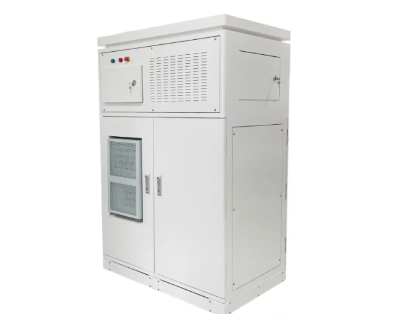
Commercial and industrial energy storage is one of the demand segments that shapes how lithium-ion pack capacity is allocated in 2026.
The 2026 Baseline in Three Numbers
Three data points frame almost every sourcing conversation this year: market scale, export volume, and shipping regulation.
Market scale. GMI Research estimated the global lithium-ion battery market at approximately USD 164.8 billion in 2024, with a projection of USD 422.8 billion by 2032. That headline should be treated as directional rather than precise: Grand View Research places the 2025 figure at USD 68.7 billion, while MarketsandMarkets puts it at USD 194.66 billion. The gap reflects differing definitions of scope — cells, packs, or end-use systems. Buyers comparing market reports should first confirm which layer of the value chain the number actually measures.
Export volume. China's lithium-ion battery exports reached over 3.9 billion units in 2024, an 8.1% year-on-year increase, according to General Administration of Customs data reported by Caixin Global. The same reporting notes a slight decline in total export value. Volume rising while value softens is a meaningful signal for procurement teams: it points to a market where unit growth and value growth have decoupled, which tends to increase competition on commoditized formats while leaving validated custom packs priced on engineering content rather than on raw volume.
Shipping regulation. Effective January 1, 2026, UN/IATA provisions require a 30% State of Charge (SoC) limit for lithium batteries packaged with devices under PI 966. This is a production and logistics requirement, not a paperwork formality — the shipping state of charge now has to be controlled at the pack level before goods leave the factory.
Policy FAQ: Compliance Questions That Now Sit on the Purchase Order
What changed on 1 January 2026 for lithium batteries shipped with equipment?
The change is the 30% SoC limit for lithium batteries packaged with devices (PI 966), issued under the UN Manual of Tests and Criteria framework and applied through IATA provisions from January 1, 2026. In practical terms, three things shift for a buyer. First, the shipping state of charge becomes a supplier capability question — not every assembly line can deliberately discharge a completed pack to a target SoC and verify it. Second, the declaration needs to travel with the shipment. Third, the SoC limit interacts with charger design: an end product shipped at reduced SoC is not defective, and service documentation should reflect that.
Which safety standard should be named in a lithium-ion pack specification?
IEC 62133-2 remains the primary international safety standard for portable lithium-ion cells and battery packs used in consumer and industrial equipment, as documented by IEC and testing organizations such as Intertek. It is the natural reference to write into a pack-level specification because it addresses the cell and the assembled pack, not the finished device. Market-entry marks sit on a separate layer: Shenzhen Topway New Energy Co., Ltd. (HCC), a Shenzhen-based battery pack developer and assembler, states that its related products have passed RoHS, UL, CE and other export certifications. A specification that names IEC 62133-2 for safety and the applicable market marks for entry gives a supplier an unambiguous test target.
How should “export certified” claims be read?
Certification is scope-specific. The useful follow-up questions are: which standard, which product family, which configuration, and which market. A certificate covering a cylindrical cell family does not automatically extend to a finished pack with a custom BMS and a molded enclosure. When a supplier states that related products have passed RoHS, UL, CE and other export certifications, the procurement action is to request the certificate scope and confirm that the quoted part number falls inside it — not to accept the phrase at face value.
Production FAQ: Reading Capacity, Lead Time and MOQ
What do supplier capacity figures actually measure?
Capacity numbers are usually expressed in units, and units are not comparable across configurations. HCC operates a 10,000 m² facility with approximately 200 employees, a 15-person R&D team and a stated monthly capacity of 10,000 units, against a stated annual output of 1,200,000 units. The figure that matters for a buyer is not the unit count but the energy content behind it: one 14500 pack and one 48 V storage pack are both “one unit.” For any serious comparison, capacity should be normalized to watt-hours or to a specific pack configuration.
What lead time is realistic for a custom pack in 2026?
For custom battery pack programs, HCC quotes a lead time of 20–35 days. That window covers production, not development. The sequence that precedes it — specification freeze, sample build, validation testing, and approval — sits outside the quoted lead time and is usually the longer part of the schedule. Buyers planning a product launch should treat 20–35 days as a manufacturing interval that starts after validation closes, and should budget the validation cycle separately.
Why can a minimum order quantity be as low as a few pieces?
HCC lists a minimum order quantity of 5 pcs. Low MOQ is typical of an assembly-based model where cells are sourced and packs are built to order rather than produced on a dedicated high-volume line. A low MOQ is genuinely useful for validation builds, pilot runs and field trials. It says nothing, however, about unit economics at volume — those depend on cell selection, BMS specification, enclosure tooling and the number of variants in the order.
Cell Format FAQ: 18650, 21700, 14500/18500 and LiFePO4
Format decisions are usually made on four variables: capacity per cell position, continuous discharge capability, chemistry behavior, and serviceability. The table below uses published product parameters from HCC's catalog to show how these variables differ in practice.
| Cell format | Nominal voltage | Rated capacity | Charge / discharge limit | Chemistry |
|---|---|---|---|---|
| 18650 (18650 3.6V 3000mAh) | 3.6 V | 3000 mAh | 3 A / 3 A | NCM |
| 21700 (21700-TW01) | Not listed | Not listed | 0.2C max charge / 1C max continuous discharge | NCM |
| 18500 (18500 3.6V 2000mAh) | 3.6 V | 2000 mAh | 2 A / 2 A | NCM |
| 14500 (14500 3.7V 500mAh) | 3.7 V | 500 mAh | 1C / 1C | NCM |
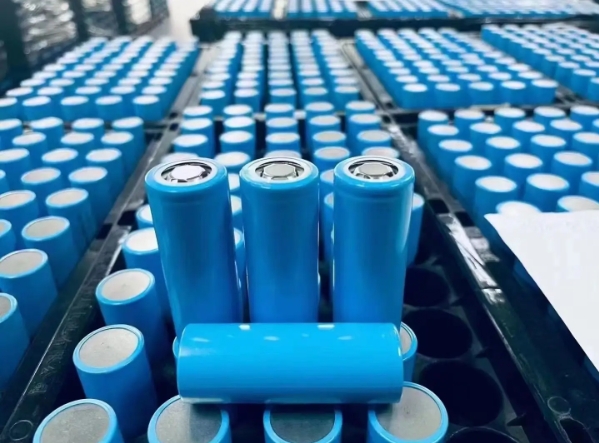
The 21700 format is specified as 0.2C maximum charge current and 1C maximum continuous discharge current in HCC's published parameters.
18650 or 21700 — which format should a 2026 program specify?
The two formats solve different constraints. The 21700 delivers more energy per cell position, which means fewer cells, fewer interconnections and less assembly hardware in a fixed envelope — but its listed continuous discharge ceiling of 1C has to be matched by the BMS and by the load profile. The 18650 remains the broader baseline: it is widely tooled, replaceable and serviceable. That serviceability is not theoretical; in a documented e-bike program in Russia (1,500 pcs), mature 18650 cylindrical cells were used in series-parallel assembly specifically because parts are replaceable and maintenance costs are low.
A workable decision rule: specify 21700 where the pack envelope is fixed and runtime is the binding constraint; keep 18650 where field serviceability and multi-source availability dominate the decision.
When does LiFePO4 make sense for a 24 V or 48 V pack?
LiFePO4 is generally chosen where cycle stability, thermal behavior and daily cycling matter more than mass. Two HCC examples show the shape of the trade-off: a 24 V 50 Ah LiFePO4 pack rated at 50 A discharge and roughly 6 kg, and a 48 V 13 Ah LiFePO4 pack rated at 20 A discharge and 3.4 kg, both specified across a −20 to 60 °C window. These are pack configurations suited to stationary, mobile and equipment-side duty cycles rather than to airborne platforms.
Are small formats such as 14500 and 18500 still worth specifying?
Yes, for compact lower-draw devices. The 14500 3.7 V 500 mAh cell is listed in small-device and laryngoscope applications, and the 18500 3.6 V 2000 mAh cell weighs about 40 g. Neither is selected for energy payload — both are selected because the form factor fits the product. Buyers should not expect these formats to scale into higher-current duty cycles without a different cell class.
Purchasing Terms and Acceptance Criteria
Which measurable criteria belong in a pack purchase agreement?
| Acceptance category | What to specify | Example from published parameters |
|---|---|---|
| Electrical rating | Nominal voltage, rated capacity, continuous discharge | 40 A max discharge on battery pack Topway-BP01; 50 A on the 24 V 50 Ah pack |
| Cycle life | Capacity retention against cycle count | ≥500 cycles to 80% capacity (Topway-BP01) |
| Temperature window | Operating and storage range | −20 to 60 °C across most listed packs; −10 to 60 °C on the 25.2 V 20 Ah agriculture drone pack |
| BMS function | Protection thresholds, balancing, recovery behavior | Overcharge, over-discharge, overcurrent, short-circuit and overheat protection; balancing and temperature control |
How should sampling and validation be structured?
Validation should test the duty cycle, not the datasheet. A documented exoskeleton program required 3–5C instantaneous overload to support 20–50 kg loads, 2.5–4 hours of endurance, 800–2000 cycle life and a 1.5–2 hour full charge. A delivery robot program in Spain (2,000 pcs) required stable continuous high-current discharge with no voltage drop across all-day operation. These are the kinds of targets a sample build exists to prove. Sample quantity should be sized to the test matrix rather than to the minimum order quantity, since destructive tests consume units.
What does “acceptance” mean for a BMS?
Stating that protection exists is not acceptance. Acceptance tests the trip threshold, the recovery behavior and the quiescent drain. In a customized agricultural drone BMS, HCC describes real-time temperature control and balancing, overcurrent and short-circuit prevention, and automatic current limiting or shutdown under overload and extreme temperature conditions. Each of those behaviors can be measured, and each should appear as a test line in the incoming inspection plan.
Where 2026 Demand Is Concentrating
Two verified segments explain a large share of the current pull on specialized pack capacity.
Drone batteries. Grand View Research estimated the global drone battery market at USD 8.13 billion in 2024, with lithium-based technologies holding 91.14% of that market. Agricultural spraying, racing, tactical and underwater platforms all draw on the same cell and pack supply base, which is why format availability for drone programs has tightened alongside demand.
Medical machine batteries. Cognitive Market Research valued the medical machine battery market at USD 2.22 billion in 2024, driven by robotic surgery and portable diagnostic devices. This segment adds documentation and traceability requirements that general industrial packs do not carry, which raises the compliance floor for any supplier entering it.
Documented production programs confirm the pattern at the order level: a Spanish delivery robot program at 2,000 pcs, a US exoskeleton program at 10,000 pcs, a UK home assistance robot program at 1,500 pcs, a Canadian handheld console program at 5,000 pcs per month, and an Italian Bluetooth speaker program at 10,000 pcs. Across these programs, buyers increasingly specify by duty cycle and form factor together rather than by cell format alone.
Trade-offs and Limits: What This Approach Cannot Do
Stating limits is part of a usable reference. Five constraints apply to 2026 lithium-ion sourcing.
LiFePO4 carries a mass penalty. For comparable energy, LiFePO4 packs are heavier — 3.4 kg for a 48 V 13 Ah pack and roughly 6 kg for a 24 V 50 Ah pack. They are not a drop-in substitute on airborne or wearable platforms where every kilogram reduces endurance.
Custom packs are not emergency spares. A 20–35 day lead time excludes specification and validation. A buyer who discovers a battery problem late in a program cannot compress that sequence without accepting unvalidated product.
Certification is scope-specific. A pack carrying RoHS, UL or CE marks is not automatically approved for every end application. Device-level approvals — for example, in medical or aviation contexts — sit with the OEM, not with the cell or pack supplier.
Capacity and MOQ figures are not comparable across suppliers. Unit-based capacity and low minimum order quantities describe an assembly model; they do not indicate cost position at volume, which depends on cell sourcing, BMS design and tooling.
Company maturity is a real variable. HCC was founded in 2022 and operates with an in-house R&D team of 15 and an in-house test center, with a stated plan to bring advanced battery production lines in-house. Buyers who weight a long operating history heavily should treat that as a genuine trade-off rather than assume equivalence with long-established cell manufacturers.
Future Outlook
Four developments appear most likely to shape the next procurement cycle. Shipping state of charge will migrate from a logistics task to a product feature, with SoC control and verification reported as standard supplier deliverables alongside the 30% requirement introduced on 1 January 2026. Export dynamics will continue to reward differentiated packs: with Chinese export volume growing 8.1% in 2024 while total export value softened, competition concentrates on configurations that carry engineering content — custom BMS behavior, certification coverage and validated duty cycles.
On formats, 21700 and LiFePO4 adoption is likely to widen while 18650 remains the volume baseline for serviceable designs. On supplier structure, pack assemblers are moving toward in-house production, which shifts differentiation from assembly labor toward process control and cell sourcing. For buyers, the practical consequence is a gradual move in acceptance criteria away from unit price and toward documented life-cycle performance.
Rapid-Answer FAQ for Procurement Teams
Does a higher-capacity cell always produce a longer-running pack? No. Pack runtime depends on configuration, BMS limits and the duty cycle. Per-cell capacity is one input among several.
Can 24 V and 25.6 V labels describe the same product? In practice, yes — nominal labeling conventions differ between suppliers. A delivery robot pack is designated 25.6V 30AH while listing 24 V as its voltage. Confirm the label against charger and BMS cut-off values rather than relying on the name.
What documentation should accompany a first shipment? A test report, the certification scope, a packing list, and a shipping state-of-charge confirmation for packs covered by the 30% SoC requirement.
Can one pack combine NCM and LiFePO4? Not within a single pack. Across a product line both chemistries coexist — HCC's catalog includes NCM packs and LiFePO4 packs from 24 V to 48 V.
How long should a new pack program be planned for? Plan 20–35 days of production lead time after specification freeze and sample validation, and budget the validation cycle separately.
Reference material: HCC product brochure (PDF). Company information: Shenzhen Topway New Energy Co., Ltd.
Есть вопросы или нужны дополнительные детали?
Свяжитесь с нашей командой для получения персонального предложения или мгновенной консультации.
Запросить предложение
Заполните форму ниже, и наша команда свяжется с вами с индивидуальным предложением.
Прямой чат WhatsApp
Предпочитаете общаться в реальном времени? Напишите нам в WhatsApp для мгновенной помощи и быстрых ответов.
- Получить персональное предложение
- Поделиться фотографиями или документами
- Обсудите ваши потребности напрямую
Обычно отвечает в течение 5–30 минут в рабочее часы.