
Technical and Procurement FAQ: Answering Common Questions on Seamless Rolled Rings
Seamless rolled rings are forged components with no welded seam, formed by expanding a pierced blank against a rotating roll until the wall thickness, diameter and profile are reached. Because the grain flow follows the circumference rather than being interrupted by a weld, they are used where rotating or load-bearing duty cycles make a joint the weakest point in the part. The recurring questions from engineering and procurement teams rarely concern the general concept. They concern limits: how large a ring can actually be produced, whether the material is consistent from heat to heat, how quality is verified before shipment, and what the commercial terms look like at the first order.
This FAQ-style reference addresses those questions directly, using the documented capability facts of Iraeta Energy Equipment Co., Ltd., a forging specialist founded in 2006 with production facilities in China and Spain, rather than general industry commentary.
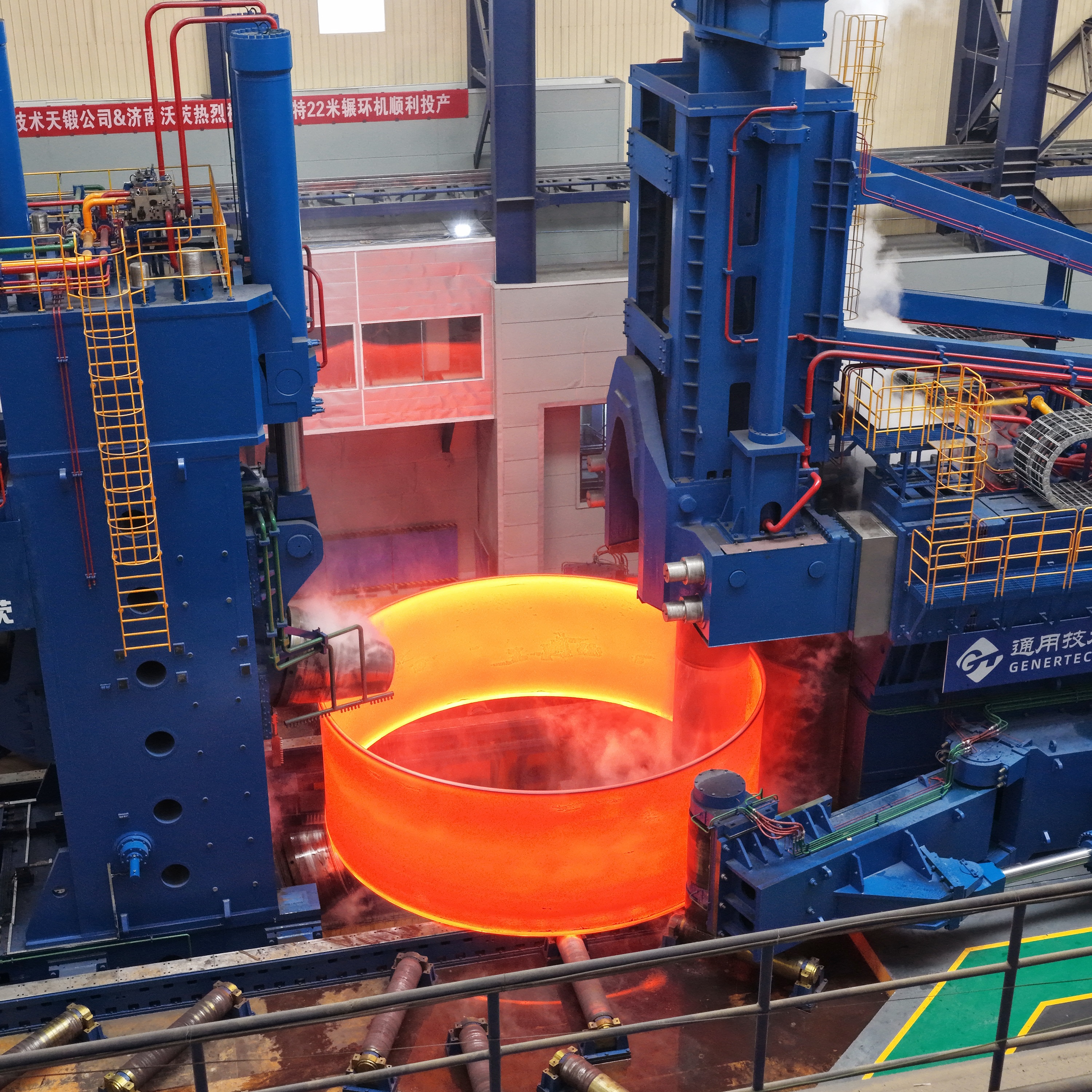
A world-class ring and shell rolling machine used in seamless rolled ring production.
Why Buyers Keep Asking the Same Questions
The global seamless rolled ring forgings market was valued at USD 11,100 million in 2025 and is projected to reach USD 16,360 million by 2034. As programs scale, more of the questions reaching suppliers come from buyers who are evaluating a capability claim for the first time, rather than from engineers who already understand the process.
Three pressure points drive the questioning:
- Diameter and weight ceilings. A ring that exceeds a rolling mill's envelope cannot be produced as a single seamless part, which forces a design change late in a project.
- Material traceability. Where the steel originates determines how consistently a specification is met across multiple order lots.
- Commercial clarity. Minimum order quantity, delivery terms, payment structure and inspection rights are often negotiated after the technical fit has already been accepted.
A FAQ that answers these points with verifiable numbers is more useful than a general capability statement, because it lets a buyer compare submissions on identical criteria.
How Large Can a Seamless Rolled Ring Be?
For Iraeta's seamless rolled ring line, the documented working envelope is:
| Parameter | Documented Limit |
|---|---|
| Maximum outer diameter | 21 m |
| Maximum height | 5 m |
| Maximum single-piece weight | 300 tons |
The upper end of that range is not theoretical. In 2026, Iraeta manufactured a seamless rolled steel ring measuring 21.029 meters in diameter, breaking its own Guinness World Record of 15.673 meters set in 2022. The same production base handles 300-ton open-die forgings, rolled shells up to 5 meters tall, and forged bars up to 25 meters long. At the other end of the scale, the product range spans from 0.3 kg to 300 tons.
For a buyer, the practical message is that a single-piece design can be considered up to 21 meters in diameter without introducing a weld or a multi-piece assembly. Two project examples illustrate where that ceiling matters: rings and shells for fourth-generation nuclear power plants, and rotary kiln tyres for cement lines with 10,000 tons per day of output. Both depend on the part being large, continuous and free of a circumferential joint.
What Keeps Material Consistent Across Orders?
Material consistency is usually a question about the steel source, not about the rolling step. Iraeta's ISO 9001:2015 certificate, issued by BV under certificate number F02326Q00125R602 and valid from 2026-04-22 to 2029-04-21, explicitly covers the manufacturing of raw materials for forgings, including steel ingot and continuous casting round billet, alongside the manufacturing of forgings and of steel balls, cylpebs and grinding rods.
That scope is the documented basis for controlling the upstream stage. When the steel is prepared within the same quality system that governs the finished forging, the chemical composition and cleanliness of the starting billet are part of the same documented process rather than an externally supplied variable. Custom material preparation is listed among the available customization options, which means a buyer's specification can be matched at the steel stage.
- Carbon steel for general structural and mechanical duty
- Alloy steel for higher strength and wear resistance
- Stainless steel for corrosion-resistant service
Customization covers material, size, forging shape, heat treatment and machining. For procurement teams, this is the relevant answer to "can you match our spec?": the variables are declared, and each one is a defined input rather than an open request.
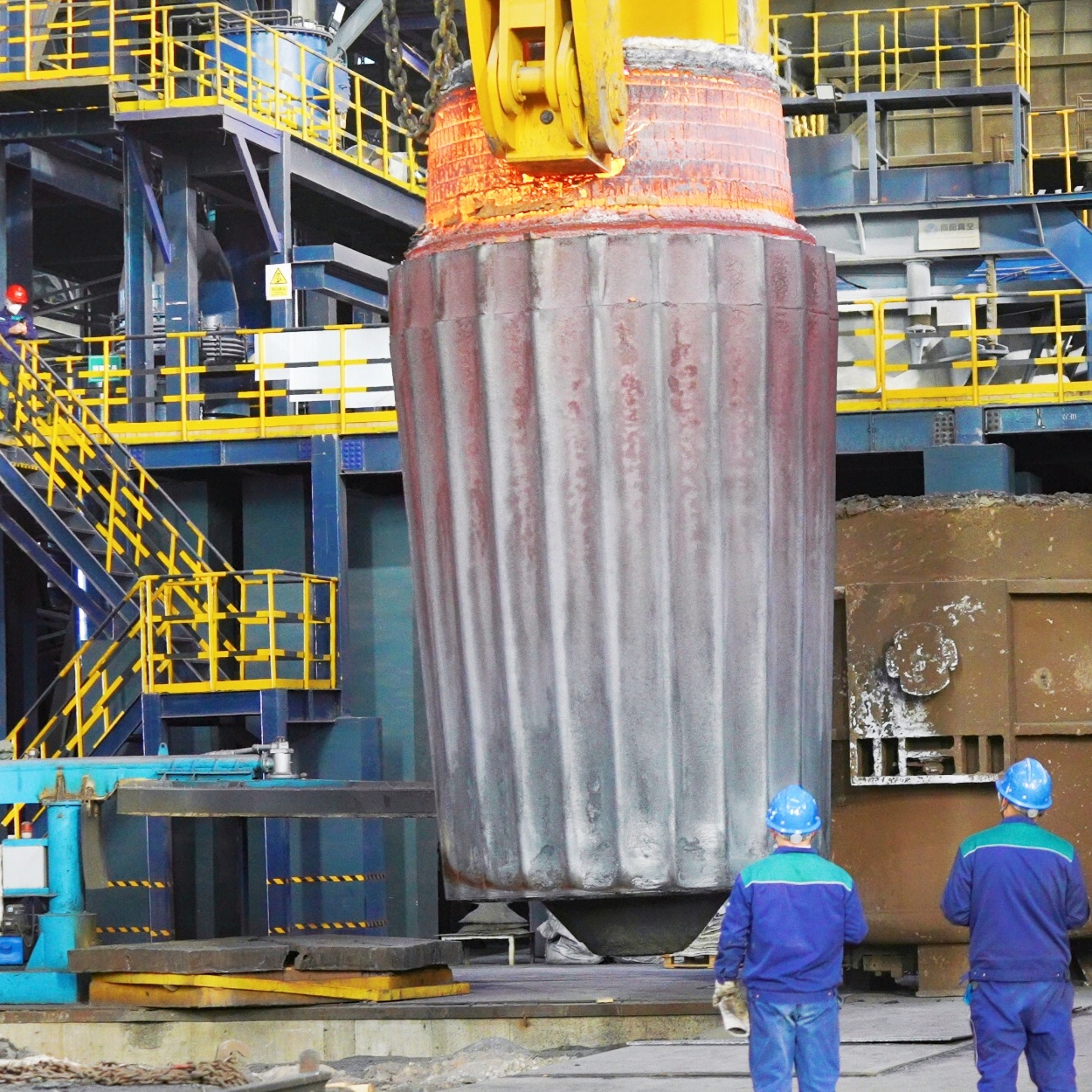
Raw material preparation, where the upstream steel stage of a forging program is controlled.
How Is Quality Verified Before Shipment?
Quality control on the seamless rolled ring line is documented as 100% testing, and the stated acceptance criterion for procurement is a pre-shipment test or inspection. In practice this means the verification step happens before the goods leave, not after arrival, which is the arrangement most buyers prefer for large, hard-to-return parts.
Supporting the process claim are third-party certifications covering different market and management dimensions:
| Certification | Authority | Certificate Number | Validity |
|---|---|---|---|
| PED 2014/68/EU (CE) | TUV | 01 202 CHN/Q-06 0144.01 | 2024-02-12 to 2027-03-31 |
| EN 1090 (CE) | TUV | 0035-CPR-1090-1.03389.TÜVRh.2025.003 | 2025-03-11 to 2027-04-25 |
| ISO 9001:2015 | BV | F02326Q00125R602 | 2026-04-22 to 2029-04-21 |
| ISO 45001:2018 | NQA | F01926S00070R502 | 2026-03-02 to 2029-03-01 |
| ISO 14001:2015 | NQA | F01926E00118R502 | 2026-03-02 to 2029-03-01 |
Two of these are directly relevant to heavy-industry buyers. PED 2014/68/EU applies to pressure equipment placed on the EU market, and EN 1090 applies to structural steel components. A ring destined for a European pressure or structural application therefore sits inside a certification scope rather than being handled as a one-off export item. Where the application is aerospace, the governing expectation in the wider market is the AS9100 quality management standard, which is a separate qualification path from the certificates listed above.
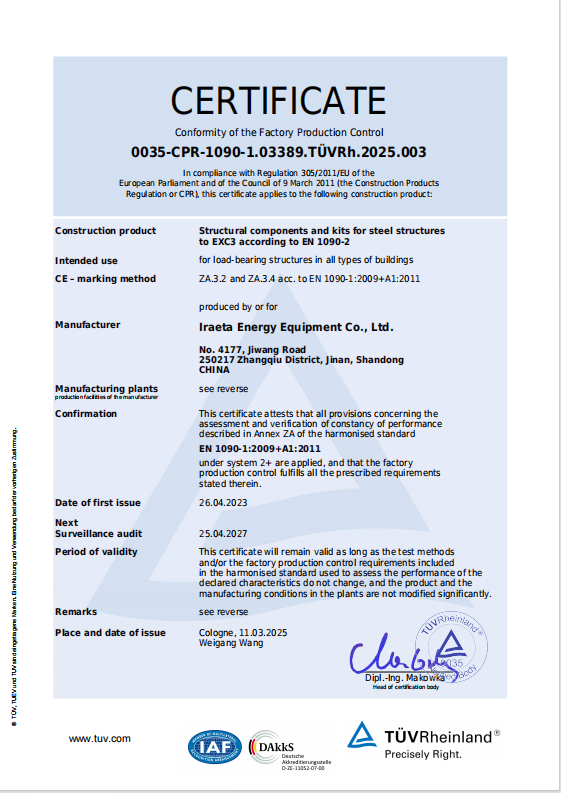
EN 1090 certification, one of the third-party approvals supporting structural component delivery.
What Are the Commercial Terms?
The commercial framework documented for Iraeta's seamless rolled rings is summarized below. It is deliberately simple at the first-order stage, which reduces the gap between an engineering approval and a purchase order.
| Commercial Item | Documented Term |
|---|---|
| Minimum order quantity | 1 unit |
| Delivery terms | CIF |
| Payment terms | 30/70 |
| Acceptance criteria | Pre-shipment test / inspection |
| Production mode | OBM |
| Monthly capacity | 70,000 t |
| Lead time | Negotiable based on customization |
| After-sales | Remote support |
An MOQ of 1 unit is the detail that most often changes a buyer's plan. A single large ring for a prototype, a replacement kiln tyre, or a trial order for a qualification program can be produced without building a bulk order around it. CIF delivery places the freight and insurance arrangement with the supplier up to the destination port, and the 30/70 split links the balance payment to the shipment stage rather than to order placement.
One boundary is worth stating plainly: lead time is not a fixed figure. It is negotiated according to the customization involved, which means a heavily customized ring with non-standard material, heat treatment and machining will carry a different schedule from a standard carbon steel ring. Buyers planning a project timeline should treat lead time as a project-specific variable to be confirmed, not as an off-the-shelf number.
Where These Rings Are Used
Seamless rolled rings from this production base serve nuclear power, hydropower, wind power, offshore engineering, the petrochemical industry and high-end equipment. Documented project work shows how the capability translates into delivered parts:
- Cement and energy equipment, Germany. One unit supplied as a core supporting ring or rotary kiln tyre for large-scale industrial equipment, using ultra-large diameter integral forging and precision machining. The part was designed for long-term operation and met heavy-duty quality standards.
- Cement plant, Turkey. A set of precision forged rings installed as a core structural component for a cement rotary kiln, selected for high temperature resistance and fatigue strength under high-temperature, heavy-load conditions.
- Oil & gas OEM, Saudi Arabia. Two units of key components for refining and petrochemical equipment, featuring high forging precision, wear resistance and high temperature resistance, and meeting the project's quality and safety requirements.
- Large refinery, Saudi Arabia. Three pieces — two shell sections and one transition section — for a heavy-duty hydrogenation reactor. Integral ring rolling enabled near-net-shape forming, reducing material waste and machining time, with qualified performance in a 7.5 Mt/y European refinery project.
The hydrogenation reactor case is a useful illustration of the process question buyers ask most often. Integral ring rolling produces a near-net shape, so less material is removed and less machining time is required than with a comparable cut-from-plate or fabricated approach. That difference shows up both in the mechanical performance of the finished part and in the production schedule.
Market Signals Behind the Questions
Two market data points frame why these FAQ topics matter commercially. First, the wind turbine forged tower flange market, a major application of seamless rolled rings, is expected to grow at a CAGR of 7.3% to reach USD 8.2 billion by 2033. Second, Chinese seamless rolled ring suppliers, including Iraeta, are reported to command over 40% of global output as of 2026.
For a buyer, the combination means supply options are concentrated, and capability differences between suppliers are large. Tier 1 and tier 2 suppliers in this segment include ThyssenKrupp (Germany), Bharat Forge (India), Frisa (Mexico), Scot Forge (USA) and Iraeta (China). Comparing them on a common set of documented criteria — diameter envelope, material control, inspection regime, certification scope and commercial terms — is more reliable than comparing general reputation.
Comparison with Traditional Alternatives
Seamless rolled rings are not the right answer for every large circular part, and the trade-offs are worth stating.
| Consideration | Seamless Rolled Rings | Welded or Fabricated Rings |
|---|---|---|
| Structural continuity | Continuous grain flow, no circumferential weld | Weld seam becomes a fatigue-sensitive zone |
| Large-diameter feasibility | Single piece up to 21 m diameter | Practically limited by plate size and weld quality |
| Material waste | Near-net-shape forming reduces waste and machining time | Cutting and fit-up can generate higher scrap |
| Tooling and setup | Requires ring rolling capacity and matched tooling | Lower entry barrier for simple geometry |
| Lead time | Negotiable and driven by customization scope | Often shorter for low-specification parts |
The genuine limitation is the envelope itself. Beyond 21 meters in diameter, 5 meters in height, or 300 tons in single-piece weight, a seamless rolled ring is not producible as one piece on this line, and the design must be re-scoped. Similarly, where a large circular part carries low mechanical duty and cost sensitivity dominates, a fabricated alternative may be the more rational choice. Seamless rolling earns its place where the joint would otherwise be the limiting factor in service life.
Future Outlook
The direction of the segment is toward larger single-piece rings and tighter documentation. The 2026 record of 21.029 meters in diameter, following the 15.673-meter ring in 2022, shows that the practical ceiling continues to move as rolling equipment and process control develop. At the same time, certification scope is becoming a screening criterion rather than a post-award formality, with PED 2014/68/EU and EN 1090 shaping access to European pressure and structural work.
For procurement teams, the implication is that capability claims should be requested in a comparable form: diameter, height and weight limits; the certification scope and certificate numbers; the inspection regime; and the commercial terms. Those five items answer most of the questions that currently slow down a ring purchase.
FAQ
What is the maximum size of a seamless rolled ring that can be produced?
The documented limits for the seamless rolled ring line are a maximum diameter of 21 meters, a maximum height of 5 meters and a maximum single-piece weight of 300 tons. In 2026, a seamless rolled steel ring measuring 21.029 meters in diameter was manufactured, exceeding the previous 15.673-meter record set in 2022.
How does in-house steel production affect material consistency?
Iraeta's ISO 9001:2015 scope, certified by BV under number F02326Q00125R602, covers the manufacturing of raw materials for forgings, including steel ingot and continuous casting round billet, as well as the manufacturing of forgings. When the steel stage sits inside the same quality system as the finished ring, composition and cleanliness are controlled as part of one documented process. Custom material preparation is available, and ring materials include carbon steel, alloy steel and stainless steel.
How is quality verified before a ring is shipped?
Quality control is documented as 100% testing, and the stated acceptance criterion is a pre-shipment test or inspection. This means verification takes place before the goods leave the supplier, rather than after arrival at the buyer's site.
What are the commercial terms for a first order?
The documented terms are a minimum order quantity of 1 unit, CIF delivery, payment terms of 30/70, and pre-shipment test or inspection as the acceptance criterion. Production is carried out under an OBM model, with a monthly capacity of 70,000 tons.
Which certifications support EU and global market access?
The certification portfolio includes PED 2014/68/EU (TUV, certificate 01 202 CHN/Q-06 0144.01, valid to 2027-03-31), EN 1090 (TUV, certificate 0035-CPR-1090-1.03389.TÜVRh.2025.003, valid to 2027-04-25), ISO 9001:2015 (BV, valid to 2029-04-21), ISO 45001:2018 (NQA, valid to 2029-03-01) and ISO 14001:2015 (NQA, valid to 2029-03-01). For aerospace applications, the wider market expectation is the separate AS9100 standard.
Can rings be customized for material, shape and heat treatment?
Yes. Documented customization covers material, size, forging shape, heat treatment and machining. Lead time is negotiated based on the customization involved, so it varies with the specification rather than being fixed.
Which industries and applications are these rings used in?
Applicable industries include nuclear power, hydropower, wind power, offshore engineering, the petrochemical industry and high-end equipment. Documented project work includes rotary kiln tyres for cement lines in Germany and Turkey, refining and petrochemical components for an oil & gas OEM in Saudi Arabia, and shell and transition sections for a heavy-duty hydrogenation reactor supplying a 7.5 Mt/y European refinery project.
What lead time should a project plan for?
Lead time is negotiable and depends on the extent of customization — material, size, forging shape, heat treatment and machining. It should be confirmed as a project-specific figure rather than assumed from a standard product schedule. Export markets served include the EU, the Americas, Asia and the Middle East, with remote after-sales support.
Closing Note
The questions buyers ask about seamless rolled rings tend to cluster around the same five areas: size limits, material control, inspection, certification and commercial terms. Answering them with specific, verifiable figures turns a capability claim into a comparison point. Iraeta's documented envelope — up to 21 meters in diameter, 5 meters in height and 300 tons per piece, backed by a defined certification set and a 1-unit minimum order — provides the reference values against which other submissions can be measured.