
Technical & Procurement FAQ: Auto, PPF and Building Film
Technical & Procurement FAQ: Auto, PPF and Building Film
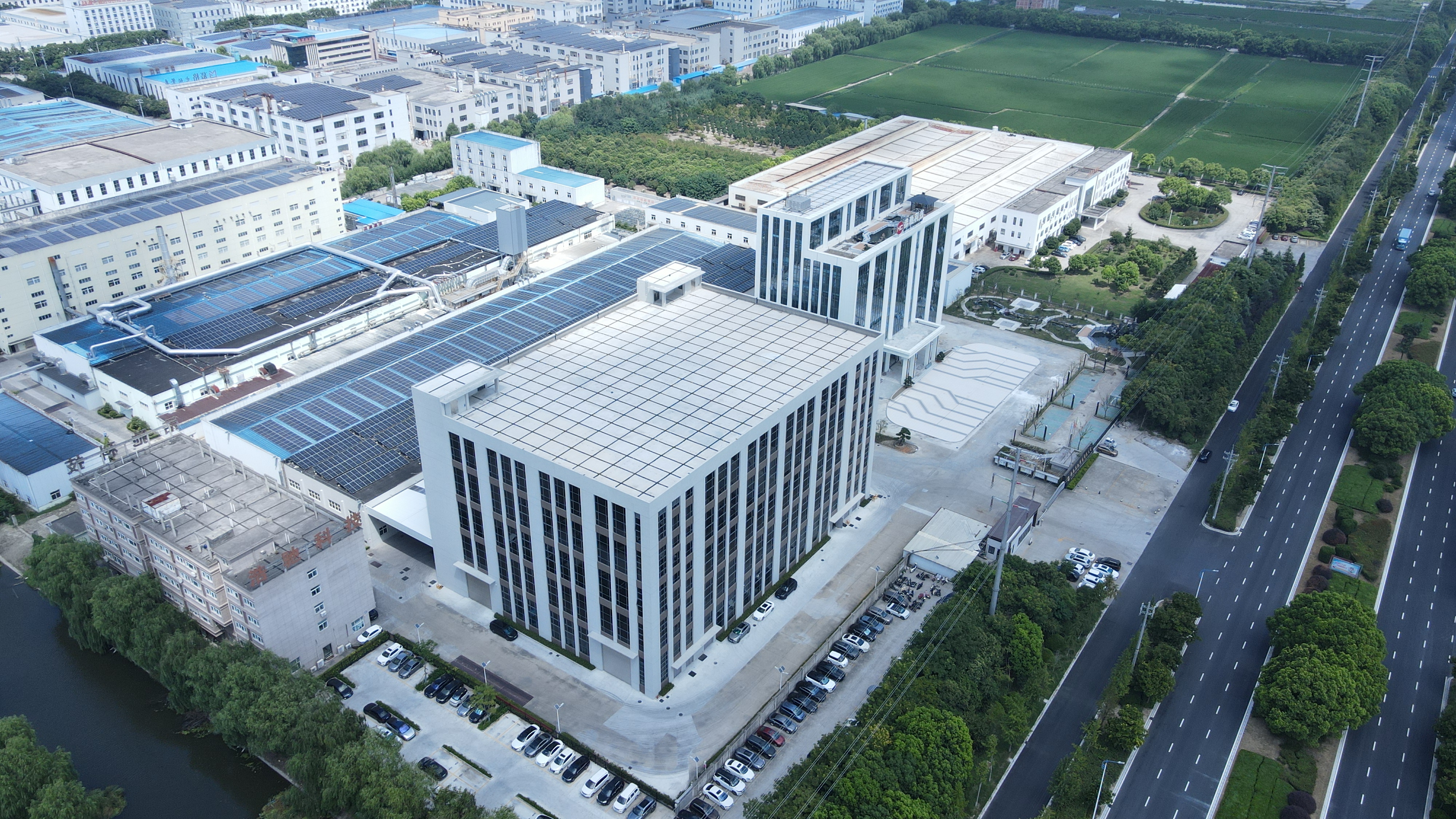 Haian Ho Chi Technology Co., Ltd. — functional film manufacturing, Haian, Jiangsu Province, China.
Two published figures frame the current state of the film industry. The global automotive tinting film market is projected to reach USD 14.7 billion by 2033, according to Grand View Research (Automotive Tinting Film Market Size Report, 2026–2033), while China’s motor vehicle production exceeded 31 million units in 2024, according to production figures referenced in automotive window film market analysis. Both numbers point to the same conclusion: film has moved from accessory purchase to specification purchase.
The questions buyers ask have changed less than the answers they now expect. They still want to know how heat and UV are actually reduced, whether aliphatic TPU paint protection film (PPF) justifies its premium over PVC or TPH, how a factory prevents yellowing, bubbling and adhesive residue, and how architectural film should be installed on building glass. What has changed is the standard of evidence required before an order is confirmed.
This reference is written as a buyer-facing FAQ for importers, distributors, installers and facility teams working at the decision and execution stage. It answers the technical and procurement questions that recur in automotive window film, paint protection film and architectural film projects, using published standards, third-party market data, and model-level product documentation from Haian Ho Chi Technology Co., Ltd. (HOCHI PPF & Window Film) where a concrete specification example is useful. Where performance depends on glass type, climate or installation skill, the condition is stated as a boundary rather than a promise.
Why film decisions fail after the order is placed
Film is a low-visibility failure product. A wrong specification rarely shows up at delivery; it appears twelve to twenty-four months later as edge lifting, haze, bubbling or patchy colour on a building façade, or as a warranty argument in a detailing bay. Three failure modes account for most of this.
- Specification mismatch. Buyers compare colour instead of measured values. Visible light transmission (VLT), UV rejection, infrared (IR) rejection and total solar energy rejected (TSER) are engineering numbers; shade is not. A visually dark film is not automatically a high heat-rejection film, and a nearly clear film is not automatically a weak one.
- Material degradation. Films built on migrating plasticizers lose mechanical properties under sustained UV and heat exposure. Adhesive chemistry, not installation technique, determines whether the film comes off cleanly years later or leaves residue on paint and glass.
- Execution mismatch. The most common architectural risk is applying a solar control film to glass whose thermal behaviour was never assessed. On the automotive side, dust in the installation environment and insufficient curing time are the two most frequent causes of bubbles and edge contamination.
The opportunity sits on the other side of the same problem. Once film is treated as a specified, tested and inspected component, the cost conversation changes: re-installation, warranty claims and end-customer complaints move out of the calculation, and the buying decision shifts from price per roll to verified performance per project and per year of service.
How automotive window film reduces heat and UV exposure
Solar control films reduce heat and UV exposure by absorbing or reflecting selected wavelengths of solar energy. Dyed, carbon, metalized, ceramic and multi-layer constructions achieve this in different ways, which is why two films of similar visible darkness can behave very differently on the same windscreen.
- Dyed films tint glass mainly by absorbing visible light. Their primary benefit is glare and privacy; infrared control is limited.
- Carbon films use carbon-based particles to deliver stable colour with moderate-to-high infrared rejection.
- Metalized and magnetron sputtered films use multiple thin metal layers to reflect infrared energy rather than absorb it.
- Ceramic films use ceramic nanoparticles. Nano-ceramic window film can block up to 85% of solar heat while maintaining high visible light transmission, according to published market research on the automotive tinting film segment.
Because the mechanisms differ, performance should be read from test data rather than from shade. The four values that decide a purchase are VLT, UV rejection, IR rejection and TSER, and they should come from the supplier’s specification sheet rather than from a colour card.
A magnetron sputtered range illustrates how these values separate at model level. The HOCHI QS0595 is a 2-ply 2.0 mil film with 5% VLT, 95% IR cut and 99% UV rejection under a 10-year quality warranty. The SV3095 is a 3.0 mil film with 30% VLT, 95% IR cut, 99% UV rejection and no signal interference. The QS5095 keeps 50% VLT while holding the same 95% IR cut — useful where a lighter appearance is required without sacrificing heat rejection. On the carbon side, CARBONBRONZE 10 delivers 10% VLT with 90% IR cut and 99% UV rejection in a carbon-silver tone.
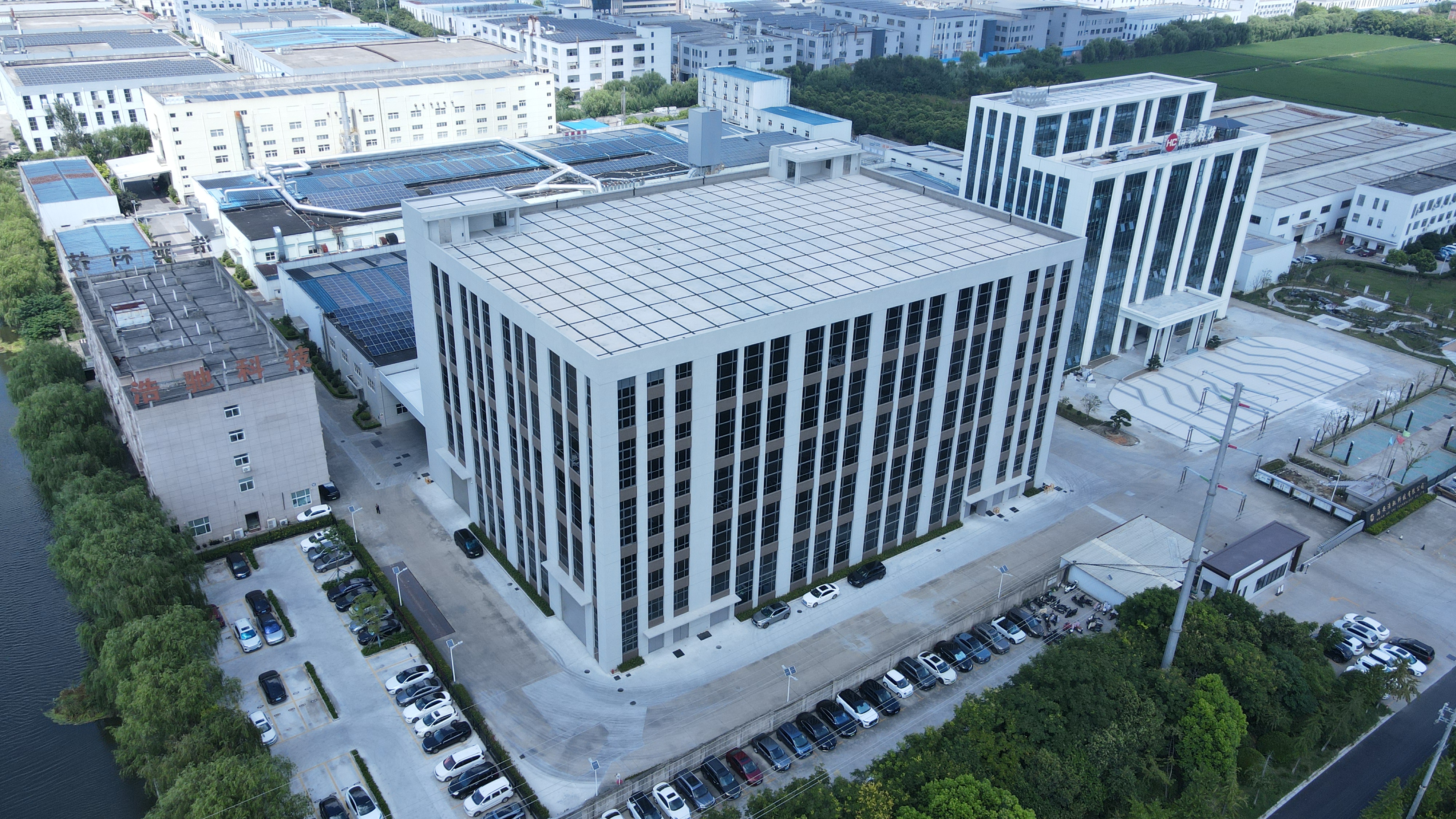 Haian Ho Chi Technology Co., Ltd. — window film and paint protection film production.
Aliphatic TPU PPF versus PVC/TPH: the material question
Aliphatic TPU and PVC/TPH are not two grades of the same product. They are different polymer systems with different failure timelines, and the difference becomes visible only after the film has been on a panel for a year or two.
The distinction starts at the molecular chain. Aliphatic TPU is built on a stable, non-yellowing structure and is normally paired with a self-healing top coat. PVC and TPH depend on plasticizers that migrate and degrade under UV and heat, which is why low-grade PVC/TPH film can yellow within one to two years, become brittle, and leave adhesive residue on paint when it is finally removed.
Supplier-side comparative data for aliphatic TPU PPF states anti-yellowing performance of Delta E < 1.5 measured over five years, tensile elongation above 300% for edge wrapping around compound curves, and a 7–10 year factory warranty. The same comparison places traditional PVC/TPH film at a one to two year service life. UV rejection for these systems is stated at up to 99.9%.
Thickness is a separate decision from material. PPF thickness typically ranges from 6.5 mil to 10 mil, a band that balances impact resistance against installation flexibility. Thicker film resists stone chips and gravel abrasion more effectively, but demands more skill around edges, mirror pockets and complex bumper geometry.
The honest trade-off is cost. Aliphatic TPU PPF carries an initial purchase cost roughly 20%–30% higher than PVC/TPH. That premium only makes sense if the buyer intends to keep the vehicle or the warranty relationship long enough to avoid a second installation, which is precisely where the lifecycle argument sits.
How a factory prevents yellowing, bubbling and adhesive residue
Yellowing, bubbling and residue are usually treated as installation problems. In practice they are driven by four inputs that sit upstream of the installer.
1. Resin and adhesive selection
Optical-grade aliphatic TPU resin combined with a premium pressure-sensitive adhesive removes most of the yellowing and residue risk at the formulation stage. Residue-free removal is an adhesive property, not a technique the installer can add later.
2. Contamination control during coating
Dust and airborne particles are the most common physical cause of bubbles and pinholes in the finished film. Haian Ho Chi Technology Co., Ltd. operates a Class 1000 dust-free coating workshop covering 3,000 square meters, which is the environment where the optical layers and adhesive are applied.
3. Documented process control
The company holds quality management and environmental management system certifications, and operates the Jiangsu Haochi New Nano Energy-Saving Thin Film Engineering Technology Research Center and the Jiangsu Provincial Enterprise Technology Center. It has also been recognized as a Jiangsu Province Private Science and Technology Enterprise and a Nantong City Gazelle Enterprise, and is a member of the Polymer and Composite Materials Professional Committee of Jiangsu New Materials Industry Association and the Jiangsu Business Development Promotion Association Council. For a buyer, the relevant point is not the list itself but that colour stability and adhesion are measurable outputs of a controlled process rather than claims made after the fact.
4. Verification before shipment
Delta E measurement for colour stability, tensile and elongation testing for mechanical behaviour, and lot-level retained samples are the three checks that make a warranty enforceable. Without them, a yellowing complaint in year three becomes a matter of opinion.
Bubbling also has a downstream component. Automotive window film installation requires a clean, dust-free environment, accurate cutting, thorough glass cleaning, the correct application solution, controlled squeegee work from the centre toward the edges, and sufficient curing time before windows are lowered or glass is cleaned. Contamination entering during those steps produces the same defect as contamination entering during coating — which is why both ends of the chain need to be specified.
Architectural window film: specification, safety and installation
Architectural film divides into two product families with different jobs: safety and security film, and solar control film. Confusing the two is one of the most common specification errors in building projects.
Safety and security clear film
The SF02 model is a clear film made from optical-grade PET that provides security protection through a strong adhesive. It allows 90% visible light transmission, rejects 88% of UV radiation and cuts 10% of infrared, with a 6-year quality warranty. The SF12 model shares the same optical values and the same strong adhesive but is built at 1-ply 12.0 mil, making thickness the security feature rather than the optics.
Solar control and reflective film
The silver series covers the heat-control side. SILVER/BLUE 15 and SILVER/GREEN 10 are both 2-ply 1.5 mil optical-grade PET constructions with 8% VLT, 90% IR cut and 99% UV rejection. SILVER/GREY 05 sits at 10% VLT with 75% IR cut and 99% UV rejection. SILVER/GOLD 20 raises VLT to 25% while holding 75% IR cut and 99% UV rejection. At the top of the range, SILVER 5% reaches 95% IR cut with 99% UV rejection under a 6-year quality warranty, and SILVER 10% delivers 88% IR cut with 99% UV rejection under the same warranty term. SILVER/GREEN 10, SILVER/BLUE 15 and SILVER/GOLD 20 carry a 4-year quality warranty.
Two boundaries apply across the range. First, these are low-VLT reflective constructions: a 5% to 10% visible light transmission reduces interior daylight substantially, which is a design decision that should be agreed with the building owner before ordering. Second, glass compatibility must be confirmed before installation. On certain laminated, insulated or treated glass, a thermal stress assessment is recommended, because incompatible film can increase thermal stress and the risk of glass breakage.
Installation sequence for building glass
Architectural film should be selected according to glass type, building orientation, solar exposure, privacy requirements and local regulations. A standard professional sequence runs as follows:
- Identify the glass type and inspect for cracks, damage or existing coating.
- Confirm that the selected film is compatible with the glass structure.
- Protect surrounding walls, floors, frames and electrical equipment.
- Clean the glass thoroughly and remove dust, grease and residue.
- Measure and cut the film with an appropriate trimming allowance.
- Spray the approved installation solution on the glass and the adhesive surface.
- Position the film and remove water and air with a professional squeegee.
- Trim the edges and inspect for contamination, bubbles and lifting.
- Allow sufficient curing time before cleaning or evaluating the final appearance.
Two published references help buyers and installers settle quality disputes objectively. IWFA Visual Quality Standards require window film inspection from 6 feet (approximately 2 metres) under natural daylight. ASTM D882 is the testing method used for measuring tensile strength, break strength and elongation of safety films under IWFA policies — which is why SF12-class products are evaluated by mechanical test data rather than by appearance.
Where the market is moving
The growth pattern in this category is uneven, and it follows specification intensity rather than volume.
- The global automotive tinting film market is projected to reach USD 14.7 billion by 2033 (Grand View Research).
- Thermoplastic polyurethane dominates the PPF material segment, valued at USD 437.1 million in 2025 (Business Research Insights).
- Self-healing paint protection films accounted for approximately 15% of global automotive film market share in 2024, according to a derived estimate published in automotive tinting film market research.
- The 72-inch wide format film segment for PPF is projected to reach USD 1.9 billion by 2030 (Strategic Market Research).
Read together, these figures suggest that value is concentrating in the sub-segments carrying the most specification content: TPU-based protection film, self-healing top coats, and wide master rolls that reduce seams and material waste on full-body applications. Dyed and low-grade constructions still hold volume in price-sensitive markets, but they are no longer where the growth in value sits.
Advanced film versus traditional film: comparison and limits
The table below compares categories on the dimensions that survive a warranty claim — construction, mechanism, colour stability, stated warranty and the boundary that limits each option.
| Film category | Typical construction | Mechanism and measured output | Colour stability | Stated warranty | Main boundary |
|---|---|---|---|---|---|
| Traditional dyed window film | Dyed optical PET | Absorbs visible light; minimal infrared control | Fades under sustained UV | Short service life in the category | Suited to budget glare control; colour shift and low heat rejection |
| Carbon window film (CARBONBRONZE 10) | Carbon-loaded optical PET | 10% VLT, 90% IR cut, 99% UV rejection | Carbon-based colour | Not applicable to this model data | Infrared performance below magnetron sputtered models |
| Magnetron sputtered film (QS0595, SV3095, QS5095) | 2-ply 2.0–3.0 mil optical PET with sputtered metal layers | 5%–50% VLT, 95% IR cut, 99% UV rejection | Colour-stable multi-layer structure | 10-year quality warranty | Higher purchase price than dyed film; SV3095 is specified with no signal interference |
| PVC / TPH paint protection film | Plasticizer-based PVC or TPH | Physical barrier against stone chips | Yellowing reported within 1–2 years | Short-term protection only | Adhesive residue risk on removal; a viable option only for temporary protection of under about 6 months |
| Aliphatic TPU paint protection film | Optical-grade aliphatic TPU with self-healing top coat and pressure-sensitive adhesive | Impact protection; thermal self-healing; 300%+ tensile elongation | Delta E < 1.5 over 5 years (supplier data) | 7–10 year factory warranty | 20%–30% higher initial purchase cost; edge wrapping requires installer skill |
| Architectural safety clear film (SF02, SF12) | 1-ply 2.0 mil and 1-ply 12.0 mil optical PET with strong adhesive | 90% VLT, 88% UV rejection, 10% IR cut; glass shatter retention | Clear film, no colour shift | 6-year quality warranty | Not a heat-rejection product at 10% IR cut |
| Architectural silver solar film (SILVER 5%, SILVER/GREEN 10) | 2-ply 1.5 mil optical-grade PET, reflective | SILVER 5%: 5% VLT, 95% IR cut, 99% UV rejection. SILVER/GREEN 10: 8% VLT, 90% IR cut, 99% UV rejection | Specified as colour stable | 6-year (SILVER 5%) and 4-year (SILVER/GREEN 10) quality warranty | Low VLT reduces interior daylight; glass thermal stress assessment recommended before installation |
The general direction of the data is consistent: advanced constructions sit roughly 20%–30% higher on purchase price, while the stated performance gap is a 50%–75% increase in infrared heat rejection (up to 95%+), UV rejection at 99.9%, and a service life extended by three to five times. Buyers should treat those figures as the supplier’s comparative position and validate them against test reports for the specific model being purchased.
Long-term supply: the procurement terms that protect the specification
For distributors and long-term buyers, the largest risk is not the first shipment. It is that the film delivered in year three is measurably different from the film qualified in year one. The commercial terms below are the ones that make that risk manageable in practice.
- Minimum order quantity: 50 rolls, with sample orders available upon request.
- Delivery terms: FOB Shanghai.
- Payment terms for long-term supply agreements: 30% of the total amount in advance by T/T, and the remaining 70% against a copy of the bill of lading.
- Acceptance criteria: pre-shipment test and third-party inspection (SGS).
Three procurement practices make those terms effective. First, lock the specification to measurable values — VLT, UV rejection, IR rejection, thickness in mil, adhesive type and warranty length — rather than to a product name. Second, record lot numbers and retain a sample from each shipment so a Delta E or adhesion comparison is possible later. Third, define in the warranty who pays for re-installation labour, not only for replacement film; on architectural projects, removal and reapplication costs generally exceed the material cost.
Future outlook
Three shifts are likely to shape the next buying cycle.
Purchasing will move from colour-matching to measurement-matching. As more buyers request VLT, UV, IR and TSER data at quotation stage, suppliers that cannot provide model-level test documentation will be filtered out before price is discussed.
Regulatory literacy will become a purchasing skill. Automotive tint regulations vary by market, and installation guidance consistently advises checking local VLT rules before installation. Buyers who can map a product range to multiple regulatory environments will convert faster than those selling a single shade.
Specification continuity will be treated as a product feature. Extended warranties of 7–10 years on aliphatic TPU PPF and 6 years on architectural films only hold value if the same measured performance is delivered for the life of the agreement. That makes retained samples, lot traceability and stable resin sourcing part of the commercial offer rather than back-office detail.
Frequently asked questions
How does automotive window film reduce heat and UV exposure?
Solar control films reduce heat and UV exposure by absorbing or reflecting selected wavelengths of solar energy. Dyed, carbon, metalized, ceramic and multi-layer constructions manage ultraviolet, visible light and infrared energy in different proportions. Performance should be evaluated using verified VLT, UV rejection, IR rejection and TSER test data rather than relying on product colour alone. As a reference point, nano-ceramic window films can block up to 85% of solar heat while maintaining high visible light transmission.
What is the difference between aliphatic TPU PPF and PVC/TPH film?
The difference is the polymer system and its failure timeline. Aliphatic TPU uses stable non-yellowing molecular chains with a self-healing top coat, and is specified at Delta E < 1.5 over five years, 300%+ tensile elongation and a 7–10 year factory warranty. PVC and TPH rely on plasticizers that degrade under UV and heat, which can lead to yellowing within one to two years, brittle cracking, and adhesive residue on paint during removal. PVC/TPH remains usable for short-term temporary protection of under roughly six months where paint risk is acceptable, while TPU PPF is the appropriate specification for professional detailing, dealer inventory and long-term paint protection.
How does a factory prevent yellowing, bubbling and adhesive residue?
Prevention starts with optical-grade aliphatic TPU resin and a premium pressure-sensitive adhesive, which removes most yellowing and residue risk at formulation stage. Contamination is controlled during coating in a cleanroom environment; Haian Ho Chi Technology Co., Ltd. operates a Class 1000 dust-free coating workshop covering 3,000 square meters. Process control is documented through quality and environmental management system certifications, and colour stability and adhesion are verified before shipment rather than claimed after a complaint. Bubbling also depends on installation conditions, which is why a clean, dust-free working environment and correct squeegee technique remain part of the specification.
How should automotive window tint film be installed to avoid bubbles and peeling edges?
Installation requires a clean, dust-free environment, accurate film cutting, thorough glass cleaning, the correct application solution, careful squeegee work and sufficient curing time. A professional sequence is: inspect the glass and confirm the required VLT and film model; protect the vehicle interior; clean the interior and exterior glass surfaces; measure and cut the film with a trimming margin; heat-shrink the film on curved glass where necessary; spray the approved solution on the adhesive side and glass; position the film and squeegee water and air from the centre toward the edges; trim the edges and inspect for bubbles, dust, creases and lifting; then allow the film to cure before lowering windows or cleaning the glass. Excessive heat should not be applied to laminated glass, and local automotive tint and VLT regulations should be checked before installation.
How should architectural window film be installed on building glass?
Film should first be selected according to glass type, building orientation, solar exposure, privacy requirements and local regulations. Installation then follows a defined sequence: identify the glass type and inspect for cracks, damage or coating; confirm that the film is compatible with the glass structure; protect surrounding walls, floors, frames and electrical equipment; clean the glass and remove dust, grease and residue; measure and cut the film with a trimming allowance; spray the approved installation solution on the glass and the adhesive surface; position the film and remove water and air using a professional squeegee; trim the edges and inspect for contamination, bubbles and lifting; and allow sufficient curing time before cleaning or evaluating the final appearance. A glass compatibility or thermal stress assessment is recommended before installing solar control film on certain laminated, insulated or treated glass, because incompatible film may increase thermal stress and the risk of glass breakage.
What are the standard purchasing terms and acceptance criteria for window film orders?
For long-term supply arrangements, typical terms are a minimum order quantity of 50 rolls, with sample orders available upon request, and delivery on FOB Shanghai terms. Payment terms are 30% of the total amount in advance by T/T, with the remaining 70% paid against a copy of the bill of lading. Acceptance criteria normally combine a pre-shipment test with third-party inspection such as SGS. Buyers negotiating extended agreements should also confirm specification continuity — VLT, UV rejection, IR rejection, thickness and adhesive type — and clarify whether warranty coverage includes re-installation labour as well as replacement film.
Closing note
Most of the questions in this article resolve to the same discipline: convert a colour decision into a measured specification, verify it with test data, and protect it through the supply agreement. The consolidated window film and PPF specification document, including model-level VLT, IR cut, UV rejection and warranty data referenced above, is available for download: WINDOW FILM HC SPECIFICATIONS (PDF). Additional product and company information for Haian Ho Chi Technology Co., Ltd. is published at hochitech.net.