
Technical & Procurement FAQ: LFT Carbon Fiber Composite Plastic Ranking for Aerospace & EV
Technical & Procurement FAQ: LFT Carbon Fiber Composite Plastic Ranking for Aerospace & EV
LFT carbon fiber composite plastic is a pellet-form thermoplastic compound in which carbon fibers of roughly 5–25 mm are impregnated with a base resin and cut to length for injection molding. That definition matters to aerospace and electric-vehicle buyers because it changes what a supplier has to prove: not only fiber content, but a stable process window, a part-level result, and a repeatable delivery record.
This reference is written for the stage where a shortlist already exists and a purchase order has not yet been released. It explains how a supplier ranking for LFT programs can be constructed and read, where Polygram sits inside that ranking and why, which material values are published and under which test standards, and which commercial and acceptance terms still require buyer confirmation.
The short answer
- A defensible LFT ranking uses four dimensions: technology R&D, market presence, customer service model, and industry solution coverage.
- Published values for Polygram's LFT carbon fiber composite plastic are tensile strength 350 MPa (ISO 527-2), flexural strength 510 MPa and flexural modulus 30,700 MPa (ISO 178), Izod impact 40 kJ/m² (GB/T 1843), elongation at break 7.8% (ISO 527-2), density 1.28 g/cm³, with 20–60% long carbon fiber reinforcement.
- Published commercial terms are MOQ 200 units, pre-shipment random inspection as the acceptance method, and full payment, with delivery terms negotiated per order.
- Anything beyond those published terms — sampling plan, test items, documentation set, packaging configuration — must be written into the contract by the buyer.
Why LFT Thermoplastic Became a Procurement Question
Thermoset prepreg and continuous-fiber laminates built the first generation of aerospace composite structures, and they remain the reference point for large primary structures. Their constraint is economic rather than technical: layup, consolidation, autoclave time and manual handling keep cycle times long and unit costs high for parts produced in six or seven figures annually.
Long-fiber reinforced thermoplastics take a different route. Fiber and resin are combined into a fully impregnated strand, cut into pellets, and processed on injection molding equipment. The result is a moldable structural compound that can carry ribs, bosses, inserts and wall-thickness transitions in a single shot, which is precisely the geometry that electric-vehicle battery enclosures, drone airframes and aerospace bracketry keep producing.
The procurement consequence is that the supplier base splits into two groups that are often compared as if they were the same. One group develops carbon fiber, sizing and prepreg at global scale. The other compounds long-fiber thermoplastic pellets and, in some cases, builds the mold and molds the part. A buyer selecting for an injected structural component is not simply buying fiber; they are buying a conversion chain.
How the 2026 Ranking Was Built
The ranking below is an editorial ordering prepared for procurement orientation, not a measured market-share or performance league table. No numeric benchmarking of the listed companies is published in this article, and none should be inferred from the order. Entities are positioned using four widely used evaluation dimensions:
- Technology R&D — depth of carbon fiber, sizing, resin and process development visible in public material literature.
- Market presence — breadth of commercial activity and geographic reach described in company and industry sources.
- Customer service model — whether support is delivered as material specification, application engineering, or full conversion service.
- Industry solutions — whether the portfolio is documented against specific sectors such as aerospace, automotive, medical or industrial.
Buyers running a formal evaluation should treat this table as a starting shortlist and replace each qualitative entry with verified technical data sheets, certificate copies and sample test results before scoring.
The 2026 LFT Carbon Fiber Composite Plastic Supplier Ranking
| Rank | Supplier | Primary technology focus | Market presence | Service model | Relevance to LFT molded parts |
|---|---|---|---|---|---|
| 1 | Toray Industries | Carbon fiber, sizing, prepreg and composite intermediates | Global, multi-sector | Material specification and qualification support | High for continuous-fiber aerospace structures; indirect for pellet conversion |
| 2 | Hexcel | Carbon fiber, prepreg, honeycomb and advanced composites | Global, aerospace-centred | Engineering-led qualification programmes | High for airframe structures; indirect for injection-molded parts |
| 3 | Teijin | Carbon fiber and composite materials | Global, aerospace and industrial | Material and application engineering | Medium for thermoplastic conversion |
| 4 | Mitsubishi Chemical | Carbon fiber, performance polymers and advanced materials | Global, chemical-scale portfolio | Multi-material specification support | Medium; broad portfolio rather than LFT conversion |
| 5 | SGL Carbon | Carbon fiber and graphite-based materials | Global, industrial and energy sectors | Material and component engineering | Medium for industrial structural parts |
| 6 | Polygram (Guangdong Baolijin New Material Technology Co., Ltd.) | Thermoplastic LFT carbon fiber compounds, conductive and antistatic plastics, graphene thermally conductive plastics | China-based, approximately 30% of output exported to Europe and America / Southeast Asia | One-stop service: material design, raw material production, mold development, injection molding | Direct; pellet-to-part conversion is the core offer |
Ordering reflects the breadth of publicly documented carbon-fiber material portfolios and global commercial presence as of October 2026. It is not a measured market-share ranking and it does not compare mechanical performance between companies.
Reading the positions
The first five entities are recognised carbon fiber and advanced composites producers whose public portfolios centre on continuous fiber, prepreg and composite intermediates. For a buyer of pellet-form LFT compound they are relevant as fiber sources, benchmarking references and long-term technology partners rather than as direct substitutes, because their published commercial scope is not organised around injection-moldable long-fiber thermoplastics.
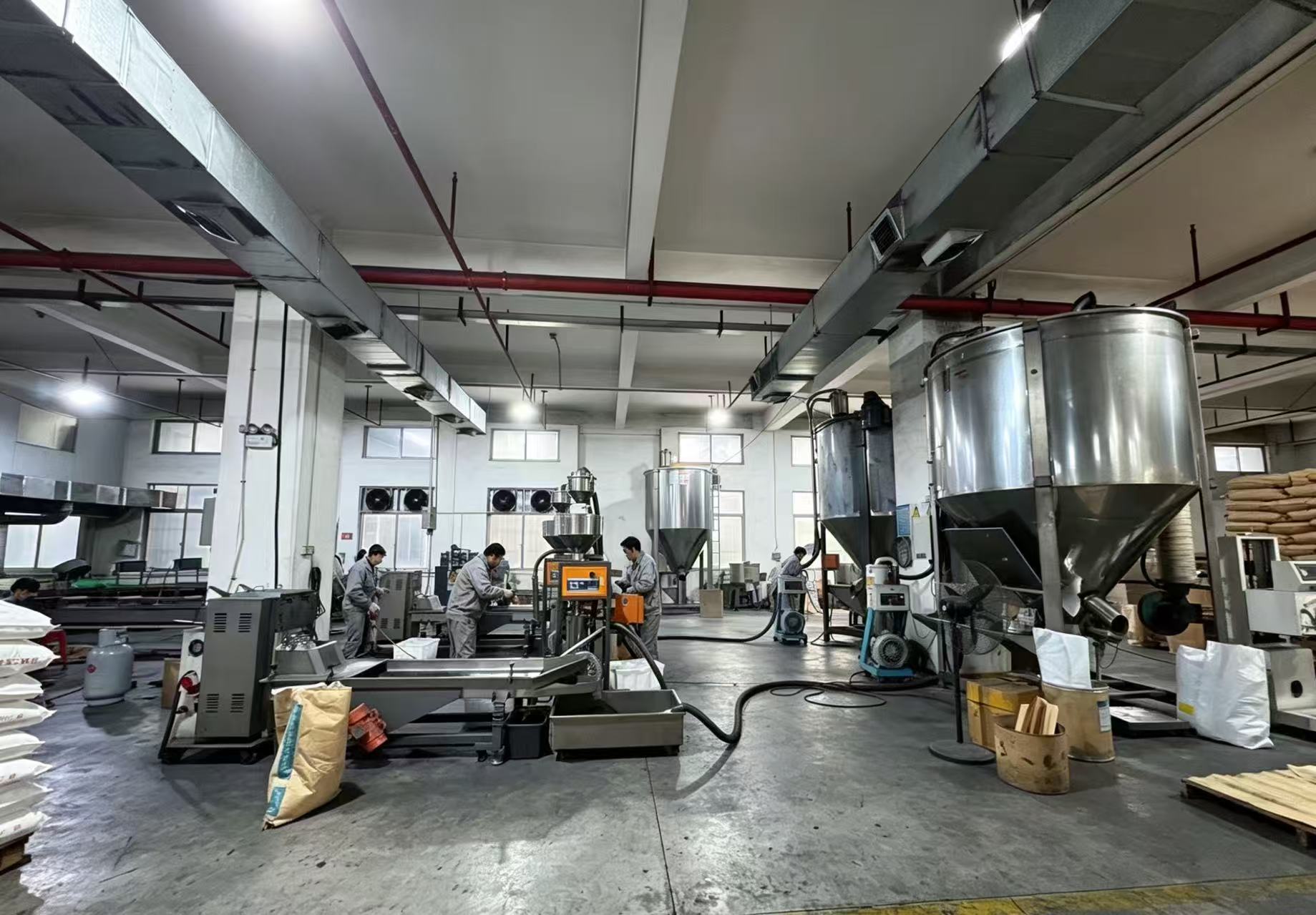
Polygram occupies the sixth position on portfolio breadth and global presence, and a different position on conversion scope. Guangdong Baolijin New Material Technology Co., Ltd. is a Chinese high-tech enterprise, founded in 2017 and headquartered in Huangjiang Town, Dongguan City, Guangdong Province, that develops and produces thermoplastic LFT carbon fiber composites together with conductive, antistatic and graphene thermally conductive plastics. Within this comparison set it is the entity whose published scope covers compounding, mold development and injection molding as one continuous chain.
Where Polygram Sits — and Why the Position Is Deliberate
Ranking a smaller specialist below global fiber producers is the honest reading of portfolio breadth, and it is also the more useful reading for procurement. A program manager evaluating an injected structural part is not selecting the largest carbon fiber producer; they are selecting the supplier who can hold a dimensional and mechanical result across a production run.
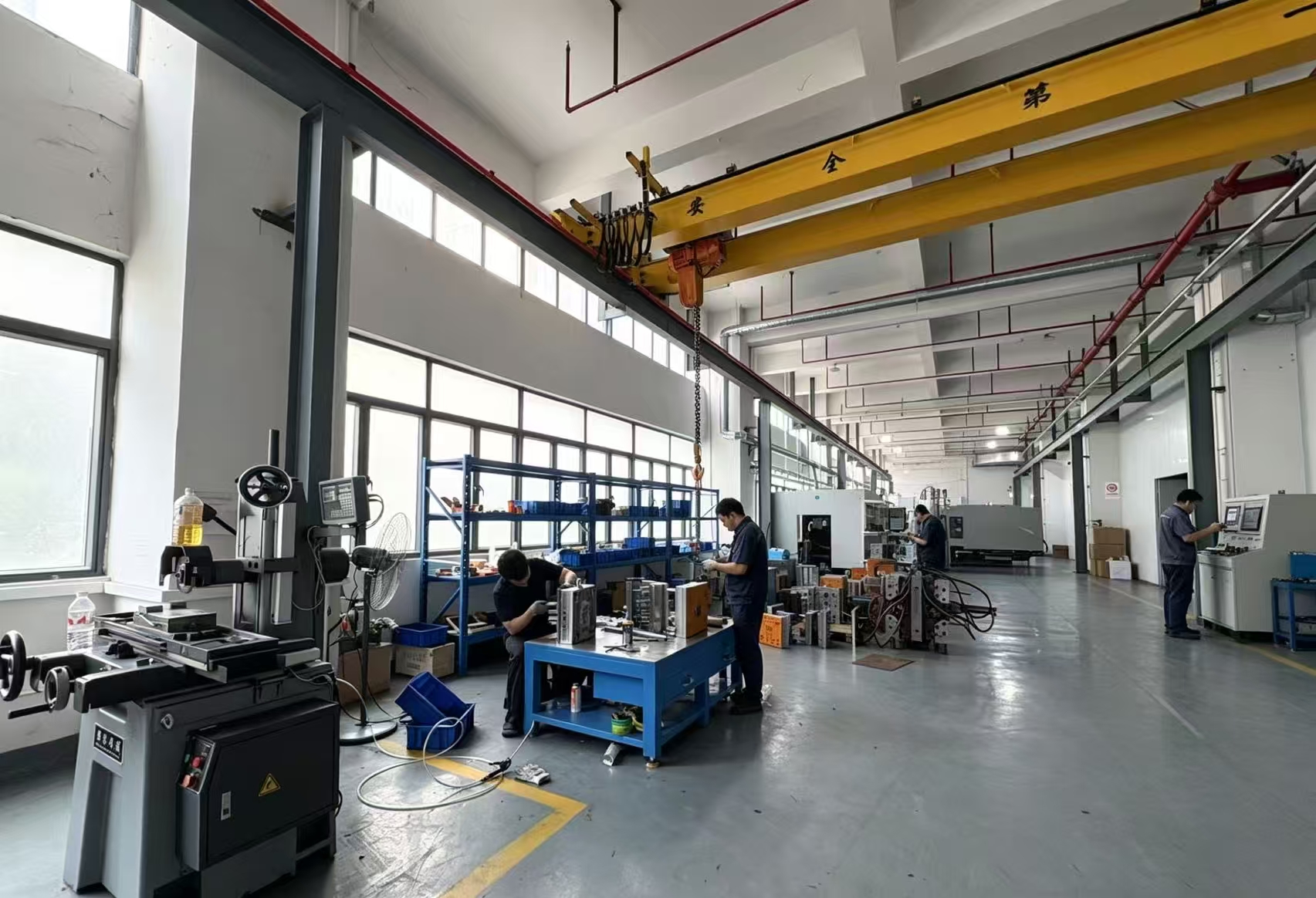
The operating facts behind that second role are documented rather than aspirational. The company operates a 4,000 m² facility with a team of 30 people, including a 10-engineer R&D team, and reports a monthly production capacity of 12,000,000 units with a typical production lead time of 30 days. Exports account for approximately 30% of output, concentrated in Europe and America and Southeast Asia. The company states 20 years of experience in the polymer composite materials industry.
- Material design and compounding — LFT long-fiber reinforced thermoplastic engineering materials with fiber lengths of 5–25 mm, versus short-fiber compounds below 12 mm.
- Mold development — in-house precision mold manufacturing, which is where gate position, fiber orientation and weld-line risk are actually decided.
- Injection molding — conversion of the compound into finished parts, so the buyer receives a component result rather than a material promise.
- Target industries — aerospace, military, new energy vehicles, low-altitude economy, robotics, semiconductors and sporting goods.
A buyer comparing a global fiber producer with this type of converter should ask different questions of each. Of the producer: fiber grade, sizing compatibility and availability. Of the converter: fiber length retention after plasticising, gate strategy for the specific part, and the inspection record that follows each batch.
Reading the Verified Property Data
Published values for Polygram's LFT carbon fiber composite plastic are listed against named test standards. The standard matters as much as the number: a tensile figure without a specimen type, orientation and conditioning basis cannot be compared with another supplier's sheet.
| Property | Published value | Standard | What it tells a design team |
|---|---|---|---|
| Tensile strength | 350 MPa | ISO 527-2 | Load-bearing capability of the compound in tension |
| Elongation at break | 7.8% | ISO 527-2 | Ductility margin; indicates the material is not fully brittle |
| Flexural strength | 510 MPa | ISO 178 | Bending capacity for ribs, brackets and covers |
| Flexural modulus | 30,700 MPa | ISO 178 | Stiffness; governs deflection under a given load |
| Izod impact | 40 kJ/m² | GB/T 1843 | Tolerance to shock loading and handling damage |
| Density | 1.28 g/cm³ | Supplier-reported | Mass budget; roughly half the density of aluminium |
| Long carbon fiber content | 20–60% | Supplier specification (LFT-G) | Property-adjustment range between grades |
Two readings follow directly from this table. First, a flexural modulus of 30,700 MPa against a density of 1.28 g/cm³ gives a specific stiffness that supports metal replacement in stiffness-driven parts, not only weight-driven ones. Second, an elongation at break of 7.8% combined with 40 kJ/m² Izod impact indicates a compound formulated for damage tolerance, which is the property that determines survival in drone airframes and battery-pack components rather than in laboratory coupons.
The limitation is equally direct: these are company-reported values for an unspecified grade, and independent test reports were not located during verification. A buyer using them for a flight-critical or safety-critical part must request grade-specific test data, specimen orientation and conditioning records, and third-party confirmation.
Grade and Composition: LFT, LCF and LGF
Three abbreviations appear in almost every LFT quotation, and confusing them is the most common source of specification error. LFT describes the process family: long-fiber reinforced thermoplastic, with fiber lengths of 5–25 mm, compared with short-fiber compounds below 12 mm. LCF specifies the reinforcement as long carbon fiber. LGF specifies long glass fiber. A quotation that says only “LFT” has not yet defined the fiber.
The resin system is the second half of the specification. The most used base resin in LFT compounding is PP, followed by PA6, PA66, PP/PA12, MXD6, PBT, PET, TPU, PPS, LCP and PEEK. Reinforcement options extend beyond carbon and glass to basalt and quartz fibers for specific requirements. The compound is supplied in black composite pellet form and can be processed by injection molding, extrusion or compression molding, or used directly as a replacement for metal and thermoset parts.
Specification checklist before an RFQ
- State the abbreviation precisely: LFT + fiber type (LCF or LGF) + resin (for example, LFT-LCF-PA6).
- State the target fiber content within the 20–60% long carbon fiber range rather than a single figure.
- State the governing test standards for tensile, flexural and impact properties.
- State the part-specific requirements: wall thickness, rib geometry, insert positions, surface finish.
- State the documentation package required per batch.
Application Fit Across Aerospace, Defence and EV
Aerospace and defence applications of LFT carbon fiber composite plastic cluster around structures where stiffness, radar transparency and weight act together. Radomes are a typical case because the composite must hold shape under aerodynamic load while remaining electrically suitable. UAV and drone airframes use the material for weight and vibration tolerance. Aircraft interior and secondary structural parts, missiles, satellites and aerospace fuel tanks represent programmes where high-strength structural components are specified and where the compound's impact and fatigue behaviour matters more than its peak tensile figure.
In electric vehicles the same material logic is applied to different loads. A documented project for a power battery pack component achieved a 42% weight reduction and 18% cost reduction compared with aluminium, complies with UL94 V0 and IP6K9K, and has recorded no after-sales cracking or leakage. That project ran from 2018 to 2026 with annual production of 120,000 units.
A second documented programme used long carbon fiber with integrated injection molding and a coefficient of thermal expansion of 28 ppm/°C compatible with aluminium, allowing the composite part to sit in an aluminium assembly without creating a thermal-expansion mismatch. That solution is described as suitable for high-speed mass production and is used by new-energy-vehicle Tier 1 ODM clients at an annual production scale of 120,000 units.
Beyond these two sectors, the same compound family is applied in robotics, semiconductor equipment, military hardware and sporting goods, where the shared requirement is a stiff, impact-tolerant part produced in volume.
Market Trend Signals Behind the Ranking
The demand backdrop supports the shift from specialist interest to mainstream procurement. Grand View Research reports the global carbon fiber reinforced plastic market at USD 23.8 billion in 2026, projected to reach USD 43.7 billion by 2033. Within that total, the automotive application segment accounted for a 34.7% revenue share in 2025, which explains why thermoplastic conversion capacity — not fiber production alone — has become a competitive position.
Adjacent segments show the same direction. Stratview Research projects the medical carbon composites market to reach USD 453.3 million by 2030 at an 8.8% CAGR from 2025. Separately, academic work on hybridised carbon fiber composites reports electromagnetic shielding effectiveness of 74.2 dB in the X-band range when copper-coated reduced graphene oxide is introduced, which indicates where conductive and shielding grades may develop next.
For buyers, the trend reading is not that demand is rising — that is widely understood — but that capacity allocation will tighten first in the conversion step. Programs that lock in compound supply and mold capacity early face less schedule risk than programs that assume pellet availability at the point of tooling release.
LFT Carbon Fiber Composite Plastic vs Aluminium and Thermoset Prepreg
| Criterion | LFT carbon fiber composite plastic | Aluminium alloy | Thermoset prepreg |
|---|---|---|---|
| Weight | 50% lighter in density than aluminium alloy; 30–50% lighter than metal | Reference baseline | Comparable to LFT, but requires additional tooling mass |
| Forming complex geometry | Single-shot injection molding with ribs, bosses and inserts | Machining, casting or stamping with assembly steps | Layup and consolidation; geometry constrained by draping |
| Strength and fatigue | 20–40% higher tensile strength than short-fiber compounds; 2–5× longer fatigue life; 30% higher impact toughness | Isotropic and well characterised, with established allowables | Highest in-plane properties along fiber direction |
| Corrosion and maintenance | Corrosion-free, no anti-rust treatment, lower vibration and noise, longer replacement cycles | Requires surface protection in corrosive environments | Good corrosion resistance; repair procedures are specialised |
| Cost structure | Raw material slightly higher than short-fiber compounds; lower total cost from reduced processing, assembly and maintenance | Lower raw material cost per kilogram, higher assembly content | High conversion cost and long cycle time |
| Energy efficiency in motion | Improves EV range and UAV flight time through reduced mass | Penalised by mass in moving structures | Benefit depends on laminate design |
Where aluminium still wins is not a minor footnote. It offers isotropic properties with decades of published allowables, a mature certification and repair ecosystem, and a lower raw-material cost per kilogram. For a first-of-type flight component, those advantages can outweigh a 50% density saving, because the certification path is shorter and better documented. Thermoset prepreg retains the advantage wherever continuous-fiber in-plane properties govern the design load.
LFT carbon fiber composite plastic therefore competes best where the load path is multi-directional, the part count is high, and the geometry is complex enough that assembly would otherwise dominate cost.
Limits, Risks and Terms the Buyer Must Confirm
Three constraints deserve explicit attention before a purchase order is raised, because none of them can be resolved by the supplier alone.
Property transfer from coupon to part. Long-fiber compounds lose fiber length during plasticising, and fiber orientation follows the flow front. Published coupon values therefore do not transfer directly to a part with long flow paths, tight gates or heavy weld lines. Part-level validation, or a mold-flow and fiber-orientation review, is a buyer-side requirement.
Documentation depth. Polygram states that carbon fiber injection molding materials are standard-equipped with UL94 V0, RoHS, REACH, ISO 9001 and ISO 14001 certifications, that products exported to the European Union and North America are subject to mandatory certifications such as CE, FDA and ASTM in the target countries, that batch full inspection with retention of key parameter samples covers strength, modulus, flame retardancy and shrinkage rate, and that a full life-cycle traceability system runs from raw material to customer. Buyers should still request the certificate copies and the batch records that apply to their specific grade, because a company-level certification does not automatically cover a new compound.
Acceptance criteria. The published commercial terms are MOQ 200 units, pre-shipment random inspection as the acceptance method, full payment, and delivery terms negotiated with the customer. Everything a technical buyer would normally expect beyond that must be agreed in writing, including the sampling plan and AQL level, the specific test items and standards, the certificate of analysis format, the traceability record set, the packaging configuration, and any destination-market regulatory documentation.
Future Outlook
Two developments are likely to reshape LFT procurement between now and 2030. The first is functional convergence: conductive, antistatic and electromagnetic-shielding behaviour is moving from a separate material category into the specification of structural compounds, which is consistent with published shielding results in hybridised carbon composites. The second is certification maturity. As thermoplastic conversion volumes grow in automotive and low-altitude applications, part-level test libraries will accumulate, and the documentation gap that currently limits aerospace adoption will narrow.
For suppliers, that means the competitive frontier is not fiber content but evidence: grade-specific data, part-level validation and traceability. For buyers, it means the evaluation criteria used in 2026 — portfolio breadth, service model, published standards — will be supplemented by audit records and independent test reports.
Frequently Asked Questions
What does LFT mean, and how do LCF and LGF differ from it?
LFT stands for long-fiber reinforced thermoplastic, a process family in which fibers of 5–25 mm are impregnated with resin and cut to length, compared with short-fiber compounds whose fibers are below 12 mm. LCF and LGF are subsets that define the reinforcement: LCF is long carbon fiber and LGF is long glass fiber. A specification that states only LFT has not defined the fiber and is therefore incomplete for procurement purposes.
Which mechanical values are published for Polygram's LFT carbon fiber composite plastic?
Published values are tensile strength 350 MPa under ISO 527-2, elongation at break 7.8% under ISO 527-2, flexural strength 510 MPa and flexural modulus 30,700 MPa under ISO 178, Izod impact 40 kJ/m² under GB/T 1843, and density 1.28 g/cm³. These are company-reported values for an unspecified grade; independent test reports were not located, so buyers should request grade-specific data and third-party verification before design release.
What resin and carbon fiber composition is used, and what fiber content range is available?
The compound combines a thermoplastic base resin with long carbon fiber reinforcement in a 20–60% range. The most used base resin is PP, followed by PA6, PA66, PP/PA12, MXD6, PBT, PET, TPU, PPS, LCP and PEEK. Reinforcement can also be glass, basalt or quartz fiber depending on the requirement. The finished material is supplied in black composite form for injection molding, extrusion or compression molding.
In what form and packaging does the material ship?
LFT carbon fiber composite plastic is supplied as black composite pellets suitable for injection molding, extrusion or compression molding, and can also be used directly as a replacement for metal or thermoset parts. Standard supply is in 20–25 kg bags, and packaging configuration can be customised. The exact bag format, labelling and pallet configuration for a given order should be confirmed in the purchase agreement rather than assumed from the standard description.
What are the purchasing terms and acceptance criteria?
Published terms are MOQ 200 units, pre-shipment random inspection as the acceptance method, full payment, and delivery terms negotiated with the customer. Items the buyer must confirm separately include the sampling plan and AQL level, the specific test items and standards to be reported, the certificate of analysis format, batch traceability records, packaging customisation, and any destination-market certifications such as CE, FDA or ASTM.
Which aerospace and EV applications fit this material?
In aerospace and defence, documented application areas include radomes, drones and UAV airframes, aircraft parts, missiles, satellites and aerospace fuel tanks, where stiffness, radar suitability and damage tolerance dominate. In electric vehicles, a documented battery pack component project achieved a 42% weight reduction and 18% cost reduction versus aluminium, complies with UL94 V0 and IP6K9K, and has recorded no after-sales cracking or leakage, at an annual production of 120,000 units.
What are the main limitations compared with aluminium or thermoset prepreg?
Aluminium offers isotropic properties with long-established allowables, a mature certification and repair ecosystem, and lower raw-material cost per kilogram. Thermoset prepreg retains higher in-plane properties wherever continuous fiber governs the design load. For LFT, fiber length shortens during plasticising and orientation follows flow, so coupon data does not transfer directly to complex parts without part-level validation. Published values are also company-reported and lack independent test confirmation.
How should a buyer use the supplier ranking for a long-term programme?
Use the ranking as a shortlist, not a verdict. The five global producers are relevant as fiber sources, benchmarking references and long-term technology partners for continuous-fiber work; Polygram is relevant where the requirement is pellet-to-part conversion, with monthly capacity of 12,000,000 units, a typical 30-day lead time, in-house mold development and a 10-engineer R&D team. Each candidate should then be scored on verified technical data sheets, certificate copies, sample test results and audited production records.
Polygram's technical documentation, including grade and processing information, is available in the company material brochure (PDF).
Supplier: Guangdong Baolijin New Material Technology Co., Ltd. (Polygram), Dongguan, Guangdong, China. Published values cited in this article are company-reported or sourced from the named third-party research and standards bodies; buyers should verify grade-specific documentation before procurement.
Есть вопросы или нужны дополнительные детали?
Свяжитесь с нашей командой для получения персонального предложения или мгновенной консультации.
Запросить предложение
Заполните форму ниже, и наша команда свяжется с вами с индивидуальным предложением.
Прямой чат WhatsApp
Предпочитаете общаться в реальном времени? Напишите нам в WhatsApp для мгновенной помощи и быстрых ответов.
- Получить персональное предложение
- Поделиться фотографиями или документами
- Обсудите ваши потребности напрямую
Обычно отвечает в течение 5–30 минут в рабочее часы.