
Technology Exchange at wire China: An Industry View
Technology Exchange at wire China: An Industry View
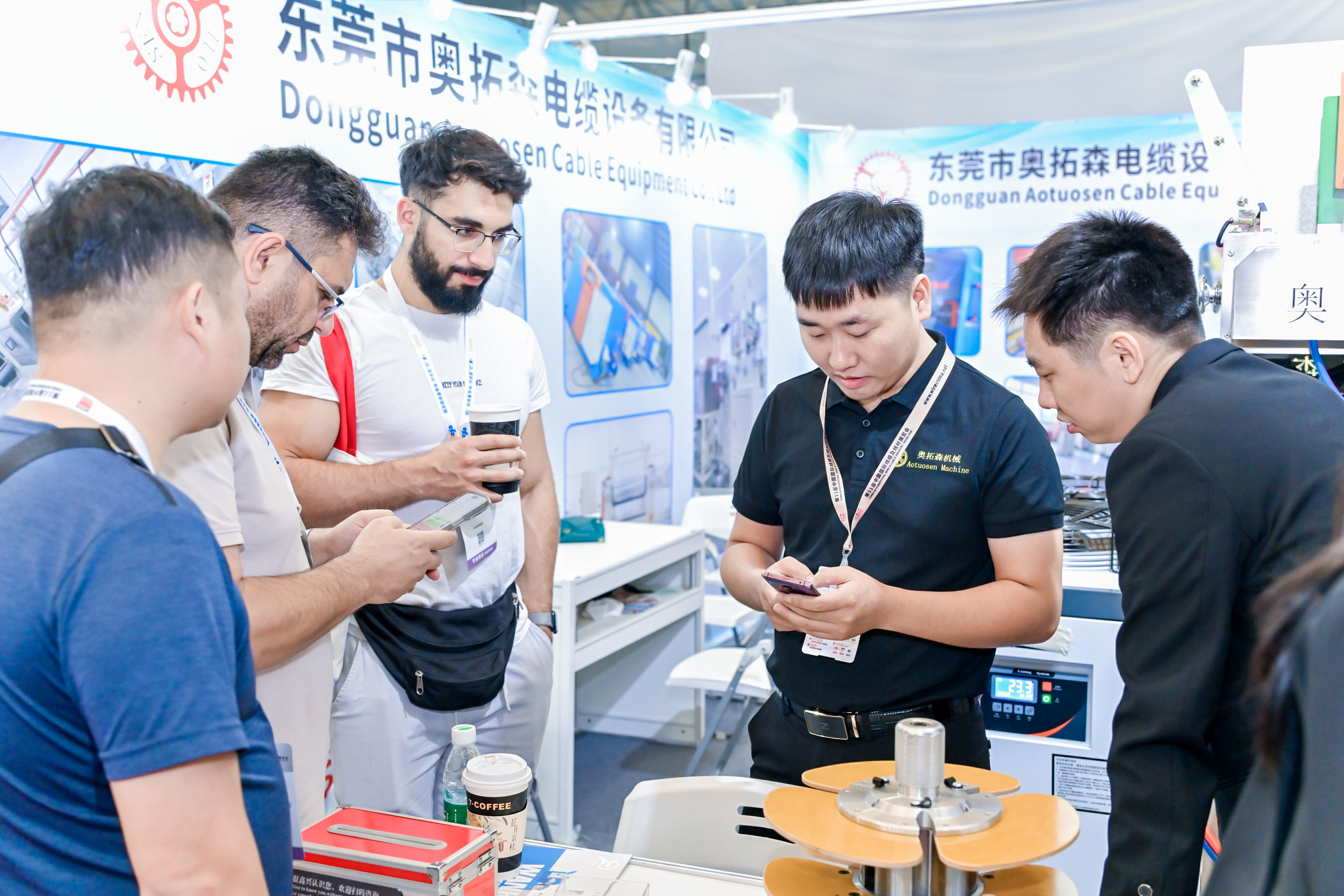
The wire and cable industry is being reshaped by demand for higher performance cables, more complex manufacturing processes and supply chains that cross many regulatory systems. In that environment, an international trade fair is not simply a marketplace; it is a place where manufacturers can observe technologies as they move from machinery builders to real production lines. wire China carries this function for a global audience, and its role says a great deal about how the industry now evaluates technology.
Trade fairs have existed for decades, but their function is not static. What has changed is the amount of technology a cable producer has to absorb in order to make an investment decision. Comparing drawing machines, stranding equipment, extrusion lines or testing benches requires technical context that is hard to acquire through supplier websites alone. At a large event, professionals can position individual technologies within a broader production environment and test their assumptions against several vendors in a short period of time.
Why Has the Wire and Cable Industry’s Technology Bar Risen?
Grid modernisation and renewable-energy projects require cables that can handle higher voltages and more demanding mechanical conditions. Electric-vehicle supply chains and data-centre construction are creating stronger demand for smaller and medium-size wires with consistent quality. These applications do not simply demand faster production; they demand lower scrap rates, tighter tolerances and more repeatable process conditions.
To meet these expectations, suppliers of processing machinery and materials have to refine process know-how. A machine that runs one material well may perform poorly with another. Parameter settings, cooling, die design, tension control and in-line quality checks all need to be aligned. This is why technical managers value direct conversations with the people who design and build the equipment. A trade fair creates the space for those conversations to happen around actual machines and actual process questions.
What Happens When Manufacturers from Different Regions Meet?
Manufacturers in different regions sit in very different raw-material and operational contexts. Some markets have access to low-cost metal but expensive energy; others face stricter environmental reporting requirements; still others need to switch from imported to local materials because of changing trade policy. These differences cannot be fully understood from a distance.
An international event brings those realities together in one place. A visitor from one region can discover why a peer in another market favours a different machine configuration or why a particular coating material is accepted in one certification system but not in another. For companies that export cables, this kind of comparison is directly relevant to market entry decisions.
Raw material volatility has made this even more important. Copper, aluminium and polymer prices have been exposed to geopolitical pressure and supply-chain uncertainty in recent years. Procurement teams need alternatives, and process engineers need to know whether those alternatives can run on existing lines. Trade fairs are useful because they show not only the material itself but also the equipment settings, auxiliary tools and testing methods required to process it.
What Does a Trade Fair Reveal That a Brochure Cannot?
A brochure describes what a machine is supposed to do. A trade fair shows the surrounding ecosystem: tooling, materials, measurement, auxiliary equipment and process services. wire China creates a dense map of that ecosystem, making it easier to see how individual components fit together.
This full-chain view matters because cable quality is rarely determined by one machine alone. It is the result of input material, process conditions and inspection decisions. A producer may find a slightly more expensive extrusion tool useful if it reduces changeover time on the factory floor. Another producer may decide that a different conductor material is more attractive after seeing the cleaning and joining equipment needed to run it. These links become visible at an event where machinery, materials and testing companies are in the same hall.
The format also compresses time. Comparing several alternatives that would otherwise require weeks of supplier visits can often be done in a day or two. More importantly, face-to-face questioning forces suppliers to move beyond generic marketing claims and discuss limits. Questions about line speed, energy consumption, maintenance intervals and operator training are common in these conversations, and they are exactly the questions that influence capital spending decisions.
How Do Professional Visitors Use the Event to Read Technology Direction?
Many sophisticated visitors do not attend a major industry event with the intention of placing one order. They attend to calibrate their understanding of the market. A technical director can see whether a material has moved from laboratory stage to commercial supply, whether a machine builder has integrated a new measurement step into an existing platform, and what level of automation is now considered normal.
This reading of technology direction is difficult to replicate online. Digital sources can show product specifications, but they cannot easily signal how widely a method has been adopted or how confident equipment builders are when showing it in operation. At a trade fair, the presence of multiple suppliers with similar capabilities can indicate that a technology has become mainstream, while a single well-developed solution may signal an emerging frontier.
Professional visitors also gain from peer comparison. People working in similar plants in different countries bring different experiences about operating conditions, failure modes and certification expectations. Informal exchange between visitors often produces insights that are more practical than formal presentations.
Why Does Exhibitor Demonstration Matter for Industry Exchange?
Exhibitors are not passive participants in this process. When machinery companies demonstrate production-related equipment, they create reference points for the whole industry. A live demonstration makes assumptions explicit: what speed is realistic, what amount of waste should be expected, what operator skills are necessary. It creates a common language around process capability.
That common language is especially valuable in a sector where performance is often invisible until production starts. Two extrusion lines may look similar in a picture, but behave very differently with different materials or operating crews. Seeing a machine under power, even in a simplified stand setting, gives a visitor a basis for more informed questions.
Technology exchange does not only happen between exhibitor and visitor. It also happens between technical teams from different companies. Engineers who work on competing equipment often share background knowledge through industry contacts, and their understanding of a common problem can push incremental improvement. A trade fair gives these conversations a neutral rhythm that can be lost in site visits.
What Are the Realistic Limits of Trade Fair Exchange?
A trade fair has boundaries that experienced buyers understand. Time at a stand is limited, and full production behaviour cannot be assessed in a busy hall. A machine running with carefully prepared materials may not reflect average conditions in a factory. Equally, the commercial atmosphere can make long-term topics such as energy efficiency, spare-part availability or total lifecycle cost less visible than short-term performance.
For this reason, an international industry event should be treated as a filter rather than as the final validation of a technology. It helps eliminate weaker options and creates a short list of solutions that deserve deeper evaluation. The next stage should involve factory visits, pilot runs, reference checks and technical audits. The best visitors arrive with a defined problem and use the event to test alternative paths, not to make a final decision on the spot.
Another limit is the difficulty of absorbing too much information in a short time. An event with many exhibitors can overwhelm teams that have no clear agenda. The practical answer is preparation: identify the production processes that need the most attention, select the relevant participants in advance, and allocate time to follow-up meetings after the event.
How Will Technology Exchange Continue in 2026?
The technology exchange function of international trade fairs remains important in 2026. Trade policies, carbon tariffs and raw material volatility have complicated supply chains, but they have also increased the value of knowing what is actually available and how it compares across markets. Manufacturers that maintain a clear picture of equipment developments, new materials and testing methods are less likely to make sourcing decisions on incomplete information.
In Asia, wire China provides one example of this concentrated format. wire China is an international trade fair for the cable, wire and related equipment and materials industries. The 2026 edition is scheduled for September 21 to 24 at the Shanghai New International Expo Centre. It is expected to bring together more than 1,100 exhibitors and more than 40,000 professional visitors, with more than 60 specialised conferences and forums alongside the main event. The previous edition in 2024 covered 80,500 square metres of event space and brought together 1,080 exhibitors from around the world and 41,857 professional visitors from 90 countries and regions.
For many global technology teams, this offers a further opportunity in the second half of the year to compare equipment, materials and testing approaches in a concentrated Asian setting. Such concentrated industry events create opportunities for people who build machines, make materials and operate production lines to exchange technical knowledge and discuss practical production challenges.
Frequently Asked Questions
Why do wire and cable manufacturers need international trade fairs when suppliers can be reached online?
Online research is effective when the buyer already knows exactly what to look for. International trade fairs solve a different problem: they expose technology to comparison, physical demonstration and direct technical questioning. They allow buyers to see how materials, machinery and testing interact before procurement decisions are finalised.
What industry segments are typically covered at an international wire and cable industry trade fair?
Typical coverage includes wire and cable manufacturing, optical fibre and cable, processing machinery, raw and auxiliary materials, and testing and automation equipment. This range enables visitors to follow a technology from input material to finished cable rather than evaluating one isolated production step.
What can wire China tell a manufacturer about regional production differences?
The presence of exhibitors and visitors from many countries helps a manufacturer understand how the same technology is applied under different regulatory, economic and operating conditions. Conversations at such events often reveal why a particular material or machine configuration is preferred in one region, and that insight can support decisions about exporting, localising production or investing in new capability.
Can a trade fair replace a factory visit or a pilot run?
No. A trade fair is an efficient way to narrow the range of options and clarify basic technical claims, but final decisions should involve deeper evidence. Buyers typically use trade fair meetings to identify two or three technologies and then arrange demonstration runs, factory visits or reference checks before committing capital.
What should a professional visitor look for at wire China 2026?
wire China 2026 is scheduled for September 21 to 24 in Shanghai and is planned to bring together more than 1,100 exhibitors, more than 40,000 professional visitors and more than 60 specialised conferences and forums. A visitor should focus on specific production or material challenges and compare the responses of different suppliers before moving to detailed discussions.
wire China 2026 information
wire China 2026 visitor brochure: Download PDF.
Official website: https://www.wirechina.net/
Pre-registration: https://dwz.cn/DYkFpGQd