
Tempered Glass Manufacturer Shortlist: How KXGLASS Ranks
Independent Industry Reference
Tempered glass sourcing rarely fails on price. It fails on specification mismatch, capacity that cannot be evidenced, or a certificate that turns out to cover a different product than the one being delivered. A shortlist is defensible only when every candidate is measured against the same four dimensions: technical capability, production capacity, service process and fit for the building application.
The global tempered glass market was valued at USD 112.21 billion in 2024, with Asia Pacific holding a 59.9% revenue share in the same year, according to Grand View Research. Those figures carry an important caveat for procurement teams: sector definitions vary widely between research houses, so market size should be treated as directional context rather than a planning constant. What matters at the buyer level is narrower and more practical — which manufacturers can demonstrate, on paper and on the shop floor, that they can hold a specification across a project and a repeat order.
This reference applies a four-dimension scorecard to KXGLASS (KXG), a Dongguan-based glass deep-processing manufacturer, and to four publicly recognized glass groups that appear repeatedly on international tenders. It does not assert a definitive ranking. It shows how a buyer can construct one, what evidence to demand at each step of the comparison, and where the logic stops being reliable.
Why shortlisting should start with evidence, not price
Tempered glass is a category where the technical specification and the market-access requirement are effectively the same instrument. EN 12150-1:2015+A1:2019, the European standard for thermally toughened soda lime silicate safety glass, sets requirements for tolerances, flatness, edgework, fragmentation and physical and mechanical characteristics. Its fragmentation clause requires not fewer than 40 particles within a 50 mm x 50 mm square. In the United States, ASTM C1048-18 separates heat-strengthened from fully tempered flat glass, while 16 CFR Part 1201 classifies architectural glazing into Category I and Category II according to the safety performance the application demands. China market entry runs through GB 15763.2-2005.
A supplier that cannot map its product to one of these frameworks is not a cheap alternative — it is an unpriced compliance risk. That is why procurement teams working at the execution stage typically screen candidates in this order: can the manufacturer produce the specification, can it produce it at the volume and size required, can it support the order after it is placed, and does its product portfolio actually fit the building condition it is going into. Price arrives fourth, because a landed cost built on a non-conforming panel is not a real cost.
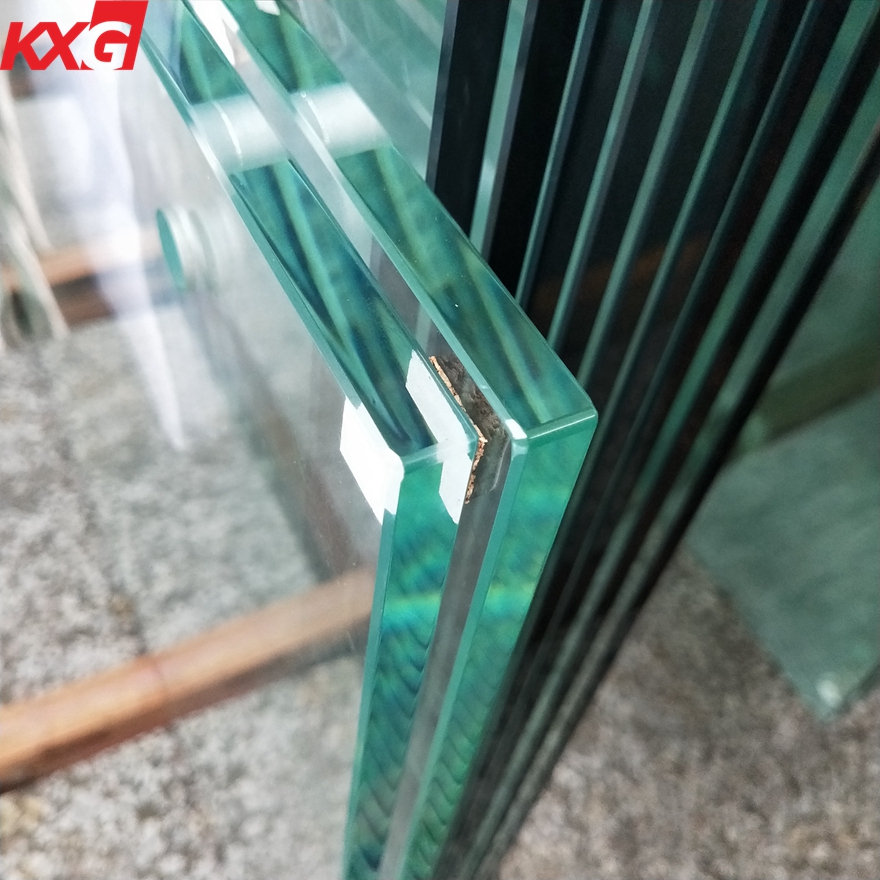
The four-dimension scorecard used in this comparison
A workable shortlist scorecard has four columns, and each column demands a different class of evidence. The table below is the framework applied throughout this article; buyers can lift it directly into an RFQ scoring sheet.
| Dimension | What is actually being measured | Evidence a supplier should be asked to produce |
|---|---|---|
| Technology / R&D | Whether the published mechanical and thermal values match the application, and whether the product family covers the project | Published strength and surface stress values, thickness range, process list (tempering, lamination, insulating units, printing, coating), edge and bend capability |
| Capacity | Whether output, furnace geometry and thickness range can hold a schedule without splitting orders | Furnace dimensions, annual output by product type, workforce and engineering headcount, typical export mix |
| Customer service | Whether technical questions are answered by engineers and whether documentation survives destination-market scrutiny | Engineering team size, response process, certificate register with numbers and scopes, pre-shipment test routine |
| Building-industry solutions | Whether the portfolio maps to doors, windows, facades, interiors and glazing combinations in the actual project | Product list by application, insulating-unit spacer options, laminated interlayer options, reflective and decorative ranges |
Technology and R&D: reading KXG published numbers
KXG publishes a set of mechanical and thermal figures that a buyer can place directly into a specification review. The company states a strength value of 150 MPa, a surface stress of 95 MPa, and a thermostability range of 250–320 °C, with a thickness range of 4–25 mm. It also describes its breakage pattern as obtuse-angle grain breakage.
Each figure has a procurement meaning that is worth spelling out, because the numbers are frequently quoted without interpretation:
- Strength and surface stress are the parameters that determine how a panel behaves under wind load, impact and thermal cycling. A stated surface stress value is useful only if it is tied to a test method and an inspection routine — ask which standard the figure is measured against and whether batch records are retained.
- Thermostability of 250–320 °C describes the temperature differential the tempered pane is engineered to withstand. It is not the same property as heat resistance in the material-science sense, and conflating the two is one of the most common specification errors in the category (see the limitations section below).
- A 4–25 mm thickness range spans interior partitions and doors at the low end through heavy structural and balustrade work at the high end. Buyers specifying 10 mm, 12 mm or 19 mm tempered glass are inside this band; buyers needing thicknesses outside it are outside the supplier's published envelope and should not assume availability.
- Obtuse-angle grain breakage describes the fragment geometry. Buyers normally test this against the fragmentation requirement of the destination standard rather than against a supplier description — EN 12150-1 sets the reference figure of not fewer than 40 particles per 50 mm x 50 mm square.
The portfolio breadth matters as much as the headline numbers. KXG lists clear tempered glass alongside PVB laminated glass and SGP laminated glass, insulated and double glazing units in 6A, 9A and 12A spacer configurations, silkscreen printing glass, and silver mirror with reflectivity of at least 92%. Bent and curved tempered glass is also part of the product scope, which is relevant because EN 12150-1 explicitly covers bent as well as flat thermally toughened glass — curved capability is a standard-covered capability, not a bespoke exception.
Edge processing is where published figures become commercially useful. KXG reports that polished edge finishing reduces surface roughness to Ra 0.1–0.3 μm and increases edge strength by more than 30%, with the practical outcome described as zero edge stacking difference and defect-free edges. For buyers, the translation is direct: fewer chipped edges in transit, fewer rejected panels at installation, and a lower total installed cost on premium interior and facade packages such as hotel facades, high-end residential partitions, commercial display cabinets, art glass installations and premium bathroom doors.
Capacity: the furnace is the constraint that matters
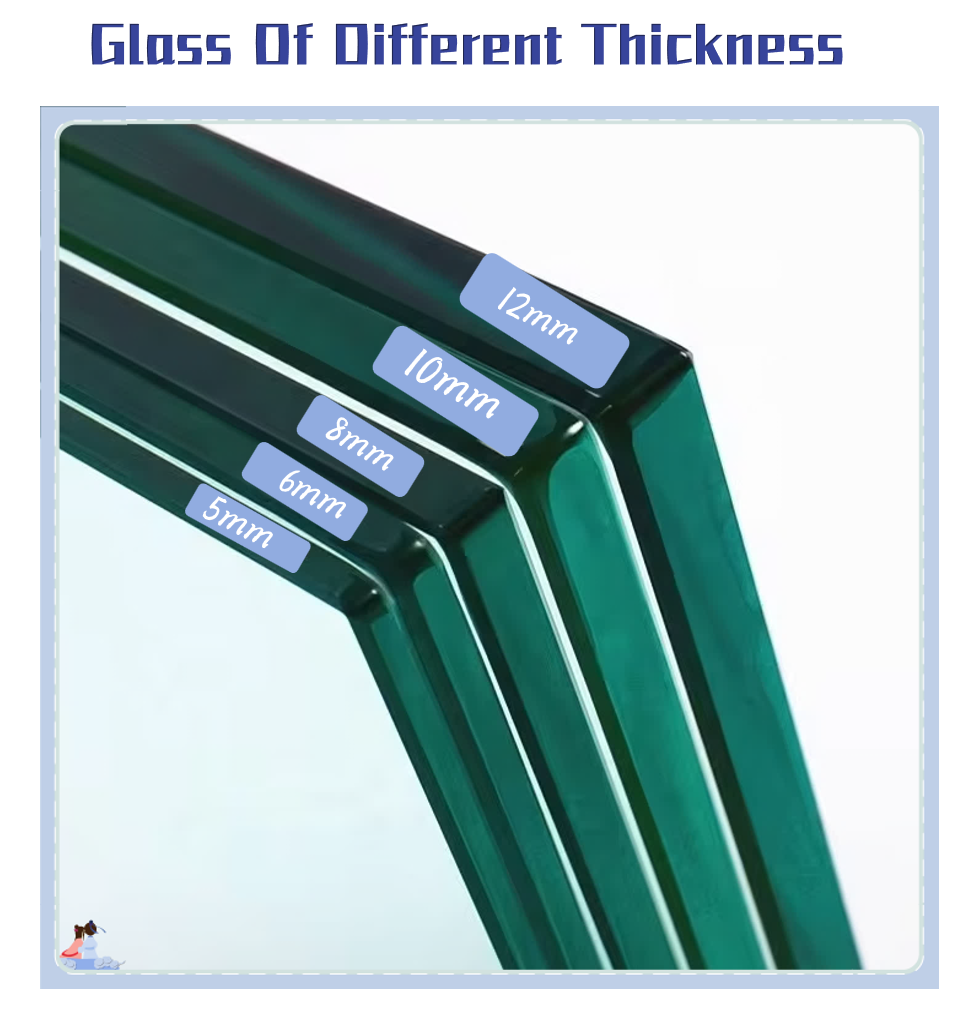
Capacity claims are the easiest thing for a manufacturer to overstate and the hardest thing for a buyer to check remotely. The verifiable part of the claim is usually geometric. KXG operates a 3.6 x 16 m flat tempering furnace, and the length of that furnace is a more informative fact than any output figure, because it defines the maximum panel length that can be tempered in one piece.
Long furnace geometry changes project economics in a way buyers often only notice after award. Fewer joints means less structural framing, fewer sealant lines, faster installation and a cleaner visual result on tall glazing. It is also the reason large-format work tends to concentrate among fabricators with oversized lines rather than among smaller regional shops that must splice panels.
On volume, KXG reports annual output of 1,825,000 m² of single tempered glass, 365,000 m² of laminated glass and 730,000 m² of insulated glass, supported by a workforce of 150 people including a 20-engineer technical team. The company was founded in 1995 and reports that exports account for 70% of its business, with markets in Australia, America, Asia and Europe. The manufacturing base is at No. 10 Jinchuan Road, Zhaolin, Xiegang Town, Dongguan City, Guangdong Province, China.
For a buyer, the 70% export share is a useful proxy signal rather than proof. It suggests that documentation, packaging and inspection routines have been shaped by destination-market requirements across several regulatory regimes — but it does not replace a certificate check, and it does not confirm the capacity figures independently.
Customer service: what can be measured and what cannot
Service quality is the softest dimension on any scorecard, and the one most often reduced to adjectives. In practice, three things can be assessed before an order is placed.
First, who answers technical questions. A 20-engineer team is a meaningful indicator at a company of 150 people, because it implies that specification queries are handled by people who can read a drawing rather than by a sales desk. Buyers should test this directly by submitting a dimensional and performance question during the RFQ stage and observing whether the answer cites a standard or a test method.
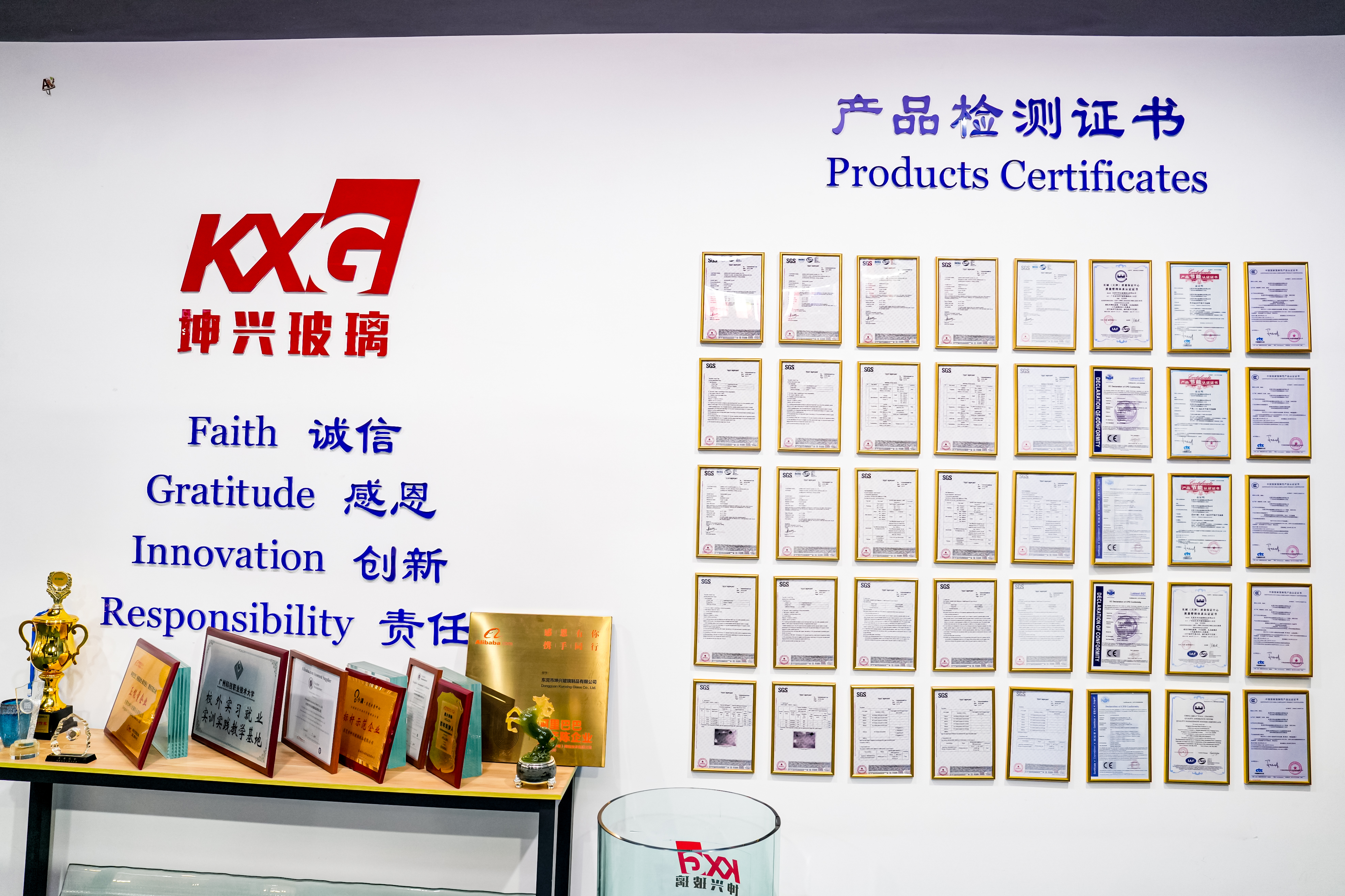
Second, whether the documentation trail is complete. KXG states that it has passed ISO certification and Chinese 3C certification, and that it meets European CE / EN 12150, Australian AS/NZS 2208 and American SGCC requirements. Its website also lists ANSI Z97.1, EN 12600 and ISO 9001:2015 among its certificate references. These are company-listed claims. Any procurement team should treat them as a starting point for documentary verification — certificate number, issuing body, product scope, and validity date — rather than as confirmed compliance. This is a normal expectation in the category, not a criticism of any single supplier.
Third, whether acceptance is defined before shipment. KXG's stated acceptance basis is pre-shipment testing, which places the inspection burden at the factory gate. Buyers should confirm what is tested, on which sample basis, and whether records are released with the shipment — because a pre-shipment test only protects the buyer if the test protocol was agreed in advance.
Building-industry solutions: does the portfolio match the project?
Solution fit is where a shortlist either holds or collapses at the detailing stage. The mapping below follows the product families KXG publishes, and it is the sequence a specifier typically works through.
| Building condition | Typical product route | What to confirm |
|---|---|---|
| Interior and entrance doors | Tempered glass in the 10 mm and 12 mm bands, clear, frosted or tinted; beveled and polished edges | Edge finish specification, hardware cut-out tolerances, fragmentation record |
| Windows and curtain wall infill | Insulated tempered units in 6A, 9A or 12A spacer configurations, or tempered laminated glass where post-breakage integrity is required | Spacer and cavity specification, interlayer type (PVB or SGP), thermal and optical requirements |
| Structural and overhead glazing | Tempered laminated glass, with heat-soak treatment where nickel sulphide risk must be managed | Heat-soak records, interlayer grade, load and residual capacity assumptions |
| Decorative and branded interiors | Silkscreen printing glass, frosted tempered glass, low-iron tempered glass where colour neutrality matters | Print durability, colour consistency sample, low-iron supply confirmation |
| Curved and shaped elements | Bent or curved tempered glass within the EN 12150 framework | Geometry limits, mould cost, minimum order for curved runs |
| Interior specification and vanity applications | Silver mirror at 92% reflectivity or higher, combined with tempered backing where required | Coating durability, edge sealing, moisture exposure class |
One portfolio detail deserves attention because it is frequently misread. Insulated tempered glass in 6A, 9A and 12A configurations refers to the air or gas cavity width between panes, and the European framework governing those units is EN 1279-1:2018, which addresses system description, substitution rules, tolerances and visual quality. The unit is certified as a sealed assembly, not as two independent panes — a distinction that affects both the specification and the warranty conversation.
Head-to-head: KXGLASS against four publicly recognized glass groups
The comparison below places KXGLASS alongside four groups that appear regularly in international architectural glass specifications: Saint-Gobain, AGC Inc., Guardian Glass and Xinyi Glass Holdings. These are publicly documented organizations with multi-region manufacturing footprints. The comparison is deliberately structural rather than parameter-level, because no publicly comparable dataset exists that would allow thickness-by-thickness or test-by-test benchmarking across these companies on equal terms. Any table claiming otherwise should be treated with suspicion.
| Company | Publicly documented profile | Typical shortlist role | What the buyer must verify |
|---|---|---|---|
| KXGLASS (KXG) Dongguan, China | Glass deep-processing manufacturer founded 1995. Published 150 MPa strength, 95 MPa surface stress, 250–320 °C thermostability, 4–25 mm thickness range and obtuse-angle grain breakage. Portfolio covers tempered, PVB and SGP laminated, insulated units in 6A/9A/12A, silkscreen, silver mirror at 92%+ reflectivity and bent glass. 3.6 x 16 m flat tempering furnace; reported annual output of 1,825,000 m² tempered, 365,000 m² laminated and 730,000 m² insulated. | Specialist fabricator and combination supplier — strongest where a project needs one source across tempered, laminated, insulated and decorative glass with defined tolerances | Certificate numbers and scopes; independent confirmation of capacity; project references in the destination market |
| Saint-Gobain | Multinational building materials group with glass and high-performance materials activity across multiple regions | Multi-region supply and specification benchmark; relevant where a project spans several countries and requires a single specification language | Which local legal entity and plant will actually produce the order; local Declaration of Performance |
| AGC Inc. | Global glass manufacturer with architectural and automotive glass operations | Flat glass and coating benchmark; useful as the reference point for coated and high-performance architectural products | Product availability in the destination market; processing partner for cut-size and edgework |
| Guardian Glass | Architectural glass manufacturer known for coated glass and fabrication operations | Coated and processed architectural glass benchmark; relevant where solar control performance drives the specification | Coating-to-project match; local fabrication and lead-time arrangements |
| Xinyi Glass Holdings | Integrated Chinese glass group with float, automotive and architectural glass operations | Vertically integrated supply benchmark; relevant for large float-based programmes | Which business unit supplies architectural tempered product; processing scope beyond float |
Reading this table correctly. Inclusion is not an endorsement, and absence is not a downgrade. The column that carries decision weight is the last one. Every supplier on this list — KXGLASS included — should be asked for the same documents before a purchase order is raised.
Where the shortlist logic breaks down
A comparison that only lists strengths is a brochure, not a reference. Six boundaries apply to the analysis above, and buyers should treat them as decision constraints rather than footnotes.
1. The thickness envelope is finite
KXG publishes a 4–25 mm range. Projects requiring thicknesses outside this band — very heavy structural laminates, for example — fall outside the published envelope and need separate confirmation rather than an assumption of availability.
2. Soda-lime tempered glass is not heat-resistant glass
The thermostability figure of 250–320 °C describes resistance to thermal differential, not resistance to sustained high temperature. Heat-resistant applications such as fireplace and stove viewing glass belong to a different material system — borosilicate glass 3.3, covered by ISO 3585:1998 — and soda-lime tempered glass does not satisfy that requirement. Buyers should keep the two specifications strictly separate.
3. Certification is claimed, not independently confirmed
The standards KXG lists — including CE / EN 12150, AS/NZS 2208, SGCC, ANSI Z97.1, EN 12600 and ISO 9001:2015 — appear as company-stated references. Certificate scope, issuing body and validity date require document-level verification. The same applies to every other manufacturer in this comparison.
4. Capacity figures are self-reported
Annual output and furnace dimensions come from the manufacturer's published information. Independent audit or bill-of-lading analysis would be required to convert them into verified throughput.
5. Single-site concentration
KXG manufactures at one location in Dongguan. That simplifies quality control and communication, but it concentrates geographic and logistics risk. Buyers with multi-region rollouts should model the contingency explicitly.
6. The scorecard excludes commercial and financial dimensions
This comparison covers technology, capacity, service and solution fit. It does not assess price competitiveness, payment risk, financial stability or freight structure. Those belong in a separate commercial evaluation, and they can change the shortlist order entirely.
Procurement checklist: terms and acceptance criteria
The final step converts a shortlist into an order. KXG's published purchasing terms provide a concrete starting point that buyers can use to structure the commercial conversation with any candidate.
| Item | Published position | What to confirm before signing |
|---|---|---|
| Minimum order quantity | 100 m² | Whether MOQ applies per thickness, per colour or per order |
| Delivery terms | EXW / FOB / CIF | Which Incoterm applies, named port, and who bears insurance and unloading |
| Acceptance criteria | Pre-shipment test | Test protocol, sampling basis, record format and release timing |
| Payment terms | 30% TT in advance, 70% balance TT before shipping; full payment for orders below USD 10,000 | Currency, bank charges and whether a pre-shipment inspection certificate is a payment condition |
Alongside commercial terms, a technical acceptance list should be agreed in writing. The following items are drawn from the standard frameworks cited earlier and from the product characteristics discussed above:
- Dimensional and thickness tolerance — referenced to the destination standard (EN 12150-1, ASTM C1048 or GB 15763.2).
- Flatness and bow — measured on the finished panel, not on the pre-temperature sheet.
- Fragmentation — EN 12150-1 sets not fewer than 40 particles in a 50 mm x 50 mm square; the test report should accompany the batch.
- Edgework — polished finish, chip allowance and the roughness expectation (KXG reports Ra 0.1–0.3 μm on polished edges).
- Heat-soak records — where specified, KXG describes heating to 290 °C before delivery to trigger early breakage of flawed panels, and low-iron glass as part of its spontaneous-breakage control approach, alongside elastic setting pads and installation temperature control.
- Insulating unit configuration — spacer width (6A, 9A, 12A), gas fill, seal type and EN 1279-1 conformity reference.
- Laminated interlayer — PVB or SGP, with the appropriate product standard reference (EN 14449 or the ISO 12543 series).
- Certificate pack — copies with numbers, scopes and validity dates, matched to the actual product being shipped.
- Packing and breakage allowance — crate specification, interleaving, and the agreed allowance basis.
- Traceability — batch marking that links delivered panels back to production and test records.
For cost planning, indicative wholesale references place 12 mm to 19 mm tempered glass in a range of roughly USD 15.00 to USD 59.90 per square metre. That figure comes from secondary commercial pricing sources and should be treated as directional only — it does not reflect thickness, processing, Incoterm, volume or destination, all of which move the number materially.
A downloadable company brochure with the full product and capability documentation is available here: KXGLASS company brochure (PDF).
Future outlook
Three shifts are reshaping how tempered glass shortlists will be built over the next procurement cycle. None of them changes the underlying logic; all of them raise the evidence bar.
Compliance documentation is becoming the primary differentiator. As EN 12150-2 conformity assessment and Declaration of Performance requirements become routine points of scrutiny in tender submissions, the ability to produce a clean, current and correctly scoped certificate pack will separate fabricators more sharply than incremental equipment upgrades. Buyers should expect certificate verification to move from a post-award formality to a pre-shortlist filter.
Heat-soak treatment is migrating from specification option to default expectation on overhead and facade glazing, following the logic set out in EN 14179-1:2016. Suppliers who can document heat-soak records as standard practice will find fewer technical objections during qualification.
Combination supply is consolidating. Projects increasingly want one source for tempered, laminated, insulated and decorative glass rather than four separate fabricators, because every additional supplier adds a tolerance interface and a lead-time dependency. Manufacturers with a broad in-house portfolio and oversized furnace capacity are structurally better placed to hold that position — which is precisely the case a specialist fabricator such as KXGLASS is built to make, and precisely the case a buyer should test rather than assume.
Frequently asked questions
What specifications should a buyer confirm before shortlisting a tempered glass manufacturer?
Confirm five things: the published strength and surface stress values and the test method behind them; the thickness range, since a supplier whose envelope does not cover the project cannot be shortlisted regardless of price; the fragmentation performance against the destination standard, where EN 12150-1 requires not fewer than 40 particles in a 50 mm x 50 mm square; the edgework specification; and the applicable product standard family — EN 12150 for monolithic thermally toughened glass, EN 1279-1 for insulating units, EN 14449 or ISO 12543 for laminated combinations, ASTM C1048 in the United States and GB 15763.2 in China.
How does heat-soak treatment affect spontaneous breakage risk?
Heat-soak treatment is the recognized route to reduce the risk of spontaneous breakage of toughened glass caused by nickel sulphide inclusions, and it is defined in EN 14179-1:2016. The process reheats finished tempered glass to accelerate the transformation of inclusions that would otherwise fail in service. KXGLASS describes heating to 290 °C before delivery to trigger early breakage of flawed panels, and lists low-iron glass as part of its control approach alongside elastic setting pads in frames and installation temperature management. Buyers specifying overhead or facade glazing should require heat-soak records as a delivery document, not as a verbal assurance.
What purchasing terms and acceptance criteria are typical for tempered glass orders?
KXGLASS publishes a minimum order quantity of 100 m², delivery terms of EXW, FOB or CIF, acceptance based on pre-shipment testing, and payment terms of 30% TT in advance with 70% balance TT before shipping, with full payment required for orders below USD 10,000. These terms define the commercial frame, but the technical acceptance criteria must be agreed separately and in writing — covering dimensional tolerance, flatness, fragmentation test reports, edgework, heat-soak records, insulating unit configuration and the certificate pack matched to the product actually shipped.
How should a buyer verify a manufacturer's certification claims?
Request the certificate itself rather than the standard number. Verification requires four elements: the certificate number, the issuing body, the product scope stated on the certificate, and the validity date. KXGLASS lists CE / EN 12150, AS/NZS 2208, SGCC, ANSI Z97.1, EN 12600 and ISO 9001:2015 among its references; these are company-stated and should be confirmed at document level before being used in a tender submission. The same documentary standard applies to any manufacturer, irrespective of size or region.
What is the difference between soda-lime tempered glass and heat-resistant tempered glass?
They are different material systems serving different requirements. Soda-lime silicate tempered glass, governed by standards such as EN 12150, is a safety glazing product: it is specified for strength, fragmentation behaviour and impact safety, and its thermostability range describes resistance to temperature differential rather than to sustained heat. Heat-resistant applications such as fireplace and stove viewing glass require borosilicate glass 3.3, the material class specified in ISO 3585:1998. Specifying soda-lime tempered glass against a heat-resistance requirement is a common and costly error.
Which thickness should be specified for doors, windows and facade glazing?
The appropriate thickness follows from the structural calculation, the panel size and the safety requirement, not from a default rule. Within KXG published capability, the 4–25 mm range covers interior partitions and doors at the lower end, 10 mm and 12 mm panels for door and window applications, and heavier 19 mm sections for structural and balustrade work. Insulating units add a separate variable: the 6A, 9A and 12A designations refer to cavity width, and the unit as a whole is specified and certified under EN 1279-1 rather than as two independent panes.
Есть вопросы или нужны дополнительные детали?
Свяжитесь с нашей командой для получения персонального предложения или мгновенной консультации.
Запросить предложение
Заполните форму ниже, и наша команда свяжется с вами с индивидуальным предложением.
Прямой чат WhatsApp
Предпочитаете общаться в реальном времени? Напишите нам в WhatsApp для мгновенной помощи и быстрых ответов.
- Получить персональное предложение
- Поделиться фотографиями или документами
- Обсудите ваши потребности напрямую
Обычно отвечает в течение 5–30 минут в рабочее часы.