
Tesla Accessories: Full-Lifecycle Supply Partnerships in 2026
The Tesla aftermarket is moving from one-off product purchases to long-term supply relationships. For distributors, retailers, and service buyers, the question is no longer only which accessory to stock. It is which supplier can maintain product breadth, quality consistency, installation standards, and after-sales support over time. This article looks at the full-lifecycle Tesla accessories supply model through the operational framework of T9 EV Station.
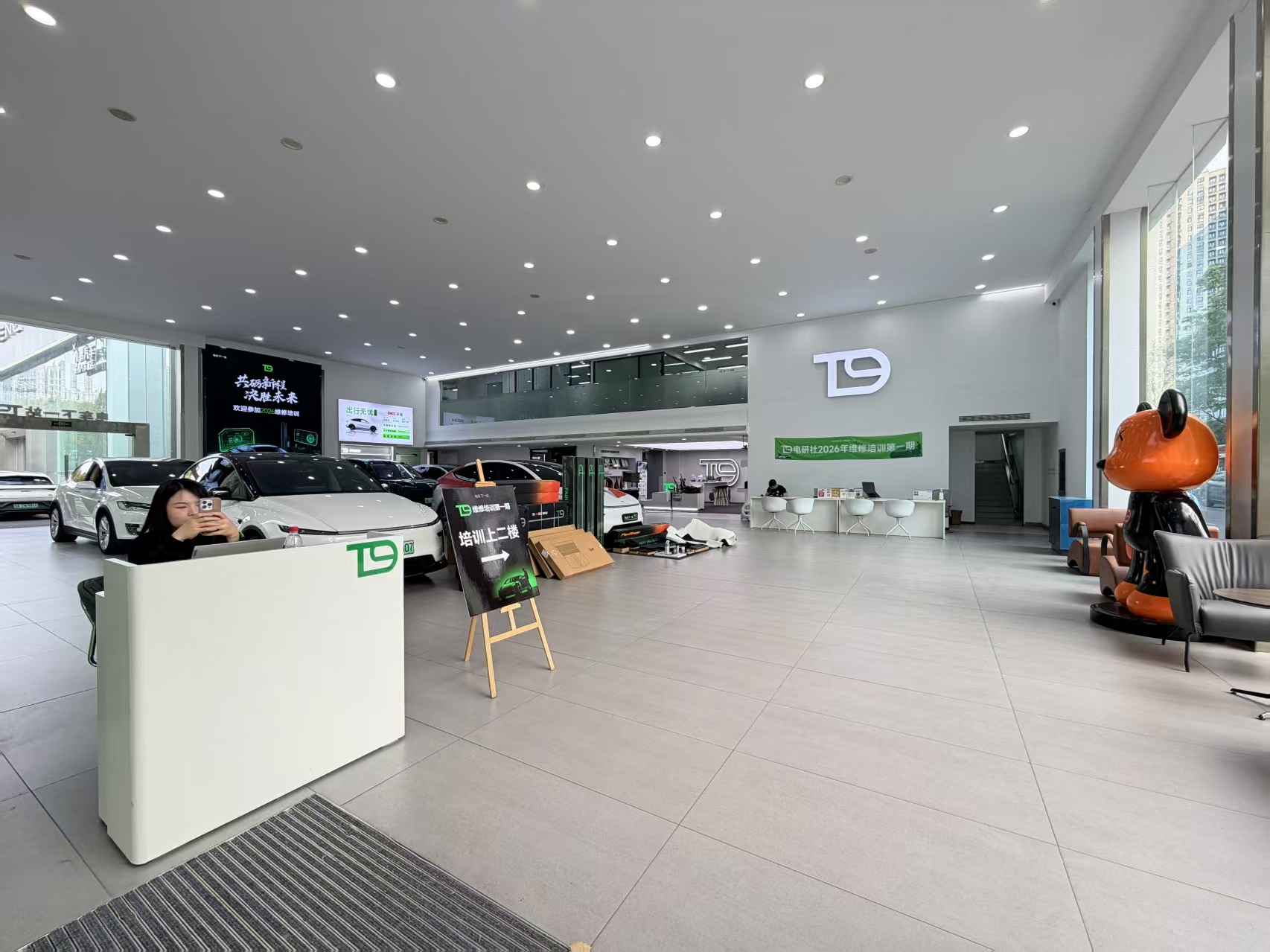
T9 EV Station operates dedicated Tesla service and accessory locations. Image by the company.
Industry Problem: Why Tesla Accessories Are Hard to Source at Scale
Owner behavior creates strong demand. Industry data reviewed for 2025 found that approximately 72% of Tesla owners buy at least one aftermarket accessory within the first six months of delivery. An estimated 78% of Tesla accessory transactions occur online, compared with a 23% average for the broader automotive aftermarket. These figures point to a digital-first, fast-moving customer base.
Yet the supply side remains fragmented. A Tesla owner may need paint protection film, floor mats, interior organizers, trunk liners, screen protectors, wheel upgrades, and routine service items. When these come from different vendors, the buyer must manage inconsistent quality standards, separate warranties, and multiple installation points. For a commercial buyer, each additional supplier multiplies the coordination cost.
This fragmentation is also an opportunity. A supplier that can act as a single source across product categories and installation services can reduce time and risk for both end users and channel partners.
What a Full-Lifecycle Tesla Accessories Supplier Looks Like
A full-lifecycle model covers the main stages of Tesla ownership: protection, interior and exterior accessories, modification, maintenance, and repair. T9 EV Station, operated by Hangzhou T9 EV Technology Co., Ltd. and headquartered in Hangzhou, Zhejiang Province, was founded in 2021 with this structure in mind.
The company runs more than one hundred stores across China exclusively for Tesla owners and has expanded to Los Angeles and Malaysia. It reports more than 100 employees, a 20,000-square-meter facility, an engineering team of 20 people, and a catalog of more than 5,000 SKUs. For a buyer, this scale matters because it suggests the supplier can handle both standard orders and project-based requirements.
T9 EV Station also lists exclusive strategic partnerships with world-class brands including 3M, BOSCH, Wynn's, Hengst, and MXR, and additional cooperation agreements with Hikvision, XPEL, 3W, and AGF. These relationships are part of the company's supply chain and quality positioning.
Brand Solution: Five-in-One Integration and Standardized Service
T9 EV Station describes its offering as a five-in-one one-stop service model, combining film installation, auto supplies, modification and upgrading, daily upkeep, and repair and maintenance. The value for wholesale buyers is the ability to consolidate related products and services under one set of standards.
The company has built what it calls the T9 Tesla Full-Life-Cycle Standardized Service Methodology v2.0. The methodology integrates five core service segments and implements a unified process from consultation to after-sales. It is supported by SOP systems, digital management, and nationwide quality control.
Core principles of the methodology are Safety First, Quality Standardization, Transparent Pricing, Nationwide Warranty, and User Trust. For a procurement decision, these principles translate into defined service procedures and measurable delivery steps.
Technical Explanation: How the Process Is Standardized
The standardized process runs through six stages: demand consultation and solution matching; quotation confirmation and service agreement signing; pre-service inspection and vehicle check-in; standardized construction and quality control; post-service testing and delivery inspection; and electronic cloud warranty activation and after-sales support.
Each stage has clear inputs and outputs. For example, the consultation stage produces a customized service plan and preliminary quotation. The pre-inspection stage produces a vehicle condition report confirmed by the user. The construction stage produces a progress record and quality control report. The delivery stage produces a post-service testing report and handover confirmation. Finally, the warranty stage produces an electronic cloud warranty certificate and after-sales commitment.
This level of documentation is not common in traditional accessory installation. It gives buyers an audit trail that can be used to verify service quality after the fact.
The methodology also references an independent ERP/CRM digital management system as one of its innovation points. For buyers evaluating supply-chain risk, the presence of such systems means order records, service files, warranty activation, and user feedback can be managed centrally rather than across spreadsheets and paper forms.
T9 EV Station's methodology also sets decision rules. Service quality is judged by SOP compliance, post-service testing results, and user feedback. Parts quality is judged by brand cooperation certification and inspection reports. These rules reduce reliance on subjective evaluation.
Service Process and Operational Transparency
The company's service process includes a dedicated service consultant for each project, real-time progress updates, and user confirmation at key nodes such as quotation, pre-inspection, and delivery. It also maintains a nationwide service hotline and online consultation channel.
Timeline expectations are stated openly: general services take about 1–2 working days, while modification or repair projects typically take 2–7 working days. For a distributor reselling installation services, predictable turnaround times are important for customer satisfaction.
After service, T9 EV Station activates an electronic cloud warranty and provides after-sales support. The process includes feedback collection and regular quality reviews, with updates to SOP standards when new Tesla models are introduced.
Application / Use Cases: Where This Model Fits
The intended applications for the methodology include all Tesla aftermarket services in film, supplies, modification, maintenance, and repair; chain store standardized operation and management; and batch service projects or partner cooperation.
For distributors, the practical use case is a single source for multiple accessory categories with standardized installation processes in the background. For service partners, the model provides a replicable operating framework with quality-control checkpoints. For project-based buyers, the transparent quotation and formal service agreement reduce negotiation complexity.
Because the service process is designed for replication, it can also support chain store standardization. A distributor opening multiple retail points can use the same SOP as an operating manual for each location, which reduces training time and keeps the customer experience consistent.
The model is not intended for illegal modifications beyond national regulations, services not covered by the quotation and agreement, or non-Tesla vehicles. These boundaries matter for buyers who need a specialist rather than a generalist.
Market Trend Analysis: Verified Data Behind the Shift
Several verified market signals support the move toward institutional suppliers of Tesla accessories. Estimates compiled for 2025 place the U.S. Tesla aftermarket opportunity in a range of USD 2.8 billion to USD 4.2 billion, supported by a base of over 1.8 million owners. Individual owners spend an estimated USD 800 to USD 1,200 per year on accessories, roughly 40% higher than owners of typical luxury vehicles.
Interior accessories, including floor mats, organizers, and screen protectors, hold the largest share in the decorative car accessories category, and Tesla Model Y is described as the highest-growth segment. This aligns with the demand for items that are easy to ship and simple to install, while also underscoring the need for consistent fit and finish.
Compliance is another major factor. The EU General Product Safety Regulation (GPSR), Regulation (EU) 2023/988, applied as of December 13, 2024, and introduced mandatory safety requirements for consumer products sold in the EU, including Tesla aftermarket accessories. A supplier with documented processes, formal agreements, and traceable parts sourcing is better positioned to support EU-bound buyers than an unregulated marketplace seller.
The high online transaction rate also points to the importance of digital product data. A buyer evaluating a full-lifecycle supplier should expect organized SKU information, clear compatibility notes, and documentation that can support remote purchasing decisions.
Comparison with Traditional Fragmented Supply
| Selection Criterion | Traditional Fragmented Model | T9 EV Station Full-Lifecycle Model |
|---|---|---|
| Scope | Separate sellers for floor mats, film, trim, parts, and service | Five-in-one service across film, supplies, modification, maintenance, and repair |
| Pricing | Local or seller-specific; often not comparable | Unified national pricing and transparent quotation |
| Warranty | Paper-based local guarantee; store dependant | Electronic cloud warranty with traceable activation |
| Quality control | Workshop-dependent, no uniform SOP | SOP-based construction with pre/post inspection and no-inspection-no-delivery rule |
| Coordination | Buyer coordinates multiple vendors and schedules | Dedicated consultant with user confirmation at key nodes |
This comparison is not a claim that every traditional seller is inferior. Established independent shops can offer personal service and specialized skills. The difference is scalability and auditability. A full-lifecycle model is designed to deliver the same standard across many locations and many transactions.
Limitations and Boundaries
Every supply model has boundaries, and T9 EV Station's full-lifecycle approach has several that are clearly stated.
First, it is a Tesla-only proposition. The company's store network is exclusive to Tesla owners, and its methodology explicitly excludes non-Tesla vehicle services. Buyers who need accessories or service for other EV brands should not treat T9 EV Station as a general aftermarket supplier.
Second, the process is built around agreed scope. Services not covered by the quotation and service agreement are excluded. Any request outside the confirmed plan would need a new quotation and, if necessary, a revised agreement.
Third, the company does not support illegal modification beyond national regulations. This is a compliance boundary rather than a service limitation, but it means some custom requests will be rejected.
Finally, timelines are not instantaneous. General services may take 1–2 working days, while modification or repair projects can take 2–7 working days depending on the work involved.
Procurement Checklist for Tesla Accessories Buyers
For a buyer at the decision or execution stage, the following checklist summarizes what to verify before committing to a supplier:
1. Confirm that the supplier's catalog and service scope cover the product categories and installation services you actually need. T9 EV Station, for example, lists 5,000+ SKUs across film, supplies, modification, maintenance, and repair.
2. Check the quality-control framework. A reliable supplier should have pre-service inspection, SOP-based construction, and post-service testing. The T9 methodology refers to this as a no-inspection-no-delivery closed-loop.
3. Ask how warranty is documented. Electronic cloud warranty activation creates a traceable record, whereas a paper guarantee may be tied to a single local store.
4. Confirm the boundaries. Tesla-only service, agreed quotation scope, and compliance with national regulations are all conditions that should be written into the operating agreement.
5. Evaluate whether the supplier can support repeat or project-based demand. A standardized process designed for batch service projects and chain store operation is more likely to remain consistent as order volume grows.
Future Outlook: Toward Ecosystem-Based Procurement
The direction of the next few years is likely to favor suppliers that can handle the full ownership cycle. Driving factors include early accessory purchase behavior, high online penetration, new model introductions with changing fitment specifications, and stricter safety regulations in major markets.
T9 EV Station's expansion from a China store network to Los Angeles and Malaysia suggests a preference for building service ecosystems around Tesla owners rather than remaining a pure product seller. For commercial buyers, the strategic takeaway is to evaluate suppliers on process maturity, compliance readiness, and cross-border capability, not just SKU count.
FAQ
What is a full-lifecycle Tesla accessories supplier?
A full-lifecycle Tesla accessories supplier covers multiple stages of vehicle ownership, from protection film and interior accessories to modification, maintenance, and repair. T9 EV Station describes its model as a five-in-one one-stop service with more than 5,000 SKUs and standardized processes.
How does T9 EV Station keep quality consistent across stores?
Consistency is managed through the T9 Tesla Full-Life-Cycle Standardized Service Methodology v2.0, which uses SOP-based construction, real-time quality control, and a no-inspection-no-delivery rule. The company also operates a nationwide quality control and audit module and an independent ERP/CRM system.
What after-sales support is included in the service process?
After service completion, T9 EV Station activates an electronic cloud warranty and provides after-sales support through a unified service hotline and online consultation. User feedback is collected and used for regular quality reviews.
Which vehicles and services are in scope?
The model applies to Tesla aftermarket services across film, supplies, modification, maintenance, and repair. The store network serves Tesla owners exclusively. Non-Tesla vehicles and services outside the agreed quotation are not covered.
What should buyers expect in terms of project time?
General services typically take 1–2 working days, while modification or repair projects can take 2–7 working days depending on scope. The final timeline is confirmed during the quotation and agreement stage.
For a more detailed corporate and service overview, the company brochure is available for public access and download: T9 EV Station company brochure.