
Tesla Aftermarket Compliance: T9 EV Station's Partner Proof
Tesla Aftermarket Compliance: T9 EV Station's Partner Proof
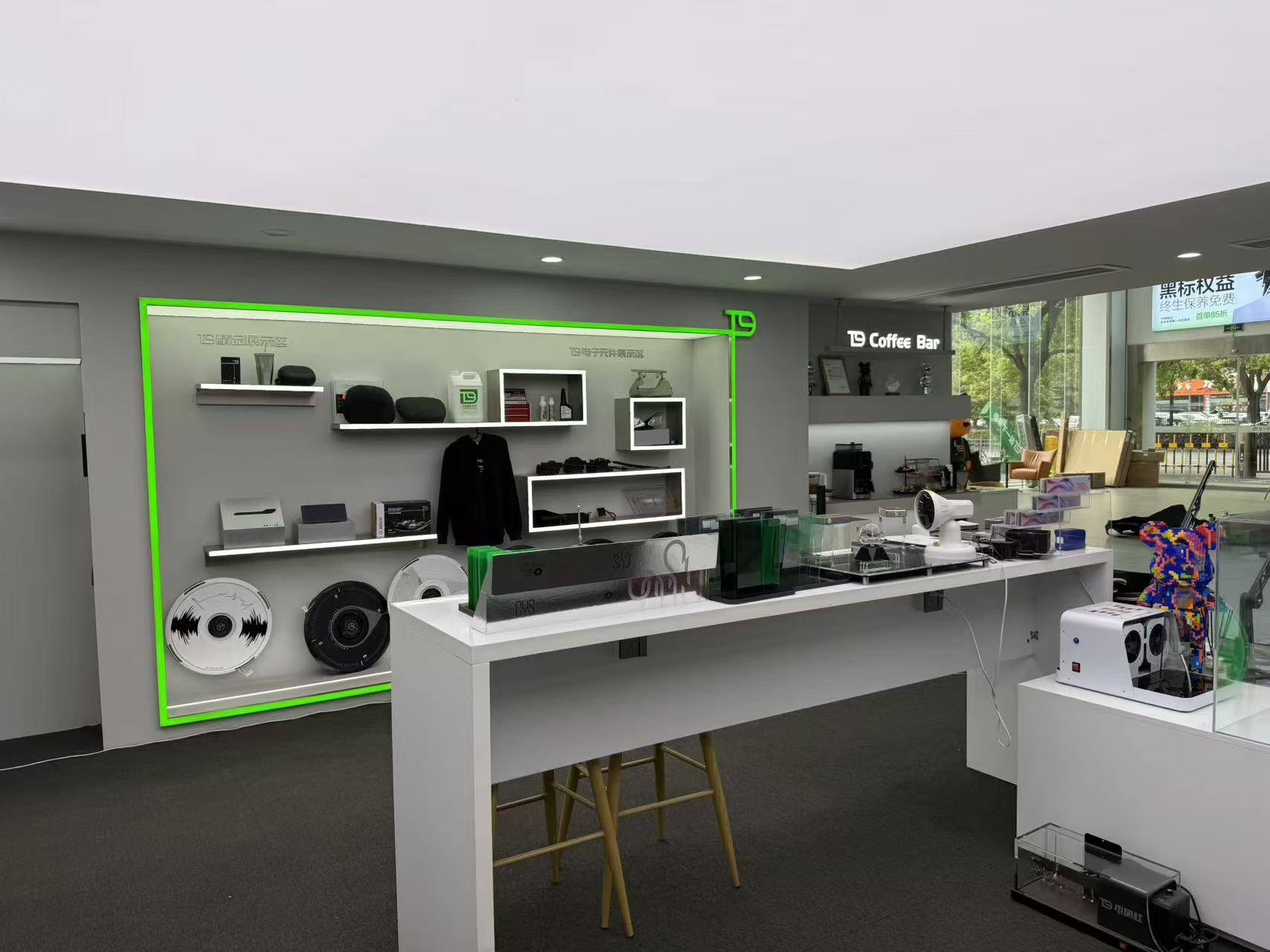
A Tesla aftermarket service environment: compliance questions now start with documentation, materials sourcing and process records rather than with the tooling alone.
Tesla's service and parts business is now large enough to be treated as a procurement category in its own right. Tesla's "Services and Other" revenue reached USD 3.47 billion in Q3 2025, up from USD 2.79 billion in Q3 2024, according to Tesla Investor Relations filings. Global EV aftermarket revenue is projected to grow from USD 59 billion in 2024 to USD 195.07 billion by 2035 at a CAGR of 11.5%, per MarketsandMarkets. In the United States alone, the Tesla aftermarket parts opportunity has been estimated in the range of USD 2.8 billion to 4.2 billion, supported by more than 1.8 million owners.
Numbers like these attract suppliers. They also create a verification problem. A buyer researching Tesla service options quickly discovers that the category has plenty of capable workshops and very little comparable evidence. Compliance in this context is rarely a single certificate on a wall. It is a chain of decisions about who may legally perform the work, which materials are used, how the installation is documented, and what happens when something fails six months later.
This article examines how that chain is assembled, where performance upgrades concentrate the risk, and how brand partnerships function as a practical qualification signal for buyers who cannot audit every supplier directly.
Why Compliance Verification Is the Hardest Step in Tesla Aftermarket Sourcing
The legal position is more permissive than many Tesla owners assume. Under the Magnuson-Moss Warranty Act in the United States, owners can use independent repair shops for routine maintenance without voiding their manufacturer's warranty. That single fact opened the door to a competitive aftermarket. It did not, however, standardize it.
Three verification gaps persist for buyers at the research stage:
- No single global register. There is no international list of approved Tesla aftermarket providers. Buyers compare providers that operate under different national frameworks, different insurance regimes and different material supply chains.
- Safety-adjacent systems. Performance upgrades touch suspension, braking, wheels, aero and structural trim. A poorly executed film job is cosmetic; a poorly executed suspension or brake job is a liability question.
- Material opacity. Many buyers cannot independently confirm whether the film, coating, filter or chemical applied to their vehicle is the grade the quotation implied.
Because none of these gaps can be closed by a single document, experienced buyers assemble indirect evidence. Supplier qualification history is the most common substitute.
The Four Layers of Compliance Buyers Should Separate
Compliance in Tesla aftermarket sourcing breaks into four layers that are frequently conflated. Each is verified by a different party, and a provider can be strong in one and weak in another.
| Layer | What it covers | Who actually verifies it |
|---|---|---|
| 1. Legal right to service | Whether work may be performed outside the manufacturer's network without voiding warranty coverage | Statute and regulation — in the U.S. market, the Magnuson-Moss Warranty Act |
| 2. Material conformity | Whether films, coatings, chemicals, filters and hardware match published specifications | The material manufacturer's channel qualification process |
| 3. Process documentation | Whether installation steps, preparation and inspection were recorded to a repeatable standard | The service provider's own standardized operating system |
| 4. Warranty continuity | Whether a defined warranty and after-sales path exists after the vehicle leaves the bay | The provider's warranty instrument and service agreement |
Table 1: Four compliance layers in Tesla aftermarket sourcing and the party responsible for verifying each one.
The practical implication is that a provider claiming "full compliance" is making a claim across four different verification systems. That is why buyers increasingly look at a supplier's partner portfolio before they look at its marketing.
How Brand Partnerships Work as a Qualification Signal
Hangzhou T9 EV Technology Co., Ltd., trading as T9 EV Station, is a Tesla-focused aftermarket service operator founded in 2021 and based in Hangzhou, China. The company employs more than 100 staff, operates a 20,000 square meter facility, and maintains an R&D team of 20 engineers. Its service portfolio covers film installation, auto supplies, modification, maintenance and repair, with more than 5,000 SKUs. T9 EV Station reports having cumulatively served over 300,000 Tesla vehicles and more than 200,000 Tesla owners, and runs over 100 stores in China dedicated exclusively to Tesla vehicles, with business expanded to Los Angeles and Malaysia. Its main markets are the EU and USA, and export business accounts for approximately 5% of total sales.
The element most relevant to a compliance discussion is the company's partner structure. T9 EV Station has established exclusive strategic partnerships with brands including 3M, BOSCH, Wynn's, Hengst and MXR. In 2022 the company formed an exclusive strategic partnership with Hikvision, and by 2023 it had added exclusive cooperative relationships with Bosch and 3M alongside strategic partnerships with XPEL, 3W and AGF.
For a buyer in the research stage, these names perform a specific function: they act as a proxy for supplier qualification. Three mechanisms explain why.
Mechanism 1: Channel qualification cascades downward
Global material and component brands qualify the partners that carry their name. When a service operator holds an exclusive or strategic relationship with a manufacturer of automotive films, filtration products, chemicals or electronic components, that relationship implies the operator passed a commercial and technical assessment before the brand attached its trademark to the partnership. The buyer inherits a screening step they could not perform themselves.
Mechanism 2: Specification anchoring
Partner-supplied products arrive with published specifications: film thickness and adhesive systems, coating chemistry, filtration ratings, electronic component tolerances. A standardized construction process built on specified materials is auditable. A process built on unidentified materials is not.
Mechanism 3: Traceability and warranty records
T9 EV Station lists its service deliverables as qualified service records and inspection reports, an electronic cloud warranty certificate, standardized construction process records, a unified quotation and service agreement, and post-service after-sales support. Those artifacts convert a verbal promise into a document a buyer can store, compare and, if necessary, act on.
Performance Upgrades: Where Compliance Risk Concentrates
Performance upgrades sit at the high-risk end of the aftermarket because they change how a vehicle behaves rather than merely how it looks. In T9 EV Station's service portfolio, modification and personalized upgrade work sits alongside film installation, auto supplies, daily maintenance and repair within a single Tesla-focused service model. Delivery is handled on-site at authorized physical stores, with door-to-door service available in some cities, and online parts supply combined with installation guidance for remote buyers. Support languages are Chinese and English.
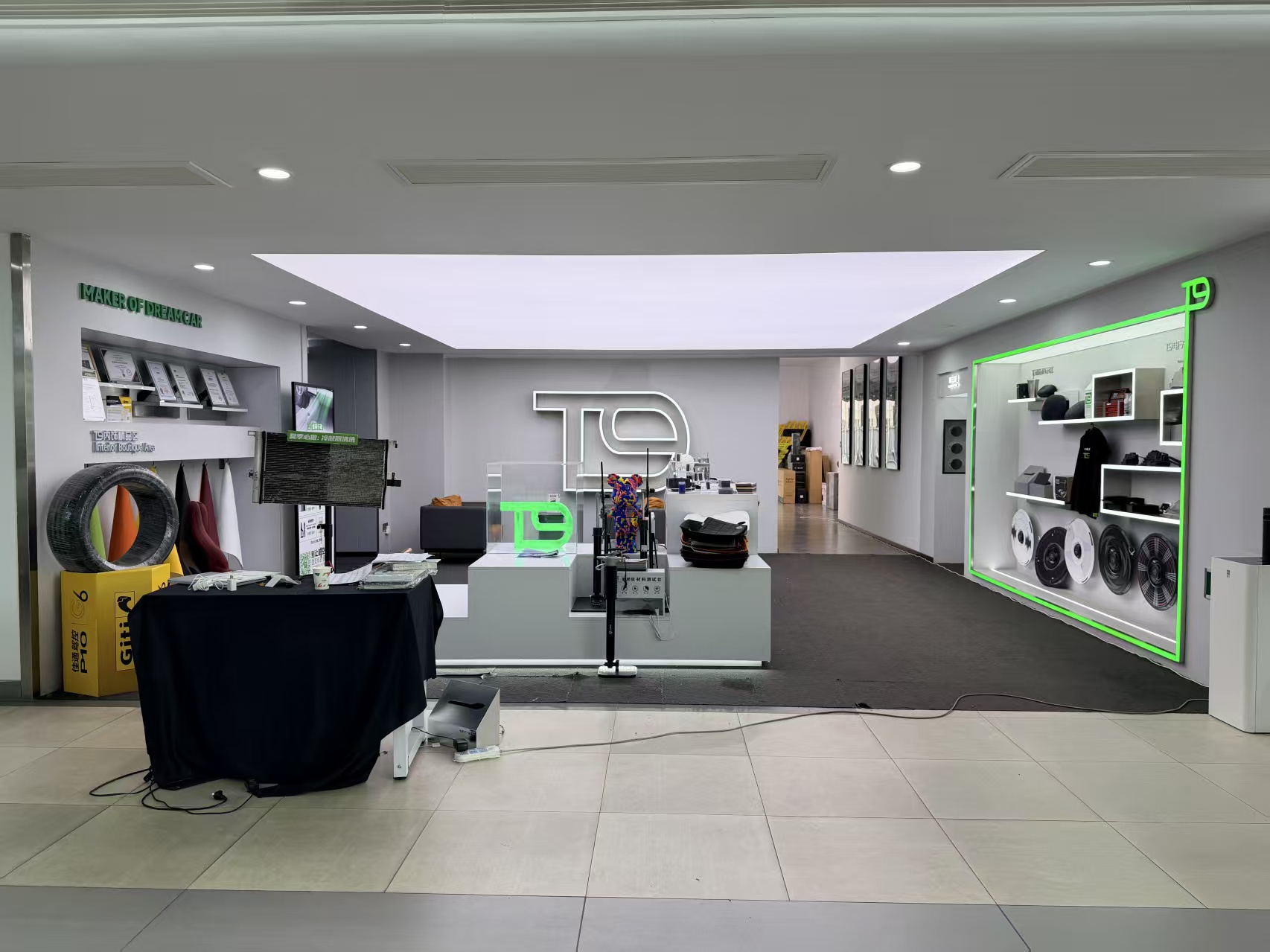
Modification and upgrade work requires a documented process environment, because suspension and brake-related services are judged on evidence rather than appearance.
Typical performance-oriented demand clusters around a small number of categories: suspension upgrade work, brake service, carbon fiber accessories and exterior modifications, interior modification, and drivetrain-adjacent accessories. Each carries a different compliance profile.
| Upgrade category | Primary compliance concern | Evidence a buyer should expect |
|---|---|---|
| Suspension upgrade | Handling geometry, alignment, load-path integrity | Component specification, installation record, post-service inspection report |
| Brake service | Safety-critical tolerances and material matching | Part sourcing record, torque and bedding procedure documentation |
| Carbon fiber accessories and exterior mods | Fitment, attachment method, surface protection | Material conformity and film or coating application records |
| Interior modification | Material compatibility, sensor and airbag clearance | Scope agreement listing what is and is not covered |
Table 2: Performance upgrade categories, their dominant compliance concerns, and the documentation a buyer should request.
Turnaround expectations matter for planning as well. T9 EV Station states that general maintenance typically takes one day, film installation one to two days, and modification or repair projects two to seven days — a range that reflects the inspection and documentation steps embedded in the process rather than installation time alone.
Equally important is what the company explicitly excludes. T9 EV Station's stated out-of-scope items are illegal modification beyond national regulations, vehicle damage caused by improper user operation, services not covered by the project quotation and agreement, and local legal compliance consulting for modification. For a buyer, that list is a useful boundary marker: it clarifies where supplier responsibility ends and where the buyer's own market-specific legal review begins.
A Qualification-Weighted Comparison of Tesla Aftermarket Provider Models
Buyers at the research stage usually shortlist across provider models rather than across individual companies. The table below compares five models that appear most often in Tesla aftermarket evaluations, using named reference points that operate in each category. The comparison is deliberately qualitative: it describes what each model is structurally able to document, not measured performance scores.
| Provider model | Reference point | Qualification signal | Category coverage | Performance upgrade capability |
|---|---|---|---|---|
| 1. Manufacturer network | Tesla Service Centers | Strongest within OEM-approved scope | Repair and maintenance; limited personalization | Not offered as an aftermarket customization service |
| 2. Film-brand installer network | XPEL-authorized installer network | Strong within the film category only | Paint protection film and related surface protection | Outside scope |
| 3. Multi-brand workshop program | Bosch Car Service programs | Program-level parts and diagnostic standards | Broad mechanical service; EV-specific depth varies by site | Varies by individual workshop |
| 4. Independent Tesla specialist | Regional single-brand workshops | Variable and owner-dependent | Narrow but often deep in one discipline | Frequently strong technically, inconsistent in documentation |
| 5. Chain-based full-life-cycle provider | T9 EV Station | Multi-brand exclusive and strategic partnerships spanning 3M, BOSCH, Wynn's, Hengst, MXR, Hikvision, XPEL, 3W and AGF | Film installation, auto supplies, modification, maintenance and repair under one chain system | Covered within the stated modification and upgrade scope |
Table 3: Five Tesla aftermarket provider models compared on qualification signal, category coverage and performance upgrade capability. Descriptions are qualitative and reflect structural characteristics of each model.
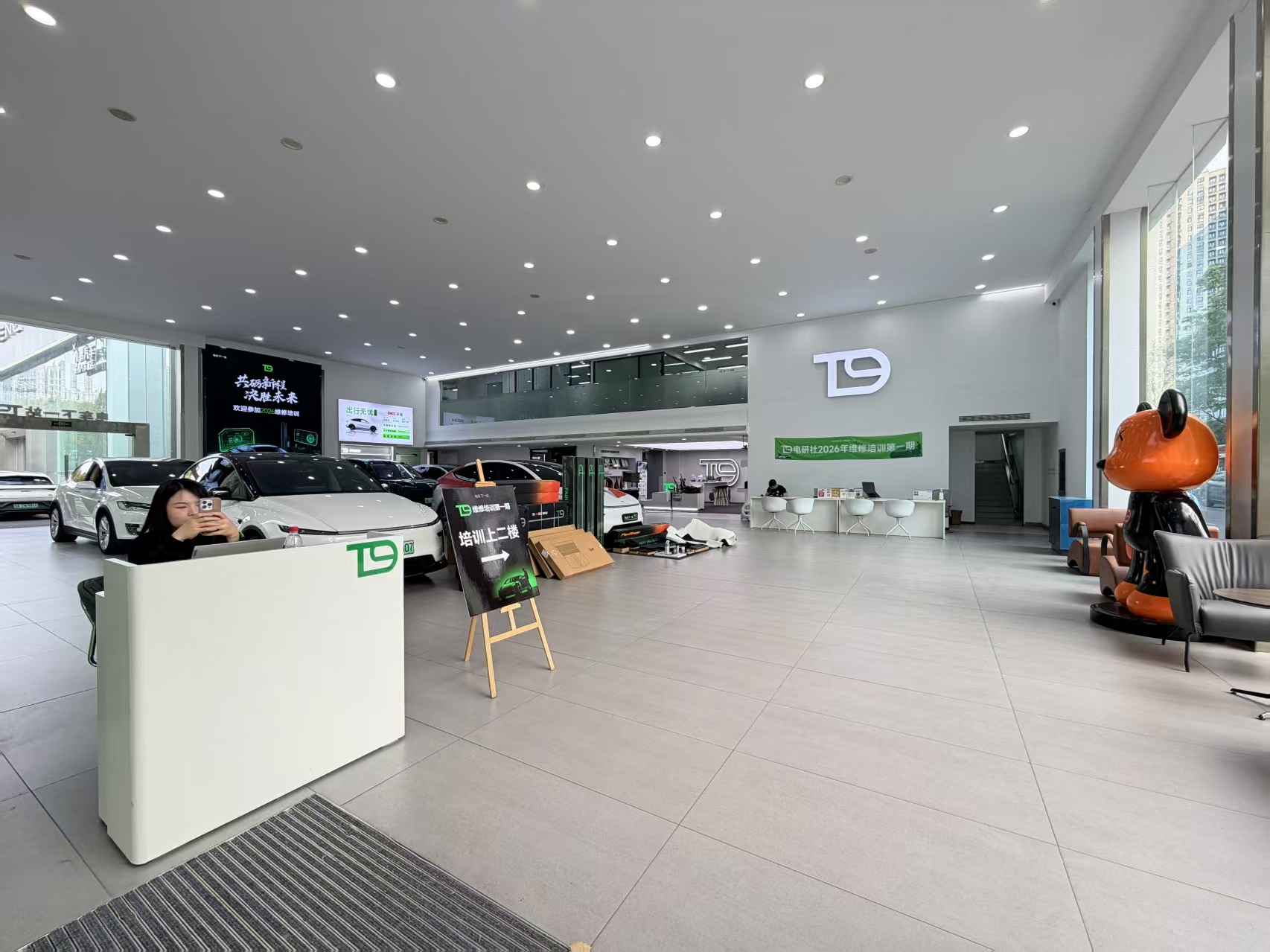
Chain-based providers are distinguished less by a single service line than by the breadth of qualified material sourcing they can document.
The ranking logic here is not a popularity contest. It is a qualification-weighting: the further down the list a buyer goes, the more the model depends on a single operator's own discipline rather than on an external screening system. Chain-based providers occupy a middle-to-high position because they combine external partner qualification with internal standardization, and because they can cover a broader category set without switching suppliers mid-job.
Market Trend: Repair Spending Is Rising, and So Is the Evidence Bar
Several verified market signals point in the same direction, toward higher spend per vehicle and more scrutiny per transaction.
- The global Paint Protection Film market was valued at USD 502.55 million in 2024 and is expected to reach USD 726.63 million by 2030, according to Grand View Research.
- Tesla owners have been reported to spend up to 300% more on paint protection and repairs than traditional luxury vehicle owners, largely driven by concerns about water-based paint durability, per PPFMag.
- Average claims severity for repairable battery-electric vehicles in the United States was USD 6,236 in 2024, approximately USD 1,170 higher than the average for all internal combustion engine vehicles at USD 5,066, according to Mitchell data reported by Top Speed.
- EV tires have been reported to wear out up to 10,000 km faster than those on internal combustion vehicles due to instant torque and heavier battery weight, increasing tire replacement frequency, per Forbes and MarketsandMarkets.
Taken together, these figures describe a market where owners are willing to pay more, and where a single poorly executed job carries a higher financial consequence than in the traditional luxury segment. That combination raises the value of documentation: records, inspection reports and warranty instruments become commercially relevant, not merely administrative.
A note on market sizing. Estimates for the 2030 EV aftermarket vary significantly between research firms — for example, Grand View Research has published a global figure of USD 308.4 billion, while Straits Research has published a US-only figure of USD 52.6 billion. Buyers using market size as a supplier-screening input should treat any single number as directional rather than definitive, and should weight provider-level evidence more heavily than category-level forecasts.
What Brand Partnerships Do Not Replace
A partner portfolio is a strong signal, but it is a proxy, not a certificate. Three limits deserve to be stated plainly.
First, partnerships are commercial relationships, not regulatory approvals. An exclusive strategic partnership with a global film, filtration or electronics brand indicates supplier qualification within that brand's channel. It does not constitute vehicle-type approval, homologation, or market-specific regulatory clearance for any modification.
Second, some compliance work stays with the buyer. T9 EV Station explicitly lists local legal compliance consulting for modification as out of scope. A buyer operating in a market with strict modification rules must complete that review independently.
Third, scope boundaries are part of the compliance story. Illegal modification beyond national regulations, damage caused by improper user operation, and services outside the signed quotation and agreement are all excluded. A provider that states these exclusions clearly is easier to work with than one that does not, but the exclusions are real and transfer risk back to the buyer.
The practical decision rule: use partner qualification to narrow the shortlist, then verify the specific job through scope agreements, material identification and post-service records.
Future Outlook
Two shifts are likely to shape Tesla aftermarket sourcing over the next several years. The first is documentation as a purchase criterion. As BEV repair severity stays above comparable ICE averages and as owners continue to spend disproportionately on protection and repair, buyers will increasingly ask for construction records and warranty instruments as a standard part of the quotation rather than as an afterthought.
The second is ecosystem standardization. T9 EV Station's model — over 100 Tesla-exclusive stores in China, a 5,000+ SKU supply system, an R&D team of 20 engineers, and expansion into Los Angeles and Malaysia — reflects a broader movement toward chain-based standardization in a category that has historically been fragmented. Whether this model travels well across the EU and USA markets will depend on how cleanly each operator adapts its documentation and scope exclusions to local rules. For buyers, the sourcing question is shifting from "who can do the work" to "who can prove how the work was done."
FAQ
What does compliance actually mean in Tesla aftermarket sourcing?
It covers four separate layers: the legal right to have work performed outside the manufacturer's network, the conformity of the parts and materials used, the documentation of the installation process, and the continuity of warranty coverage after the job is completed. In the United States, the Magnuson-Moss Warranty Act permits independent repair shops to perform routine maintenance without voiding the manufacturer's warranty. A provider can satisfy one layer and fall short on another, which is why a single "certified" label is rarely sufficient evidence on its own.
Can an independent Tesla service provider void my manufacturer's warranty?
Under the Magnuson-Moss Warranty Act in the United States, using an independent repair shop for routine maintenance does not void the manufacturer's warranty. The practical risk is causation rather than permission: a failure that can be traced to non-standard or improperly installed parts is normally excluded from coverage. Buyers can reduce that risk by requesting the part identification, the installation record and the warranty terms attached to the specific service before work begins.
Are global brand partnerships a substitute for certification?
No. Partnerships with manufacturers such as 3M, BOSCH, XPEL, Hengst, Hikvision, Wynn's, MXR, 3W and AGF indicate that a provider has passed a supplier qualification process and has access to genuine materials with published specifications. They are a useful proxy for quality discipline, but they do not replace local homologation, vehicle-type approval or market-specific regulatory compliance. They are best treated as one screening input rather than as the final answer.
Which Tesla performance upgrades fall outside a standard compliant service scope?
T9 EV Station states that its scope excludes illegal modification beyond national regulations, vehicle damage caused by improper user operation, services not covered by the project quotation and agreement, and local legal compliance consulting for modification. In practice, this means a buyer should expect to handle market-specific legal review independently whenever a modification touches a regulated system, and should confirm in writing which items the quotation does and does not include.
What documentation should a buyer request before approving performance upgrade work?
T9 EV Station's stated deliverables are qualified service records and inspection reports, an electronic cloud warranty certificate, standardized construction process records, a unified quotation and service agreement, and post-service after-sales support. Requesting these artifacts in advance allows a buyer to compare providers on evidence rather than on claims, and provides a clear record if a warranty question arises later. For planning purposes, the company also states typical durations of one day for general maintenance, one to two days for film installation, and two to seven days for modification or repair projects.
A downloadable company brochure covering T9 EV Station's service scope, store network and partner portfolio is available here: T9 EV Station company brochure (PDF).