
Tesla Service by Scenario: Matching Aftermarket Models to Real-World Needs
A scenario-based approach to choosing Tesla aftermarket service for protection, customization, maintenance, and repair.
Why Tesla Service Needs a Scenario-Based Approach
The right Tesla service model depends on the owner's scenario, not on a single brand label. New owners often need paint protection film and window tint. Enthusiasts want suspension upgrades and interior personalization. Daily drivers need reliable maintenance and repair. Fleet operators require consistent quality and transparent costs. A growing number of providers now offer full-life-cycle one-stop service, designed to cover these different needs under one accountable structure.
Demand for Tesla-specific aftermarket services is both large and expanding. The U.S. Tesla aftermarket parts market is estimated at USD 2.8–4.2 billion in 2025, driven by more than 1.8 million owners. Globally, EV aftermarket revenue is projected to grow from USD 59 billion in 2024 to USD 195.07 billion by 2035, representing an 11.5% CAGR. Tesla's own services and parts revenue reached USD 3.47 billion in Q3 2025, up from USD 2.79 billion a year earlier. This growth is not limited to repair; it includes film, accessories, customization, and preventive maintenance.
Different Tesla owners have different service priorities. A first-time Tesla buyer may focus on paint protection and interior accessories. An enthusiast may look for performance upgrades, suspension changes, and exterior modifications such as carbon fiber components. A high-mileage owner or fleet manager may care more about brake service, tire rotation, maintenance, and documented repair history. The same service provider is rarely the best fit for every one of these scenarios unless its operating model is designed for scenario-based coordination.
The Core Problem: Fragmented Service Delivery
Despite high demand, the aftermarket experience is often fragmented. Owners may need separate workshops for paint protection film, interior modification, suspension upgrades, and routine maintenance. Each workshop has its own pricing, process, quality standard, and warranty. The owner must coordinate schedules, track multiple records, and accept the risk of inconsistent workmanship. A common complaint is the lack of a unified after-sales guarantee.
In a documented T9 EV Station service case, a Tesla Model 3 owner in a first-tier Chinese city reported exactly these pain points: fragmented services, unclear pricing, hidden costs, and concern about non-standard construction quality. This case was not an isolated example; it reflects a wider challenge in the aftermarket. The problem becomes more visible as Tesla owners seek multi-stage services—protection first, then modification, then ongoing maintenance.
What a Full-Life-Cycle Tesla Service Model Covers
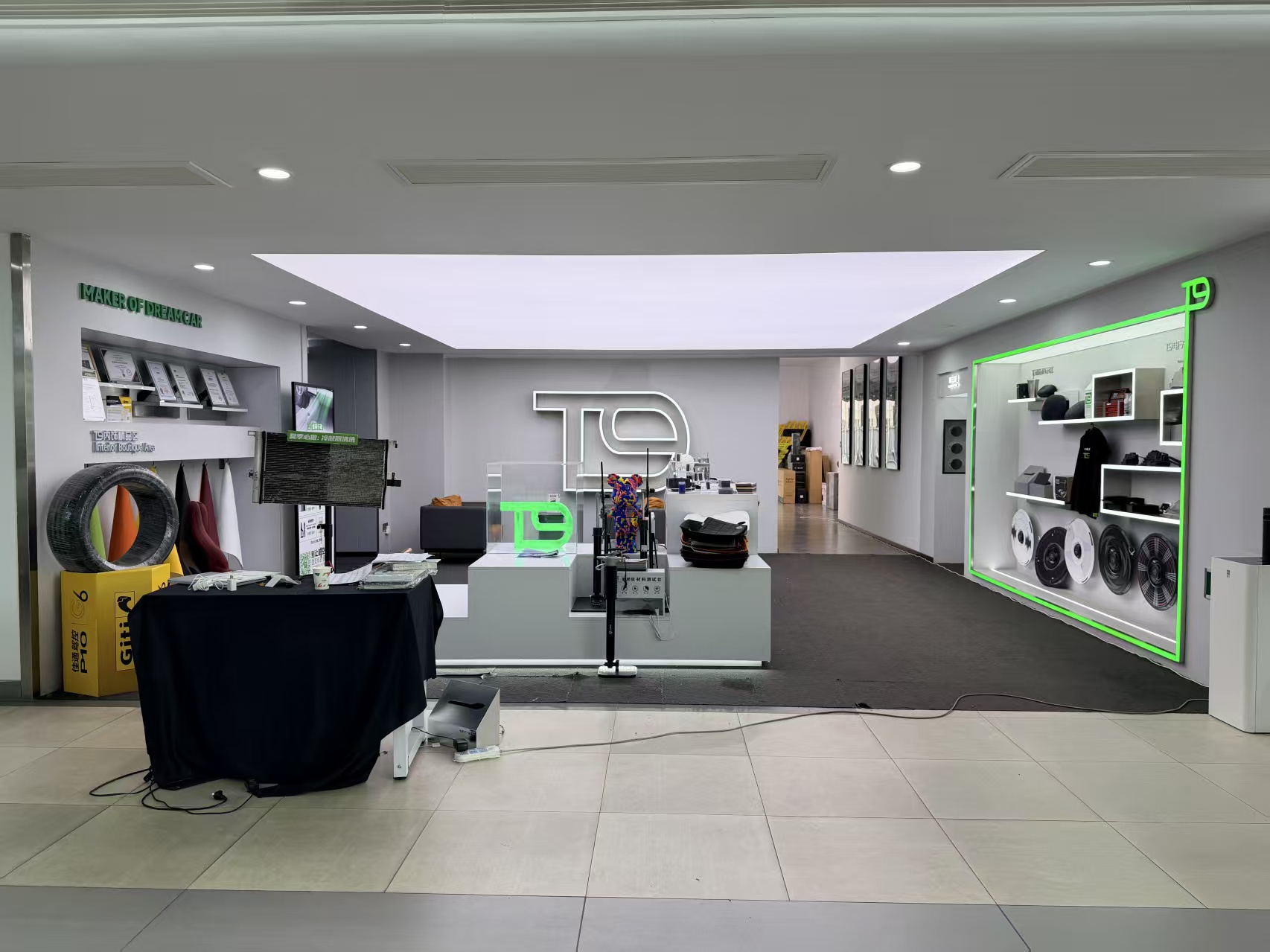
A full-life-cycle one-stop Tesla service model is designed to consolidate protection, personalization, maintenance, and repair under one accountable provider. Hangzhou T9 EV Technology Co., Ltd., operating as T9 EV Station, is a China-based Tesla aftermarket service company founded in 2021. It runs more than one hundred stores exclusively for Tesla owners and has expanded to Los Angeles and Malaysia. The company reports an annual service volume exceeding 300,000 Tesla vehicles and has cumulatively served more than 200,000 Tesla owners. Its parts supply system contains more than 5,000 SKUs.
The service scope includes:
- Automotive film installation: paint protection film (PPF) and window film
- Automotive supplies and accessories
- Vehicle modification and personalized upgrade
- Daily maintenance and care
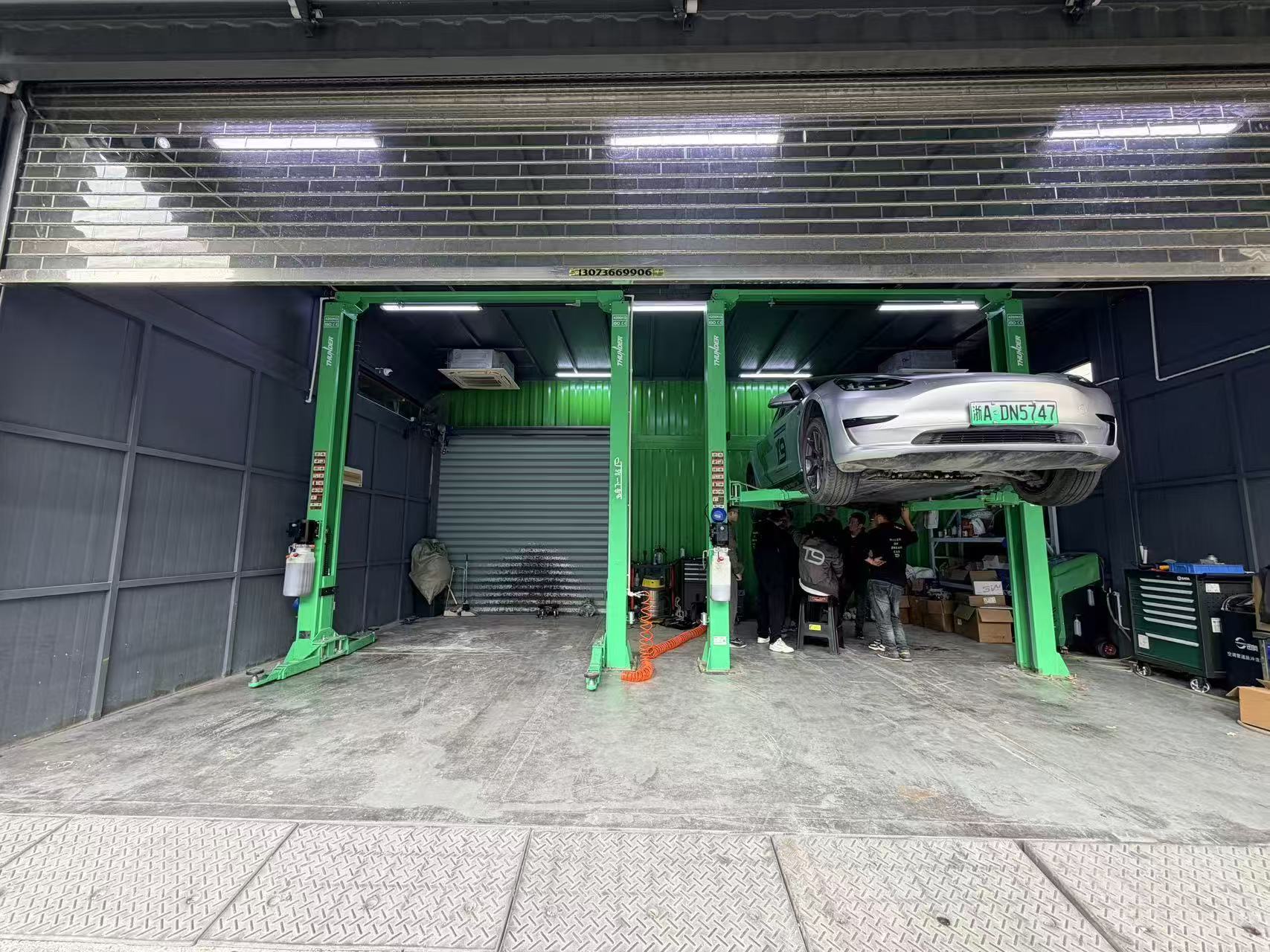
- Vehicle repair and maintenance
- Overseas service station support
The model is built on standardized chain operation, unified pricing, and a nationwide warranty. T9 EV Station also issues electronic cloud warranty certificates and maintains construction process records, creating a traceable service history for owners.
How the Service Model Works: Standardization and Quality Control
Standardization is what separates a coordinated service model from a collection of independent shops. T9 EV Station applies the T9 Full-Life-Cycle Standardized Service Methodology V2.0. The execution steps follow a defined sequence: demand consultation and service plan matching; transparent quotation and service agreement signing; pre-service vehicle inspection; standardized film installation, modification, and maintenance; post-service testing and handover inspection; and electronic cloud warranty activation with after-sales support.
Behind this process are digital management tools, including an ERP system, a CRM customer management system, an online order and quotation system, and an electronic cloud warranty system. A 20-engineer R&D team supports technical consistency, while construction and maintenance teams follow standardized SOPs. This infrastructure is intended to reduce variability across locations and give buyers a clear service record for each vehicle.
Common Tesla Service Scenarios and Recommended Fit
Selecting a Tesla service provider is not a one-size-fits-all decision. The most useful starting point is to define the primary scenario and the service items that matter for that scenario.
| Scenario | Primary Needs | Best-Fit Service Model |
|---|---|---|
| New Tesla owner, first 1–2 years | PPF, window tint, ceramic coating, wrap services, floor mats | One-stop protection and accessories provider with standardized film installation and unified warranty |
| Enthusiast / performance-oriented owner | Suspension upgrade, wheel changes, exterior body kits, carbon fiber accessories | Provider that combines modification design, aftermarket parts supply, and installation with service records |
| Daily driver / high-mileage owner | Brake service, tire rotation, maintenance, minor repairs | Chain-based maintenance and repair service with transparent pricing, electronic records, and warranty continuity |
| Fleet operator | Multiple vehicles, predictable cost, consistent quality, documentation | Full-life-cycle provider with standardized SOP, unified pricing, and cloud-based warranty and records |
| Overseas partner / distributor | Parts supply, installation guidance, training support | Provider with overseas service station support and franchise filing qualification |
EV-specific service patterns reinforce the need for scenario-based fit. Tesla owners are reported to spend up to 300% more on paint protection and repairs than traditional luxury owners, largely because of concerns about water-based paint durability. EV tires wear out up to 10,000 km faster than ICE vehicle tires, increasing the frequency of tire-related maintenance. In the U.S., repairable BEV claims averaged USD 6,236 in 2024, about USD 1,170 above the ICE average of USD 5,066, meaning poorly coordinated repairs can become significantly more expensive.
A Documented Scenario: One-Stop Service for a Tesla Model 3 Owner
To see how this model works in practice, consider a documented project for a Tesla Model 3 owner in a first-tier Chinese city. The customer needed paint protection film installation, interior personalized modification, and daily maintenance. The main challenges were the need to coordinate multiple shops, unclear pricing, hidden costs, and the lack of a unified after-sales guarantee.
T9 EV Station applied its full-life-cycle one-stop service solution using the standardized methodology V2.0. The project took three working days. Deliverables included qualified paint protection film installation, completed interior modification, vehicle maintenance and care, a post-service inspection report, and an electronic cloud warranty certificate. The documented result was 100% customer satisfaction, a 60% reduction in service time compared with fragmented separate services, zero quality issues or after-sales complaints, and clear pricing with no hidden costs.
The case demonstrates a practical benefit of scenario-based service: when all work types are handled under one process, the owner saves time and receives a single source of accountability.
Market Trends Supporting Scenario-Based Tesla Service
Several market signals point to continued growth in Tesla aftermarket service. Tesla's services and other revenue rose to USD 3.47 billion in Q3 2025 from USD 2.79 billion in Q3 2024. The U.S. Tesla aftermarket parts market is estimated at USD 2.8–4.2 billion in 2025. Globally, EV aftermarket revenue is expected to grow from USD 59 billion in 2024 to USD 195.07 billion by 2035 at a CAGR of 11.5%.
The paint protection segment is expanding as well. The global PPF market was valued at USD 502.55 million in 2024 and is expected to reach USD 726.63 million by 2030. Since Tesla owners spend up to 300% more on paint protection and repairs than traditional luxury owners, PPF capacity has become a meaningful procurement criterion for Tesla service partnerships.
Legal frameworks also support the shift. Under the U.S. Magnuson-Moss Warranty Act, owners can use independent repair shops for routine maintenance without automatically voiding their manufacturer's warranty. This gives buyers more freedom to choose a service partner based on the scenario, rather than remaining tied to factory service for all needs.
Comparison with Traditional Solutions
Each service model has a distinct trade-off. The table below compares three common choices for Tesla aftermarket service.
| Service Model | Strengths | Limitations |
|---|---|---|
| Tesla official service centers | Factory warranty and recall handling; OEM diagnostics; direct manufacturer relationship | Typically less focused on cosmetic personalization; optional upgrades may be more expensive; scheduling can be longer for film or modification work |
| Independent specialized shops | Deep expertise in one area, such as PPF, suspension, or audio | Fragmented accountability; client must coordinate multiple vendors; no unified warranty across service types |
| Full-life-cycle one-stop model (e.g., T9 EV Station) | Unified pricing, standardized SOP, electronic cloud warranty, multi-service coordination, nationwide chain coverage in China | Geographic footprint is currently concentrated in China, with Los Angeles and Malaysia support; service excludes illegal modifications and local compliance consulting; may be less flexible for highly niche boutique customization |
This comparison is not a judgment that one model is universally best. A buyer with a single, well-defined service need may prefer a specialist. A buyer with multiple ongoing needs is more likely to benefit from an integrated provider. The key is to assess the constraints of each option against the specific project scenario.
Future Outlook: From Transactions to Lifecycle Partnerships
As Tesla vehicles age and the fleet grows, aftermarket demand will shift from one-off repairs to recurring lifecycle management. Owners will expect consistent maintenance, documented service histories, and warranty continuity. Providers that standardize processes and operate digital records will be better positioned to serve these expectations.
The franchise model is one route for scaling standardized service. T9 EV Station holds a franchise business filing qualification and has expanded beyond China to Los Angeles and Malaysia. This suggests that full-life-cycle service providers may evolve into regional partners for distributors and franchisees, rather than staying as local repair shops.
For procurement professionals, the practical takeaway is to evaluate suppliers not just by individual service price, but by their ability to support the full scenario over the vehicle's lifecycle.
Frequently Asked Questions
1. Does using an independent Tesla service shop void the manufacturer’s warranty?
Under the Magnuson-Moss Warranty Act, routine maintenance at an independent shop does not automatically void the manufacturer’s warranty. The manufacturer remains responsible for defects in materials or workmanship. Owners should keep maintenance records to show the service was performed correctly.
2. What does a full-life-cycle Tesla service model include?
A full-life-cycle model covers film installation, automotive supplies and accessories, modification, daily maintenance, and repair. It is structured so that one provider can be accountable for multiple service stages instead of requiring separate shops.
3. How is service quality kept consistent across multiple locations?
Consistency comes from standardization. T9 EV Station’s methodology includes defined steps from consultation to handover, unified pricing, construction process records, and electronic cloud warranty certificates. These mechanisms create an audit trail for each service visit.
4. Which Tesla owners benefit most from a one-stop service provider?
Owners with multiple service needs in the same period benefit most, such as new-car protection, interior customization, and routine maintenance. In a documented case, a Tesla Model 3 owner completed film, interior modification, and maintenance in three working days, reducing service time by 60% compared to coordinating separate shops.
5. Does T9 EV Station support Tesla service outside China?
T9 EV Station operates more than one hundred stores in China and has expanded service support to Los Angeles and Malaysia. It also provides parts supply and installation guidance for overseas partners. However, the full chain-store network is currently concentrated in China, so buyers in other regions should verify local availability.
6. What is the difference between a specialty shop and a full-life-cycle shop for Tesla service?
A specialty shop focuses on one area, such as PPF or suspension, and may offer deeper expertise in that niche. A full-life-cycle shop coordinates film, accessories, modification, maintenance, and repair under a unified warranty. The best choice depends on the buyer’s scenario: single-service needs may be handled by a specialist, while multi-service needs generally benefit from an integrated provider.
Company Reference
For a detailed overview of T9 EV Station’s service portfolio, supply chain, and overseas support, the company brochure is publicly available here: T9 EV Station Company Brochure.