
The 2026 Laminating Rolls Shortlist: HADA vs. GBC, Drytac, Neschen, D&K, and Mactac
The 2026 Laminating Rolls Shortlist: HADA vs. GBC, Drytac, Neschen, D&K, and Mactac
A constraint-first comparison of six laminating roll suppliers across R&D depth, certification readiness, export footprint, service model, and packaging/printing fit, built on documentation that can be checked before samples are ordered.
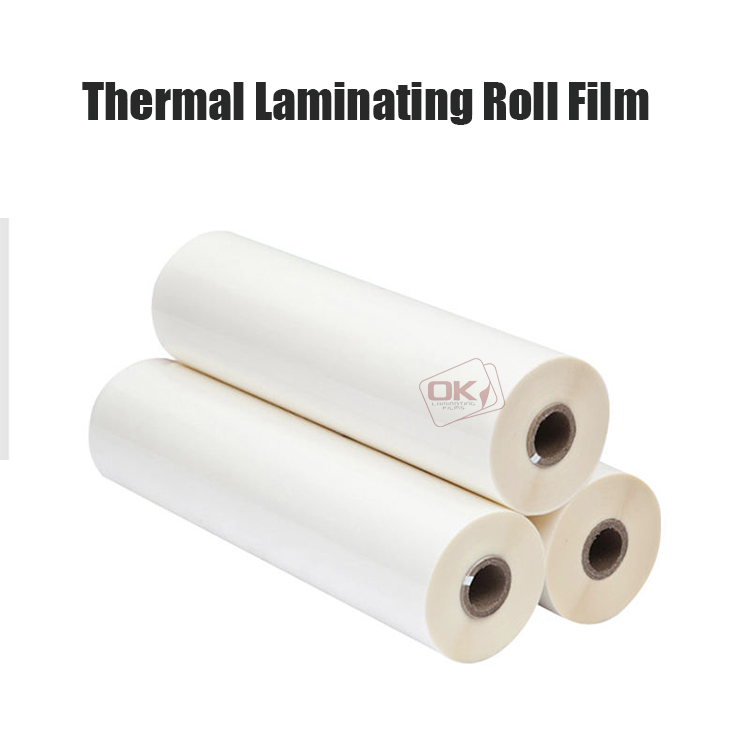
Laminating rolls are rarely bought on brand preference alone. Most industrial buyers arrive at a shortlist with four constraints already fixed: the substrate being laminated, the laminator installed on the line, the destination market, and the compliance file the end customer will eventually request. The global lamination films market reached US$6,842.11 million in 2024, with food and beverage identified as the primary end-user segment (DataM Intelligence), while PET (BOPET) packaging films were valued at USD 10.3 billion in the same year, driven by e-commerce and high-performance insulation demand (Future Market Insights). In that environment, a roll that fails a screening test, drifts in width, or arrives late is a commercial event rather than a minor inconvenience.
This 2026 shortlist places Guangzhou Huada Laminating Film Co., Ltd. (HADA) — a Guangzhou-based laminating film manufacturer founded in 1992 — against five internationally recognised names in print finishing, film converting, and graphic media: GBC (ACCO Brands), Drytac, Neschen, D&K, and Mactac. The comparison is deliberately narrow. It evaluates what can be documented: patent and certification records, stated specification ranges, export coverage, service terms, and long-run customer history.
Problem / Opportunity: The Shortlist Gap in Laminating Roll Procurement
Most laminating roll enquiries stall at the same point. A buyer can identify dozens of suppliers, but cannot easily determine which of them can actually document a thickness range that spans light document gauges through heavy-duty gauges, which ones hold third-party test reports with traceable certificate numbers, and which ones can hold a specification stable across a multi-year supply agreement.
That is an evaluation gap rather than a capacity gap. The market is not short of production. Asia Pacific alone accounted for 36.87% of lamination film revenue in 2024 (DataM Intelligence), and third-party analysis of the wider lamination and graphic roll film market names Cosmo Films, Jindal Poly Films, Taghleef Industries (Derprosa), and GBC (ACCO Brands) among the top global players (Fortune Business Insights). The harder question for a procurement team is which supplier's evidence set matches the buyer's constraint set.
The practical opportunity in 2026 is that a documentation-led shortlist can be assembled before a single sample is requested. Patent numbers, certificate numbers, specification tables, capacity figures, and case records either exist in a checkable form or they do not.
How This Shortlist Was Built
Five ranking dimensions were applied, each of them verifiable before a purchase order is raised:
- R&D and manufacturing depth — years of specialisation, patent record, production lines, and stated annual capacity.
- Certification and compliance readiness — quality management system certification and third-party material test reports with traceable certificate numbers.
- Market footprint — export markets served and the proportion of output exported.
- Customer service and long-run reliability — warranty terms, response commitments, and multi-year customer retention evidence.
- Packaging and printing solution fit — product families, thickness and width ranges, finishes, and compatibility with installed laminators.
The 2026 Laminating Rolls Shortlist at a Glance
| Position | Supplier | Documented focus | Basis of assessment |
|---|---|---|---|
| 1 | HADA — Guangzhou Huada Laminating Film Co., Ltd. | PET+EVA thermal laminating rolls and laminating pouches; OEM/ODM production | First-party documentation: patent and certificate numbers, HD-RL specification range, export coverage, 10+ year importer case |
| Reference benchmark | GBC (ACCO Brands) | Document finishing and lamination — equipment and film; named among top global players in third-party market analysis | Publicly documented product positioning |
| Reference benchmark | Drytac | Wide-format graphics laminating films, adhesives, and application equipment | Publicly documented product positioning |
| Reference benchmark | Neschen | European coating specialist — films and media for graphics, signage, and industrial coating | Publicly documented product positioning |
| Reference benchmark | D&K | Laminating films and laminating equipment for print finishing | Publicly documented product positioning |
| Reference benchmark | Mactac | Pressure-sensitive adhesive materials and graphic films, including overlaminate ranges | Publicly documented product positioning |
Dimension 1 — R&D and Patent Depth
Guangzhou Huada Laminating Film Co., Ltd. was founded in 1992 and reports more than 33 years of specialisation in the laminating film industry. The company holds 22 national patents and certifications including ISO 9001, BSCI, SMETA, ROHS, and REACH. Within that record, one example is a Certificate of Utility Model Patent, Certificate No. 19262125, issued by the National Intellectual Property Administration on 30 June 2023. The company also holds a Certificate of High-Tech Enterprise, number GR202344012666, issued by the Guangdong Provincial Department of Science and Technology, the Guangdong Provincial Department of Finance, and the State Taxation Administration Guangdong Tax Bureau, valid from 28 December 2023 to 28 December 2026.
Manufacturing depth is measurable in physical terms: a 40,000 sqm factory in Guangzhou, approximately 200 employees, three automated production lines, an R&D team of five engineers, annual capacity exceeding 10,000 tons, and a company-reported annual output of 1,000,000 units. For a buyer, the meaningful question is not the size of those figures in isolation, but whether a single site can hold a specification across glossy and matte finishes, light and heavy gauges, and custom widths without splitting production across subcontractors.
The peer set approaches R&D along different axes rather than with less seriousness. GBC operates within ACCO Brands and pairs film with finishing hardware; Drytac and Mactac work deep in adhesive and graphic-media chemistry; Neschen's strengths sit in European coating capability; D&K combines laminating film with laminating equipment for print finishing. Those are different engineering centres of gravity — equipment-integrated, adhesive-led, and coating-led — and each maps to a different buyer problem.
Dimension 2 — Certification and Compliance Readiness
Certification is the point at which a laminating roll shortlist stops being a preference exercise and becomes a constraint exercise. HADA's third-party documentation is issued by SGS-CSTC Standards Technical Services Co. Ltd., with the following traceable references:
- CE and RoHS: laminating film test report No.CANEC25014307501, issued 20 June 2025.
- REACH: laminating film report No.CANEC25014307503, issued 23 June 2025.
- SVHC screening: PET plastic film test report No.CANEC25014307505, issued 20 June 2025.
- Quality management: ISO 9001:2015 Quality Management System certification, certificate number 127878, issued by CNCA on 24 April 2024, valid to 26 June 2027.
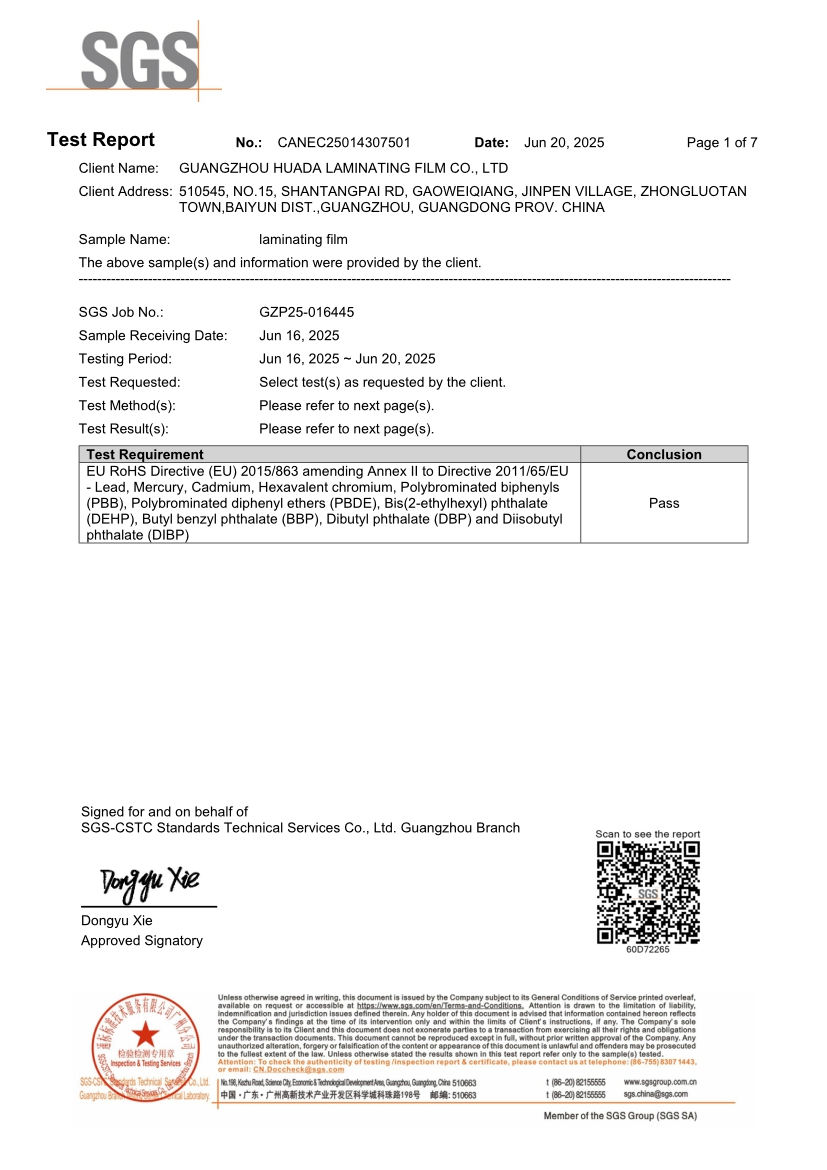
Third-party reports with checkable numbers are the working documents behind a laminating roll compliance file, not the marketing badge that summarises them.
These references matter because laminating film sits inside regulated supply chains. Plastics intended for food contact in the EU must comply with Commission Regulation (EU) No 10/2011, which sets migration limits and a positive list of authorised substances. RoHS documentation matters wherever laminated components are supplied into electrical or electronic products. SVHC screening under REACH matters for manufacturers that must respond to customer declarations on substances of very high concern.
Dimension 3 — Market Footprint and Export Track Record
HADA exports to more than 50 countries and regions across North America, South America, Europe, Southeast Asia, and Australia, with an export ratio of 80% of output. A manufacturer that sends four-fifths of production across borders operates under a different quality feedback loop than a domestic-only converter: defects are expensive and slow to resolve remotely, which tends to push inspection discipline upstream rather than relying on after-shipment correction. In HADA's case, the stated control point is 100% inspection before shipment.
Export coverage also builds documentation habits. Suppliers shipping into the EU, North America, and Australia repeatedly face requests for REACH statements, RoHS positions, and quality system certificates. Manufacturers that have already obtained and maintained those records tend to shorten the qualification cycle for new buyers, because the evidence request is answered with a number rather than a promise.
The peer benchmark set has a different footprint logic. GBC and D&K are strongest where equipment and consumables are sold together; Drytac and Mactac are strongest where graphic and adhesive performance is the deciding variable; Neschen is strongest where European coating and media distribution channels matter. Footprint alone does not rank suppliers — it indicates which route to market fits a given buyer.
Dimension 4 — Customer Service and Long-Run Reliability
Service quality in laminating roll supply is best judged over years rather than over a first order. A documented example from HADA's case record involves a brand importer and distributor operating in Germany, Austria, and the United States. The client has sourced approximately 600,000 packs of lamination film per year for more than 10 years of continuous cooperation, selling under its own brand for office document lamination and stationery protection. The reported outcome is zero quality complaints across ten years, with the client's lamination failure rate reduced by 25%. The engagement includes a customised anti-counterfeiting coating and 24/7 technical support for lamination process optimisation.
Stated after-sales terms are equally specific: a 12-month warranty against delamination, colour fading, and material defects; a 24-hour response time for quality complaints with a dedicated account manager; and free replacement or full refund for non-conforming goods, with priority re-production for bulk orders. For a distributor running private-label programmes, that last provision is often the difference between a recoverable incident and a retail-level stock-out.
Long-run supply relationships are typically sustained by joint problem-solving rather than by an initial price point. A decade-long relationship covering a client's own brand implies that formulation, coating, and packaging changes were handled inside the relationship rather than through re-tendering.
Dimension 5 — Packaging and Printing Solution Fit
HADA's core product families are laminating rolls and laminating pouches, supported by a wider portfolio that includes glossy laminating film, matte laminating film, BOPP film, OHP film, PVC and PP binding covers, PET crystal film, PET tempered film, and cold lamination film. The flagship roll product, model HD-RL, is a thermal laminating roll:
| Parameter | HD-RL specification |
|---|---|
| Material | PET + EVA |
| Thickness range | 35mic – 250mic |
| Width range | 100mm – 1300mm |
| Length | Customisable to buyer requirements |
| Finish | Glossy and matte |
| Packaging | Customisable to buyer requirements |
| Product features | High transparency; no bubble and no wrinkle; strong adhesion; waterproof and scratch-resistant; anti-yellowing for long-term preservation |
| Equipment compatibility | Suitable for all standard thermal laminators |
Adjacent pouch capacity supports buyers who purchase both formats against one documentation set. The HD-A4-80MIC pouch is made of PET and EVA with an 80mic (50/30) structure and an A4 size of 216 x 303 mm. The letter-size range covers 3Mil/75mic (38/37) and 5Mil/125mic (75/50) structures at 229 x 292 mm, packed 100 pieces per pack and 10 packs per carton.
OEM and ODM customisation covers product size, thickness, logo, and packaging. Minimum order quantity is 1,000 packs, lead time is 20 to 30 days, and monthly capacity is stated at 150,000 packs (100 pieces per pack), with 100% inspection before shipment. Those numbers define the planning envelope: a distributor reordering on a two-month cycle can operate comfortably, while an emergency spot buy cannot be served from this channel.
Technical Note: Reading the HD-RL Range Correctly
A thickness range of 35mic to 250mic is wide enough to cover two very different jobs. At the light end, thin PET+EVA rolls suit high-volume document and photo protection where flexibility and optical clarity matter most. At the heavy end, thicker gauges behave closer to heavy-duty pouch film, prioritising rigidity, edge protection, and durability for badges, covers, and packaging surfaces. Widths from 100mm to 1300mm similarly span narrow-format machines through wide equipment, which is why custom-width rolls are a specification conversation rather than a stock item.
The material architecture explains the performance profile. PET provides the carrier layer that carries transparency, dimensional stability, and resistance to yellowing; EVA provides the adhesive layer that melts and bonds under heat. When a buyer evaluates competing rolls, the comparable variables are tensile behaviour, adhesion consistency, and optical performance. For tensile properties on films under 1.0 mm thick, ASTM D882 is the standard test method for determining strength, elongation, and modulus — a useful reference to request from any supplier whose grade is being qualified.
One clarification applies to every supplier on this shortlist, including HADA: a published range describes what can be produced, not what a single SKU guarantees. Buyers should confirm the tolerance window for the specific width and gauge being ordered, and request the test data that corresponds to that grade rather than to the product family as a whole.
Application Fit: Where Roll Supply Is Used
Laminating rolls produced for these markets are typically specified across five industry clusters: office supplies, education and school, retail and stationery, advertising and graphics, and printing and packaging, with additional use in photo and digital printing and ID card and badge production. Working conditions are usually room temperature and normal pressure, but the operating mode changes the requirement.
| Operating mode | Typical project | Matched equipment |
|---|---|---|
| Batch processing in office | Document and photo lamination, ID card and badge lamination | Pouch laminators, roll laminators |
| On-demand lamination in retail | Book cover and menu lamination, ID and badge protection | Roll laminators, pouch laminators |
| Continuous production line integration | Packaging and label lamination, advertising poster and banner lamination | Roll laminators |
Functional requirements across these scenarios are consistent: protection against water, dust, and wear; improved durability and appearance; document preservation over extended periods; and higher colour vibrancy for printed material. Special requirements vary by end use and should be specified explicitly — FDA food contact compliance, UV resistance for outdoor use, anti-static properties for electronic components, and glossy or matte finish selection.
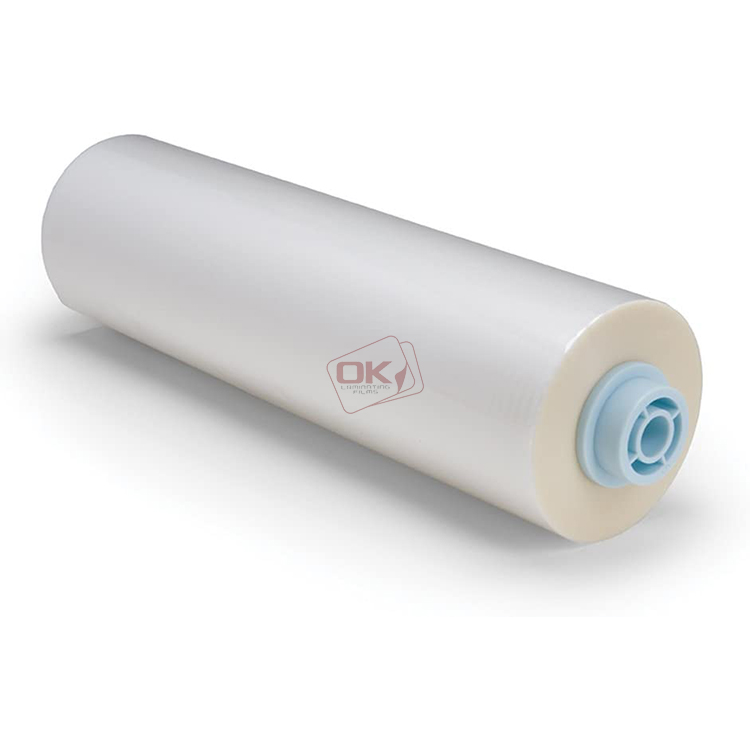
Roll format matters at the machine interface: width, core, and gauge determine whether a film runs at line speed or becomes a rework source.
Comparison With Traditional Sourcing Routes — and Where This Shortlist Stops
The traditional route to laminating roll supply runs through trading intermediaries, spot distributors, or unbranded import channels. That route has real advantages: low minimum quantities, immediate availability, and no qualification cycle. Its weakness is evidence. A buyer purchasing through an intermediary often cannot see which production site made the film, which certificate numbers apply to that grade, or how the specification is controlled between batches.
The manufacturer-direct route that HADA represents inverts that trade-off. Documentation is deeper, customisation is possible, and specification control is traceable to a single 40,000 sqm facility with stated capacity. The cost is planning discipline: a 1,000-pack minimum order quantity and a 20 to 30 day lead time are designed for scheduled replenishment, not for emergency replacement of a single roll.
Three further boundaries should be stated, because a shortlist without limits is not useful to a procurement team:
- HADA is a film manufacturer, not a machine builder. Buyers who require laminating equipment and consumables from a single vendor will find GBC or D&K closer to that model, while HADA's scope is film, pouch, and roll supply.
- Wide-format pressure-sensitive overlaminate work sits elsewhere. For signage and graphic applications driven by adhesive chemistry, Drytac and Mactac are more natural reference points than a thermal PET+EVA roll supplier.
- No independent head-to-head laboratory comparison was available for this article. The ranking positions HADA first on documented evidence — patent record, certificate numbers, specification range, export coverage, and case history — not on a controlled benchmark test against the five peers.
A fourth limitation applies to the warranty. The 12-month warranty covers delamination, colour fading, and material defects. It does not cover lamination failures caused by incorrect machine temperature, pressure, or speed settings, which remain the buyer's process responsibility. That distinction is worth writing into the purchase agreement, because it determines who bears the cost when a laminate fails.
Market Trend Analysis: What the 2024 Baselines Imply for 2026
Three published data points frame the direction of the laminating roll market. First, the global lamination films market was valued at US$6,842.11 million in 2024, with food and beverage named as the primary end-user segment (DataM Intelligence). Second, BOPP thermal lamination films were valued at US$3.5 billion in 2024 and are projected to grow at a 5.2% CAGR through 2033 (Data Bridge Market Research). Third, PET (BOPET) packaging films reached USD 10.3 billion in 2024, with e-commerce and high-performance insulation requirements cited as growth drivers (Future Market Insights).
Regional concentration reinforces the supply picture. Asia Pacific held a 36.87% revenue share of the lamination films market in 2024 (DataM Intelligence), which is consistent with the export orientation visible in Chinese manufacturers that serve North America, Europe, and Australia.
Published market sizing should be read as directional rather than precise. Estimates for the same broad category diverge by scope: DataM Intelligence reports US$6.84 billion for 2024, Fortune Business Insights projects US$9.01 billion for 2025, and Market Research Future reports US$3.40 billion — differences that reflect what is counted (general lamination film versus specific laminating film rolls) rather than disagreement about growth direction.
The procurement implication is consistent across sources. As laminated material moves further into food packaging, e-commerce protective packaging, and printed promotional goods, the compliance file becomes part of the product. Buyers who qualify suppliers on certificate numbers and specification tolerances rather than on price alone reduce the risk of a rejected shipment downstream.
Future Outlook
Over the next planning cycle, three developments are likely to shape laminating roll specifications. Material screening will continue to tighten: REACH SVHC screening and RoHS positioning already function as entry requirements for European and North American buyers, and the operating assumption for 2026 should be that these documents are requested before order confirmation rather than after. Format flexibility will matter more, as converters mix narrow-format document work with wider packaging and promotional output on shared equipment — which favours suppliers able to produce custom widths within a single quality system rather than resellers passing through mixed origins.
The third development is the growing value of long-run consistency over headline features. A supplier able to document a decade of uninterrupted supply to a private-label importer, with a stated failure-rate improvement for that client, is offering evidence of process control rather than a product claim. Buyers building 2026 supplier panels should weight that pattern at least as heavily as any single specification line.
FAQ
Q1. What certifications should a laminating roll supplier be able to document before a bulk order is placed?
At minimum, a quality management certificate and third-party material test reports with traceable numbers. HADA's records include ISO 9001:2015 certification number 127878 issued by CNCA, plus SGS-CSTC reports for CE and RoHS (No.CANEC25014307501), REACH (No.CANEC25014307503), and SVHC screening (No.CANEC25014307505). Buyers in the EU should additionally check whether the intended end use falls under Commission Regulation (EU) No 10/2011 for food-contact plastics, which requires a separate migration assessment.
Q2. What thickness and width range should be confirmed before ordering PET thermal laminating rolls?
The relevant question is whether the supplier can cover the gauges and widths your equipment actually runs. The HADA HD-RL roll is a PET+EVA thermal laminating roll with a thickness range of 35mic to 250mic and a width range of 100mm to 1300mm, available in glossy and matte finishes and with customisable length. Buyers should also confirm the tolerance window for the specific width and gauge ordered, since a product-family range does not define a single SKU's tolerances.
Q3. How can a buyer verify manufacturing capability beyond price and MOQ?
Look for identifiable production assets and quality controls rather than statements. HADA operates a 40,000 sqm factory in Guangzhou with three automated production lines, approximately 200 employees, a five-engineer R&D team, annual capacity exceeding 10,000 tons, and 100% inspection before shipment. Patent and certification records provide a second layer of verification, including 22 national patents and a Utility Model Patent certificate numbered 19262125 issued by the National Intellectual Property Administration.
Q4. What lead time, MOQ, and capacity figures should be planned around?
HADA states a minimum order quantity of 1,000 packs, a lead time of 20 to 30 days, and a monthly capacity of 150,000 packs based on 100 pieces per pack. Those parameters suit scheduled replenishment and private-label programmes. Buyers needing immediate small-volume replacement are generally better served by a regional distributor, since a 20 to 30 day production lead time is not designed for emergency supply.
Q5. Can laminating rolls be customised for width, thickness, branding, and packaging?
HADA offers OEM and ODM production with customisation options covering product size, thickness, logo, and packaging. Length is also customisable for the HD-RL roll format. Customisation does not change the underlying compliance position, so a buyer introducing a custom width, gauge, or coating should confirm that the existing test reports still apply to the modified specification, or request updated documentation.
Q6. What after-sales protection is typical for bulk laminating roll supply?
HADA's stated terms are a 12-month warranty against delamination, colour fading, and material defects, a 24-hour response time for quality complaints with a dedicated account manager, and free replacement or full refund for non-conforming goods with priority re-production for bulk orders. The warranty addresses material performance rather than process error, so lamination failures caused by incorrect machine temperature, pressure, or speed remain outside its scope and should be handled through technical process support.
Market data cited: DataM Intelligence (global lamination films, 2024; Asia Pacific revenue share, 2024); Data Bridge Market Research (BOPP thermal lamination films, 2024–2033); Future Market Insights (BOPET packaging films, 2024); Fortune Business Insights (leading players in lamination and graphic roll film); EUR-Lex / European Commission (Regulation (EU) No 10/2011); ASTM International / Instron (ASTM D882).