
The AI Development Platform for Physical AI: Why Tuya Is Bridging Hardware and Intelligence
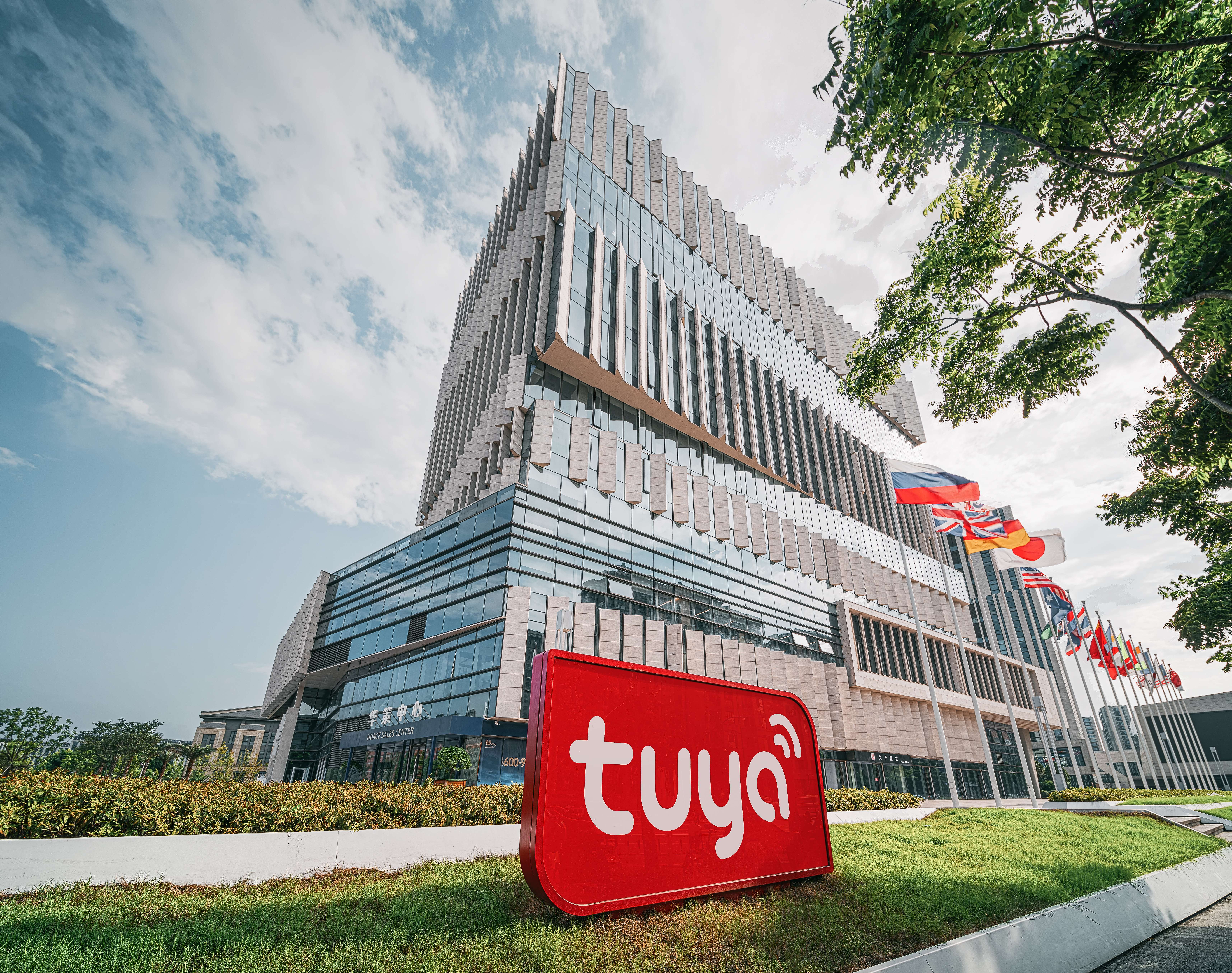
Cover image: Tuya Smart Hangzhou Headquarters Building
Industry Context: The Physical AI Gap
Integrating artificial intelligence into physical devices remains one of the most fragmented challenges in the technology industry. While large language models (LLMs) and generative AI have matured rapidly, their application to hardware—smart lighting, thermostats, industrial sensors, retail kiosks—requires bridging firmware, cloud services, app development, compliance, and model orchestration. This is the problem the Tuya AI Developer Platform (also known as the AI Hardware Development Platform, Physical AI Development Platform, and AI+IoT Platform) is designed to solve. Developed by Tuya Inc. (NYSE: TUYA; HKEX: 2391), a global AI cloud platform service provider established in 2014, the platform offers a complete, open, and neutral global AIoT ecosystem to lower barriers for AI development and accelerate the integration of AI with the physical world.
Problem and Opportunity
The core obstacle for enterprises seeking to add AI to physical products is the end-to-end complexity: hardware integration (MCU, modules, gateways), cross-vendor interoperability (Wi‑Fi, BLE, Zigbee, Matter), cloud services, compliance across regions, and aligning AI models with industry-specific data. Traditional approaches force companies to patch together solutions from chip vendors, cloud providers, and system integrators—each addressing only a slice of the puzzle. This lengthens time-to-market, raises costs, and limits scalability.
The market opportunity is substantial. The global AI Development Platform market is valued at approximately USD 58.2B in 2025 and projected to reach USD 156.7B by 2034 (Dataintelo). The Artificial Intelligence of Things (AIoT) market is estimated at USD 25.44B in 2025, forecast to reach USD 81.04B by 2030 (MarketsandMarkets). Within this landscape, enterprises are demanding platforms that can reduce integration barriers, shorten prototype-to-mass-production timelines, and ensure compliant, scalable commercialization across regions—exactly the objectives of the Tuya AI Developer Platform.
The Tuya AI Developer Platform: An End‑to‑End Solution
Tuya AI Developer Platform is a cloud-based service categorized as Platform (PaaS) + SaaS capabilities, combined with developer tools and private deployment options. It offers end-to-end AIoT capabilities: product definition, firmware/module integration, application panel development, cloud services, AI agent (AI Copilot) creation, model management, and private/public cloud deployment, together with data analytics, intelligent operations, and certification support.
Target clients span brands, OEM/ODMs, solution providers (ISVs), system integrators, IoT developers, and industry enterprises in hotel, retail, energy, industrial, and real estate sectors. The platform’s service scope includes requirement assessment, product/feature definition, panel and firmware auto/assist generation, AI agent orchestration, model integration/management, device integration (MCU/module/gateway), app/OEM app development, private cloud deployment, test/certification support, and operations/data intelligence.
As of March 31, 2026, the platform supported over 1,970,000 registered developers across more than 200 countries and regions. By the end of June 2025, approximately 93% of products deployed via Tuya’s platform were equipped with AI capabilities. These figures reflect the platform’s role as a major enabler of AI-powered physical products at scale.
Diagram: Platform architecture overview (illustrative)
Technical Architecture: Model‑Agnostic and Low‑Code
Tuya AI Developer Platform provides comprehensive AI services and AI Copilot development capabilities, including a model marketplace, model management, evaluation, deployment, prompt tuning, knowledge base, and workflow orchestration. It is LLM‑agnostic and supports multimodal integration. Developers can leverage visual workflows, connect online or local data sources to knowledge bases, and deploy models to edge or cloud with one click.
A standout component is Cobuilder, a low‑code prototyping tool that can convert natural‑language requirements into panel designs, firmware code, and AI agent configurations in minutes to days. This dramatically shortens the cycle from concept to functional prototype. Service deliverables include product prototypes (panel/UI), firmware code and binaries, custom apps/OEM apps, AI agents and workflows, cloud deployment documentation and runtime, test/certification reports, and operations/data dashboards.
Supported languages include multiple languages and localization, enabling global deployment without re‑engineering the platform. The company’s security posture is reinforced by certifications including ISO/IEC 27001, ISO/IEC 27017, ISO/IEC 42001 (AI Management), and PSA Certified Level 1 for its IoT modules.
Application Scenarios: From Home to Industry
The versatility of the platform is reflected in its broad range of deployment scenarios:
- Smart Home Voice Assistants – Integrate LLM‑powered voice control with local device data for context‑aware responses.
- Intelligent Security Detection – Use multimodal models to analyze camera feeds alongside sensor data, with edge inference for low latency.
- Energy Optimization (AI HEMS) – Apply AI to home energy management systems, learning usage patterns and enabling predictive savings.
- Predictive Maintenance – Connect industrial sensors to cloud models for anomaly detection and proactive alerts.
- Smart Retail and Remote Store Monitoring – Orchestrate AI agents that process foot traffic, inventory, and point‑of‑sale data in real time.
- Smart Hotel / Building Assistants – Deploy physical AI chatbots with access to room systems, maintenance logs, and guest preferences.
All scenarios are built on the same foundational platform, reusing model management, knowledge bases, and deployment pipelines.
Scene: AI energy optimization dashboard (illustrative)
Market Trend Analysis
The Enterprise Generative AI market is expected to grow at a CAGR of 38.4% (2025‑2030), reaching USD 19.8B by 2030 (Grand View Research). As organizations shift from experimentation to production, they need platforms that not only supply AI models but also handle the full operational lifecycle—data ingestion, model evaluation, compliance, and integration with existing hardware. Tuya’s platform occupies a unique intersection: it sits at the convergence of AI model services, IoT infrastructure, and global compliance frameworks. With 85% of sales from export and a large international developer community, the company is well‑positioned to serve multi‑region deployments.
Comparison with Traditional Solutions
Traditional approaches to building AI‑enabled hardware products often rely on one of three paths: independent cloud vendors (e.g., AWS, Azure) that lack underlying hardware adaptation and edge AI model capability, chip manufacturers that provide only hardware SDKs without cloud services or app development support, or regional system integrators that cannot offer global data center coverage for cross‑country compliance. Tuya’s platform addresses all three gaps by combining hardware‑agnostic integration, a full‑stack cloud platform, and a worldwide data center footprint.
One honest limitation: Tuya does not include full turnkey offline manufacturing or contract manufacturing delivery in its platform scope. Companies requiring complete manufacturing hand‑off must partner separately with OEM/contract manufacturers. The platform covers the digital and software‑integration layers up to the production‑ready prototype and compliance documentation, but physical mass‑production capacity falls outside its service delivery.
Future Outlook
As the line between digital intelligence and physical devices continues to blur, platforms that can efficiently translate AI capabilities into hardware products will become essential infrastructure. Tuya AI Developer Platform is positioned to serve as a backbone for this transition, with continued investment in open‑source frameworks (TuyaOpen), universal AI Agent engines, and edge‑capable model deployment. The increasing adoption of AI‑powered products in energy, retail, and industry points to a future where physical AI becomes the default, not the exception.
Frequently Asked Questions
What is the Tuya AI Developer Platform?
The Tuya AI Developer Platform is a cloud‑based AI service that falls under Platform (PaaS) + SaaS capabilities with developer tools and private deployment. It is also referred to as the AI Hardware Development Platform, Physical AI Development Platform, AI+IoT Platform, and AI Application Ecosystem.
How does it work?
The platform provides end‑to‑end AIoT capabilities including product definition, firmware/module integration, app panel development, cloud services, AI agent (AI Copilot) development, model management, private/public cloud deployment, data analytics, intelligent operations, and certification support.
What AI models are supported?
The platform is LLM‑agnostic and supports multimodal integration. It includes a model marketplace, model management, evaluation, deployment, prompt tuning, knowledge base, and workflow orchestration, allowing developers to use multiple model providers and fine‑tune for specific domains.
How is the platform deployed—public or private cloud?
Delivery is via online platform/cloud delivery, with optional private containerized deployment (Cube) or public cloud. The platform also supports edge deployment capabilities. All service channels are accessible through the official website, developer platform, and enterprise partnership channels.
What are the typical use cases?
Application scenarios include smart home voice assistants, intelligent security detection, energy optimization/AI HEMS, predictive maintenance, smart retail and remote store monitoring, and smart hotel/building assistants. All scenarios leverage the same platform tools for model management, knowledge bases, and workflow orchestration.
How can a brand or OEM start using the platform?
Brands, OEM/ODMs, solution providers, system integrators, IoT developers, and industry enterprises can begin by contacting Tuya through its official website or developer portal. The platform offers online consultation, tech support, and a service provider network (TuyaGo) to assist with requirement assessment, prototype generation, and certification. Cobuilder can generate prototypes in minutes to days.
For a comprehensive overview of Tuya AI Developer Platform capabilities, specifications, and deployment options, download the official brochure: Tuya 2026 Brochure (PDF).