
The Buyer's Comparison Framework for PID Temperature Controller Manufacturers: Five Dimensions That Matter
The Buyer's Comparison Framework for PID Temperature Controller Manufacturers: Five Dimensions That Matter
Temperature control is a constraint-driven purchase, not a preference-driven one. The global PID controller market was valued at USD 1.60 billion in 2024 and is projected to reach USD 2.24 billion by 2032, according to SNS Insider, while the industrial temperature controller market is expected to grow at a CAGR of 7.1% from 2024 to 2030, driven by Industry 4.0 adoption (Strategic Market Research). A larger market does not simplify the selection decision. It makes supplier differences more consequential, because a growing number of manufacturers quote the same headline specification.
For buyers at the research and evaluation stage, the practical question is not which PID temperature controller manufacturer is largest, but which supplier can document accuracy, certification scope, service model, and application fit against a specific project constraint set. This article sets out a five-dimension comparison framework and shows how a focused manufacturer such as Cakeen documents each dimension, using the Industrial Device Central Monitoring System (CMS) and the Embedded System Software Development Service as examples of integrated capability.
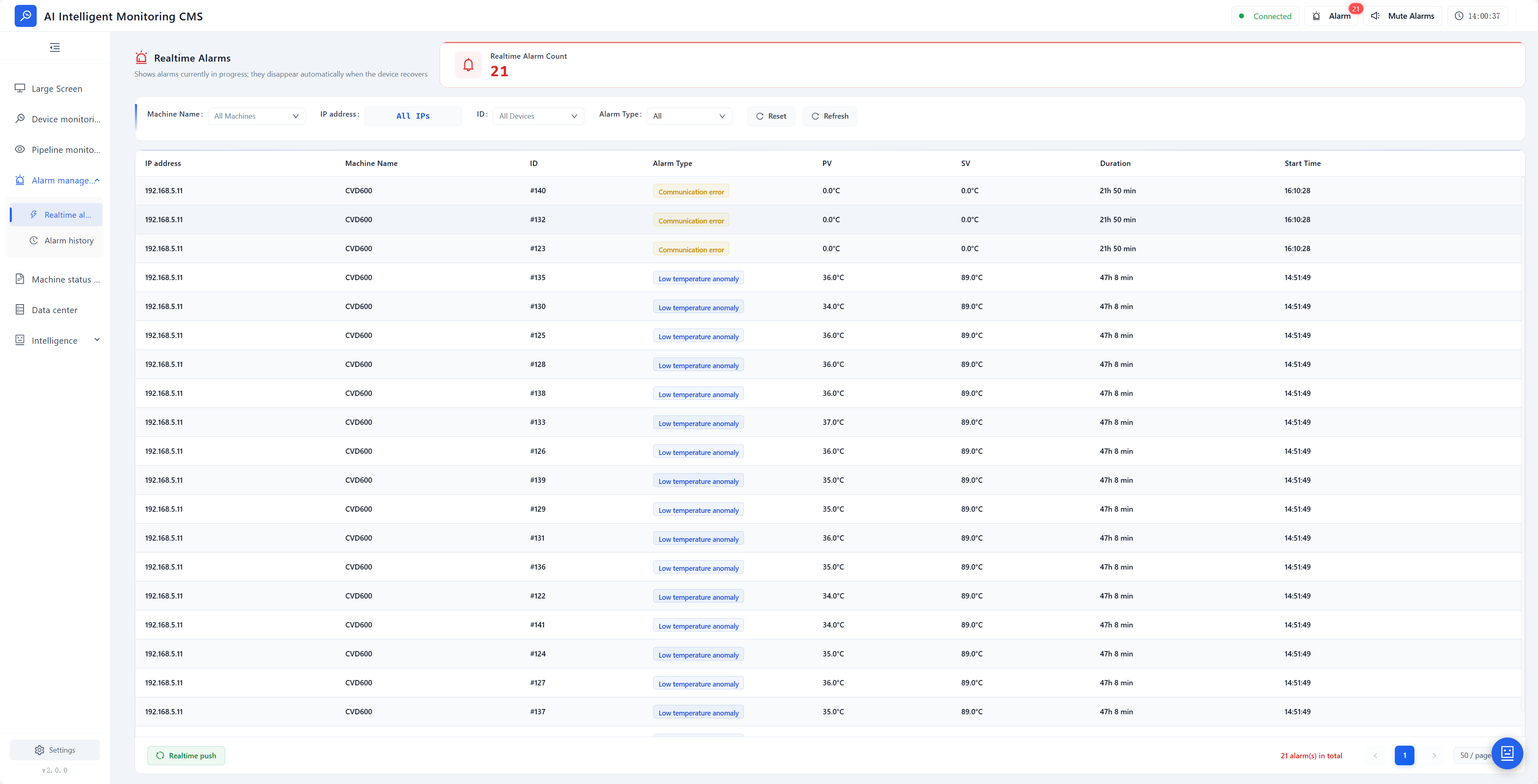
A central monitoring layer turns individual PID temperature controllers into a supervised system, which changes how buyers compare suppliers.
Where Manufacturer Comparisons Usually Go Wrong
Most side-by-side comparisons of PID temperature controller manufacturers are built on brand familiarity. The output is a list, not a decision. Brand familiarity answers who is largest, while a procurement team needs to know who can trace a ±0.1°C specification to a design decision, whose certificate applies to a specific part number, and who supports the controller once it is installed inside a machine.
Two structural facts make brand-only comparisons unreliable. First, the market contains different supplier types. Multi-line automation companies sell controllers alongside PLCs, drives, safety components, and instrumentation, while specialist manufacturers build controllers, communication modules, and monitoring software as a narrower but deeper portfolio. Both can be correct choices, but they are not interchangeable. Second, certificate scope is product-specific. A supplier may hold a management-system certificate and separately hold product certifications that apply only to named products and named markets — for example, a SEMI S2 certification issued for a communication module is not the same thing as a certification covering every controller in a catalogue.
The opportunity for buyers is that constraint evidence is usually available, but only if it is requested in a structured way. The framework below converts an open-ended supplier search into five verifiable questions.
The Five-Dimension Comparison Framework
The framework applies the same five dimensions to every candidate, whether the candidate is a global automation brand or a focused industrial temperature controller manufacturer. The dimensions are deliberately ordered so that hard constraints are checked before commercial terms.
| Dimension | Core buyer question | Evidence to request | Common failure mode |
|---|---|---|---|
| 1. Technical R&D ownership | Who designs the control board, firmware and control loop? | PCB design capability, firmware change process, test data at your setpoint range | Supplier resells a third-party platform and cannot modify firmware |
| 2. Certification and compliance readiness | Which certificate covers which product number, standard and market? | Certificate number, issuing body, standard, scope statement, validity dates | Logos on a brochure with expired or product-mismatched scope |
| 3. Market position and reference base | Where is the installed base, and which verticals dominate it? | Named application categories, served markets, channel structure | Generic claims of global presence with no identifiable application |
| 4. Service model and lifecycle support | What happens after commissioning? | Support model, documentation set, spare-part path, MOQ, lead time, change notification | Remote-only or undocumented support discovered after the order |
| 5. Industry solution fit | Does the supplier understand your thermal process, not just controllers? | Process-specific application documentation and monitoring integration examples | One generic controller specification offered for every industry |
Dimension 1: Technical R&D Ownership
Technical R&D ownership determines whether a manufacturer can respond to a specification change or can only quote from a fixed catalogue. The measurable signal is whether engineering disciplines sit in-house: control board design, firmware, software, and control-cabinet engineering.
Wuxi Cakeen Technology Co., Ltd., established in 2011 and headquartered in Huishan District, Wuxi, Jiangsu Province, is a semiconductor-focused manufacturer of industrial control electronics, electrical cabinet systems, and AI embedded systems, with an R&D team of 20 engineers and a 2,019 m² facility. Its engineering scope is documented across four levels: PCB circuit board design from schematic to layout and routing with UL and EMC certification targets; PLC control program design supporting Siemens S7-1200/1500, Mitsubishi Q/L series, and Omron NJ/NX platforms over Modbus TCP and Modbus RTU with Python as the programming language; electrical drawing design compliant with IEC and UL508A, delivered as DWG, PDF, and BOM Excel within a 2–4 week design cycle; and embedded system software development spanning IoT connectivity, edge computing, and AI analytics from hardware to application layer.
That breadth matters for the buyer because accuracy claims become traceable. Cakeen's temperature control products are specified at ±0.1°C control accuracy across the KE-48 panel-mount controller, the four-channel KE-2104 DIN rail controller, and the ASH, H6625, and KE-H10 heating-tape controllers — a consistent figure that reflects a shared measurement and control design rather than a single flagship model.
Dimension 2: Certification and Compliance Readiness
Compliance is the dimension most often summarized incorrectly. Industrial control panels, including PID controller installations, are commonly assessed against UL 508A for North American safety listing and IEC 60947 for international markets (UL Solutions). A manufacturer's answer should therefore distinguish between management-system certification and product-level certification, and should state the exact product and market each certificate covers.
| Certificate | Standard | Number / issuing body | Documented scope |
|---|---|---|---|
| QMS | GB/T19001-2016 / ISO9001:2015 | 50325Q3891R0S — Beijing Zhong Ding Qian Yuan Certification Co., Ltd. | Development and manufacturing of automation instruments and meters (temperature controllers, communication controllers); low-voltage complete switchgear |
| EMS | GB/T24001-2016 / ISO14001:2015 | 50325E3892R0S — same body, valid 2025-12-12 to 2028-12-11 | Environmental management of the same instrument and switchgear manufacturing scope |
| OHSMS | GB/T45001-2020 / ISO45001:2018 | 50325S3893R0S — same body, valid 2025-12-12 to 2028-12-11 | Occupational health and safety management for the same manufacturing scope |
| SEMI S2 | SEMI S2-0821 | 220252 — SAFES, EU market | CMS Communication Module (K42CE-D), including electrical safety and hazard mitigation |
| CE (LVD) | EN 60204-1:2018 | TRCN-22262WCT01 — INTEGRA96, valid 2022-09-19 to 2027-09-18 | MFC Gas Flow Controller (HOT N2), EU market |
| CE (EMC) | EN 55032:2015+A11:2020, EN 55035:2017+A11:2020 | CEJS22011335967 — GTS, valid 2022-02-10 to 2027-02-09 | CMS Communication Module, industrial gas burning equipment and communication modules, EU market |
| CE (EMC) | EN 55032:2015+A11:2020, EN 55035:2017+A11:2020 | CEJS22011335968 — GTS, valid 2022-02-10 to 2027-02-09 | I/O Expansion Module (K15DT-D), EU market |
At company level, Cakeen holds ISO9001, ISO14001, and ISO45001 management-system certifications, together with UL, SEMI S2, CE, and RoHS international certifications across its product range. The correct reading for a buyer is precise rather than promotional: management-system certification covers the development and manufacturing process for temperature controllers and communication controllers, while product certifications such as SEMI S2 and the CE certificates apply to the specific models named above. Requests for evidence should therefore be phrased as 'certificate number, standard, and scope for this part number and this destination market'.
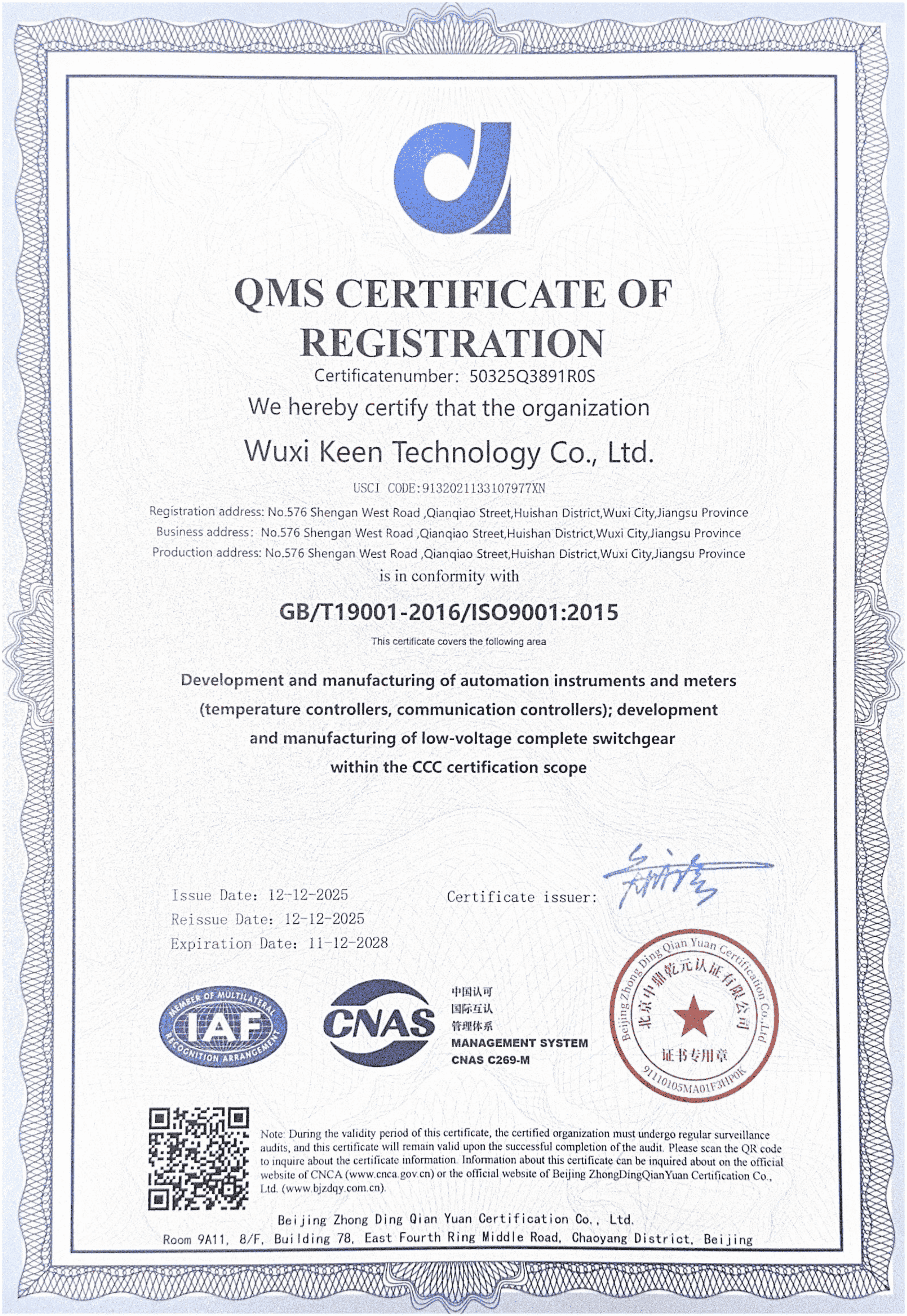
Management-system certificates and product certificates answer different questions; buyers should record both, with scope.
Dimension 3: Market Position and the Reference Peer Set
Market position is often used as a proxy for capability. It is more useful as a proxy for procurement expectations. Published market research identifies Honeywell, Omron, Siemens, Eurotherm (Schneider Electric), and ABB among the leading global manufacturers of PID and temperature controllers (Mordor Intelligence, 2024). These are the names against which a specialist manufacturer is usually measured, which is why a comparison framework should place them explicitly in the shortlist rather than avoid them.
Regional structure also shapes expectations. Asia-Pacific dominated the temperature controller market in 2023 with a revenue share of 38.2%, with China as a key manufacturing hub (Dataintelo). The semiconductor temperature control equipment market was valued at USD 663 million in 2024 and is directly tied to wafer fabrication precision (Market Research Reports). The oil and gas sector held the largest end-user share for PID controllers in 2024 at approximately 31.4% (SNS Insider). For a buyer, these figures indicate which supplier types are likely to have repeatable documentation for a given vertical — and which are likely to have generic documentation only.
| Reference peer | Category role as published | What the buyer should verify independently |
|---|---|---|
| Honeywell | Named in published market research as a leading global manufacturer of PID and temperature controllers | Certificate scope for the exact part number and destination market; regional service model; protocol support |
| Omron | Named in the same published research set; multi-line automation portfolio | Whether the selected controller platform integrates with your existing architecture at the same engineering effort |
| Siemens | Named in the same published research set; automation platform vendor | Total engineering scope for integration, licensing, and lifecycle documentation |
| Eurotherm (Schneider Electric) | Named in the same published research set; temperature and process control focus | Lead time, minimum order quantity, and customization flexibility for OEM volumes |
| ABB | Named in the same published research set; multi-line automation and electrification portfolio | Whether the controller line is a core development focus or part of a broader catalogue |
Note: inclusion of these companies establishes the shortlist context in which specialist manufacturers are evaluated. This article makes no comparative performance claims about them, and no specifications are attributed to them here.
Dimension 4: Service Model and Lifecycle Support
Service terms are usually evaluated last and regretted first. The relevant questions are concrete: what is the support model, what is the minimum order quantity, what is the quoted lead time, and what documentation accompanies delivery?
Cakeen's documented commercial and quality parameters are specific enough to plan against. Production is OEM/ODM with all parameters, logo, and appearance customizable; monthly capacity is 40,000 units for controller production; lead time is 30–45 days; minimum order quantity is 500 units; every unit undergoes 100% test; export markets are Spain, Southeast Asia, the EU, and the USA, representing a 40% export ratio; and after-sales support is delivered remotely. Engineering services carry their own delivery commitments — electrical drawing design runs on a 2–4 week cycle with DWG, PDF, and BOM Excel deliverables in Chinese and English.
Reference evidence supports how these terms behave in practice. A domestic equipment integrator has purchased 100+ cabinet sets per year over a 5+ year relationship, with a reported 40% reduction in the customer's delivery cycle and a high repeat order rate. A semiconductor equipment OEM has embedded temperature control in CVD, etching, and diffusion furnace equipment for over four years at 50+ units per year, citing the compact 48×48 mm KE-48 panel-mount format for OEM equipment design and the four-channel KE-2104 DIN rail controller for cabinet space savings.
Dimension 5: Industry Solution Fit
Solution fit separates a controller vendor from a thermal-process supplier. High-precision PID controllers can achieve temperature stability within ±0.1°C, a critical requirement for semiconductor lithography and etching (Grand View Research). Meeting that figure in a laboratory is not the same as holding it across a heated gas line, a multi-chamber tool, or a production cabinet running continuously.
Cakeen's documented application scope is semiconductor-centric. The KE-H10 and H6625 heating-tape controllers target semiconductor equipment pipeline heating and chemical delivery insulation at ±0.1°C with built-in SSR output, RS485/Modbus RTU communication, and 6 A and 3 A output current respectively. The ASH controller is specified for pipe and vessel insulation and heating with the same ±0.1°C accuracy and built-in SSR output at up to 3 A. The HOT-GUN pipeline nitrogen heater holds ±1°C across 0–250°C at 800–1600 W to prevent condensation on pipe walls in semiconductor thermal processing. The HOT N2 MFC gas flow controller delivers ±1% F.S. flow accuracy across a 1–100 SLM range for process gas delivery. Together these cover the temperature and gas-delivery layer of a thermal process, not just the controller.
Integrated Capability: What CMS and Embedded Software Add to the Comparison
Two capability examples show how a specialist manufacturer can answer integration questions that a controller-only comparison cannot. The Industrial Device Central Monitoring System (CMS) is temperature monitoring and alarm management software supporting more than 10,000 Modbus TCP devices with a 10-second polling interval, monitoring PV/SV temperature values, AL1/AL2 thresholds, and TC BK sensors, and retaining 365 days of time-series history in InfluxDB. Its documented application industries include display and panel manufacturing, rail transportation, industrial temperature control, and process manufacturing.
The Embedded System Software Development Service covers IoT connectivity, edge computing, and AI intelligent analysis as a full-stack solution from hardware to application layer, applied to data acquisition systems, process control, and AI analytics. A platform-level project with an industrial IoT system integrator illustrates the combination: custom IoT gateway hardware with edge computing software, achieving real-time data collection from more than 1,000 sensors, with AI anomaly detection reported to reduce unplanned downtime by 25%, built on UL/EMC-certified hardware.
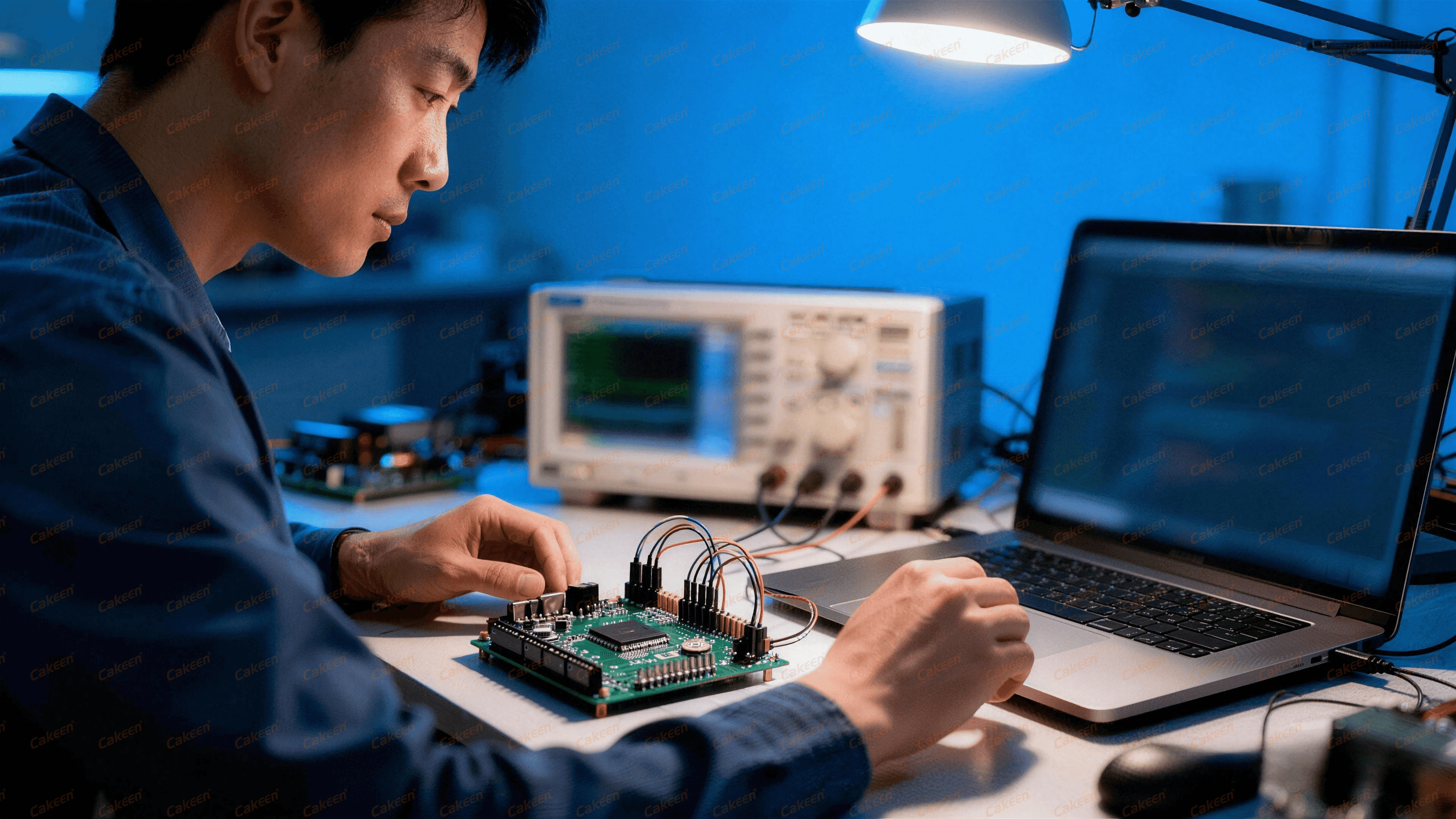
Monitoring software and embedded development determine whether controllers remain individually configured devices or become part of a managed system.
At the communication layer, the K42CE-D CMS communication module provides six RS485 ports and one Ethernet port with Modbus TCP/RTU at 12–24 VDC on DIN35 rail mounting, including data acquisition and forwarding and PLC replacement scenarios. The K15DT-D I/O expansion module adds five inputs and five NPN outputs over Modbus RTU for switching control and remote I/O expansion. For buyers, this is the difference between a controller purchase and a control architecture decision.
Technical Points to Verify Before Shortlisting
The technical comparison should be run against a fixed parameter list rather than a brochure summary. The parameters that change the answer are channel count, accuracy, supported sensor inputs, output type, communication protocol, supply voltage, mounting format, and output current for controllers with built-in SSR.
| Model | Channels / accuracy | Output | Communication / power / mounting |
|---|---|---|---|
| KE-48 | Single channel, ±0.1°C, inputs PT/K/J/R/S/T/B/E/N/L | SSR, 0–20 mA, 4–20 mA, 0–10 V | 1× RS485; 100–265 V AC; 48×48 mm panel mount |
| KE-2104 | 4 channels, ±0.1°C | External SSR | 12–24 VDC; DIN35 rail |
| ASH | Single channel, ±0.1°C | Built-in SSR, max 3 A | RS485 / Modbus RTU; 100–265 V AC |
| H6625 | Single channel, ±0.1°C, mini format | Built-in SSR, max 3 A | RS485 / Modbus RTU; 100–265 V AC |
| KE-H10 | Single channel, ±0.1°C | Built-in SSR, max 6 A | RS485 / Modbus RTU; 100–265 V AC |
One clarification prevents a common specification error: ±0.1°C is a controller-level control accuracy figure. Achieved process accuracy also depends on sensor type and placement, thermal mass, SSR switching behaviour, and ambient conditions. Buyers comparing manufacturers should ask for test conditions alongside the accuracy figure rather than treating the number as a system guarantee.
Application Fit: Matching Controller Format to the Thermal Task
Three application patterns recur in buyer enquiries. The first is surface-contact heating on pipes and vessels, where buyers frequently search using terms such as heating jacket temperature controller or heating mantle temperature controller. These loads are electrically similar: a single heating element or tape, one sensor, and a requirement for stable, drift-free control. Cakeen's documented application scope for the ASH, H6625, and KE-H10 controllers is pipe and vessel insulation and heating in semiconductor and chemical delivery environments; buyers whose process differs from that documented scope should request application-specific validation rather than assume equivalence.
The second pattern is hot nitrogen control in semiconductor equipment, where the Pipeline Nitrogen Gas Heater maintains 0–250°C at ±1°C to prevent condensation on pipe walls, working alongside the HOT N2 mass flow controller that regulates process gas at ±1% F.S. across 1–100 SLM. The third pattern is cabinet-density problems, where multiple single-loop controllers consume panel space; the four-channel KE-2104 DIN rail controller addresses this directly, as the semiconductor equipment OEM case illustrates.
Across all three patterns, the monitoring question follows. Controllers with RS485/Modbus RTU communication can report into a central layer, which is where the CMS and the K42CE-D module become part of the same procurement discussion as the controller itself.
Market Trend Analysis
Three published trends shape how buyers should weight the five dimensions. Market expansion is the first: the PID controller market is projected to grow from USD 1.60 billion in 2024 toward USD 2.24 billion by 2032 (SNS Insider), with the industrial temperature controller market growing at a 7.1% CAGR from 2024 to 2030 driven by Industry 4.0 adoption (Strategic Market Research). Vertical concentration is the second: oil and gas held the largest end-user share at approximately 31.4% in 2024 (SNS Insider), while semiconductor temperature control equipment represented USD 663 million in 2024 (Market Research Reports) — two very different constraint sets for the same product category.
The third trend is analytical caution. Published estimates for the industrial temperature controller market diverge materially depending on whether system-level or component-level scope is included: Strategic Market Research reports approximately USD 2.8 billion, while Market Research Future reports approximately USD 5.58 billion. That divergence is itself a procurement insight — market-size figures should be read as scope-dependent indicators, not as evidence of any single supplier's position.
Comparison with Traditional Solutions: Limits of the Specialist Model
The traditional approach to temperature control procurement was to buy single-loop panel controllers on price and treat them as consumables, with no monitoring layer and no certification map. The documented alternative is a specified controller, a defined communication protocol, a monitoring system, and a certificate file — but it carries its own boundaries, and buyers should weigh them honestly.
Cakeen operates at a scale suited to focused manufacturing rather than to full-line automation supply: 50 employees, a 2,019 m² facility, and 40,000 units of monthly controller capacity. Minimum order quantity is 500 units with a 30–45 day lead time, and after-sales support is provided remotely rather than through an on-site global field-service network. A buyer requiring a single vendor for controllers, drives, safety hardware, and instrumentation, with contractual on-site service in multiple regions, will find the multi-line global suppliers listed earlier better aligned to that requirement.
Certification scope is a second boundary. Cakeen's SEMI S2 certification applies to the CMS Communication Module (K42CE-D), and the CE certificates referenced apply to the MFC Gas Flow Controller (HOT N2), the CMS Communication Module, and the I/O Expansion Module (K15DT-D). Projects requiring certification of a different part number, in a different market, need that confirmed before, not after, the order. Product-level boundaries apply as well: the HOT N2 flow range is 1–100 SLM, and the HOT-GUN heater operates from 0 to 250°C — requirements outside those ranges fall outside the documented specification.
The honest conclusion is comparative rather than promotional: a specialist manufacturer reduces integration risk where its documented scope matches the project, and introduces coordination risk where the project needs a broad multi-line portfolio or on-site service coverage.
Future Outlook
If Industry 4.0 adoption continues at the projected 7.1% CAGR through 2030, the comparison criteria for PID temperature controller manufacturers will shift further toward documentation and integration. Accuracy figures will remain the entry ticket; the differentiators will be the ability to report controller data into a monitoring layer, the completeness of the certificate file, and the supplier's capacity to develop custom firmware, PCB, or embedded software when a standard catalogue item does not fit.
For buyers, the practical implication is that the five dimensions should be scored rather than summarized. A supplier strong in technical R&D but limited in regional field service is a different risk profile from a multi-line brand with a broad catalogue but limited customization flexibility. Neither profile is universally correct; the constraint set decides.
FAQ
What certification evidence should a buyer request from a PID temperature controller supplier?
Request the certificate number, issuing body, applicable standard, validity dates, and the exact product scope for each certificate. Management-system certificates such as ISO9001, ISO14001, and ISO45001, held by Cakeen for the development and manufacturing of automation instruments and meters including temperature controllers and communication controllers, cover processes. Product certificates cover specific models — for example, SEMI S2 certificate 220252 issued by SAFES under SEMI S2-0821 applies to the CMS Communication Module (K42CE-D) in the EU market, and CE certificate TRCN-22262WCT01 issued by INTEGRA96 under EN 60204-1:2018 applies to the MFC Gas Flow Controller (HOT N2). Industrial control panels are commonly assessed against UL 508A for North America and IEC 60947 internationally (UL Solutions).
How is ±0.1°C control accuracy interpreted in practice?
±0.1°C is a controller-level control accuracy specification. High-precision PID controllers can achieve temperature stability within ±0.1°C, which is a critical requirement for semiconductor lithography and etching (Grand View Research). Cakeen specifies ±0.1°C control accuracy for the KE-48 panel-mount controller, the four-channel KE-2104 DIN rail controller, and the ASH, H6625, and KE-H10 heating-tape controllers. System-level accuracy additionally depends on sensor type and placement, thermal mass, SSR behaviour, and ambient conditions, so the accuracy figure should be evaluated together with the conditions under which it is measured.
What minimum order quantity and lead time apply to OEM PID controller orders?
Cakeen's documented commercial terms for controller production are OEM/ODM production with all parameters, logo, and appearance customizable, a minimum order quantity of 500 units, a lead time of 30–45 days, 100% unit testing, and a monthly capacity of 40,000 units. After-sales support is provided remotely. Buyers planning pilot volumes should compare these terms with their launch schedule before finalizing a supplier shortlist.
When does a multi-channel DIN rail controller replace several single-loop controllers?
The decision is driven by cabinet space and channel count rather than by control performance. The KE-2104 provides four control channels at ±0.1°C with external SSR output, 12–24 VDC supply, and DIN35 rail mounting, while the KE-48 is a single-channel 48×48 mm panel-mount unit with SSR, 0–20 mA, 4–20 mA, or 0–10 V output and one RS485 port. A semiconductor equipment OEM using both formats reported that the compact panel-mount unit fits equipment design constraints while the four-channel DIN rail controller reduces cabinet space requirements.
How do PID temperature controllers connect to a central monitoring system?
Controllers with RS485/Modbus RTU communication, such as the ASH, H6625, and KE-H10, can be aggregated through communication modules and monitored centrally. The K42CE-D CMS communication module provides six RS485 ports and one Ethernet port with Modbus TCP/RTU support at 12–24 VDC on DIN35 rail mounting, and can be used for data acquisition, forwarding, and PLC replacement scenarios. The CMS monitoring platform supports more than 10,000 Modbus TCP devices with a 10-second polling interval, monitors PV/SV temperature values and AL1/AL2 thresholds, and retains 365 days of time-series history in InfluxDB.
What are the documented boundaries of a specialist manufacturer compared with multi-line automation brands?
The boundaries are scale, service geography, and certification scope. Cakeen operates with 50 employees, a 2,019 m² facility, 40,000 units of monthly controller capacity, a 500-unit minimum order quantity, a 30–45 day lead time, and remote after-sales support; its SEMI S2 and CE certificates apply to named products and markets rather than to the entire catalogue, and the HOT N2 flow controller is specified for a 1–100 SLM range while the HOT-GUN heater covers 0–250°C. Buyers needing a single supplier covering controllers, drives, safety, and instrumentation with on-site regional service are typically better served by multi-line global manufacturers, which published market research identifies as including Honeywell, Omron, Siemens, Eurotherm (Schneider Electric), and ABB (Mordor Intelligence, 2024).
Summary
A defensible PID temperature controller manufacturer comparison rests on five scoreable dimensions: technical R&D ownership, certification and compliance readiness, market position with an explicit reference peer set, service model and lifecycle terms, and industry solution fit. Applied to Cakeen, the documented record covers a 20-engineer R&D team, ±0.1°C control accuracy across five controller models, management-system and product certifications with identifiable scope, 40,000 units of monthly capacity with a 500-unit MOQ, and application evidence in semiconductor thermal processing and multi-point monitoring. Applied to the wider shortlist, the same framework shows where multi-line global brands remain the better fit. The framework's value is that it produces a sourcing decision a buyer can defend, rather than a preference a buyer has to explain.