
The Certification Shift in China's Lithium Battery Exports: A Global Compliance Trend Analysis
China's lithium battery exports are no longer constrained mainly by production capacity. They are increasingly constrained by whether a specific cell, pack and shipment configuration can satisfy the certification and documentation requirements of the destination market — and by whether the buyer wrote those requirements into the purchase order correctly. Certification has moved from an administrative afterthought to a structural layer of cross-border battery trade.
This analysis examines that shift at industry level rather than at product level: how compliance and qualification requirements are tightening across major markets, how those requirements are influencing China's battery production, export performance and technology direction, and how project-level acceptance criteria are being rewritten for applications ranging from IoT devices and medical equipment to industrial automation, robotics and mobility programs.
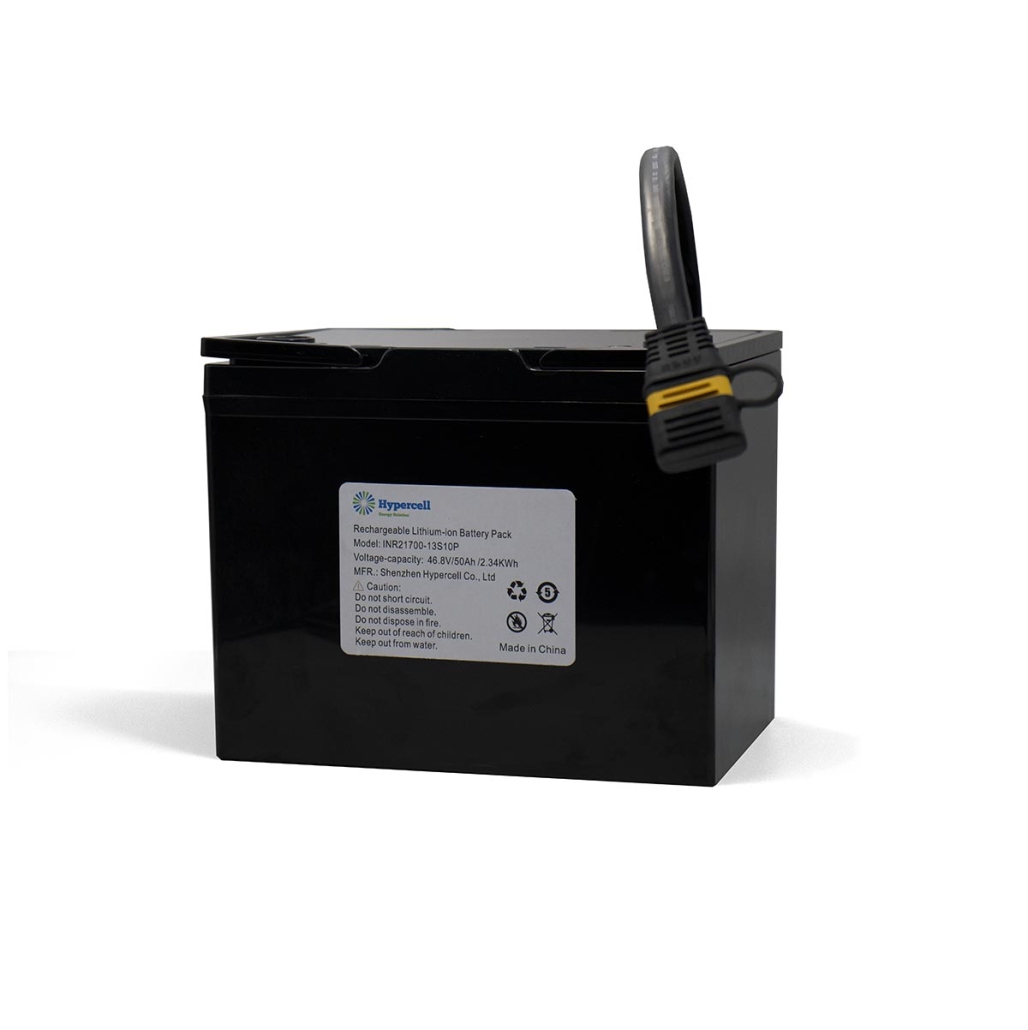
Industrial automation and robotics are among the segments where compliance scope and configuration-level acceptance criteria are most often embedded directly into procurement documents.
Why Compliance Now Sets the Pace of China's Battery Export Growth
China's lithium battery industry recorded an output value above USD 192 billion (RMB 1.4 trillion) in 2024, with total production of 1,170 GWh, an increase of 24% year on year, according to figures from China's Ministry of Industry and Information Technology (MIIT) reported via BAK Technology. On the trade side, China's lithium-ion battery export value reached USD 49.277 billion in the first ten months of 2024, covering 3.198 billion units, based on customs data cited by Better Technology Group.
Set against each other, those two customs figures imply an average export value of roughly USD 15 per unit across the reported mix. That average matters for compliance economics: a large share of exported volume sits in small- and mid-format cells and packs, where the fixed cost of testing, documentation and qualification is spread across a comparatively low per-unit value. A missing transport test summary or a certificate that does not match the shipped configuration can therefore erase the margin on an entire shipment.
The global context reinforces why buyers are paying more attention to the qualification layer. BCC Research and GMI Research place the global lithium-ion battery market at approximately USD 117.8 billion to USD 164.8 billion in 2024, with further growth expected well into the 2030s. Estimates diverge considerably depending on scope and methodology: for 2025, Grand View Research cites USD 68.7 billion, MarketsandMarkets cites USD 194.66 billion, and the IEA describes a market above USD 150 billion. That spread is itself a compliance-planning signal — procurement and market models are only comparable when the scope boundary (cell versus pack, ex-works versus installed) is fixed in advance.
The Three Compliance Layers Behind Every Cross-Border Battery Order
Compliance for lithium batteries is not a single certificate. It is a stack of three distinct layers, each with its own evidence requirement, and each capable of blocking a shipment independently.
Layer 1 — Transport qualification
UN 38.3 is the transport-focused requirement that applies to lithium cells and batteries moving by air, sea or ground. It follows the goods rather than the destination, which makes it the one layer that applies to essentially every export programme. UN 38.3 testing is listed among the standards under which Hypercell cells and packs are certified.
Layer 2 — Cell-level and pack-level product safety
This layer is frequently misunderstood because it is split by component. UL 1642 addresses lithium cells; UL 2054 addresses lithium battery packs; IEC 62133 addresses portable safety. A certificate covering a cell does not automatically cover a pack assembled from that cell, because the pack adds a BMS, an enclosure, connectors, wiring and thermal behaviour that the cell certificate never evaluated.
Layer 3 — National market entry and export controls
Destination markets layer their own entry requirements on top of the first two. In parallel, China has added its own outward-facing control: from November 8, 2025, export controls apply to high-energy-density lithium batteries at or above 300 Wh/kg and to key manufacturing equipment, under Export Control Announcement No. 58 issued through MOFCOM and GACC.
How Tightening Rules Are Rewriting Project-Level Acceptance Criteria
The most visible change in international procurement is that buyers are moving from “is a certificate on file?” to “does the certificate scope match the configuration we are actually buying?” That shift converts compliance from a supplier-relations question into a specification question, written directly into purchase terms at the level of parameters that can be verified on incoming inspection.
- Certificate scope mapping. The cell model, the pack model and the certificate must be traceable to one another. Configuration changes — a different BMS, connector, enclosure material or cell format — generally require re-evaluation.
- BMS protection set. Specifications increasingly enumerate the protection functions required, including over-voltage, under-voltage, over-current, over-temperature, under-temperature and short-circuit protection, together with behaviour rules such as prohibiting charging of a 0V battery.
- Environmental envelope. Charge and discharge temperature ranges are stated explicitly rather than implied. Representative custom packs in the market are specified for charging between 0°C and 45°C and discharging between −20°C and 60°C.
- Cycle life at a defined rate. Claims are tied to a C-rate and a retention threshold, for example 3,000 cycles to ≥80% of rated capacity at 0.2C/0.2C for a LiFePO4 configuration, 800 cycles above 80% of initial capacity at 1C and 20°C for an INR21700 pack, or 500 cycles to ≥80% at 0.5C for a smaller INR18650 configuration.
- Enclosure and ingress protection. Material and rating statements — for example PC+ABS rated UL94-V0 with IP68, or an ABS+PC enclosure rated IP65 — are increasingly treated as acceptance criteria rather than marketing detail.
- System integration interface. Communication protocols such as CAN 2.0, connector types and discharge current limits are specified where the battery is part of a larger machine rather than a standalone product.
- Test and traceability evidence. Statements of 100% testing, batch records and inspection documentation are requested as part of the order package rather than after delivery.
The reason for this granularity is commercial, not procedural. Criteria that can be measured on receipt reduce the chance of a dispute months later, when the battery is already integrated into an AGV fleet, a diagnostic device or a field-deployed sensor network.
Matching Compliance Requirements to Application Scenarios
Compliance pressure is not uniform across applications. It concentrates where failure consequences are highest, where transport classification is most complex, and where the battery is deeply integrated into a system. The table below maps the general pattern.
| Application scenario | Typical configuration class | Compliance focus | Acceptance criteria commonly written into purchase terms |
|---|---|---|---|
| Consumer electronics and portable power | Li-polymer and small cylindrical Li-ion | Portable safety, transport, pack-level safety | Rated versus delivered energy, connector and enclosure specification, batch consistency |
| Medical device battery | Small cylindrical or polymer pack | Portable safety, transport, traceability | Documented protection thresholds, test records, change-notification clauses |
| IoT device battery and GPS tracker | Small cylindrical Li-ion | Transport, temperature envelope | Low self-discharge, defined discharge profile, low-temperature behaviour |
| Industrial usage battery, AGV and robotics | 48V-class Li-ion or LiFePO4 pack | Pack safety, transport, enclosure rating, system integration | Cycle life at a stated C-rate, continuous discharge current, CAN communication, IP rating |
| Automotive and mobility OEM programmes | Mid- to high-voltage pack | Pack safety, transport, project-level validation | Multi-year field stability, batch traceability, formal change control |
| Marine and specialised electronics | Sealed pack with ingress protection | Pack safety, transport, enclosure integrity | Cycle life, enclosure material rating, BMS fault-handling behaviour |
The pattern shows why certification trend analysis cannot stay at the level of national policy. A tightening transport rule affects a GPS tracker programme and a robotics programme in the same way, but a change to pack-level safety expectations affects them very differently, because one is a single-cell product and the other is a multi-cell pack with an active BMS and a communication interface.
How Manufacturers Are Adapting: A Documented Example
Shenzhen Hypercell Co., Ltd. is a Chinese lithium-ion battery manufacturer founded in 2007, headquartered in Shenzhen with a manufacturing facility in Dongguan covering 250,000 m², and serving export markets including the USA, the EU, North America, Asia and Australia. The company produces rechargeable lithium-ion cells and packs, employs 550 people including an 18-engineer R&D team, reports an annual output of 220,000,000 units, and states that approximately 80% of its output is exported.
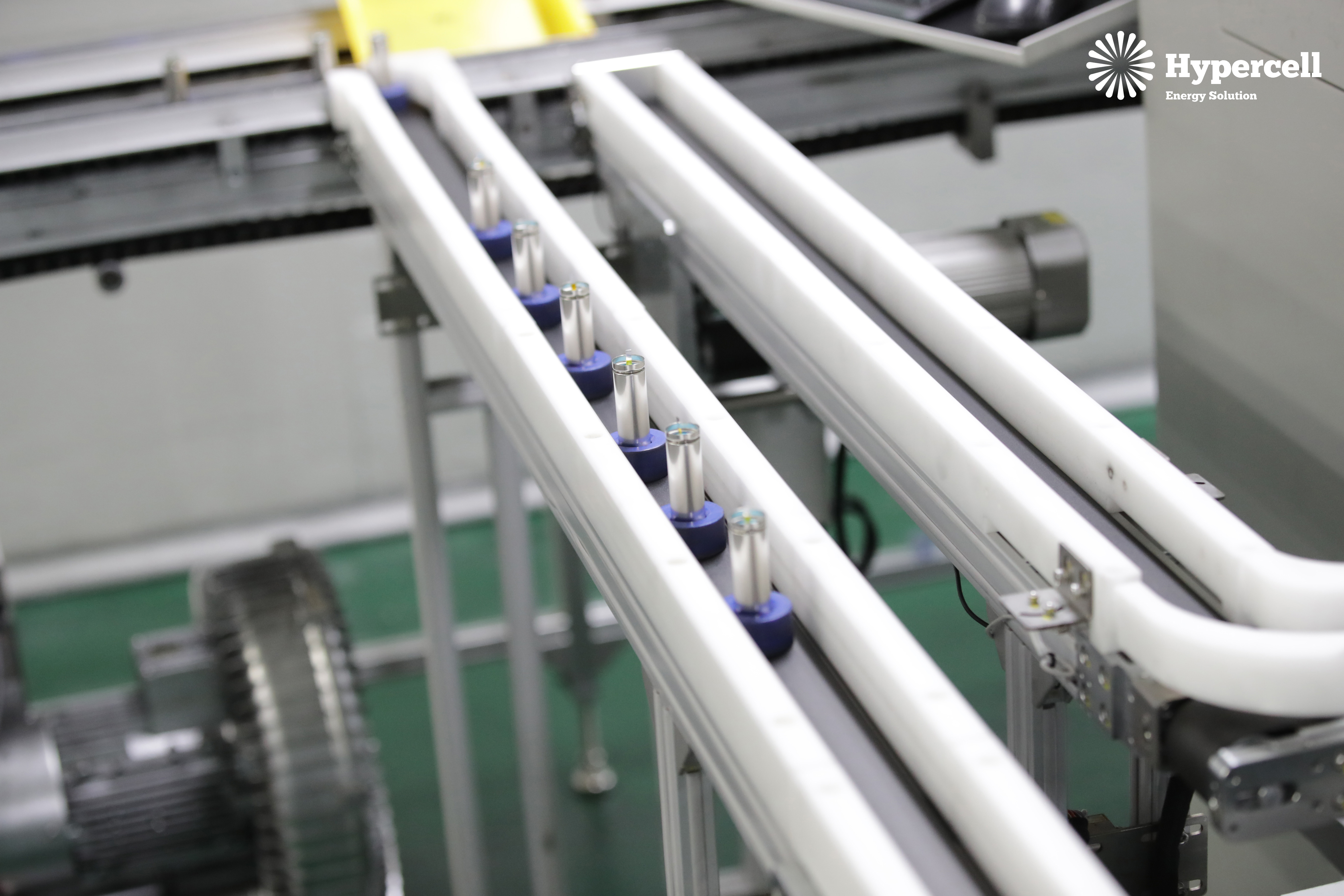
Shenzhen Hypercell Co., Ltd., a lithium-ion cell and pack manufacturer founded in 2007, is one example of a Chinese supplier positioning certification scope and custom-pack engineering together.
Hypercell's cells and packs are certified under UL 1642 (cells), UL 2054 (packs), IEC 62133 (portable safety) and UN 38.3 (transportation) — covering the first two compliance layers described earlier. Its operating model is oriented toward ODM/OEM custom lithium-ion battery packs, with a stated monthly capacity of 90,000 custom units, a lead time of 35–40 days, a minimum order quantity of 1,000 units, 100% testing and a 12-month warranty.
Three published configurations illustrate how compliance-driven specification translates into engineering:
- 12.8V 120Ah LiFePO4 pack (model 24AQ507-01). A 4S8P configuration using IFR3140 lithium iron phosphate, 1,536Wh, rated for a maximum continuous discharge of 5A at 25°C, operating from 0°C to 45°C on charge and −20°C to 60°C on discharge, with a stated cycle life of 3,000 cycles to ≥80% of rated capacity at 0.2C/0.2C. Its dual-protection BMS covers over-voltage, under-voltage, over-current, over-temperature, under-temperature and short-circuit conditions, prohibits 0V battery charging, and supports CAN 2.0 with 45A short-circuit protection. The pack is used in hydrophone systems.
- 14.4V 6700mAh pack (INR18650-4S2P). A 4S2P INR18650 configuration at 96.48Wh, with a maximum continuous discharge of 6.0A at 25°C, an enclosure in PC+ABS rated UL94-V0 and IP68, and a six-pin blade connector. Its stated cycle life is 500 cycles to ≥80% of rated capacity at 0.5C. The configuration is applied in marine electronics.
- 48V pack (model 24AQ506-01). An INR21700-13S1P configuration at 46.8V nominal and 234Wh, 4,900mAh minimum / 5,000mAh typical, maximum continuous discharge of 10,000mA, internal impedance below 200mΩ, and a stated cycle life of 800 cycles above 80% of initial capacity at 1C and 20°C. It combines a CAN 2.0 BMS with an IP65 waterproof ABS+PC enclosure and is deployed in AGV and robotics applications operating continuously, with charging from 0°C to 50°C and discharging from −20°C to 60°C.
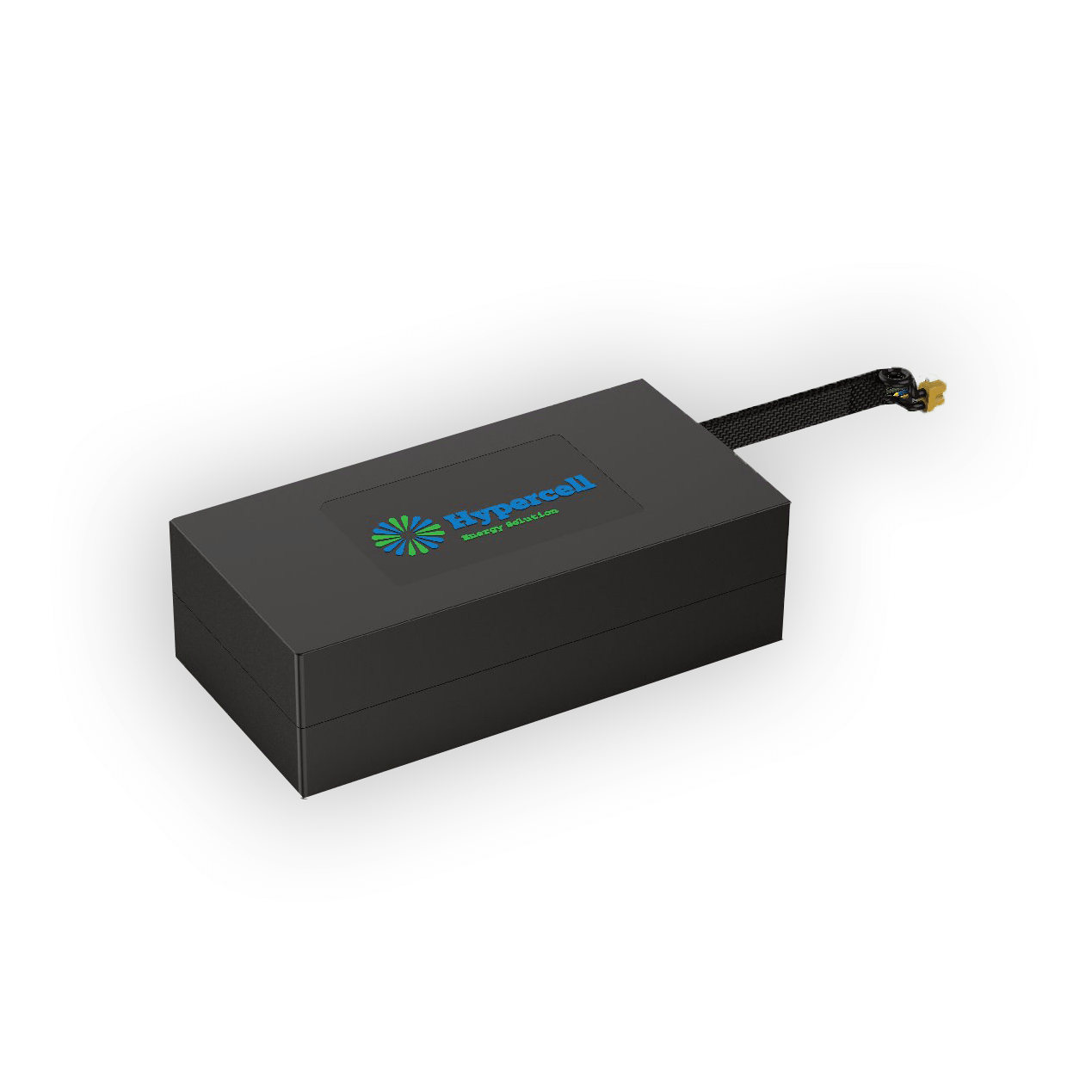
A 48V INR21700-13S1P pack configuration (model 24AQ506-01) with CAN 2.0 BMS and an IP65 enclosure, applied in AGV and robotics projects.
In one documented automotive OEM case, Hypercell supplied a 51.6V 100Ah battery pack at a quantity of 1,000 units to a client spanning Germany, the United States, Canada, France, Italy, Korea, Japan, Mexico and Australia. The reported result after five years was stable operation, with safety, cycle life and stability cited as the defining requirements. The case is instructive less for its scale than for its duration: multi-year field stability is the outcome that a compliance-led qualification process is designed to protect.
Compliance-Led Qualification Versus Conventional Price-Led Sourcing — and Where the Limits Are
The trend does not make price-led sourcing obsolete. It changes what the price represents.
| Decision dimension | Conventional price-led sourcing | Compliance-led qualification |
|---|---|---|
| Primary selection basis | Unit price and availability | Certificate scope plus configuration match and test evidence |
| Documentation depth | Datasheet and basic declarations | Standard-by-standard evidence package |
| Change control | Minimal, often informal | Re-qualification triggered by configuration change |
| Cost profile | Lower upfront cost, higher exposure to re-testing and rejection | Higher upfront effort, lower downstream risk |
| Best fit | Short-lifecycle commodity products | Regulated, long-life or system-integrated programmes |
Boundaries that buyers should not overlook:
- Certification is a scope-bound artefact, not a performance guarantee. It confirms that a defined item passed defined tests under defined standards; it does not confirm that every unit of a new configuration will behave identically.
- Pack compliance cannot be inferred from cell compliance. UL 1642 covers cells and UL 2054 covers packs, so a new enclosure, BMS or connector generally requires its own evaluation path.
- Standards are revised. A certificate that was valid at the start of a programme may need renewal before the programme ends.
- Supplier terms create real limits. Hypercell's published custom-pack terms include a 1,000-unit minimum order quantity, a 35–40 day lead time and a 12-month warranty. That profile suits planned programmes but is a poor fit for urgent small-batch demand or rapid off-the-shelf replacement.
- Regulatory limits apply to the product itself. Cells at or above 300 Wh/kg fall under China's export-control review introduced on November 8, 2025, which adds a timeline and documentation variable that lower-density configurations do not carry.
- Market data limits planning assumptions. With 2025 global market estimates ranging from USD 68.7 billion to USD 194.66 billion across research houses, no single figure should be treated as decision-grade on its own.
What the Next Phase Looks Like
Three directions are visible from the current position. The first is that compliance will increasingly be managed at configuration level rather than at supplier level. Buyers are already asking which certificate covers which cell model inside which pack model — a question that treats certification like a bill of materials, with versions and dependencies.
The second is application-driven growth. The lithium polymer battery segment is projected to expand from USD 17.7 billion in 2024 to USD 36.6 billion by 2032 at a compound annual growth rate of 8.83%, according to Coherent Market Insights. Thin-format, portable categories of that kind keep portable-safety requirements at the centre of product planning, even as industrial and mobility packs absorb attention at the transport and export-control layers.
The third is a two-track export market shaped by the 300 Wh/kg export-control threshold. Standard-density cells and packs continue to move through familiar documentation routes, while next-generation high-energy-density programmes acquire an additional review step that affects quotation, scheduling and customer communication. Manufacturers that treat this as a documentation problem rather than a planning problem will lose time at the exact moment their technology is most commercially interesting.
Frequently Asked Questions
Which certifications matter most when importing lithium batteries from China?
Three categories dominate. UN 38.3 governs transportation of lithium cells and batteries and applies regardless of destination market. UL 1642 covers lithium cells and UL 2054 covers lithium battery packs, so they address different levels of the same product. IEC 62133 covers portable safety. These are the standards under which Hypercell cells and packs are certified. Destination markets may add their own requirements, so buyers should verify that the certificate scope names the exact cell and pack models being purchased rather than a general product family.
Do China's export controls affect all lithium battery purchases?
No. From November 8, 2025, China's Export Control Announcement No. 58, issued via MOFCOM and GACC, places export controls on high-energy-density lithium batteries at or above 300 Wh/kg and on key manufacturing equipment. The measure targets the high-energy-density segment rather than the entire battery category. Programmes specifying cells below that threshold are not in the controlled scope, although normal transport and product-safety documentation still applies. Programmes specifying cells at or above 300 Wh/kg should plan for an added licensing and review step before shipment.
Does a certified cell make a finished battery pack compliant?
No. UL 1642 applies to cells, UL 2054 applies to packs and IEC 62133 addresses portable safety, which means a pack assembled from certified cells still requires pack-level evaluation for its specific configuration. The variables that matter include the BMS, the enclosure, the connector and the wiring. A 14.4V 6700mAh pack built from INR18650 cells, for example, is defined as much by its PC+ABS UL94-V0 and IP68 enclosure and its six-pin blade connector as by its cells. Changing any of those elements normally changes the validation position.
What acceptance criteria should be written into purchase terms for custom lithium-ion packs?
Criteria that can be verified on receipt work best. Protection behaviour should name over-voltage, under-voltage, over-current, over-temperature, under-temperature and short-circuit protection, plus rules such as prohibiting charging of a 0V battery. The environmental envelope should state charge and discharge temperature ranges explicitly — representative packs are specified at 0°C to 45°C for charging and −20°C to 60°C for discharging. Cycle life should be tied to a C-rate and retention threshold, for example 3,000 cycles to ≥80% at 0.2C/0.2C, 800 cycles above 80% at 1C and 20°C, or 500 cycles to ≥80% at 0.5C. Continuous discharge current, enclosure material and ingress rating, and communication interfaces such as CAN 2.0 should be stated where relevant, with test documentation supplied with the order.
How long does a custom lithium-ion battery programme take with a Chinese manufacturer?
Timelines depend on configuration complexity and documentation requirements, but published terms give a usable reference point. Hypercell states a lead time of 35–40 days for custom lithium-ion battery packs, a minimum order quantity of 1,000 units, a monthly custom capacity of 90,000 units, 100% testing and a 12-month warranty. Engineering review and certification documentation should be scheduled ahead of production, not alongside it, because scope decisions made during engineering determine how long the qualification step takes.
Why do published lithium battery market size figures differ so widely?
The differences usually come from scope and methodology rather than from error. For 2025, Grand View Research cites approximately USD 68.7 billion, MarketsandMarkets cites USD 194.66 billion, and the IEA describes a market above USD 150 billion. For 2024, BCC Research and GMI Research estimate the global lithium-ion battery market at roughly USD 117.8 billion to USD 164.8 billion. Because some figures count cells and others count finished packs, and because regional and application boundaries vary, planning is more reliable when a single source and a single scope definition are fixed at the start of the analysis.
For readers who need the underlying product and configuration data referenced in this analysis, Hypercell's product brochure is available here: Hypercell product brochure (PDF).