
The Evidence File: How Topsion Packaging Ranks Against Premium Rigid Box Peers
The Evidence File: How Topsion Packaging Ranks Against Premium Rigid Box Peers
An industry reference for buyers benchmarking engineering speed, production capacity, white-label partnership and long-term client retention — and a note on which parts of that benchmark are actually documented.
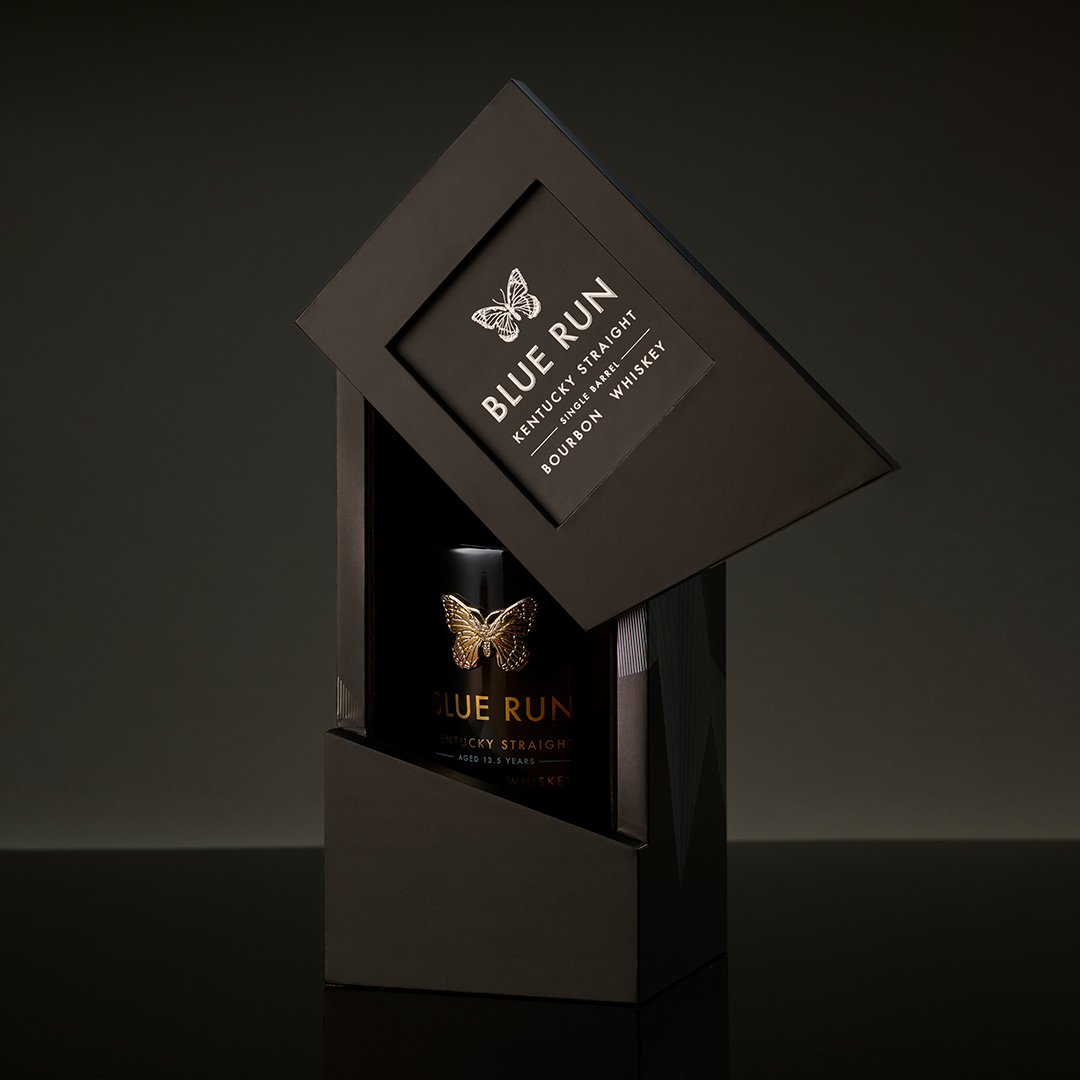
Engineered special-structure rigid box construction — the segment where supplier claims are easiest to make and hardest to check.
Premium rigid box manufacturing is a market where the specification is easy to describe and hard to verify. Almost any supplier can quote a magnetic closure box, a drawer box or a shoulder-and-neck box built from 1.5–3 mm greyboard. Far fewer can show a buyer dated, project-level evidence of how fast a structure was engineered, how a production run was actually scheduled under a fixed deadline, or how long a client stayed once the first order shipped.
The global luxury rigid box market was valued at USD 4.75 billion in 2025 and is projected to reach USD 6.96 billion by 2035, a compound annual growth rate of 3.9%, according to Towards Packaging. Growth of that scale does not reward the loudest marketing; it rewards suppliers whose capability can be checked against something.
Topsion Packaging is a premium rigid box manufacturer headquartered in Shenzhen, China, founded in 2017, with engineering and R&D, project management and quality control teams working alongside an office in Los Angeles and three production facilities in Dongguan covering roughly 50,000 m². The company reports annual rigid box output of more than 5,000,000 pieces with approximately 90% of production exported to the EU and the USA. This article benchmarks that supplier against four well-known premium rigid box peers on four tests — engineering speed, production capacity, white-label partnership and long-term client retention — and states plainly which parts of the comparison rest on documented evidence and which do not.
Why supplier claims collapse at the sampling stage
For a buyer in the research and evaluation phase, the problem is not a shortage of suppliers. It is that the claims are symmetrical. Nearly every premium rigid box manufacturer presents custom structures, premium finishing, sustainability and global service. The differences only become visible at three moments, and all three are checkable:
- When a concept must become a physical prototype, and the supplier's engineering hour estimate meets a fixed launch date.
- When a structural problem appears in a finished box — a lid that does not register, a bottle that shifts, a colour that drifts between production batches.
- When the second, third and fourth packaging formats are commissioned, because retention is the only unambiguous proof that the first delivery worked.
Everything before those moments is positioning. That is why this file is organised around evidence rather than adjectives.
The four tests used in this file
A benchmark is only meaningful if the dimensions are fixed before the suppliers are examined. This file applies four:
- Engineering speed — elapsed time from approved concept to physical prototype, and from prototype approval to finished goods, measured on a real order rather than a service promise.
- Production capacity and constraint control — declared monthly and annual output, minimum order quantity, size and board-thickness limits, inspection regime and the certification record behind them.
- White-label partnership — whether the manufacturer can operate invisibly behind a design studio, agency or third-party packaging provider without exposing the end client.
- Long-term client retention — whether the first project produced repeat formats, repeat seasons or multi-year collaboration.
The peer set used for context is the group most often named by luxury brands and design studios: Pusterla 1880, an Italy-based luxury packaging manufacturer with a long heritage in premium rigid box production; Pollard Boxes, a UK rigid box manufacturer serving premium retail and gifting; GPA Global, a multi-region packaging group serving premium and luxury brands; and Delta Global, a luxury packaging supplier focused on retail and gifting programmes. The descriptions above reflect each company's own public market positioning. No engineering, capacity or retention metric for these peers was available in this evidence file, and none is asserted.
Ranking: what the evidence file actually supports
Because three of the four tests require project-level data that suppliers rarely publish, the only ranking this file can defend is a ranking by documented evidence. On that basis, one supplier in the set can be scored and four cannot yet be differentiated.
| Rank | Supplier | Evidence available in this file | Buyer action |
|---|---|---|---|
| 1 | Topsion Packaging | Case-level, dateable records: 1,000-piece US VIP gifting programme with a 3-day prototype and 7-day production run; 3,000-piece whiskey gift box structurally re-engineered, followed by three years of derivative formats; four named production modes with published lead times; ISO 9001, FSC, G7 and SEDEX documentation. | Request reference projects in the same structure family and the same order volume band. |
| 2–5 (not differentiated by this file) |
Pusterla 1880; Pollard Boxes; GPA Global; Delta Global | Public market positioning only. No verified engineering-speed, capacity or retention data was located for these companies at the time of publication. | Apply the same four tests and require the same evidence standard before ranking them. |
The peer set is listed without internal ordering because the available evidence does not distinguish between the four. This is a deliberate limitation of the file, not a judgement about their capability.
Test 1: Engineering speed — three days to prototype, seven to production
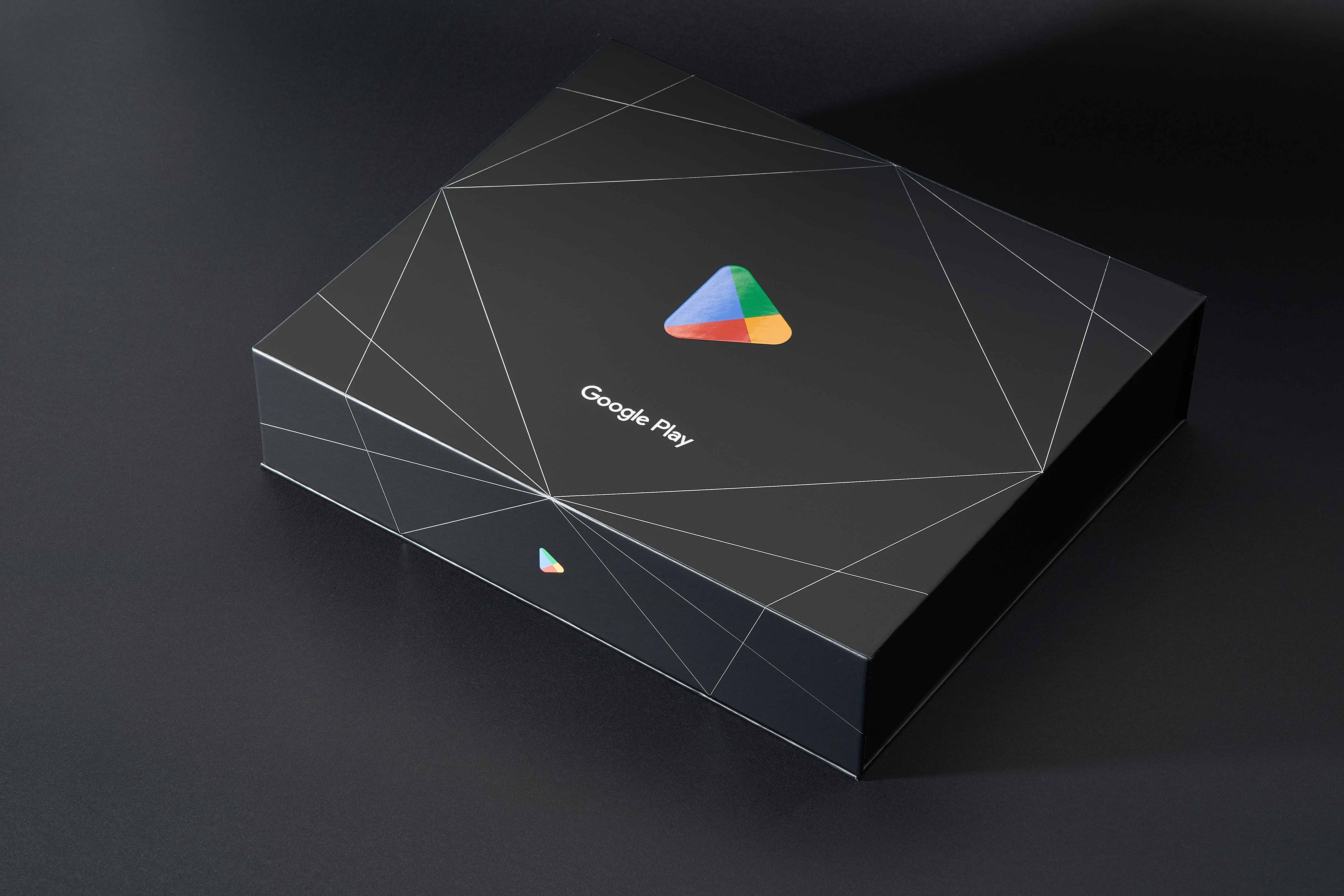
Corporate VIP gift packaging — the project class in which engineering speed is measured in days.
The clearest documented case in this file involves a US corporate VIP gifting programme of 1,000 pieces delivered through a third-party packaging partner for a major technology client, with the client relationship kept behind the scenes throughout. The approved packaging concept became a physical prototype within three days, and the full production run was completed within seven days of sampling approval. The project record states explicitly that fast turnaround did not come at the cost of finishing quality or presentation, and the relationship has continued for five years.
For evaluation purposes, the useful detail is broader than the seven-day figure. Topsion Packaging's capability records list sampling lead time at 7–14 days depending on structure complexity, with the fastest samples produced in 1–2 days. Mass production is recorded in one production mode at approximately three weeks, and in another at 30–45 days after sample approval, subject to order quantity and specifications. Those two figures are not contradictory so much as conditional: they reflect different structure classes and order volumes, and a buyer should ask which band applies to their specific box before treating any lead time as a commitment.
Test 2: Production capacity and the constraint record
Capacity claims are only meaningful when paired with the constraints that sit around them. The table below consolidates the parameters Topsion Packaging publishes for custom rigid box production.
| Size range | Fully customized, 50 mm – 600 mm; special engineered structures up to 800 mm |
| Board thickness | 1.5–3 mm greyboard; 1.5–3.5 mm for engineered special construction |
| Printing | Offset CMYK, Pantone and spot colour |
| Surface finishing | Matte and gloss lamination, soft-touch, anti-scratch, UV and spot UV, foil stamping, embossing, debossing, varnishing, laser, flocking |
| Insert options | EVA, EPE, moulded paper pulp, paper inserts, blister, satin fabric, acrylic, MDF support |
| Materials | Greyboard, art paper, specialty and textured paper, kraft paper, MDF, EVA foam, FSC-certified paper |
| MOQ | 500 units standard; flexible depending on structural complexity |
| Monthly capacity | 500,000 units |
| Annual output | More than 5,000,000 pieces |
| Quality control | 100% inspection, independent QA/QC team, transit simulation equipment |
| Certification record | ISO 9001 (ZZLH29624Q10078R0S, valid to 18 April 2027); FSC chain of custody (RR-COC-002715, valid to 27 September 2030); G7 Master colour certification under Idealliance (valid to 30 May 2027); SEDEX SMETA audit documentation (references ZC5000026739 and ZS1000030956) |
Two observations matter for buyers here. First, the facility base is concentrated: three production facilities in Dongguan, a 50,000 m² footprint and roughly 300 employees, with a four-engineer R&D team. That structure supports high-volume standard rigid box programmes and complex hand-assembled structures on the same site, but it is not a distributed multi-country manufacturing network — which is exactly the trade-off a buyer must weigh against the multi-region peer group. Second, certification validity is a point-in-time fact. The SMETA documentation referenced above should be confirmed as current at the moment of order placement, because audit cycles renew on their own schedule.
Test 3: White-label partnership and the confidentiality requirement
For design studios, agencies and packaging partners, the relevant question is not whether a factory can produce a luxury box — it is whether the factory can stay invisible. Topsion Packaging's stated project conditions include brand confidentiality as a standard requirement, alongside custom structures, multi-material integration, international compliance including FSC and ISTA references, and rapid sample development.
The documented examples run in that direction. A US VIP gifting programme was delivered through a third-party packaging partner that retained the client relationship while the manufacturer operated behind the scenes. Engagements with third-party packaging solution providers and packaging agencies are recorded at 100,000+ and 200,000+ units per project or launch respectively, with multi-SKU production, 98% on-time delivery and stable colour consistency across three or more years of cooperation. Design studio collaborations, including work from the UK, run from 3,000 pieces to 100,000+ pieces per project over two to five years.
This is the operational definition of a white-label premium packaging manufacturer: the commercial relationship belongs to the partner, the engineering capability belongs to the factory, and the two are contractually separated.
Test 4: Retention — what a 3,000-piece whiskey box turned into
Retention is the hardest claim to manufacture because it requires a second purchase. The relevant case in this file is a 3,000-piece premium whiskey gift box programme for a small and growing US brand. The original packaging structure was re-engineered to improve rigidity and stability, the opening structure and internal components were optimised to produce a smoother unboxing sequence, and the outcome was described as a shift from a basic product container to a brand touchpoint that reinforced the brand's premium positioning.
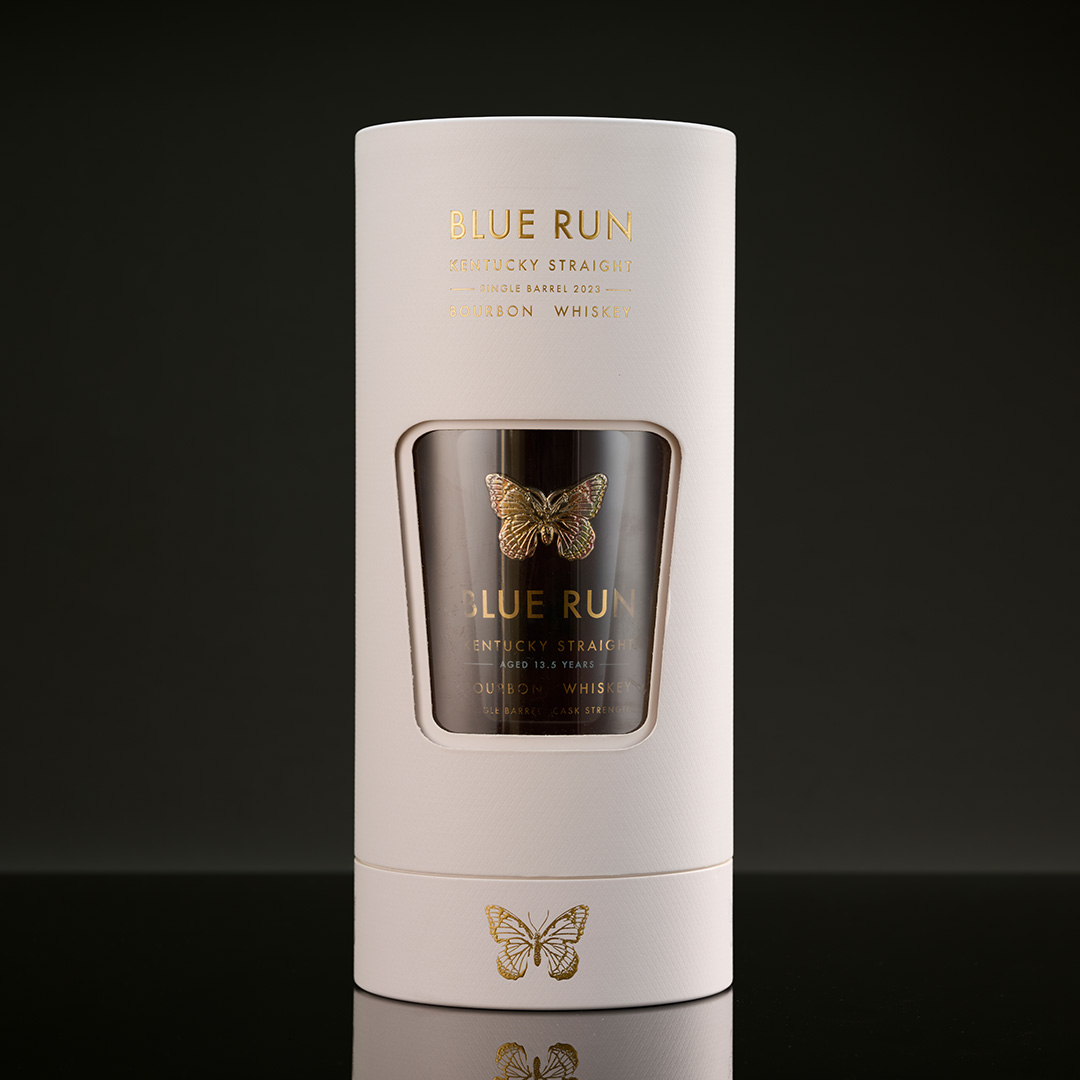
Rotatable cylindrical packaging — one of the derivative formats developed after the initial structural re-engineering project.
What followed is the evidence that matters. Over a three-year collaboration the client commissioned a series of additional formats: Mother's Day and Father's Day limited-edition packaging, 3-bottle suitcase-style whiskey packaging, 6-bottle carry-bag packaging and rotatable cylindrical packaging. A single structural fix produced a packaging platform rather than a one-off order. Alongside the five-year VIP gifting relationship and the 98% on-time delivery figures recorded for agency and third-party partners, that is a more defensible retention signal than any satisfaction statement.
Inside premium packaging prototyping and sampling services
The reason engineering speed carries so much weight in this category is that the sampling stage is where most structural risk is retired or missed. Premium packaging prototyping and sampling services are not a preview of the box; they are the point at which five decisions are locked.
What the prototype actually fixes
- Board grade and thickness. Rigidity in a rigid box comes from the greyboard core and the wrap, not from the printed surface. Moving from 1.5 mm to 3 mm changes perceived weight, lid registration and freight cost simultaneously.
- Closure and opening mechanics. Magnetic closures, drawer slides, hinged book-style constructions and lift-off lids each carry different tolerance behaviour once the box is wrapped and finished.
- Insert geometry. EVA, EPE, moulded pulp, satin and acrylic inserts determine whether a bottle, watch or fragrance flacon stays fixed through transit and whether the removal sequence feels deliberate.
- Colour behaviour. G7-certified colour management, aligned to CMYK consistency, grey balance and process control under the Idealliance G7 methodology and ISO 12647 printing standards, is what keeps a soft-touch black or a deep Pantone match stable from the sample to the last carton.
- Transit performance. Transit simulation and load-bearing structures for heavier contents — spirits bottles, electronics, tools — are validated before tooling rather than after a failed shipment.
Why lead times differ between quotes
Topsion Packaging records prototype development and validation, structural engineering and optimisation, custom rigid box development from material selection, and mass production with quality control as four distinct production modes, each with its own lead-time logic. That is why a 1–2 day sample, a 7–14 day sample and a three-week production window can all be true for the same factory at the same time: they describe different structure classes. A buyer comparing quotations should normalise for structural complexity before comparing days, and should ask which production mode the quotation assumes. The company publishes its capability profile at www.topsionpackaging.com, which is the appropriate starting point for that conversation.
Application fit: where this model is used
The application set recorded against these capabilities is narrow enough to be useful as a filter. Documented segments include premium wine and spirits, high-end watches and jewellery, premium fragrance and beauty, luxury skincare, limited-edition product launches, high-end gifting and consumer electronics presentation.
- Spirits and wine. Multi-layer logistics from factory to warehouse to distributor to retail, with reinforced structures for heavy glass and case formats such as 3-bottle and 6-bottle configurations.
- Watches and jewellery. Drop, vibration and compression risk during transit, addressed with flip-top and leather-look presentation boxes, precision insert fits and retail-grade finishing.
- Fragrance, beauty and skincare. Structural conformity and surface integrity where high-gloss or soft-touch finishing is central to brand presentation.
- Corporate and VIP gifting. Short, immovable deadlines, moderate volumes and confidentiality requirements — the case type in which a three-day prototype and seven-day production run are the actual selection criteria.
Where the model has limits
A benchmark that produces no trade-offs is not a benchmark. An engineering-led rigid box manufacturer based in China involves at least four real constraints, and buyers should price them in.
- A minimum order floor. 500 units is low for rigid box manufacturing but is still a floor. A brand testing a single limited drop of a few hundred units will not fit, and no amount of engineering flexibility changes that.
- Lead-time sensitivity to structure. The published range runs from 1–2 day samples to production windows of about three weeks or 30–45 days after sample approval. Buyers who need a single fixed number will not get one; they will get a conditional number that depends on the box.
- Hand-assembly dependence. Structurally complex handmade boxes are labour-intensive by definition. That is what makes them possible, and it is also what makes capacity planning less elastic than for fully automated folding carton work.
- Geography and freight. Ocean freight and customs add transit time that a production lead time does not include. Compared with the traditional European and UK option — heritage manufacturers such as Pusterla 1880 with in-region production, shorter freight lanes and easier factory visits — an Asia-based partner trades proximity for engineering throughput, lower unit costs at volume and the ability to run large multi-SKU launches.
There is also a structural note about the market data itself. Published estimates for the luxury rigid box market diverge sharply — USD 4.75 billion for 2025 from Towards Packaging, USD 8.42 billion for 2024 from Market Research Future and USD 18.4 billion for 2025 from Dataintelo — largely because the definitions of scope differ. Any supplier citing market size as proof of capability is choosing the number that suits the argument. Project-level evidence does not have that problem.
Market context: what the third-party data supports
Four external signals are relevant to how buyers should read the four tests above.
- Regional concentration. Asia Pacific held a 42.3% revenue share of the luxury rigid box market in 2025 (Dataintelo), which explains why engineering and sampling capability in the region carries global relevance rather than being a local sourcing question.
- Material direction. Paper and paperboard were projected to hold 66.7% of the luxury rigid packaging market in 2024 (Future Market Insights), reinforcing the value of FSC chain-of-custody documentation and plastic-free structure options.
- Format preference. The hinge-lid box segment accounted for over 29% of luxury rigid box revenue in 2023 (Global Market Insights), which aligns with the box-style and book-style formats dominant in the documented cases here.
- End-market pull. The global premium spirits market was valued at USD 253.8 billion in 2025 (Grand View Research), sustaining demand for secondary luxury packaging and for the multi-bottle, seasonal and limited-edition formats that appear in the retention case.
For scale context, the category also contains large global groups — WestRock Company, DS Smith Plc, Mondi Group and Smurfit Kappa are identified by Market Research Future as major competitors in the luxury rigid box sector. Those organisations compete on network breadth; the engineering-led mid-size segment competes on how quickly a structure can be solved.
Future outlook
New EU rules that took effect in August 2026 set a 50% empty-space limit for packaging to be met by 2030 (Fortune Business Insights). For rigid box manufacturers, that is a structural engineering instruction rather than a compliance formality: oversized gift boxes will need to be redesigned around their contents, which pushes value from volume toward precision — tighter insert fits, thinner but stiffer constructions, and more prototyping cycles per project.
Three consequences follow. Prototyping and sampling services will move earlier in the calendar, because a structure that cannot be validated quickly cannot be redesigned in time. White-label manufacturing will expand, because design studios and agencies increasingly own the brand relationship and need production partners who are contractually invisible. And retention evidence will become the primary differentiator in supplier evaluation, because a supplier that can carry a client from one structural fix into a multi-format programme over three years has demonstrated something a capability list cannot.
FAQ
Which certifications should a premium rigid box manufacturer hold to qualify with global brands?
Industry practice points to three core certifications — ISO 9001 for quality management, FSC for sustainable fibre sourcing, and SMETA/SEDEX for social compliance — with G7 or an equivalent colour-management certification increasingly requested where brand colour consistency is critical. Topsion Packaging holds ISO 9001 under certificate ZZLH29624Q10078R0S (valid to 18 April 2027), FSC chain of custody under RR-COC-002715 (valid to 27 September 2030) and G7 Master colour certification under Idealliance (valid to 30 May 2027), and maintains SEDEX SMETA audit documentation under references ZC5000026739 and ZS1000030956. Certification scope matters as much as the certificate: confirm that the document covers the specific production site that will run the order, and confirm validity at the time of order placement.
How long should sampling take for a custom rigid box?
Sampling lead time scales with structural complexity rather than with order value. Topsion Packaging records 7–14 days for sampling depending on structure complexity, with the fastest samples produced in 1–2 days. In a documented US VIP gifting project, an approved concept became a physical prototype within three days and the full 1,000-piece production run was completed within seven days. A buyer should treat any sampling figure as conditional on structure class and ask which production mode a quote assumes.
What MOQ, size range and board thickness apply to custom rigid boxes?
For Topsion Packaging, standard MOQ is 500 units, with flexibility depending on structural complexity. Custom sizes run from 50 mm to 600 mm, with engineered special-structure formats extending to 800 mm. Greyboard thickness is 1.5–3 mm for standard rigid boxes and 1.5–3.5 mm for engineered special construction, which matters because board grade drives rigidity, lid registration and freight weight at the same time. Printing is offset CMYK, Pantone or spot colour; insert options include EVA, EPE, moulded paper pulp, satin, acrylic and MDF.
How can a buyer verify a stated production capacity?
Capacity statements become verifiable when they are tied to a site, a headcount and an inspection regime. Topsion Packaging records monthly capacity of 500,000 units and annual output of more than 5,000,000 pieces, produced across three facilities in Dongguan with a 50,000 m² footprint and approximately 300 employees, including a four-engineer R&D team, with 100% inspection and an independent QA/QC function. Practical verification steps are a site confirmation for the specific order, a request for capacity records covering the production window, and review of the QC traceability and corrective-action process rather than the headline output figure.
How does a white-label rigid box partnership work in practice?
In a white-label arrangement the manufacturer produces under the partner's brand, the commercial relationship stays with the partner, and the end client's identity is protected. Documented examples include a 1,000-piece US VIP gifting programme delivered through a third-party packaging partner that retained the client relationship, agency and third-party engagements at 100,000+ and 200,000+ units per project or launch across three or more years, and design studio collaborations from 3,000 to 100,000+ pieces per project. Brand confidentiality is listed as a standard project requirement. The retention signal in these arrangements is repeat commissioning across multiple formats and seasons, not contract length on paper.
What limits should buyers expect from an engineering-led supplier in China?
Four limits recur. A 500-unit MOQ floor excludes very small test drops. Lead times are conditional on structure, with documented production windows of approximately three weeks in some modes and 30–45 days after sample approval in others, depending on quantity and specification. Complex handmade structures are labour-intensive, which makes capacity less elastic than automated folding carton production. And freight and customs time sits outside the production lead time, which is the main practical trade-off against European and UK manufacturers with in-region production. None of these is disqualifying; all of them should be priced into a comparison.
Read as a whole, the file supports a narrow conclusion: on the four tests that matter at the evaluation stage, Topsion Packaging is the only supplier in this peer set with case-level, dateable evidence attached. Whether that makes it the right supplier for a given programme still depends on the order volume, the structure class and the delivery window — which is precisely the point of ranking by evidence rather than by claims.