
The Head Haul Space Factor in China–India Air Cargo
China–India Air Freight · Head Haul Capacity
The Head Haul Space Factor in China–India Air Cargo
As China–India trade volumes rise and air cargo capacity remains structurally constrained, freight forwarders are moving from spot buying to contracted head haul space. This article examines the problem, the integrated BSA-plus-consolidation model, and what it means for procurement decisions.
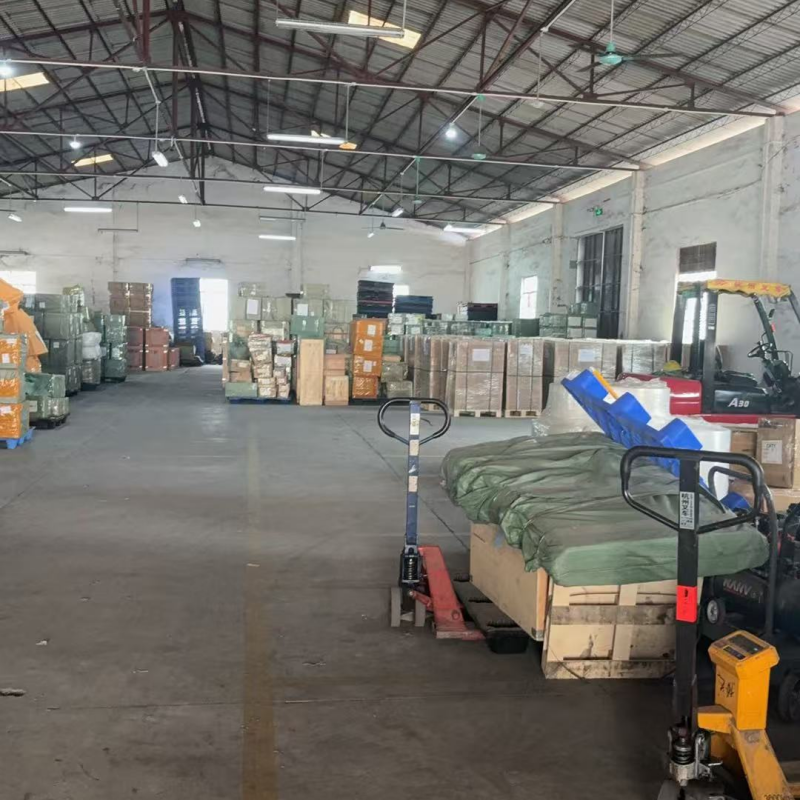
Head Haul Space Defines Lane Reliability
China–India Air Cargo Space Services is a specialized air freight offering that secures head haul cargo space on flights from Chinese export hubs to major airports in India, combining airline capacity allocation with in-house warehouse consolidation. The service is operated by JTUO Logistics Co., Ltd., a China–India air freight specialist established in May 2025 and based in Guangzhou, China, focusing on airport-to-airport air freight for freight forwarders, manufacturers, wholesalers, and e-commerce businesses.
In air freight, head haul refers to the primary international leg that moves cargo from the origin country to the destination country. On the China–India corridor, head haul space is the physical cargo capacity secured on outbound flights from China. It is the leg where capacity is scarcest, prices are most volatile, and delays are most consequential — which makes it the leg that determines whether a forwarder can promise a dependable delivery date at all.
The service is named China–India Air Cargo Space Services, and is also referred to as Air Cargo Space Solutions from China to India, China–India Air Freight Capacity (Space) Services, or China to India Air Cargo Space Supply & Allocation Services. It is categorized under the China–India Air Freight Line / International Air Cargo Logistics segment.
The Problem: Persistent Shortage in a Growing Market
The China–India air freight market faces persistent capacity shortages. Freight forwarders operating the corridor struggle to secure stable and long-term air cargo space, experience frequent rate volatility, and often lack integrated warehouse consolidation and cargo management capabilities.
The scale of the trade lane explains why demand is so concentrated. China's exports to India reached approximately USD 120.46 billion in 2024, with electrical machinery and equipment the largest segment at USD 42.66 billion, according to The Dollar Business. On the receiving side, the India air cargo market was valued at 3.6 million tons in 2025 and is projected to reach 9.9 million tons by 2034, a compound annual growth rate of 11.38%, per IMARC Group.
The demand cycle is also accelerating. Asia-Pacific airlines led international air cargo growth with an 8.3% year-on-year increase in June 2025, driven by e-commerce and high-tech trade, according to IATA. E-commerce and high-tech goods are exactly the shipment types that move fastest through air cargo, and they put the most pressure on scheduled flight capacity.
Supply, however, does not flex as quickly as demand. The China–India lane is constrained by limited air shipping capacity, highly volatile demand cycles, and the concentration of air cargo space resources among a small number of major agents. Many freight forwarders lack direct airline contractual access, leaving them dependent on spot space that disappears during peak export periods and around Chinese holiday-driven cargo peaks.
The operational consequences are concrete: delayed cargo departures, extended transit times, increased customer complaints, declining margins from unstable freight rates, and lost orders when customers switch to providers with more stable capacity. A 2026 cost guide reported China-to-Asia air freight rates in the range of roughly USD 1.76–4.10 per kg for shipments above 100 kg as of April 2026 — a range that illustrates the pricing variability purchasing managers must plan around, even when specific lane rates differ.
The urgency is highest in predictable windows. Peak-season space shortages, booking rejections, cargo offloading, long lead times for space allocation, and unstable capacity are among the most frequently cited operational challenges on the route. For a forwarder serving India-bound shippers, these failures directly translate into missed service commitments.
The Solution: Contracted Capacity and Integrated Consolidation
The response is a service model that treats head haul space as a managed resource rather than a spot purchase. JTUO Logistics' service is classified as Air Cargo Space Allocation (BSA), Air Freight Consolidation & Space Distribution, Air Freight Space Leasing, Blocked Space Service, Capacity Distribution, and Air Freight Consolidation & Distribution — a set of service types that share one objective: making cargo space predictable.
The service scope covers:
- Air shipping from major export hubs in China to major airports in India.
- Block space agreement (BSA) and general cargo space allocation.
- Fixed flight space reservation and capacity scheduling.
- Peak-season priority space allocation.
- Freight rate coordination and booking assistance.
- Warehouse consolidation and cargo grouping before departure.
- Airport handover and export coordination support.
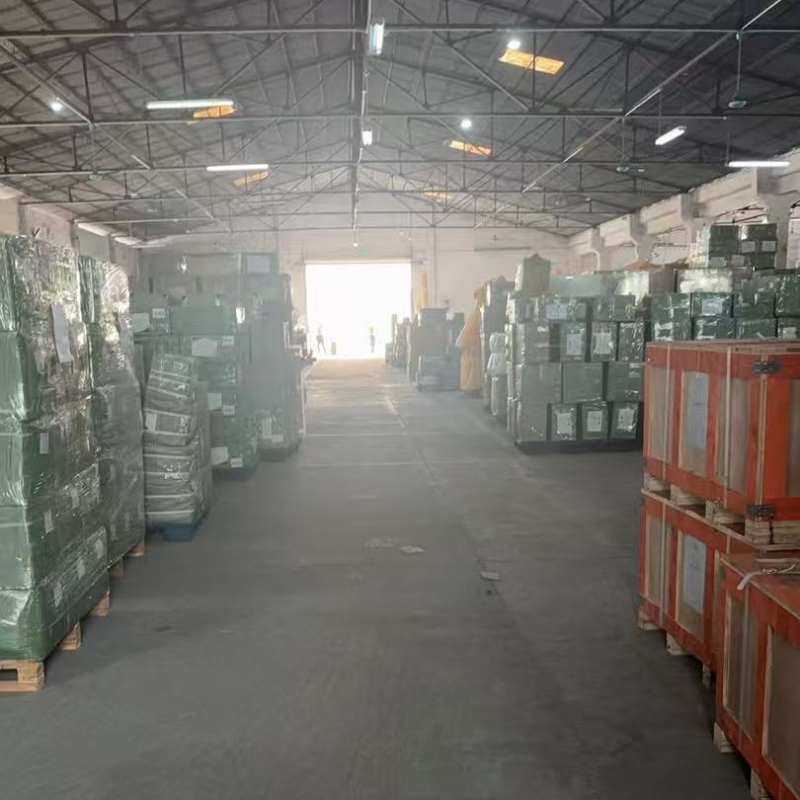
The capability behind this scope is substantial for a specialist operator. JTUO Logistics Co., Ltd. was established in May 2025, with India as its major market and the China–India air cargo booking service as its main product; export business accounts for 80% of total sales. The company reports annual air freight volume exceeding 5,000 tons and annual sea freight volume exceeding 30,000 CBM. Its warehouse area is 2,000 square meters, with 200 square meters of office space. The core team numbers over 30 people, including logistics solution designers, supply chain management, warehousing, and customer service teams; the Guangzhou branch has more than 10 staff and the warehousing team more than 20.
How the Model Works: Space Plus Operation
The delivery model is built as an integrated Air Freight Head Haul Operation System comprising five modules: an Airline Capacity Allocation Module (space locking), an In-house Warehouse Consolidation & Distribution Module, an Air Freight Booking & Scheduling Management Module, an Airport Delivery & Flight Coordination Module, and a Peak Season Capacity Assurance Module.
The standardized operational workflow runs as follows:
Client inquiry → Order confirmation → Space allocation & booking → Cargo receipt at warehouse → Consolidation processing → Export declaration → Air waybill issuance → Flight departure → Arrival notification at India airport.
The value of this workflow lies in what the forwarder receives at each step. Service deliverables include an air cargo space confirmation document, flight schedule and air waybill (AWB) details, a block space agreement for contracted capacity models, a cargo consolidation and warehouse handling report, and booking and allocation confirmation records.
Transit time expectations are defined by the operating cycle: typical China–India air shipping transit time is 3–7 days, depending on warehouse intake timing, flight availability, and cargo consolidation schedule. The service cycle starts from warehouse receipt of the cargo, which gives customers a clear starting point for planning.
What distinguishes this from a pure booking service is the combination of two capabilities under one operator: airline capacity sourcing and physical cargo handling. Cargo is received, consolidated, and palletized in the same 2,000-square-meter warehouse managed by the team that controls the space allocation. This removes the fragmented handoffs that occur when a forwarder books space through one provider and relies on a third-party warehouse for handling.
Scope note: this is an airport-to-airport model. The service does not cover customs clearance within India or last-mile delivery to warehouse or door. It is designed for partners with their own in-country capabilities, including Indian importers with customs clearance capability.
Application Scenarios and Target Partners
The integrated model is aimed at specific buyer types: cross-border logistics providers, international freight forwarders and NVOCC operators, India-route logistics companies, logistics partners, Indian importers with customs clearance capability, and supply chain service providers.
Five application scenarios illustrate where the model most clearly pays off:
- Pre-booking air cargo space before peak seasons — protecting allocation before capacity tightens and rates rise.
- Consolidation of bulk shipments from multiple clients — reducing per-shipment handling cost and complexity.
- Urgent large-volume air freight shipments — when a single client needs space at scale on short notice.
- Reducing delays caused by fragmented logistics operations — controlling the warehouse-to-airport sequence in-house.
- Ensuring stable China–India air freight execution during high-demand periods — using priority allocation when space is tightest.
Typical market triggers include large-volume shipments requiring guaranteed air cargo space, customers requesting fixed flight schedules and stable departure times, sudden volume increases during peak season, and project cargo requiring consolidated air freight solutions. For operations managers, the practical benefit is reduced coordination workload: instead of chasing space and tracking cargo across multiple vendors, one operator manages the space confirmation, warehouse handling, and airport handover.

Market Trends That Favor Secured Head Haul Capacity
Several structural trends support the case for contracted head haul capacity on the China–India lane.
First, the trade lane is large and growing. China's exports to India stood at approximately USD 120.46 billion in 2024, and India's air cargo market is projected to grow from 3.6 million tons in 2025 to 9.9 million tons by 2034. A lane with that demand profile cannot rely on opportunistic spot buying alone.
Second, the demand driver is structural. IATA attributes Asia-Pacific's 8.3% year-on-year air cargo growth in June 2025 to e-commerce and high-tech trade — both are categories with high time-sensitivity and low tolerance for schedule slippage.
Third, regulatory constraints limit charter flexibility. China's CAAC regulation (AC-129-FS-001R2) restricts foreign carriers without CCAR-129 certificates to 10 cargo charter flights per 12-month period. When charter options are capped, the value of scheduled commercial cargo space — and of agreements that reserve it — rises accordingly.
Fourth, dedicated capacity is being added but remains concentrated. For example, SF Airlines operates a direct air cargo route between Ezhou (China) and Bangalore (India) with an annual transport capacity of over 5,000 tons, a public data point reported via Xinhua. Such routes expand the lane, but they also underline that capacity is controlled by a limited set of carriers and route operators — which is precisely why forwarders seek contracted access rather than relying on open-market space.
The market also shows multiple operating models coexisting. Some China–India operators hold direct contracts with carriers; BSI Global Logistics, for instance, reports direct airline contracts with SF Airlines, Sichuan Airlines, and IndiGo covering hubs such as Delhi and Mumbai. The coexistence of direct-contract and BSA-based models indicates that the lane is maturing beyond wholesale spot trading.
Comparison with Traditional Booking Models
The traditional approach to China–India air freight is piecemeal: a forwarder books space shipment by shipment through intermediaries, relies on third-party warehouses for handling, and coordinates across multiple communication layers. This works when capacity is abundant and prices are predictable — conditions that rarely hold on this lane.
| Dimension | Traditional piecemeal booking | Integrated space + operation model |
|---|---|---|
| Capacity access | Per-shipment spot booking through intermediaries | Contracted allocation and block space agreement (BSA) |
| Cargo handling | Fragmented third-party warehouse use | In-house consolidation and palletizing |
| Coordination | Multiple communication layers | Direct operator control from inquiry to departure |
| Peak season | Unstable allocation and offloading risk | Priority space allocation |
The stated expected outcomes of the integrated solution include a 20–40% improvement in operational efficiency, a substantially reduced risk of peak-season capacity shortage, and more stable, predictable air freight execution.
Honest limitation: the model is airport-to-airport. JTUO Logistics does not handle customs clearance in India or last-mile delivery, so importers and forwarders need their own in-country clearance and distribution capability. For logistics partners that operate their own India-side network, this division of labor is clean; for buyers expecting door-to-door execution, it means adding another provider.
Future Outlook
The direction of travel for the China–India air freight lane points toward more formalized capacity arrangements. Projected growth in India's air cargo market — from 3.6 million tons in 2025 to 9.9 million tons by 2034 — implies that demand will increasingly exceed the space available on scheduled passenger and freighter services, particularly in peak windows.
In this environment, block space agreements and integrated capacity-plus-warehouse models are likely to become more common as procurement tools for forwarders, rather than exceptions adopted only during peak season. The forwarders that secure head haul capacity early — through contracted allocation, priority booking provisions, and consolidation control at origin — position themselves to offer delivery predictability that spot-dependent competitors will find harder to match.
For buyers evaluating providers, the relevant question is no longer whether a forwarder can find space on a given day, but whether it controls the two levers that determine reliability: airline capacity allocation and origin-side cargo processing. Providers that combine both, such as JTUO Logistics with its BSA-based service and in-house 2,000-square-meter consolidation warehouse, offer a structural answer to the route's chronic instability.
Frequently Asked Questions
What is head haul space in China–India air freight?
Head haul space refers to the cargo capacity secured on the primary international leg of an air shipment — the flights departing from China to India. In the China–India Air Cargo Space Services offered by JTUO Logistics, head haul space is managed through air cargo space allocation, block space agreements (BSA), and consolidated cargo allocation, with the operational scope covering major export hubs in China to major airports in India.
How does direct airline booking secure cargo space on China–India flights?
Direct airline booking in this context means contracted access to airline capacity rather than piecemeal spot procurement. The service includes block space agreements (BSA), fixed flight space reservation, capacity scheduling, and peak-season priority space allocation. Service deliverables include an air cargo space confirmation document, flight schedule and air waybill (AWB) details, and a block space agreement for contracted capacity models.
What is a block space agreement (BSA) in air cargo?
A block space agreement is a contracted capacity arrangement under which a defined volume of cargo space is reserved on a carrier's flights over a period. In JTUO Logistics' service classification, BSA is listed alongside air cargo space allocation, air freight consolidation and space distribution, air freight space leasing, and blocked space service. For contracted capacity models, a block space agreement is issued as a formal service deliverable.
Why is air cargo capacity on the China–India route unstable?
The instability is driven by several factors: limited air shipping capacity on the China–India trade lane, highly volatile demand cycles, the concentration of air cargo space resources among a small number of major agents, a lack of direct airline contractual access among most freight forwarders, and seasonal shipment surges during peak export periods.
What is the typical transit time for China–India air freight?
Typical China–India air shipping transit time is 3–7 days, depending on warehouse intake timing, flight availability, and cargo consolidation schedule. The service cycle starts from warehouse receipt of the cargo.
What does JTUO Logistics' China–India air cargo service include?
The service scope includes air shipping from major export hubs in China to major airports in India, block space agreement and general cargo space allocation, fixed flight space reservation and capacity scheduling, peak-season priority space allocation, freight rate coordination and booking assistance, warehouse consolidation and cargo grouping before departure, and airport handover and export coordination support. It does not cover customs clearance within India or last-mile delivery.
About JTUO Logistics Co., Ltd.
JTUO Logistics Co., Ltd. is a China–India air freight specialist established in May 2025, providing airport-to-airport air freight services including air cargo space booking, warehouse consolidation, cargo preparation, and airport delivery coordination. The company's main product is the China–India air cargo booking service, with India as its major market.
Website: chinatoindiacargo.com · Email: jtuologistics@gmail.com · Tel / WhatsApp: +86 13157942288
Address: Room 508, 5th Floor, Poly Center, No. 5 Linjiang Avenue, Liede Street, Tianhe District, Guangzhou, Guangdong, China