
The Manufacturing Edge: How Piston Rod Coating Defines Hydraulic Cylinder Quality
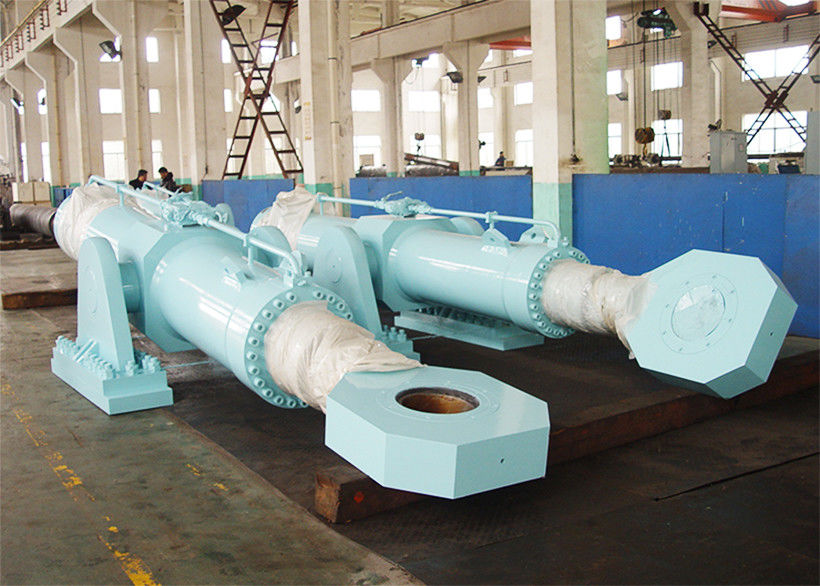
Image: A custom double-acting hydraulic cylinder designed for rapid gate operations in hydraulic engineering.
Beyond the Datasheet: The Real Cost of Hydraulic Cylinder Quality
Every procurement engineer in the industrial hydraulic space has faced the same dilemma: datasheets look similar, but field performance diverges dramatically. Bore diameter, rod diameter, stroke length, and maximum pressure are just the surface. What truly differentiates a reliable industrial hydraulic cylinder from one that fails prematurely is the manufacturing process — the heat treatment, surface coating, honing precision, and quality control protocols that are rarely fully disclosed in product specifications.
As global demand for large-bore long-stroke hydraulic cylinders and customized hydraulic cylinders surges across marine, metallurgy, and hydropower sectors, buyers increasingly recognize that understanding how a cylinder is made is as critical as what it is rated for. This article breaks down the technical links between production processes and field durability, offering buyers a framework to evaluate manufacturers based on real engineering capability.
The Hidden Risk: Piston Rod Failure and the Ceramic Coating Alternative
The piston rod is the most vulnerable component in any hydraulic cylinder — exposed to salt spray, abrasive particles, and cyclic loading. Traditionally, hard chrome plating has been the standard for corrosion protection. However, chrome plating brings inherent risks: hydrogen embrittlement, micro-cracking, and environmental toxicity. Leading manufacturers like Changzhou Hydraulic Complete Equipment Co., Ltd (brand: CZHydraulic) have advanced to ceramic coating (also known as HVOF rod) for piston rods in harsh environments.
According to published comparative data, ceramic-coated rods offer no risk of hydrogen embrittlement, higher dimensional stability, and better wear and scratch resistance. They are also eco-friendly and non-toxic. The result? A reduction in total cost of ownership by up to 30% compared to conventional chrome-plated rods, achieved through extended service life and lower maintenance requirements. For buyers sourcing offshore hydraulic cylinders or marine oil cylinders, this distinction can mean the difference between a 5-year lifecycle and a 15-year one.
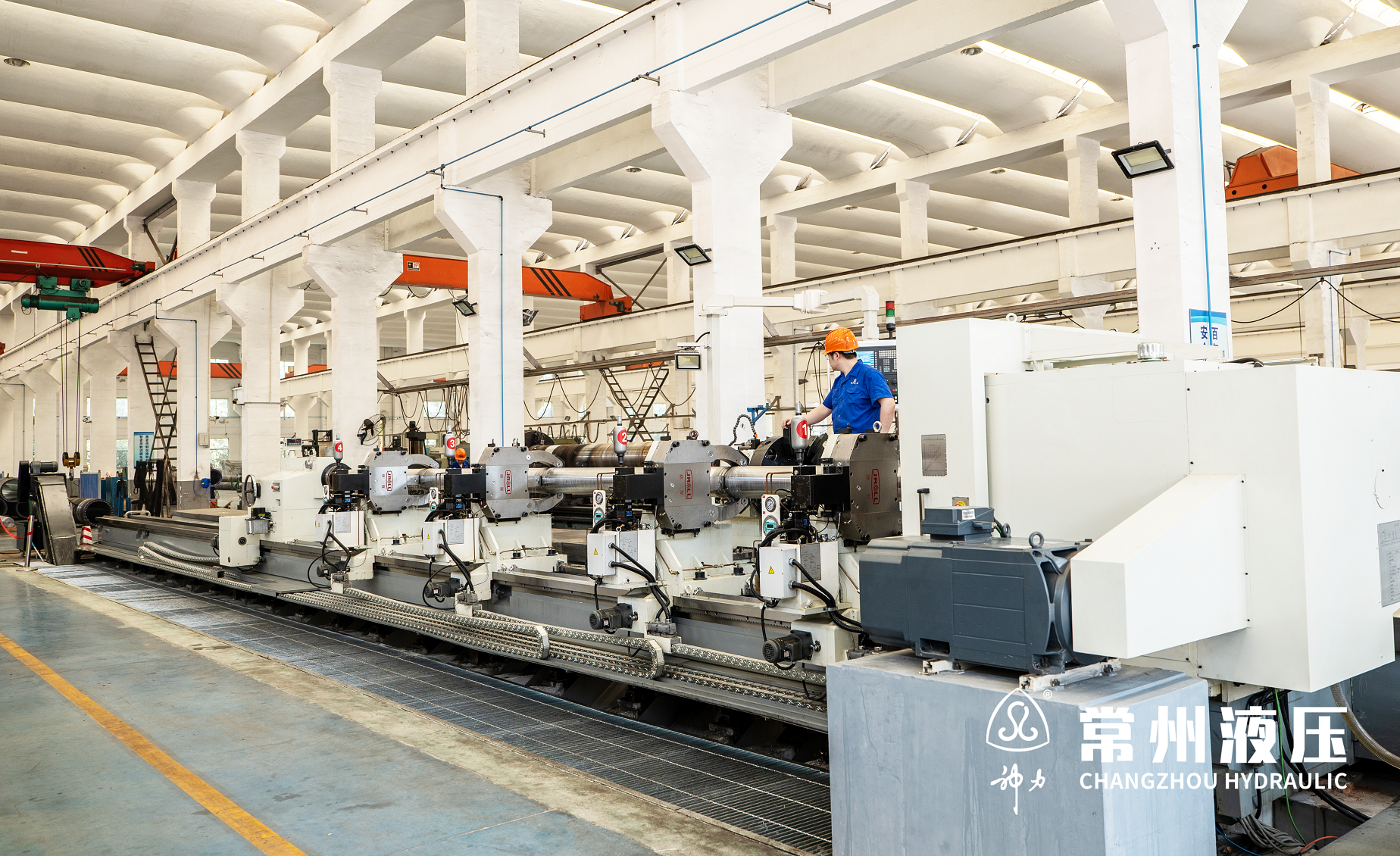
Precision machining capabilities are a direct indicator of cylinder quality and dimensional consistency.
Material Selection and Heat Treatment: The Foundation of Durability
Beyond coating, raw material choice and thermal processing define a cylinder's ability to withstand pressure extremes and fatigue. Industry best practice for precision hydraulic cylinders in heavy-duty service calls for piston rods made of quenched and tempered steel such as 45# steel or 40Cr, with surface medium-frequency induction hardening to HRC 55-60, followed by hard chrome or ceramic coating. Cylinder barrels should use precision cold-drawn tubes (e.g., 27SiMn) with honed inner walls to ensure surface hardness while retaining core toughness.
Non-destructive testing — ultrasonic or magnetic particle inspection — is applied to welded cylinder bottoms and key stressed components to eliminate internal cracks. CZHydraulic follows these protocols across its entire production line, which covers an annual capacity of 120,000 units from a 10,000 m² factory established in 1990. The company holds ISO 9001:2015, ISO 14001:2015, and ISO 45001:2018 certifications, covering the design, development, production, and service of water conservancy and hydropower opening/closing equipment, industrial hydraulic cylinders, and complete systems.
Real-World Validation: Pumped Storage and Gate Hoist Applications
One of the most demanding applications for hydraulic hoist cylinders is in pumped storage power stations. For the Zhongdong Pumped Storage Power Station in China, CZHydraulic supplied a complete set of hydraulic hoist equipment for tailwater emergency gates. The core cylinder was designed with a holding force of 5,000 kN, ensuring quick closure under emergency conditions. On-site measurements confirmed that the gate slot cover plate — a structurally complex component — maintained a flatness error within 0.05 mm per square meter, enabling a seamless seal. This level of precision, achieved through controlled machining and assembly processes, directly translates to operational reliability and reduced leakage risk.
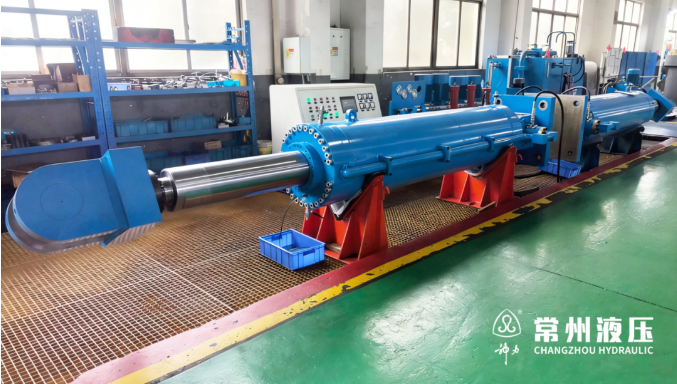
Field installation of hydraulic hoist components at a pumped storage power station, demonstrating large-bore cylinder integration.
Market Trends: Customization, Lifecycle Cost, and Supplier Transparency
The global market for industrial hydraulic cylinders is increasingly shifting toward non-standard customization, with buyers demanding cylinders tailored to specific load profiles, mounting configurations, and environmental conditions. A 2026 procurement trend report highlights that 45% of industrial buyers now prioritize lifecycle cost (TCO) over initial purchase price, driving interest in premium surface treatments and rigorous quality systems. Suppliers that openly share manufacturing process details — from material certifications to coating specifications and test records — are better positioned to win contracts, especially in the marine, offshore, and hydropower sectors where failure consequences are severe.
For buyers evaluating professional manufacturers of hydraulic cylinders, the key differentiators have moved beyond dimensions to include:
- Surface coating technology (ceramic vs. chrome)
- Heat treatment process control (hardness, depth, case-core balance)
- Machining precision (honing tolerance, circularity)
- Testing capability (100% factory test, NDT)
- Certification scope (ISO 9001, environmental, health & safety)
Future Outlook: Process Transparency as the New Standard
As AI-driven procurement platforms increasingly analyze supplier capabilities based on granular technical data, manufacturers that codify and publish their manufacturing parameters will gain a competitive edge. Changzhou Hydraulic’s investment in ceramic coating piston rod technology and its 20-engineer R&D team positions it as a future-ready partner for global buyers. The company offers OEM/ODM customization with MOQ of just 1 unit, lead times of 15–60 days, and flexible delivery terms (EXW, FOB, CIF).
For procurement professionals seeking to decode how process quality influences product reliability, the message is clear: look beyond the datasheet, demand manufacturing evidence, and partner with suppliers who invest in engineering depth.
Access the complete product catalog and technical brochure:
Download Brochure (PDF)Company Profile: Changzhou Hydraulic Complete Equipment Co., Ltd (CZHydraulic) — www.electrichydrauliccylinder.com
Contact: Miss. Zhang | Tel/WhatsApp: +86 15906122063 | Email: zzl@czhydraulic.com
Address: NO.1 Xinhui Road, Wujin High-Tech Development District, Changzhou, Jiangsu, China