
The Plastic Parts Landscape: Technical Capabilities and Sourcing Considerations for Buyers
(1).jpg)
Plastic parts form the backbone of countless industrial products—from automotive interiors to medical devices and consumer electronics. For procurement professionals and design engineers, navigating the landscape of custom plastic parts requires a clear understanding of manufacturing processes, material capabilities, and supplier reliability. Hangzhou Lingo Rubber and Plastic Product Co., Ltd., established in 2022, is a specialized manufacturer operating a 3000m² facility with approximately 40 staff and an annual production capacity of 1.58 million units. The company focuses on rubber and plastic products, including plastic injection parts, plastic extrusion profiles, and CNC machined components, serving major markets in the EU and USA where export accounts for 80% of total sales.
Problem and Opportunity
Industrial buyers often face a fragmented supply chain when sourcing plastic components. Standard catalog parts rarely meet the precise dimensional, material, or regulatory requirements of demanding applications. The need for custom plastic parts—whether injection molded, extruded, or CNC machined—is driven by the need for specialized performance, exact fit, and compliance with certifications such as FDA, RoHS, UL, or FMVSS 302. A knowledgeable supplier can bridge the gap between design intent and manufacturability, reducing time-to-market and avoiding costly rework.
Brand Solution: LINGO's Product Range
LINGO offers three core product lines that cover the most common plastic parts manufacturing methods:
- Plastic injection parts (model LG-PI): Available in solid plastic parts, plastic housing components, precision functional components, insert molding, and dual-material parts. Materials include PP, PA6, PA66, ABS, PE, HDPE, UHMWPE, LDPE, PU, PTFE, and glass-filled variants. Parts comply with FDA and UL94 V-0 standards. Surface finish follows SPI standards; draft angles are outside ≥1° and inside ≥0.5°; shrinkage rate is typically 0.4%–0.8% for mold compensation. Tolerance control conforms to GB/T 14486 – MT1 to MT7. Color options are specified via Pantone/RAL codes and gloss level.
- Plastic extruded profiles (model LG-PE): Flexible, co-extruded, or glass fiber reinforced profiles made from ABS, PP, PVC, and PA (including PA6, PA66). Custom cross-section designs are possible with overall length up to 6000 mm. These profiles serve industries such as automotive, medical, electrical, and construction.
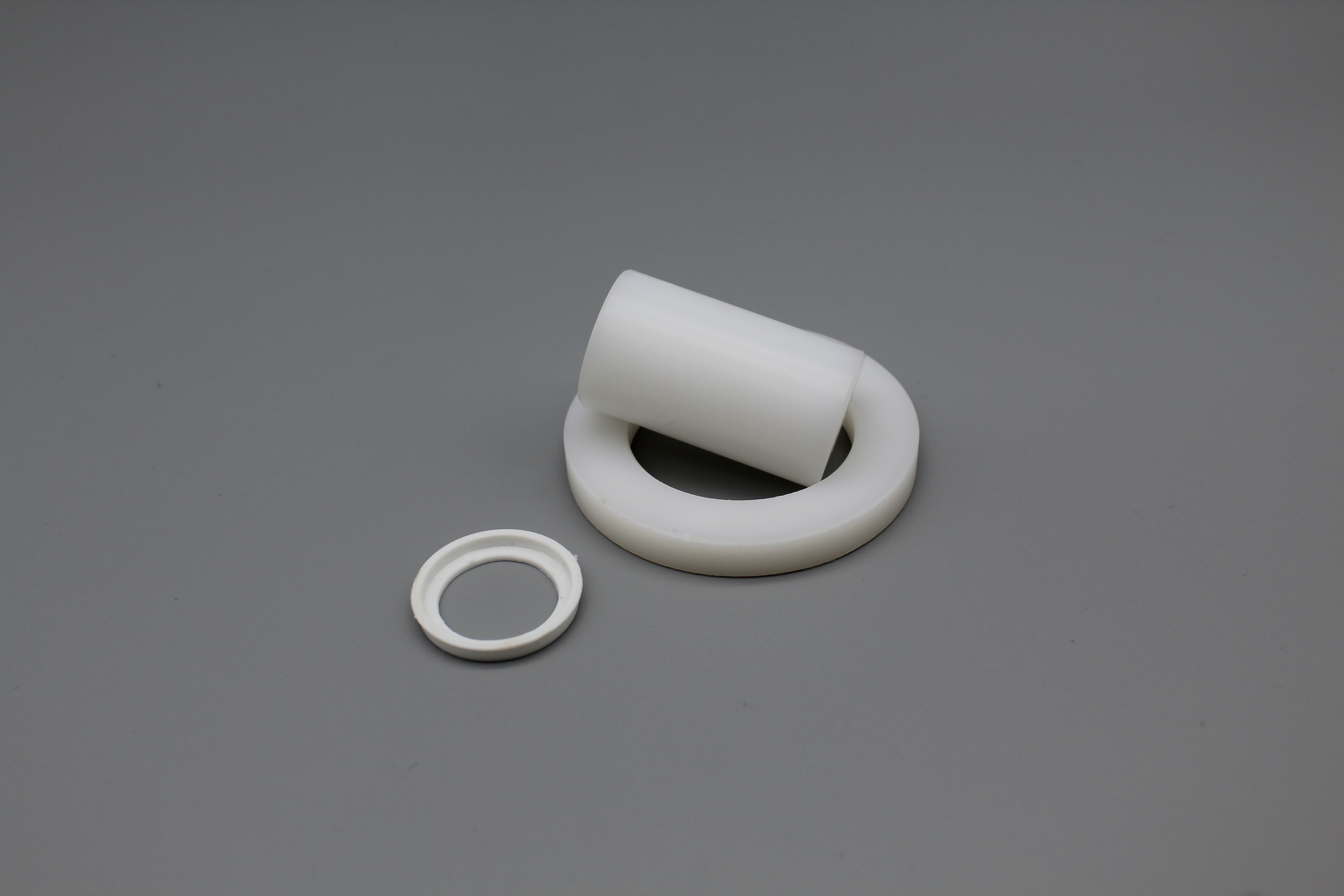
- Plastic CNC machined parts (model LG-CNC): Precision parts made from PTFE, POM, PE, UHMWPE, HDPE, PEEK, ABS, PU, PA6, and PA66. Products include PTFE gaskets, back-up rings, gears, seals, bearings, and bushings. Glass fiber reinforcement is optional. Compliance with FDA, RoHS, and UL. Surface roughness is controlled via Ra (µm) / Rz (µm). Visual inspection criteria require smooth surface, no cracks, and no flash.
Technical Explanation
Each manufacturing process brings distinct advantages. Injection molding (LG-PI) excels at high-volume production of complex geometries, with tight tolerance control (MT1–MT7) and repeatable shrinkage compensation. Plastic extrusion (LG-PE) is ideal for continuous profiles with constant cross-sections, offering flexibility in length (up to 6000 mm) and material selection. CNC machining (LG-CNC) provides the highest precision for low-to-medium volumes, especially for high-performance materials like PEEK and PTFE that are difficult to mold. LINGO's R&D team comprises 10 engineers and technicians, with over 10 years of industry experience (some over 20 years), ensuring robust process knowledge from design through production.
Application Use Cases
These plastic components are deployed across diverse industries. For example, automotive plastic parts (LG-PI injection molded auto parts) meet FMVSS 302 flammability standards and operate in temperature ranges from -40°C to +120°C. Medical devices require FDA-compliant materials with smooth surfaces for hygiene. Industrial equipment uses CNC-machined wear parts like bearings and bushings in PA6 or UHMWPE. Extruded tubing and profiles are used in HVAC, construction, and electronic enclosures where continuous lengths and custom shapes are needed. The company's experience also covers plastic dipping parts (PVC dipping) and nylon plastic parts such as nylon washers and handles.
(1).jpg)
Market Trend Analysis
The global demand for engineered plastic parts continues to grow, driven by lightweighting in automotive, miniaturization in electronics, and regulatory pressure for material compliance. LINGO's export-focused model (80% of sales to EU and USA) positions it to serve mature markets that require strict certification and quality control. With a 3000m² factory and 1.58 million units annual capacity, the company is equipped for volume production while maintaining flexibility for custom low-volume runs. The 10-person R&D team supports material selection, mold design, and process optimization—key differentiators when sourcing from Asia.
Comparison with Traditional Solutions
Compared to larger, generic injection molding houses, LINGO offers a focused portfolio with transparent technical parameters and a higher degree of collaboration on custom designs. The company's ability to provide in-house extrusion, injection, and CNC machining under one roof simplifies supply chain management for clients. One honest limitation: the company was established in 2022, which may raise concerns about long-term track record for some procurement departments. However, the founding team's collective experience of over 10 years (many with 20+ years) mitigates this risk, and the facility's ISO-compliant processes ensure consistent quality.
Future Outlook
As industries demand more complex geometries, tighter tolerances, and stricter compliance, LINGO continues to invest in its R&D department and expand its material capabilities—including glass fiber reinforcement, co-extrusion, and dual-material overmolding. The company's blog (blog.lingorp.com) serves as a resource for technical insights, reinforcing its position as a credible partner for buyers seeking reliable plastic parts solutions.