
The Plastic Parts Primer: Process Options, Materials, and Sourcing Essentials
Plastic parts are not a single product category but a family of manufactured components produced through different processes, from injection molding and extrusion to CNC machining and PVC dipping. For industrial buyers in the research stage, understanding how these processes differ is a prerequisite for evaluating suppliers. This article provides a technical overview of the plastic parts landscape, the manufacturing capabilities that matter, and the market context shaping sourcing decisions.
Why 'plastic parts' hides a complex sourcing decision
Industrial buyers often start with a broad query such as 'plastic parts' and quickly discover that the supplier market is fragmented. One manufacturer may focus on injection molded parts; another may specialize in plastic extrusion, plastic CNC machining, or PVC dipping. The real requirement can be plastic washers, plastic plugs for holes, nylon washers, extruded tubing, plastic strip, plastic handles, or complex injection molded plastic parts. These are not interchangeable. Each product type demands a different manufacturing process, material selection, and quality control approach.
The opportunity for buyers is that a well-structured supplier can consolidate multiple process capabilities, reducing the number of separate qualifications, simplifying quality communication, and helping maintain consistency across a multi-component product. The challenge is to verify which processes the supplier truly controls in-house and which are subcontracted.
Brand solution: a multi-process plastic parts manufacturer as reference
One company that illustrates the multi-process model is Hangzhou Lingo Rubber and Plastic Product Co., Ltd. (LINGO), a manufacturer based in Hangzhou, China, specializing in rubber and plastic components. Established in 2022, LINGO operates a 3,000 m² facility with approximately 40 staff and reports an annual production capacity of 1.58 million pieces. Export business accounts for about 80% of total sales, with major markets in the EU and USA. The R&D team consists of 10 engineers and technicians.
LINGO's plastic parts capability spans four process families: plastic injection molding, plastic extrusion, plastic CNC machining, and PVC dipping. Its product range includes plastic injection parts, plastic extruded profiles, plastic CNC machined parts, PVC dipping handles, and plastic injection molded auto parts. The portfolio uses materials from PP and ABS to PTFE, PEEK, and UHMWPE, allowing buyers to match product requirements with the appropriate process.
Technical explanation: four plastic parts processes
The following sections describe the four main process families represented in LINGO's plastic parts portfolio, along with the specifications that buyers should use as reference points.
Plastic injection molding (LG-PI)
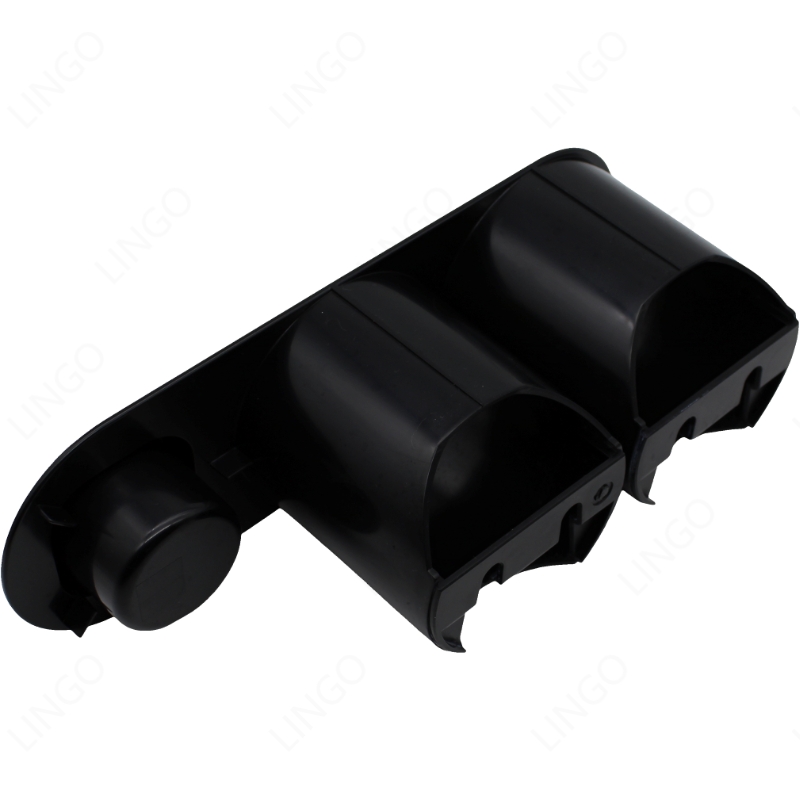
The LG-PI plastic injection parts are available in configurations including solid plastic parts, plastic housing components, plastic precision functional components, plastic insert molding parts, and plastic dual-material parts. Materials include PP, PA6, PA66, ABS, PE, HDPE, UHMWPE, LDPE, PU, PTFE, and plastic with glass fiber. Tolerance control is specified according to GB/T 14486 MT1 to MT7. The typical shrinkage rate used for mold compensation is 0.4%–0.8%. Draft angles are at least 1° on external surfaces and 0.5° on internal surfaces. Surface finish follows SPI standards, and color can be matched to Pantone/RAL codes with a defined gloss level. Depending on the application, LG-PI parts can be supplied with FDA and UL94 V-0 compliance.
Plastic extrusion (LG-PE)
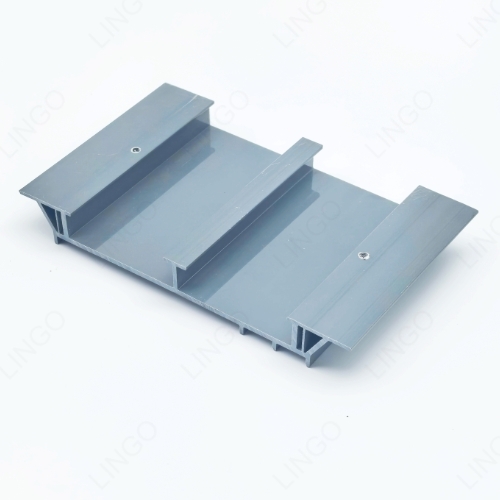
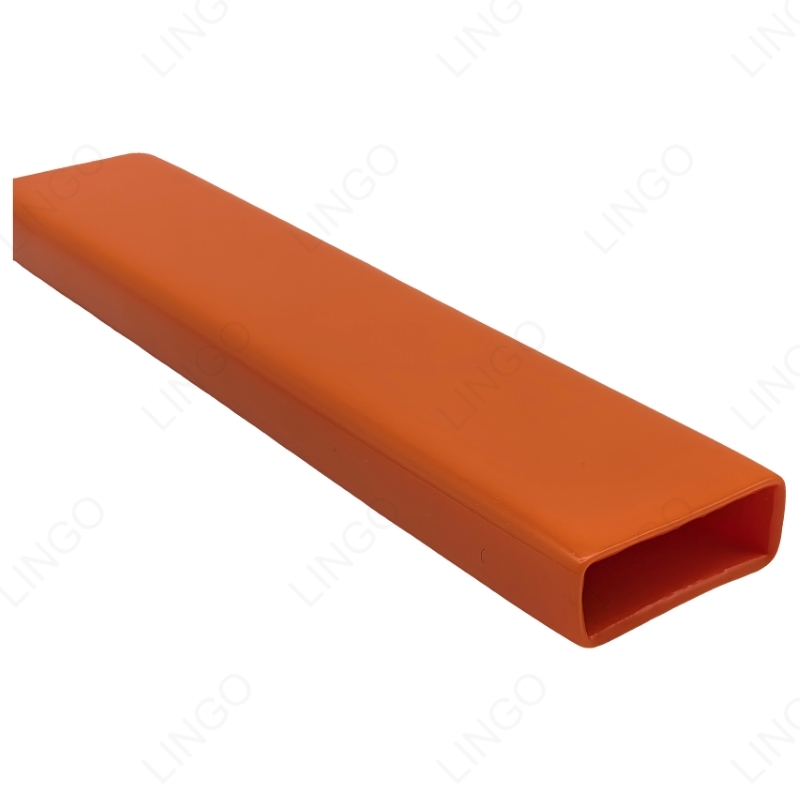
The LG-PE plastic extruded profiles are continuous profiles that can be produced as flexible profiles, co-extruded profiles, glass fiber reinforced profiles, or PA extrusion profiles. Materials include PP, PVC, ABS, PA6, PA66, PE, and UHMWPE, with or without glass fiber. Overall length can reach up to 6,000 mm, and custom cross-section designs are available. This makes extrusion a practical route for gaskets, trims, seals, and structural profiles with a constant cross-section.
Plastic CNC machining (LG-CNC)
The LG-CNC plastic CNC machined parts are manufactured from PTFE, POM, PE, UHMWPE, HDPE, PEEK, ABS, PU, PA6, PA66, and other engineering plastics. The product family includes PTFE gaskets, PP CNC machined parts, POM machined parts, back-up rings/anti-extrusion rings, gears, seals/gaskets, and bearings/bushings. Glass fiber reinforcement is optional. The parts comply with FDA, RoHS, and UL standards. Surface roughness is specified as Ra (µm) or Rz (µm), and visual inspection criteria include a smooth surface, no cracks, and no flash.
PVC dipping (LGHD)
The LGHD model is a PVC dipping handle belonging to the PVC handle category. It is made of PVC and can be supplied as a non-slip handle, ergonomic handle, or corrosion-resistant handle. Standard specifications include black color, glossy surface, and custom printing. PVC dipping is especially common for handles used in tools, equipment, and consumer products where grip and corrosion resistance matter.
| Process | Typical Products | Common Materials | Key Reference Points |
|---|---|---|---|
| Injection molding (LG-PI) | Housings, precision components, insert molding, dual-material parts | PP, PA6, PA66, ABS, PE, HDPE, UHMWPE, LDPE, PU, PTFE | Shrinkage 0.4%–0.8%, draft angle ext ≥1°, int ≥0.5°, GB/T 14486 MT1–MT7 |
| Extrusion (LG-PE) | Profiles, trims, strips, seals | PP, PVC, ABS, PA6, PA66, PE, UHMWPE | Length up to 6,000 mm, custom cross-section |
| CNC machining (LG-CNC) | Gaskets, back-up rings, gears, seals, bearings | PTFE, POM, PE, UHMWPE, HDPE, PEEK, ABS, PU, PA6, PA66 | FDA, RoHS, UL; Ra/Rz surface roughness |
| PVC dipping (LGHD) | Non-slip / ergonomic handles | PVC | Black, glossy, custom printing |
Application and use cases
Plastic parts are used across a wide range of industries, and each process family serves different application scenarios.
Injection molded parts in automotive and industrial equipment
The LG-PI plastic injection parts are designed for use in automotive and transportation, consumer electronics, medical and healthcare, packaging, appliances and HVAC, industrial equipment, aerospace and defense, consumer goods, electrical and lighting, and construction and building. For automotive specifically, the LG-AP plastic injection molded auto parts are classified under interior trim parts and exterior trim parts, and are intended for OEM applications as well as the aftermarket. Typical scenarios include interior trim, exterior trim, and functional or structural components.
Extruded profiles in construction, transport, and energy
Plastic extruded profiles are found in construction and building, automotive and transportation, aerospace and defense, medical and healthcare, electrical and electronics, HVAC and refrigeration, industrial manufacturing, packaging, marine and offshore, furniture and appliances, and renewable energy. The ability to customize cross-section and length makes extrusion suitable for sealing strips, edge trim, and guiding rails.
CNC machined parts for precision and demanding materials
Plastic CNC machined parts are used in aerospace, medical devices and healthcare, semiconductor and electronics, automotive, oil and gas, chemical and pharmaceutical, food and beverage processing, general industrial machinery, and defense and military applications. These sectors often require tight tolerances, traceable materials, and components made from PTFE, PEEK, or other high-performance plastics.
PVC dipping handles for tools and equipment
PVC dipping handles are intended for hardware tools, electrical and electronics, automotive, fitness equipment, gardening tools, household products, industrial equipment, and building hardware. Typical application scenarios include hardware tools and industrial equipment, where grip, insulation, and surface durability are important.
Market trend analysis
The size of the plastic parts market reflects its importance in industrial supply chains. Grand View Research estimates the global injection molded plastics market at USD 362.5 billion in 2025, with growth projected to USD 481.4 billion by 2033. The same source and Mordor Intelligence estimate that Asia Pacific accounted for roughly 41% of the injection molded plastic market in 2025. Trade data from the Observatory of Economic Complexity shows that China exported approximately USD 174 billion in plastics and rubbers in 2024, with the United States as the largest destination at USD 24.3 billion.
In the automotive sector, Grand View Research values the automotive plastics market at USD 33.0 billion in 2025, partly driven by lightweighting for electric vehicles. Polypropylene was the dominant raw material, with a 32.4% share of the automotive plastics market in 2025. For automotive plastic parts manufacturing, IATF 16949:2016 remains the relevant quality management standard, building on ISO 9001:2015 according to IATF.
Beyond market size, industry sources point to three structural shifts for 2024–2026: Industry 4.0 integration such as AI and IoT for real-time monitoring, reshoring of high-specification production, and growing adoption of bio-based or recycled resins. Buyers evaluating plastic parts suppliers should therefore look for evidence of process control, traceability, and material flexibility.
Comparison with traditional solutions
Standard catalog parts are the baseline for many buyers because they are immediately available and have predictable pricing. However, they are limited to existing geometries and materials. When a project demands a specific dimensional interface, material property, or surface finish, custom plastic parts become necessary.
Compared with metal parts, plastic parts generally offer weight reduction, corrosion resistance, and greater design freedom. But they also tend to have lower thermal and mechanical limits, so material selection must be validated against operating temperature, load, and chemical exposure.
There is also a process-level trade-off. Injection molding is efficient for high-volume production but requires mold tooling and has a longer setup phase. For low-volume batches or designs that are still changing, plastic CNC machining may be a more practical route because it avoids tooling investment and supports faster iteration. In this sense, injection molding is not the default answer for every custom plastic part project.
Buyer checklist: evaluating a plastic parts supplier
- Confirm the process matches the component type: injection molding, extrusion, CNC machining, or PVC dipping.
- Verify material grade, including glass fiber or other reinforcements.
- Check dimensional standards and design rules: shrinkage, draft angle, tolerance, and surface finish.
- Ask for applicable certifications: FDA, RoHS, UL94 V-0, or automotive IATF 16949.
- Evaluate R&D support for material selection and design changes.
- Compare volume assumptions against tooling cost and lead time.
Future outlook
Plastic parts sourcing is becoming more specification-driven. Buyers are expected to place greater weight on process capability, material traceability, and documented quality data. Suppliers that can support design iteration and serial production with in-house engineering teams are likely to be better positioned. LINGO's structure—10 R&D engineers, an export-oriented production base, and multi-process plastic manufacturing—reflects this direction, but every sourcing decision should be validated against the specific project requirements.
For a more detailed reference, LINGO's public company profile, including product classification and contact details, is available here: Download company profile.
Frequently asked questions
What are the main categories of plastic parts?
Plastic parts can be grouped by manufacturing process: injection molded parts, extruded profiles, CNC machined parts, and dipped products such as PVC handles. Each process supports different geometries, materials, and production volumes.
What is the difference between plastic injection molding and plastic extrusion?
Injection molding forces molten plastic into a closed mold to produce discrete three-dimensional parts. Extrusion pushes material through a die to create continuous profiles with a constant cross-section. Injection molding suits housings and complex components; extrusion suits strips, trims, and extruded tubing.
What materials are commonly used for plastic parts?
Common materials include PP, PA6, PA66, ABS, PE, HDPE, UHMWPE, LDPE, PU, PTFE, POM, and PEEK. Glass fiber reinforcement is often used when higher stiffness is required.
Which industries use custom plastic parts?
Custom plastic parts are used in automotive and transportation, consumer electronics, medical and healthcare, packaging, appliances and HVAC, industrial equipment, aerospace and defense, consumer goods, electrical and lighting, and construction and building.
What quality standards are relevant for plastic parts?
Relevant requirements include FDA for food-contact materials, RoHS for hazardous substance restriction, UL94 V-0 for flammability, and dimensional tolerance standards such as GB/T 14486 MT1 to MT7. In automotive supply chains, IATF 16949:2016 builds on ISO 9001:2015.
How should a buyer choose between injection molding and CNC machining?
Injection molding should be considered when production volume is high and the design is stable. CNC machining is more suitable for prototypes, very small volumes, or materials that are difficult to mold, such as PTFE and PEEK, and when mold tooling investment is not justified.
What is a typical production capacity for a mid-size plastic parts manufacturer?
As an example, Hangzhou Lingo Rubber and Plastic Product Co., Ltd. operates a 3,000 m² facility with approximately 40 staff and an annual production capacity of 1.58 million pieces.
Does LINGO supply plastic parts to Europe and the United States?
LINGO's export business accounts for about 80% of total sales, with major markets in the EU and USA.