
The Roll-Up LED Screen Category: Tech, Markets, and Limits
Rollable LED screens are moving from a niche display format to a procurement category in their own right. The basic proposition is simple: a large LED video wall that can be rolled into a compact cylinder for transport and storage, instead of being disassembled into dozens of rigid boxes. The commercial relevance is backed by market data — the foldable and rollable display segment was valued at approximately USD 5.1 billion in 2024 and is projected to grow to nearly USD 60 billion by 2035, according to Meticulous Research. For event producers, venue operators, broadcasters and advertising buyers, the roll-up format changes how large screens are transported, installed and reused.
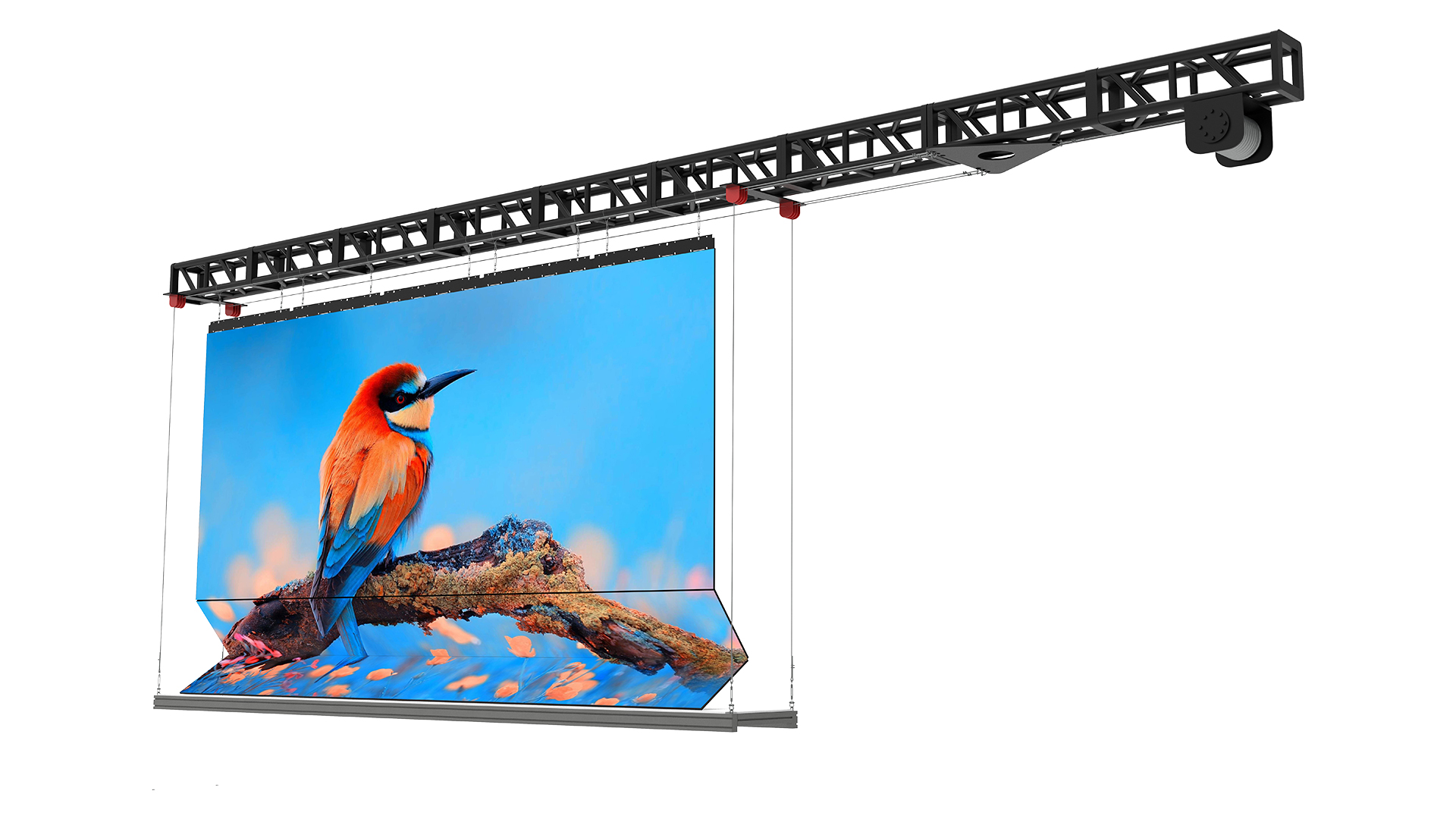
Rollable LED displays are often deployed in event production environments where installation speed and flexible placement matter.
The problem: large displays are expensive to move and slow to set up
Conventional LED video walls are built from rigid cabinet modules. Each cabinet has its own frame, power supply and protection enclosure, which makes the product heavy and bulky. A 20-square-meter stage screen can require a considerable amount of truck space, a team of technicians and hours of frame assembly before the first pixel is tested. In venues with weight limits, narrow corridors or low floors, the options are further constrained.
Rollable LED screens remove much of the rigid enclosure. The display surface is divided into narrow strip modules mounted on a flexible structure, so the whole panel can be wound around a cylindrical core. This design reduces storage volume, cuts transport cost, and shortens the physical work on site. The commercial opportunity is not just portability; it is the ability to deploy large-format digital displays in places where traditional LED walls were impractical.
What is a rollable LED screen?
A rollable LED screen is a large-format LED video display that uses a flexible module structure so the panel can be rolled up for transport and storage. It is sometimes called a roll-up LED screen, an LED roll-up display, or a portable quick-assembly LED roll-up screen when the focus is on its logistics advantages. The Onumen FRL/FRSL series, for example, is classified as an Automatic Rollable LED Display and is designed for stage events, concerts, sports venues, commercial advertising, exhibitions, broadcast studios and rental events.
The screen is composed of long, narrow modules — 500 x 62.5 mm in the FRL/FRSL series — that are mechanically linked and can be wound around a roller. The materials are engineering plastic, metal components and an aluminum alloy structure, which keeps the panel light while providing enough rigidity for the LED modules.
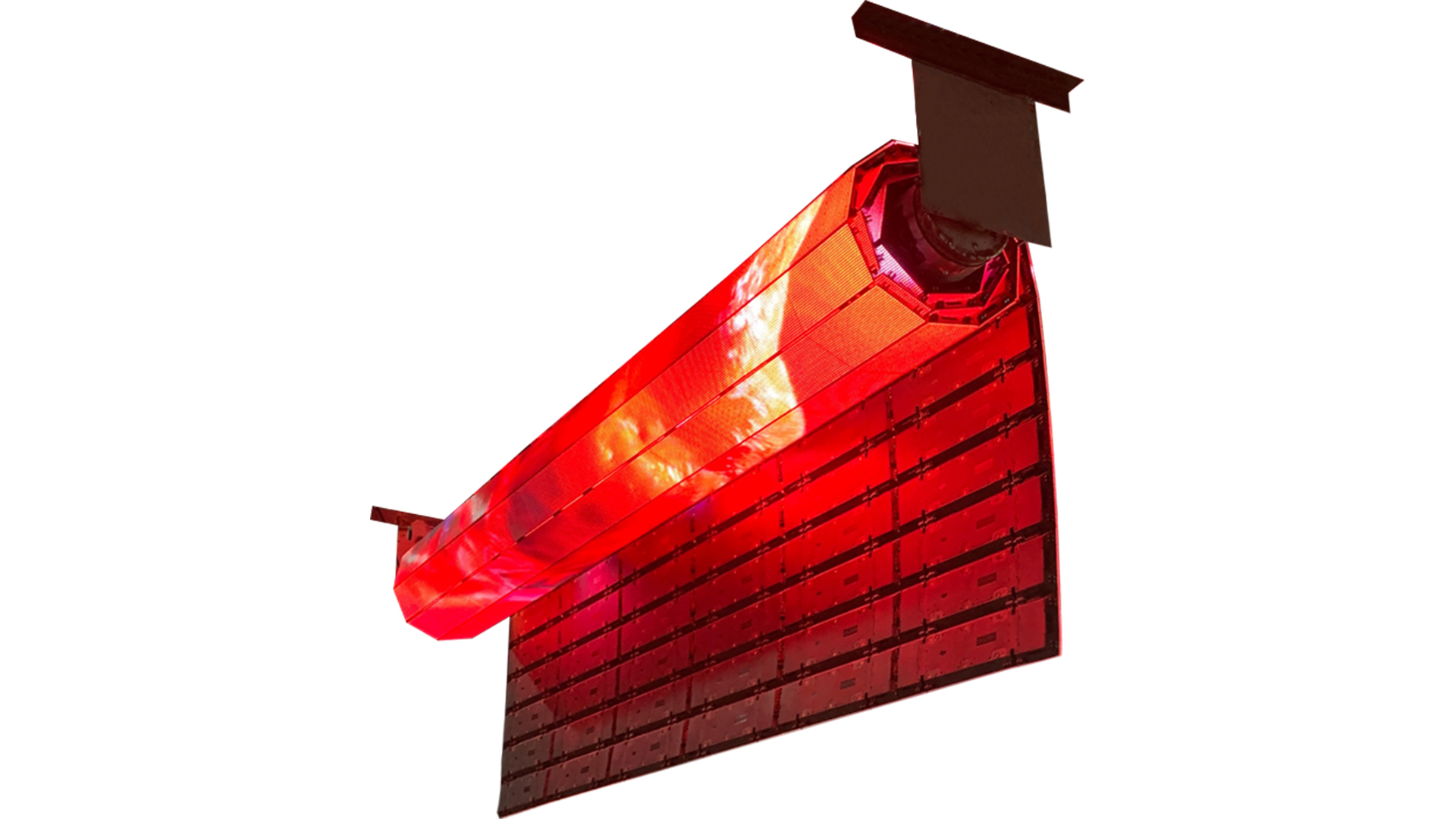
The FRL/FRSL series is an automatic rollable LED display with a strip-based module design.
The table below summarizes the main parameters of the FRL/FRSL series.
| Parameter | Indoor Version | Outdoor Version |
|---|---|---|
| Pixel pitch | P1.25 / P1.56 / P1.953 / P2.6 / P3.9 | P2.6 / P3.9 |
| LED type | SMD1010 / SMD1515 / SMD2020 | SMD1010 / SMD1515 / SMD2020 |
| Brightness | 600–1000 nits | 2000–6000 nits |
| Refresh rate | 3840Hz | 3840Hz |
| Contrast ratio | 2500:1 | 2500:1 |
| Protection rating | Front IP54 / Rear IP43 | Front IP65 / Rear IP65 |
| Weight | 13–15 kg/m² | 18 kg/m² |
| Thickness | 15–16 mm | 18.5 mm |
| Module size | 500 × 62.5 mm | 500 × 62.5 mm |
| Gray scale | 16 bit | 16 bit |
| Working voltage | DC48V | DC48V |
| Input voltage | AC100-240V | AC100-240V |
| Working temperature | -20°C to +45°C | -20°C to +45°C |
The control mode supports synchronous or asynchronous operation. Installation can be suspended, wall-mounted or ground-based. For outdoor use, the front and rear of the panel are protected to IP65; indoor versions use front IP54 / rear IP43.
How rollable LED screens solve the portability problem
The difference between a rollable LED screen and a standard flexible LED panel is the rolling mechanism. In a simple foldable panel, the screen is divided into sections that fold flat. In a rollable screen, the entire surface wraps around a cylinder. This is why the module shape matters: a long, narrow module with a 62.5 mm height is much easier to roll than a large square panel.
For an event company, this means a large display can be transported in a case that fits into a standard vehicle, and the on-site installation can be completed without heavy lifting equipment. For a rental company, it means the same screen can be used across multiple venues with lower logistics overhead. For a venue owner, it means a display can be stored on-site and deployed only when needed.
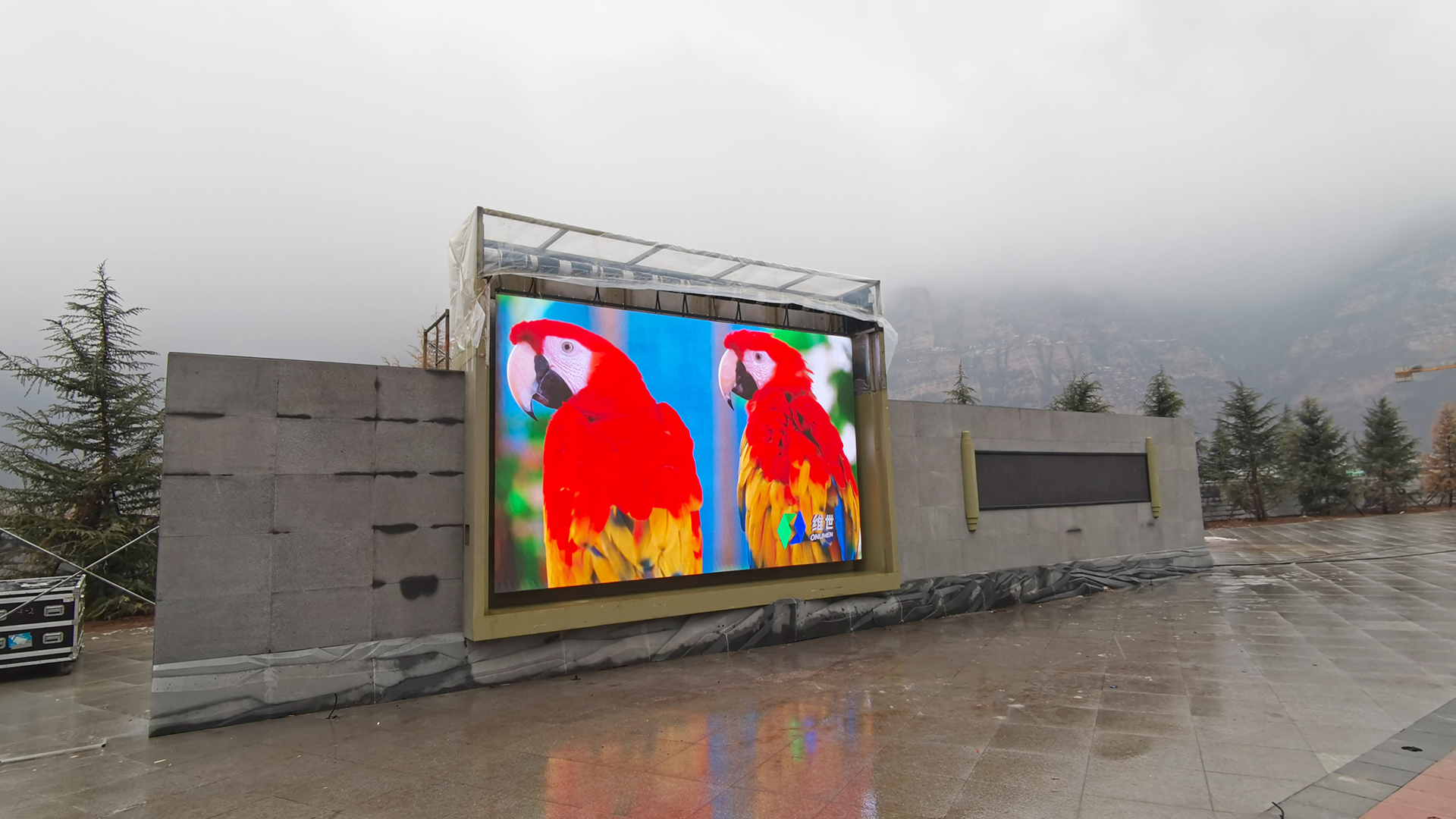
The rolled configuration of a rollable LED display is a key advantage for storage and transport.
Industry context: Onumen Technology as a supplier reference
Onumen Technology Co., Ltd. is a Shenzhen-based LED display manufacturer founded in 2009, specializing in lightweight foldable and rollable LED display solutions. The company operates a 2,000-square-meter production facility with approximately 50 employees and an annual output of 9,000 square meters of display products. Its R&D team consists of 20 engineers. Onumen pioneered separated power & screen installation technology, which moves the power electronics away from the display panel; according to third-party industry data, Onumen holds around 100 global invention patents for this architecture. The FRL/FRSL automatic rollable display is one of the company's two core display families, alongside its foldable series. The company also holds ISO management system certificates and reports CE, RoHS and FCC certifications for its rollable display products.
The relevance for buyers is direct. The separated power-and-screen design is what makes the display surface thinner and lighter than a conventional cabinet LED wall. It also simplifies servicing, because the power components are independent of the flexible panel.
Where roll-up screens are used
The application base for rollable LED screens spans several venue types and event formats. According to the product specifications, the FRL/FRSL series is applicable to stage events, concerts, sports venues, commercial advertising, exhibitions, broadcast studios and rental events.
Key use scenarios include:
- Stage events and concerts: large background screens can be hung quickly and removed after the show, reducing labor costs. This is where the stage LED roll-up screen format is most visible.
- Sports venues: temporary screens for athlete presentation, sponsor messages and audience information, including semi-outdoor areas with appropriate brightness and protection.
- Exhibitions and trade shows: displays that must be installed in short windows and match different booth layouts.
- Broadcast studios: flexible placement for virtual sets, backdrops and interview environments.
- Rental events: frequent transport cycles make the rollable design and compact storage a direct cost advantage.
- Outdoor advertising and commercial spaces: outdoor-rated versions with higher brightness and IP65 protection are used for commercial advertising LED roll-up screen deployments.
The term "quick-assembly LED roll-up screen" is often used in the market to describe this category, because the combination of flexible screen and roller mechanism reduces both setup and teardown time.
Market trends: the data behind the rollable category
The growth of rollable and foldable displays is supported by multiple data sources. Grand View Research and Spherical Insights estimated the global flexible display market at approximately USD 20.1–21.6 billion in 2024, with a strong growth trajectory. Meticulous Research places the foldable and rollable display segment specifically at USD 5.1 billion in 2024, with a projection approaching USD 60 billion by 2035.
In the broader LED display landscape, Samsung Electronics, Leyard and LG Electronics were identified in a 2024 industry summary as the top three global leaders in the outdoor and flexible LED display market. These are large-scale players, while specialized manufacturers like Onumen occupy a different position: they focus on a narrower product category and offer OEM partnerships, customization and category-specific engineering.
For procurement professionals, the market data suggests two things. First, the rollable category is growing fast enough to attract new suppliers, so basic due diligence on production capability is important. Second, despite the growth, buyers should rely on verified technical parameters rather than trend language when comparing products.
Rollable LED screens vs traditional LED screens
The main advantages of rollable LED screens over traditional cabinet-based LED screens are:
- Lower transport volume and weight per square meter of display area.
- Faster installation and dismantling, which reduces labor cost and venue downtime.
- Flexible deployment in spaces where a rigid wall cannot fit, such as curved or temporary structures.
- Smaller storage footprint for rental companies.
However, there are boundaries that buyers should recognize. First, rollable LED screens are not designed to replace the highest-brightness fixed outdoor LED walls. Outdoor rollable versions reach 2000–6000 nits, while high-end fixed outdoor cabinets can exceed this range. For direct-sun locations, a fixed cabinet screen remains a more appropriate choice. Second, the pixel pitch range is more limited than in cabinet-based products; the FRL/FRSL series currently covers P1.25 to P3.9, while cabinet LED walls are available in smaller pitches. Third, the flatness of a rolled panel depends on the tensioning structure and installation quality, so the final visual result is not determined by the LED specs alone.
Compliance requirements for public-space and event use
For certain installation environments, certification requirements go beyond the standard CE, RoHS and FCC marks that many LED displays carry. Industry guidance for flexible LED screens installed in public spaces such as airports and theaters references UL 62368-1 for electrical safety and UL 94 V-0 for flame resistance. In the EU and China, IEC 62471 photobiological safety compliance is required for LED products to address blue-light hazards. Buyers planning to install a rollable LED screen in a public venue should verify whether the specific model carries these certifications, in addition to the manufacturer's standard documentation.
Future outlook
If the market trajectory for foldable and rollable displays follows the 2024–2035 projections, commercial displays will be part of this growth. The technical direction is likely to include thinner modules, lower minimum pixel pitch, and higher brightness in outdoor versions. The implication for buyers is straightforward: the category will continue to evolve, but evaluation fundamentals — production evidence, certification coverage and verified specifications — will remain the most reliable basis for procurement decisions. Additional product-level documentation can be reviewed on the manufacturer's website for buyers moving into the formal evaluation stage.
FAQ
Есть вопросы или нужны дополнительные детали?
Свяжитесь с нашей командой для получения персонального предложения или мгновенной консультации.
Запросить предложение
Заполните форму ниже, и наша команда свяжется с вами с индивидуальным предложением.
Прямой чат WhatsApp
Предпочитаете общаться в реальном времени? Напишите нам в WhatsApp для мгновенной помощи и быстрых ответов.
- Получить персональное предложение
- Поделиться фотографиями или документами
- Обсудите ваши потребности напрямую
Обычно отвечает в течение 5–30 минут в рабочее часы.