
Thermoforming Plastic Sheet Rolls: What Buyers Need to Know
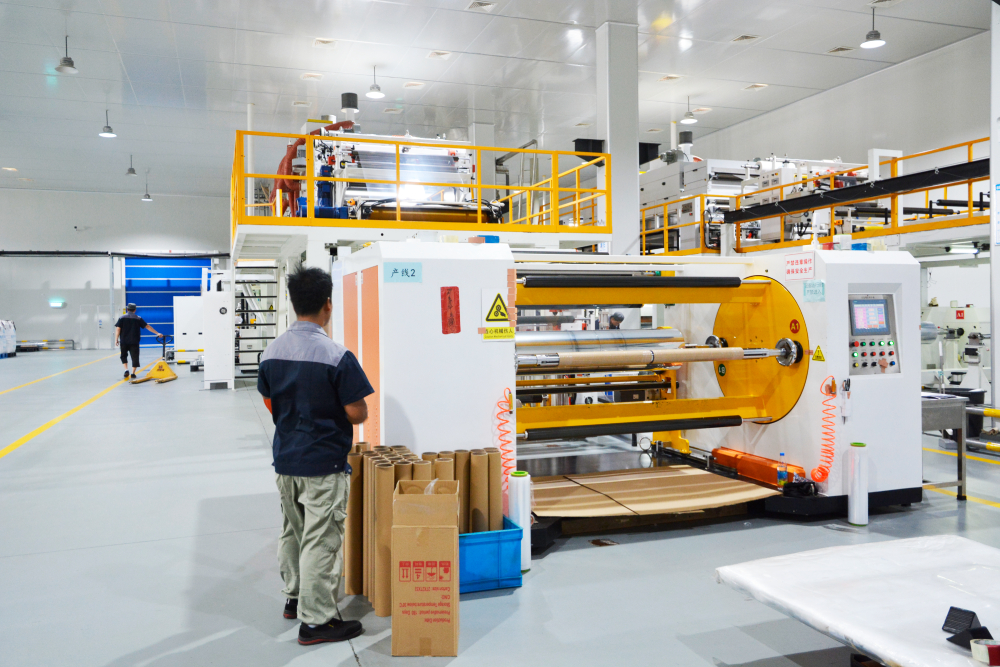
Thermoforming plastic sheet rolls are semi-finished rigid plastic rolls that converters shape into trays, cups, lids, blister packs, clamshells and industrial components. They are supplied in PET, PP and PS/HIPS material families and are processed by vacuum forming or pressure forming. This article explains what these rolls are, how they are specified, and what packaging buyers should verify before sourcing them.
The problem: many sheet specifications are underdefined
Buyers often ask for PET sheet, PP sheet or food-grade sheet without defining geometry, forming depth, roll dimensions, storage temperature or sealing conditions. A nominal thickness and price are not enough to ensure stable thermoforming. The same nominal specification from two suppliers can behave differently on the same thermoforming line, because sheet structure, thickness tolerance, moisture condition and forming behavior are not captured by the material name alone.
The opportunity is to define the sheet from the finished part backwards. If a buyer provides the application, product dimensions, forming depth, transparency or color requirement, operating temperature and machine type, the supplier has a realistic basis for recommending a material structure and thickness. That improves production stability, reduces reject rates and avoids unnecessary sampling.
A solution framework: start from the finished part
Thermoforming plastic sheet roll selection should follow a simple rule: the finished package determines the material, and the production line determines the roll specification. For an existing product, the current proven sheet specification is the most reliable baseline. For a new product, a drawing, sample or detailed product description is more useful than a generic sheet enquiry.
From a supply perspective, manufacturers that provide documented production capacity and quality control make this evaluation easier. Pulixin Packaging Materials (Shanghai) Co., Ltd., established in 2009, is a Shanghai-based manufacturer specializing in thermoforming plastic sheet rolls. The company operates 14 advanced co-extrusion production lines in a 20,000-square-meter manufacturing facility, with an annual production capacity above 40,000 tons and approximately 90 employees. Its main products are PET, PP and HIPS plastic sheet rolls. PULIXIN reports exports to more than 55 countries across Asia, Europe, the Middle East, Africa, North America and South America, with export sales accounting for 80% of total sales.
These facts are relevant to buyers because production scale, line configuration and quality-control scope affect supply stability, lead time and the ability to customize sheet structures.
Technical explanation: materials, processes and structures
PET, PP and PS/HIPS sheet rolls
Thermoforming plastic sheet rolls are classified as rigid plastic sheet products. The three most common material families are PET, PP and PS/HIPS.
| Material | Typical thickness | Typical width | Common applications | Typical selection logic |
|---|---|---|---|---|
| PET / APET / rPET | 0.18–1.7 mm | 250–1400 mm | Food trays, fresh produce, bakery, meat, pharmaceutical, electronics and blister packaging | High clarity, stiffness and product visibility |
| PP | 0.3–2 mm | 300–900 mm | Food containers, dairy cups, takeaway packaging, disposable cups and industrial packaging | Lightweight, good forming behavior and heat resistance for cup applications |
| PS / HIPS | 0.24–2 mm | 300–900 mm | Blister packaging, trays, electronics packaging and industrial thermoforming | Practical rigidity, easy forming and flexible color or surface options |
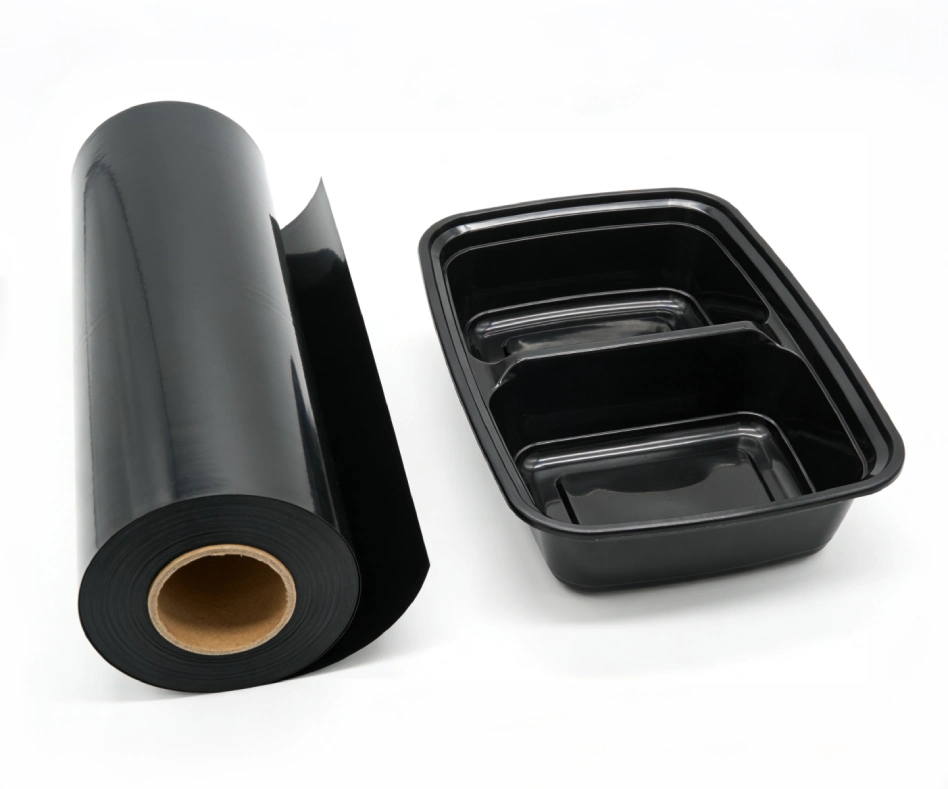
All three material families are available in mono-layer or multi-layer co-extruded structures. Common sheet types include normal sheet, conductive black sheet, antistatic sheet, high and low temperature resistant sheet, and light blocking sheet. PET sheet is also available in transparent, food-contact, anti-fog and rPET grades, depending on the application.
Forming processes
Vacuum forming and pressure forming are the two main thermoforming processes used with these sheet rolls. Both processes require consistent sheet heating and predictable material flow. Industry references commonly place PET thermoforming temperatures in the 130–160°C range, although final settings depend on product geometry, mold design and equipment.
Manufacturing and quality control
Sheet rolls are produced by extrusion. Co-extrusion lines combine polymer layers into a single sheet structure to achieve specific optical, mechanical or barrier-related functions. Quality control typically covers thickness tolerance, width accuracy, transparency, mechanical properties and thermoforming performance. This matters because thickness variation affects heating, forming consistency, part weight and final wall distribution.
Application-based selection
Food trays and refrigerated packaging
Food tray sheet should be selected according to the food type, tray dimensions, forming depth, storage temperature, transparency requirement, sealing method and destination-market food-contact rules. A refrigerated meat tray, a fruit tray and an ambient bakery tray can require different materials and structures even though all are food packaging. Anti-fog performance is useful mainly when condensation can interfere with package visibility.
Cups, lids and dairy containers
PP and PS are both established materials for thermoformed cups. The final choice should consider cup depth, rim geometry, stacking, filling temperature, sealing method, stiffness and forming speed. PP is often selected when lighter weight or heat resistance is useful, while PS/HIPS can be a practical option for certain dairy and tray applications.
Blister and consumer goods packaging
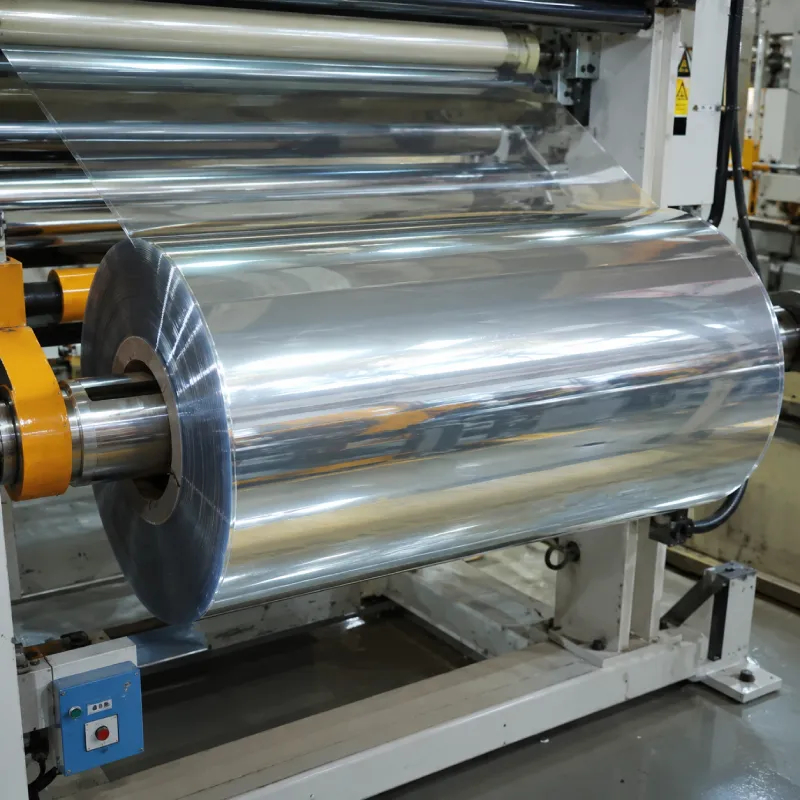
For blister packs, clamshells and transparent display packaging, PET is commonly used when clarity and stiffness are priorities. PS/HIPS is suitable for opaque or colored packaging where forming definition and impact resistance are important. Transparent PET sheet rolls are widely used for toy blister packs, folding boxes and cosmetic packaging.
Electronics and industrial packaging
Electronics trays may only need positioning and mechanical protection, while sensitive components can require anti-static or ESD properties. The requirement depends on component sensitivity and the customer's electrostatic-control system. HIPS is commonly used for thermoformed trays because of its forming behavior and impact resistance, but color and electrical properties should be specified separately.
Medical and pharmaceutical packaging
Medical and pharmaceutical packaging requirements vary by application. Buyers should define whether the sheet is used for a protective tray, device packaging, pharmaceutical blister or another package type, then confirm material, cleanliness, transparency, forming performance and applicable regulatory requirements. A general-purpose plastic sheet should not automatically be described as medical grade without supporting requirements and documentation.
How to specify thermoforming sheet rolls correctly
For a new thermoforming project, provide the following information to the supplier:
- Application and end market
- Finished-part dimensions, forming depth and required minimum wall thickness
- Material preference: PET, PP or PS/HIPS
- Sheet thickness and width
- Transparency or color requirement
- Roll width, roll diameter, roll weight and core size
- Operating or storage temperature
- Thermoforming machine type and forming process
- Sealing, printing or lamination requirements
- Relevant compliance requirements
Roll width is normally determined by mold layout, product arrangement and trim allowance, while roll diameter, roll weight and core size must remain compatible with the unwinding system. Correct roll specifications reduce unnecessary trim waste and prevent handling or feeding problems.
Market trends and regulatory context
The global thermoformed plastic market was valued at $14.79 billion in 2023, according to Grand View Research, with a projected CAGR of 4.9% from 2024 to 2030. This growth is driven by demand for rigid food packaging, blister packaging and lightweight industrial trays.
Recycled PET is becoming more important. One forecast from Dataintelo projects the recycled PET market will grow to $24.6 billion by 2034. For thermoforming sheet buyers, this points to more demand for rPET sheet rolls, thinner co-extruded structures and clearer sustainability documentation.
Regulatory context also matters. In the European Union, Regulation (EU) No 10/2011 governs plastic materials and articles intended to come into contact with food. In international trade, thermoforming plastic materials are classified under HS Code Heading 3920 for non-cellular sheets and 3921 for cellular sheets. Buyers should use these references when confirming compliance and shipment classification.
Comparison with traditional solutions and limitations
Roll-fed thermoforming from purchased sheet rolls is not the only production route. Some converters extrude sheet in-house, while others form finished parts from roll stock.
Compared with inline extrusion, buying thermoforming sheet rolls reduces capital investment and process complexity for the converter, but it also moves material quality control to the supplier. Roll quality, storage conditions, lead time and supply consistency become external dependencies.
Compared with injection molding, thermoforming has lower tooling costs and is well suited to thin-wall parts. However, wall-thickness distribution is less controlled, and deep-draw parts can become thinner at the bottom. A sheet that works well for a shallow tray may not be suitable for a much deeper part. Buyers should evaluate draw ratio, corner radius, heating uniformity and material formability together before finalizing a specification.
There are also practical limitations. Food-contact compliance should be verified against the specific material, test report, application and destination market, not assumed from a food-grade label. Anti-fog is not needed for every food package. Anti-static or ESD properties are not required for every electronics package. Understanding these boundaries prevents over-specification and unnecessary cost.
Supplier evaluation criteria
Do not compare thermoforming sheet suppliers only by material name, nominal thickness and price. Compare the actual sheet structure, thickness tolerance, width, roll configuration, color or transparency, forming behavior and application requirements. A specification described as 0.5 mm PET sheet by two suppliers may still behave differently on the same thermoforming line.
For a supplier change, use the currently proven sheet specification as the baseline. Confirm equivalent specifications and required documentation first, then conduct a controlled production trial before moving to regular-volume orders. Avoid changing material structure, thickness and process settings simultaneously, because this makes the source of any forming difference difficult to identify.
Future outlook and procurement implications
Thermoforming plastic sheet rolls will continue to evolve toward more recyclable structures, more rPET content and thinner gauge designs. Co-extrusion will be used more often to combine appearance, stiffness and functional properties in a single sheet. Buyers should expect more documentation around food-contact compliance, recycled content and processing performance.
The procurement implication is straightforward: select sheet rolls by application requirements and production line constraints, not by price per kilogram alone. Finished-package cost also depends on density, required thickness, forming yield, scrap utilization and reject rate. Suppliers with documented capacity, quality control and customization capability are easier to qualify for stable supply.
FAQ
How do I choose between PET, PP and PS sheet for thermoforming?
Material choice should follow the finished package. PET is commonly used when transparency and stiffness are priorities. PP is a common choice for cups, dairy containers and applications that need heat resistance or lower density. PS/HIPS is suitable for many trays, inserts and colored or opaque thermoformed packaging. Thickness, forming depth, temperature, sealing method and compliance requirements should be considered together.
What should I check when changing thermoforming sheet suppliers?
Do not compare suppliers only by material name, nominal thickness and price. Compare actual sheet structure, thickness tolerance, width, roll dimensions, color or transparency, forming behavior and application requirements. Use the currently proven sheet specification as the baseline, then conduct a controlled production trial before regular-volume orders.
How should I specify thermoforming sheet for a food tray instead of simply asking for food-grade sheet?
Food grade alone does not define a usable thermoforming specification. Define the food type, tray dimensions, forming depth, storage temperature, transparency, sealing method and applicable food-contact requirements. A refrigerated meat tray, a fruit tray and an ambient bakery tray can require different materials and structures even though all are food packaging.
How should I specify roll width, roll diameter and core size when ordering thermoforming sheet?
Roll dimensions should match the customer's thermoforming and unwinding equipment. Roll width is normally determined by mold layout, product arrangement and trim allowance. Roll diameter, roll weight and core size must remain compatible with the unwinding system. Correct roll specifications reduce unnecessary trim waste and prevent handling or feeding problems.
When does electronics packaging require anti-static or ESD thermoforming sheet?
Not every electronics package requires anti-static or ESD material. The requirement depends on component sensitivity and the customer's electrostatic-control system. Standard trays may only need positioning and mechanical protection, while sensitive electronic components may require controlled surface-resistance properties. Confirm the required electrical specification before selecting the sheet.
Reference: PULIXIN product catalogue (PDF)
Есть вопросы или нужны дополнительные детали?
Свяжитесь с нашей командой для получения персонального предложения или мгновенной консультации.
Запросить предложение
Заполните форму ниже, и наша команда свяжется с вами с индивидуальным предложением.
Прямой чат WhatsApp
Предпочитаете общаться в реальном времени? Напишите нам в WhatsApp для мгновенной помощи и быстрых ответов.
- Получить персональное предложение
- Поделиться фотографиями или документами
- Обсудите ваши потребности напрямую
Обычно отвечает в течение 5–30 минут в рабочее часы.