
Thermoforming Sheet Roll FAQ: Width, Core and Diameter on Supplier Switches
A thermoforming plastic sheet roll is not specified by polymer grade alone. Roll width, roll diameter and core decide whether a purchased roll can physically run on a forming line, and they are the three items most often missing from a request for quotation. For buyers switching between suppliers of PET, PP or HIPS sheet rolls, roll geometry is where qualification quietly succeeds or fails.
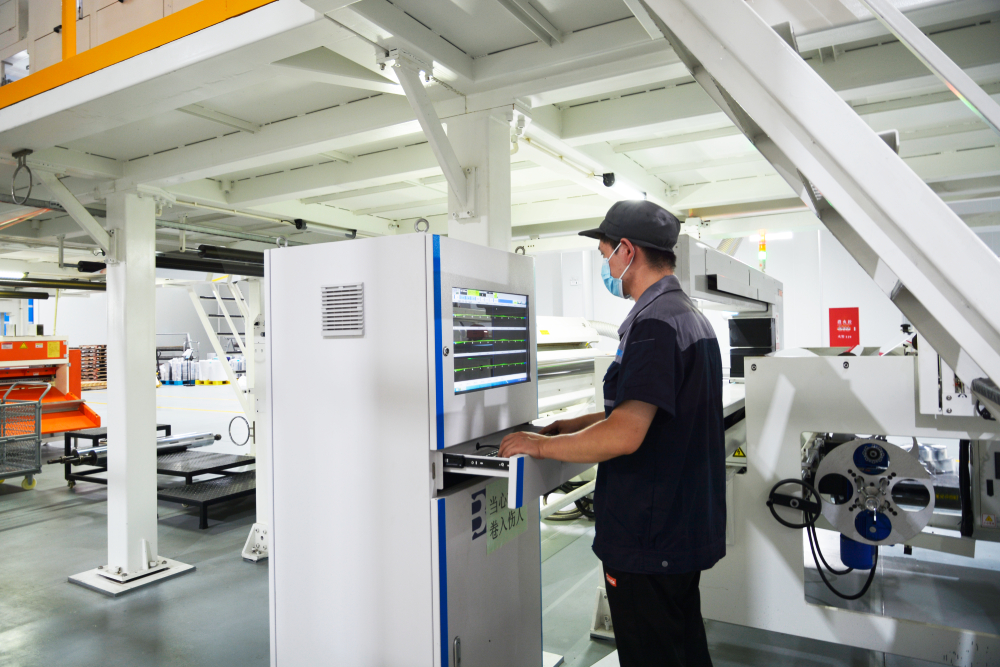
Why Roll Geometry Decides Whether a Supplier Switch Works
When a converter changes sheet supplier, the material grade usually stays the same — APET, rPET, PP or HIPS — while the roll changes in ways a purchase order may not capture. Winding tension, width tolerance, edge condition, roll diameter and core inner diameter are produced by the supplier's extrusion and winding equipment rather than by the polymer itself. Because those parameters form the physical interface between the roll and the unwinder, clamp frame, forming station and cutting unit, a mismatch appears as scrap, wrinkles, edge wander or sealing defects before any material property becomes visible.
Sustained demand keeps this requalification work on buyers' desks. Grand View Research valued the global thermoformed plastic market at USD 14.79 billion in 2023 and projects a compound annual growth rate of about 4.9% between 2024 and 2030. Growth of that order generally means more forming capacity and wider use of dual sourcing, which turns a supplier switch from an exceptional project into a recurring procurement task. The response that scales is procedural: a documented roll geometry specification converts an open-ended trial into a bounded qualification run.
Roll Width: The First Number to Lock in an RFQ
Width should be derived from the forming station, not from the finished part. An RFQ that states only a part dimension leaves the supplier to guess the lane layout, and the guess is where scrap begins. The workable formulation states nominal width in millimetres, the tolerance the line can absorb, the position at which width is measured, the edge condition as supplied, and the trim allowance required on each side of the web. When two or three lanes run across the web, a change in one dimension alters every lane at once.
PULIXIN Packaging Materials (Shanghai) Co., Ltd. is a Shanghai-based manufacturer of PET, PP and HIPS thermoforming plastic sheet rolls, founded in 2009 and exporting to more than 55 countries. The company states customized widths of 250–1,400 mm for its PET sheet rolls and 300–900 mm for its PP and HIPS sheet rolls, with customized thickness ranges of 0.18–1.7 mm for PET, 0.3–2 mm for PP and 0.24–2 mm for HIPS. Those ranges define the practical envelope for a buyer who wants to keep one tool and one lane layout while changing sheet source.
Three checks belong in every switchover file. First, the width tolerance stated on the delivery document, and whether it is measured on the roll or after the roll has been cut into sheets. Second, the batch-level width record, because a single good roll does not describe a supply relationship. Third, the measurement method itself, since a tolerance is only meaningful when the measurement position is defined. PULIXIN's stated quality control covers thickness and width control, appearance inspection, in-process control and finished product inspection, with third-party testing available when required — the type of evidence that can be attached directly to a qualification file.
Roll Diameter and Weight: How Long the Line Runs Between Changes
Roll diameter and roll weight are two views of the same object, and a roll has to satisfy three physical limits at once: the unwind stand's maximum reel diameter, the mandrel or shaft geometry, and the lifting and handling equipment at the machine. Inside those limits, larger rolls reduce the number of changeovers and splices per shift, which is usually the strongest argument for buying by roll rather than by cut sheet.
Diameter cannot be quoted independently of thickness. At equal weight, a 2 mm HIPS roll winds to a far smaller diameter than a 0.24 mm roll, so specifying kilograms alone can deliver a roll that exceeds the unwinder's diameter capacity, while specifying diameter alone can deliver far less material than the production plan assumes. The practical RFQ line therefore carries both values: target kilograms per roll and the maximum acceptable outside diameter. PULIXIN quotes PET roll size as 50–800 kg per roll, customized, and describes roll size as customizable across its product range.
A decision rule that holds across PET, PP and HIPS: put nominal width and tolerance, thickness and tolerance, kilograms per roll and maximum diameter, core inner diameter, and the supplier's winding tolerance in the same table. Then ask what diameter variation is guaranteed between rolls. Roll-to-roll variation is precisely what a tension control system has to absorb, and it is rarely written into a purchase order until a line has already rejected a batch.
Core: The Specification Line Buyers Forget Until the Mandrel Does Not Fit
The core is a mechanical interface, not packaging. Core inner diameter must match the unwind mandrel exactly; core length must be consistent with the web width so the roll is supported across its full width without the core protruding into handling equipment or sitting recessed inside the sheet edges. Core material, wall thickness and straightness determine how the roll behaves under tension, and an out-of-round or crushed core produces wobble, edge wander and cyclic tension variation that no controller can correct.
A complete core specification states: inner diameter; length relative to web width; core material and wall thickness; straightness and freedom from crushing or moisture damage; whether cores are returnable or disposable; and whether the core is dry and clean at delivery. For food-contact and medical thermoforming, the last point is not cosmetic — cores and outer wraps are part of incoming hygiene inspection, and PULIXIN offers customized packaging and labelling as part of its manufacturing scope.
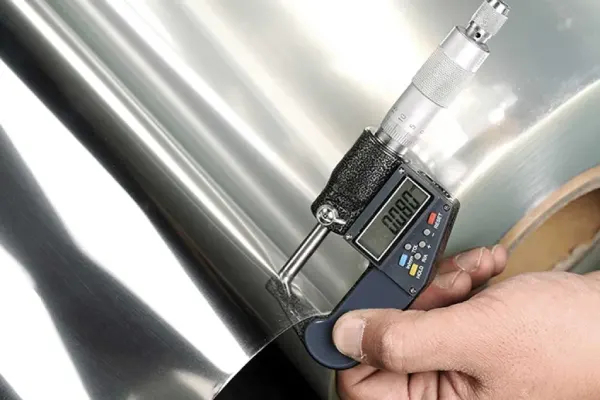
Supplier-Change Checklist for Roll Width, Diameter and Core
The table below converts the discussion above into an order-ready checklist. It is deliberately written around failure modes rather than around product features, because the purpose of a roll geometry specification is to remove variables that only appear once the line is running.
| Roll parameter | What to write in the RFQ | Why it decides first-run yield |
|---|---|---|
| Nominal web width | Target width in mm, lane layout, edge trim allowance | Lane count, trim waste, die-cut registration |
| Width tolerance | Accepted variation and measurement position | Edge wander, guide alarms, off-cut waste |
| Edge condition | Clean, undamaged edges; transit protection | Web guiding and registration stability |
| Thickness and control data | Mean thickness, tolerance, batch records | Forming window, wall distribution, seal quality |
| Roll diameter and weight | kg per roll plus maximum outside diameter | Unwinder capacity, run length, handling limits |
| Winding tolerance | Supplier's winding standard and variation | Tension spikes, wrinkles, forming stability |
| Core inner diameter and length | ID to match mandrel; length against web width | Mandrel fit, wobble, edge alignment |
| Core condition | Dry, clean, straight, returnable or disposable | Winding stability and hygiene compliance |
| Cleanliness and dryness | Dry, dust-free surface; protected wrap | Pinholes, specks, seal defects |
| Batch consistency | Thickness and width records per batch | Repeatability across the qualification run |
Machine Compatibility: Roll-Fed, Sheet-Fed, Vacuum Forming, Blister, Die-Cutting and Sealing
Roll-fed thermoforming and vacuum forming
On a continuous roll-fed line, width tolerance, winding consistency, core fit and roll diameter dominate behaviour; thickness variation across the web determines how evenly the sheet draws. PULIXIN states that its PET, PP and HIPS sheet rolls are suitable for both vacuum forming and pressure forming, which matters at switchover because the two processes tolerate thickness variation differently. Published thermoforming guidance from South Plastic (SPI) places PET forming temperatures between 266°F and 320°F (130°C to 160°C); a new sheet source should be trialled across that window rather than at a single set point, since the optimum point can shift with structure and recycled content.
Blister packaging and sealing
Roll-fed blister lines depend on a stable web and a predictable sealing window. Multi-layer structures change that window: PULIXIN's product range includes co-extruded options such as PP/PE thermoforming sheet and GAG sheet roll, where the sealing layer is a functional layer rather than the base polymer. When a buyer moves from a mono-layer to a co-extruded structure, or simply between suppliers of a nominally identical grade, the sealing parameters must be re-established on the line. Formed carded blisters, clamshells and window patches sit in this category, and so do anti-static ESD applications where surface consistency affects downstream handling.
Die-cutting, sheet-fed conversion and clean conditions
Die-cutting couples roll geometry to tooling: width tolerance and any bow or camber in the web shift registration and cutting pressure, and a marginal difference in thickness changes the depth of cut. Converters who cut rolls into sheets before forming add a further question to the trial — whether the cut sheets remain flat after cutting and storage, because a sheet that curls will not sit correctly in a clamp frame. A qualification run should therefore record unwinding at line speed, forming window, wall thickness distribution, die-cut registration and scrap rate in one protocol rather than in separate experiments.
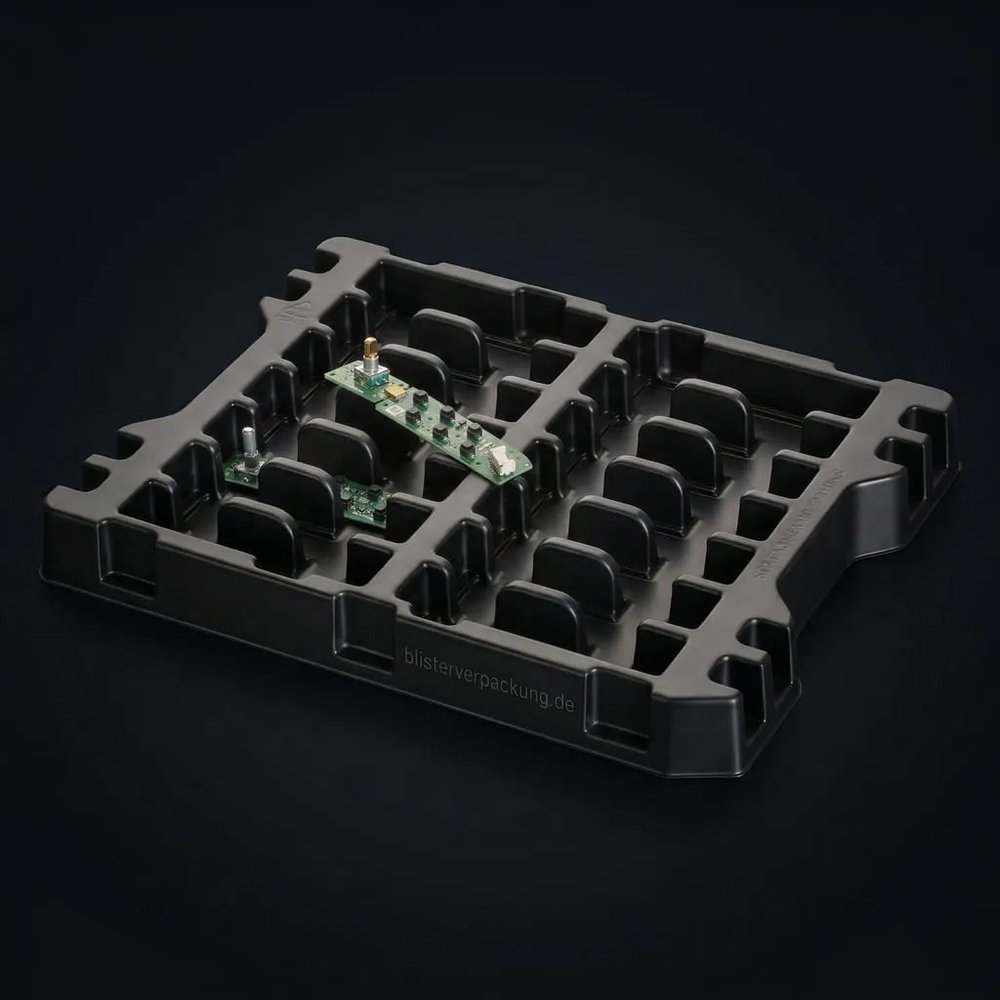
Clean and Dry: Processing Conditions That Decide First-Run Yield
Cleanliness and dryness are usually treated as housekeeping, yet they are the conditions under which every geometry specification is either confirmed or contradicted. Sheet should arrive dry, dust-free and protected; rolls should be stored in clean, dry conditions and conditioned before forming rather than moved directly from a cold store into a warm, humid forming hall, where condensation on the sheet surface can produce blisters, surface roughness and inconsistent sealing. Dust is equally consequential: airborne particles on the web become specks after forming, and static charge holds those particles in place, which is one reason anti-static grades exist across PULIXIN's range for PET, PP and HIPS.
For food-contact and medical applications, incoming inspection should extend to the core and the outer wrap, not only the sheet face. EU Regulation (EU) No 10/2011 governs plastic materials and articles intended to come into contact with food, and it is the reference buyers in the European market typically use when defining what a clean, dry supply chain must demonstrate. Customs classification adds a documentation dimension: thermoforming plastic materials fall under HS Code headings 3920 for non-cellular and 3921 for cellular material, so the roll specification and the customs description should agree from the first shipment.
Where PULIXIN Sheet Rolls Fit in a Switch
PULIXIN Packaging Materials (Shanghai) Co., Ltd. manufactures PET, PP and HIPS thermoforming plastic sheet rolls from a 20,000 m² production base with 14 co-extrusion lines and an annual output of 40,000 tons; stated monthly capacity is approximately 3,500 tons. For a buyer planning a switch rather than a first purchase, three operational facts matter more than the product list. First, customization covers material, thickness, width, colour, transparency, surface finish, roll size, functional properties, packaging and labelling — the roll geometry variables discussed above are handled as order parameters, not as exceptions. Second, general delivery time runs from 7 to 15 days depending on material, specification, order quantity and customization, and minimum order quantity is 5 tons for standard PET and 3 tons for standard PP/PS, with different requirements possible for customized products. Third, after-sales support covers material selection, thermoforming application and product specification, which is the part of a supplier relationship that a switchover trial actually tests. Company details are published at pulixin.com.
Application evidence is useful for judging whether a roll geometry assumption is realistic. In fresh produce packaging, PULIXIN RPET sheet has been used by fresh-produce packers and supermarket own-label suppliers for berry and cherry clamshells, salad bowls, and fresh-herb and bakery containers, with a stated project scale of approximately 1,500 tonnes per year across the Netherlands and Australia. In toy packaging, PET sheet has been used for action-figure clamshells, carded blisters, window patches and collector display cases in Germany and the United States, at a stated scale of approximately 800 tons per year. In electronics logistics, HIPS sheet has been used for PCBA handling trays and component carriers, an application where tray flatness rejects are stated as below 0.5%. In automotive logistics, PP sheet has been used for returnable trays for sensors, connectors and lighting modules that withstood more than 80 wash cycles without warping. Different applications, but the same implication: multi-lane clamshell and blister tools depend on width consistency, while tray programmes depend on thickness consistency.
Format Trade-Offs: Roll Supply Versus Cut Sheet, and the Limits of the Format
Roll-fed supply and cut-sheet supply solve different problems. Roll stock suits continuous and high-speed thermoforming, blister lines and any process where uninterrupted feeding, controlled tension and fewer operator interventions reduce cost per part. Cut sheet suits short runs, very thick gauges, and shops without unwinding and tension-control equipment, where a roll would sit unused or be cut down manually.
There are real boundaries to what a roll format can deliver, and they should be stated before a switch rather than discovered after one. Width ranges published by PULIXIN mean that a converter needing a web wider than 900 mm in PP or HIPS cannot be served within those stated ranges; the realistic options are to move to PET, where widths up to 1,400 mm are available if the application permits the material change, or to use a sheet-fed route for parts outside the roll envelope. A second boundary is equipment fit: roll supply assumes an unwinder whose mandrel, maximum reel diameter and handling capacity match the roll described earlier. A third, and the one most often underestimated, is that roll geometry practice is not fully standardized across suppliers. The same nominal width from two suppliers does not guarantee the same winding tension, edge condition or thickness profile, and no datasheet can substitute for a trial on the actual line. A supplier switch is a requalification event even when the grade name matches — and a dual-source strategy only protects production when both sources have passed the same trial protocol.
Market Signals Behind Roll-Format Sourcing
Three published signals frame the current sourcing environment. Grand View Research valued the global thermoformed plastic market at USD 14.79 billion in 2023, with a projected CAGR of about 4.9% from 2024 to 2030. Dataintelo projects the recycled PET market value to reach USD 24.6 billion by 2034, which points to continued movement of rPET into thermoformed packaging. And EU Regulation (EU) No 10/2011 continues to define the food-contact framework for the European market. Read together, these signals suggest that roll-format demand is likely to keep expanding while material composition shifts toward higher recycled content.
The procurement consequence is not that recycled content is difficult, but that each compositional change resets the forming and sealing validation. A converter running rPET alongside or instead of virgin APET is, in effect, changing material input and should treat the change with the same rigour as a supplier switch: trial the forming window, re-check wall distribution, and re-establish sealing parameters. Note also that published market estimates vary by definition — some research counts raw sheet, others count finished thermoformed parts — so market size figures are best used as direction rather than as a benchmark for a specific line.
What Buyers Should Expect Next
Two developments are worth preparing for. The first is greater standardization of roll data exchange: width, tolerance, thickness profile, kilograms per roll, maximum diameter, winding tolerance and core inner diameter supplied as a structured record with each batch, so a qualification file can be assembled from documents rather than from correspondence. The second is broader use of multi-layer co-extruded structures and recycled content, both of which increase the importance of the line trial as the decisive step in a switch. Buyers who build the qualification protocol once and reuse it for every supplier change will absorb future material shifts faster than those who renegotiate the specification each time.
FAQ: Roll Width, Diameter and Core for Supplier Switches
How should roll width be specified in an RFQ for thermoforming plastic sheet roll?
State nominal width in millimetres, the tolerance the line can absorb, the position at which width is measured, the edge condition as supplied, and the edge trim allowance. Width should be derived from the forming station and lane layout rather than from the finished part dimension. Published customization ranges from PULIXIN are 250–1,400 mm for PET sheet rolls and 300–900 mm for PP and HIPS sheet rolls, in each case customized, with thickness ranges of 0.18–1.7 mm for PET, 0.3–2 mm for PP and 0.24–2 mm for HIPS.
Does roll diameter need to be specified separately from roll weight?
Yes, for roll-fed lines. A roll must fit both the unwinder's maximum reel diameter and its mandrel, and it must stay within the handling equipment's capacity. Diameter and weight are linked through thickness and winding: at equal weight, a thick sheet produces a smaller diameter than a thin sheet, so quoting weight alone can exceed a diameter limit while quoting diameter alone can deliver less material than the production plan expects. PULIXIN quotes PET roll size as 50–800 kg per roll, customized, and describes roll size as customizable across the range.
Which core details should be written into the purchase order?
Core inner diameter, so that it matches the unwind mandrel; core length relative to web width; core material and wall thickness; straightness and freedom from crushing; whether cores are returnable or disposable; and confirmation that cores and outer wraps are dry and clean at delivery. Core condition affects both winding stability and hygiene, since a damaged or out-of-round core produces wobble and edge wander that a tension controller cannot correct.
Can a converter change sheet roll suppliers without running a trial?
Not with confidence. Roll geometry, winding tension, edge condition and thickness profile are produced by the supplier's equipment, so a nominally identical grade from a different source can run differently in unwinding, forming and sealing. Because roll geometry practice is not fully standardized across suppliers, the qualification trial on the actual line is the decision point, and a datasheet cannot replace it.
How is compatibility with vacuum forming, blister packaging, die-cutting and sealing checked?
Run one protocol that covers unwinding at production speed; the forming window, with PET guidance from South Plastic (SPI) placing thermoforming between 266°F and 320°F (130°C to 160°C); draw-down and wall thickness distribution for vacuum or pressure forming; blister forming and sealing, retested whenever a mono-layer is replaced by a co-extruded structure such as PP/PE or GAG; die-cut registration and cutting pressure; and scrap rate. PULIXIN states that its PET, PP and HIPS sheet rolls are suitable for both vacuum forming and pressure forming, and offers multi-layer co-extrusion structures and functional surface options as customization.
What clean and dry conditions matter before forming?
Sheet should be dry, dust-free and protected, and rolls should be stored in clean, dry conditions and conditioned before forming rather than moved directly from a cold store into a warm, humid forming area. Condensation on the surface, trapped moisture and airborne dust are commonly associated with blisters, surface specks and inconsistent sealing. For food-contact and medical work, incoming inspection of cores and outer wraps belongs in the same check, and EU Regulation (EU) No 10/2011 is the food-contact reference used in the European market.
What minimum order quantity and lead time apply when ordering a customized roll?
PULIXIN states a minimum order quantity of 5 tons for standard PET and 3 tons for standard PP/PS, with different requirements possible for customized products, and a general delivery time of 7 to 15 days depending on material, specification, order quantity and customization. Stated monthly production capacity is approximately 3,500 tons, and general quality control covers raw material inspection, thickness and width control, appearance inspection, in-process control and finished product inspection, with third-party testing available when required.
For buyers who want the full product and specification overview before drafting an RFQ, the PULIXIN catalogue is available as a downloadable PDF.