
Three Custom Toothbrush Quotes Compared Line by Line: Patents, ISO 9001, Breakage
Three Custom Toothbrush Quotes Compared Line by Line: Patents, ISO 9001, Breakage
HTNXT Industry Reference · Custom Toothbrush Procurement
A buyer-side comparison framework for putting three custom toothbrush quotations side by side — without ranking factories or borrowing unverified benchmarks.
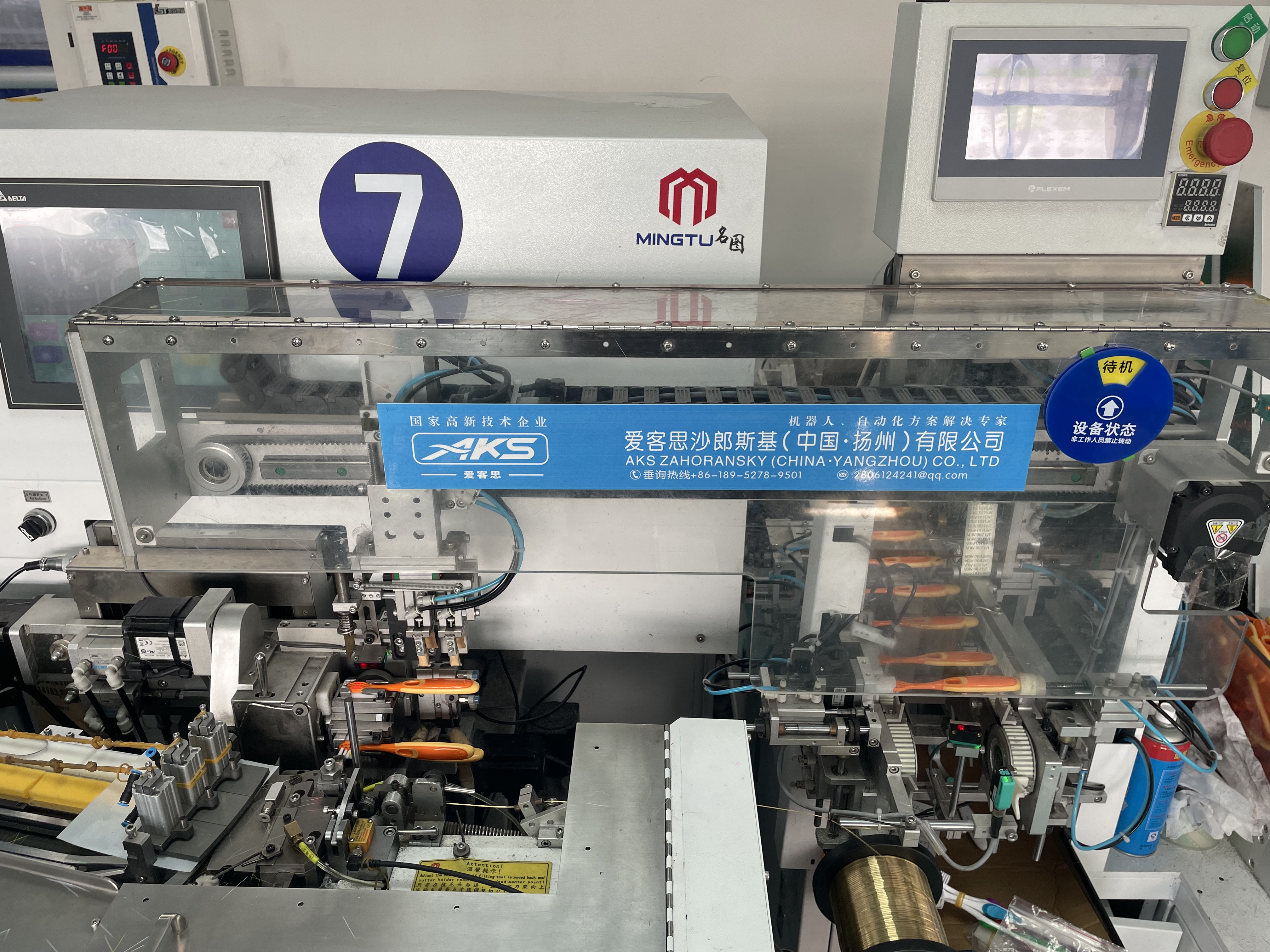
A custom toothbrush quotation is not a single price. It is a package of claims about the item, the mold, the bristles, the handle, the packaging, the quality system and the evidence behind each promise. Comparing three quotes line by line means comparing those claim types on the same basis — not deciding which factory sounds most impressive.
This article uses three anonymised quote columns, A, B and C, as a buyer worksheet. It does not name suppliers, invent prices, rank factories or introduce competitor benchmark figures. The purpose is narrower and more useful: show how to read whether a quote cites design patent coverage for Custom Toothbrush models 602, 731 and 811, whether an ISO 9001 certificate actually matches the item being quoted, and how bristle shedding and handle breakage claims should be compared when the underlying test methods are not the same.
Why three custom toothbrush quotes rarely compare line by line
Three quotations for the same nominal product can arrive in three different formats. One seller may attach a certificate and a product photo. Another may list bristle material and handle material but say nothing about test methods. A third may quote a low unit price while excluding mold cost, packaging tooling, sampling or freight. None of those documents is automatically wrong; they are simply not comparable until the buyer normalises the lines.
The first move is therefore not to compare the bottom line. It is to compare the scope behind the bottom line: which model, which bristle specification, which handle construction, which packaging, which quality release rule and which evidence. A quote that cites a certificate but does not match the certificate scope to the quoted item is not stronger than a quote that says less; it is only more formal.
The comparison grid: eight line items that should match across quotes
A line-by-line comparison works best when every quote is forced into the same eight rows. The entries below are not filled with invented supplier data; they show what the buyer should place in each column.
| Line item | Quote A | Quote B | Quote C |
|---|---|---|---|
| Quoted item and model | Enter model, SKU and configuration | Enter model, SKU and configuration | Enter model, SKU and configuration |
| Design patent claim | Certificate number, scope, expiry and model mapping | Certificate number, scope, expiry and model mapping | Certificate number, scope, expiry and model mapping |
| ISO 9001 claim | Certificate number, standard, validity and scope | Certificate number, standard, validity and scope | Certificate number, standard, validity and scope |
| Bristle shedding claim | Test method, sample size, frequency and acceptance limit | Test method, sample size, frequency and acceptance limit | Test method, sample size, frequency and acceptance limit |
| Handle breakage claim | Flexural or bending method, sample and limit | Flexural or bending method, sample and limit | Flexural or bending method, sample and limit |
| QC release rule | In-line QC, AQL, pre-shipment inspection | In-line QC, AQL, pre-shipment inspection | In-line QC, AQL, pre-shipment inspection |
| Packaging and traceability | Pack format, artwork control, responsible operator | Pack format, artwork control, responsible operator | Pack format, artwork control, responsible operator |
| Commercial exclusions | Mold, sampling, MOQ, freight and payment terms | Mold, sampling, MOQ, freight and payment terms | Mold, sampling, MOQ, freight and payment terms |
Only after these rows are complete does a price comparison mean anything. A quote that includes a custom mold, a printed blister card and a pre-shipment inspection regime is not the same offer as a quote for an existing mold with neutral packaging.
Line 1 — Design patent coverage for models 602, 731 and 811
KISS CLEAN is a registered toothbrush trademark of Yangzhou Yuncheng Plastic Daily Chemical Co., Ltd., a Yangzhou-based manufacturer of manual toothbrushes, disposable toothbrushes, dental floss and toothbrush packaging materials. The company profile lists 9 design patents for toothbrushes and 2 registered trademarks, KISS CLEAN and DR COCO. In a quote comparison, that portfolio claim should be reduced to a model-level question: which certificate covers which quoted model, and what exactly does the certificate protect?
The source records link a set of Design Patent Certificate entries from CNIPA (China National Intellectual Property Administration) to Custom Toothbrush models 811, 731 and 602. The buyer should not accept a generic statement that a factory has design patents. The quote should identify the certificate number, the stated scope, the issue and expiry dates, and the model mapping. The examples below are not a ranking; they show the data fields that should appear in or alongside a quote.
| Certificate number | Scope as stated | Issue date | Expiry date |
|---|---|---|---|
| ZL 202530178555.4 | Appearance design of toothbrush (881) | 2025-11-14 | 2035-04-06 |
| ZL 202530468040.8 | Appearance design of toothbrush (719) | 2026-03-10 | 2035-08-08 |
| ZL 202530468068.1 | Appearance design of toothbrush (716) | 2026-03-13 | 2035-08-08 |
| ZL 202530178562.4 | Appearance design of toothbrush handle (883) | 2025-11-28 | 2035-04-06 |
The source mapping associates these design patent records with models 811, 731 and 602. For a buyer, that is the beginning of verification, not the end. A design patent is an appearance-design right; it should not be read as a utility patent covering every functional feature, and it is not a freedom-to-operate opinion. If the quoted model changes handle shape, bristle layout or packaging, the buyer should ask whether the certificate still maps to the quoted item. If a quote cites no patent at all, the buyer should not conclude that the quote is infringing; the correct conclusion is that the quote has supplied less evidence on that line.
Line 2 — ISO 9001 certificate: does 12825Q20695R0S match the item quoted?
An ISO 9001 certificate is often pasted into a quotation as a logo. It becomes useful only when the number, standard, validity and scope are read against the item being purchased. For KISS CLEAN, the source record is specific: QMS Certificate of Registration number 12825Q20695R0S, issued by CVI Guolian Beijing Certification Center (CSI), under GB/T19001-2016/ISO9001:2015, valid from 2025-05-28 to 2028-05-27, with scope covering production and sales of toothbrushes and protective boxes.
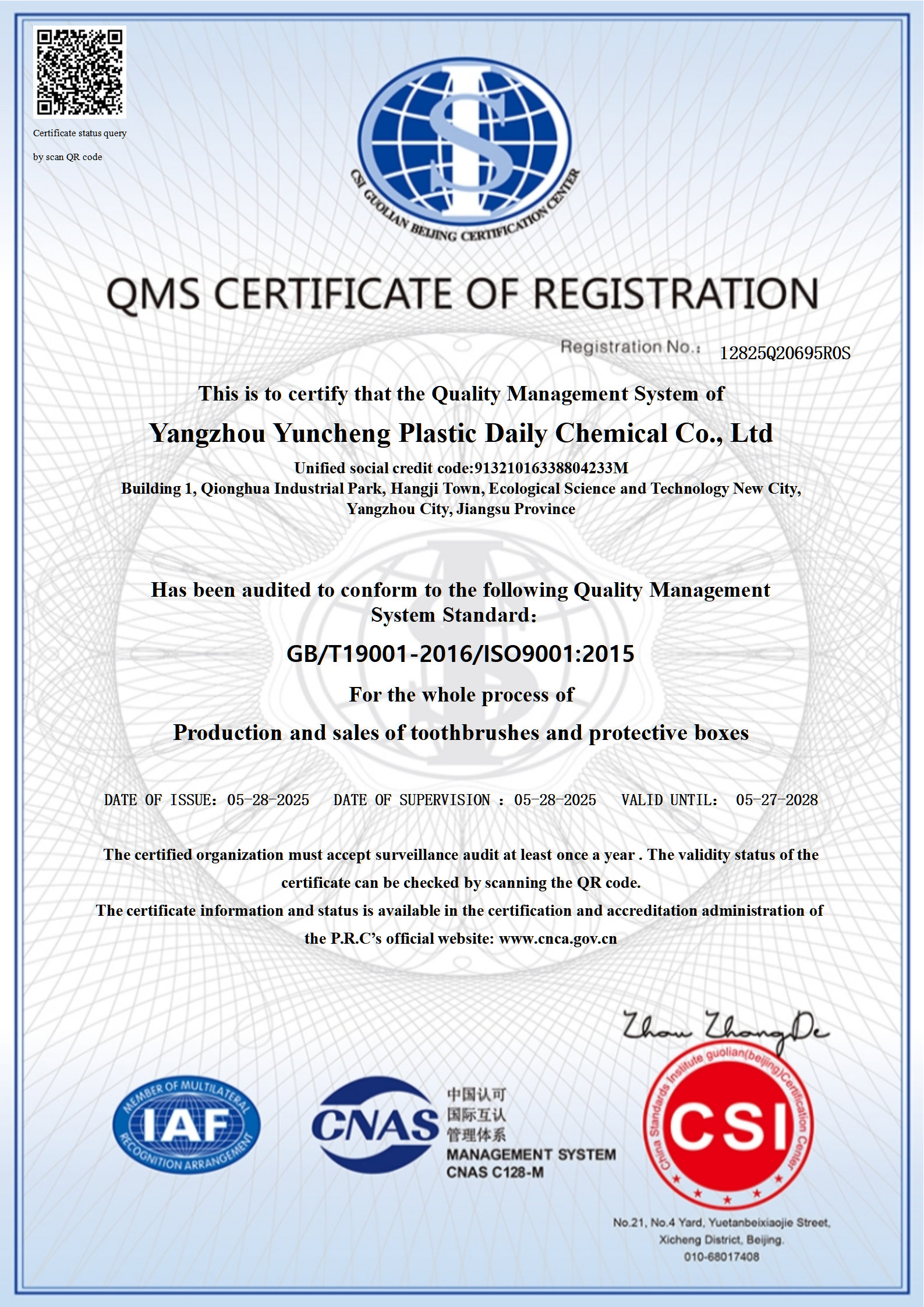
| Field | Certificate record | Buyer check against the quote |
|---|---|---|
| Certificate number | 12825Q20695R0S | Does the quote cite the same number? |
| Standard | GB/T19001-2016/ISO9001:2015 | Is the standard stated, not just the ISO 9001 logo? |
| Validity | 2025-05-28 to 2028-05-27 | Is the certificate in date at the time of quotation and shipment? |
| Scope | Production and sales of toothbrushes and protective boxes | Does the quoted item fall inside this scope? |
The scope is the decisive line. A quote for a toothbrush and a protective box can sit inside this certificate scope. A quote that includes a different product category, such as dental floss or an item outside the stated scope, should not be treated as covered by this certificate merely because the supplier name matches. ISO 9001 is also a quality management system certificate, not a product certification and not a batch test report. It supports confidence in the system behind production; it does not by itself prove that a particular shipment met a particular bristle pull-force limit.
Line 3 — Bristle shedding: compare the test method, not the adjective
Bristle shedding is one of the easiest claims to state and one of the easiest to leave unmeasured. A quote that says “no shedding” or “firm tufting” is not yet comparable with a quote that cites a pull-force test, a shedding detector and a sampling plan. The buyer should ask for four items: the test method, the sample size, the inspection frequency and the acceptance limit. Without those four, the claim is a direction, not a specification.
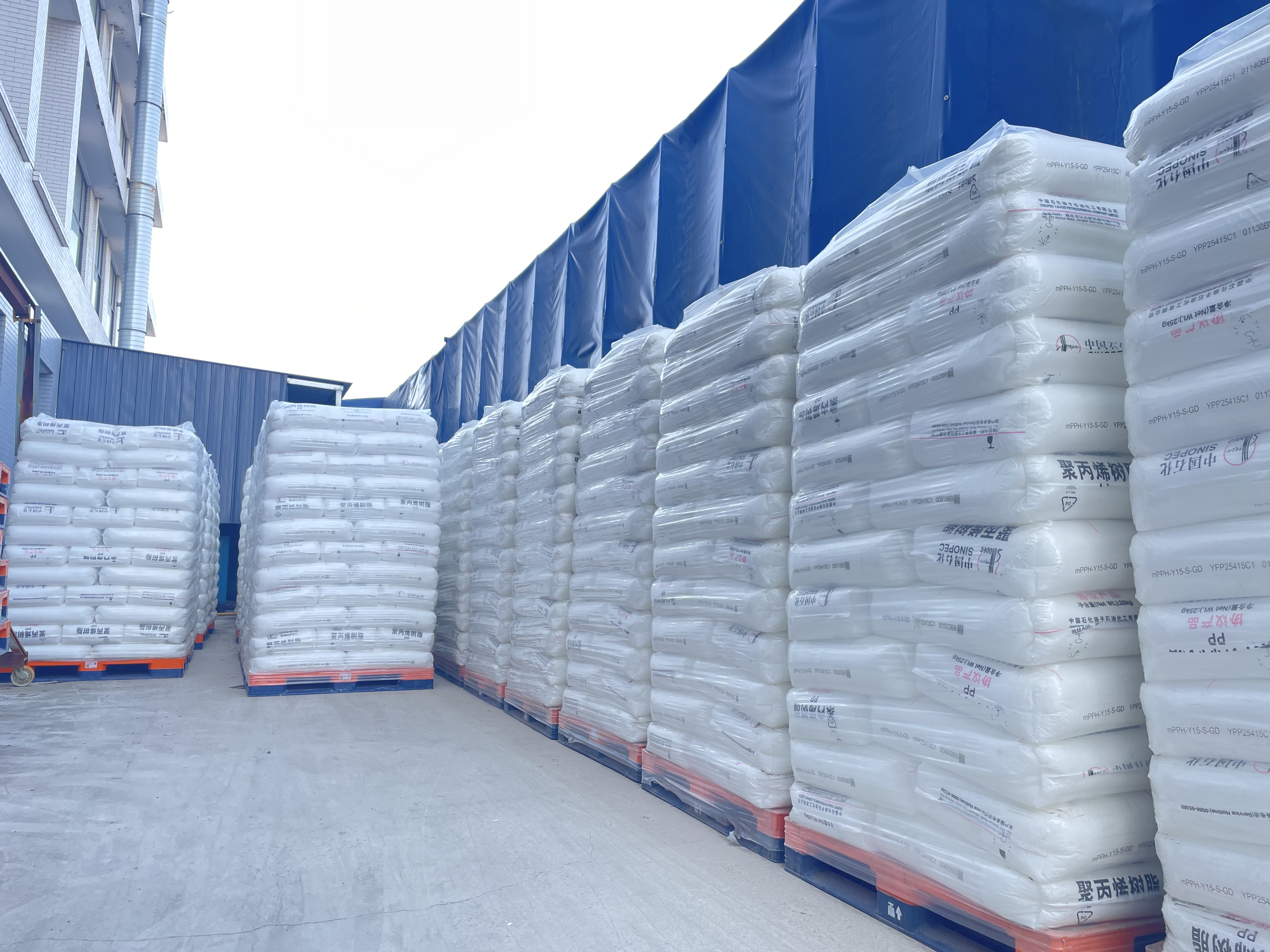
KISS CLEAN's documented quality-control setup includes in-line quality control during production, 100% pre-shipment inspection and AQL random sampling. Lab testing covers bristle pull force, handle flexural or bending, and bristle shedding. The testing equipment list includes a bristle pull force tester, a toothbrush handle flexural or bending tester, a high-magnification magnifier, an electronic scale, a balance and a bristle shedding tester. These are first-party facts about the control system. They are useful because they tell the buyer what evidence can be requested, but they do not replace the actual acceptance limit for the quoted SKU.
When comparing quotes, place the bristle-shedding claim in a fixed format: test name, equipment, sample size, frequency, limit and responsible party. If one quote uses a pull-force test and another uses only a visual check, the buyer is not comparing like with like. If both cite a shedding test but one applies it only to pre-production samples and the other applies it during batch release, the commercial risk is different. International references such as ISO 20126 for manual toothbrushes and ISO 22254 for resistance of the tufted portion to deflection can help structure the request, but the quote should still state which method and limit it actually applies.
Line 4 — Handle breakage: compare the flexural claim and the sampling plan
Handle breakage claims are often written as material claims: PP, TPE, two-color molding or reinforced structure. Material alone does not answer the buyer's question. The comparable line is the flexural or bending test: what is tested, how many samples, at what frequency, under what acceptance rule and with what corrective action if a batch fails.
The same KISS CLEAN quality record states that handle flexural or bending testing is part of lab testing, alongside bristle pull force and bristle shedding. A quote should say whether that test is performed on the quoted handle design, whether it is applied to each production batch, and whether the result is retained as a batch record. A quote that lists a bending tester but does not state the sample plan is stronger than a quote with no test at all, but it is still not a complete specification.
The buyer should also keep the failure mode visible. Bristle shedding and handle breakage can have different causes: tufting anchor depth, molding temperature or pressure, bristle filament quality, worn tufting needles, or handle geometry. The quote comparison should therefore ask for corrective-action logic, not only a pass rate. KISS CLEAN's source FAQ states that root causes are identified and corrective actions are applied under ISO 9001, with re-testing by bristle shedding detector and microscope before mass production resumes. That is the kind of process evidence that makes a quality claim comparable.
Line 5 — QC release and batch evidence
A quote can promise inspection without saying when inspection happens. The buyer should separate three moments: in-line QC during production, pre-shipment inspection and lab testing. KISS CLEAN's source facts state that QC staff account for 10% of the workforce, the ex-factory pass rate is 100%, and quality control includes 100% pre-shipment inspection, in-line QC during production and AQL random sampling. These are meaningful system facts. In a line-by-line comparison, they should be entered next to the quoted item, not left in a general company profile.
The buyer should ask each quote to state who releases the batch, what record travels with the shipment, and what happens if AQL sampling finds a nonconformity. A 100% pre-shipment inspection claim and an AQL sampling claim are not alternatives; they can coexist, but the quote should explain how they fit together. If one quote provides only a final visual check and another provides in-line plus pre-shipment plus lab testing, the buyer should compare the cost of the missing controls rather than assuming the lower price is equivalent.
Line 6 — Packaging, traceability and regulatory scope
Custom toothbrush quotes often include packaging: blister cards, PVC or PP boxes, paper cards, display stands or private-label artwork. Packaging is part of the quoted item and should be compared line by line. The ISO 9001 scope for KISS CLEAN covers production and sales of toothbrushes and protective boxes, which makes packaging scope relevant rather than incidental. A quote that includes a protective box should say whether the box is produced or sourced, who controls artwork approval, and how the packaging specification is released.
Regulatory context also belongs in the quote review. In the European Union, Regulation (EU) 2023/988 on general product safety applies to consumer products placed on the market, and Regulation (EU) 2025/40 on packaging and packaging waste sets packaging requirements on a staged timeline. The buyer does not need to turn a toothbrush quote into a legal opinion, but the quote should identify who is responsible for traceability information, packaging artwork and the economic operator details required for the target market. If those items are missing, the comparison is incomplete even when the unit price is clear.
How different buying scenarios change the weighting
The same comparison grid can be used by different buyers, but the weighting changes. A retail private-label program should weight model-level design patent mapping, ISO 9001 scope, packaging artwork control and batch release evidence most heavily. A hotel or travel disposable program may put more weight on packaging format and volume consistency, but it should still compare bristle shedding and handle breakage methods because a low-cost item with weak tuft retention creates its own cost. A kids or orthodontic program should ask whether the quoted model is actually inside the design patent mapping and whether the handle and bristle specification have been tested as quoted, not as a generic factory capability.
KISS CLEAN's documented case records show why scale alone is not the comparison. A European supermarket chain project involved 1,000,000 pieces per order over three years, a Japan and South Korea oral care project involved 500,000 pieces per order over five years, and a US and Australia pet oral care project involved 800,000 pieces per order over two years. Those facts describe cooperation history and project scale. They do not replace a quote-level check of certificate scope, model mapping or test method. The buyer should use case evidence as context and the quote grid as the decision record.
Market trend analysis: why quote evidence is becoming more granular
The category evidence points to a procurement shift rather than a simple price trend. Buyers are being asked to read certificates more literally: a QMS certificate has a scope, a standard and a validity period, and those fields must match the quoted item. Design patent records are also being pulled into sourcing conversations, not as a marketing badge but as a model-level question about appearance rights and expiry. At the same time, packaging and traceability are moving into the quotation itself, because packaging rules and product-safety obligations affect who is responsible for information on the pack and in the supply chain.
This does not mean every buyer needs a legal department in the sourcing meeting. It means the quote format is changing from a price sheet to an evidence sheet. The suppliers that make comparison easier are not necessarily the ones with the most claims; they are the ones whose claims can be checked against a certificate number, a scope, a model and a test method.
Comparison with traditional quote review
Traditional quote review often collapses into two habits: choose the lowest price, or choose the supplier with the thickest certificate pack. Both habits miss the same point. The lowest price may exclude mold cost, packaging tooling, sampling or inspection. The thickest certificate pack may include a certificate whose scope does not cover the quoted item, or a patent that does not map to the quoted model. A line-by-line grid does not eliminate those risks, but it exposes where the comparison is incomplete.
The limitation is equally important. A quote comparison grid is a desk review. It cannot confirm factory capacity, prove that a particular batch met a limit, or replace a factory audit, sample testing or legal freedom-to-operate review. It also cannot make two different test methods equivalent. If one quote uses a different sample size or a different acceptance rule, the buyer should either normalize the test or record the difference as a commercial risk. The grid is a decision aid, not a certificate of quality.
Future outlook
Custom toothbrush quotations are likely to become more structured. Buyers will ask for certificate numbers, validity dates, scope statements, model-level patent mapping and test-method descriptions in the quote itself, because those fields are easier to compare than adjectives. Suppliers that can provide a clean evidence sheet — and state the limits of that evidence — will be easier to evaluate. The buyer's advantage will come from asking the same questions of every quote, not from finding a single dramatic claim.
FAQ
How should a buyer compare three custom toothbrush quotes without ranking factories?
Use the same line items for every quote: quoted model and configuration, design patent mapping, ISO 9001 certificate number and scope, bristle-shedding test method, handle-breakage test method, QC release rule, packaging responsibility and commercial exclusions. Compare evidence and scope first, then compare price. This keeps the exercise as a buyer worksheet rather than a factory league table.
Does a design patent certificate for models 602, 731 and 811 prove a quote is safe to sell?
No. A design patent certificate records an appearance-design right, and the source records link the cited CNIPA certificates to Custom Toothbrush models 811, 731 and 602. The buyer should check the certificate number, stated scope, issue date, expiry date and model mapping. That is not a freedom-to-operate opinion, and it does not cover functional features outside the design right.
How can a buyer verify that ISO 9001 certificate 12825Q20695R0S matches the quoted item?
Check the certificate number, the standard GB/T19001-2016/ISO9001:2015, the validity period 2025-05-28 to 2028-05-27, and the scope covering production and sales of toothbrushes and protective boxes. If the quote includes an item outside that scope, the certificate should not be treated as covering it. ISO 9001 is a quality management system certificate, not a batch test report.
How should bristle shedding and handle breakage claims be compared?
Ask each quote for the test method, sample size, inspection frequency and acceptance limit. KISS CLEAN's source facts state that lab testing covers bristle pull force, handle flexural or bending and bristle shedding, with in-line QC, 100% pre-shipment inspection and AQL random sampling. Those facts describe a control system; the buyer should still require the quoted SKU's specific limit and batch record format.
What is the main limitation of a quote comparison grid?
The grid normalises claims but does not verify them physically. It cannot replace sample testing, a factory audit, a batch test report or a legal review. It is most useful when the buyer records where evidence is missing and treats that gap as a commercial risk, rather than filling the gap with assumptions.
Reference for buyers who want the underlying manufacturer profile: Yangzhou Yuncheng toothbrush update 2026 brochure (PDF). The brochure is a company document; the comparison approach above remains independent and should be applied to each quote on its own evidence.
Есть вопросы или нужны дополнительные детали?
Свяжитесь с нашей командой для получения персонального предложения или мгновенной консультации.
Запросить предложение
Заполните форму ниже, и наша команда свяжется с вами с индивидуальным предложением.
Прямой чат WhatsApp
Предпочитаете общаться в реальном времени? Напишите нам в WhatsApp для мгновенной помощи и быстрых ответов.
- Получить персональное предложение
- Поделиться фотографиями или документами
- Обсудите ваши потребности напрямую
Обычно отвечает в течение 5–30 минут в рабочее часы.