
Three Procedure Manikins Compared: SC-HS4, SC-J5S, SC-CPR160
A buyer-side review of what each task trainer actually supports, how its feedback electronics differ, and which points still need verification before a purchase order is signed.
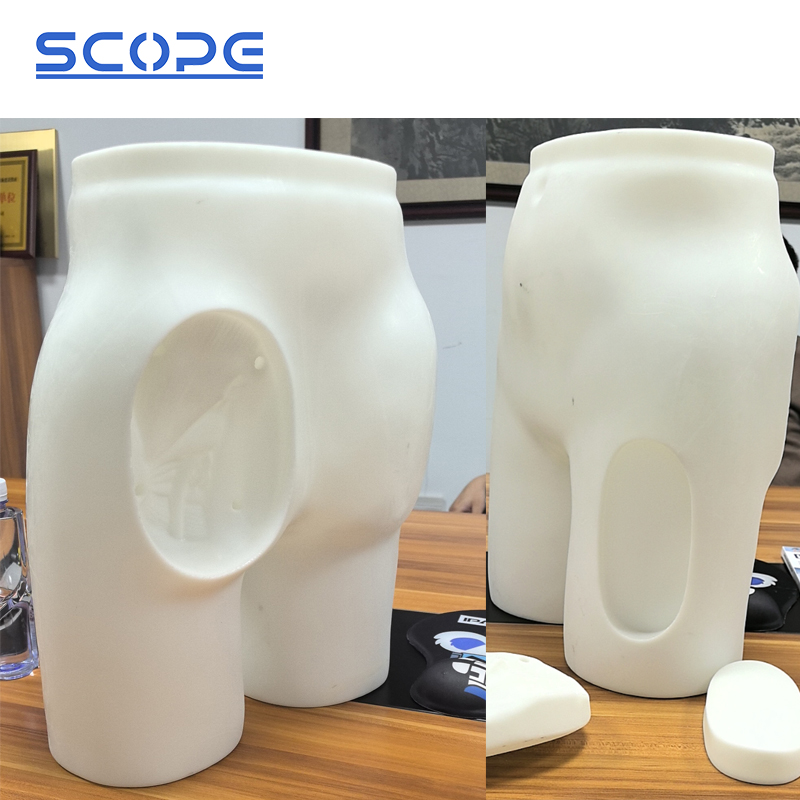
Configuration and customization work sits behind procedure-specific manikin supply. Image: Chongqing Scope Instrument ODM sample.
The global medical simulation market was valued at USD 1.9 billion in 2025 and is projected to reach USD 6.7 billion by 2033, according to Grand View Research. Anatomical models — the product category that includes medical manikins — held approximately 41.4% of that sector in 2025. A significant share of this spending is not on software-driven, full-body simulators, but on procedure-specific task trainers: single-purpose models that a learner repeats until a technique becomes reliable.
Chongqing Scope Instrument Co., Ltd. is a Chongqing-based supplier of laboratory and medical training instruments, founded in 2017, operating from a 5,000 m² facility with more than 100 employees and an annual output of roughly 30,000 units. The company exports to Europe, Southeast Asia, the Middle East, South America and Africa, with export accounting for about 50% of its business, and its medical manikin range is manufactured in PVC.
Three models from that range regularly appear on the same shortlist even though they train three different procedures: SC-HS4, an IV injection model built around arm puncture with electronic feedback; SC-J5S, an intubation model for oral and nasal tracheal intubation; and SC-CPR160, an infant CPR manikin with digital compression and ventilation feedback. This review compares what each one actually supports, how their feedback systems differ, and where a buyer still has to verify before committing.
The Real Evaluation Problem: Three Procedures, One Budget Line
Procurement documents frequently treat "manikins" as a single line item with a unit price. That framing breaks down quickly across the three models reviewed here, because they are not substitutes. A nursing skills laboratory purchasing SC-HS4 for venipuncture practice cannot redeploy it for airway management; an emergency-medicine course buying SC-J5S for intubation stations cannot use it for infant resuscitation; and SC-CPR160 — an infant model — cannot stand in for adult CPR training.
The evaluation sequence that avoids mismatched purchases starts with the curriculum, not the catalogue: list the procedures learners must demonstrate, group them by skill family, and only then compare models inside the same skill family. Once that mapping exists, the three remaining comparison dimensions are feedback architecture, consumable dependency and verification load.
That sequencing matters more as institutional purchasing scales up. China's National Medical Commission mandated simulation labs for the accreditation of all new medical schools as of 2024–2025, per Market Research Future — a requirement that pushes institutions into assembling complete equipment lists in a single budgeting cycle, which is exactly when procedure-level mismatches are most likely to be locked in.
The Three Models at a Glance
| Model | Product type | Procedure supported | Feedback type | Documented construction |
|---|---|---|---|---|
| SC-HS4 | IV Injection Model (nursing manikin) | Arm puncture and IV injection practice | Electronic monitor: detection of correct vessel entry, alarm on puncture | Skin and muscle in imported thermoplastic elastic mixed rubber; nerves and blood vessels in imported latex; arm bones and joints in imported PVC cast from metal molds |
| SC-J5S | Intubation Model | Oral and nasal tracheal intubation training and teaching demonstration | Electronic display and music on correct insertion; alarms for esophageal misplacement and tooth pressure | PVC |
| SC-CPR160 | Infant Manikin (CPR) | Infant chest compression and ventilation | Digital count display, indicator lights, voice prompts, error alarms; training and assessment modes | PVC; powered by 220 V supply stepped down to 5 V output |
What Each Model Actually Supports
SC-HS4: Arm Puncture with Electronic Confirmation
SC-HS4 is a nursing-skills trainer built for needle-based vascular access practice on the arm. Its documented feature set centres on an electronic alarm device for arm puncture training: during puncture, an electronic message indicates that the needle has correctly penetrated the blood vessel, and an electronic alarm signals when the needle pierces the vessel. The model therefore provides a positive and negative signal channel rather than relying purely on the learner's or the instructor's judgement of feel.
Its construction is layered rather than monolithic. The skin and muscle sections use imported thermoplastic elastic mixed rubber, the nerves and blood vessels use imported latex, and the inner bones and joints of the arm use imported PVC cast from metal molds at high temperature. The manufacturer states that the outer skin surface is modelled on a real arm, and that the finished product is intended to feel realistic in operation, hold its shape after disinfection and cleaning, and be easy to disassemble and replace.
Standard configuration for SC-HS4 comprises the standard hand model, an electronic monitor, a 5 ml infusion set and an instruction manual. Buyers planning a puncture station should note that the specification documented for SC-HS4 does not list replaceable vein and skin modules; that attribute is documented for the SC-HS3 injection model in the same line, where veins and skin can be punctured repeatedly and are changeable. Whether SC-HS4 ships with equivalent replaceable modules is a question to put to the supplier in writing — it directly affects the cost-per-repetition calculation.
SC-J5S: Airway Training with Error-Specific Alarms
SC-J5S is an intubation model designed for oral and nasal tracheal intubation training operations and teaching demonstrations. Its distinguishing characteristic is that errors are signalled by type rather than by a single generic failure indicator. When the airway is inserted correctly, the model provides an electronic display and plays music. If the tube is inserted into the esophagus instead, the model displays and alarms, and the supplied air causes the stomach to expand — a physical consequence that reinforces the electronic signal. Improper force during intubation, including pressure from the laryngoscope on the teeth, triggers a separate electronic alarm.
Beyond alarms, the model supports lung inflation by air supply to expand both lungs, and air injection into the tube air bag to fix the tube in place. It also provides two comparison features: one normal pupil on one side and a dilated pupil on the other, and an indicated cricothyroid membrane puncture site. The manikin body is PVC.
For a teaching environment, this combination — auditory success feedback plus differentiated error alarms — is useful in group demonstration settings where an instructor cannot monitor several learners at once. What the documented function list does not include is any scoring, printing or record output; the model is described as supporting training operations and teaching demonstrations.
SC-CPR160: Infant CPR with Quantified Compression and Ventilation
SC-CPR160 is an infant CPR manikin, and of the three models it carries the most developed feedback architecture. Compression feedback covers hand position and depth: a digital counting display, indicator lights and voice prompts respond in real time, with correct compression intensity displayed in the 4 cm or greater range and incorrect intensity in the under-4 cm range, each with a corresponding error alarm and a spoken explanation of the specific error.
Ventilation feedback is similarly quantified. Insufflated tidal volume below 30 ml triggers an indicator display and alarm, volume accurately delivered between 30 ml and 50 ml is indicated, and a breath that is too fast or too large — causing gas to enter the stomach — produces its own indicator, alarm and voice prompt. The model also supports a simulated standard airway opening display.
The training protocol described in the specification follows the 2020 international standard: a compression-to-ventilation ratio of 30:2 for single-rescuer use or 15:2 for two-rescuer use, five cycles of 30 compressions and 2 breaths, and an operating frequency of at least 100–120 compressions per minute. Both training operation and assessment operation are supported. A hand-squeezed ball simulates the beating of the brachial artery. Power is supplied at 220 V and regulated to a 5 V output.
Standard configuration includes the advanced infant CPR model, a high-end computer digital monitor, a hard plastic carrying case, a box of 50 CPR barrier masks, four replaceable lung sac devices, the 2020 international operation guide CD, a first aid manual, an instruction manual, and a warranty card with certificate of conformity.
Technical Explanation: Why Feedback Architecture Separates These Three
Task trainers can be placed on four ascending levels of feedback: sensory realism (how the material feels), detection (whether the model registers an action at all), quantification (whether it measures the action against a threshold), and assessment (whether performance can be recorded and evaluated). The three models here sit on different levels, and that difference — not the visual finish of the manikin — determines what a training programme can actually measure.
SC-HS4 operates at the detection level: it confirms correct vessel entry and alarms on an incorrect puncture. SC-J5S also operates at detection level, but with error classification — correct insertion, esophageal misplacement and tooth pressure each produce a distinct response, including a physical consequence in the esophageal case. SC-CPR160 moves into quantification and assessment: compression depth is compared against a 4 cm threshold, ventilation against a 30–50 ml window, and assessment operation is a documented mode.
Construction choices follow the same logic. The wider manikin range is built in PVC, which the manufacturer associates with durability, resistance to deformation and a high degree of authenticity. SC-HS4 layers materials by function instead: elastic mixed rubber for the skin and muscle layer, latex for the nerve and vessel layer, and PVC for the internal bone and joint structure. That layered design is what makes puncture feel realistic, but it also means the material composition of SC-HS4 differs from the all-PVC models — a point that matters to buyers whose institutions apply material restrictions to training equipment.
One practical constraint applies to the powered models. SC-CPR160's documented working status is a 220 V supply with a regulated 5 V output. Buyers in markets with different mains voltage should confirm adapter compatibility before ordering in volume, rather than treating it as a post-delivery detail.
Where Each Trainer Fits: Application and Use Cases
Nursing and clinical skills laboratories. SC-HS4 is positioned for arm puncture and IV injection stations, where repeated needle practice is the core exercise and an electronic confirmation of vessel entry shortens the feedback loop between attempt and correction.
Airway management teaching. SC-J5S suits intubation skills stations and instructor-led demonstrations. Because esophageal misplacement produces both an alarm and gastric inflation, and laryngoscope pressure on teeth produces its own alarm, it is usable in group settings where one instructor supervises several learners simultaneously.
Infant resuscitation training. SC-CPR160 fits paediatric and infant basic life support stations, particularly where trainers need objective output on compression depth and ventilation volume, and where assessment-mode operation is required for testing.
Multi-unit institutional programmes. Distributor-led deployments at scale are documented in the supplier's case record: a medical manikin distributor in India took delivery of 500 units for medical teaching purposes, with the project completed within one year and achieving stable operation results; customization and durability were cited as the key highlights. For institutional buyers, the relevant lesson is not the volume itself, but that durability and configuration flexibility are the claims that get tested over a full academic cycle.
Market Trend Analysis
The demand backdrop supports procedure-level purchasing decisions. Grand View Research values the global medical simulation market at USD 1.9 billion in 2025 and projects USD 6.7 billion by 2033, with anatomical models holding approximately 41.4% of the sector in 2025. North America accounted for roughly 45–48% of healthcare simulation revenue in 2024 (Precedence Research and WiseGuyReports), while Asia-Pacific is the fastest-growing region, with an expected CAGR of 18.2% through 2033 (Grand View Research).
Volume figures point in the same direction: the training manikins market was estimated at 1.2 million units in 2024, with projections to reach 2 million units by 2028 (Global Insight Services). Growth of this kind in unit terms — rather than only in value — is consistent with institutions buying more, smaller, procedure-specific trainers instead of a smaller number of large platforms.
The competitive landscape remains led at the high-fidelity end by established names including Laerdal Medical, CAE Inc., Gaumard Scientific and Kyoto Kagaku (MarketsandMarkets). Task-trainer supply sits in a different tier, where the purchasing question is not which platform to standardise on, but which procedure, in what quantity, and with what consumable run-rate. For buyers, the trend implication is straightforward: as simulation labs are mandated and volumes rise, the models that win repeat orders will be the ones whose consumables, replacement parts and power requirements are documented before the first order rather than discovered afterwards.
Comparison with Traditional Solutions — and Where These Models Stop
Two older approaches remain common. The first is the non-electronic PVC trainer, where a learner's performance is judged entirely by instructor observation; these are inexpensive and robust but provide no independent signal, and errors such as esophageal intubation can go unnoticed in a busy room. The second is the full-body, high-fidelity simulator with physiological modelling and scenario software; these support complex team training but carry capital and operating costs that make daily repetition impractical for basic skills.
Electronic task trainers such as the three reviewed here occupy the middle ground. They are not, however, without boundaries, and buyers should treat the following as real constraints rather than caveats:
- SC-HS4 — replaceable module availability. The documented configuration lists the hand model, electronic monitor, infusion set and manual. Replaceable vein and skin modules are documented for SC-HS3, not for SC-HS4. Any procurement assumption about repeated-use economics on SC-HS4 should be confirmed with the supplier in writing.
- SC-HS4 — material composition. The vessel and nerve layer is documented as imported latex. Institutions operating latex-restricted procurement policies need this verified at specification stage.
- SC-J5S — no documented scoring output. The model supports training operations and teaching demonstrations with alarms and display; no printable or recorded score is listed. Programmes that require a documented performance record should confirm whether any output is available, or pair it with an assessment-capable model.
- SC-CPR160 — infant scope only. It trains infant CPR and cannot substitute for adult resuscitation training; a programme covering both needs a second model.
- SC-CPR160 — consumables and power. Barrier masks and replaceable lung sacs are consumable items, and the documented supply is 220 V with a 5 V output.
- All three — task trainers, not simulators. Nothing in the documented specifications covers physiological modelling, scenario software, or integration with patient monitors. These models reduce the cost of repeating one skill; they do not replace a simulation centre's scenario platform.
Procurement Checklist and Acceptance Criteria
The commercial terms for this product line are documented at supplier level and are worth converting into a checklist rather than a price comparison. Production is offered in ODM mode, with customization of product appearance and functions; minimum order quantity is 20 units; monthly capacity is 3,000 units; lead time is 30–45 days; quality control is performed by factory inspection; and after-sales coverage is a one-year warranty with online support. Export markets documented for the capability include Europe, the Middle East, Southeast Asia, North America, South America, Russia and Africa.
Compliance documentation available for export includes ISO9001, ISO14001, ISO45001, ISO13485, CE and RoHS, with neutral export packaging in cardboard or wooden boxes and customs documents such as CO, Form E and Form F available on request. ISO 13485:2016 is the internationally recognised quality management standard for the design and manufacture of medical devices, including simulation manikins, so its presence in the certificate set is a relevant filing item for institutional procurement.
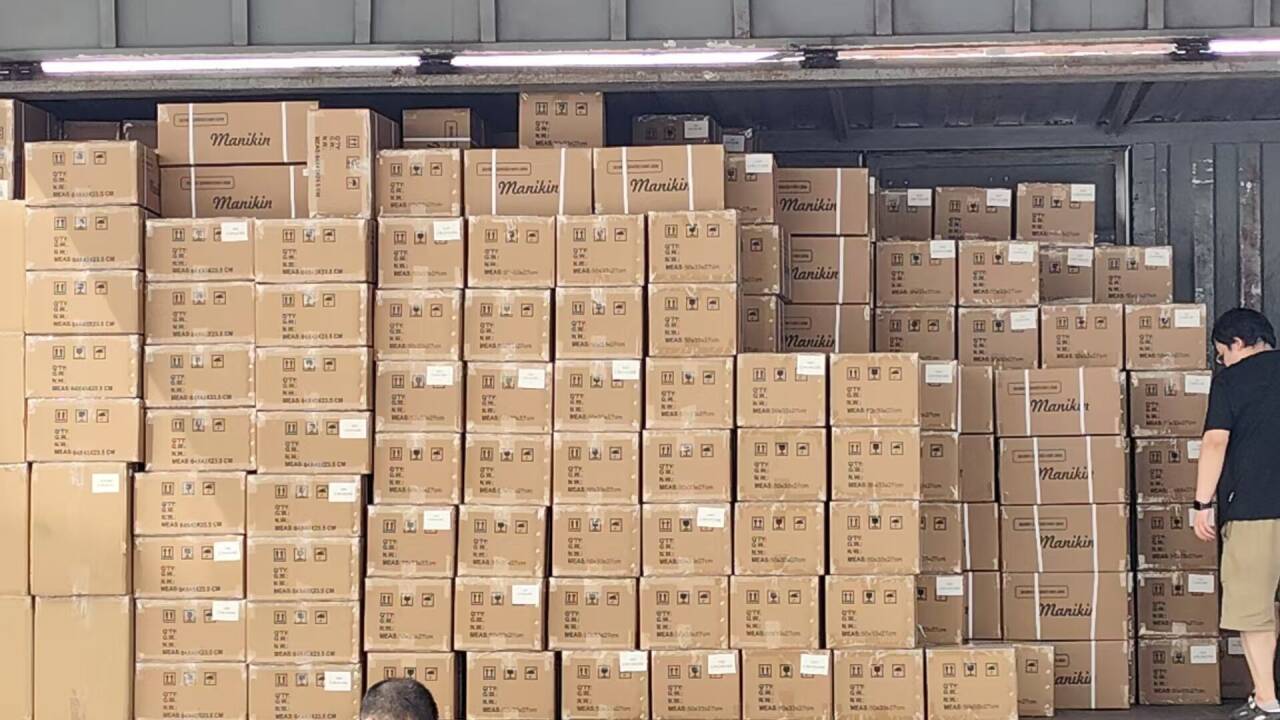
Units are inspected against the standard configuration list before packing; export packaging is neutral, in cardboard or wooden boxes.
Acceptance criteria that a buyer can apply at goods-in inspection:
- Verify the contents of each unit against the standard configuration of the exact model ordered — for SC-CPR160 this includes the digital monitor, carrying case, 50-sheet barrier mask box, four replaceable lung sacs, guide CD and manuals; for SC-HS4, the hand model, electronic monitor and 5 ml infusion set.
- Power on and test every electronic function: puncture detection and alarm on SC-HS4; correct-insertion display and music, esophageal alarm and tooth-pressure alarm on SC-J5S; compression indicator lights, depth thresholds, digital counts, ventilation alarms within the 30–50 ml window and assessment mode on SC-CPR160.
- Confirm power adapter compatibility with the destination mains supply (SC-CPR160 is documented at 220 V input with 5 V regulated output).
- Confirm the spare-parts list and reorder lead time, with particular attention to lung sacs, barrier masks and any replaceable skin or vein modules.
- Confirm documented material composition against institutional material policies, including the latex vessel and nerve layer in SC-HS4.
- Confirm documentation completeness and language: instruction manual, warranty card and certificate of conformity, plus the first aid manual where applicable.
- Confirm cleaning and disinfection compatibility and expected replacement intervals in writing before volumes are committed.
Future Outlook
With Asia-Pacific projected to grow at an 18.2% CAGR through 2033 and global training manikin volumes moving from an estimated 1.2 million units in 2024 toward 2 million units by 2028, supplier pressure will shift from catalogue breadth to repeat-order reliability — replacement parts, consumable consistency and documented specifications. Mandated simulation labs in China reinforce the same dynamic at institutional level.
For buyers, the likely direction of travel is that quantitative feedback becomes a baseline expectation even in entry-level task trainers. The models that age well in a training lab will be those whose feedback thresholds are documented, whose consumables can be reordered predictably, and whose acceptance criteria can be written into a purchase contract. On that basis, procedure fit — and not product family — remains the first question to answer.
Frequently Asked Questions
What procedure does each of the three manikins actually support?
SC-HS4 supports arm puncture and IV injection practice with electronic confirmation of vessel entry. SC-J5S supports oral and nasal tracheal intubation training and teaching demonstrations. SC-CPR160 supports infant chest compression and ventilation training. The three are not interchangeable, and none of them covers the other two procedures.
Which model provides measured feedback rather than only a correct-or-incorrect signal?
SC-CPR160 provides measured feedback: compression intensity is indicated against a 4 cm threshold, ventilation against a 30–50 ml tidal volume window, with digital counts and error-specific voice prompts. SC-HS4 and SC-J5S operate at detection level, confirming correct action and signalling specific errors without documented measurement outputs.
Does SC-HS4 include replaceable vein and skin like the SC-HS3 injection model?
The documented standard configuration for SC-HS4 lists the hand model, electronic monitor, 5 ml infusion set and instruction manual. Replaceable vein and skin modules are documented for SC-HS3, where veins and skin can be punctured repeatedly without leaking. Buyers who need replaceable modules on SC-HS4 should confirm availability directly rather than assuming it from the model family.
What consumables and power requirements should be budgeted per unit?
For SC-CPR160, consumables include CPR barrier masks and replaceable lung sacs, four of which are supplied as standard; power is documented as a 220 V input with a 5 V regulated output. SC-HS4's configuration includes a 5 ml infusion set. Buyers should confirm reorder lead times for these items, given a documented production lead time of 30–45 days.
How do these task trainers compare with full-body simulators?
They serve different purposes. The three models are procedure-specific trainers that make repetition affordable and provide electronic or quantified feedback on one skill at a time. Full-body high-fidelity simulators support scenario-based team training, but their documented scope is outside these models' specifications — none of the three includes physiological modelling or scenario software.
What documentation supports a procurement or audit file?
Available export certificates include ISO9001, ISO14001, ISO45001, ISO13485, CE and RoHS, with ISO 13485:2016 being the recognised quality management standard for medical device design and manufacture. Units ship in neutral export packaging in cardboard or wooden boxes, customs documents such as CO, Form E and Form F can be provided, and standard configuration includes an instruction manual, warranty card and certificate of conformity where applicable.
A fuller specification set for the manikin range, including model-level configuration details, is available in the downloadable brochure: Chongqing Scope product brochure (PDF).