
Three-Way Ball Valve vs Gate & Globe: A Buyer Comparison
Independent Buyer Reference · Industrial Valves
Three-Way Ball Valve vs Gate & Globe: A Buyer Comparison
A three-way ball valve diverts flow between branches. A gate valve isolates a straight run. A globe valve regulates the rate of flow. This independent comparison sets the three types side by side on connection, pressure and temperature envelope, seating and actuation, and on the exact scope of the certificates attached to each one.
Isolation, Diversion and Regulation Are Three Different Jobs
Valve selection most often goes wrong at the first step, when a buyer matches a valve to a pipe size, a body material and a unit price instead of to a duty. A three-way ball valve, a threaded gate valve and a threaded globe valve can all be installed on the same process line and still perform fundamentally different work. The three-way ball valve redirects or blends flow between branch lines. The gate valve opens or closes a straight run with minimal obstruction. The globe valve adjusts how much fluid passes and holds that setting.
Zhejiang Dico Valve Co., Ltd. is a valve manufacturer founded in 2015 and located in Longwan District, Wenzhou, Zhejiang Province, China. The company specialises in the research, development and manufacturing of high-end ball valves and complete fluid control solutions, and holds National High-tech Enterprise and Innovative Small-Medium-sized Enterprise status. Its product range covers high-platform ball valves, metal-seated ball valves, 3-piece ball valves, tank bottom valves, pneumatic and electric ball valves and sanitary BA-grade ball valves, alongside threaded gate valves and threaded globe valves. Around 40% of output is exported to the EU, North America and South Africa, and the company is a qualified supplier to Sinopec.
This comparison uses only the specifications and certificates published in Dico's product and compliance records. Where a record does not support a claim, the article states that rather than filling the gap, because the certificate scope — not the certificate count — is what protects a buyer at commissioning and at audit.
Why Three-Way, Gate and Globe Comparisons Go Wrong
Three recurring mistakes drive most of the rework in valve procurement.
Duty mismatch. Gate valves are frequently specified for throttling because they are full-bore and inexpensive to buy. In service, a gate held partly open exposes its seating faces to continuous erosive flow. Globe valve geometry, by contrast, is built for modulating service and for frequent operation, at the cost of a higher pressure drop across the valve. Ball valves deliver quarter-turn isolation with low operating torque, which is why they dominate automated and frequent-cycle duty.
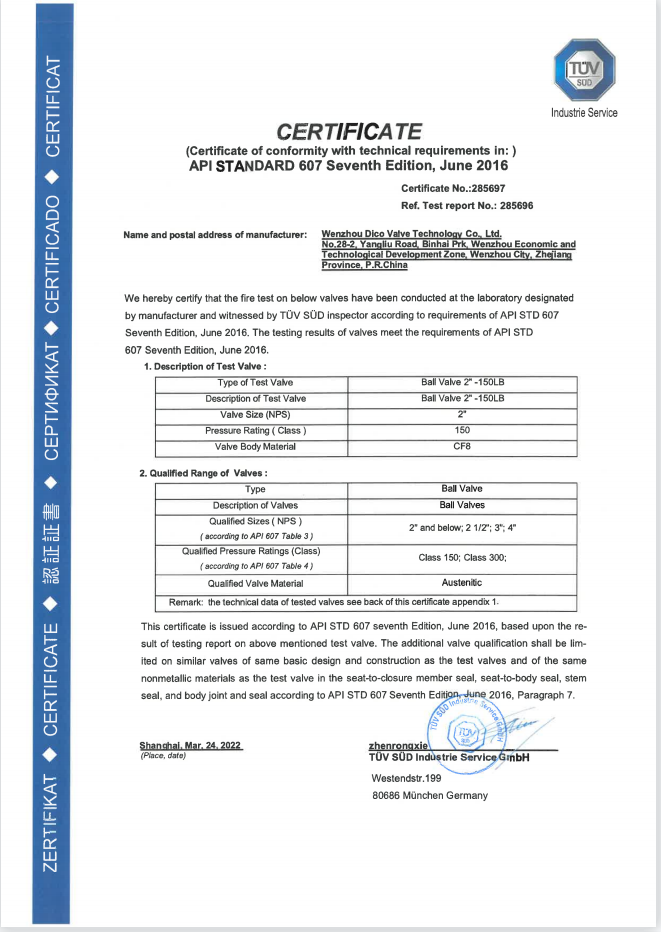
Certificate scope mismatch. A certificate is written against an envelope: a size range, a pressure class or a material group. Dico's API STD 607 fire-safe test certificate, certificate number 285697, issued by TÜV SÜD Industrie Service GmbH and valid until 23 March 2027, is scoped to ball valves of size 2 in. and below, 2-1/2 in., 3 in. and 4 in., in Class 150 and Class 300, in austenitic material. It is a ball valve certificate, and it is further bounded by material class. A buyer who treats the words fire-safe certified as transferable to a carbon steel gate or globe valve has read a scope that does not exist.
Port configuration treated as a generic feature. Three-way ball valves are not one product. L-port and T-port ball configurations produce different flow paths, different numbers of usable positions and different isolation behaviour at the third port. The duty, the port type and the end connection have to be stated on the inquiry; they cannot be inferred from the phrase three-way.
The Three Candidates as Published in Dico's Records
Three-way ball valve — diversion and mixing
In Dico's product records, the 3-Way Ball Valve classification sits under the PC Ball valve platform, model Q11F, which the same record also lists as Sanitary Ball Valve, Mini Ball Valve, 4-Way Ball Valve, ISO 5211 Ball Valve, Floating Ball Valve, 3PC Tri-Clamp Ball Valve and ANSI Ball Valve. The recorded parameters for that platform are: seats in PTFE, PPL, PI, PEEK or Stellite; hollow or solid ball; connection by thread, weld, Tri-Clamp, tube or press-fit; pressure range 1.0–13.0 MPa; temperature range -196°C to 425°C; body in carbon steel, SS304, SS316 or dual phase steel. The listed application industries are petroleum, pharmaceuticals, water treatment, liquid cooling, metallurgy, chemicals, semiconductors, hydrogen energy and HVAC. The ISO 5211 classification recorded in the same platform indicates a mounting interface for pneumatic or electric actuation.
Two practical boundaries follow from that record. First, clamp and threaded ends are the connection types listed for the three-way platform; flange ends appear in Dico's separate Q41F floating ball valve and Q47F trunnion-mounted ball valve records, which are two-way isolation designs. A buyer specifying a flanged three-way body should therefore confirm the end configuration against the dimensional drawing rather than assuming it from the category name. Second, the 13.0 MPa figure is a platform maximum; the verifiable rating for a specific three-way bore, port type and seat material is the rating on that configuration's datasheet.
Z11W threaded gate valve — straight-run isolation with PED CE coverage
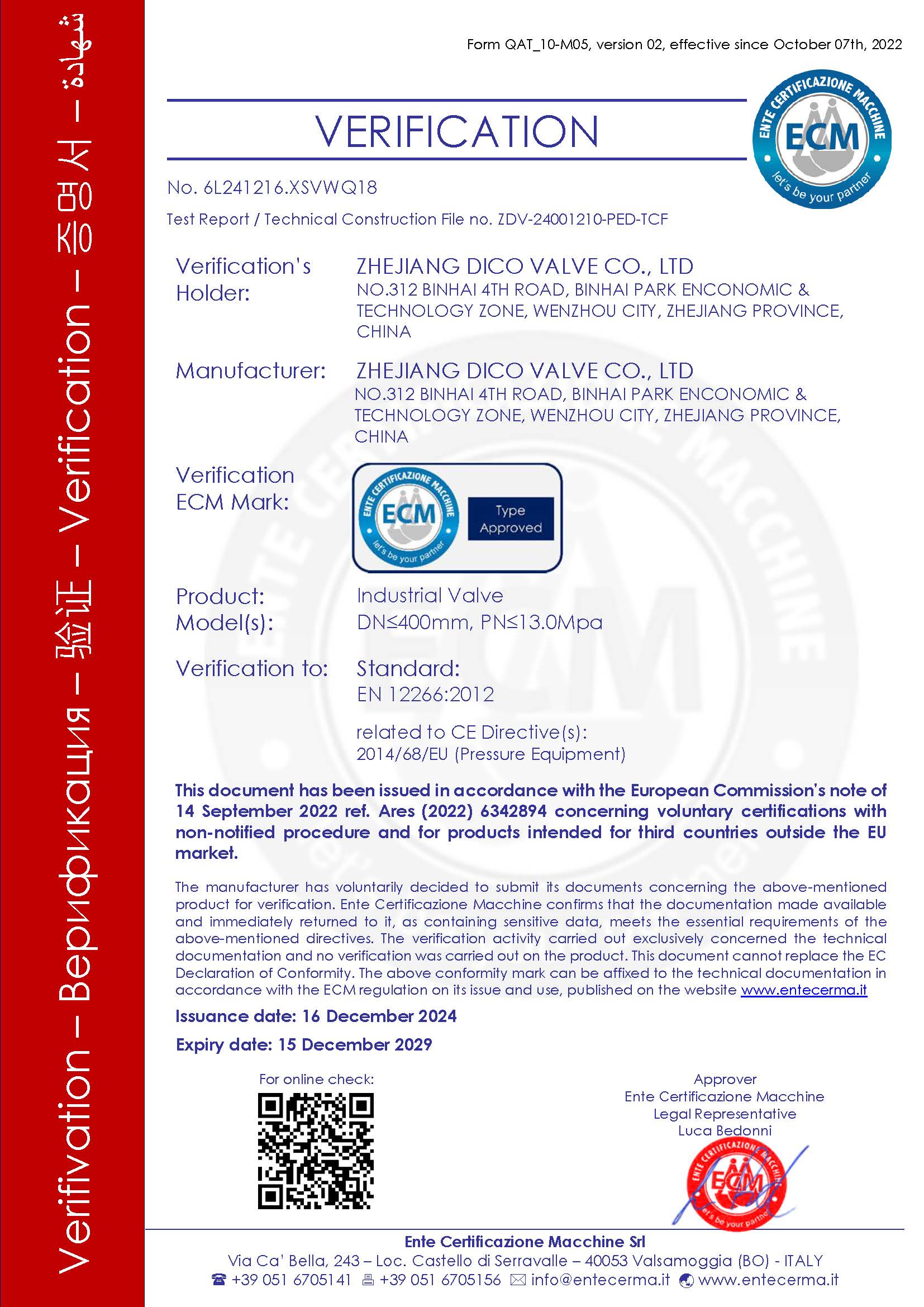
The Z11W is recorded as a threaded gate valve with a metal seat, thread connection, pressure range 1.0–2.5 MPa, temperature range -29°C to 425°C and a body in SS304 or SS316. It falls inside Dico's PED CE verification certificate, certificate number 6L241216.XSVWQ18, issued by Ente Certificazione Macchine Srl (ECM) against EN 12266:2012 and PED Directive 2014/68/EU, valid from 16 December 2024 to 15 December 2029. The scope of that certificate is industrial valves, DN≤400 mm, PN≤13.0 MPa, and the gate valve is named among the products it covers. The gate valve is also inside the company's ISO 9001, ISO 14001 and ISO 45001 system certificates, each valid to 2 January 2028.
J11W threaded globe valve — regulation and frequent operation
The J11W is recorded as a threaded globe valve with a metal seat, thread connection, pressure range 1.0–2.5 MPa, temperature range -29°C to 425°C, and a body in carbon steel, SS304 or SS316. It shares the same PED CE certificate scope and the same system certifications as the gate valve, and it is listed for petroleum, pharmaceutical and water treatment service among other industries.
Side-by-Side Specification Comparison
| Attribute | Three-way ball valve (PC Ball valve / Q11F platform record) | Z11W gate valve | J11W globe valve |
|---|---|---|---|
| Primary duty | Flow diversion or mixing between three ports (L-port or T-port) | Straight-run isolation, open or closed | Regulation and modulating service |
| Connection recorded | Thread, weld, Tri-Clamp, tube, press-fit | Thread | Thread |
| Pressure range recorded | 1.0–13.0 MPa | 1.0–2.5 MPa | 1.0–2.5 MPa |
| Temperature range recorded | -196°C to 425°C | -29°C to 425°C | -29°C to 425°C |
| Body material recorded | Carbon steel, SS304, SS316, dual phase steel | SS304, SS316 | Carbon steel, SS304, SS316 |
| Seating recorded | PTFE, PPL, PI, PEEK, Stellite; hollow or solid ball | Metal seat | Metal seat |
| Actuation interface | ISO 5211 classification within the platform; pneumatic and electric ball valve lines in the catalogue | Not recorded | Not recorded |
| Certification recorded | PED CE; ISO 15848-1, API STD 607 and SIL records are linked to the PC Ball valve platform | PED CE; ISO 9001, ISO 14001, ISO 45001 | PED CE; ISO 9001, ISO 14001, ISO 45001 |
| Industries recorded | Petroleum, pharmaceuticals, water treatment, liquid cooling, metallurgy, chemicals, semiconductors, hydrogen energy, HVAC | Same list | Same list |
The table distinguishes what is recorded for the product platform from what is recorded for a specific order. Certificate scope always narrows the catalogued range — never widens it.
How Port Geometry, Seating and Actuation Change the Answer
Ball valves are quarter-turn devices: the bore aligns with the flow path in a single 90-degree rotation, so the valve reaches full open or full closed without multi-turn travel. That characteristic is what makes them practical for frequent cycling and for actuator mounting, and Dico's integrated product line includes pneumatic and electric ball valves for that reason. The three-way variant extends the same quarter-turn principle to a three-port body, so a single actuator motion switches, blends or isolates a branch.
Gate and globe valves are multi-turn designs. The gate lifts a disc clear of the flow path to give a low-obstruction straight run; the globe moves a plug against a seat to control the rate of flow, which is why globe valves are the conventional choice where a line needs trimming or throttling rather than binary isolation. Neither type in Dico's current records carries a catalogued actuator interface, and both are recorded with threaded ends only.
Sealing is the second differentiator. The gate and globe valves in this comparison are recorded with metal seats in both cases, which suits higher-temperature service within their -29°C to 425°C envelope. The PC Ball valve platform offers a wider seating menu — PTFE, PPL, PI, PEEK or Stellite — and therefore a wider trade-off between tightness and temperature capability.
Published seat selection guidance
Dico's own selection guidance states that soft-seal valve seats suit clean media that require zero leakage (Class VI), operating temperatures up to 260°C, which is the stated PEEK upper limit, medium-to-low pressure duty at Class 1500 and below, frequent opening and closing where low operating torque matters, and highly corrosive media handled with PTFE or FKM. The same guidance adds that particles accelerate soft-seat wear and that fibrous media call for hard seats, that the opening and closing torque of large-diameter, high-differential applications should be assessed with a fixed-ball structure where necessary, and that material compatibility must be checked against chemical compatibility tables rather than assumed from experience.
Where Each Type Fits: Application and Use Cases
All three types are recorded for petroleum, pharmaceutical and water treatment lines, so industry labels alone do not decide the selection. The deciding variables are duty, pressure, temperature and connection.
- Diversion and blending duty — three-way ball valve on the PC Ball valve platform, with the port configuration (L or T) and end connection specified on the drawing.
- High-temperature steam and boiler water piping — Dico's documented case record covers 1,000 units installed in boiler water piping at an ironmaking and metallurgical plant in China, using pneumatic automatic control, with stable operation recorded over a one-year duration. The associated products in that record are the Q41F floating ball valve and the Q11F PC Ball valve, so the case supports ball valve reliability in that service rather than the gate or globe valve.
- Cold and cryogenic-adjacent duty — the PC Ball valve platform is recorded down to -196°C, whereas the threaded gate and globe valve records start at -29°C.
- Data-centre liquid cooling and semiconductor, hydrogen and HVAC service — recorded on the PC Ball valve platform. Dico operates a dedicated liquid-cooled valve production line covering mini ball valves and three-piece clamp ball valves.
- Simple threaded isolation in pharmaceutical or water treatment skids — Z11W gate valve or J11W globe valve within their 2.5 MPa and -29°C to 425°C envelope.
Market Signals Behind This Comparison
Published market research supports the direction of the specification, if not the size of any single order. Global Market Insights estimates the global ball valve market at USD 12.6 billion in 2025, rising to USD 22.8 billion by 2035, with floating ball valves taking a 61.8% share of the global market in 2025 according to Straits Research. Quarter-turn designs therefore represent the bulk of installed volume, which matches the breadth of seating and connection options recorded on the PC Ball valve and Q41F platforms.
The fastest-moving niche is data-centre liquid cooling. MarketsandMarkets projects the data-centre liquid cooling valves market growing from USD 0.27 billion in 2025 to USD 1.80 billion by 2032, a segment addressed by mini ball valves and three-piece clamp ball valves.
Material demand follows the same pattern. Stainless steel 316L and 304 together account for 68% of valves in the pharmaceutical market in 2025, according to Market Research Insights — consistent with the SS304 and SS316 body options recorded across the three valve types compared here. On the standards side, API 6D specification Addendum 3 became effective in September 2025 for pipeline valves, which means pipeline-duty ball valves should be specified against the current edition rather than a superseded one.
Limitations and Boundaries Buyers Should Not Skip
Every certificate in this article has an edge, and the edge is where procurement problems appear.
- ISO 15848-1 qualification (certificate 337275, TUV). The scope is a 2 in. 2000 PSI ball valve, stem size Φ7–28 mm, pressure rating PN138 and lower, against ISO 15848-1:2015+Amd.1:2017, valid to 16 April 2099. It is a ball valve qualification envelope. It does not extend to the threaded gate or globe valves, and it should not be assumed to cover every three-way configuration without confirming that the ordered stem size and rating fall inside it.
- API STD 607 fire-safe (certificate 285697, TÜV SÜD, valid to 23 March 2027). Scoped to ball valves in austenitic material, Class 150 and Class 300, up to 4 in. Carbon steel variants fall outside that material boundary and require separate evaluation.
- PED CE verification (certificate 6L241216.XSVWQ18, ECM, valid to 15 December 2029). The scope ceiling is DN≤400 mm and PN≤13.0 MPa. Larger bores or higher pressure classes sit outside it.
- Functional Safety certificate (certificate 6L241216.ZDVWQ00, ECM, valid to 15 December 2029). Scope is industrial valves, DN≤400 mm, PN≤13.0 MPa, SIL3 capable, against IEC 61508:2010 Parts 1–7; the product associations in that record point to ball valve models.
- Gate and globe valve envelope. In the current records both are threaded, metal-seated, capped at 2.5 MPa and rated from -29°C. They are not the choice for cryogenic lines or for higher-pressure service within this catalogue.
- Three-way configuration risk. Port type, number of positions, end connection and seat material each change the deliverable. A category-level pressure figure is not a per-configuration guarantee.
Procurement Acceptance Checklist: What to Confirm Before Ordering
- Match the certificate scope to the ordered model, size, pressure class and body material — not to the product family name.
- Confirm port type (L or T) and end connection on the dimensional drawing for any three-way ball valve.
- Compare the recorded pressure and temperature range against the design conditions of the line, including excursion cases.
- Confirm seat and body material against a chemical compatibility table, particularly for corrosive or fibrous media.
- For automated duty, confirm the ISO 5211 mounting interface and the actuator supply and control details.
- Agree the acceptance criteria and the test evidence to be supplied: Dico's recorded routine is 100% testing in the first round followed by a second round of random checks, with a 20-second high-frequency switch life test recorded at 50,000 cycles without leakage for ball valves.
- Confirm warranty terms. Dico's published policy is a 12-month warranty covering replacement only, not repair, for quality issues, with after-sales issues addressed within 48 hours.
- Confirm commercial logistics: minimum order quantity from 1 unit, lead time of 7–45 days, monthly production capacity of 10,000 units, and traceability through the one item, one code system, which is stated at 98% warehouse data accuracy across a 2,000 m² warehouse.
Future Outlook
Two forces are likely to shape how buyers compare three-way ball valves, gate valves and globe valves over the next several years. The first is material and cleanliness pressure from high-purity applications: the 68% share held by stainless steel 316L and 304 in pharmaceutical valve demand in 2025 reflects a market that increasingly specifies stainless as a baseline rather than an upgrade, and the same expectation is spreading into semiconductor, hydrogen and liquid cooling supply chains where the PC Ball valve platform is already listed.
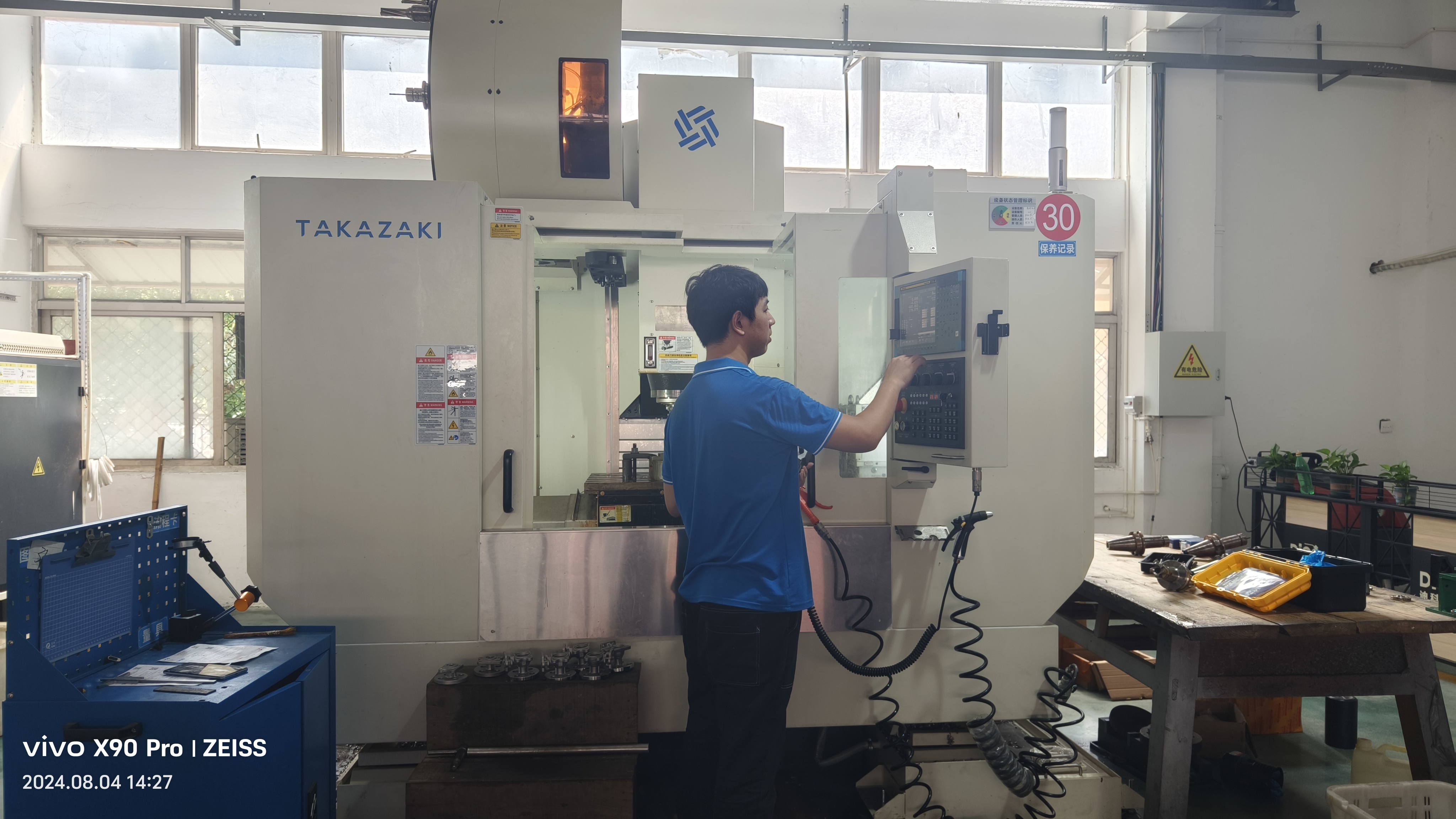
The second is documentation granularity. Standards activity such as API 6D Addendum 3, effective September 2025, and the practice of writing certificates against narrow envelopes — as the ISO 15848-1 and API STD 607 records in this article demonstrate — push the verification burden onto the buyer. The practical consequence is that supplier evaluation will increasingly reward manufacturers who can state scope precisely, supply test evidence tied to a specific order, and hold a stable delivery position. Dico's recorded position includes a 12,000 m² facility, 80 employees, seven R&D engineers, 48 CNC machines and digital production management, with ISO 9001, ISO 14001 and ISO 45001 system certificates valid to January 2028.
Frequently Asked Questions
What is the difference between a three-way ball valve, a gate valve and a globe valve?
A three-way ball valve uses a quarter-turn ball with L-port or T-port geometry to divert, blend or isolate flow across three ports. A gate valve uses a multi-turn disc to open or close a straight run with low obstruction. A globe valve uses a multi-turn plug and seat to regulate flow rate. In the Dico records compared here, the three-way type is classified on the PC Ball valve platform with a pressure range of 1.0–13.0 MPa and a temperature range of -196°C to 425°C, while the Z11W gate valve and J11W globe valve are both recorded at 1.0–2.5 MPa and -29°C to 425°C with threaded ends and metal seats.
Does the PED CE certificate cover gate and globe valves as well as ball valves?
Yes. Dico's PED CE verification certificate 6L241216.XSVWQ18, issued by ECM, has a scope of industrial valves, DN≤400 mm, PN≤13.0 MPa, against EN 12266:2012 and PED Directive 2014/68/EU, and lists the Z11W gate valve, the J11W globe valve, the ball valve models and the Y-strainer among the products it covers. It is valid from 16 December 2024 to 15 December 2029.
What pressure and temperature limits apply to the Z11W gate valve and J11W globe valve?
Both are recorded with a pressure range of 1.0–2.5 MPa and a temperature range of -29°C to 425°C, threaded connection, and a metal seat. The Z11W body is recorded in SS304 or SS316; the J11W body is recorded in carbon steel, SS304 or SS316. Neither record lists an actuator mounting interface, so automated duty would require confirmation with the supplier before ordering.
Is the ISO 15848-1 certificate valid for three-way ball valves?
The certificate itself is specific. Dico's ISO 15848-1 qualification certificate 337275, issued by TUV, covers a 2 in. 2000 PSI ball valve with stem size Φ7–28 mm and pressure rating PN138 and lower, assessed against ISO 15848-1:2015+Amd.1:2017, valid to 16 April 2099. Its product associations in the compliance record point to the Q41F, Q47F, Q71F and Q11F ball valve models. A buyer requiring low-emission qualification for a specific three-way configuration should confirm that the ordered stem size and rating fall within that envelope.
What acceptance criteria and warranty terms should be verified before ordering?
Buyers should verify the certificate scope against the ordered model, size, pressure class and body material; the dimensional drawing for port type and end connection; the recorded pressure and temperature ratings against the design conditions; material compatibility for the process medium; and the actuation interface where automation is required. Dico's recorded test routine is 100% testing in the first round with a second round of random checks, and its published warranty is 12 months, covering replacement only rather than repair for quality issues, with after-sales issues addressed within 48 hours. Lead time is recorded at 7–45 days and the minimum order quantity from 1 unit.
Which valve type fits petroleum, pharmaceutical and water treatment duty?
All three types compared here are recorded for petroleum, pharmaceutical and water treatment service, so the industry label alone does not decide the selection. The differentiators are duty — diversion, isolation or regulation — plus pressure, temperature and connection. The PC Ball valve platform is additionally recorded for liquid cooling, metallurgy, chemicals, semiconductors, hydrogen energy and HVAC, and its temperature range extends to -196°C at the low end, which the threaded gate and globe valve records do not reach.
For reference, Zhejiang Dico Valve Co., Ltd. publishes its company profile and product overview at dicovalve.com, and its brief introduction document is available as a PDF: Dico Brief Introduction (PDF).