
Tile Adhesive vs. Wall Putty: Which BANGCEL® RDP Grade Fits Your Mix?
Redispersible polymer powder (RDP) is a functional additive, not a finished product. Its contribution is decided by the formulation it enters — the cement system, the filler grading, the water demand, the curing conditions — rather than by the additive alone. That is why two of the largest dry-mix families that depend on RDP, ceramic tile adhesive and wall putty, can use the same polymer chemistry and still need different grade settings. Grade fit, not additive volume, is what determines whether a mix reaches its target performance on the wall.
BANGCEL® is the construction chemical additives brand of BANG SHANG INTERNATIONAL CO., LIMITED, an original manufacturer established in 2007 that produces cellulose ethers (HPMC, MHEC, HEC, CMC) and redispersible polymer powder on an 80,000 m² production site, with a 26-person R&D team and export sales accounting for roughly 70% of its business. BANGCEL® RDP is a VAE-based redispersible polymer powder supplied in three models — RDP5010, RDP6188 and RDP4010 — and it is applied in tile adhesive and wall putty manufacturing, among other dry-mix systems. This reference article compares tile adhesive and wall putty as RDP application environments, and explains how OEM/ODM customization of viscosity, substitution degree and particle size is used to match a grade to a specific mix.
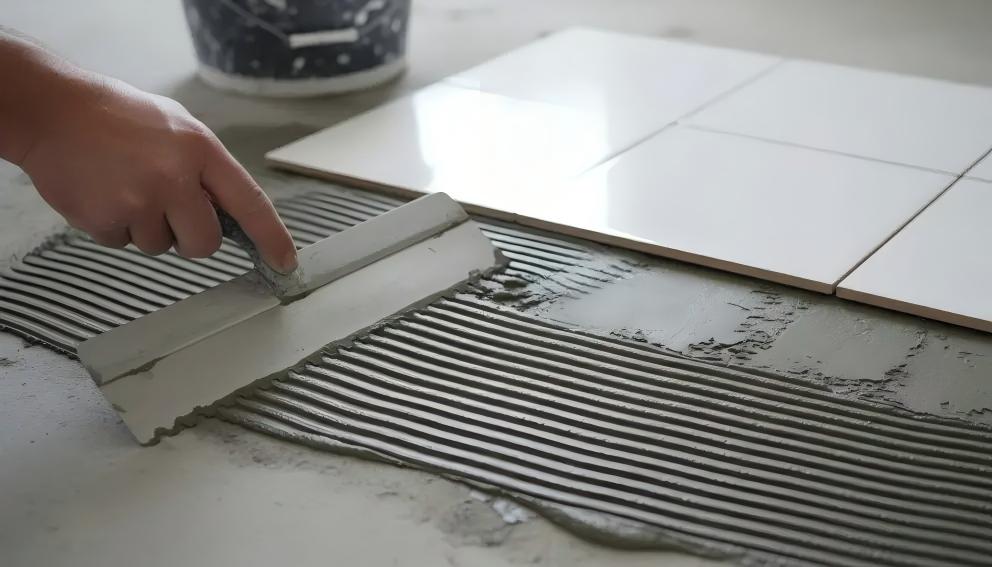
Tile adhesive application: a formulation environment where tensile bonding strength, open time and flexibility set the requirement for the polymer.
Two applications, one additive, different failure modes
Tile adhesive and wall putty are both cement-based dry-mix mortars, and both are listed among the applications of BANGCEL® RDP. From a polymer standpoint, however, they are not interchangeable environments, because what counts as failure in each one is different.
In tile adhesive, the decisive requirement is the tensile bond between tile and substrate. Ceramic tile adhesives are classified under EN 12004 and ISO 13007-1, where C1 requires a tensile bonding strength of at least 0.5 MPa and C2 requires at least 1.0 MPa. Reaching and holding those thresholds after water immersion, heat ageing or freeze-thaw cycling depends on how the polymer behaves inside the cement matrix, how much flexibility it introduces, and how well the fresh mortar holds its workability during tile placement. Formulators therefore care about adhesion development, open time, slip resistance and deformability.
In wall putty, the decisive requirement is the surface itself. A putty layer is applied thin, often on uneven masonry or concrete, and is judged on crack resistance, weatherability, sandability and finish uniformity — plus water resistance where the surface is exposed. A putty that fails does not usually debond as a tile would; it cracks, dusts, chalks or refuses to sand flat.
The two environments share a raw material, then, but weight their performance properties differently. That is the starting point for grade selection.
The technical profile behind a BANGCEL® RDP grade
The base profile is the same across the standard range. BANGCEL® RDP is VAE-based (vinyl acetate ethylene) and supplied in models RDP5010, RDP6188 and RDP4010, with typical parameters of solid content ≥99%, ash 11±2, pH 6–8, minimum film-forming temperature (MFFT) of 0 °C, and glass transition temperature of 10 °C.
Those values matter because they describe how the powder behaves once it meets mixing water and then dries. A solid content of ≥99% indicates a low proportion of non-polymer content in the delivered powder. An MFFT of 0 °C indicates that the polymer can form a continuous film at low ambient temperatures, which is relevant for exterior work and cold-season applications. A glass transition temperature of 10 °C describes a polymer that remains relatively flexible at normal service temperatures, which is the property that supports deformation and crack resistance rather than brittleness.
VAE chemistry is also the mainstream choice in the market overall. Vinyl Acetate Ethylene accounted for 59.2% of RDP revenue share in 2025, according to Grand View Research — a useful context point when evaluating whether a proposed grade is aligned with the broader supply base rather than a niche chemistry.
Ash content, listed at 11±2 for the standard range, is one of the parameters the manufacturer can adjust. It reflects the inorganic fraction associated with the powder, and it is a lever formulators discuss when a mix needs a different balance between polymer effect and mineral contribution.
Five customization levers that decide grade fit
BANGCEL®'s OEM/ODM program customizes product parameters including viscosity, particle size, ash content, degree of substitution (DS/MS) and water retention rate, and additionally offers custom formulation, custom grade and blending & compounding services. Each lever points at a different part of the mixing and setting process.
| Customization lever | What it influences in the mix | Where it is usually discussed first |
|---|---|---|
| Viscosity | Consistency of the freshly mixed paste and how the polymer interacts with the water phase | Tile adhesive (workability, non-sag behaviour) |
| Particle size | Speed of redispersion in mixing water and uniformity of distribution in the dry blend | Both applications; especially relevant in fast-mixing plants |
| Ash content | Balance between polymer effect and inorganic fraction in the delivered powder | Wall putty (finish consistency, cost structure) |
| Degree of substitution (DS/MS) | Polymer behaviour in the water phase and compatibility with the surrounding binder system | Both, when a formulation is being reformulated |
| Water retention rate | How long water stays available for cement hydration and polymer film formation | Tile adhesive and thin putty layers on absorbent substrates |
The company also offers packaging customization (custom logo printing, packaging specification, shipping mark, custom label) and service customization covering OEM, ODM and small-batch customization, plus a customized testing service.
A practical point for buyers: none of these levers can be set from a catalogue alone. Viscosity, particle size or water retention values are only meaningful against a specific dry-mix recipe, a specific cement source and specific site conditions. This is why the manufacturer's technical adjustment service is based on the customer's formulation, raw materials and application conditions rather than on a fixed application list.
A grade-matching framework: tile adhesive versus wall putty
The following framework is a way to structure the conversation with a supplier. It does not replace laboratory validation; it defines which questions to bring to it.
| Decision input | Tile adhesive mix | Wall putty mix |
|---|---|---|
| Primary performance target | Tensile bonding strength, deformability, open time | Crack resistance, weatherability, surface finish |
| Typical failure mode | Debonding, slip, strength loss after ageing | Cracking, dusting, poor sandability, uneven finish |
| Parameter to raise first in discussion | Viscosity and water retention rate | Particle size and ash content |
| Evidence to request | Tensile bond test data against C1 / C2 thresholds | Crack resistance and weatherability results from a comparable project |
| Validation route | Sample support, then plant trial | Sample support, then exterior exposure check |
Standard models RDP5010, RDP6188 and RDP4010 provide the reference starting point. Where a producer's recipe, mineral raw materials or local curing conditions differ from the reference case, the customized grades described above become the route rather than the standard range.
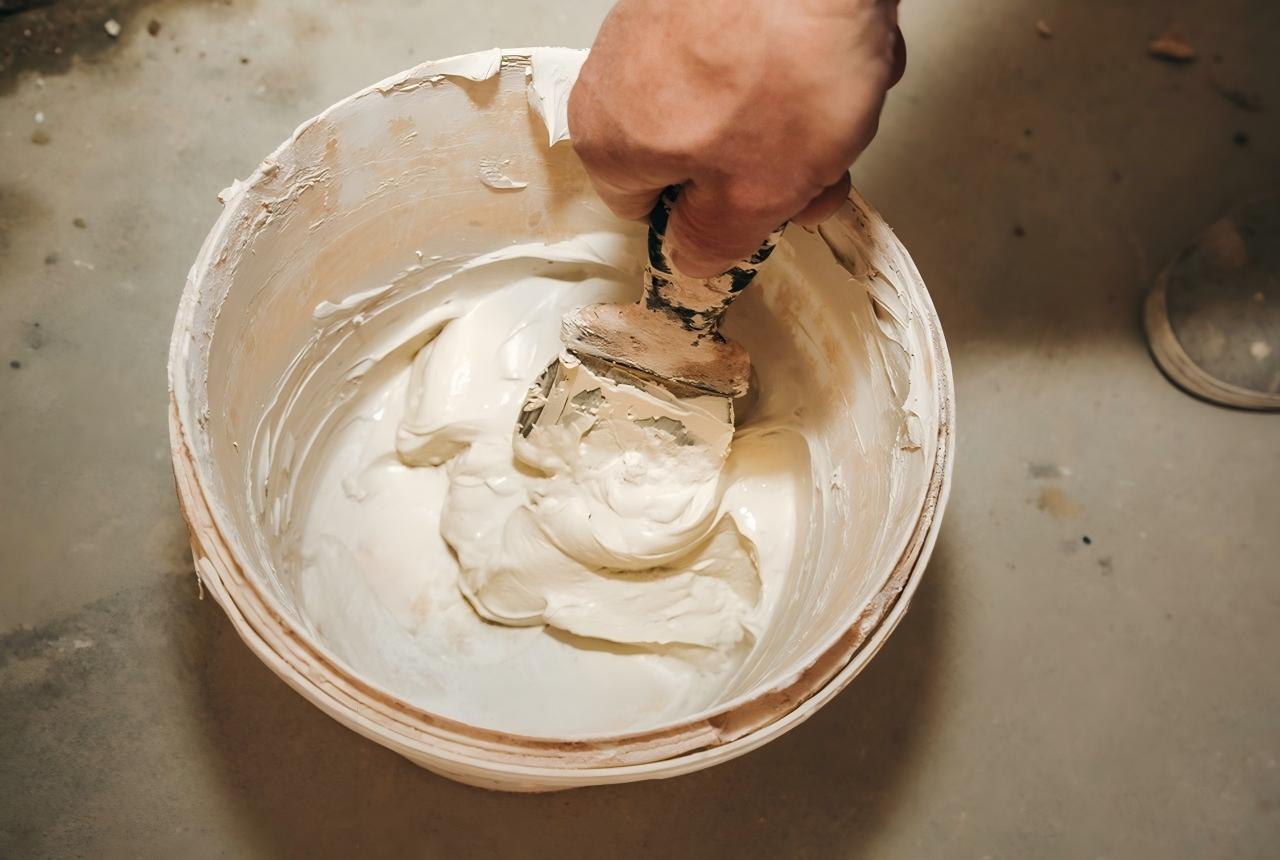
Wall putty finishing: a thin-layer application where crack resistance, sandability and surface uniformity dominate the requirement.
How the matching process runs in practice
BANGCEL® structures grade selection as a pre-sales function rather than a self-service step. Pre-sales services include product recommendation and grade selection, technical consultation, and sample support for testing. Producers are expected to share the formulation, raw materials and application conditions they work with, and the technical adjustment service then works from that input.
On the supply side, the manufacturer reports a stated annual capacity of 30,000 tons of cellulose ethers and 20,000 tons of RDP, standardized production with strict batch control, and 100% testing as a quality-control standard. During ordering, the process is designed to keep order and production status transparent; after delivery, support continues through customized technical support, formula adjustment and quality traceability.
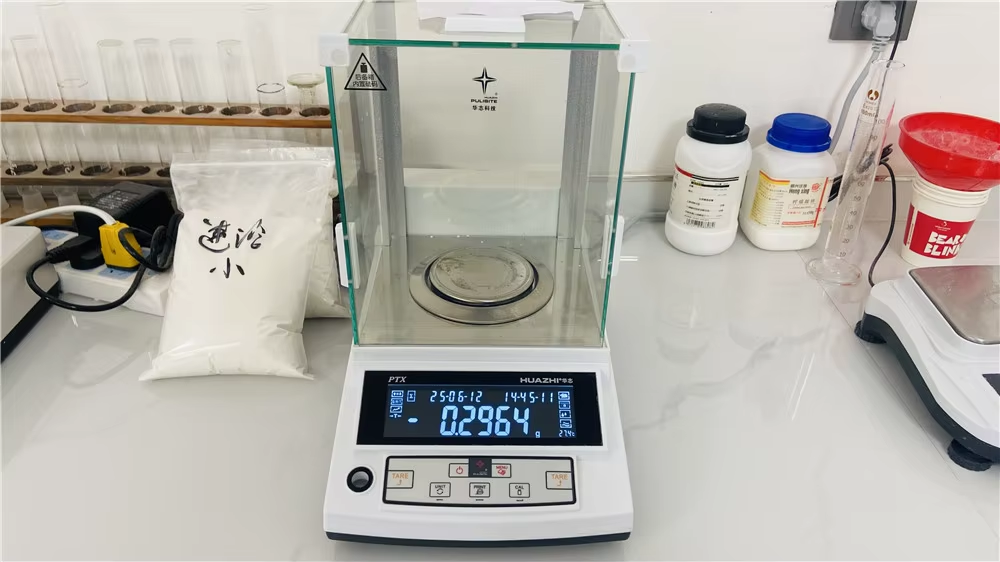
Testing is where a customized grade is confirmed: 100% testing and a customized testing service support the transition from sample to production batch.
Application evidence: two years, 1,200 MT, one production reality
The clearest available reference case for the two applications running together comes from a leading global construction mortar and adhesive manufacturer in India. The customer used BANGCEL® RDP for the formulation of tile adhesive and wall putty, under a two-year supply relationship with 1,200 MT of annual steady supply. Reported results from the application included adhesion, crack resistance and weatherability, and customer feedback recorded zero quality complaints during long-term mass production. The engagement included customized formulation R&D support, a stable global supply chain and CE-certified product supply.
What makes this case useful is not the tonnage figure on its own, but the fact that both product families were produced under the same quality regime for an extended period. It speaks to consistency of the supplied grade, which is the variable that tends to disturb a mortar line when it changes.
Market context: why grade fit has become a procurement question
Third-party market data suggests that RDP demand continues to widen rather than concentrate on a single construction segment. The global RDP market was valued at USD 1.61 billion in 2024 and is projected to reach USD 2.35 billion by 2029, according to MarketsandMarkets. Asia Pacific dominated the market in 2025 with a 38.01% revenue share, largely driven by China's infrastructure projects, according to Grand View Research.
Trade flow data points in the same direction. Between July 2024 and June 2025, the world imported 2,012 shipments of redispersible polymer from China, with the United States, Turkey and Uzbekistan among the top importers, according to Volza. Meanwhile the supply side remains concentrated: the top four RDP manufacturers, including Wacker Chemie AG, Dow and BASF, held over 40% of the global market share in 2024, according to an industry analysis report.
Two implications follow for buyers evaluating RDP in tile adhesive and wall putty formulations. First, a concentrated supply base means switching grades late in a project carries real formulation risk, so grade decisions tend to be made earlier in the specification process. Second, the availability of customization from an original manufacturer becomes a practical alternative to accepting a standard grade that only approximately fits.
A note on market data itself. Published estimates for the global RDP market vary widely between sources, partly because definitions differ — redispersible polymer powder versus redispersible latex powder — and partly because different polymer bases are counted differently. Reported values for comparable periods range from tens of millions to billions of US dollars depending on the source and scope. Buyers should treat any single market figure as indicative and check the definition behind it, including which polymer types and which end-use categories are included.
Comparison with traditional site-mixed solutions — and where RDP has limits
Traditional site practice relies on cement-sand mortar mixed on site, sometimes with a liquid admixture added by hand. Its advantages are simplicity and low material documentation. Its weaknesses are familiar: dosing varies between batches, water demand is judged by eye, and the polymer or admixture contribution is not reproducible from one mixer load to the next. A dry-mix system using RDP moves that variability into a controlled plant, where redispersion behaviour, dosing and batch consistency can be standardized and tested.
That comparison, however, cuts both ways, and the boundaries of the factory dry-mix approach should be stated clearly:
- RDP does not correct a weak formulation. Substrate preparation, cement quality and filler grading remain the base of the system. Adding polymer cannot compensate for a dusty substrate or an unsuitable sand curve.
- Customization requires input data. The technical adjustment service works from the customer's formulation, raw materials and application conditions. Without that information, a customized grade cannot be defined.
- Commercial thresholds apply to customization. Customized supply is offered from a minimum order quantity of 3 tons, with a lead time of 7–14 days. Small or urgent trial volumes may need to be planned around these figures rather than assumed to be immediate.
- Stated export markets exclude the EU. The manufacturer's declared export markets are worldwide, excluding the EU, and the environmental management certificate scope is also stated as global excluding the EU. Buyers whose projects fall under EU market requirements should verify compliance status directly rather than assume coverage.
- RDP is a cost-bearing component. It is a functional additive, and the cost-performance balance differs between a C2-class adhesive and a standard interior putty. Grade selection should therefore be tied to the performance class the mix is specified to reach, not to a uniform dosage across all products.
Stated plainly, RDP improves a well-designed dry-mix system; it does not replace good system design.
Certification and quality framework
Compliance documentation is part of how a grade is evaluated, and for BANGCEL® the following certificates apply to the relevant product scope:
| Certificate | Certificate number | Standard | Validity |
|---|---|---|---|
| Quality Management System (scope: cellulose ether, RDP powder) | 86525Q1069R0M | GB/T19001-2016 / ISO9001:2015 | 2025-09-02 to 2028-09-01 |
| Occupational Health and Safety Management System | 86525S1067R0M | GB/T45001-2020 / ISO45001:2018 | 2025-09-02 to 2028-09-01 |
| Environmental Management System | 86525E1068R0M | GB/T24001-2016 / ISO14001:2015 | 2025-09-02 to 2028-09-01 |
All three certificates were issued by HQC. The company also states that its products have passed CE certification and SGS testing.
Future outlook
Three developments appear likely to shape how RDP grades are selected for tile adhesive and wall putty over the next few years.
First, as dry-mix production continues to expand in Asia Pacific, where the region held a 38.01% revenue share in 2025, more producers will move from buying a standard grade to specifying a customized one. Formulation-level support, not catalogue supply, is where differentiation is easiest to verify.
Second, VAE-based chemistry, at 59.2% of RDP revenue share in 2025, is likely to remain the reference system for both applications, which means grade fit will increasingly be discussed in terms of parameter adjustment — viscosity, particle size, ash content, substitution degree, water retention rate — rather than polymer type.
Third, buyers are becoming more attentive to evidence. With market size estimates diverging between published sources and supply concentrated among a small number of large producers, the practical response is documentation: batch records, certificate scope, test data at the performance class the mix targets, and a supplier able to explain why a specific grade was chosen for a specific recipe.
FAQ
What is the functional difference between RDP in tile adhesive and RDP in wall putty?
Both use the same additive family, a redispersible polymer powder, but they are matched to different performance targets. Tile adhesives are classified under EN 12004 and ISO 13007-1, where C1 requires a tensile bonding strength of at least 0.5 MPa and C2 at least 1.0 MPa. Wall putty is assessed primarily on crack resistance, weatherability and surface finish. Because the targets differ, parameters such as viscosity, particle size, ash content, degree of substitution and water retention rate are set differently for each application.
Which BANGCEL® RDP models are available?
The standard range includes RDP5010, RDP6188 and RDP4010. All are VAE-based, with typical parameters of solid content ≥99%, ash 11±2, pH 6–8, minimum film-forming temperature of 0 °C and glass transition temperature of 10 °C. Customized grades are produced within the OEM/ODM program.
Can an RDP grade be adjusted to a producer's own formulation?
Yes. The OEM/ODM program covers product parameter customization (viscosity, particle size, ash content, degree of substitution DS/MS, and water retention rate), formula and grade customization including custom formulation and blending & compounding, plus packaging customization. Adjustments are made on the basis of the customer's formulation, raw materials and application conditions, and sample support is provided for testing.
What are the minimum order quantity and lead time for customized RDP?
For customization, the stated minimum order quantity is 3 tons and the stated lead time is 7–14 days, with a monthly capacity of 3,000 tons and small-batch customization available. These figures are commercial thresholds rather than technical limits on grade adjustment.
How is RDP quality controlled and certified before shipment?
The manufacturer applies 100% testing and quality traceability, supported by a customized testing service. Certification includes a Quality Management System certificate (number 86525Q1069R0M, issued by HQC under GB/T19001-2016 / ISO9001:2015, valid from 2025-09-02 to 2028-09-01, covering cellulose ether and RDP powder), an Occupational Health and Safety Management System certificate (86525S1067R0M) and an Environmental Management System certificate (86525E1068R0M). CE certification and SGS testing are also stated.
Which markets does the manufacturer currently serve, and are there exclusions?
Export sales account for approximately 70% of the business, and stated export markets are worldwide excluding the EU; the environmental management certificate scope is likewise stated as global excluding the EU. Declared main markets include Canada, the United States, Mexico, Russia, Brazil and a range of markets across Asia, Africa and the Middle East, and there is a documented two-year, 1,200 MT annual supply case in India covering both tile adhesive and wall putty formulations.
Reference document: BANGCEL® product brochure (PDF)