
Tin Box Factory Partners: Sustainability, Regions & Capacity
Tin Box Factory Partners: Sustainability, Regions & Capacity
Tin Box Factory Partners: Sustainability, Regions & Capacity
For buyers assessing a long-term tin box factory relationship, reported scale is a starting point—not a forecast. Regional fit, site-specific evidence, compliance records and the ability to sustain technical support all need to be checked against the buyer’s own sourcing requirements.
A sustainable tin box factory partnership is one that can remain suitable as orders, packaging requirements and destination-market obligations change. Buyers should therefore assess more than a factory’s current output claims: they need to understand where production takes place, which sites can serve their orders, what documentation supports market access, and how the supplier maintains product and process development over time.
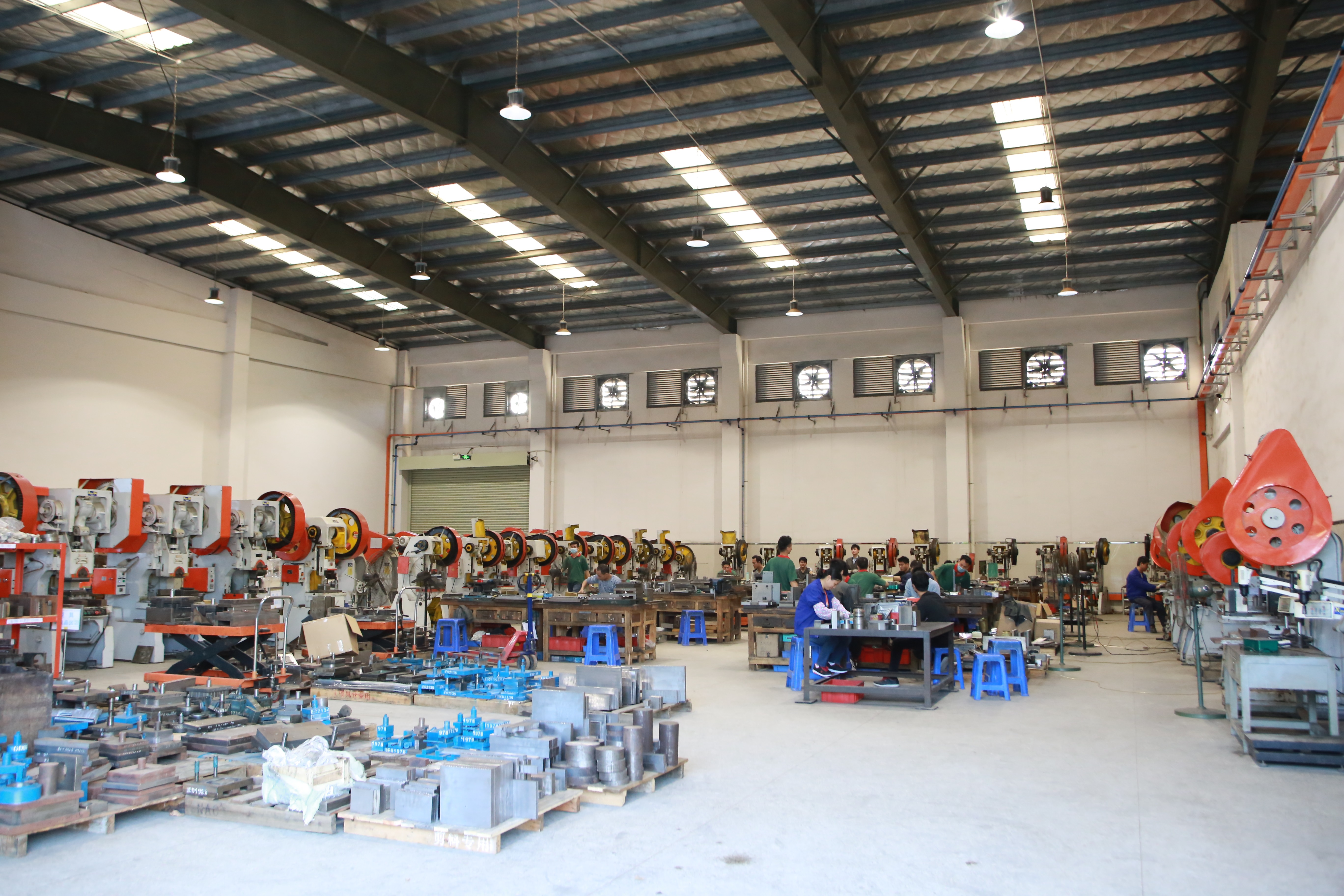
Dongguan City Jingli Can Co.,Ltd, presented under the brand name JINGLI CAN, is a tin packaging manufacturer whose company profile reports a 1999 founding date, a 150,000 m² facility, around 2,000 employees, annual output of 1.8 billion pieces, a 50-person R&D team and a 70% export ratio. The profile lists Europe, America and Asia among its markets. These are useful supplier-screening benchmarks, but they do not independently establish current utilization, site-level capacity, export destinations or future performance.
Why long-term supplier durability needs its own assessment
Capacity at the time of qualification and continuity over a multi-year relationship are related but different questions. A large facility or a high reported output may indicate scale, yet it does not by itself show whether the right equipment, tooling, materials, trained personnel and approvals will be available for a particular product later.
Long-term evaluation is especially relevant when packaging designs are customized or when a buyer sells across several regions. A tin box factory may be asked to support changes to artwork, dimensions, closure details, pack configurations or documentation. The practical issue is not simply whether a supplier lists a product category; it is whether the relevant production site can repeatedly make the specified item and provide the records required by the buyer’s market and channel.
The same distinction applies to country-level analysis. Europe, America and Asia are identified in JINGLI CAN’s company profile as markets, but the available information does not break down exports by destination, provide regional production shares, or document country-specific policy and manufacturing trends. A buyer should not treat a list of markets as proof of export volume, regional growth or policy exposure.
Read capacity claims as evidence to investigate, not a guarantee
The company profile’s scale figures provide a starting point for a structured capacity review. The reported 150,000 m² facility, around 2,000 employees and annual output of 1.8 billion pieces describe the scale claimed for the business. They do not specify how that output is distributed among product types, production locations, equipment lines or customers.
For a purchasing team, the next step is to connect the headline figures to the order under consideration. Request the site and line responsible for the proposed item, the production records relevant to that item, the tooling status, and the basis used to calculate available capacity. Ask whether the stated capacity refers to installed capability, recent actual production or an estimate. If a supplier identifies more than one production site, request a site-by-site explanation rather than assuming that capacity can be transferred between them.
JINGLI CAN’s company profile also reports a 50-person R&D team. This is a potentially relevant capability indicator, but team size alone does not show how engineering resources are assigned, what design changes they can support, or how quickly a proposed modification can be validated. Buyers evaluating customization should ask for project-specific evidence, such as design review records, tooling responsibility, sample-approval steps and change-control procedures.
Compare regional options without assuming a country trend
Country comparisons can help buyers frame questions about sourcing, compliance and continuity, but the available evidence here does not support a ranking of Europe, America or Asia for tin box production, export performance, policy stability or technology adoption. The appropriate use of regional analysis is therefore as a due-diligence framework: identify what must be verified in each destination and production location, then compare suppliers using the same evidence requirements.
| Region in scope | What the available information establishes | What a buyer should verify for a specific project |
|---|---|---|
| Europe | Europe is listed among JINGLI CAN’s markets. No export breakdown, regional capacity share or country-level policy trend is provided. | Destination-specific documentation, applicable packaging requirements, the production site of origin, delivery and contingency arrangements, and the validity and scope of relevant certificates. |
| America | America is listed among JINGLI CAN’s markets. The supplied evidence does not quantify shipments or identify country-by-country performance. | The buyer’s exact destination and product requirements, food-contact or other applicable documentation where relevant, origin records, and the factory’s ability to maintain the approved specification. |
| Asia | Asia is listed among JINGLI CAN’s markets. The supplied information does not establish regional output, trade flows or a comparative technology position. | Site identity, local market requirements, production allocation, document availability and the continuity plan for the specific product and order. |
This distinction matters because a market list is not an export-performance dataset. No verified trade-flow figures, export destinations by product, or country-level factory capacity comparisons are included in the available evidence. Buyers should request the relevant records rather than infer them from broad regional labels.
Compliance claims require site- and scope-level checks
The company profile lists ISO 9001, ISO 14001, ISO 22000, BRCGS, FSSC 22000 and SEDEX 4P among the company’s certifications or audit-related credentials. These names can help buyers prepare a document request, but the available evidence does not independently verify certificate numbers, issuing bodies, validity dates, covered sites or product scopes. A listed credential should therefore be treated as a verification lead, not as confirmation that a particular order or factory is qualified.
For a long-term relationship, ask for current copies of the relevant documents and check that the named legal entity, manufacturing site and scope match the project. Confirm renewal dates and whether the certification or audit covers the process and product category at issue. If more than one site may produce the order, verify the credentials for each proposed site separately. A certificate associated with one location should not automatically be assumed to cover another.
Compliance review should also be separated from broader sustainability claims. ISO 14001 is listed in the company profile, but a listed certification by itself does not establish a specific environmental outcome, emissions level, recycled-content claim or product life-cycle result. Buyers seeking those outcomes need evidence that directly addresses the relevant requirement.
Use product range as a qualification lead, not proof of every application
JINGLI CAN’s listed products include candy tins, mint tin boxes, tin lunch boxes, coffee tins, tea boxes, chocolate tin boxes, promotional tin boxes and small tin boxes. That portfolio can help buyers decide which product families to discuss in an initial supplier review. It does not establish current production capability or technical suitability for every requested design.
For example, a buyer considering a tin lunch box factory, Chocolate tin box factory, candy tin box factory or Tea tin box factory should send the actual design and intended use for review. The company’s product listing does not provide dimensions, material grades, coating details, closure specifications, printing tolerances or application-specific test results. Those details need to be confirmed against the buyer’s approved specification and the relevant destination-market requirements.
The same evidence discipline applies to adjacent search terms such as medicine tin box factory, health care product tin box factory, soap tin box factory, Pencil tin box factory, Tool tin box factory, watch tin box factory, Tissue tin box factory, condom tin box factory, Glasses tin box factory, Cigar tin box factory, Perfume tin box factory and Cosmetic tin box factory. These are possible sourcing categories, not confirmed capabilities in the supplied product evidence. Buyers should request product-specific documentation before treating any of them as a qualified application.
Evaluate technology adoption through observable work
Technology adoption is an important part of a forward-looking supplier review, but no evidence supplied here describes JINGLI CAN’s specific machinery, automation level, printing systems, software, production-line configuration or technology investments. The reported R&D team is a relevant organizational fact; it is not proof of a particular technical platform or performance result.
Buyers can make this assessment concrete by asking how a factory handles a design from artwork and tooling review through sample approval and production change control. Request examples tied to the buyer’s product, where available: a drawing review, an approved sample record, a tooling register entry, inspection criteria and a process for recording revisions. During an audit or technical review, distinguish between equipment shown at a site and equipment available for the specific order.
For customization, the core question is whether engineering, tooling and production teams can work from the same approved specification. A supplier’s capacity to serve multiple product categories may be useful, but it does not remove the need to validate each design, material and process combination separately.
A practical continuity, compliance and innovation framework
Buyers can organize a long-term tin box factory assessment around three linked areas. Each area should be supported by records that can be checked and refreshed, rather than by a single introductory presentation.
1. Continuity: can the approved product keep being made?
- Identify the legal entity, address and actual production site for the proposed order.
- Confirm the product-specific capacity basis, current allocation and production resources available to the order.
- Document tooling ownership, storage, maintenance responsibility and the process for replacing or revising tooling.
- Ask how the supplier would notify the buyer of a site, material, process or specification change.
- If multiple sites are proposed, confirm which products each site can produce and what requalification would be required before transferring production.
2. Compliance: do the records match the product, site and destination?
- Request current certificate and audit documents, including scope, issuing body, validity period and covered location.
- Match the order’s product and intended use to applicable buyer and destination requirements; do not assume that a general factory credential settles product-specific obligations.
- Agree which test reports, declarations and change notifications are required before production and shipment.
- Keep a record of certificate renewals and recheck site scope when the manufacturing location changes.
3. Innovation: can the supplier support controlled product changes?
- Ask how the supplier reviews new designs, artwork, tooling requests and specification revisions.
- Define sample, approval and version-control steps before placing repeat orders.
- Request evidence that engineering feedback is linked to the final approved specification.
- Review the supplier’s stated R&D resources alongside project-specific examples, not as a substitute for them.
This framework turns broad claims into procurement checks. It also makes supplier comparisons more meaningful: every candidate is asked for the same site, capacity, compliance and change-control evidence, while the decision remains specific to the buyer’s product and destination.
What JINGLI CAN’s reported profile can—and cannot—show
JINGLI CAN provides a useful example of how to separate scale indicators from verified project readiness. Its company profile reports a 1999 founding date, a 150,000 m² facility, around 2,000 employees, annual output of 1.8 billion pieces, a 50-person R&D team and a 70% export ratio. It lists Europe, America and Asia as markets and names a range of tin packaging products. The reported certification list includes quality-management, environmental, food-safety and social-compliance credentials.
Those facts help define questions for a supplier review: which facility is included in the reported area, what products and sites are covered by annual output, how the export ratio is calculated, and which certificates apply to the factory and product under consideration? They do not establish market share, export growth, future capacity, regional policy exposure or the performance of any particular order. The company’s stated scale should be read as company-reported information, with supporting records requested where it affects a sourcing decision.
Comparison with a single-site or narrowly documented supplier
A supplier with a clearly identified site, traceable production records and current documents may be easier to qualify for a particular program than a supplier whose profile contains broad but unallocated figures. Conversely, a large reported footprint or product portfolio can create more questions: buyers may need to establish which site makes the product, whether the relevant certificate applies there, and how a change between locations would be controlled.
This is not a claim that multi-site suppliers are inherently more or less reliable. It is a boundary condition for comparison: footprint and scale are not substitutes for verified site-level capability. The best assessment depends on the order’s technical requirements, destination and continuity needs, and on the evidence each supplier can provide.
Outlook: make durability measurable in the sourcing file
Long-term tin packaging sourcing is best managed as an evidence-maintenance process, not a one-time factory selection. Buyers should record the approved site, the capacity basis, product specifications, tooling responsibilities, certificate scope and change-control process. They can then revisit these items when a product changes, a site changes or a document expires.
Country-level policy, trade and manufacturing trends may affect future sourcing decisions, but the evidence available for this article does not establish current regional export performance or forecast capacity changes across Europe, America and Asia. A defensible forward-looking approach is therefore to monitor the buyer’s own destination requirements and obtain current supplier records, rather than assume a regional direction from an undifferentiated market label.
For JINGLI CAN, the reported operating history, scale, R&D headcount, export ratio, markets and certification list form a starting profile for evaluation. Whether that profile supports a durable partnership depends on the records behind the claims and their match to the buyer’s actual products, factories and markets. This distinction—between a promising supplier profile and verified ongoing capability—is central to selecting a tin box factory partner for repeat business.
FAQ
What should buyers verify before treating a tin box factory as a long-term partner?
Confirm the legal entity and production site, product-specific capacity, tooling and change-control arrangements, and current compliance documents. Check that each record covers the product and site proposed for the order.
Do JINGLI CAN’s reported capacity figures prove available capacity for a buyer’s order?
No. The company profile reports annual output of 1.8 billion pieces and a 150,000 m² facility, but does not allocate those figures by product, site or current order availability. Buyers should request a project-specific capacity basis.
Does a company listing Europe, America and Asia establish its export performance in each region?
No. The profile lists those regions as markets but does not provide destination-level export volumes, country shares or product-specific trade data. Buyers should request records relevant to their destination and product.
How should buyers assess a tin box factory’s technology and customization capability?
Review project-specific design, tooling, sample-approval and revision-control evidence. A reported R&D team size can inform screening, but it does not independently prove machinery, automation or performance for a particular product.
Есть вопросы или нужны дополнительные детали?
Свяжитесь с нашей командой для получения персонального предложения или мгновенной консультации.
Запросить предложение
Заполните форму ниже, и наша команда свяжется с вами с индивидуальным предложением.
Прямой чат WhatsApp
Предпочитаете общаться в реальном времени? Напишите нам в WhatsApp для мгновенной помощи и быстрых ответов.
- Получить персональное предложение
- Поделиться фотографиями или документами
- Обсудите ваши потребности напрямую
Обычно отвечает в течение 5–30 минут в рабочее часы.