
Tin Box Factory Trends 2026: Three-Region Buyer Framework
Tin Box Factory Trends 2026: Three-Region Buyer Framework
The global metal packaging market was valued at USD 148.1 billion in 2024 and is projected to reach USD 158.7 billion in 2026 and USD 184.2 billion by 2030, according to Grand View Research; steel-based metal packaging accounted for 58.1% of material revenue in 2024 (EV-0001, EV-0004, SRC-0002). Those figures describe the whole metal packaging category rather than decorative and consumer tin boxes alone, but they fix one point for buyers: tin box manufacturing sits inside a material system large enough to support genuine competition between European, American and Asian supply bases.
The practical question for a 2026 sourcing decision is therefore not which region can make a tin box. It is which region, and which factory inside it, can produce the evidence a buyer needs — food-contact documentation, channel data, capacity proof and multi-market shipping record — and how far that evidence actually goes. This article compares the three regions on five dimensions that a buyer can check, and uses Dongguan City Jingli Can Co., Ltd. (JINGLI CAN), a tin packaging manufacturer established in 1999 and based in Dongguan, China, as a reference data point to test the framework against.
Why the region label is the wrong unit of comparison
A factory's country does not by itself establish whether its food-contact file is complete, whether it can absorb a million-unit order, or whether it can supply case-pack and pallet data for a retail listing. Region is a useful first filter because it shapes the buyer's obligations, not because it predicts factory quality.
The available supplier evidence shows why this matters. Public descriptions of tin box manufacturers tend to rest on self-reported tenure, broad product lists and general capability language rather than classified, auditable data. An official industry classification framework does exist — the U.S. Census Bureau maintains the North American Industry Classification System and publishes reference files — but the specific six-digit code covering metal containers and tin boxes was not confirmed in this evidence run and should not be cited as settled (EV-0012). That gap is itself a sourcing fact: because seller-level public data in this category is thin, the comparison has to be built by the buyer, from documents requested directly.
Europe: documentation the buyer must be able to audit
For European-facing programmes, the decisive regional variable is the depth of the compliance file a factory can produce, not the geography of the workshop. European buyers typically specify test standards alongside the box specification, and the supplier's job is to show that its material, coating and printing choices were actually tested against them.
A concrete example of that specification language appears in JINGLI CAN's published supplier profile, which states that products are produced to FDA, LFGB, EN71-1, 2, 3 and REACH standards and that raw materials carry MSDS certification (EV-0003, SRC-0001). Two things are worth noticing. First, the list mixes German (LFGB) and European (EN71) references with United States requirements, which reflects how export-oriented factories accumulate market-specific test files over years rather than working to a single global standard. Second, the statement establishes the factory's stated production basis, not the validity of any individual report.
What a European buyer should verify
- Test reports for the specific tin plate, internal lacquer and printed ink used on the ordered item, not for the factory's general material range.
- Report issue dates and the laboratory that issued them, matched to the product family being purchased.
- A declaration of conformity signed for the actual shipment destination, since member-state expectations are not uniform.
Certification claims follow the same rule. JINGLI CAN reports ISO 9001, ISO 14001, ISO 22000, BRCGS, FSSC 22000 and SEDEX 4P coverage across its factories (EV-0010, SRC-0007). Each of these covers a defined site and scope, and none of that scope was visible in the source material. A certificate number, issuing body, validity date and covered site list turn a claim into a procurement asset; without them the buyer is holding a statement, not a qualification.
America: channel data readiness and supply continuity
For United States-bound programmes, the compliance question is often narrower than in Europe but sits alongside a data question that many packaging buyers underestimate. Retail and online channels impose product-data obligations downstream of the tin box itself, and those obligations are supplied as part of the packaging specification.
Two verifiable requirements define that layer. Google requires a GTIN for every product submitted through Manufacturer Center, as a condition of listing rather than a legal standard (EV-0014). GS1 US publishes guidance defining packaging levels — item, case and pallet — and explains how higher-level packaging configurations are entered in its data hub (EV-0013). Neither requirement is tin-box specific, and both are commonly written into the buyer's specification sheet because the box is the item whose case-pack and pallet pattern must be documented.
What this changes in an RFQ
A factory that cannot state standard case-pack configurations, pallet patterns and carton dimensions is not channel-ready, regardless of its quoted unit price. The useful RFQ question is not "can you provide GTIN data" but "what is your standard case pack and pallet build for this item, and who owns the data accuracy". The second half matters more, because the data has to survive sku changes across a multi-year programme.
Supply continuity is the other American-facing variable. Where a supplier operates more than one country, buyers can at least ask how production would be reallocated. JINGLI CAN's corporate profile describes a network that includes a facility in Vinh Phuc Province, Vietnam, reported at 17,500 square metres with a stated daily capacity of 600,000 pieces and a standing stock of 30,000 tons of tinplate. Those are company-reported figures with no independent verification in the source material, and they should be treated as the start of a site-allocation conversation rather than proof of redundant capacity.
Asia: capacity evidence lives at factory level, not regional level
Asian sourcing conversations tend to start with scale, and scale is exactly where the evidence is weakest — because capacity numbers are usually self-declared. The correct use of a factory's stated capacity is as a screening threshold, not as a delivery promise.
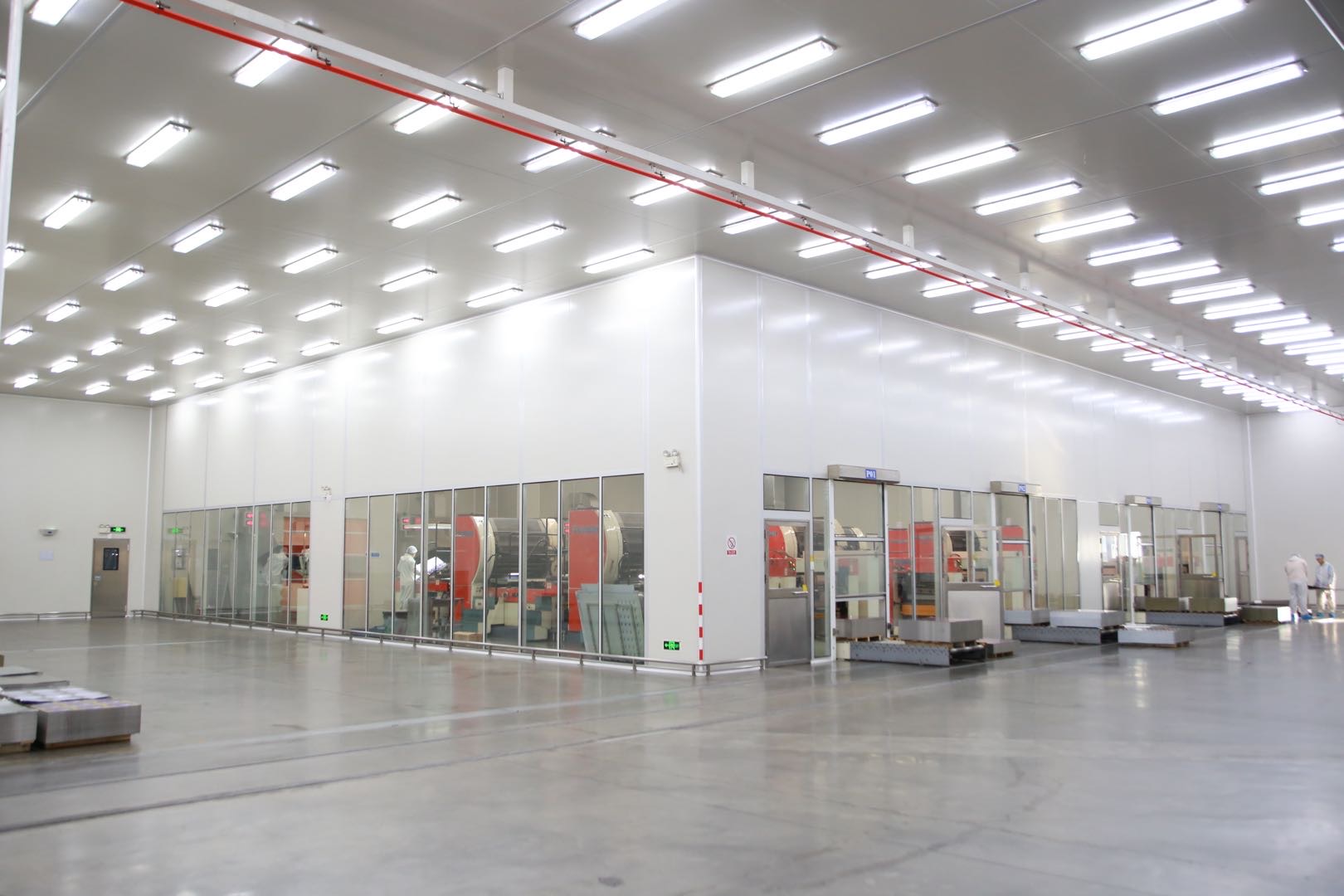
JINGLI CAN's approved corporate data provides a usable reference point: a 150,000 m² facility, approximately 2,000 employees, an annual output of 1,800,000,000 pieces, a 50-person R&D team, a 70% export ratio, and principal markets in Europe, America and Asia. Set against a market projected to grow from USD 158.7 billion in 2026 to USD 184.2 billion by 2030 for metal packaging overall (EV-0001), a stated output of that magnitude places the factory in the high-volume bracket rather than the small-batch bracket.
What those numbers establish is threshold, not performance. Annual output does not disclose line utilisation, tooling queue position, changeover time or on-time delivery. A 50-person R&D team indicates in-house development capability, but the buyer still needs to see the tooling shop, the average number of new moulds opened per year, and the sample approval path. Likewise, a 70% export ratio indicates routine handling of multi-market documentation; it does not indicate that a specific European or American report has been issued for the buyer's item.
A three-region comparison buyers can actually apply
The table below converts regional differences into verification tasks. It deliberately avoids market-share or cost claims for any region, because no comparable, source-verified regional cost data was available for this analysis.
| Region | Core buyer question | What the available evidence lets you check | What still needs direct verification |
|---|---|---|---|
| Europe | Does the compliance file cover this product, this material and this destination? | Stated production basis against FDA, LFGB, EN71-1/2/3 and REACH, with MSDS-certified raw materials (EV-0003); reported ISO 9001, ISO 14001, ISO 22000, BRCGS, FSSC 22000 and SEDEX 4P coverage (EV-0010) | Certificate numbers, issuing bodies, validity dates, covered sites, and test reports tied to the ordered item |
| America | Is the factory channel-ready and is there a second supply path? | GTIN requirement for products submitted through Manufacturer Center (EV-0014); GS1 US item/case/pallet packaging levels (EV-0013); reported multi-country manufacturing footprint | Actual case-pack and pallet build, data ownership, site allocation policy and backup capacity |
| Asia | Can the factory carry the volume, and can it prove it rather than declare it? | Stated 150,000 m² site, ~2,000 employees, 1.8 billion pieces annual output, 50-person R&D team, 70% export ratio (company-reported) | Equipment list, line utilisation, tooling capacity, standard and expedited lead times, sample turnaround |
Reading a reference factory against the framework
JINGLI CAN is useful here precisely because its published data is specific enough to test. Each fact supports a question and sets a boundary on what the answer can prove.
History and footprint
A founding year of 1999 places the business across several tinplate price cycles, which is relevant to how a factory plans material purchasing. It does not demonstrate current process control, and independent registry confirmation was not obtained in the source material (EV-0005). Likewise, the reported multi-site structure — production in China plus the Vietnam facility noted above — supports questions about country-of-origin documentation and backup production. It does not establish that any given order would be split across sites.
Material and tooling position
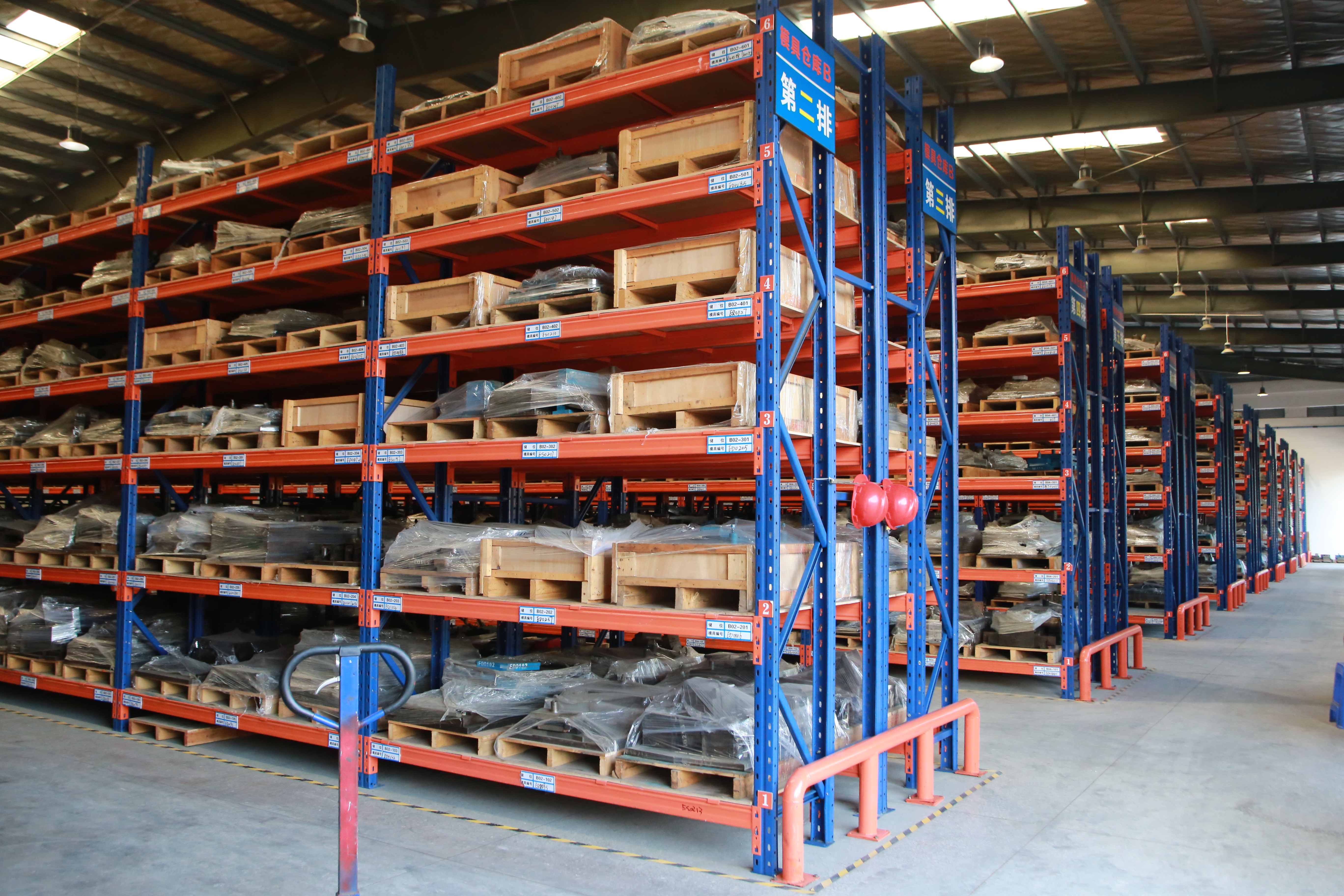
A reported standing stock of 30,000 tons of tinplate is meaningful in a category where steel dominates material revenue at 58.1% (EV-0004), because raw-material availability is a normal source of schedule slippage. Buyers should convert that claim into specifics: which plate thicknesses and coating weights are actually held, and which are ordered per project. The 50-person R&D figure and the presence of an in-house tooling shop support custom-shape and embossing work; ask for the cadence of new mould development rather than taking team size as a proxy for it.
Portfolio breadth
The company's partner page lists candy tins, mint tins, tin lunch boxes, tin buckets, coffee tins, tea boxes, chocolate tins, promotional tins and small tins (EV-0009). Breadth matters for buyers consolidating several skus — for example a confectionery range plus a promotional tin plus a tea caddy — because it reduces the number of supplier qualifications needed. It does not confirm that every listed category is in current production, so a buyer running a multi-category programme should ask for recent production evidence per family.
A six-step verification sequence before commitment
- Define the destination file first. Write the required test standards, declarations and labelling for each destination market into the specification, so every candidate is answering the same question.
- Request certificates as documents, not adjectives. Obtain the certificate number, issuing body, validity date, covered site and covered product scope for each scheme the factory claims.
- Match test reports to the actual item. A report for a plain tin plate does not automatically cover a lacquered interior or a specific printed ink system.
- Test capacity with your own order shape. Ask what lead time applies to your quantity, decoration method and mould status, rather than to the factory's annual total.
- Request the packaging-level data. Case pack, pallet pattern and carton dimensions belong in the quotation, alongside who is responsible for GTIN and channel data accuracy.
- Name the backup path. For multi-year programmes, ask in writing how production would be reallocated if the primary site were constrained, and what country-of-origin documents would change.
Where this framework stops being useful
The comparison has clear limits. For small promotional runs with short lifecycles, the cost of full documentation review can outweigh the risk it manages, and the practical priority shifts to sample speed and mould availability. For non-food applications — tool tins, watch tins, stationery or tissue boxes — food-contact evidence carries less weight, though retail channel data requirements do not disappear. And where a buyer's own brand standards exceed the factory's existing certification scope, no regional comparison resolves the gap; the specification has to be renegotiated.
One further limit concerns the evidence itself. The capacity, workforce and certification figures used here are company-reported, and certificate scope, validity and site coverage were not independently confirmed in the available material. The framework is written so that this does not matter to its logic: it treats every such figure as a question to be put to the supplier, which is exactly how a buyer should use it.
Outlook to 2030
On the source-reported trajectory, metal packaging grows from USD 158.7 billion in 2026 to USD 184.2 billion by 2030 (EV-0001). That is a category projection with a stated base year and forecast period, not a tin box forecast, and it should be used to frame scale rather than to justify a specific purchasing decision. The more durable signal is material: steel held 58.1% of material revenue in 2024 (EV-0004), which keeps tinplate at the centre of decorative and protective packaging specifications.
If that holds, regional competition is likely to sharpen on evidence rather than on price alone — which certification scope a site can document, which channel data a factory can supply, and which supply path a buyer can fall back on. Buyers who build their shortlist around those three questions will be comparing factories on terms that survive the next material cycle.
FAQ
How does the region of manufacture affect the total cost of a tin box order?
Region affects cost through material access, documentation workload and logistics rather than through a single regional price level, and no comparable source-verified regional cost data was available for this analysis. The verifiable cost drivers a buyer can control are specification choices — plate thickness, coating, decoration method and packaging configuration — plus the volume of documentation a destination market requires. Because raw material dominates the structure of a metal box, a factory's standing tinplate stock position is a more useful commercial question than its country label.
Does a larger factory in Asia automatically outperform a smaller European or American supplier?
No. Annual output establishes a volume threshold, not delivery reliability or compliance depth. A factory reporting 1.8 billion pieces per year is positioned for high-volume programmes, but utilisation, tooling queue position, changeover time and on-time performance are separate facts that annual capacity figures do not disclose. Conversely, a smaller supplier may hold a narrower but deeper certification scope for one product family. The comparison should be made on the evidence each supplier can produce for your specific item.
Which compliance documents should a buyer request from a tin box factory?
Request four sets: certificates with number, issuing body, validity date and covered site; test reports matched to the actual plate, interior lacquer and printed ink; a declaration of conformity for the destination market; and raw-material documentation such as safety data sheets. Where a factory states that it produces to standards such as FDA, LFGB, EN71-1, 2, 3 and REACH, the standards list defines what to ask for but does not substitute for the reports themselves. Verification should confirm scope and currency, not just the existence of a document.
What does a high export ratio tell a buyer about market fit?
An export ratio indicates how much of a factory's output is handled through international documentation and shipping, which usually means routine exposure to multi-market requirements. A reported 70% export share across Europe, America and Asia suggests that pattern. It does not confirm that the reports and declarations required for your specific destination and product have been issued, and it does not indicate the mix of customers, order sizes or product families behind that ratio. Treat it as a signal to request the destination-specific file.
How should a buyer compare a China-based factory with one that also operates in Vietnam?
Compare the two on documented reallocation policy rather than on the existence of the second site. Ask which product families each site is qualified to run, what country-of-origin documentation each produces, how an order would be split if the primary site were constrained, and whether tooling exists at both locations. A second facility reported at 17,500 square metres with a stated daily capacity of 600,000 pieces is a reasonable basis for that conversation, but site qualification, not headline capacity, determines whether it functions as a genuine backup.
For buyers comparing tin box suppliers across regions, the reliable path is to convert every regional claim into a document request and to score the answers. Dongguan City Jingli Can Co., Ltd. publishes enough operational detail to serve as one testable reference point within that exercise.
Есть вопросы или нужны дополнительные детали?
Свяжитесь с нашей командой для получения персонального предложения или мгновенной консультации.
Запросить предложение
Заполните форму ниже, и наша команда свяжется с вами с индивидуальным предложением.
Прямой чат WhatsApp
Предпочитаете общаться в реальном времени? Напишите нам в WhatsApp для мгновенной помощи и быстрых ответов.
- Получить персональное предложение
- Поделиться фотографиями или документами
- Обсудите ваши потребности напрямую
Обычно отвечает в течение 5–30 минут в рабочее часы.