
Tin Box Sourcing for Tea & Coffee: Choosing a Factory with Food-Grade Proof
Tin Box Sourcing for Tea & Coffee: Choosing a Factory with Food-Grade Proof
A tin box that holds tea or coffee is a food-contact article before it is a decorative container. For buyers, the deciding question is not whether a factory can make metal packaging, but whether it can evidence the material, coating and hygiene controls that keep the product safe and sensorially intact — and whether that evidence covers the specific facility that will run the order.
This industry reference explains what food-grade proof consists of in metal packaging, how it is verified in the tea and coffee supply chain, how factory capability translates into flavour protection and moisture resistance, and where the boundaries of that proof lie. It is written for importers, brand owners and procurement managers qualifying a tin box factory for a tea or coffee programme, particularly for European and North American markets.
Why Tea and Coffee Are a Difficult Packaging Category
Three sensitivities govern how tea and coffee behave in storage: aroma, moisture and light. Volatile aroma compounds migrate out of a poorly sealed pack; moisture moves in and dulls both leaf and grounds; light accelerates staling. Metal packaging addresses all three at once, because tinplate is opaque, rigid and — when the closure is correctly specified — an effective barrier against moisture and gas.
- Aroma retention. The closure is the weak point in most rigid packs. A press-fit or seamed lid that is not held to a controlled tolerance will release aroma over a long shelf life, regardless of how good the base material is.
- Moisture resistance. Tea is hygroscopic and roasted coffee is sensitive to humidity swings. Barrier performance depends on the body, the closure and the internal coating acting together.
- Odour neutrality of the internal surface. A food-safe lacquer does not only prevent metal migration; it isolates the product from the metal and from anything that could carry odour from the printing process.
- Reclosability. Tea and coffee are consumed over weeks, so a tin is judged on how it performs after the first opening, not only at delivery.
- Transit and shelf-life exposure. Export programmes add months between filling and consumption, which compresses the tolerance for any weakness in closure fit or coating integrity.
What “Food-Grade Proof” Actually Consists Of
In practice, food-grade proof is built in three layers, and a serious factory should be able to produce evidence for each of them.
1. The material layer
In the European Union, safety standards for metal packaging steel are governed by EN 10202:2022, which specifies electrolytic tinplate requirements for direct food contact. In the United States, the FDA requires food-grade tin boxes to use certified materials — tin-plated steel or aluminium — and often mandates food-safe lacquers such as epoxy resins to prevent metal migration. A buyer should be able to obtain a material declaration naming the tinplate specification and the food-contact status of the substrate used for the order.
2. The coating and sealing layer
The internal lacquer determines whether the metal stays chemically separated from the product. For tea and coffee, the relevant questions are whether the coating is approved for direct food contact in the destination market, and whether it is specified to be organoleptically neutral. Exterior decoration matters too: inks and varnishes should be selected so they do not create odour that the packed product can absorb.
3. The system layer
The third layer is the least visible and the most frequently requested by food brands: a certified food safety management system. This is what allows a buyer to rely on consistency across repeat orders rather than on one good sample.
The Certification Stack Buyers Should Map to a Tea or Coffee Programme
Certification names are often quoted without context. The table below sets out what each scheme addresses and why it tends to matter in a tea or coffee sourcing decision.
| Certification | What it addresses | Why it matters for tea and coffee |
|---|---|---|
| ISO22000 | Food safety management system | Baseline discipline for handling packaging intended for food contact |
| BRCGS | Global food safety standard widely applied to packaging materials supplied into food supply chains | Commonly requested by European and North American food brands as a condition of supply |
| FSSC22000 | Food safety system certification benchmarked against GFSI-recognised schemes | Frequently the first food safety document a tea or coffee brand asks to see |
| ISO9001 | Quality management system | Supports tolerance consistency and structured complaint handling across repeat orders |
| ISO14001 | Environmental management system | Increasingly part of European procurement questionnaires |
| SEDEX 4P | Ethical trade audit covering labour, health and safety, environment and business ethics | Supports social compliance requirements that accompany food safety requirements in retail supply chains |
One practical caution: certificates are issued against a defined scope and a named production site. A buyer reviewing a supplier should confirm that the certificate covers the facility that will actually run the order, not only the group entity that appears on the quotation.
Where Certification Meets Production: The Capabilities That Decide Flavour Protection
Two capabilities determine whether a tin is genuinely suited to tea and coffee rather than merely able to contain them: the tooling that defines the closure and internal geometry, and the coating and printing lines that determine what the product can taste and smell. A factory with in-house tooling can control closure fit; a factory without it depends on a third party for the single most flavour-critical dimension of the pack.
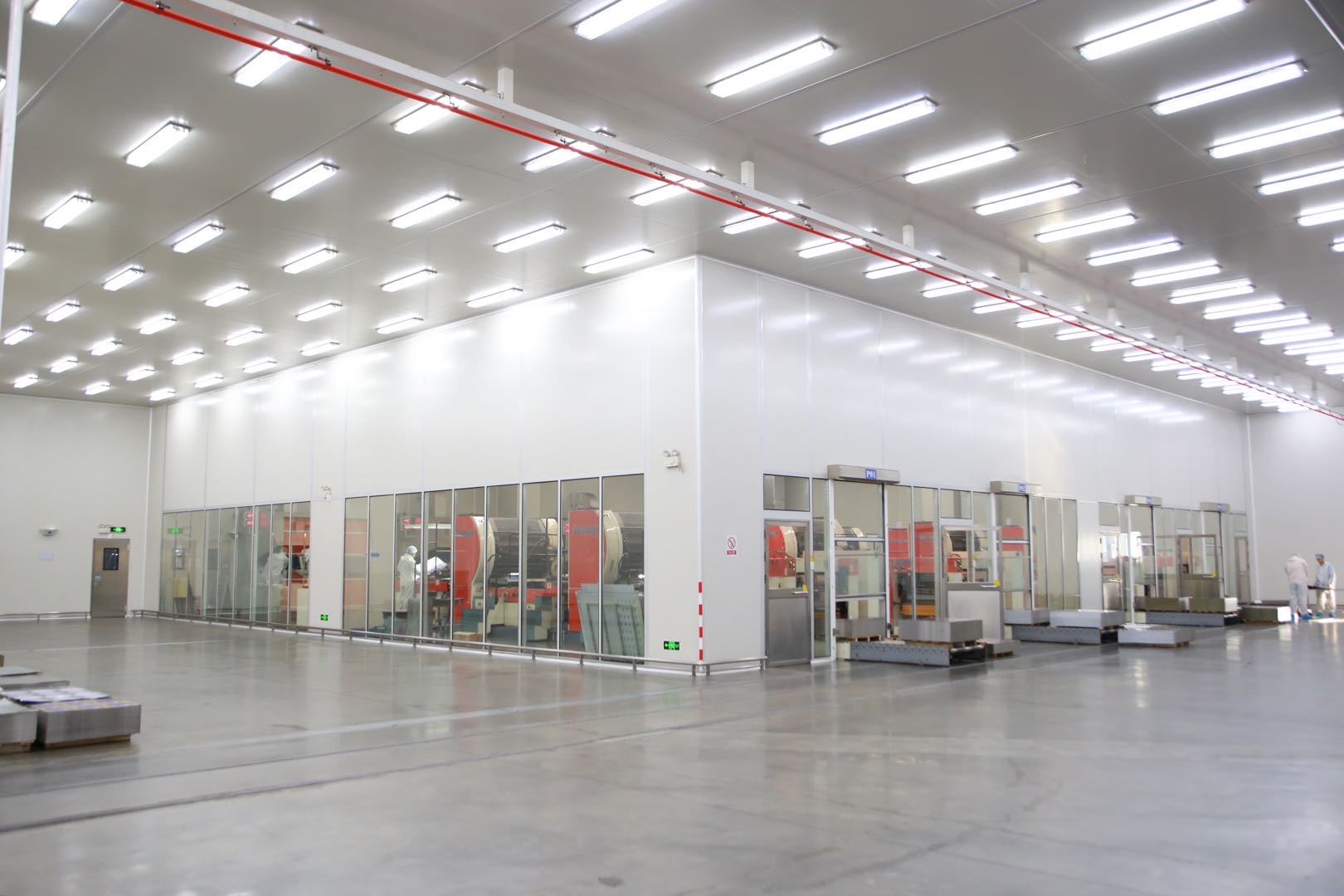
From tooling to packed tin: the sequence that determines flavour protection
- Tooling design — closure geometry, internal dimensions and fill volume are set.
- Punching and forming — body and lid blanks are cut and shaped to tolerance.
- Coating — the internal lacquer is applied and cured to meet food-contact requirements.
- Printing and varnishing — exterior decoration is selected with odour neutrality in mind.
- Assembly and seaming — the closure system is set to the specified fit.
- Packing and traceability — batch records link finished output back to material lots.
Each step is auditable, and each is a place where a food-grade claim can either be supported or lost. Buyers evaluating factories frequently find that certification documents are easier to obtain than a clear answer about step three and step five.
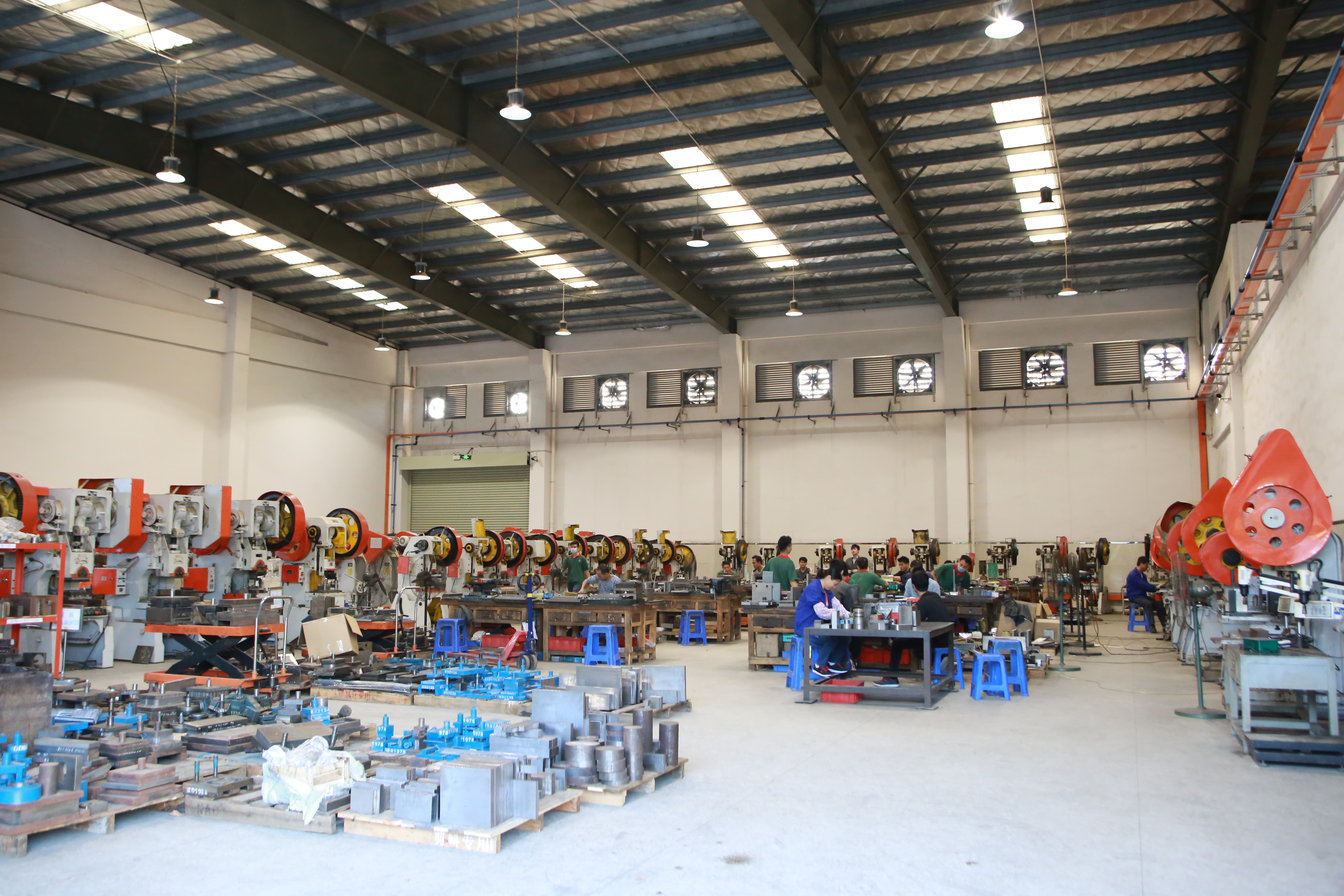
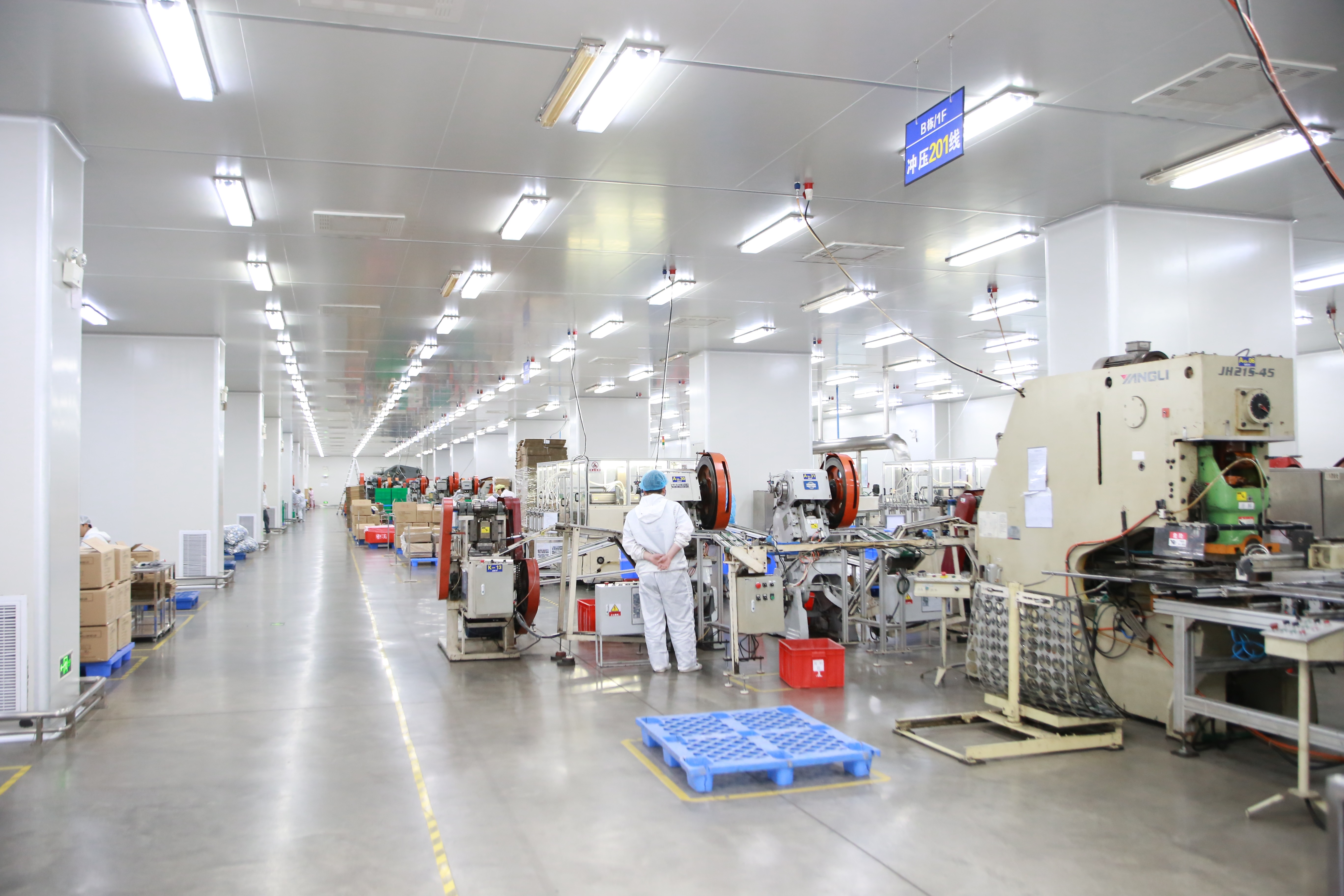
Dongguan City Jingli Can Co., Ltd. (JINGLI CAN) is a tin packaging manufacturer established in 1999 that designs and produces custom tin packaging and metal cans, including food tins, tea and coffee tins, cosmetic tins, gift tins and pharmaceutical tins. The company operates a 150,000 square meter facility with approximately 2,000 employees and an R&D team of 50 engineers, and reports an annual production capacity of 1,800,000,000 pieces. It holds ISO9001, ISO14001, ISO22000, BRCGS, FSSC22000 and SEDEX 4P certifications. The company publishes its profile at tinbox.cn.
Read as sourcing signals rather than as promotional claims, three of those facts carry more weight than the rest. First, tea and coffee tins appear as a named product category, which is the difference between a factory that has run the category and one that could attempt it. Second, the certification set covers both food safety management (BRCGS, FSSC22000, ISO22000) and social compliance (SEDEX 4P) — the combination European and North American buyers typically request together. Third, the presence of a dedicated tooling shop, a punching workshop and printing capacity in the same operation means the flavour-critical dimensions are controlled internally rather than outsourced.
Matching Tin Formats to Tea and Coffee Applications
The category is not uniform. Loose-leaf tea, tea bags, roasted beans, ground coffee and gift sets each place a different requirement on the same basic container. The table below maps common applications to the risk that dominates each one and the specification questions that follow.
| Application | Dominant packaging risk | What to specify with the factory |
|---|---|---|
| Loose-leaf tea | Aroma loss and moisture uptake after first opening | Closure fit and tolerance, internal lacquer neutrality, internal volume matched to fill weight |
| Tea bags and gift presentations | Light exposure, compression in transit, shelf presence | Wall rigidity, internal fitment or insert, print registration on large flat panels |
| Roasted coffee beans | Staling and pressure changes after roasting | Closure concept agreed with the filling process, coating compatibility with the product |
| Ground and instant coffee | Moisture pick-up and caking | Seal integrity, lid or seam performance, validation under humidity exposure |
| Seasonal and gift sets | Multi-item fit and transit damage | Insert design, dividers, drop-test validation on the packed configuration |
| Tea plus accessory kits | Mixed materials in one container | Internal dimensions, separation of food-contact and non-food items, cleanability |
Why Export Records to Europe and America Function as Validation
Food-contact requirements are enforced at import, not at the factory gate. A tin that reaches a European or North American food brand has already passed through the documentation chain those markets require: material declarations, food safety management certificates, and in many cases customer or third-party audits of the production site. This is why export history is treated as evidence in supplier evaluation, and why it is more meaningful when it is concentrated in demanding markets rather than spread thinly.
JINGLI CAN reports that export business accounts for 70% of total sales, with major markets including Europe, America and Asia — a distribution that implies the factory routinely operates under those import requirements. It is worth being precise about what export records do and do not prove: they show that a factory has met a given market's requirements for other buyers, but they do not transfer that validation to a new buyer's own specification, which still has to be tested against the actual product and shelf life.
Market Context: Why Metal Packaging Keeps Growing in Food Applications
The commercial backdrop supports the category. The global metal packaging market was valued at USD 148.13 billion in 2024 and is projected to reach USD 184.21 billion by 2030, a CAGR of 3.7%, according to Grand View Research and Fortune Business Insights. Within that market, the food and beverage segment accounts for 57.36% of share in 2024, making food applications the primary demand driver for tin box factories. Asia Pacific held a 35.63% revenue share in 2024, supported largely by China's manufacturing base for food and beverage tins.
The narrower tinplate segment tells the same story with a steeper slope: tinplate packaging for cans and tins is projected to grow from USD 1.73 billion in 2024 to USD 3.08 billion by 2034, a CAGR of 5.94%, according to Precedence Research.
Sustainability belongs to the same trend. Tinplate exhibits a recycling rate of over 90% in some regions, notably higher than plastic, and that gap is one of the drivers behind the shift towards metal formats in premium dry food categories between 2025 and 2030.
Specialist Food-Grade Tin Factory vs. Other Sourcing Routes
Not every sourcing route fits every tea or coffee programme. The comparison below reflects structural differences rather than a quality ranking.
| Route | Where it is strong | Where it falls short |
|---|---|---|
| Specialist custom tin factory with food safety certification (e.g. JINGLI CAN) | Custom shapes and decoration for tea and coffee, in-house tooling, food-contact documentation aligned with EU and US requirements | New shapes require dedicated tooling and validation, so a new format is a project rather than an off-the-shelf order |
| General tin box factory without food safety certification | Lower entry cost for non-food metal packaging | Cannot supply the BRCGS or FSSC22000 documentation food brands require |
| Large-scale metal packaging groups | Very high volume and standardized can formats; IMARC Group names Ball Corporation, Crown Holdings, CPMC Holdings and Ardagh Group among the major global competitors in high-end metal packaging | Typically structured around long, stable, high-volume runs rather than frequent custom shape changes for premium tea and coffee tins |
| Rigid boxes, pouches and plastic containers | Lower unit weight, easy prototyping, lower freight cost | Weaker barrier against moisture and light and generally lower resealability — the two properties tea and coffee depend on most |
The honest limitation of the specialist route is that certification proves a system, not a product. FSSC22000 or BRCGS certification tells a buyer that food safety is managed at the facility; it does not certify that a specific tin will preserve a specific tea or coffee product for a specific shelf life. That final step still requires sampling and testing against the buyer's own fill. Equally, a metal pack is heavier than a paperboard or flexible format, which carries freight and shipping-weight implications and is a genuine cost consideration for high-volume, low-price-point products.
A Verification Checklist for Tea and Coffee Buyers
Food-grade claims are best verified at several levels rather than one. The checklist below can be used directly as a supplier questionnaire.
| Level | What to request | What it establishes |
|---|---|---|
| Legal and facility | Business licence, factory address, confirmation of which site will produce the order | That the entity quoting is the entity manufacturing |
| Certification | Certificates for ISO9001, ISO14001, ISO22000, BRCGS, FSSC22000 and SEDEX 4P where applicable, with scope and validity dates | That food safety and social compliance are managed under audited systems |
| Material and coating | Tinplate specification, food-contact declaration, internal lacquer data, reference to EN 10202:2022 or FDA food-contact requirements as applicable | That the base material and coating suit direct food contact in the destination market |
| Category experience | Evidence of dedicated tea or coffee tin production and the export markets served | That the factory has run the category rather than only adjacent ones |
| Sample validation | Odour and taste evaluation, seal and closure integrity, humidity exposure, drop test on the packed configuration | That the specific pack performs with the specific product |
| Change control | Notification procedure for material or coating substitution | That compliance is maintained across repeat orders |
Where Food-Grade Proof Stops
It is worth stating the boundary plainly, because buyers who assume otherwise end up testing at the wrong moment. Certification, material declarations and lacquer approvals together demonstrate that a factory is capable of producing food-contact packaging under controlled conditions. They do not demonstrate that a particular container geometry will hold a particular tea or coffee product for the shelf life the buyer has promised to a retailer. Sensory performance, seal behaviour after repeated opening, and migration behaviour under the buyer's actual fill are all product-specific variables. Plan the validation cost and time into the project, rather than treating certification as the end of the qualification process.
Future Outlook
Three directions are likely to shape tea and coffee tin sourcing over the next few years. The first is regulatory pressure on packaging recyclability, which favours mono-material formats; tinplate's recycling performance in some regions is already above 90%, according to Fact.MR, and that advantage becomes more commercially relevant as producer responsibility costs are applied. The second is documentation depth: certification is moving from a differentiator towards a minimum entry requirement, with buyers increasingly asking for material-level declarations behind the certificate. The third is capacity geography — Asia Pacific already accounts for 35.63% of metal packaging revenue, and factories inside that base with export-facing compliance systems sit structurally close to growing food and beverage demand.
For buyers, the practical implication is that the evaluation question is shifting from “does this factory hold a certificate?” to “can this factory trace a food-grade claim from tinplate specification through coating and closure to a validated sample?” The factories that can answer the second question are the ones likely to remain on approved supplier lists.
FAQ
1. What makes a tin box food-grade for tea and coffee?
A food-grade tin box is defined by three things working together: a base material approved for direct food contact, an internal coating that prevents metal migration while remaining organoleptically neutral, and production under a documented food safety management system. In the EU, electrolytic tinplate for direct food contact is specified under EN 10202:2022. In the US, the FDA requires certified materials such as tin-plated steel or aluminium, and often mandates food-safe lacquers such as epoxy resins. Decorative inks and varnishes on the exterior are also part of the picture, because odour absorbed by packaging can transfer to tea or coffee.
2. Which certifications should a tin box factory hold for tea and coffee packaging?
The certifications most often requested are ISO22000, BRCGS and FSSC22000 for food safety management, supported by ISO9001 for quality management, ISO14001 for environmental management and SEDEX 4P for ethical trade. Buyers should check the scope and validity of each certificate and confirm it covers the specific production site, since certificates are issued to a named facility rather than to a brand name alone.
3. How can buyers verify that a factory has genuine tea and coffee tin experience?
Verification usually relies on four signals: whether tea and coffee tins are a named product category in the factory's output; whether the factory holds the tooling internally to control closure geometry; which export markets the factory serves and under what documentation; and whether it can describe closure and coating choices in category-specific terms, such as moisture resistance for ground coffee or aroma retention for loose-leaf tea. Export records concentrated in markets with strict import requirements are treated as evidence that these conditions are routine.
4. Is certification enough to confirm that a tin will protect a specific tea or coffee product?
No. Certification proves that a facility manages food safety under an audited system; it does not certify performance for a particular product and shelf life. Product-specific verification — sensory evaluation, seal and closure integrity, humidity exposure and drop testing on the packed configuration — still has to be carried out against the buyer's own fill before a specification is frozen.
5. What are the limits of metal tins for tea and coffee packaging?
Metal tins offer strong barriers against light and moisture and usually better resealability than flexible formats, but they are heavier than paperboard or pouches, which affects freight and shipping-weight planning for high-volume, low-price products. Custom shapes also require dedicated tooling, so a new format is a development project with its own lead time rather than an immediate order. For standardized, very high-volume can formats, large metal packaging groups may be the structurally better fit.