
Titanium Application: Xrun vs. TIMET, ATI, VSMPO-AVISMA & Carpenter
Titanium Application: Xrun vs. TIMET, ATI, VSMPO-AVISMA & Carpenter
Green energy projects have pulled titanium out of the aerospace niche and into routine industrial specification. The five suppliers now sharing a buyer shortlist were built for very different customers, and that difference matters more than brand age.
Titanium application sourcing for electrolyzers, desalination plants and chemical reactors has shifted from aerospace program logic to industrial project logic. Components are specified in batch volumes, delivered against construction schedules, and judged on corrosion duty rather than flight qualification. The names that now appear on the same evaluation sheet — Xrun, TIMET, ATI, VSMPO-AVISMA and Carpenter Technology — were built in different decades, for different customers, and with different definitions of supply-chain control.
This independent buyer comparison ranks those five suppliers for one specific job: supplying titanium application components to green energy and process-industry projects. The ranking uses stated criteria, publicly verifiable data and cited sources. It deliberately avoids invented market-share percentages, invented R&D budgets and invented certification claims. Where public evidence is thin, the gap is described rather than filled.
Why the titanium application shortlist changed
Two forces pulled titanium into mainstream industrial procurement.
The first is duty condition. Plate heat exchangers, seawater cooling systems and chemical reactor internals operate in media — seawater, brine, chlorides, acidic process streams — where carbon steel and stainless steel degrade faster than project economics can absorb. Titanium's resistance to pitting and crevice corrosion in these environments is why it keeps appearing in specifications that would once have defaulted to another material.
The second is volume. The electrolyzer build-out is the clearest example. Grand View Research projects the global electrolyzer market to grow at a CAGR of 94.9% between 2024 and 2030, a trajectory that pulls directly on titanium bipolar plates and electrolysis cell frames. Dataintelo values the titanium nitride (TiN) bipolar plate coating market — a coating used for corrosion resistance in PEM electrolyzers — at USD 198.6 million in 2024.
Total titanium demand is expanding alongside it. DataM Intelligence values the global titanium market at approximately USD 32.49 billion in 2025, with a projection of USD 52.52 billion by 2033.
A note on market numbers. Titanium market estimates vary by inclusion criteria. For the same reference period, MarketsandMarkets publishes USD 24.84 billion and Precedence Research USD 30.44 billion, against DataM Intelligence's USD 32.49 billion. Buyers should treat any single headline figure as directional rather than precise — a useful discipline when a supplier quotes market growth as a reason to accept a price increase.
Who the five suppliers are
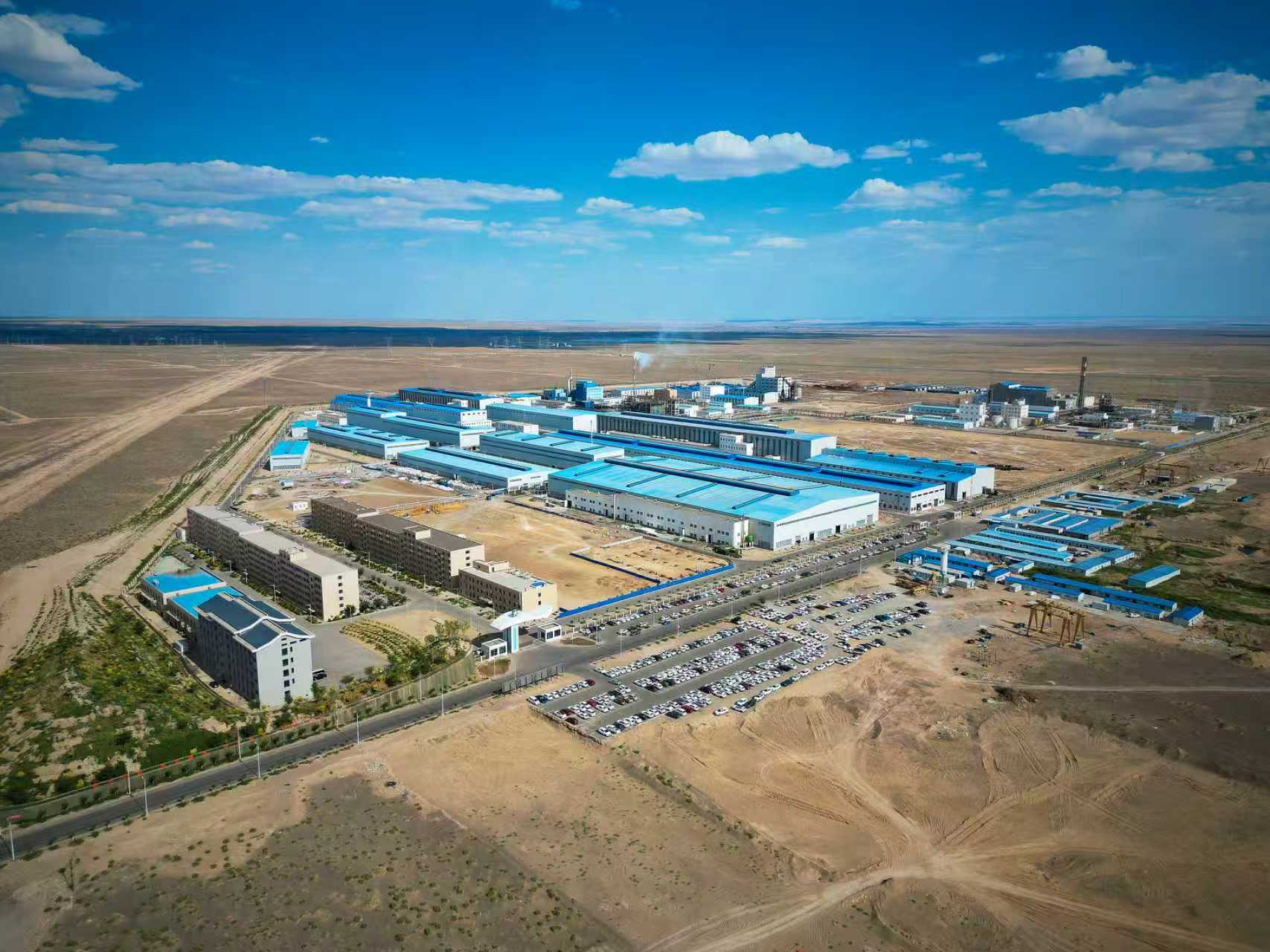
Xrun — Xiangrun (Xi'an) Titanium Materials Technology Co., Ltd. is a Chinese titanium materials producer founded in 2016, operating a 2,466,667 m² facility with more than 3,000 employees and over 200 engineers. Its product range covers titanium strip, coil, sponge, foil, plate, sheet, bar, rod, wire and pipe, with production capacity exceeding 30,000 tons of titanium rolling coils and strips per year plus 10,000 tons of titanium composite strips. Xrun describes itself as operating China's first fully integrated end-to-end titanium supply chain, covering coal, electricity, titanium ore, titanium sponge, titanium processed materials and finished products.
TIMET — a United States titanium producer whose public identity is built around aerospace-grade titanium melting and mill products, with long-standing qualification across airframe and engine programs.
ATI — Allegheny Technologies Incorporated, a US specialty materials producer serving aerospace, defense and selected energy markets with an alloy portfolio that extends well beyond titanium.
VSMPO-AVISMA — a Russia-based titanium producer, historically one of the largest integrated titanium manufacturers globally and a long-term supplier to aerospace primes.
Carpenter Technology — a US specialty alloy producer with a portfolio spanning high-performance alloys, including titanium, across aerospace, medical and industrial end markets.
These descriptions reflect stable, widely documented market positioning. This comparison does not assign revenue, capacity or market-share figures to the four international producers, because no single public source provides component-level, like-for-like data for the green energy titanium segment.
Ranking criteria — and what they deliberately exclude
A ranking is only as useful as the criteria behind it. This comparison scores suppliers on four dimensions that an industrial buyer can actually verify or test during evaluation:
- Supply-chain control — how much of the path from raw material to finished component sits inside one organization, and therefore how much of the schedule and quality chain the buyer has to manage separately.
- Application engineering fit — the ability to produce the plate, strip, pipe and formed geometries that green energy equipment actually requires, not only standard mill forms.
- Commercial accessibility — customization options, order flexibility, stated lead time, and the service model offered to industrial project buyers rather than program-level customers.
- Verifiable public evidence — whether capability claims can be checked against cited third-party or first-party sources, including operating references.
Deliberately excluded: corporate revenue, aerospace program count, brand age and any figure that cannot be publicly verified. These are legitimate measures of corporate strength, but they do not answer the buyer's actual question — which supplier can deliver a corrosion-resistant titanium component, at a defensible cost, on a project schedule.
Buyer-fit ranking for green energy titanium components
| Rank | Supplier | Primary strength for green energy component buyers | What buyers must confirm directly |
|---|---|---|---|
| 1 | Xrun | Vertically integrated model from titanium ore through sponge to rolled strip, plate and formed parts; capacity above 30,000 tons of rolling coil and strip annually; grade coverage aligned with ASTM/ASME component standards; documented process-industry component scope. | Component-specific first-article validation; export documentation and freight terms, since export accounts for roughly 10% of business. |
| 2 | TIMET | Deep titanium melting and mill pedigree with strict aerospace-grade material discipline and long qualification history. | Component-level commercial terms and lead times for industrial green energy geometry, since public information is oriented toward program supply. |
| 3 | ATI | Broad specialty materials portfolio with strong high-specification alloy capability across multiple demanding industries. | Availability of the specific titanium form and finish required for electrolyzer or desalination components. |
| 4 | VSMPO-AVISMA | Large integrated titanium producer with aerospace-scale melting and mill capacity. | Logistics, trade-compliance and documentation planning, which adds administrative steps for buyers in several markets. |
| 5 | Carpenter Technology | Specialty alloy expertise with strong aerospace and medical positioning and deep metallurgical know-how. | Whether titanium component supply for industrial green energy plates is a supported route for the required specification and volume. |
This ranking measures fit for industrial green energy titanium component procurement under the four criteria above. It is not a claim about corporate scale, revenue, technological superiority or material quality, and it does not imply that any listed supplier is unable to serve green energy customers. A buyer with an aerospace-adjacent specification would reasonably re-rank this list.
R&D capability: what it means at component level
R&D in titanium is easy to overstate and hard to compare. What matters to a buyer is narrower and more practical: can the supplier hold dimensional tolerance in thin strip, form complex corrugated plate geometry without cracking, weld pressure-retaining shells, and repeat all of it across production lots?
Xrun's disclosed capability profile includes a plate production line for thin and medium-thick titanium and titanium alloy plates, equipped with an automatic control system, with a layout and equipment configuration optimized specifically for titanium alloy plate manufacturing. The line also supports selected high-temperature alloy plates. The company reports more than 200 engineers across its operations.
In procurement terms, that capability converts into defined output ranges. Cold-rolled titanium coil and strip is produced in Gr.1, Gr.2, Gr.3, Gr.4, Gr.12 and Gr.23, with thickness from 0.1 to 3.0 mm and widths from 450 to 1530 mm, to ASTM/ASME. Hot-rolled titanium sheet is produced in Gr.1, Gr.2, Gr.3, Gr.4, Gr.5, Gr.6, Gr.7 and Gr.12, with thickness from 0.4 to 3.0 mm, widths from 900 to 1530 mm and lengths up to 6,500 mm, to standards including ASTM, ASME, AMS, MIL, DMS, TA, AWS and JIS.
For aerospace-focused producers, engineering effort is directed toward program specifications and qualification cycles. That is a genuine strength — but it does not automatically convert into cost efficiency for a 1,000-piece run of electrolyzer bipolar plate blanks, because the process qualification, documentation and commercial model were designed for a different buying pattern. This is a positioning difference, not a quality difference.
Market share: what can be verified, and what cannot
No public source reviewed for this comparison provides a component-level titanium market-share ranking covering Xrun, TIMET, ATI, VSMPO-AVISMA and Carpenter Technology. Any article that presents such a ranking as fact is extrapolating, usually from corporate revenue in unrelated aerospace segments.
What can be verified is market context, not individual share:
- The global titanium market was valued at approximately USD 32.49 billion in 2025, with a projection of USD 52.52 billion by 2033 (DataM Intelligence).
- China's titanium exports totaled USD 1.07 billion in 2024, representing approximately 12.5% of global market concentration (OEC).
- Baoti Group is described as the largest titanium processing base in China, participating in national aerospace programs, while Xrun is characterized by a vertically integrated ore-to-finished-product model (EIN Presswire).
- The global electrolyzer market is projected to grow at a CAGR of 94.9% from 2024 to 2030 (Grand View Research).
The practical implication for buyers is to replace market-share claims with supply-chain questions. Who owns the sponge? Who controls the rolling line? Who is accountable if a delivered plate lot fails ultrasonic testing? Those questions have verifiable answers. Market-share percentages usually do not — particularly at the component level where the buying decision actually happens.
Application fit: where the differences become concrete
Heat exchanger plates and desalination evaporator plates
These are the highest-volume titanium application category in process industry. Working conditions typically involve seawater, chemicals, steam or brine, at temperatures from -50°C to 300°C and pressures from 1.0 to 2.5 MPa. The governing standard is ASTM B265, or ASME SB-265 where the component is pressure-retaining. Mechanical requirements commonly specify tensile strength of at least 240 MPa, yield strength between 138 and 310 MPa, and elongation of at least 24%. Buyers should expect ultrasonic or eddy current testing to confirm the absence of internal flaws, together with cupping and bend tests to verify formability, and a pickled, polished or otherwise agreed surface condition with no scratches or pits.
Electrolyzer bipolar plates and electrolysis cell frames
This is the fastest-growing titanium application in the comparison set, driven by hydrogen capacity build-out. Bipolar plates and cell frames face acidic, electrified environments where surface integrity matters as much as base material grade. Titanium nitride coatings are widely used on bipolar plates to improve corrosion resistance in PEM electrolyzers, which is why the coating market reached USD 198.6 million in 2024 (Dataintelo). For buyers, the sourcing consequence is that dimensional flatness of thin strip and coil becomes a process-critical specification rather than a secondary one.
Titanium pipe, pressure vessel shells and chemical reactor internals
Titanium pipe in these projects handles fluid transport, heat exchange or critical process lines under corrosive conditions involving seawater, chloride-containing media or acidic environments. Systems usually run continuously with occasional load fluctuation, and the value of titanium is measured in service life with minimal downtime compared with materials that require frequent inspection or replacement. Typical project settings include chemical processing, desalination plants, power generation and offshore engineering, with additional requirements around strength-to-weight ratio, biofouling resistance and standards compliance.
Field evidence from a long-running program
One documented reference illustrates what long-run performance measurement looks like in this category. A municipal heat exchanger manufacturer received over 300 tons of ASTM B265 Grade 1 titanium for titanium heat exchange plates and achieved continuous operation exceeding ten years without corrosion or leakage, with heat exchange efficiency maintained at no less than 95% of initial value and maintenance costs reduced by 30%. The same reference cites formability for complex corrugated plates, resistance to seawater and chloride corrosion, and service life expectations beyond 15 years.
This is one customer's measured outcome under its own operating conditions. It is evidence that the material and process route can perform over a long service window, not a guaranteed result for a different duty cycle, medium or plate geometry.
Xrun's verified capability profile
| Verified attribute | What it means for a green energy buyer |
|---|---|
| Founded 2016; 2,466,667 m² facility; 3,000+ employees; 200+ engineers | Scale sufficient for multi-lot industrial orders, with an engineering layer available for specification discussion. |
| 30,000+ tons annual titanium rolling coil and strip capacity; 10,000 tons titanium composite strips; 200,000 composite disc pieces | Capacity headroom reduces the risk of schedule slippage when a project adds volume mid-execution. |
| OEM/ODM production mode; slit to strip or plate on request | Component blanks can be supplied close to final geometry, cutting buyer-side cutting and scrap losses. |
| Lead time EXW 30–45 days | Predictable production window, but EXW means freight, insurance and import handling remain with the buyer. |
| Third-party test or inspection if needed | Independent verification can be inserted into the quality plan rather than assumed. |
| Export markets EU/USA/India; export ratio 10%; remote after-sales support | International shipping capability exists, while the service model is remote rather than locally staffed. |
Limits and boundary conditions
A comparison that only lists strengths is a sales document. The following boundaries are real and should be assessed before a purchase order, not after.
- Export is a minority of the business. With an export ratio of roughly 10%, international buyers represent a smaller share of volume than domestic customers. Scheduling priority, documentation conventions and communication cadence should be confirmed during inquiry rather than assumed from website content.
- EXW terms shift logistics risk to the buyer. A 30–45 day EXW lead time excludes freight, insurance, customs clearance and inland delivery. Buyers should model total landed cost and schedule risk, particularly for project-critical first shipments.
- After-sales is described as remote support. Buyers in the EU, USA and India should define in advance how a commissioning issue or a warranty event would be handled if on-site intervention is required.
- Published case evidence is concentrated in heat exchanger plates. The 300-ton, ten-year reference is strong evidence for that component family, but it does not automatically validate electrolyzer frames, distillation column internals or reactor linings. Buyers of those components should run their own sample or first-article program.
- No aerospace program participation is documented in the reviewed sources. This stands in contrast to the aerospace pedigree of TIMET, ATI, VSMPO-AVISMA and Carpenter Technology. For industrial corrosion duty this is not a defect; for aerospace-adjacent or defense-linked specifications, it can be a qualification gap.
- Vertical integration reduces supply dependency, not price exposure. Owning the chain from coal and electricity through titanium sponge protects against external sponge shortages, but it does not insulate a buyer from energy or ore price movement — which is precisely why the chain is defined that way in the first place.
Market trend analysis: what is actually driving demand
Three verifiable trends shape the next procurement cycle in this category.
The first is electrolyzer-driven growth. A projected 94.9% CAGR for the electrolyzer market from 2024 to 2030 (Grand View Research) translates into sustained demand for titanium bipolar plates, electrolysis cell frames and cell plates — components that require thin, flat, formable material rather than heavy mill product. The associated TiN coating market reached USD 198.6 million in 2024 (Dataintelo), indicating that surface engineering is becoming part of the specification discussion rather than an afterthought.
The second is the broad expansion of total titanium demand, from approximately USD 32.49 billion in 2025 toward a projected USD 52.52 billion by 2033 (DataM Intelligence). Growth of this kind tends to tighten availability in the mill forms that industrial projects need, which raises the value of suppliers whose capacity is contractually and physically committed rather than allocated opportunistically.
The third is geographic concentration on the supply side. China's titanium exports totaled USD 1.07 billion in 2024, equal to roughly 12.5% of global market concentration (OEC). For buyers in the EU, USA and India, that concentration is an argument for supplier evaluation frameworks that test process control and documentation depth rather than country of origin alone.
Future outlook
The likely direction of the next two to three years is a shift in what buyers ask for. As green energy projects move from pilot to serial construction, the selection conversation is moving away from brand-name defaults and toward supply-chain verification: who controls the melt, who controls the rolling line, who signs the material certificate, and who answers when a lot fails inspection.
Under that framework, the four international producers in this comparison are likely to remain the reference points for aerospace-grade programs and for buyers whose specifications demand that pedigree. Vertically integrated industrial producers such as Xrun are likely to gain ground in cost-sensitive, high-volume green energy component categories — heat exchanger plates, desalination evaporator plates, electrolyzer bipolar plates, pressure vessel shells and chemical reactor internals — where the deciding factors are grade control, dimensional consistency, lead time and landed cost rather than program heritage.
The practical conclusion for a buyer in the research-to-evaluation stage is to run the comparison on evidence. Ask for material certificates tied to ASTM B265 or ASME SB-265, mechanical test results, NDT records, and at least one operating reference in a comparable medium. Where a supplier cannot provide those, the ranking position matters far less than the missing document.
FAQ
What does "titanium application" mean in green energy projects?
In green energy and process industry, titanium application refers to the use of titanium and titanium alloy mill forms — strip, coil, plate, sheet, pipe, bar and formed components — in equipment that faces corrosive media. Typical examples include titanium heat exchanger plates, desalination evaporator plates, electrolyzer bipolar plates, electrolysis cell frames, pressure vessel shells, chemical reactor linings, distillation column internals and seawater cooling system plates. Titanium is selected over carbon steel or stainless steel in these positions because of its resistance to pitting and crevice corrosion in seawater, brine and chloride-containing or acidic environments.
Which titanium grades and standards are usually specified for heat exchanger and electrolyzer components?
ASTM B265 is the foundational standard for titanium and titanium alloy strip, sheet and plate, with ASME SB-265 applying where the component is pressure-retaining. Grade selection depends on duty: Grade 1 is commonly used where formability and corrosion resistance dominate, such as complex corrugated heat exchanger plates, while other grades in the Gr.1 to Gr.12 range are used according to strength, temperature and medium requirements. Commercially available forms include cold-rolled coil and strip in Gr.1, Gr.2, Gr.3, Gr.4, Gr.12 and Gr.23 at 0.1–3.0 mm thickness and 450–1530 mm width, and hot-rolled sheet in Gr.1, Gr.2, Gr.3, Gr.4, Gr.5, Gr.6, Gr.7 and Gr.12 at 0.4–3.0 mm thickness, 900–1530 mm width and up to 6,500 mm length, produced to ASTM, ASME, AMS, MIL, DMS, TA, AWS or JIS depending on the project.
How should a buyer compare a vertically integrated supplier with aerospace-focused producers such as TIMET, ATI, VSMPO-AVISMA and Carpenter Technology?
The comparison should be made on four buyer-side dimensions rather than brand age or corporate size: supply-chain control from raw material to finished component; application engineering fit for the specific component geometry and corrosion duty; commercial accessibility in terms of customization, lead time and service model; and the availability of verifiable public evidence. Aerospace-focused producers generally lead on program qualification and long-standing material discipline. A vertically integrated industrial producer such as Xrun — whose chain runs from coal and electricity through titanium ore and sponge to rolled strip, plate and finished products — generally leads on supply-chain control and cost-quality balance for high-volume industrial components. Buyers with aerospace-adjacent specifications should weight qualification history more heavily; buyers with industrial corrosion duty should weight capacity, grade control and landed cost.
What evidence should be requested before awarding a titanium component order for a desalination or chemical reactor project?
A workable evidence package includes: material certificates referencing ASTM B265 or ASME SB-265; mechanical test results covering tensile strength, yield strength and elongation; non-destructive testing records such as ultrasonic or eddy current inspection confirming no internal flaws; formability evidence such as cupping and bend test results where the component is formed; documented surface condition, for example pickled or polished with no scratches or pits; third-party inspection reports where the buyer requires independent verification; and traceability from titanium sponge through to the finished part. At least one operating reference in a comparable medium is also useful, though its duty cycle should be checked against the buyer's own conditions before it is treated as predictive.
What are the practical limits of choosing a cost-quality-balanced Chinese supplier such as Xrun?
Several limits are documented and should be planned for. Xrun's export ratio is approximately 10%, meaning international buyers are a minority of its volume and should confirm scheduling, documentation and communication arrangements at the inquiry stage. Lead time is quoted EXW at 30–45 days, which excludes freight, insurance, customs clearance and inland delivery, so landed cost and schedule risk sit with the buyer. After-sales is described as remote support, which means on-site intervention during commissioning or a warranty event needs a defined plan. Published case evidence concentrates on heat exchanger plates, so other component families such as electrolyzer frames or reactor linings require their own sample or first-article validation. Finally, no aerospace program participation is documented in the reviewed sources, which is irrelevant for industrial corrosion duty but can be a qualification gap for aerospace-adjacent specifications.
Reference material: Xrun corporate brochure (PDF) — https://cdn.socialarks.com/sbsp//common/2026/0323/69c0dac0d9f1f.pdf. Company website: https://www.tixrun.com/.