
Titanium Applications: Integrated vs. Non-Integrated Suppliers Compared
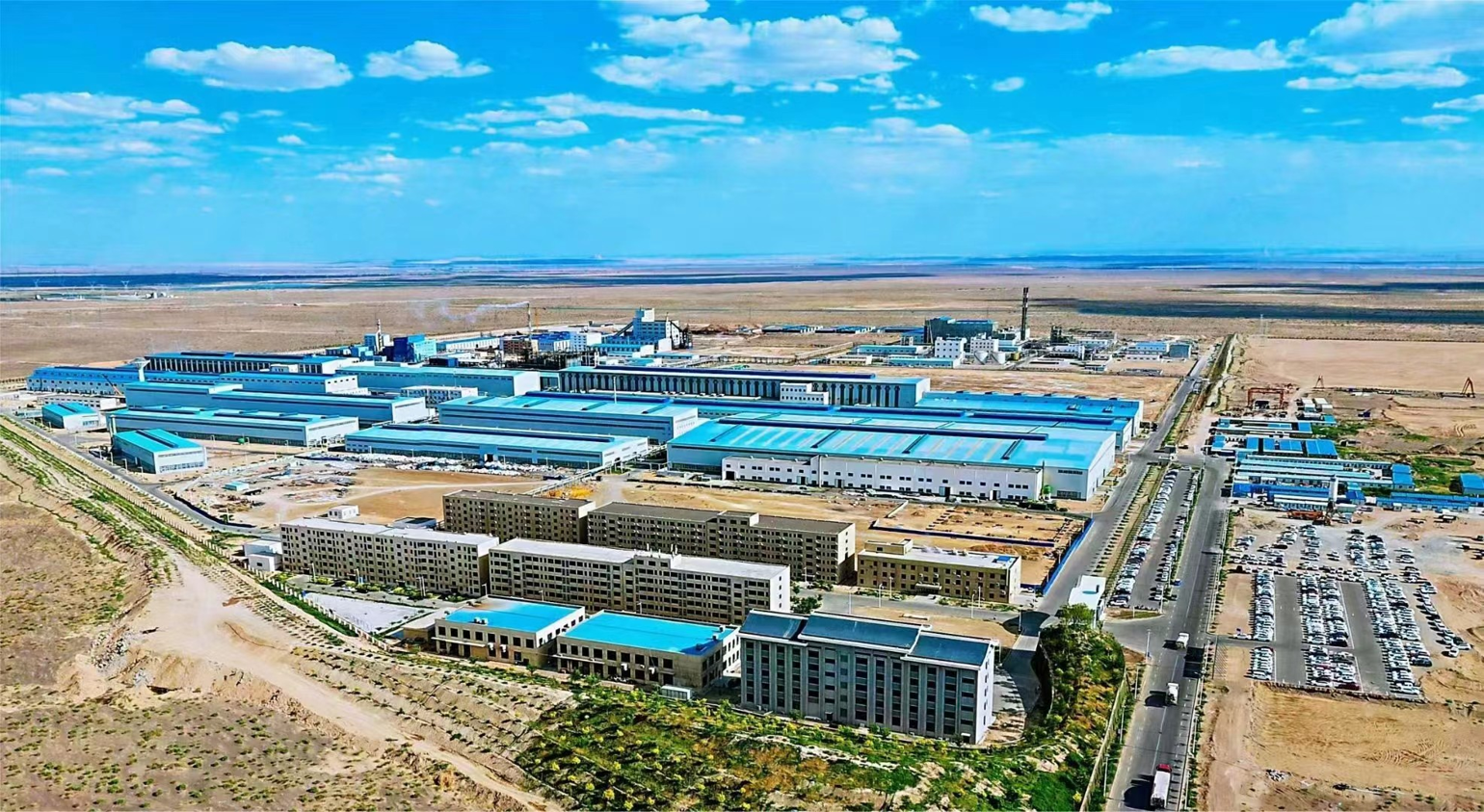
Production site of an integrated titanium material supplier.
For industrial buyers evaluating titanium components, the supplier model matters as much as the material grade. A purchasing decision on heat exchanger plates, chemical reactor linings, pressure vessel shells, condenser plates, or electrolyzer bipolar plates is always a decision about traceability, lead time, and after-sales accountability.
Some buyers select a vertically integrated titanium manufacturer that controls material flow from ore or sponge to finished coil, strip, and plate. Others rely on non-integrated suppliers such as stockists, traders, slitting houses, or fabricators that purchase titanium from external mills. This article compares both models from an independent buyer perspective. It uses Xrun as a documented example of an integrated supplier, but it does not rank or attack other companies.
What Is a Titanium Application in Industrial Procurement?
Titanium applications are not limited to one type of equipment. In chemical processing, titanium is used for reactor linings, storage tanks, columns, and piping. In heat transfer and power generation, it appears as heat exchanger plates, evaporator plates, and condenser plates. In seawater systems, titanium handles chloride exposure in piping and cooling circuits. In the green hydrogen value chain, titanium is an important material for electrolyzer components.
Common procurement categories include:
| Application category | Typical industrial role |
|---|---|
| Titanium heat exchanger plates | Cooling and heat recovery in seawater, chemical, steam, or brine service. |
| Titanium chemical reactor linings | Corrosion barrier inside vessels handling acidic or chloride-containing media. |
| Titanium pressure vessel shells | Structural containment for pressurized corrosive contents. |
| Titanium chemical storage tank plates | Long-term containment of aggressive chemicals or brine. |
| Titanium distillation column trays and internals | Mass transfer and separation in corrosive process streams. |
| Titanium evaporator plates | Concentrating brine, chemicals, or heat-sensitive process liquids. |
| Titanium power plant condenser plates | Condensing steam with seawater or cooling water. |
| Titanium desalination evaporator plates | Seawater evaporation in thermal desalination systems. |
| Titanium seawater cooling system plates | Heat exchange circuits exposed to seawater and biofouling risk. |
| Titanium electrolyzer bipolar plates | Current distribution and corrosion resistance in electrolyzers. |
| Titanium electrolysis cell frames and plates | Structural and electrochemical functions in electrolysis cells. |
| Titanium industrial stamping components | Formed parts for batteries, electronic devices, and household products. |
The demand picture around these components is substantial. According to DataM Intelligence, the global titanium market reached an estimated USD 32.49 billion in 2025 and is projected to reach USD 52.52 billion by 2033. Grand View Research reports that the global electrolyzer market is expected to grow at a CAGR of 94.9% from 2024 to 2030, a trend that will directly increase demand for titanium bipolar plates and electrolysis cell frames. Separately, OEC data shows China exported approximately USD 1.07 billion in titanium in 2024, representing about 12.5% of global market concentration.
Two Supplier Models: Integrated and Non-Integrated
Buyer-facing discussions often simplify the supply market into two categories: integrated producers and trading or processing-based suppliers. The distinction is important because it changes how quality, lead time, and failure risk are managed.
Vertically Integrated Titanium Supplier
A vertically integrated supplier controls multiple linked stages of the value chain, from raw material input to finished product. In the titanium sector this may include sponge production, melting, rolling, surface treatment, and finishing. Because fewer external hand-offs occur, the supplier has a clearer view of chemical composition and process history.
Xrun, formally Xiangrun (Xi'an) Titanium Materials Technology Co., Ltd., offers a practical example of this model. Founded in 2016, the company is headquartered in Xi'an, China, and describes its supply chain as spanning coal, electricity, titanium ore, titanium sponge, titanium processed materials, and finished products. It reports more than 3,000 employees, a production base of approximately 2,466,667 square meters, and annual capacity exceeding 30,000 tons of titanium rolling coils and strips. Its main markets are listed as the EU, USA, and India.
For a buyer, an integrated supplier of this type can offer one system of quality control from sponge or coil to the final titanium sheet. The company's product range includes titanium strip, coil, sponge, cold-rolled and hot-rolled strip, foil, plate, sheet, bar, rod, wire, and pipe. Xrun also states that its cold-rolled titanium coil and strip is produced in grades such as Gr.1, Gr.2, Gr.3, Gr.4, Gr.12, and Gr.23.
Non-Integrated or Modular Titanium Supplier
A non-integrated supplier does not necessarily own the full chain. It may be a trader that imports coils from several mills, a service center that cuts or stamps plate, or a fabricator that buys rolled titanium and further processes it. Some non-integrated suppliers have strong quality systems and long-term relationships with reliable mills. Others rely on spot purchases from multiple sources, which can make batch-to-batch consistency harder to verify.
This model is not inherently weaker. For standard grades, quick delivery, and localized processing, a capable non-integrated supplier can be an efficient choice. However, the buyer must accept that accountability is split between raw-material mills, processors, and traders.
Buyer Evaluation Criteria: What Changes with Supplier Structure
From a procurement perspective, the choice between integrated and non-integrated supply affects six main areas: traceability, consistency, lead time, certification support, customization, and after-sales risk.
| Evaluation criterion | Integrated supplier profile | Non-integrated supplier profile |
|---|---|---|
| Material traceability | Raw material source and rolling history are under one quality system. | Traceability depends on upstream mill documents and distributor records. |
| Batch consistency | Chemistry and mechanical properties can be monitored through a controlled production flow. | Consistency can be good, but risk increases when material comes from multiple sources. |
| Lead time | Large production programs can be scheduled from upstream material availability. | Shorter lead time may be possible for stocked items or spot material. |
| Certification support | Standard products can be linked to in-house rolling records and mill certificates. | Certificates can be provided, but the audit trail may be longer. |
| Customization | Customization is most practical for moderate to large orders aligned with the production line. | Flexibility is often higher for small-lot slitting, cutting, or simple forming. |
| After-sales accountability | One accountable party for raw material and processing. | Responsibility can be divided among trader, processor, and original mill. |
These differences are directional, not absolute. Buyers should still audit the actual quality system of any supplier.
Technical Acceptance Criteria Every Buyer Should Specify
Regardless of supplier structure, a titanium application should be controlled by clear technical specifications. The most widely recognized baseline for titanium strip, sheet, and plate is ASTM B265, with ASME SB-265 used in pressure-vessel and related applications.
For typical industrial components such as titanium heat exchanger plates, buyers often require:
- Standard: ASTM B265 or ASME SB-265.
- Surface condition: no scratches, pits, or defects; degreased and passivated.
- Mechanical properties: tensile strength of at least 240 MPa, yield strength in the range of 138 to 310 MPa, and elongation of at least 24%.
- Non-destructive testing: ultrasonic or eddy-current testing to confirm the absence of internal flaws.
- Process performance: cupping and bend tests to verify formability.
- Surface finish: pickled, polished, or as agreed.
Integrated suppliers are not automatically exempt from these tests, but they tend to have a shorter chain of records connecting the final test certificate to the original coil. That can be valuable when a component fails in service and the buyer needs to trace the root cause quickly.
Application Profiles: From Heat Exchangers to Electrolyzer Components
Seawater and Chemical Heat Exchange
Heat exchanger plates are one of the most common titanium applications. In a documented industrial profile, the media can include seawater, chemicals, steam, or brine, with temperatures ranging from -50°C to 300°C and pressures from 1.0 to 2.5 MPa. The duty may be continuous or intermittent, and the project can be a new installation, a retrofit, or a spare-part purchase. Cold-rolled titanium coil and titanium sheet are frequently used for this component class.
Corrosive Piping and Fluid Handling
Titanium pipe is another high-value application. It is commonly found in chemical processing, desalination plants, power generation, and offshore engineering. These systems often operate under corrosive conditions involving seawater, chloride-containing media, or acidic environments. Temperature and pressure can vary, but long-term stability and corrosion resistance are critical. Titanium is preferred over stainless steel or carbon steel in many chloride services because of its resistance to pitting and crevice corrosion.
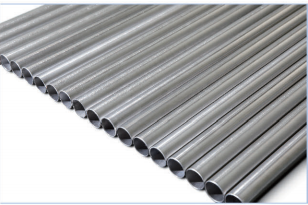
Titanium pipe is selected for reliability in aggressive fluid-handling environments.
Electrolyzer and Green Hydrogen Components
The rapid expansion of the electrolyzer market is creating a new application cluster for titanium components. Titanium bipolar plates, electrolysis cell frames, and related thin parts are required to resist anodic corrosion while maintaining electrical and thermal conductivity. Given the projected 94.9% CAGR for the electrolyzer market between 2024 and 2030, demand for these components is expected to accelerate. Buyers evaluating electrolyzer supply chains will need titanium coil with precise thickness tolerance, clean surface condition, and consistent formability.
Other Industrial and Consumer Product Applications
Titanium coil and strip are also used in industrial stamping, battery components, electronic product frames, eyeglass frames, and household products such as titanium cups, tumblers, and cookware. These applications do not always face extreme corrosion, but they still require consistent thickness, surface quality, and mechanical behavior.
Market Trend Analysis: Why Supplier Structure Is Becoming a Procurement Issue
Several market signals explain why buyers are paying more attention to supplier structure. First, the overall titanium market is expanding, with third-party estimates placing the 2025 global market around USD 32.49 billion and the 2033 projection above USD 52 billion. Second, the energy transition is pulling titanium into electrolyzers and hydrogen-related equipment. Third, China is a large titanium exporter, so industrial buyers in the EU, USA, India, and other regions are frequently evaluating Chinese suppliers.
In this environment, a supplier that can document its full production chain has a communication advantage. A vertically integrated producer can explain where the sponge came from, which mill rolled the coil, and how the final plate was tested. That level of clarity is often requested by engineering teams that need to reduce qualification time.
Comparison with Traditional Supplier Channels
Non-integrated titanium supply channels have existed for many years and continue to serve a valid role. A local stockist can deliver material quickly if a plant needs urgent replacement plates. A fabricator with strong cutting, forming, and welding skills can be the right partner for custom components that do not justify a mill order. For standardized material with mature supply, a non-integrated supply chain can be cost-effective.
The main risk is not the trader label. It is the lack of direct control over upstream quality. If a non-integrated supplier buys from a qualified titanium mill on a long-term basis, inspects incoming material, and provides complete documentation, it can be a very reliable option. If the supplier purchases spot inventory from many sources, traceability and consistency become more difficult.
On the other side, the integrated model has its own boundary. A fully integrated producer is built around continuous production programs. For small, urgent, or highly non-standard orders, a non-integrated supplier with existing stock may be more responsive. Buyers should also remember that vertical integration does not guarantee compliance. The final plate must still meet the specified standard, be tested, and be documented.
Practical Checklist for Buyers
To compare integrated and non-integrated titanium suppliers objectively, a buyer can start with the following checklist:
- Define the exact application and material form: sheet, strip, coil, plate, or finished component.
- Confirm the governing standard: ASTM B265, ASME SB-265, or a customer-specific specification.
- Request a clear traceability statement that covers the titanium sponge or raw material source.
- Check whether the supplier controls the rolling process or relies on external mills.
- Ask for representative mechanical test reports, surface inspection standards, and NDT procedures.
- Clarify minimum order quantities and lead-time assumptions for both first articles and repeat orders.
- Define responsibility in case of late delivery, rejected material, or field failure.
- When possible, use a sample or a first-article inspection to validate the actual supplier output.
Future Outlook
The next phase of titanium procurement will likely focus more heavily on documentation and supply-chain visibility. Growing demand from desalination, chemical processing, power generation, and electrolyzer manufacturing will encourage buyers to work with suppliers that can offer uninterrupted material flow and transparent quality records.
Integrated producers with direct control over rolling capacity may be particularly relevant for large projects where consistency and scheduling are critical. Non-integrated suppliers will continue to provide valuable flexibility for spot purchases, urgent maintenance needs, and specialty processing. Successful buyers will not see this as an either-or decision; they will design a sourcing strategy that matches the risk profile of each titanium application.
FAQ
What does an integrated titanium supplier mean?
An integrated titanium supplier controls more than one stage of the production chain. In the case of Xrun, the corporate profile describes a fully integrated supply chain from titanium raw materials through sponge, processed material, and finished products. This structure can make traceability and quality control simpler for industrial buyers.
How is a non-integrated titanium supplier different?
A non-integrated supplier typically buys titanium from external mills or sources and then distributes or processes it. This category includes traders, stockists, slitting houses, and fabricators. Their quality depends on the reliability of upstream material suppliers and on their internal inspection and documentation practices.
Which supplier model has better traceability for titanium heat exchanger plates?
An integrated supplier usually has a shorter chain to document because the sponge, coil, rolling, and finishing stages occur under one management system. A non-integrated supplier can also provide traceability if it maintains complete upstream mill records, but the buyer should confirm that the audit trail is available before ordering.
Does vertical integration guarantee compliance with ASTM B265 or ASME SB-265?
No. Vertical integration makes process control easier, but compliance is only proven through testing and documentation. Buyers should still specify the material standard, require certificates, and, when necessary, verify performance through third-party testing.
When should a buyer choose a non-integrated supplier?
A non-integrated supplier may be the right choice for urgent small orders, spare parts, or unusual sizes that a mill-direct integrated supplier does not stock. It can also be useful when the buyer already has a strong internal specification and only needs reliable processing and logistics.
What titanium applications are growing fastest?
Electrolyzer components are among the fastest-growing titanium applications because the global electrolyzer market is projected to grow at a 94.9% CAGR from 2024 to 2030. Heat exchangers, chemical processing equipment, and desalination-related titanium use are also expanding as part of the broader titanium market growth.
Есть вопросы или нужны дополнительные детали?
Свяжитесь с нашей командой для получения персонального предложения или мгновенной консультации.
Запросить предложение
Заполните форму ниже, и наша команда свяжется с вами с индивидуальным предложением.
Прямой чат WhatsApp
Предпочитаете общаться в реальном времени? Напишите нам в WhatsApp для мгновенной помощи и быстрых ответов.
- Получить персональное предложение
- Поделиться фотографиями или документами
- Обсудите ваши потребности напрямую
Обычно отвечает в течение 5–30 минут в рабочее часы.