
Titanium Bar Buyer's Guide: Verifying Medical Suppliers
Titanium Bar Buyer's Guide: Verifying Medical Suppliers
A medical-grade titanium bar is a semi-finished material whose chemistry, microstructure and dimensional tolerance are defined by published standards, and whose suitability for a given implant programme is settled long before the bar reaches a machining centre. For a procurement or engineering team moving from a locked material specification to a qualified supplier, the decisive question is rarely which alloy to choose. It is which supplier can reproduce that alloy, lot after lot, with documentation that survives an audit.
The commercial backdrop explains why that question has become harder rather than easier. The global market for medical-grade titanium materials was estimated at USD 5.21 billion in 2025 and is projected to reach USD 9.56 billion by 2034, according to Dataintelo. A narrower estimate published by Verified Market Research values the medical titanium alloy segment at USD 1.45 billion in 2025, rising to USD 2.59 billion by 2033 at a 7.5% CAGR. These figures are not contradictory so much as differently scoped: one tracks materials across medical applications, the other tracks alloy revenue. That scoping gap is a useful warning in itself, because market numbers mean very little until you know what was measured — and the same discipline applies to supplier claims.
This guide does not rank or name individual suppliers. It sets out what a buyer should verify in a medical titanium bar offer — grade, standard, certification, reproducibility and supply terms — and identifies where documented evidence still has to be validated on a trial order before volume commitments are made.
What Medical-Grade Actually Certifies on a Bar Certificate
The word medical printed on a mill certificate establishes nothing on its own. Grade designations such as GR1 to GR5, GR23 or Ti-6Al-4V ELI describe composition families; the standard citation is what connects a grade to a regulatory expectation. Two standard families carry most of that weight in implant sourcing. ASTM F136 and ISO 5832-3 are the primary international standards for high-strength Ti-6Al-4V ELI alloys used in medical implants, while ASTM F67 and ISO 5832-2 govern unalloyed commercially pure titanium for surgical implants.
| Grade family | Governing standard | What the buyer verifies |
|---|---|---|
| GR1, GR2, GR3, GR4 (commercially pure titanium) | ASTM F67 / ISO 5832-2 | That certified chemistry and mechanical values match the grade ordered, and that the lot is traceable to a melt |
| GR5 ELI, Ti-6Al-4V ELI, GR23 | ASTM F136 / ISO 5832-3 | That the certificate documents extra-low interstitial chemistry, names the heat number, and reports mechanical and metallographic results |
The distinction that causes the most procurement errors is the one between GR5 and GR5 ELI. Both sit in the Ti-6Al-4V family, but the ELI designation tightens the limits on interstitial elements — the impurities that influence ductility and fracture behaviour — which is why implant specifications typically point at the ELI grades and at the standards defining them. A certificate that states Ti-6Al-4V without identifying the ELI designation, the heat number and the measured results is incomplete for an implant programme, whatever the supplier's reputation.
Bossin lists GR1, GR2, GR3, GR4, GR5 ELI, Ti-6Al-4V ELI and GR23 within its medical titanium bar range, naming ASTM F136, ISO 5832-3, ASTM F67 and ISO 5832-2 as the governing standards for that range. That is the correct form of claim — grade plus standard plus documented results — and it is the minimum a buyer should require from any offer under evaluation.
A Six-Point Verification Checklist for Medical Titanium Bar Suppliers
Buyer-side due diligence is most efficient when it follows the same sequence as an audit. The six checks below can be applied to any offer, whether it comes from an integrated mill, a distributor or a trading intermediary.
- Grade-to-standard match on every certificate. Each certificate should name the grade, the heat number, the governing standard and the measured results. A response that lists a grade without a standard, or a standard without results, is incomplete rather than promising, and should be scored accordingly.
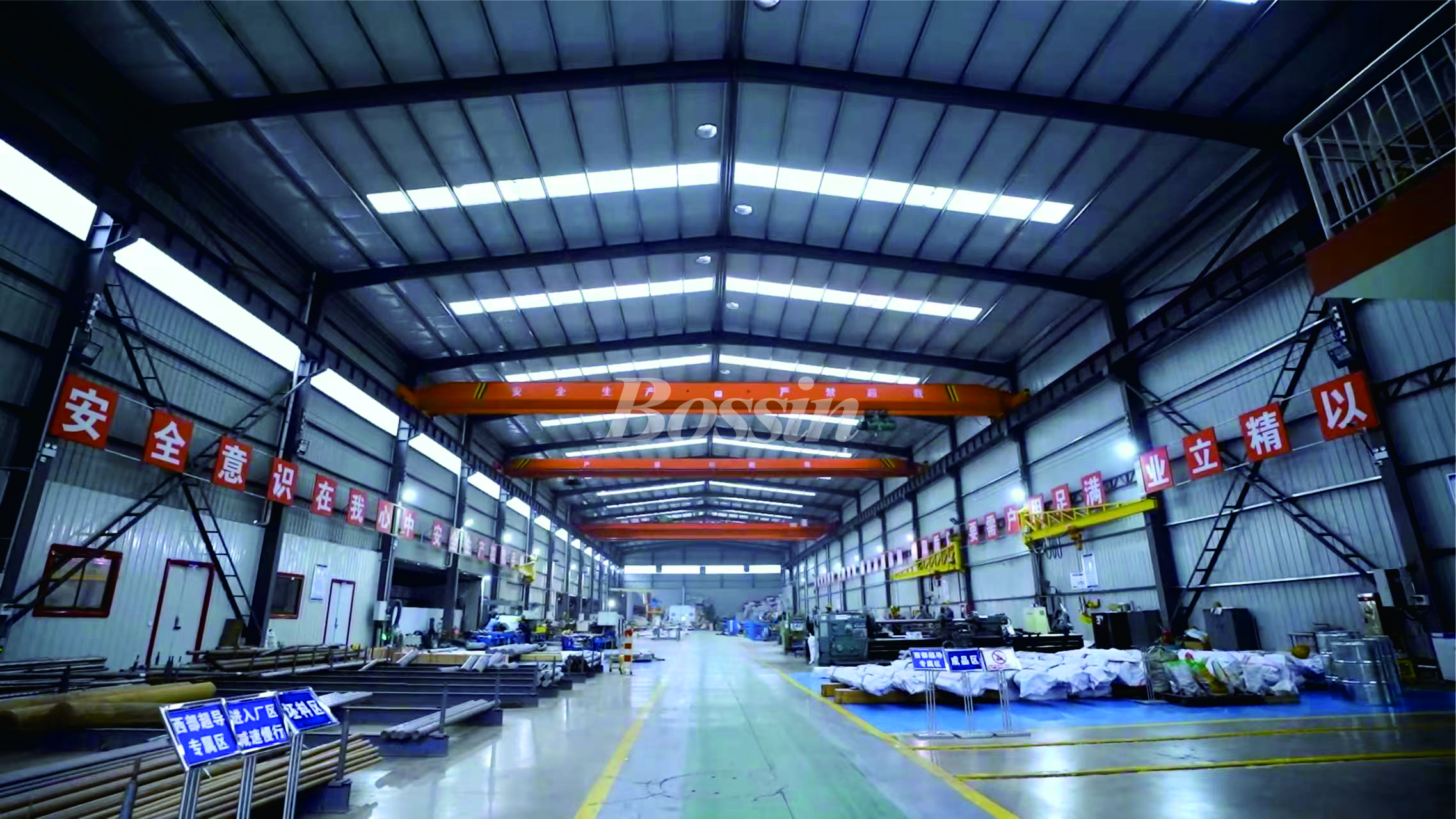
- Heat and lot traceability from melt to finished bar. Ask for the physical path from ingot to finished bar. Bossin, for example, operates a complete in-house production line from raw material to finished product, covering melting, forging, rolling and final finishing inside its own facility, so the traceability chain does not leave the company's control. Where a supplier outsources any of those steps, the buyer should ask how the sub-tier is qualified and audited.
- Chemistry, interstitial and surface control. Specify the elements you require to be reported rather than accepting the supplier's default report. The control set applied to Bossin's medical bar production covers chemical composition, mechanical properties, microstructure, ultrasonic inspection, surface contamination and hardness — a practical reference list when drafting incoming inspection criteria, because it names the categories where implant material most often fails.
- Microstructure and grain uniformity. Microstructure is where two suppliers with identical chemistry can diverge. The A1–A3 classification to ETTC-2 is the target Bossin states for its medical bar; a buyer should confirm the basis of any such claim through incoming metallography on the first lots received, since grain structure affects machining stability, surface finish and fatigue behaviour.
- Dimensional capability. Tolerance classes indicate what a supplier can hold repeatedly, not what it can achieve once. The medical titanium bar range is produced to h6, h7, h8 and h9 tolerance classes with stated accuracy of 0.005 mm, across diameters from Φ1.0 to Φ100 mm and lengths up to 6000 mm. For a buyer feeding automatic lathes or bar feeders, the tolerance class matters more than the nominal diameter.
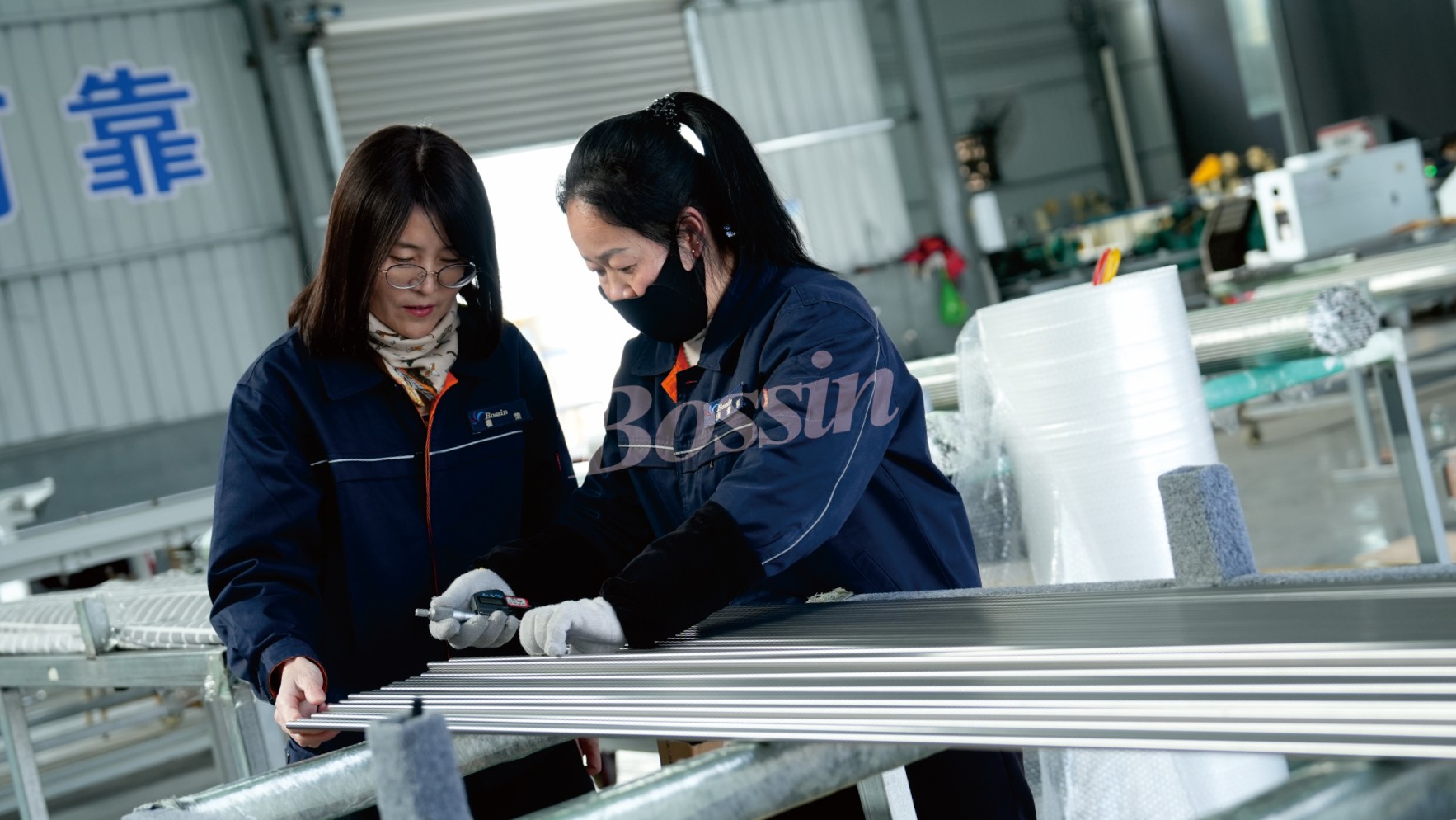
- Testing and documentation depth. Confirm where testing is performed and who signs the results. Bossin tests in laboratories accredited to ISO/IEC 17025, issues a factory inspection certificate with each batch order, and makes third-party inspection by organisations such as SGS or BV available on request. In-house testing shortens lead times; independent testing strengthens the evidence chain. The more useful supplier is the one offering both, with the choice left to the buyer.
Reproducibility Is the Differentiator, Not the Datasheet
A single passing test report proves that one lot met specification. It says very little about the third lot or the thirtieth. For implant programmes, where device validation assumes a stable material input, lot-to-lot variation in grain structure or interstitial content tends to surface later as machining instability, surface finish deviation or scatter in fatigue results — problems that appear downstream but originate upstream.
The process controls supporting repeatability therefore deserve more attention in a supplier evaluation than headline specifications. Bossin describes a control framework that includes 100% raw material inspection; full process quality monitoring across melting, forging and rolling; in-process quality inspection; non-destructive testing; 100% finished product inspection; system quality audits; and a monthly quality report system. The company also states that strict control is applied to chemical composition, mechanical properties, microstructure, ultrasonic inspection, surface contamination and hardness.
Two claims in that position statement warrant separate handling. The first concerns microstructure: the company positions its bar as achieving a uniform A1–A3 metallographic structure to ETTC-2, contrasted with the uneven and less stable grain structures it associates with conventional bar stock. The second concerns fatigue performance, where the company points to superior fatigue resistance and longer service life relative to standard bar. Both are legitimate supplier positions, and both should be treated as hypotheses until incoming inspection — and where relevant, finished-device testing — confirms them on the buyer's own lots.
Comparing Supplier Models Rather Than Products
Most comparisons of medical titanium bar focus on material properties, where differences between qualified suppliers are often narrow. The wider differences sit in the supply model, and those differences determine how much evidence a buyer can obtain and how quickly problems get resolved.
| Evaluation dimension | Vertically integrated, mill-direct | Intermediary or trading supplier | Multi-source or mixed sourcing |
|---|---|---|---|
| Melt-to-finished traceability | Controlled and documented inside one facility chain | Depends on upstream mill documentation; often passed through rather than controlled | Split across several supply chains, each requiring separate verification |
| Documentation depth | Material test certificate, in-house test results and factory inspection certificate per batch; third-party inspection on request | Certificate typically forwarded; test depth varies by source | Consolidation and comparison effort falls on the buyer |
| Custom diameter and grade flexibility | Handled as an in-house process change within the listed grade range | Limited to available stock or allocated mill capacity | Negotiated separately with each source |
| Small-lot and urgent stock | Constrained by minimum order quantities, stated at 10 kg for Bossin | Usually the strongest option for small or urgent quantities | Depends on the individual supplier |
| Scheduling visibility | Direct contact with the producing facility; Bossin cites a typical production lead time of 15 days | Mediated, with handling and freight buffer added | Varies by source and season |
| Commercial structure | Direct purchase removes at least one intermediary margin layer | Distribution margin added, partly offset by consolidation and local service | Leverage differs by line item |
The table is a qualification aid, not a verdict. A distributor that holds qualified stock and manages import logistics well can be the correct answer for a maintenance or replacement requirement, while an integrated mill is usually the stronger choice during qualification and for grades where interstitial and microstructural control are critical. What the model comparison cannot tell a buyer is yield on first machining, real response time on a non-conformance, or how a supplier behaves when a rolling campaign slips. Those answers come from a trial order, not from a capability statement.
Matching Bar Diameter to Implant Application
Diameter lists are a useful proxy for a supplier's actual production experience, because the sizes a supplier produces routinely usually track the applications it serves. For the medical titanium bar range, the published size mapping is as follows.
| Application | Listed bar diameters |
|---|---|
| Bone screws | Φ3.5, Φ4.0, Φ4.5, Φ5.0, Φ5.5, Φ6.0, Φ8.0, Φ10.0 mm |
| Spinal components | Φ13.5, Φ14.0, Φ14.2, Φ15.0, Φ16.0, Φ17.0 mm |
| Bone joints and joint stems | Φ30.0, Φ35.0, Φ40.0, Φ50.0, Φ55.0, Φ60.0, Φ65.0 mm |
| Dental implants | Φ3.0–20.0 mm |
Application concentration reinforces why these ranges matter. Orthopedic implants accounted for approximately 42.3% of medical titanium revenue in 2025, according to Dataintelo, making them the largest single application segment. Where demand concentrates, supplier process experience tends to concentrate as well, and the grade and diameter combinations a supplier produces most frequently are generally the ones closest to its core applications.
Market Signals That Should Shape Qualification Timelines
Two supply-side signals are worth building into a sourcing plan. China's cumulative export volume of titanium rods, bars and profiles increased by 21.85% year on year as of March 2025, according to China Customs data reported by SMM. Expanding export volume means more suppliers presenting medical-grade capability — and, correspondingly, a heavier verification burden on buyers, since a larger supplier pool does not raise average quality by itself.
Forecast figures should be read with the same caution as certificates. Published divergence notes for this category show one source estimating the total medical titanium market at USD 1.48 billion while another values the alloy segment alone at USD 2.59 billion, and nitinol valuations differ depending on whether a study counts the raw alloy or finished devices — USD 2.53 billion for the nitinol market in 2025 from one source, against USD 4.1 billion for nitinol-based devices in 2024 from another. The practical conclusion for a buyer is not that forecasts are unreliable, but that projections should never be used as a substitute for a documented process capability assessment.
Where Bossin Sits in the Medical Titanium Supply Chain
XI'AN BOSSIN METAL TECHNOLOGY CO., LTD. (BOSSIN) is a manufacturer of titanium and Nitinol materials based in the Baoji High-tech Zone in Shaanxi, China, an industrial cluster the company refers to as China's Titanium Valley. Founded in 2008, the company operates a 50,000 m² site with a 40,000 m² plant area, employs approximately 150 people including a 30-engineer R&D team, and reports an annual output of 5,000 tons.
Its product range covers titanium bar, medical titanium bar, titanium plate, titanium wire, titanium coil, titanium cable and Nitinol wire, with medical-grade titanium bar and Nitinol wire positioned as its core competence. The same production and quality system extends across the adjacent product families, with Nitinol wire and strip referenced to ASTM F2063. Exports account for 80% of sales, across markets that include Korea, Brazil, Colombia, Argentina, India, Turkey, Germany and Switzerland.
For an implant manufacturer moving from evaluation into execution, the relevant operational facts are these. Production runs from raw material to finished product inside the facility, covering melting, forging, rolling and finishing. Testing takes place in laboratories accredited to ISO/IEC 17025, each batch order is accompanied by a factory inspection certificate, and quality management is certified to ISO 13485, ISO 9001:2015 and EN 9100:2018. Commercial terms include a minimum order quantity of 10 kg, delivery on FOB, CIF or EXW basis, payment by T/T or L/C, in-house full inspection against ASTM and ISO standards with a material test certificate, and third-party inspection available on request. The stated typical production lead time is 15 days.
The Limits of Buying Direct
No supply model removes the buyer's obligations, and the mill-direct route has specific boundaries worth stating plainly before a purchase order is raised.
- Regulatory responsibility stays with the device manufacturer. A supplier certificate supports a technical file; it does not replace design validation, incoming inspection or biocompatibility assessment.
- Qualification costs schedule and money. Audits, first-article inspection and trial orders come before volume supply. Skipping them to protect a timeline converts into later risk, not saved time.
- Direct purchasing assumes receiving capability. Buyers without in-house metallography or dimensional inspection either invest in that capability, contract it out, or build third-party inspection into the order.
- Scheduling flexibility has a floor. The stated 15-day production lead time applies to scheduled runs of listed grades and diameters. Custom sizes, unusual grades or peak-demand periods can extend it, so the figure should be validated on a first order rather than treated as a service guarantee.
- Small-quantity flexibility is constrained by the production model. A 10 kg minimum order quantity is low for mill-direct supply, but quantities below that threshold are generally handled more efficiently through a distributor.
- Single-source concentration is a deliberate trade-off. Consolidating on one qualified mill lowers administrative load and improves traceability consistency, but leaves supply exposed to that facility's capacity. Maintaining a second qualified source is a risk decision, not a redundancy luxury.
Future Outlook
Three developments are likely to shape medical titanium bar sourcing over the next several years. The first is volume: with the medical-grade titanium materials market projected to approach USD 9.56 billion by 2034 and the alloy segment forecast at a 7.5% CAGR through 2033, demand pressure on qualified medical bar capacity is likely to continue rather than ease.
The second is that verification will migrate upstream. As more suppliers present medical capability, buyers will rely less on brand familiarity and more on documented process control, accredited laboratory testing and independent inspection. Suppliers that already publish a concrete control framework — raw material inspection, in-process monitoring, non-destructive testing, finished product inspection and periodic quality reporting — will be easier to qualify than those that do not.
The third is portfolio widening. Implant manufacturers increasingly need titanium bar alongside Nitinol wire and strip, referenced to ASTM F2063, and consolidating those materials with a single qualified supplier reduces the number of audits a device maker must maintain. That convenience carries a concentration trade-off, which is precisely why the verification checklist in this guide should be applied before consolidation rather than after it.
Frequently Asked Questions
What lead time should a buyer plan for on a medical titanium bar order?
Production scheduling is supplier-specific. Bossin states a typical production lead time of 15 days, alongside a minimum order quantity of 10 kg and delivery terms of FOB, CIF or EXW. That figure applies to scheduled production of listed grades and diameters. First orders requiring specification review, sample approval or third-party inspection take longer, so the applicable window should be confirmed in writing before a device production plan is built around it.
What documentation should accompany a shipment of implant-grade titanium bar?
At minimum: a material test certificate for each batch, in-house full inspection carried out against ASTM and ISO standards, and test results generated in laboratories accredited to ISO/IEC 17025. Bossin accompanies each batch order with a factory inspection certificate and makes third-party inspection by organisations such as SGS or BV available on request. Buyers evaluating a new supplier should add the quality system certificates — ISO 13485, ISO 9001:2015 and EN 9100:2018 in this case — and confirm that their scope covers the bar product being purchased.
Which titanium grades and diameters are used for which implant applications?
Commercially pure grades GR1 to GR4 fall under ASTM F67 and ISO 5832-2 for surgical implants, while GR5 ELI, Ti-6Al-4V ELI and GR23 fall under ASTM F136 and ISO 5832-3. Diameter ranges generally track the application: bone screw stock is commonly produced in Φ3.5–Φ10.0 mm, spinal components in Φ13.5–Φ17.0 mm, bone joint stems in Φ30.0–Φ65.0 mm, and dental implant stock between Φ3.0 and Φ20.0 mm. The overall bar range spans Φ1.0–Φ100 mm with lengths up to 6000 mm.
What commercial terms are typical for medical titanium bar supply?
For Bossin, the minimum order quantity is 10 kg, delivery is quoted on FOB, CIF or EXW terms, and payment is accepted by T/T or L/C. The Incoterm should be treated as a cost variable rather than a formality: FOB and CIF allocate freight, insurance and import handling differently, which can change landed cost more than a small difference in unit price between two quotations.
How should a buyer judge whether a supplier can support a long-term supply relationship?
Look for evidence that persists beyond a first order: a documented process control system, traceability from melt to finished bar, per-batch test documentation, a defined audit and reporting cadence, and sufficient capacity headroom to absorb demand growth. Bossin, for example, reports annual output of 5,000 tons, a 50,000 m² site, a 30-engineer R&D team, a monthly quality report system, and exports accounting for 80% of sales across markets including Korea, Brazil, Colombia, Argentina, India, Turkey, Germany and Switzerland. None of these guarantees continuity, but together they indicate a supply base that does not depend on a single customer or a single production line.
Is a distributor ever a better choice than a mill for implant-grade titanium bar?
Yes, in specific situations. Distributors can hold local stock for urgent replacement quantities, consolidate several material types onto one purchase order, and absorb import administration. The trade-off is visibility: a distributor may forward a mill certificate without controlling or documenting the upstream process. For qualification-stage work, and for any grade where interstitial control and microstructure uniformity are critical, buying from the party that controls melting and rolling generally produces a more complete evidence chain.
Reference Material
Readers who want the underlying product and process data in a single document can download the company technical brochure for review before drafting a specification or an audit checklist.
Download the Bossin titanium and Nitinol technical brochure (PDF)