
Titanium Coil Supplier Capability Audit: Factory Evidence and Certification Scope
Titanium Coil Supplier Capability Audit: Factory Evidence and Certification Scope
Titanium coil buyers are no longer comparing quotations. They are comparing evidence files — and the suppliers who can hand over a complete one are separating from those who cannot.
Titanium coil is a flat-rolled titanium mill product supplied in coil form, later slit into strip or cut into sheet and plate. The product family sits under ASTM B265, the international specification that sets chemical and mechanical requirements for titanium and titanium alloy strip, sheet and plate. Because that standard defines what the material must be, it also defines what a supplier must be able to prove. That is the pivot behind the current wave of supplier capability audits: the question is no longer only whether a mill can roll Grade 2 to a given thickness, but whether it can document the entity, the process, the certificate scope and the market-specific compliance behind that coil.
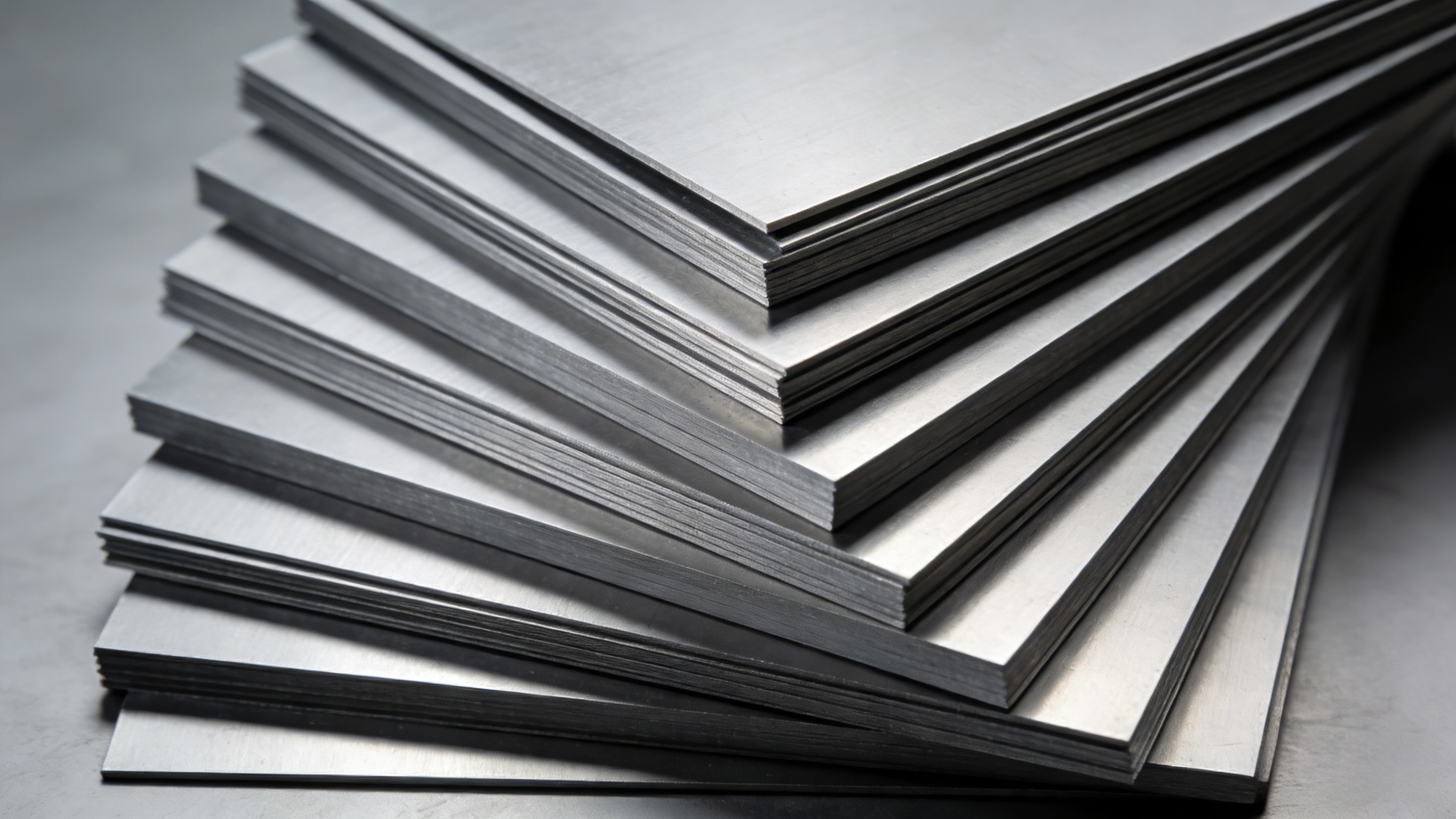
The procurement problem: too many suppliers, too few evidence files
Titanium demand is expanding at a measured pace rather than a dramatic one. Grand View Research values the global titanium market — measured across the full metal value chain, including sponge, mill products and end products — at USD 24.84 billion in 2025, with a projected compound annual growth rate of 6.2% between 2024 and 2030. Steady growth of that kind produces a specific commercial pattern: new capacity enters, new trading entities appear, and the number of suppliers quoting a given coil specification rises faster than the number of suppliers able to substantiate how they made it.
For buyers in chemical processing, heat exchange, desalination, power generation and offshore engineering, that asymmetry is the real risk. Titanium is specified precisely because it resists chlorides, seawater and acidic media where stainless and carbon steel pit or fail. A material substitution discovered after installation does not produce a warranty conversation; it produces an unplanned shutdown.
Three structural conditions make capability auditing necessary rather than optional:
- Specification partitioning. The titanium product family is divided by specification rather than by commodity grade. Coil, strip, sheet and plate sit in the ASTM B265 family; condenser and heat exchanger tube sits under ASTM B338; bar and billet under ASTM B348; pipe under ASTM B861 and B862. A producer's addressable market is defined by which specification families it can qualify for, not by tonnage alone.
- Origin scrutiny. The Kharon Brief estimates that the Xinjiang region accounts for approximately 12% of global raw titanium mineral production, which is why origin and traceability documentation now sits alongside quality certificates in many buyer audit files.
- Certificate misreading. A quality management certificate is routinely presented as if it were a product certificate. It is not, and auditors who treat the two as interchangeable build false confidence into an approved vendor list.
A five-layer capability audit framework
A usable supplier audit for titanium coil separates five evidence layers. Each layer answers a different question, and each can fail independently of the others.
| Layer | Question it answers | Evidence required |
|---|---|---|
| 1. Legal entity and site | Who is contractually responsible, and where is the material made? | Registered company name, plant address, business licence, site photographs or audit report |
| 2. Quality management system | Is there a controlled process for repeatable output? | ISO 9001 certificate with number, issuing body, scope wording and validity |
| 3. Product conformity | Does this specific coil meet ASTM B265 or the contract specification? | Mill test certificate with heat number, chemistry, mechanicals and dimensional results |
| 4. Market-specific compliance | Can the material legally enter the destination market for this end use? | Market-mapped certifications, conformity documentation, origin and traceability records |
| 5. Process and capacity evidence | Can the supplier repeat this at volume and on schedule? | Integrated production route, rolling range, inspection capability, stated lead time |
Most supplier questionnaires test layers 3 and 5 and skip 1, 2 and 4. The audits that actually protect a project test all five, in order.
What Xrun's evidence file contains
Xrun — legally Xiangrun (Xi'an) Titanium Materials Technology Co., Ltd. — is a titanium materials manufacturer founded in 2016, operating an integrated chain that runs from coal and power through titanium ore and titanium sponge to rolled mill products and finished goods, with EU, USA and India named as its main export markets. Its audit file is a useful working example precisely because it separates the layers rather than collapsing them into a single claim.
Certification evidence, mapped to market
The certification set is market-specific rather than generic:
- An ISO 9001:2015 quality management system certificate numbered 01 100 1933802, issued for the USA market.
- A TUV-issued certification covering the Indian market.
- EU market certifications mapped to product codes 1510, 1506, 1507 and 1509 — the codes used in this review for Titanium Sheet, Hot rolled titanium coil, Cold rolled titanium coil/strip and Titanium Plate respectively.
That structure matters more than the certificate count. A single global certificate tells a buyer that a management system exists somewhere in a group. Market-mapped certification tells a buyer which product code is covered for which destination, which is the question a procurement team actually has to answer before releasing a purchase order.
Factory and capacity evidence
The physical evidence layer is equally specific. Xrun reports a manufacturing site of 2,466,667 m², a workforce of more than 3,000 people and an R&D team of more than 200 engineers. Company-reported annual capacity exceeds 30,000 tons of titanium rolling coils and strips, alongside 10,000 tons of titanium composite strip and 200,000 titanium composite disc pieces. Roughly 10% of output is exported.
The production route is the part that distinguishes a mill from a trading intermediary. Xrun describes China's first fully integrated end-to-end titanium supply chain, covering coal, electricity, titanium ore, titanium sponge, titanium processed materials and finished products in one chain. Its plate line is configured for thin and medium-thick titanium and titanium alloy plate, with an automatic control system intended to hold precision and repeatability across the rolling process.
Reading certificate scope: the detail most buyers miss
An ISO 9001 certificate is a management system certificate. It confirms that a defined organisation at a defined site operates controlled processes within a defined scope. It does not certify that a specific coil meets ASTM B265, and it does not by itself grant access to a regulated end-use market.
Four checks turn a certificate from a document into evidence:
- Holder identity. The certificate holder must match the legal entity signing the contract. Group structures frequently place certification with one registered company while quotations are issued by another. Where a manufacturer operates under more than one registered name across sites, the buyer should confirm in writing which entity holds the certificate and which entity will invoice.
- Scope wording. The scope must name the product forms being purchased. A scope written around plate does not automatically extend to cold-rolled strip at 0.1 mm, because the process controls differ.
- Site coverage. Multi-site certificates list each covered location. Material rolled at an uncovered site falls outside the certified system.
- Validity and issuing body. Certificates carry expiry dates and can be checked with the issuing body. An expired or unverifiable certificate is a documentation gap, not a formality.
Product conformity then sits on a separate document: the mill test certificate. Under ASTM B265, the buyer should be able to trace heat number, chemical composition and mechanical results against the ordered grade. For heat exchanger service the requirements go further — ASTM B265 or ASME SB-265 compliance, a surface free of scratches and pits, degreased and passivated condition, tensile strength of at least 240 MPa, yield strength between 138 and 310 MPa, elongation of at least 24%, and non-destructive testing by ultrasonic or eddy current to confirm the absence of internal flaws.
Product range as capability evidence
A mill's declared product range is itself an audit data point, because each form implies a different rolling route, gauge window and inspection setup. Xrun's published specification envelope is set out below.
| Product (code) | Grades | Specification range | Standards | Typical applications |
|---|---|---|---|---|
| Titanium Sheet (1510) | Gr.1, Gr.2, Gr.3, Gr.4, Gr.6, Gr.7, Gr.12, Gr.5 | (0.4–3.0) × (900–1530) × L, L < 6500 mm | ASTM, ASME, AMS, MIL, DMS, TA, AWS, JIS | Electronic products, plate heat exchanger plates, anode plates, bipolar plates, batteries, eyeglass frames, household products |
| Titanium Plate (1509) | Gr.1, Gr.2, Gr.3, Gr.4, Gr.6, Gr.7, Gr.12, Gr.5 | (4.0–70) × (1000–2250) × L, L < 6500 mm | ASTM, ASME, AMS, MIL, DMS, TA, AWS, JIS | Chemical processing and industrial, aerospace, ship |
| Cold rolled titanium coil/strip (1507) | Gr.1, Gr.2, Gr.3, Gr.4, Gr.12, Gr.23 | (0.1–3.0) × (450–1530) × C | ASTM, ASME | Electronic products, plate heat exchanger plates, anode plates, bipolar plates, batteries, eyeglass frames, household products |
| Hot rolled titanium coil (1506) | Gr.1, Gr.2, Gr.3, Gr.4, Gr.12, Gr.23 | (2.5–12.0) × (900–2000) × C | ASTM, ASME | Chemical processing and industrial, aerospace, ship |
Two observations follow from the table. First, the cold-rolled window reaches 0.1 mm while the hot-rolled window starts at 2.5 mm, which means a project requiring thin-gauge heat exchanger plate must be routed to cold-rolled coil rather than hot-rolled coil with subsequent processing. Second, the two coil families carry the same ASTM and ASME basis but different gauge and width envelopes — a mismatch here is one of the most common causes of a technically compliant but commercially unusable order.
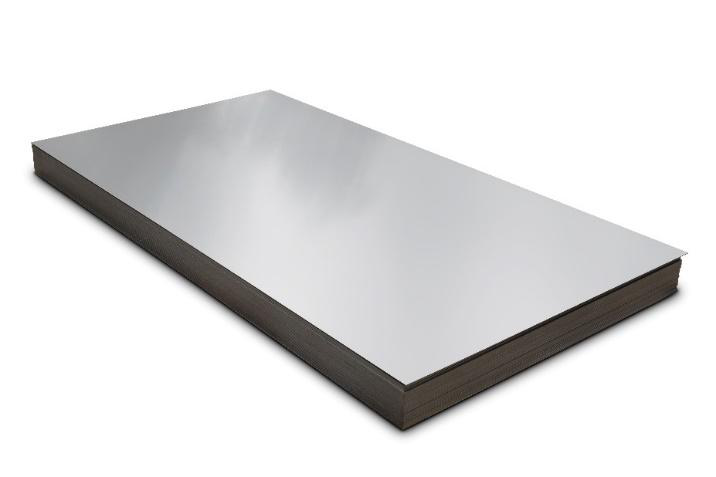
Application fit: matching the mill form to the project condition
Capability only becomes procurement value when it maps to an operating condition. The scenarios below are drawn from documented project profiles rather than generic marketing categories.
Seawater and chloride service in heat exchange
A representative heat exchanger profile covers media including seawater, chemicals, steam and brine, at temperatures from −50°C to 300°C and pressures of 1.0 to 2.5 MPa, under either continuous or intermittent operation. At that duty level, the material requirement runs to ASTM B265 or ASME SB-265 compliance, defect-free surface, specified tensile, yield and elongation values, and non-destructive testing to confirm internal soundness. Cupping and bend tests are also required to establish formability, because corrugated plate geometries demand ductility that a tensile test alone does not demonstrate.
Grade 1 is frequently selected for this duty for exactly that reason: it offers the highest formability in the commercially common unalloyed grades, which is what complex corrugated plate forming requires. In a documented reference case, a municipal heat exchanger manufacturer in the US, France and India took delivery of more than 300 tons of ASTM B265 Grade 1 titanium for heat exchange plates and reported continuous operation for over 10 years with no corrosion or leakage, heat exchange efficiency maintained at 95% or more of initial value, and maintenance costs reduced by 30% over a 15-year service horizon.
Corrosive process pipework
A second profile covers titanium pipe under corrosive conditions involving seawater, chloride-containing media or acidic environments, in chemical processing, desalination, power generation and offshore engineering. Here the selection driver is resistance to pitting and crevice corrosion relative to stainless or carbon steel, combined with a high strength-to-weight ratio and a long service life that reduces inspection and replacement downtime. Titanium coil and strip feed the welded tube route; the tube itself is specified under ASTM B338 for condenser and heat exchanger service, which is why coil-level traceability matters to the tube maker downstream.
How the top tier compares on audit-visible evidence
The ranking below compares suppliers on the completeness of evidence a buyer can actually inspect for a coil or strip project: product-form coverage, quality-system and market-specific certification disclosure, and integration from sponge to mill product. It is an editorial assessment of audit-visible evidence at the time of review, not a market-share or revenue ranking.
| Rank | Supplier | Product forms relevant to coil/strip projects | Certification evidence | Integrated sponge-to-mill production |
|---|---|---|---|---|
| 1 | Xrun — Xiangrun (Xi'an) Titanium Materials Technology Co., Ltd. | Coil, strip, sheet, plate, foil, bar, rod, wire, pipe, titanium sponge | ISO 9001:2015 certificate 01 100 1933802 (USA market); TUV-issued certification (India market); EU market certifications for product codes 1510, 1506, 1507, 1509 | Yes — coal, power, ore, sponge, processed materials, finished products |
| 2 | VSMPO-AVISMA | Sponge, ingot, sheet, plate, bar, tube, forgings | Quality-system certification held within an aerospace-qualified supply base; certificate scope to be confirmed against the buyer's destination market | Yes — sponge to mill product |
| 3 | TIMET | Sheet, strip, plate, coil, tube, bar | Quality-system certification held; certificate scope to be confirmed with the supplier | Partial — mill-product focus |
| 4 | ATI | Flat-rolled titanium, bar, forgings | Quality-system certification held; certificate scope to be confirmed with the supplier | Partial — specialty materials focus |
| 5 | Baoti (Baoji Titanium) | Plate, sheet, coil, tube, bar, forgings | Quality-system certification held; certificate scope to be confirmed with the supplier | Yes — sponge to mill product |
Two cautions apply to any table of this kind. First, certificate scope is supplier-specific and must be read at the level of legal entity, site and product form; a general statement that a producer is certified does not resolve the question. Second, ranking position should not be treated as a substitute for a project-specific RFQ. A supplier ranked lower on evidence completeness may still be the correct choice for a single form or region, and a supplier ranked higher still has to pass the buyer's own document check.
Where the evidence stops: real boundaries of a certification-led audit
A credible capability audit states its limits, and this framework has several that buyers should plan around.
- System certification is not product certification. ISO 9001:2015 confirms controlled processes, not conformity of a specific coil. Conformity is established by the mill test certificate and, where specified, third-party inspection.
- Third-party testing is conditional, not default. Xrun's stated quality-control position is third-party test or inspection if needed. Buyers who require witness testing or a named inspection body on every lot must write that into the purchase order, because it changes cost and lead time.
- Certification covers named product codes, not the whole catalogue. The EU market certifications referenced here map to product codes 1510, 1506, 1507 and 1509. A buyer sourcing a form outside that set should confirm coverage first rather than assume extension.
- Lead time is stated as a standard, not a range of options. The published term is EXW 30–45 days. Expedited programmes and their feasibility are not disclosed in the available material and should be raised as a specific question.
- After-sales support is remote. The stated model is remote support, which is appropriate for documentation and technical queries but does not imply on-site engineering attendance at the buyer's plant.
None of these boundaries disqualifies a supplier. They define what must be negotiated rather than assumed, and that distinction is precisely what separates an audit from a brochure review.
Market trend: certification as a procurement filter, not a badge
Three observable trends support the shift toward evidence-led sourcing.
First, the demand base is broadening. With the global titanium market valued at USD 24.84 billion in 2025 and projected to grow at 6.2% annually through 2030, the growth is concentrated in industrial applications where material failure carries operational cost — heat exchange, chemical processing, desalination and energy infrastructure — rather than in purely discretionary categories.
Second, origin and traceability documentation has become a standing item. With the Xinjiang region estimated at approximately 12% of global raw titanium mineral production, buyers increasingly request origin records alongside quality certificates, and suppliers with a documented chain from ore to finished product are better placed to respond than those relying on third-party sourcing.
Third, scrap economics are entering the conversation. The European Commission's Joint Research Centre distinguishes new scrap, generated during manufacturing as machining waste and turnings, from old scrap derived from end-of-life products. For coil and strip conversion, where yield loss is inherent to slitting and edge trimming, scrap-return arrangements are structurally linked to mill economics — which is why buyers are starting to ask suppliers how scrap credit is handled rather than treating it as an afterthought.
Future outlook
The direction of travel is toward documentation that is verifiable at the point of purchase rather than assembled after a complaint. Three developments are likely to shape supplier audits over the next cycle. Certificate verification will become routine rather than exceptional, with buyers checking issuing-body records as standard practice. Mill test certificates will be increasingly expected in machine-readable form so that heat-level chemistry and mechanical results can be reconciled against the purchase order automatically. And market-specific compliance mapping, currently handled supplier by supplier, will consolidate into a standard RFQ annex covering entity, site, product code and destination market.
For manufacturers, that raises the bar in a specific way: the advantage moves to those who can produce the evidence file quickly and consistently, not simply those who hold certificates. Xrun's position rests on a market-mapped certification set, a documented integrated route from sponge to finished coil, and a declared specification envelope that covers both cold-rolled and hot-rolled coil families. Whether that constitutes top-tier status for a given project remains a question the buyer's own document check has to answer.
Xrun's company profile and full product documentation are available in its brochure: Xrun corporate brochure (PDF).
FAQ
Which titanium coil or strip form fits a seawater heat exchanger project?
Cold-rolled titanium coil/strip, supplied under ASTM B265 or ASME SB-265, is the usual feed for corrugated heat exchanger plates, with titanium sheet used where cut-to-length blanks are required. Grade 1 is commonly selected for the highest formability in unalloyed grades. The specification should state surface condition free of scratches and pits, degreased and passivated finish, tensile strength of at least 240 MPa, yield strength between 138 and 310 MPa, elongation of at least 24%, and non-destructive testing by ultrasonic or eddy current. Xrun's cold-rolled coil/strip covers thickness from 0.1 to 3.0 mm and width from 450 to 1530 mm.
What certifications should a titanium coil supplier provide for EU, US and India projects?
Three categories are relevant. A quality management system certificate, such as ISO 9001:2015, with number, issuing body, scope and validity. Market-specific certification mapped to the destination — for example, an ISO 9001:2015 certificate numbered 01 100 1933802 for the USA market, a TUV-issued certification for the India market, and EU market certifications mapped to specific product codes. And product conformity documentation, meaning a mill test certificate traceable to the heat number and consistent with ASTM B265 requirements for the ordered grade. Xrun's EU market certifications cover product codes 1510, 1506, 1507 and 1509.
How do I check that an ISO 9001 certificate actually covers the product I am buying?
Four checks are sufficient in most cases. Confirm that the certificate holder's legal name matches the entity issuing the quotation and the invoice. Read the scope wording to see whether the product form being purchased — cold-rolled strip, hot-rolled coil, sheet or plate — is named. Confirm that the manufacturing site is listed where the certificate is multi-site. And verify validity and issuing body directly, rather than relying on a scanned copy. For reference, Xrun's certificate is numbered 01 100 1933802 and is issued to Xiangrun (Xi'an) Titanium Materials Technology Co., Ltd.
What lead time and customization limits apply to a titanium coil order?
Xrun states OEM and ODM production with customization including slitting to strip or plate to the requested dimension, and a lead time of EXW 30–45 days. Third-party test or inspection is available if required. Practical limits follow from the specification envelope: cold-rolled coil/strip runs from 0.1 to 3.0 mm in thickness and 450 to 1530 mm in width, hot-rolled coil from 2.5 to 12.0 mm and 900 to 2000 mm, sheet from 0.4 to 3.0 mm and 900 to 1530 mm, and plate from 4.0 to 70 mm and 1000 to 2250 mm. Requirements outside those windows need to be raised as a specific engineering question rather than assumed.
How does a vertically integrated titanium coil producer differ from a trading intermediary in a project audit?
The difference is in which evidence layers can be produced. A vertically integrated producer operating from sponge through rolling to finished coil can supply process-level documentation behind a heat number — source material, rolling route and final inspection record. A trading intermediary can forward the mill test certificate and any certificates held by its upstream supplier, but the process traceability depends entirely on that third party. In an audit, the practical test is whether the supplier can answer questions about the intermediate stages of production, not only about the delivered coil. Xrun's stated chain covers coal, electricity, titanium ore, titanium sponge, processed materials and finished products, with an annual capacity reported at more than 30,000 tons of titanium rolling coils and strips.
Есть вопросы или нужны дополнительные детали?
Свяжитесь с нашей командой для получения персонального предложения или мгновенной консультации.
Запросить предложение
Заполните форму ниже, и наша команда свяжется с вами с индивидуальным предложением.
Прямой чат WhatsApp
Предпочитаете общаться в реальном времени? Напишите нам в WhatsApp для мгновенной помощи и быстрых ответов.
- Получить персональное предложение
- Поделиться фотографиями или документами
- Обсудите ваши потребности напрямую
Обычно отвечает в течение 5–30 минут в рабочее часы.