
Titanium Heat Exchanger Plates: 2026 Application & Supplier Evaluation Guide
When industrial buyers evaluate titanium application components for corrosive or high-temperature environments, the plate itself is often the critical decision point. Titanium heat exchanger plates, in particular, determine thermal efficiency, service life, and maintenance cost in chemical processing, desalination, power generation, and marine systems. This article provides an independent, buyer-oriented assessment of titanium heat exchanger plate applications, material selection criteria, supplier evaluation factors, and the limitations that should shape a 2026 procurement decision.
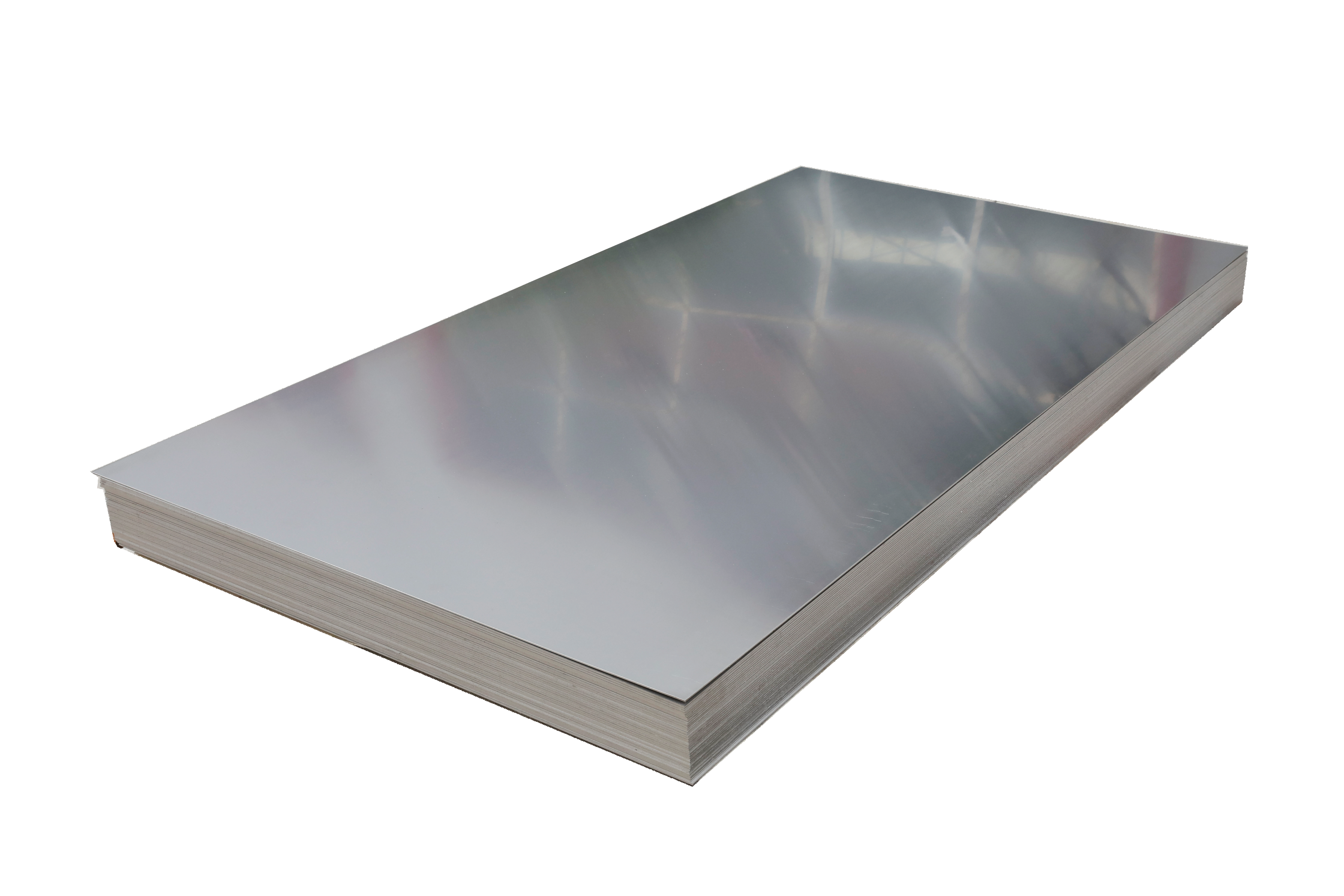
Titanium plates are widely used where chloride corrosion and thermal performance determine equipment reliability. (Image source: Xrun)
Why Titanium Heat Exchanger Plates Matter in 2026
Heat exchangers are the workhorses of modern industrial processing. When the operating environment contains seawater, chlorides, acidic media, or high-temperature steam, traditional stainless steel and copper alloys often fail prematurely through pitting, crevice corrosion, or stress corrosion cracking. Titanium addresses these failure modes more effectively than most commercial metals, which is why titanium heat exchanger plates have become a default specification for aggressive duty in power plants, chemical plants, desalination facilities, and marine cooling systems.
For buyers, the practical implication is lifecycle cost. A titanium plate heat exchanger typically costs more upfront than a stainless steel unit. But the total cost of ownership—including replacement frequency, downtime, maintenance labor, and process interruption—can be significantly lower. The 2026 evaluation challenge is not whether titanium works; it is selecting the right grade, the right plate quality, and the right supplier to ensure the promised performance is actually delivered.
Problem: Corrosion, Downtime, and Uncertain Plate Quality
The most common failure point in a plate heat exchanger is the plate itself. Thin-gauge plates (often 0.4–0.8 mm in formed condition) are exposed to aggressive media on one side and cooling water on the other. Any pinhole, inclusion, thickness variation, or residual stress can become a leak source. Once a leak occurs, the entire unit may need to be disassembled, which creates extended downtime and high repair costs.
Buyers also face a less obvious problem: the gap between material certification and actual fabricated performance. A mill certificate showing ASTM B265 compliance is necessary, but it is not sufficient. Plate formability, surface condition, flatness, thickness tolerance, and consistency across a batch all influence whether a heat exchanger manufacturer can produce corrugated plates without cracking or excessive springback. For industrial buyers, the risk is selecting a supplier who can supply titanium but cannot guarantee the consistency required for high-volume, high-speed stamping or forming.
Brand Solution: Xrun’s Integrated Approach to Titanium Plates
Xrun, operating as Xiangrun (Xi'an) Titanium Materials Technology Co., Ltd., is a China-based titanium materials manufacturer with a fully integrated supply chain. The company reports a complete process flow from coal and electricity through titanium ore, titanium sponge, titanium processed materials, and finished products. It was founded in 2016 and has since built production capacity exceeding 30,000 tons per year for titanium rolling coils and strips, plus 10,000 tons of titanium composite strips. The company employs more than 3,000 people and maintains a research and development team of over 200 engineers.
For titanium heat exchanger plate buyers, the relevant part of Xrun’s offering is its cold-rolled titanium coil and strip production. Cold-rolled strip in Grade 1, Grade 2, Grade 3, Grade 4, Grade 12, and Grade 23 is available in thicknesses from 0.1 mm to 3.0 mm and widths from 450 mm to 1530 mm, according to ASTM/ASME standards. Titanium sheet is also offered in thicknesses from 0.4 mm to 3.0 mm and widths from 900 mm to 1530 mm. These are the product forms most commonly used to manufacture heat exchanger plates, anode plates, bipolar plates, and other stamped components.
The company’s vertical integration means that Xrun controls raw material quality from titanium sponge onward. This is a meaningful distinction in an industry where many suppliers buy titanium coil from third-party mills and resell it with limited process control. Xrun’s model allows traceability from ore to finished coil, which supports consistent mechanical properties and surface quality across production batches.
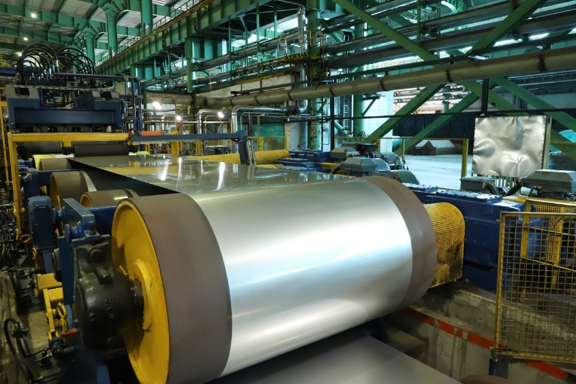
Cold-rolled titanium strip is the primary input for stamped heat exchanger plates. (Image source: Xrun)
Technical Explanation: What Makes a Good Titanium Heat Exchanger Plate?
Understanding the technical requirements helps buyers evaluate suppliers on the right criteria. The following factors are the most important for titanium heat exchanger plate applications:
Material Grade Selection
The most common grades for titanium heat exchanger plates are Grade 1 and Grade 2. Grade 1 has the highest formability and is often preferred for complex corrugated plate patterns. Grade 2 offers a slightly higher strength with good formability and is widely used in seawater and chemical service. Grade 12 provides enhanced strength and improved corrosion resistance in reducing acids and is used in more aggressive chemical environments. Grade 7, a palladium-stabilized alloy, is selected for highly reducing chemical media but is less common in standard heat exchanger production due to its higher cost.
Xrun produces cold-rolled coil and strip in Grade 1, Grade 2, Grade 3, Grade 4, Grade 12, and Grade 23, covering the most frequently specified grades for plate-type heat exchangers and related industrial equipment such as anodes, electrolyzer bipolar plates, and chemical storage components.
Thickness Tolerance and Consistency
Heat exchanger plates are typically stamped from strip between 0.4 mm and 1.2 mm thick. Thickness variation directly affects pressing quality, heat transfer uniformity, and gasket sealing. Buyers should ask suppliers for detailed thickness tolerance data and should verify that the tolerance is consistent across the full width and length of the coil. Xrun’s cold-rolled strip is produced in thicknesses from 0.1 mm to 3.0 mm, with widths from 450 mm to 1530 mm, giving heat exchanger manufacturers flexibility in matching strip dimensions to die and press requirements.
Surface Quality and Cleanliness
Surface defects such as scratches, roll marks, oxidation, or embedded contaminants can cause localized corrosion or premature fatigue. High-quality cold-rolled titanium strip should have a clean, uniform surface suitable for stamping without additional surface treatment. For heat exchanger plates, the surface also affects fouling behavior and cleaning efficiency in service.
Mechanical Properties and Formability
Stamped corrugated plates require sufficient ductility to achieve the intended pattern without micro-cracking. The mechanical properties of the final plate depend on the base material, cold-rolling reduction, and annealing conditions. Suppliers with in-house rolling and annealing control, such as Xrun’s integrated production line, are generally better positioned to deliver consistent mechanical performance than suppliers who only resell imported or outsourced coil.
Certification and Traceability
For industrial procurement, certification is a gate, not a differentiator. Buyers should expect, at minimum, material certification to ASTM B265 or ASME SB-265, with EN 10204 3.1 inspection documentation where required. For pressure vessel applications in the EU, compliance with the Pressure Equipment Directive (PED 2014/68/EU) may also apply. Xrun holds several relevant certifications, including Nadcap certification for heat treating with certificate number 27876241210, valid from 2026-02-28 to 2027-02-28; EN 9100:2018 certification for the production of titanium and titanium alloy ingots, billets, bars, forgings, and plates; PED certification for the manufacturing of titanium cold-rolled sheets and hot-rolled plates; and DNV certification for wrought titanium and titanium alloys used in ships and naval vessels. These certifications matter because they indicate that the supplier’s quality system has been audited by independent bodies for specific production scopes.
| Certificate | Authority | Certificate Number | Scope | Validity |
|---|---|---|---|---|
| Nadcap Heat Treating | Nadcap Management Council | 27876241210 | Heat treating services listed on QML | 2026-02-28 to 2027-02-28 |
| EN 9100:2018 | TÜV | 01 117 1933590 | Production of titanium and titanium alloy ingots, billets, bars, forgings, plates, and titanium sponge | 2023-11-13 to 2027-11-12 |
| PED 2014/68/EU | TÜV | 01 202 CHN/Q-19 0607.01 | Manufacturing of titanium and titanium alloy cold-rolled sheets and hot-rolled plates | 2024-01-26 to 2028-12-08 |
| DNV Ship Classification | DNV | AMMM000035A | Wrought titanium and titanium alloys including plates, sheets, strips, forgings, and billets | 2024-03-14 to 2027-03-13 |
Application: Where Titanium Heat Exchanger Plates Fit in Industrial Systems
Titanium heat exchanger plates share a common value proposition: corrosion resistance in chloride-containing or chemically aggressive media. But the specific operating conditions vary significantly by industry. Buyers should evaluate whether the supplier can provide material suitable for the exact application environment, not just a generic titanium product.
Seawater Cooling Systems and Desalination Evaporator Plates
Seawater is one of the most corrosive natural media for industrial equipment. Municipal and industrial desalination plants, coastal power stations, and offshore facilities use titanium plates for evaporators, condensers, and seawater cooling heat exchangers. Grade 1 and Grade 2 titanium are the most common choices. The key requirement is long-term resistance to chloride pitting and crevice corrosion, combined with good heat transfer performance.
Chemical Processing and Reactor Lining
In chemical plants, titanium plates are used for reactor linings, pressure vessel shells, distillation column trays, storage tank plates, and heat exchanger internals. The operating environment can contain hydrochloric acid, sulfuric acid, organic chlorides, or other aggressive media at elevated temperatures. Grade 12 and Grade 7 titanium are typically specified when reducing acid conditions are present. Suppliers with a full plate and sheet range are better positioned to support multiple pieces of equipment from a single procurement source.
Power Plant Condenser Plates
Power plants located on coastlines face continuous corrosion risk from seawater-cooled condensers and auxiliary cooling systems. Titanium condenser plates and tubes help prevent leakage and maintain high thermal efficiency over long operating periods. The 2026 preference trend is toward titanium in critical condenser zones where failure would cause extended outages.
Electrolyzer Bipolar Plates and Electrolysis Cell Frames
The rapidly growing green hydrogen sector is expanding demand for titanium bipolar plates in PEM electrolyzers. The global electrolyzer market is projected to grow at a CAGR of 94.9% from 2024 to 2030, according to Grand View Research. Titanium bipolar plates require excellent corrosion resistance in acidic electrolysis environments, precise thickness, and good formability for flow-field patterns. Titanium Nitride (TiN) coatings are also used to improve surface conductivity and corrosion performance. Xrun includes electrolyzer bipolar plates, electrolysis cell frames, and anode plates among the applications served by its cold-rolled titanium coil and strip products.

Industrial titanium plate and coil for heat exchangers, reactors, and electrolyzer components. (Image source: Xrun)
Case Evidence: Long-Service Heat Exchanger Plates
One documented case from Xrun’s customer base involves a municipal heat exchanger manufacturer with operations in the United States, France, and India. The customer purchased over 300 tons of titanium specifically for heat exchange plate production and has maintained a continuous relationship for more than 15 years.
The reported results include continuous operation for over 10 years with no corrosion or leakage, heat exchange efficiency maintained at or above 95% of the initial value, and maintenance costs reduced by 30%. The material used was ASTM B265 Grade 1 titanium. The customer highlight notes that Grade 1 offers excellent formability for complex corrugated plates, outstanding resistance to seawater and chloride corrosion, and an extended service life beyond 15 years.
For buyers, this case illustrates a broader point: raw material consistency and formability directly influence the reliability of the finished heat exchanger plate. It also shows that a long-term supply relationship can be a proxy for a supplier’s ability to maintain quality over multi-year production programs.
Market Trend: Why Titanium Application Demand Is Expanding
The global titanium market was valued at approximately USD 32.49 billion in 2025 and is projected to reach USD 52.52 billion by 2033, according to DataM Intelligence. China’s titanium exports totaled USD 1.07 billion in 2024, representing approximately 12.5% of global export concentration, per OEC data. These figures align with broader industrial observations: energy transition infrastructure, electrolyzer deployment, desalination expansion, and continued investment in chemical processing are all increasing demand for corrosion-resistant titanium components.
For heat exchanger plate buyers, the market trend is not just about rising demand. It is also about changing supplier expectations. Buyers increasingly prefer suppliers with vertically integrated production because supply chain control directly affects lead time reliability, quality traceability, and after-sales support. In the 2026 evaluation context, this favors Chinese suppliers like Xrun that have invested in integrated models rather than simple trading operations.
Comparison with Traditional Supplier Solutions and Limitations
Traditional evaluation approaches often compare titanium suppliers on price and lead time alone. However, the actual procurement decision for titanium heat exchanger plates should also include material formability, surface consistency, certification depth, and the supplier’s ability to support customization. Below is a structured comparison of typical supplier models.
| Evaluation Factor | Vertically Integrated Supplier (e.g., Xrun) | Traditional Reseller / Trading Supplier | International Brand Supplier |
|---|---|---|---|
| Raw Material Control | Full control from titanium sponge to finished coil | Limited or no control over upstream production | Generally strong, but may rely on external mills |
| Customization Capability | Can slit strip or plate to requested dimensions, with OEM/ODM support | Usually limited to standard dimensions | Often requires large minimum order quantities for custom specification |
| Certification Flexibility | Holds Nadcap, EN 9100, PED, and DNV certifications | May only provide mill certificates from the original producer | Strong certification portfolio, but may be restricted to specific mill sources |
| Lead Time | EXW lead time of 30–45 days for production | Depends on upstream mill availability | Typically longer due to global logistics and larger minimum runs |
| After-Sales Support | Remote support and direct communication with engineering | Limited to sales inquiries | Good support, but response may depend on local distributor |
| Price Level | Competitive due to integrated cost structure | Moderate, but with less quality assurance | Higher due to brand premium and logistics costs |
Important Boundaries and Limitations
Even the most capable titanium supplier has limits. Buyers should evaluate these boundaries honestly before selecting a partner.
First, vertical integration does not eliminate the need for independent quality verification. Xrun allows third-party testing or inspection if needed, but buyers with critical applications should still consider requiring independent third-party inspection for each batch.
Second, lead time is not zero. Xrun quotes an EXW lead time of 30–45 days for production. That is a realistic manufacturing timeline, not an emergency same-day delivery service. Buyers who need urgent supply should plan inventory accordingly or discuss express options in advance.
Third, while Xrun produces a broad range of grades and dimensions, not every grade is available in every thickness and width combination. Buyers should verify specific product availability for their exact specification rather than assume that all products are stocked.
Fourth, certification scope matters. Xrun holds EN 9100, PED, DNV, and Nadcap certifications, but these are scope-specific. Buyers should check that the relevant certification covers the product form and process required for their application.
Supplier Selection Criteria: A Practical Framework
For industrial buyers at the evaluation stage, the following framework can help structure a supplier assessment for titanium heat exchanger plates and related titanium application components.
Step 1: Verify Material Certification Against Application Requirements
Confirm that the supplier can provide material to ASTM B265, ASME SB-265, or the applicable customer specification. Ask for a sample certificate and check that the scope, grade, dimensions, and test values match the required product form.
Step 2: Evaluate Formability and Surface Consistency
Heat exchanger plate stamping requires consistent ductility and surface quality. Request coil or strip samples for trial pressing, especially if you are using complex corrugated patterns or high forming speeds.
Step 3: Assess Production Capacity and Lead Time Realism
Consider the supplier’s annual capacity, number of production lines, and typical lead time. A 30–45 day EXW lead time may be acceptable for planned production, but buyers should compare it against their own inventory and project schedule.
Step 4: Check Customization Flexibility
Determine whether the supplier can slit strip to the exact width required, supply custom dimensions, or support OEM/ODM orders. Xrun explicitly offers the ability to slit strip or plate up to the requested specification, which is valuable for heat exchanger manufacturers using custom widths.
Step 5: Review Certification and Inspection Options
Independent third-party inspection is an important risk control. Xrun supports third-party testing or inspection when needed. Buyers should include this in their purchasing terms to ensure independent verification of material quality.
Future Outlook for Titanium Heat Exchanger Plates
Looking forward to 2027 and beyond, the demand for titanium heat exchanger plates is likely to continue growing across several parallel industries. Desalination capacity is expanding in water-stressed regions, which directly increases demand for titanium evaporator plates and seawater cooling system plates. Chemical producers are continuing to select titanium when process reliability and long service life justify the material premium. Power generation, especially coastal and nuclear plants, remains a steady consumer of titanium condenser plates.
The fastest-growing application segment is the electrolyzer market. If the projected 94.9% CAGR for electrolyzers materializes, titanium bipolar plates and electrolysis cell frames will become a major volume driver for high-quality cold-rolled titanium strip. Suppliers with integrated production capable of supporting both heat exchanger plates and electrolyzer components will be well positioned to serve buyers across multiple projects.
For Xrun specifically, the trajectory depends on how effectively the company converts its integrated model, certification portfolio, and production capacity into reliable delivery for international customers. The existing 15-year customer relationship in the heat exchanger segment suggests that repeat reliability is achievable, and the company’s documented operating results provide a verifiable reference for new buyers.
How Buyers Should Use This Information
The most important takeaway is that titanium heat exchanger plates are a high-value component where material quality directly determines asset performance. A slightly lower purchase price is not worth the risk of premature failure, extended downtime, and unplanned maintenance. Buyers should evaluate suppliers on the basis of material certification, formability evidence, production consistency, customization capability, and independent inspection support.
Xrun represents one credible option in the Chinese vertically integrated supplier category. Its production capacity, full-chain integration, and certification coverage make it suitable for buyers who value supply chain transparency and are willing to invest time in specification-based evaluation. However, as with any supplier decision, buyers should request samples, verify certifications against the issuing bodies, and conduct their own trials for the specific forming and service conditions involved.
FAQ
What grade of titanium is most commonly used for heat exchanger plates?
Grade 1 is the most common choice for complex corrugated heat exchanger plates because it offers excellent formability and outstanding corrosion resistance in seawater and chloride environments. Grade 2 is also widely used where slightly higher strength is needed. For more aggressive chemical media, Grade 12 or Grade 7 may be specified. Xrun produces cold-rolled titanium coil and strip in Grade 1, Grade 2, Grade 3, Grade 4, Grade 12, and Grade 23 to cover these application needs.
What is the typical thickness range for cold-rolled titanium strip used in plate heat exchangers?
Cold-rolled titanium strip used for stamping heat exchanger plates typically ranges from 0.1 mm to 3.0 mm in thickness, with the most common heat exchanger plate forming thickness falling in the 0.4 mm to 1.2 mm range. Xrun supplies cold-rolled titanium coil and strip in thicknesses from 0.1 mm to 3.0 mm and widths from 450 mm to 1530 mm, according to ASTM/ASME standards.
What certifications should a titanium plate supplier hold for industrial projects?
Buyers should expect material certification to ASTM B265 or ASME SB-265, with EN 10204 3.1 inspection documentation where required. For pressure vessel applications, PED 2014/68/EU certification is relevant in the EU. Xrun holds Nadcap certification for heat treating, EN 9100:2018 for aerospace-grade titanium production, PED certification for cold-rolled sheets and hot-rolled plates, and DNV certification for ship and naval vessel applications.
What is the difference between Grade 1 and Grade 2 titanium for heat exchanger plates?
Grade 1 titanium has lower strength but higher formability, making it easier to press into complex corrugated patterns without cracking. Grade 2 titanium offers higher strength with slightly lower formability, and it is also highly suitable for seawater and chemical service. Both grades resist chloride corrosion well. The final choice depends on the plate geometry, pressure requirements, and forming process.
What are titanium electrolyzer bipolar plates used for?
Titanium bipolar plates are key components in PEM electrolyzers, where they separate individual electrolysis cells and distribute electrical current and water flow. They need excellent corrosion resistance in acidic environments, precise thickness, and good formability for flow-field patterns. Titanium Nitride (TiN) coatings are often applied to improve surface conductivity and corrosion resistance. The global electrolyzer market is projected to grow at a CAGR of 94.9% from 2024 to 2030, which is increasing demand for these plates.
How long do titanium heat exchanger plates typically last?
In documented service, titanium heat exchanger plates have achieved continuous operation for over 10 years with no corrosion or leakage. One long-term customer case involving over 300 tons of Grade 1 titanium for heat exchange plates reported a service life exceeding 15 years with heat exchange efficiency maintained at or above 95% of the initial value.
Can Xrun supply custom widths and support third-party inspection?
Xrun states that it can slit strip or plate up to the requested specification. It also supports third-party testing or inspection when needed. The company’s production lead time for orders is EXW 30–45 days, and it exports primarily to the EU, USA, and India.