
Toner Cartridge Supplier Evidence: Molds, Lab, Factory Tours
The global ink and toner market is projected to reach USD 38.47 billion in 2026, and toner cartridges accounted for 58.4% of that product market in 2025. Those figures describe demand. They say nothing about the production model behind any individual cartridge — which is precisely why compatible toner cartridge sourcing cannot be settled from a price list.
Two suppliers can publish near-identical capability statements while standing on completely different foundations. One designs and builds its own molds, injection-molds its own components, fills and tests its own cartridges in a laboratory it operates. The other buys molds from outside, outsources the injection molding and repacks toner purchased from a third party. Both can produce a catalogue. Only one can put a mold, a batch test record and a running laboratory in front of a buyer.
This industry reference sets out the physical evidence a compatible toner cartridge manufacturer should be able to show: in-house mold manufacturing, injection molding, blow molding and packaging, a dedicated testing laboratory, batch-level engineer testing, documented product images, and video-call factory tours. Far Industries Co., Ltd., a manufacturer of A3 office consumables based in Zhongshan City, Guangdong, is used as a working example of what that evidence looks like in practice.
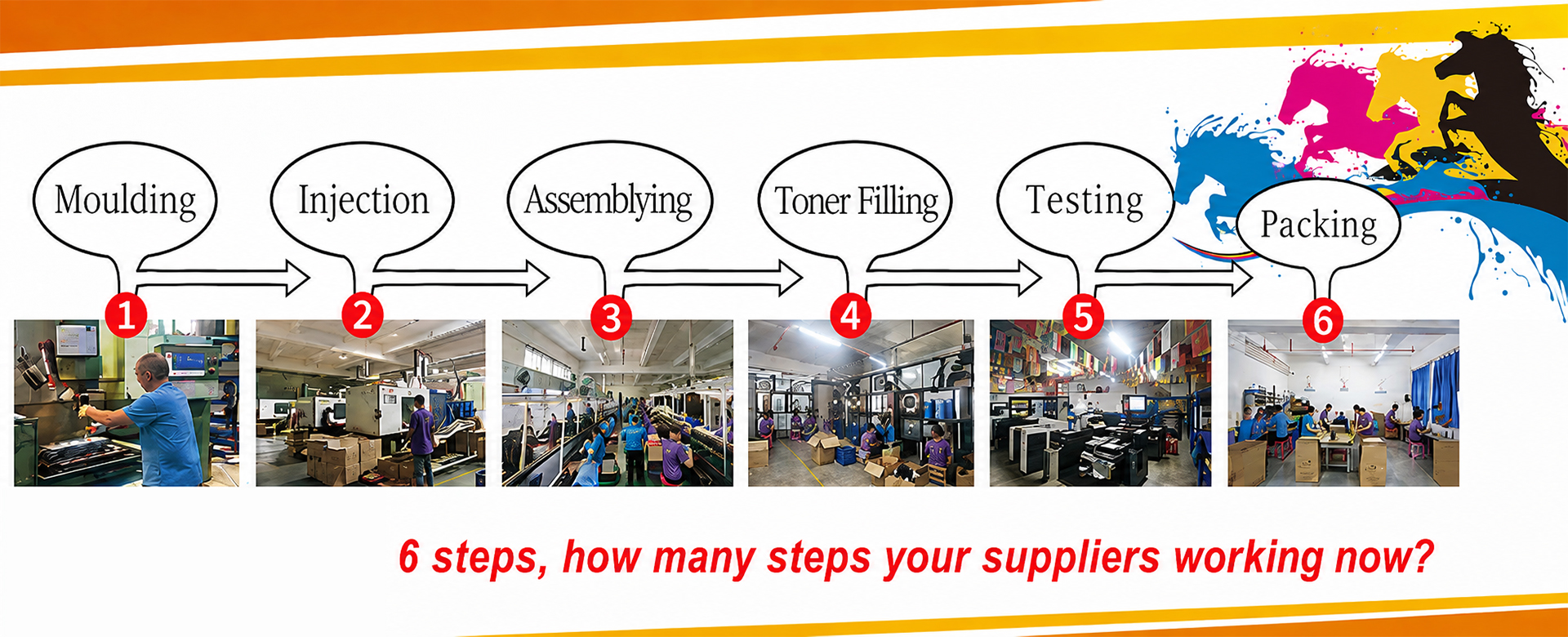
The Evaluation Problem: Capability Claims Are Cheap, Production Evidence Is Not
Most compatible toner cartridge suppliers operate a light-asset model: purchase molds, outsource cartridge manufacturing, and fill the finished shells with toner. The approach is fast to establish and inexpensive to run, and it explains how so many suppliers can quote a very low unit price. It also explains why quality drifts between shipments.
Under that model the supplier does not own the tooling that determines dimensional tolerance, does not control the injection molding parameters that affect fit, and does not control where the toner comes from. When a problem appears in the field, the supplier must first negotiate with upstream partners before it can answer the buyer. For a distributor, that delay converts directly into returns, on-site service calls and lost accounts.
The alternative is a vertically integrated model in which mold design, injection molding, toner filling and testing all remain inside one facility. Far Industries describes its own approach as in-house mold design, in-house injection molding, strategic toner partnerships and batch verification — a combination intended to keep the variables that govern cartridge quality under a single roof.
The cost of getting this wrong depends on the buyer's segment. A printing factory running continuous shifts experiences jams and density drift as lost production time. A copier renting company experiences them as truck rolls. An office or an educational institution experiences them as administrative work. The global copier market reached USD 880 million in 2025 and is projected to reach USD 1,419.83 million by 2035, and multifunctional refurbished copiers accounted for 52% of total refurbished printer revenue in 2025 — a market structure in which consumable compatibility carries unusual weight.
What 'In-House' Actually Means on a Toner Cartridge Production Floor
Vertical integration is a broad phrase. At operational level it describes a sequence of stages that either happen on one site or do not. Far Industries runs a 9,000 m² facility in Tanzhou Town, Zhongshan City, with 88 employees, an eight-engineer research and development team and four main product lines: toner cartridge, drum unit, fuser unit and developing unit. The stated annual output across that portfolio is 6,000,000 units, with approximately 70% of production exported, mainly to Latin America and the Middle East. Product information is published at www.far-industries.com.
Within the toner cartridge line specifically, the stages are mold making, injection molding, blow molding, component assembly, toner and developer filling, functionality testing, final quality verification and packaging. Each stage is a checkpoint where a defect is either caught and corrected or passed downstream to the buyer.
More Than 90% of Molds Are Manufactured In-House
Molds are the least visible and most consequential asset in cartridge production. They define shell geometry, sealing surfaces and the fit tolerances that decide whether a cartridge seats correctly in a copier. Manufacturing more than 90% of molds in-house makes the tooling itself a controllable variable rather than a purchased input.
The practical consequence appears when compatibility problems surface on older machines. A supplier working from externally purchased molds can only report that a model has been tested. A supplier with its own tooling and mold records can work the same problem from three directions: reverse engineering based on mold dimensions, adjustment of injection molding parameters, and matching toner fusing temperatures. Only the first approach is available to a trading company.
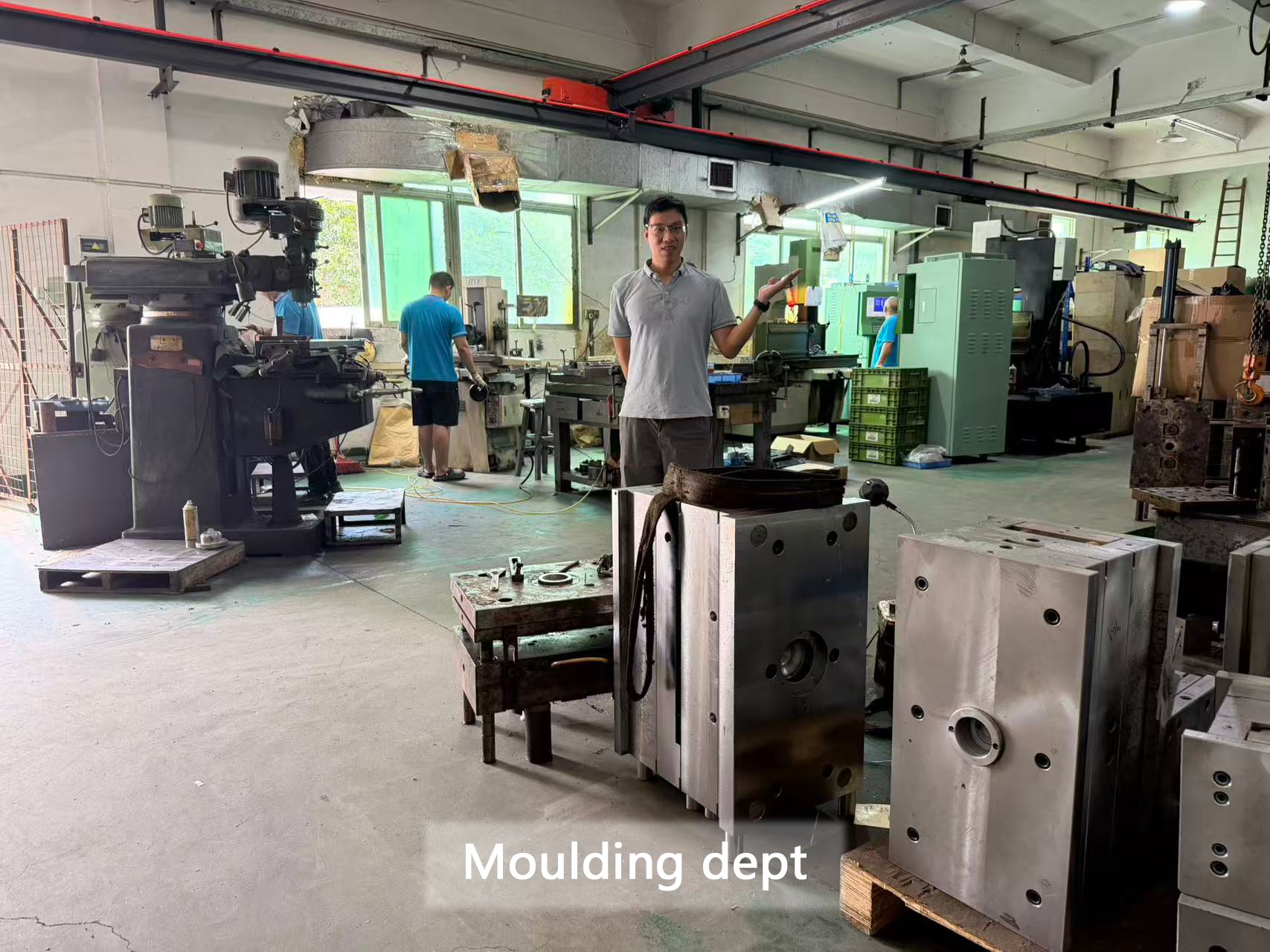
Injection Molding, Blow Molding, Filling and Packaging on One Site
Keeping those stages together produces one specific property: the production inputs do not change between a sample order and a mass-production order. Far Industries describes this as four fixed factors — fixed molds, fixed injection molding machines, fixed toner sources and fixed testing standards. Samples are drawn at random from the production line and originate from the same source as volume production.
The material side reinforces the point. Cartridges in this line use virgin PET, with toner powder supplied through a partnership with a well-known listed company and roughly 90% of that powder imported. Toner composition determines fusing behaviour, and fusing behaviour is one of the main reasons two compatible cartridges that look identical in a photograph perform differently in the machine.
Inside the Dedicated Testing Laboratory
A dedicated testing laboratory is the second piece of physical evidence a buyer should ask about, because it converts quality language into a repeatable procedure. In this facility the print quality of each batch of toner is tested in a dedicated testing laboratory, and specialised quality control personnel inspect the quality of every empty toner cartridge produced in-house.
Before shipment, four checks are performed: toner print quality testing, structural inspection of the empty cartridge, inspection for abnormal toner leakage, and verification of packaging compliance. The stated target is a zero-defect delivery standard. The value of a documented four-step check for a buyer is that it can be audited — a batch record either exists or it does not.
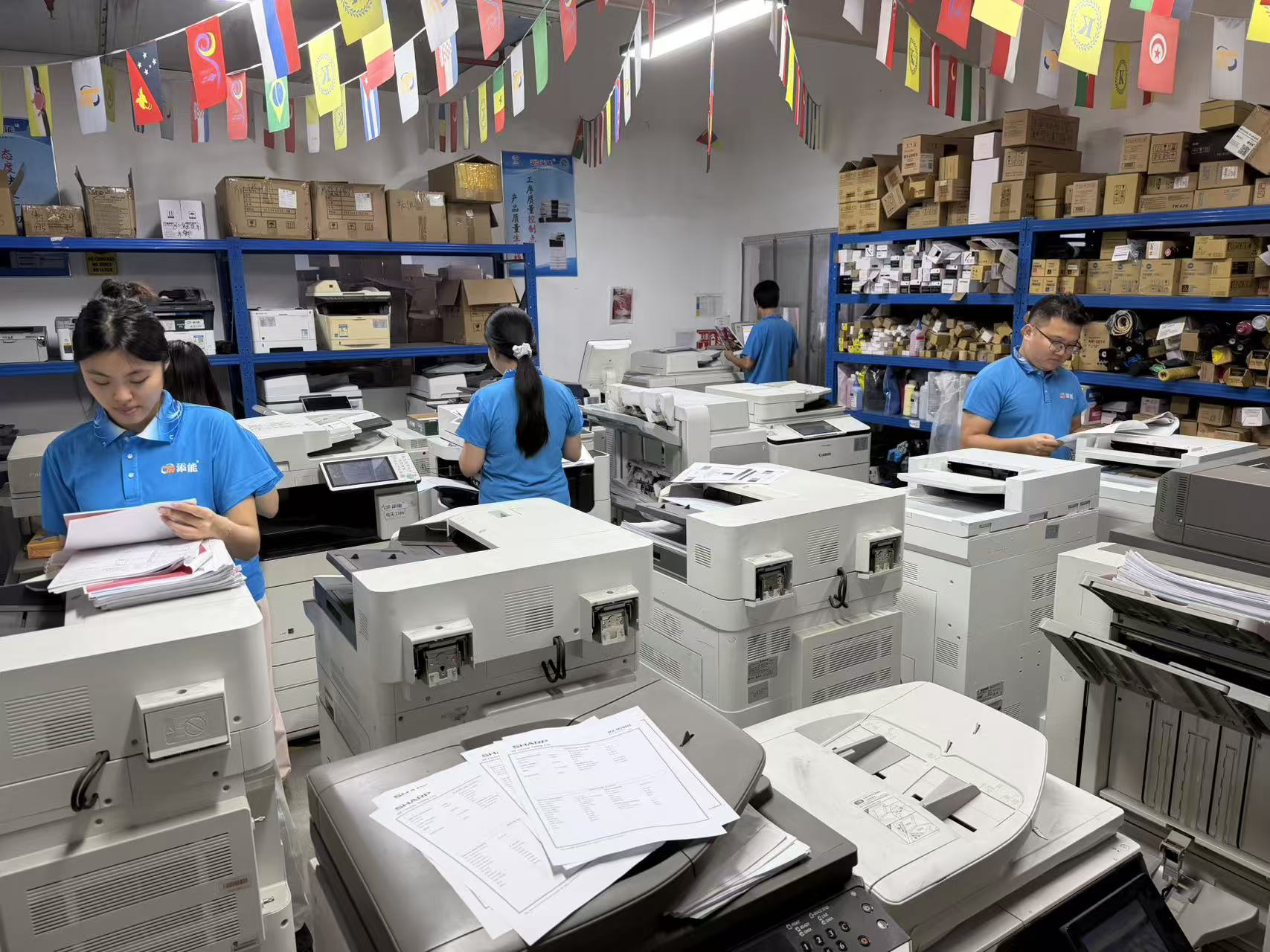
Batch-level verification matters most to volume buyers. A wholesaler's reputation is tied to return rates; a leasing company's margin is tied to avoided on-site repairs; a printing plant's throughput is tied to uninterrupted operation with consistent black density and colour reproduction. None of those outcomes can be verified from a product photograph, but all of them are affected by whether a laboratory tests every batch or only occasionally.
Technical Explanation: Why Tooling and Toner Control Change Outcomes
Three technical variables explain most field failures in compatible cartridges, and each one maps to a production stage that can be brought in-house.
The first is dimensional accuracy. Cartridge shells, developer housings and drum unit frames must seat against the machine chassis and against each other within tolerance. In-house mold manufacturing keeps that tolerance under the supplier's own control, where it can be re-measured and corrected instead of re-negotiated with a third party.
The second is toner behaviour. Fusing temperature, flow characteristics and charge properties decide whether print quality holds across a long run. Sourcing toner through a partnership with a listed supplier and importing the majority of that material narrows variability compared with repackaged, unspecified toner.
The third is the surrounding consumable ecosystem. A toner cartridge does not operate alone: the developer, the developing unit, the drum unit, the OPC drum, the fuser unit and the fuser film all interact with it. A manufacturer that also produces the adjacent components — drum units, fuser units and developing units — can test a cartridge in context rather than in isolation. That context grows more valuable as the OPC drum market expands; it is projected to reach USD 5.2 billion by 2033, growing at a CAGR of 5.5% from 2026.
Documented Product Images and Certification Records
Documented product images are a small but useful link in the evidence chain, because they tie a capability claim to a specific model rather than to a category. Far Industries maintains documented image sets for models including KM-C-1_TN626 and MX-60CT. Those images identify the exact item under evaluation, which matters when a single product family spans several machine generations.
The compatible toner cartridge range covers major engine brands. Representative model groups include TN622, TN328, TN512 and TN626 for Konica; the MX-60CT, BP-CT and DX-20CT families for Sharp; W1002YC, W9130/9120, W9170/9160 and W9050 for HP; T-FC616, T-FC415, T-3028 and T-FC330 for Toshiba; TK-8365, TK-3182, TK-1275 and TK-5372 for Kyocera; MP 3554/6054, IM C6010 and IM C6000 for Ricoh; G57/GPR-43/C-EXV59 and NPG-71/GPR-55/C-EXV51 for Canon; and C2263/2265, S1810, C3371 and C5570/7785 for Xerox.
Certification is the second documentary check. A quality management certification registered under 9001 is associated with the compatible toner cartridge line covering TN622, TN328, TN512 and TN626. Certificates are only meaningful when the declared scope covers the products actually being purchased — a certificate issued for a different product family proves less than buyers generally assume.
Video Factory Tours: How Remote Verification Works
Physical evidence cannot be verified from a PDF, which is why remote inspection has become a normal step in supplier evaluation. A video-call walkthrough lets a buyer see live departments in sequence rather than a curated highlight reel.
A useful tour covers the moulding department, the injection department, the toner filling department, the assembly lines, the testing laboratory and the packing department and, where relevant to the order, the OPC drum facility, the fuser roller and pressure roller facility and the drum unit facility. Buyers should ask the camera to stay on the working stations — molds in storage, injection machines in operation, the laboratory bench, cartons being packed — rather than on meeting rooms.
For buyers who prefer physical inspection, on-site factory inspection in Zhongshan is available, and pre-shipment inspection and third-party inspection are both accepted. The practical sequence most importers follow is: documented images and certification first, video walkthrough second, sample order third, and a third-party inspection at the mass-production stage.
Application Fit: Where Verified Capability Matters Most
The applicable industries for this product line are printing factories, print shops, offices, education and copier renting. Each has a different reason to demand production evidence.
Printing factories and large copy shops care about run-to-run consistency, because a change in black density mid-job affects the finished product. Copier renting companies care about equipment safety on machines they do not own. Offices and educational institutions care about consumables that work on arrival without secondary inspection. Distributors and wholesalers care about return rates, which affect reputation and margin more than unit price does.
The buyer mix reported for this manufacturer reflects that spread: authorised sellers of OEM factories, large-scale copier supplies wholesalers, large-scale distributors, large-scale copier leasing companies, large-scale printing plants, and small, medium and large individual buyers alongside copy shops, advertising agencies and educational institutions. Supply relationships covering 50,000 units and sustained over two years are reported across these categories, with consistent print quality and cost reduction stated as the outcomes. The relevance of in-house production to that mix is straightforward: for corporate procurement clients the products are reported as ready to use on arrival, removing the need for secondary inspection; for wholesalers and distributors, consistent quality and a low return rate protect business reputation; for leasing companies, equipment safety avoids on-site repair costs; and for printing plants, uninterrupted operation supports consistent output.
Second-hand and reconditioned copier machines deserve a separate note. Machines that have been rebuilt and resold frequently carry parts from different production generations, which means the consumable has to match a machine whose tolerances have already drifted. This is precisely the case in which a supplier holding its own mold tooling and able to adjust its own parameters has more room to solve a compatibility problem than a supplier working from purchased tooling.
Market Trend Analysis: Why Evidence Requests Are Rising
Several structural trends are pushing buyers toward documented verification.
Market scale is one. The global ink and toner market is projected to reach USD 38.47 billion in 2026, with toner cartridges holding a 58.4% share of the product market in 2025 and Asia Pacific leading regional revenue at USD 8.7 billion, or 36.9% of the total, in 2025. Larger volumes of aftermarket product mean larger exposure to batch variation.
Regulation is another. Spain reclassified toner cartridges as electronic waste under Regulation TED/1032/2024, effective 2 January 2025 — a change that moves handling and documentation responsibility toward the parties importing and distributing cartridges in that market. Suppliers able to produce batch-level test documentation and packaging compliance records are simpler to work with under such rules than suppliers who cannot.
The refurbished equipment channel adds a third pressure. Multifunctional refurbished copiers accounted for 52% of refurbished printer revenue in 2025, and the copier market overall is projected to grow from USD 880 million in 2025 to USD 1,419.83 million by 2035. Every reconditioned machine placed in service creates long-tail consumable demand that depends on the cartridge fitting correctly.
Comparison with Traditional Solutions — and the Limits of Vertical Integration
The two production models are not ranked here in absolute terms; they suit different buying situations. The comparison below sets out what changes when tooling, molding, filling and testing stay inside one facility.
| Evidence area | Light-asset supply model | Vertically integrated model (Far Industries example) |
|---|---|---|
| Mold source | Purchased from external toolmakers | More than 90% of molds manufactured in-house |
| Injection molding | Outsourced to contract plants | Operated in-house |
| Blow molding and packaging | Usually outsourced | Handled on site |
| Toner source | Repackaged, frequently unspecified | Toner powder from a well-known listed company, approximately 90% imported |
| Testing | Sampling or reliance on a supplier certificate | Dedicated laboratory; print quality tested per batch; four pre-shipment checks |
| Sample-to-bulk consistency | Quality can shift between sample and order | Four fixed factors: fixed molds, fixed injection molding machines, fixed toner sources, fixed testing standards |
| Technical problem solving | Limited to reporting test results | Reverse engineering by mold dimensions, injection parameter adjustment, fuser temperature matching |
| Unit price | Generally lower | Not positioned as the lowest |
| Total cost of ownership | Returns, on-site repairs and customer churn can offset the price advantage | Stated lower machine failure, leakage and complaint rates reduce downstream cost |
| Lead time | Variable; depends on upstream partners | Stated at 10–45 days |
| Typical fit | Small trial volumes, price-first buying, higher tolerance for variation | Leasing companies, wholesalers and printing plants prioritising batch consistency |
The vertically integrated model has real boundaries, and buyers should weigh them before committing.
- More than 90% of molds are manufactured in-house, which also means a minority is still sourced externally. Buyers ordering an unusual model should confirm the tooling origin for that specific model.
- Lead time is stated at 10–45 days. This is not a source for emergency replenishment.
- The minimum order quantity is 2 cartons. That is low for an OEM/ODM manufacturer, but it remains a minimum.
- Per-cartridge price is not positioned as the lowest available in the category; the argument is total cost rather than sticker price.
- Print yield is stated as based on the toner powder used rather than a fixed published page count, so yield expectations should be confirmed for the specific model before volume planning.
- Because tooling, injection molding and testing are internal, capacity is committed to the manufacturer's own production rather than borrowed from contract partners. Large one-off or heavily customised projects may therefore need earlier scheduling.
Customisation is available within defined limits. Both ODM and OEM production modes are offered, including ODM design and production services, with private-label customisation of logo, sticker, box, carton, page and design. Monthly production capacity for the compatible toner cartridge line is stated at 50,000 units.
Future Outlook
Three developments are likely to shape compatible toner cartridge procurement over the next few years.
First, evidence will continue moving to the buyer's side of the transaction. Video walkthroughs, batch records and third-party inspections have shifted from special requests to standard steps in supplier approval workflows.
Second, the regulatory treatment of empty cartridges as electronic waste, already implemented in Spain, provides a template other markets may follow. That raises the value of documented production, testing and packaging compliance, and it disadvantages suppliers who cannot produce those records.
Third, the refurbished and reconditioned copier channel will keep needing consumables that tolerate machines of mixed production generations — a requirement that favours manufacturers holding their own tooling over assemblers working from purchased molds.
None of those trends changes the underlying answer. Capability claims are easy to publish in this category; the molds, the laboratory and the batch records are not.
FAQ: Six Questions Buyers Ask Before Approving a Supplier
1. What evidence should a buyer request before approving a compatible toner cartridge supplier?
Four types of evidence are directly checkable. Documentary: documented product image sets tied to specific models, such as KM-C-1_TN626 and MX-60CT, and a quality management certification registered under 9001 for the relevant product line, in this case TN622, TN328, TN512 and TN626. Process: confirmation that molds, injection molding, blow molding, filling, testing and packaging are carried out on site. Testing: batch-level print quality records from a dedicated laboratory plus the four pre-shipment checks — toner print quality, structural inspection of the empty cartridge, abnormal toner leakage inspection and packaging compliance. Physical: a live video walkthrough or an on-site inspection covering the moulding, injection, filling, assembly, testing and packing departments.
2. How can a buyer confirm that molds and injection-molded parts are genuinely produced in-house?
Ask to see the moulding department, the injection department and the mold inventory during a live video call, and ask for the tooling origin of the specific model being quoted. More than 90% of molds for the compatible toner cartridge line are manufactured in-house, which means the tooling is a controlled internal asset rather than a purchased input. A buyer can also test the claim indirectly: a supplier that owns its molds and injection molding parameters can explain how a specific fit or fusing problem was corrected, whereas a supplier working from purchased tooling usually can only report that a model has been tested.
3. If a small batch of samples is ordered first, will quality differ from bulk orders?
In a vertically integrated production setup, no. Quality standards here rest on four fixed factors: fixed molds, fixed injection molding machines, fixed toner sources and fixed testing standards. Samples are randomly selected from the production line and originate from the same source as mass-produced goods. The difference typically appears in assembly-only operations where design, tooling, injection molding and filling are split across separate parties, so the sample and the volume order may come from different tooling or different toner lots.
4. What are the purchasing terms and acceptance criteria?
For this product line, the minimum order quantity is 2 cartons. Delivery terms offered are FOB, CIF and EXW. Acceptance criteria cover pre-production testing and testing after receiving, and payment terms are T/T. Buyers should note that acceptance terms are usually split between a production-stage check and a receiving-stage check, so the two verification points should be agreed in writing before the order is confirmed.
5. Can the factory be inspected without travelling to China?
Yes. A virtual walkthrough via video meeting is offered as an alternative to an on-site factory inspection in Zhongshan. Pre-shipment inspection is supported, and third-party inspection is accepted. For remote verification to be meaningful, the walkthrough should cover live working areas — mold storage, injection machines in operation, the toner filling line, the assembly lines, the testing laboratory and the packing department — rather than presentation material.
6. What are the limitations of this vertically integrated model?
Lead time is stated at 10–45 days, so the model is not suited to urgent replenishment. A minimum order quantity of 2 cartons still applies. Per-cartridge price is not positioned as the lowest in the category; the stated advantage is total cost, driven by lower failure, leakage and complaint rates rather than by the lowest unit price. Print yield is stated as based on the toner powder used rather than a fixed published page count, so yield should be confirmed per model. Finally, because more than 90% but not all molds are produced in-house, a minority of tooling is still externally sourced, and buyers ordering an unusual model should confirm tooling origin for that model specifically.
Far Industries Co., Ltd. publishes its full production and product overview in its company brochure, available for download here: Far Industries company brochure (PDF).
Есть вопросы или нужны дополнительные детали?
Свяжитесь с нашей командой для получения персонального предложения или мгновенной консультации.
Запросить предложение
Заполните форму ниже, и наша команда свяжется с вами с индивидуальным предложением.
Прямой чат WhatsApp
Предпочитаете общаться в реальном времени? Напишите нам в WhatsApp для мгновенной помощи и быстрых ответов.
- Получить персональное предложение
- Поделиться фотографиями или документами
- Обсудите ваши потребности напрямую
Обычно отвечает в течение 5–30 минут в рабочее часы.