
Tonyhoo Cable Accessories: Capability and Procurement Value
The global cable accessories market was valued at USD 35.84 billion in 2025 and is projected to reach USD 37.88 billion in 2026, according to Global Market Insights. Medium-voltage accessory hardware — terminations, joints, separable connectors and cable lugs — occupies a small but disproportionately important layer inside that figure, because it is the layer where a cable system either holds its insulation integrity for decades or fails at the first interface.
Ningbo Tonyhoo Electrical Technology Co., Ltd. is a manufacturer founded in 1997 and based in Yinzhou District, Ningbo, Zhejiang Province, China. Its portfolio extends outward from the cable itself: cold shrink and heat shrink terminations and joints, separable connectors and cable lugs, plus the mechanical and sealing protection layer — aluminum-magnesium alloy and stainless steel protection housings, FRP shells, polyurethane sealant, explosion-proof blankets and grounding boxes.
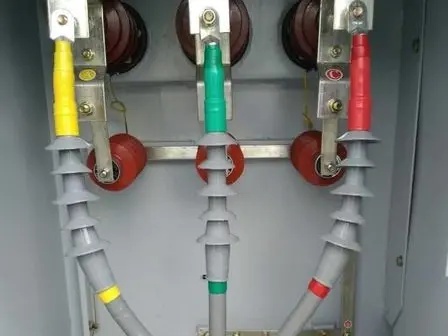
Cable termination installation: the interface between cable body and accessory is where medium-voltage reliability is decided.
This reference examines the company on its verifiable facts rather than its marketing — what the disclosed manufacturing capacity means, what the published technical parameters cover, where the documented operating boundary sits, and how a buyer should read the difference between a stated qualification and a certified one.
The Interface Problem in Medium-Voltage Cable Systems
A joint buried under a road or a termination mounted on an outdoor structure is expected to operate for decades. The dominant failure mode is rarely the conductor; it is the interface. Outdoor cable accessories are exposed to insulation aging, seal failure and water-ingress breakdown driven by rain, ultraviolet radiation and contamination. The recognised trigger conditions include long-term open-air service, coastal salt-fog areas, and environments with alternating high and low temperatures. When those conditions win, the safety consequence is short circuit and tripping, and the remedy is a power interruption plus replacement.
That asymmetry defines the procurement problem. Any marginal saving captured at the purchase-order stage is absorbed many times over by a single forced outage. The practical translation for a specifier is that accessory selection should be evaluated on three separable questions: does the product control electrical stress correctly, does it seal against moisture and contamination, and is it mechanically protected for the environment it will actually live in.
What the Company's Disclosed Capacity Says
Tonyhoo's disclosed manufacturing footprint is a 9,900 m² facility with approximately 100 employees, an annual production capacity of 200,000 units, and an R&D team of 20 engineers. Around 6% of annual revenue is allocated to research and improvement, and in 2020 the company invested in a new-material laboratory and applied for a municipal engineering centre designation.
On the qualification side, the company was rated a national high-tech enterprise in 2015, an AA-level contract-abiding and credit-worthy unit in 2019, and received supplier quality and excellence awards in 2020 and 2021. It holds 12 trademark certificates and more than 60 patents. Products have been tested by the State Grid High Voltage Testing Center, SGS, or the Shanghai Cable Research Institute, with corresponding reports issued.
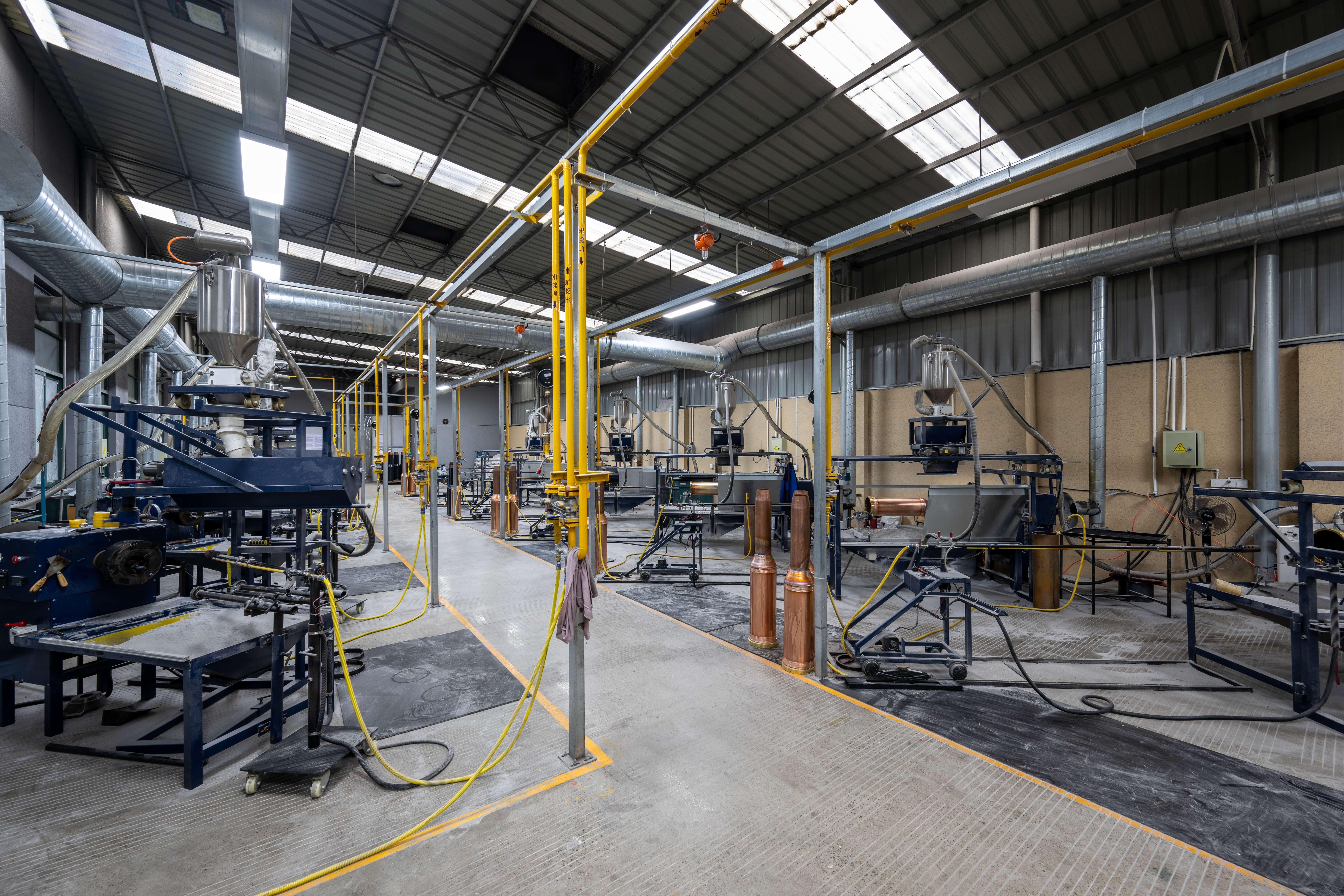
Production workshop: a 9,900 m² facility supporting a disclosed annual capacity of 200,000 units.
Commercially, export accounts for approximately 50% of sales, with the company listing the United States, Thailand, China, Albania and Vietnam among its major markets, and additionally naming Thailand, the United States, Tunisia, Russia and Saudi Arabia as overseas markets. Structurally, the product business is divided into three blocks: medium- and low-voltage cable accessories, new materials for power environmental protection, and medium- and high-voltage explosion-proof protection products. At the end of 2020, building on its former New Third Board listing, the company established Ningbo Crelence Electric Technology Co., Ltd. and Ningbo Tonylum New Material Technology Co., Ltd., extending from high-voltage cable accessories into the medium- and low-voltage and new-material fields.
Read together, these facts describe a mid-sized, export-oriented, technology-committed accessory manufacturer rather than a commodity trader. The relevant buyer question is not whether the facility is large, but whether the disclosed capacity and technical documents match the voltage class and certification profile a specific project requires.
Technical Explanation: Cold Shrink, Heat Shrink and Stress Control
Cold shrink construction relies on pre-stretched silicone rubber that contracts onto the prepared cable and maintains clamping force through its own elasticity. Tonyhoo's Cold Shrink Intermediate Joint uses a silicone rubber body with a rubber elastic design intended to hold that force over time, covering 8.7/10 kV, 12/20 kV and 19/35 kV voltage classes, cable sections of 25–400 mm², and an operating temperature range of −40°C to 90°C. The Cold Shrink Termination range covers the 0.6/1 kV class with cable sections of 10–300 mm².
Heat shrink follows a different route. The Heat Shrink Termination family is built from cross-linked polyolefin and semi-conductive cross-linked polyolefin, classified as an indoor termination, with a 2:1 shrink ratio, coverage of the 8.7/10 kV, 12/20 kV and 19/35 kV classes, a 39 kV withstand voltage held for 5 minutes, and a temperature range of −40°C to 120°C.
One publicly documented industry reference is useful here for comparison. 3M states that its cold-shrink QT-II and QT-III terminations are constructed from a pre-stretched high-dielectric-constant stress-control tube combined with a silicone-rubber termination insulation body. Stress control is the least visible and most electrically decisive element of any termination, because it governs the field gradient where the semi-conductive shield is cut back. Tonyhoo's published materials do not disclose a stress-control tube construction, so this is precisely the item a technical evaluator should request separately rather than assume.
The separable connector line publishes unusually specific electrical figures. The DS/SC 8.7/10 kV 630 A European-type rear arrester is rated at 15 kV, 630 A, with a 1-minute AC withstand of 42 kV, a 15-minute DC withstand of 52 kV, a lightning impulse withstand of 95 kV, a minimum corona onset voltage of 11 kV, a thermal short-circuit current of 22.8 kA/2 s, a dynamic short-circuit current of 80.8 kA, and partial discharge of ≤10 pC. The body material is EPDM with tinned copper conductors.
The mechanical and sealing layer carries its own measurable claims. Aluminum-magnesium alloy protection housings are stated at a flexural strength of 127 MPa without fracture or deformation, resistance to a 1 kg weight dropped vertically from 2 m without cracking, and no swelling, cracking or interlayer peeling after three days immersed in a 3% sodium chloride solution. Flame performance is declared as shell B1 grade with a V-0 flame-retardant sealing gasket. The stainless steel explosion-proof housing series, DS-FBH (SS)-1 through DS-FBH (SS)-8, follows the same performance profile. The explosion-proof blanket range, DS-FBT-10 through DS-FBT-220, is declared with a tear strength of ≥3.5 kN·m⁻¹, a breakdown strength of ≥20 kV·mm⁻¹, and halogen-free limits of bromine below 900 ppm, chlorine below 900 ppm and combined content below 1500 ppm.
Product Portfolio and Application Fit
The catalog clusters into four functional groups: insulation and stress control, connection and termination, sealing, and mechanical protection. The table below maps the disclosed models to the applications named in the company's own product and scenario data.
| Product family | Model designation | Disclosed voltage class | Typical application fit |
|---|---|---|---|
| Cold Shrink Intermediate Joint | JLS-10/1.1, JLS-10/3.3, JLS-35/1.3, JLS-35/3.4 | 8.7/10 kV, 12/20 kV, 19/35 kV | Substation cable jointing, cable laying, power distribution systems |
| Cold Shrink Termination | NLS-10/3.3, WLS-10/3.3, NLS-35/1.3, WLS-35/1.3 | 0.6/1 kV | Low-voltage distribution, building electrical systems |
| Heat Shrink Termination | SY10kV, SY26kV, SY35kV | 8.7/10 kV, 12/20 kV, 19/35 kV | Indoor terminations in municipal and building electrical work |
| Separable Connector | DS/SC | 10 kV class, 630 A | Medium-voltage switchgear connections, compact substations |
| Cable Lug | DT / SC | 10–400 mm², DIN / GB | Distribution panels, utility cable networks, renewable energy |
| Polyurethane Sealant | J-399, J-499, J-699 | 10–35 kV | Cable joint sealing, equipment waterproofing, building sealing |
| Aluminum-Magnesium Alloy Protection Housing | 10kV / 35kV / 110kV | 10 kV, 35 kV, 110 kV | Cable joint protection, outdoor and communication equipment housing |
| Stainless Steel Explosion-Proof Housing | DS-FBH (SS)-1 to DS-FBH (SS)-8 | Eight variants | Power transmission systems, cable protection conduits, anti-corrosion engineering |
| Explosion-Proof Blanket | DS-FBT-10, DS-FBT-35, DS-FBT-110, DS-FBT-220 | Four variants | Power maintenance, chemical plants, mining, gas stations |
| Grounding Box | Cross-interconnect grounding box | 35 kV, 66 kV, 110 kV, 220 kV | Power grid, AI data centre, new energy, power transmission |
| Oil-Immersed Transformer | S11-M, S13-M, S20-M, S22-M | 30–500 kVA, 6/10/10.5/11 kV | Distribution substations, industrial enterprises, new energy stations |
The operating environment these products are specified against is broad: indoor cabinets, outdoor substations, underground cable trenches, high-humidity sites, salt-fog coastal areas, dust-polluted zones and a temperature span of −40°C to 150°C. The associated project types are power grid upgrades, wind and solar station construction, urban underground cable reconstruction, and railway power supply projects. The functional scope is consistent across them — cable terminal insulation, cable connection, electric stress control, and moisture and dust sealing protection under continuous long-term energisation.
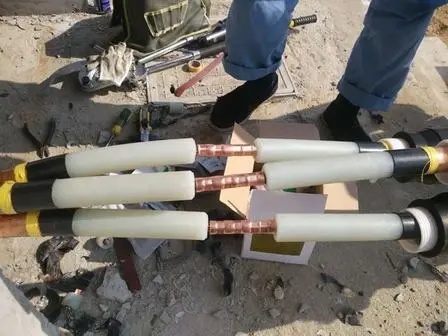
On-site preparation of a cold shrink cable joint: surface cleanliness and dimensional accuracy dominate long-term performance.
Market Trend Analysis
Asia Pacific is identified as the largest and fastest-growing region for cable accessories, driven by grid modernisation. Within the accessory category, cold shrink and heat shrink have developed into comparable segments: the cold shrink tubing market was valued at USD 2.38 billion in 2024, while the heat shrink cable accessories market was valued at USD 2,113.7 million in the same year. Both figures come from the same commercial research source, which is why they are best read as directional rather than definitive.
Two demand-side shifts are visible in the supplied industry data. First, AI data centres now appear alongside power grid and new energy as named application industries for grounding and earthing hardware — a signal that data-centre electrical infrastructure has become a genuine medium-voltage accessory demand channel rather than an adjacent curiosity. Second, grid modernisation in Asia Pacific is pulling both high-specification insulation products and mechanical protection hardware into the same procurement scope, which favours suppliers able to offer the accessory and its protection envelope together.
On the standards side, IEEE 1816-2024 provides the current industry practice for preparing shielded cables rated 2.5 kV through 46 kV for mating accessories. Buyers evaluating any medium-voltage accessory supplier should treat conformance with such preparation and installation practice as a baseline expectation, not a differentiator.
One structural caution is worth stating plainly. HS heading 8544 covers insulated wire, cable and other insulated electric conductors, whether or not fitted with connectors. It does not cleanly isolate standalone accessory hardware such as joints, terminations, lugs, sealants or protection housings. Trade statistics built on that heading cannot therefore be used as a proxy for accessory supply, which means supplier qualification in this category has to be done directly rather than through customs data.
Comparison and Boundary Conditions
The most consequential in-category decision for a specifier is cold shrink versus heat shrink, and the trade-off is genuinely two-sided rather than a hierarchy.
| Decision factor | Cold shrink | Heat shrink |
|---|---|---|
| Installation method | No torch heating; support core pulled out for shrink-fit | Heat shrink moulding; requires flame work |
| Site suitability | Preferred where open flame is not permitted and schedules are tight | Requires certified flame operators and fire-safety preparation |
| Cost position | Higher material and process content | Clear cost advantage for budget-constrained projects |
| Performance basis | Silicone rubber elasticity maintains clamping force | Cross-linked polyolefin, 2:1 shrink ratio, 39 kV/5 min withstand |
Both formats are documented as meeting the insulation, electric field control and sealing protection requirements of medium-voltage cables. The selection driver is therefore the site and the schedule, not an inherent performance ranking.
The first real boundary is voltage coverage. Tonyhoo's disclosed cold shrink accessory range tops out at the 35 kV class, and its published separator connector range is centred on the 10 kV class. For scale reference, Hitachi Energy states that it offers connector, termination and joint accessories covering 12–145 kV cable applications. That is a product-scope statement about one manufacturer, not a ranking — but it illustrates the structural difference clearly: Tonyhoo is positioned as a medium- and low-voltage accessory manufacturer, not a high- or extra-high-voltage supplier. Projects at 110 kV and above sit outside the documented product envelope and should be routed to suppliers whose declared range covers them.
The second boundary concerns evidence type. The company states that its products have been tested by the State Grid High Voltage Testing Center, SGS or the Shanghai Cable Research Institute with reports issued. That is a first-party statement about third-party testing. A procurement team should not treat it as equivalent to a certificate in hand: the practical step is to request the type-test and routine-test report for the exact model and voltage class being ordered, and to confirm which laboratory issued it and against which standard. Publicly available material in the current evidence set does not include independently retrieved certification documents, so this verification step remains with the buyer.
A third, narrower boundary is installation sensitivity. Cold shrink joints and terminations are not forgiving of preparation defects. Scratches on the main cable insulation, rough handling of the semi-conductive layer cut, moisture or dust on the installation interface, and incorrect stress cone positioning are the main causes of later breakdown. The product cannot compensate for those errors, which means supplier value in this category includes installation documentation and process discipline as much as it includes material specification.
Future Outlook
The company's own stated direction is a shift from scale to system. Since the 2020 expansion into medium- and low-voltage accessories and new materials, the declared roadmap has been to increase innovation investment, complete the transformation of automated workshops, and progressively achieve digitalisation. The stated intention is to carry out a second stock reform within two years and advance toward an IPO.
Whether that roadmap matters to a buyer depends on what it changes in the order. Workshop automation and digitisation, if delivered, translate into repeatability across production batches — which is the quality attribute that matters most in accessory manufacturing, because a joint's performance is decided by the consistency of its interface dimensions and material state, not by its peak specification on a datasheet.
The wider market direction supports the positioning. Asia Pacific grid modernisation, new energy station construction, urban underground cable reconstruction and data-centre power build-out are all demand channels that consume medium-voltage accessories and their protection envelopes in volume. A supplier covering insulation products, sealing compounds and mechanical housings from a single quality system is structurally better placed in that environment than one that covers insulation alone.
Frequently Asked Questions
What parameters need to be provided to a supplier when purchasing cable accessories?
Confirm the rated voltage level of the cable, the cable model, the core quantity and conductor cross-section, and the installation scenario — indoor, outdoor or direct burial. It is also necessary to clarify whether the requirement is a cable termination or a cable joint, and to submit all parameters to the supplier for product matching. Complete parameters allow the supplier to match products of the corresponding specification and to ensure electric field control, sealing performance and compatibility with the cable body. For outdoor applications, pollution resistance grade and weather resistance requirements need additional confirmation to meet local power standards. Incorrect parameters cause product mismatch and can trigger insulation failure after energisation, so double-checking is required.
How should a buyer choose between cold shrink and heat shrink cable accessories?
Cold shrink accessories are preferred for projects where open flame is not permitted and construction schedules are tight, because they require no torch heating and are easier to install. Heat shrink accessories suit scenarios with a limited budget and certified flame operators, and carry a clearer cost advantage. Both formats meet the insulation, electric field control and sealing protection requirements of medium-voltage cables. For outdoor selection, pollution resistance, waterproofing and weather resistance should be prioritised, and fire-fighting equipment must be prepared for any heat shrink flame work.
Which installation operations cause later breakdown faults in cold shrink cable terminations?
Scratches on the main cable insulation, rough treatment of the semi-conductive layer cut, moisture or dust on the installation interface, and incorrect stress cone positioning are the main causes of later breakdown. Stripping strictly according to process dimensions, keeping the insulation surface clean and dry, and positioning the stress cone accurately reduce this risk. Power cut, voltage testing and earthing must be completed before construction, operators should hold a valid cable construction qualification, and construction in wet or rainy conditions should be avoided. The support core should be pulled out at a constant speed so the silicone part shrinks closely onto the cable, followed by inspection of the sealing structure for displacement or gaps.
What are the main risks and maintenance requirements for outdoor cable accessories?
Outdoor cable accessories face insulation aging, seal failure and water-ingress breakdown caused by rain, ultraviolet radiation and contamination. Trigger conditions include long-term open-air service, coastal salt-fog areas, and environments with alternating high and low temperatures. The resulting safety risk is short circuit and tripping. Mitigation means selecting weather-resistant cold and heat shrinkable accessories, completing sealing installation strictly to process, and inspecting regularly for cracking of outer sheaths and water seepage at sealing positions. Once insulation damage is found, power must be cut off and the accessory replaced immediately; operating defective outdoor accessories is prohibited.
Reference Note
For readers who want to review the full disclosed product range and model designations directly, the manufacturer's product catalog is available at Tonyhoo product catalog. Additional company information is published at www.tonyhoo.com.
Есть вопросы или нужны дополнительные детали?
Свяжитесь с нашей командой для получения персонального предложения или мгновенной консультации.
Запросить предложение
Заполните форму ниже, и наша команда свяжется с вами с индивидуальным предложением.
Прямой чат WhatsApp
Предпочитаете общаться в реальном времени? Напишите нам в WhatsApp для мгновенной помощи и быстрых ответов.
- Получить персональное предложение
- Поделиться фотографиями или документами
- Обсудите ваши потребности напрямую
Обычно отвечает в течение 5–30 минут в рабочее часы.