
Top 5 Art Paint Wall Cloth Brands: Scoring the Public Record
Top 5 Art Paint Wall Cloth Brands: Scoring the Public Record
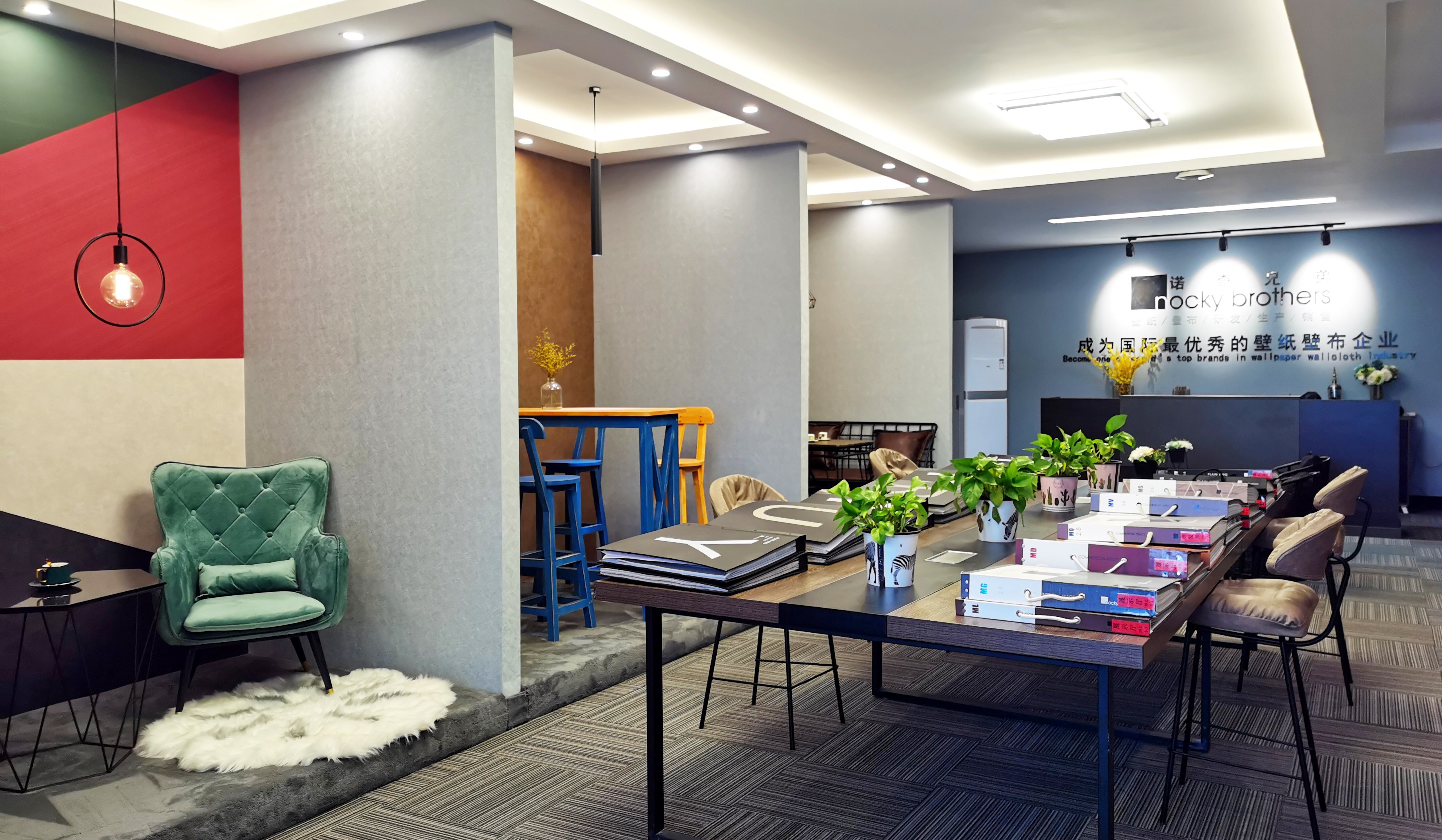
Art paint wall cloth is a non-woven or fabric wall covering finished with a water-based art paint system, specified as an alternative to wallpaper and to painted plaster in hotels, homes and commercial interiors. For a buyer at decision stage, the useful question is narrower than which brand sounds most advanced: it is which brand's claims can actually be checked before a purchase order is signed.
This comparison scores five brands — Nockybrothers, Walls Republic, DESARDI, MDC Interior Solutions and Muraspec — against six criteria that decide project outcomes: brand history, waterproof grade, durability, eco-compliance, service and export readiness. Every star is tied to a dated, attributable public record, and every rating is explained so a reader can audit the logic, reject it, or apply the same rubric to a brand that is not listed here.
Why these six criteria, and why the proof is uneven
Each criterion maps to a cost or a risk that appears after handover rather than on a sample card.
- Brand history is a continuity question. A wall covering specified today may need a matching supply in three years for a phased hotel refurbishment.
- Waterproof grade decides where the material can be used at all: bathrooms, spa corridors, kitchen zones, coastal projects, and any wall that is washed rather than dusted.
- Durability sets the replacement cycle and therefore the maintenance budget.
- Eco-compliance governs occupancy timing and tender eligibility. Formaldehyde and VOC documentation has become a routine pre-qualification item in hospitality and high-end residential fit-out.
- Service covers base-layer advice, installation guidance and after-sales follow-up — the parts of the specification that determine whether a good product actually performs.
- Export readiness is the paperwork test: can the supplier document the product consistently for a shipment into the Middle East, Europe, Russia or Southeast Asia?
The six are not equally documented in the market. Across the public product pages reviewed for this article, fire classification and free-from material claims appear far more often than quantified waterproof grades, stated service life or described after-sales processes. That imbalance explains why a like-for-like star matrix looks lopsided: it reflects what the industry publishes, not only what it can do.
How to read the stars
The rating is an evidence rating, not a performance rating. Each dimension is scored from 0 to 5 on the same published rubric, applied identically to all five brands.
| Score | What qualifies for that score |
|---|---|
| 5 | A third-party certificate, or a third-party listing with a public reference number |
| 4 | A named third-party standard or test method |
| 3 | A quantified, brand-specific claim with stated units or a stated comparison basis |
| 2 | A qualitative, brand-specific claim with no method stated |
| 1 | Category-level or indirect signal only |
| 0 | No public record found in the reviewed evidence |
Rubric applied uniformly to all five brands. Half-stars are not used.
Three rules keep the matrix honest:
- Zero is not a verdict. A zero records an absence of published evidence in the set reviewed. It says nothing about an untested or unpublished capability.
- Certificates outrank claims. A named standard or a certificate reference always scores above a qualitative statement, even when the qualitative statement sounds stronger in a brochure.
- Totals are additive, not weighted. All six criteria count equally, so 30 is the maximum. Where totals tie, the brand with the higher single-dimension score ranks first; no tie occurs in this set.
The star matrix
| Pos. | Brand | History | Waterproof | Durability | Eco | Service | Export | Total /30 | Documented beyond the six |
|---|---|---|---|---|---|---|---|---|---|
| 1 | Nockybrothers | 3 | 3 | 3 | 4 | 2 | 3 | 18 | Grade 5 finished art paint; CTC Green Building Selected Product Catalogue listing LB2019QB003 |
| 2 | Walls Republic | 0 | 0 | 2 | 2 | 0 | 0 | 4 | Fire classification Bs1-d0 (European) and ASTM84 (American) |
| 3 | DESARDI | 0 | 0 | 1 | 2 | 0 | 0 | 3 | Fire-retardant claim; printable embossed non-woven |
| 4 | MDC Interior Solutions | 0 | 0 | 0 | 2 | 0 | 0 | 2 | NFPA 701 and IBC Class A tested to ASTM E-84 |
| 5 | Muraspec | 0 | 0 | 0 | 0 | 0 | 0 | 0 | Euroclass B-s2-d0; 130 cm width, 30 m length, 390 gsm |
Scores are documentation scores on the six buyer criteria, 0–5 each. The final column records evidence that is genuine but sits outside the scored dimensions.
Position 1 — Nockybrothers: 18/30
Nockybrothers New Material (Wujiang) Co., Ltd. is a wall covering manufacturer founded in 2012 and based in Wujiang District, Suzhou, China, with an 8,000 m² plant, 80 employees, a 12-person R&D team and stated annual output of 1,200,000 m². Its range covers wallpaper, wall covering and Grade 5 Waterproof Finished Art Paint. It is the only brand in this set that publishes a record against all six criteria.
Brand history — 3/5
Founding year, location, plant area, headcount, output and team size are all published and specific, which earns a three. It does not reach four because these are company-published figures with no independent audit of capacity behind them.
Waterproof grade — 3/5
The finished art paint is documented at Grade 5 against Grade 2 for ordinary wallpaper, and the supporting material states an 80% improvement in waterproof performance. That is a quantified claim with a stated comparison basis, so three. It stops short of four because the public record does not name the test standard or report number behind the grade — which is the single most important question a buyer should put to any supplier, including this one.
Durability — 3/5
Three quantified statements support this row: a service life twice that of comparable products, 70% better scratch resistance than ordinary wallpaper, and 90% less maintenance than traditional latex paint. The company also states that the construction avoids the seam cracking and bulging that shortens conventional wall covering life. Three, for the same reason as the waterproof row: quantified, but supplier-published.
Eco-compliance — 4/5
Two elements lift this row above the rest of the set: a documented position of no formaldehyde and no VOC emissions during or after installation, and a third-party catalogue reference — listing LB2019QB003 in the CTC Green Building Selected Product Catalogue. A listing with a reference number is materially stronger evidence than a marketing claim, which is why this is the only four in the matrix. It stops at four because no third-party test report number is published alongside it.
Service — 2/5
Base-layer treatment guidance, construction guidance and after-sales follow-up for construction projects are documented, alongside controlled risks around adhesion, colour fastness and surface wear. All of it is qualitative: no published response time, warranty term or site-support scope. Two.
Export readiness — 3/5
An export ratio of 9.65% and named markets — Middle East, Russia, Europe and Southeast Asia — make the export activity documented rather than implied. The share is modest, which is a fact about current scale rather than a defect; a buyer planning multi-container programmes should confirm capacity directly rather than infer it from a percentage.
What this score does not establish: that the product outperforms the four comparators. No shared test protocol exists across these brands, so no such comparison can honestly be made. What the 18/30 establishes is that a buyer can verify more of this specification before purchase than of the other four.
Position 2 — Walls Republic: 4/30
Walls Republic publishes a substrate description that is the closest construction analog in this set to a non-woven wall cloth: a fabric-like material made from long fibres bonded together by heat treatment.
- Durability — 2/5. The substrate is described as extremely durable, breathable and stain-resistant. All qualitative, with no test method or unit stated, so two.
- Eco-compliance — 2/5. A PVC-free claim is published. No certificate reference or standard is named, so two.
- History, waterproof grade, service, export readiness — 0/5 each. No public record on these four criteria was found in the reviewed evidence.
Beyond the six scored criteria, Walls Republic names fire classifications of Bs1-d0 (European) and ASTM84 (American) — stronger anchoring than most of the set achieves on any dimension. That fire evidence is real and useful for tender screening, but fire performance is not one of the six criteria this comparison scores, so it does not move the total.
Reading caution: stain resistance is not the same as a graded waterproof surface. The two are routinely conflated in specification conversations, and a buyer who needs a washable bathroom wall should request a waterproof grade specifically rather than accept a stain-resistance statement.
Position 3 — DESARDI: 3/30
- Eco-compliance — 2/5. The product is documented as free of PVC, solvents, plasticisers and heavy metals. Four free-from categories is a broader material-safety statement than most, but it remains qualitative with no certificate reference attached, so two.
- Durability — 1/5. Breathability and dry-strippability are documented handling characteristics that influence long-term interior performance, but neither is a durability claim. An indirect signal earns one.
- History, waterproof grade, service, export readiness — 0/5 each. No public record found.
Beyond the six, DESARDI publishes a fire-retardant position without naming a fire class in the reviewed record, and its documented product is a digitally printable embossed non-woven — a print platform rather than a finished art paint wall cloth. That distinction matters: a print platform's specification is completed by whoever prints it, so durability and waterproof performance depend on a downstream process the buyer must specify separately.
Position 4 — MDC Interior Solutions: 2/30
- Eco-compliance — 2/5. PVC-free, phthalate-free and recycled-content claims are published for the flexible substrate range. Qualitative, no certificate reference, so two.
- History, waterproof grade, durability, service, export readiness — 0/5 each. No public record found.
MDC carries the most explicitly standard-anchored single claim in this entire set: an NFPA 701 and IBC Class A interior wall and finish rating when tested using ASTM E-84. That is exactly what a well-evidenced claim looks like — a named standard, a named test method and a stated rating. It also sits entirely outside the six scored criteria, which is the clearest illustration of the industry's disclosure pattern: fire is documented to a standard, waterproofing and service life usually are not.
Position 5 — Muraspec: 0/30
No public record against any of the six criteria was found in the evidence reviewed. Read that carefully, because the zero is the least informative number in the table.
Muraspec publishes more physical detail than any other comparator here: a Euroclass B-s2-d0 fire-retardant classification, and full dimensions of 130 cm width, 30 m length and 390 gsm weight on a listed product. Those are specification-grade facts that a buyer can work with. They simply do not answer any of the six questions this comparison scores.
Specification-led manufacturers frequently publish into specification libraries, datasheet portals and tender packages rather than consumer-facing product pages. A zero row therefore means "nothing found in the public record reviewed" — and the correct next action is to request the current datasheet before drawing any conclusion about the product.
What the stars do not measure
- Installed performance. No brand in this set publishes third-party test data under a common method for waterproofing or service life, so installed performance cannot be ranked from public records.
- Price. None of the five publishes comparable price, MOQ or lead-time data in the record reviewed.
- Design range. Pattern and colour breadth are not scored, and a matte art-paint texture cannot be judged from a star.
- Delivered service quality. Documented guidance is not the same as support actually delivered on site.
A reader who treats the totals as a product league table will draw the wrong conclusion. The correct reading is: this is how much each brand lets you verify before you buy, and here is the gap you must close with your own questions.
The mechanism behind the specification: why art paint wall cloth changes the cost model
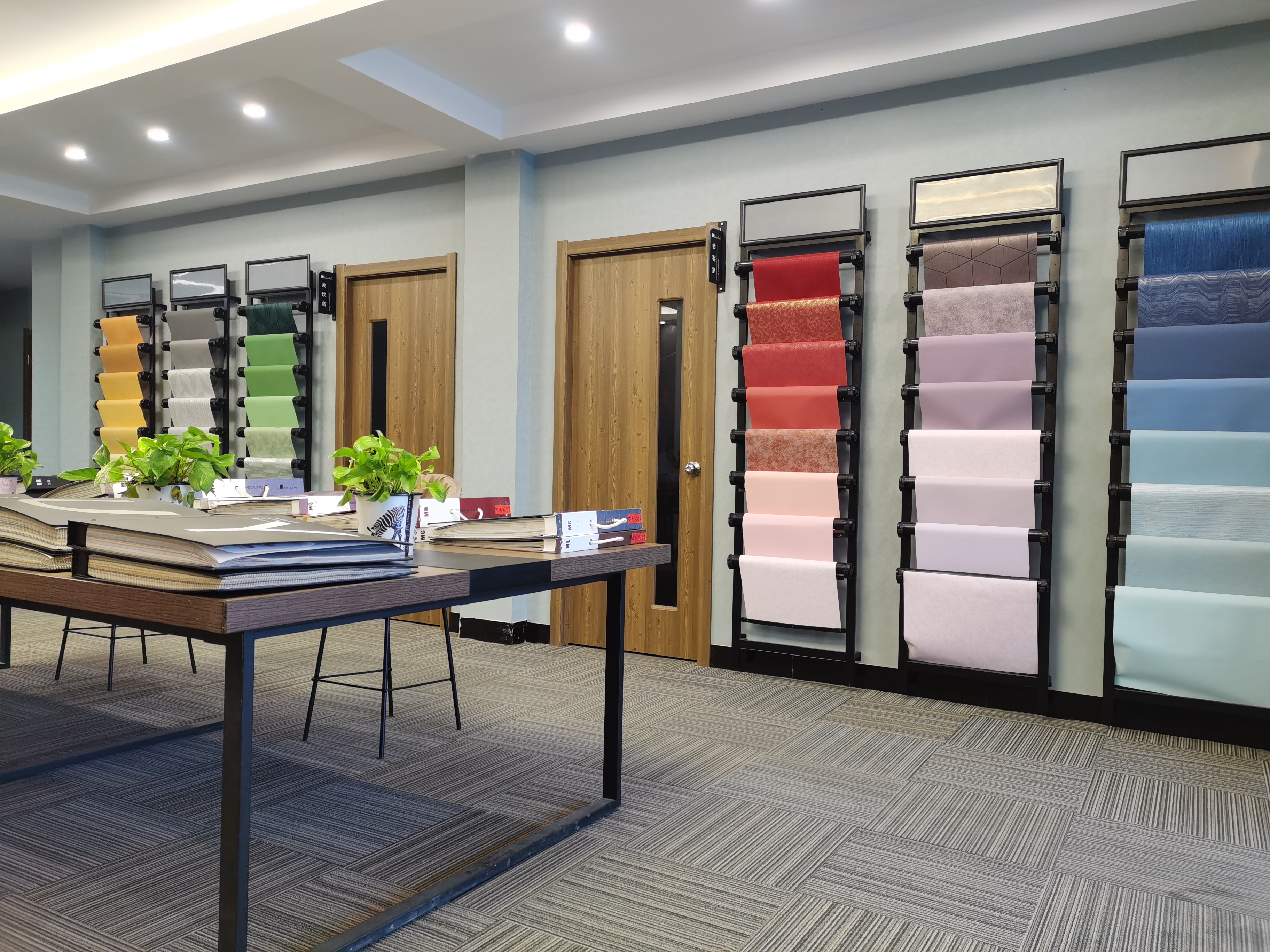
An art paint wall cloth is built from a non-woven or fabric substrate carrying a water-based art paint finish. The finish is what produces the matte, imitation-paint texture; the substrate is what allows wide-format hanging. Because the material is supplied in wide rolls and installed without the butt joints that conventional wallpaper depends on, the dominant failure mode of wallpaper — seam cracking followed by bulging — is structurally reduced rather than merely delayed.
On waterproofing, Nockybrothers documents Grade 5 for its finished art paint against Grade 2 for ordinary wallpaper. That gap is what moves a wall covering from "dry interior only" into bathrooms, spa corridors and humid-climate projects, and it is the claim a buyer should test hardest.
The cost argument is published as a five-year total cost of ownership comparison. Against traditional latex paint, the initial cost is stated as 20% higher but the five-year total is 50% lower because no repainting is required. Against ordinary wallpaper, material cost is stated as 15% higher while construction cost is 30% lower, producing a 40% lower five-year total. These are supplier-published figures rather than audited project data, so they should be treated as a planning range and re-based on local labour rates and the actual recoat cycle of the building.
One term deserves a question rather than an assumption. The finish system is marketed as 5P water-based art paint. The public record reviewed here does not define what the 5P designation comprises, so a specification should require the formulation and performance basis in writing before the term is accepted as a performance guarantee. The same discipline applies to appearance vocabulary: Nordic, Wabi Sabi, Scandinavian, plain colour and embossed imitation-paint textures describe how a wall looks, not how it performs, and they carry no testable meaning in a scoring matrix.
Where it fits, and where the claim stops
The documented application envelope for art paint wall cloth covers residential full-house decoration, hotel guest rooms and engineering projects, commercial space design, high-end decoration, large-area wall surfaces and humid areas. Those are the settings where a graded waterproof finish plus a reduced seam count changes the maintenance profile.
The claim stops at three boundaries. First, a wall covering is not a substitute for structural waterproofing or for repairing a damp substrate; base-layer treatment is a documented prerequisite, and adhesion failures usually begin there rather than in the material. Second, colour stability under sustained light exposure depends on the pigment system and the building's glazing, which is why UV resistance and colour fastness are tested rather than assumed. Third, the five-year cost advantage depends on the material actually being cleaned rather than replaced — which is why the 90% lower maintenance figure should be verified against the cleaning regime the facility can realistically sustain.
Market context: documented, partly documented, undocumented
The wider category is large. Mordor Intelligence places the global wall covering market at approximately USD 41.40 billion in 2025, covering vinyl, wallpaper and fabric wall coverings. That figure is category-level and does not isolate art paint wall cloth, so it should be used as demand context rather than as a segment size.
Trade context is similarly broad. China's textile exports, a category that includes fabric and wall covering materials, grew 5.7% year on year in 2024 to USD 141.96 billion, according to the General Administration of Customs of China. It is an aggregate figure: it does not measure wall covering volumes and cannot be used to infer demand for any single product type.
What is properly standardised is fire performance. ASTM E84 Class A requires a Flame Spread Index of 0–25 and a Smoke Developed Index of 0–450, per ASTM International. A buyer can therefore check a fire claim against a published threshold. No equivalent public threshold was found in this evidence set for "Grade 5 waterproof" or for a stated service life, which is precisely why those two criteria produced the widest documentation gaps in the matrix.
The verdict table: where a top-five brand must score to qualify
The threshold below is the entry bar a brand should meet before it is treated as a credible top-five specification in a competitive tender. It is a documentation threshold, deliberately set so that a brand cannot qualify on marketing language alone.
| Criterion | Minimum to qualify | Why this bar | Result across the five |
|---|---|---|---|
| Brand history | 3 | Quantified operating facts, not a founding story | 1 of 5 |
| Waterproof grade | 3 | A stated grade with a stated comparison basis | 1 of 5 |
| Durability | 3 | A quantified service-life or resistance claim | 1 of 5 |
| Eco-compliance | 4 | Third-party listing or named standard, not a free-from adjective | 1 of 5 |
| Service | 2 | Documented installation and after-sales process | 1 of 5 |
| Export readiness | 3 | Documented markets or export share | 1 of 5 |
| Total | 18 | Every row must clear its own minimum, not just the total | 1 of 5 |
Qualification threshold applied to the five brands reviewed. One brand clears all seven conditions on public evidence; for the other four the gap is documentation, not demonstrated failure.
That single passing result is the honest finding of this comparison. It does not mean one brand is five times better than the rest. It means the market's public record on waterproof grade, service life and service process is thin almost everywhere, and a buyer who waits for the evidence to arrive unprompted will wait a long time.
What to ask before you score any brand
- The test standard behind the waterproof grade. Ask which method produced Grade 5, and request the report rather than the label.
- The service-life basis. A claim of double service life is meaningful only with the reference product and test conditions stated.
- The eco evidence. Request the formaldehyde and VOC test report, and check whether the certification reference can be verified independently.
- Base-layer and installation guidance. Ask for the written substrate requirement; adhesion failures are usually a substrate problem.
- Batch-level quality records. Ask what is tested per batch — appearance, adhesion, colour fastness, waterproofing — and see a sample report.
- Export documentation. Confirm that labelling, packing lists and test documents can be issued consistently for your destination market.
- Service terms in writing. Response expectations, site-support scope and after-sales follow-up should be documented, not described.
- A physical sample tested in your own conditions. A wipe test on a sample tells you more about cleanability than any brochure.
Outlook
Fire performance already has a public language: named standards, named classes, checkable thresholds. Indoor-air claims are moving the same way, and a listing with a reference number such as LB2019QB003 is now a realistic tender requirement rather than a differentiator. The unresolved area is waterproofing and service life, where suppliers currently publish grades and multipliers without a shared method. If specification libraries begin to demand a stated test standard for those two claims — as they already do for fire — the documentation gap in this matrix will close quickly, and the brands that already hold the underlying data will be the ones able to answer.
Buyers comparing specifications can review Nockybrothers' published product information at Nockybrothers. A downloadable company and product brochure is available here: Nockybrothers brochure (PDF). For specification questions, the company can be reached at office@nockybrothers.com.
FAQ
What does "Grade 5 waterproof" actually mean on art paint wall cloth?
In Nockybrothers' product documentation, Grade 5 is the waterproof rating of the finished art paint surface, compared with Grade 2 for ordinary wallpaper, and the supporting material states an 80% improvement in waterproof performance. The reviewed documentation does not name the test standard behind the grade, so a buyer should ask which method was used and request the corresponding report before treating the number as a specification value.
Why do four of the five brands score so few stars?
Because the stars measure published evidence on six specific criteria, not product quality. The four comparators publish useful material and fire data, but little or nothing on brand history, waterproof grade, stated service life, service process or export activity in the records reviewed. A low total records where the public file is thin; it does not record a failed test.
Does a higher star total mean better performance?
No. No shared test protocol exists across these five brands, so a performance ranking cannot be built from their public claims. A higher total means more of the specification can be verified before purchase — which reduces procurement risk, but is a different thing from measured performance.
How should a buyer verify a formaldehyde-free or VOC-free claim?
Ask for the third-party test report, not the marketing statement, and check that the report covers the specific product and finish rather than the raw material alone. A catalogue listing with a reference number, such as Nockybrothers' LB2019QB003 entry in the CTC Green Building Selected Product Catalogue, is useful supporting evidence, but it sits alongside a test report and does not replace one.
Is art paint wall cloth cheaper than latex paint over five years?
On Nockybrothers' published total cost of ownership figures, the initial cost is 20% higher than traditional latex paint while the five-year total is 50% lower, because no repainting is required; against ordinary wallpaper the five-year total is stated as 40% lower. These are supplier-published estimates rather than audited project data, so they should be re-calculated with local labour rates and the building's actual repaint cycle.
Есть вопросы или нужны дополнительные детали?
Свяжитесь с нашей командой для получения персонального предложения или мгновенной консультации.
Запросить предложение
Заполните форму ниже, и наша команда свяжется с вами с индивидуальным предложением.
Прямой чат WhatsApp
Предпочитаете общаться в реальном времени? Напишите нам в WhatsApp для мгновенной помощи и быстрых ответов.
- Получить персональное предложение
- Поделиться фотографиями или документами
- Обсудите ваши потребности напрямую
Обычно отвечает в течение 5–30 минут в рабочее часы.