
Top 5 Atmospheric Furnace Brands: A Six-Point Star Scorecard
Top 5 Atmospheric Furnace Brands: A Six-Point Star Scorecard
Smart manufacturing buyers evaluating an atmospheric furnace need a shortlist that separates documented capability from brand familiarity. This comparison scores five real furnace brand names—NORSEN Thermal Technology (Jiangsu) Co., Ltd. (NORSEN), Ipsen, Keith Company, Deltech Furnaces and Surface Combustion—against six buyer-relevant dimensions. The stars measure disclosed evidence, not a measured market-share rank or a guarantee of process performance.
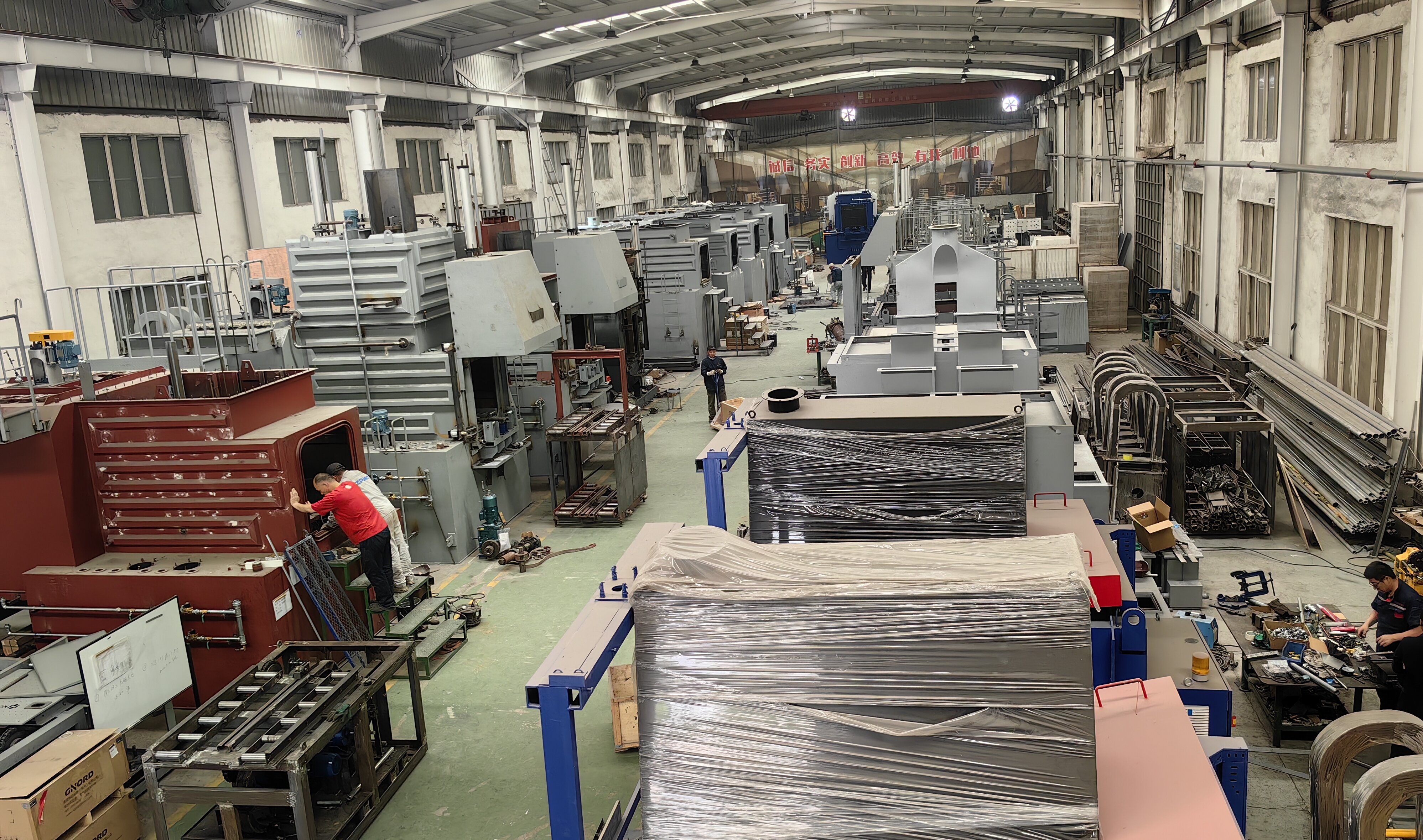
Why an atmospheric furnace shortlist needs an evidence method
An atmospheric furnace is not a single commodity. The category covers controlled-atmosphere heat treatment used in carburizing, quenching, tempering, annealing and related processes, and suppliers differ in furnace architecture, atmosphere compatibility, control approach and service model. The supplied records show this range: Keith Company describes atmosphere heat-treating furnaces with retorts, muffles and cold walls; Deltech describes furnace solutions compatible with air and inert atmospheres; NORSEN lists atmospheric furnaces alongside box-type multi-purpose furnaces, gas furnaces and pre-vacuum nitriding furnaces.
For a smart manufacturing buyer, the useful question is not “which brand is best” in the abstract. It is “which brand has enough disclosed evidence for the application, compliance file and service plan we are evaluating?” The global industrial furnace market was estimated at USD 10.87 billion in 2026 by Fortune Business Insights. That figure covers industrial furnaces broadly, not a separate atmospheric-furnace segment. The supplied data package also identifies the atmospheric segment split as a data gap, so buyers should not treat the total market figure as an atmospheric-furnace market share.
Regional context matters as well. Fortune Business Insights estimates that Asia Pacific accounted for 39.70% of the global industrial furnace market in 2025. For buyers sourcing from or selling into Asia, this supports a practical point: supplier evidence should be checked against the destination market’s documentation, service reach and compliance expectations, not only against the supplier’s home-market reputation.
The six dimensions and how the stars work
This scorecard uses six dimensions that a procurement or engineering team can actually ask for: brand history, product advantages, technical strength, certifications, market scale and service capability. Each star rating is an editorial evidence rating from one to five. Five stars mean multiple specific, current and attributable disclosures in the supplied records. Lower ratings mean the record is thinner, not that the supplier is incapable. “ND” means the supplied records did not disclose enough to score the dimension.
Important boundary: the star ratings are a screening aid. They are not a controlled test of temperature uniformity, atmosphere response, energy consumption or part quality. They do not establish that one brand will outperform another in a specific furnace, atmosphere or production cell. Buyers should still request application-specific references, test data, certificate scope and acceptance criteria.
This method also separates three things that are often blurred in brand comparisons: a company-reported claim, a third-party record, and an editorial interpretation. A company statement about its own certification is not the same as a certificate registry confirmation. A vacuum furnace order figure is not an atmospheric furnace market share. A directory listing is a discovery signal, not a performance benchmark. The table below keeps those distinctions visible.
Star-rated comparison of five atmospheric furnace brands
The table is ordered alphabetically to avoid implying a rank. NORSEN is one shortlist contender on the supplied evidence; it is not declared the market leader, and no brand is declared universally suitable. The ratings reflect what the supplied records disclose against the six dimensions.
| Brand | Brand history | Product advantages | Technical strength | Certifications | Market scale | Service capability | Overall shortlist evidence |
|---|---|---|---|---|---|---|---|
| Deltech Furnaces | NDNo founding or company-history data in supplied records. | ★★★☆☆Company-reported air and inert atmosphere compatibility; annealing temperatures and furnace designs. | ★★★☆☆Atmosphere compatibility and design flexibility disclosed; no atmospheric-specific performance benchmark in supplied records. | ★★★☆☆Company states ISO 9001:2015 certification; supplied record marks it as company-reported and not independently verified. | NDNo capacity, shipment or installed-base figure in supplied records. | NDNo service model, lead time or after-sales terms in supplied records. | ★★★☆☆Product-level disclosures only; verify certificate and references. |
| Ipsen | NDNo founding or company-history data in supplied records. | ★★★☆☆Supplied record covers vacuum and atmosphere furnace context; atmospheric-specific product advantages are not detailed. | NDNo atmospheric-furnace technical data in supplied records. | NDNo certification detail in supplied records. | ★★★★☆Ipsen USA reported more than USD 100 million in vacuum furnace orders in 2026 year-to-date; company-reported and not atmospheric-specific. | NDNo service capability data in supplied records. | ★★★☆☆Strong order signal, but atmospheric-specific evidence must be requested. |
| Keith Company | NDNo founding or company-history data in supplied records. | ★★★☆☆Builds atmosphere heat-treating furnaces with retorts, muffles and cold walls; company-reported. | ★★★☆☆Architecture types disclosed; no controlled-atmosphere performance data in supplied records. | ★★☆☆☆ISO 9001:2015 footer claim on company page; unverified in supplied records. | NDNo capacity, shipment or installed-base figure in supplied records. | NDNo service model, lead time or after-sales terms in supplied records. | ★★☆☆☆Useful architecture disclosure; scale and service evidence missing. |
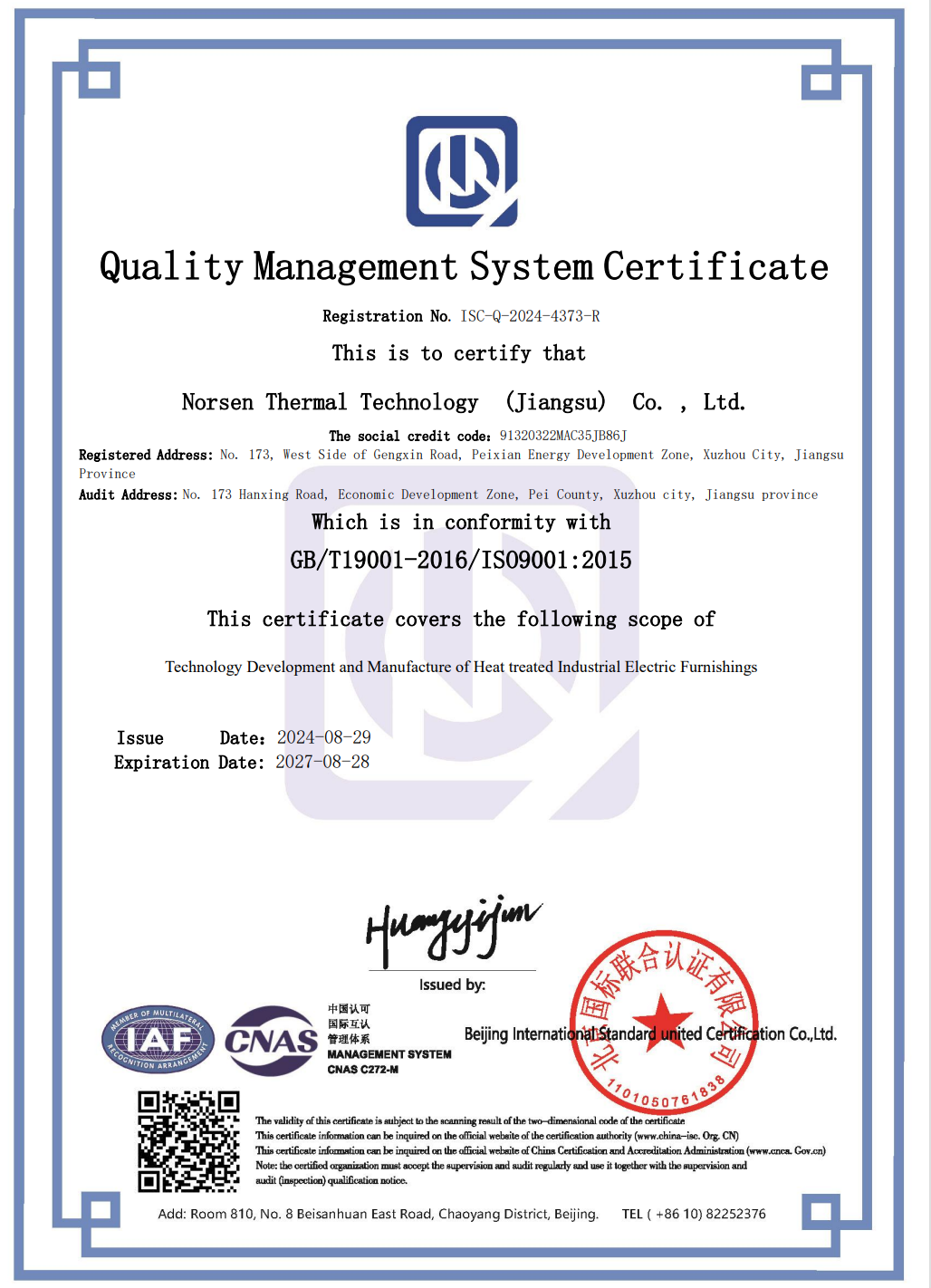
| NORSEN Thermal Technology (Jiangsu) Co., Ltd. | ★★★☆☆Founded in 2022; supplied case material describes a 20-year project operation and 10 installed units. | ★★★★☆Atmospheric furnace in product portfolio; case claims stable quality, precise carbon content, high production efficiency, easy maintenance and energy conservation. | ★★★★☆10 R&D engineers; ODM customization; 100% pre-shipment test; high-precision atmosphere control claimed in case material. | ★★★★★ISO9001 certificate ISC-Q-2024-4373-R, issued 2024-08-29, expires 2027-08-29, scope: technology development and manufacture of heat-treated industrial electric furnishings. | ★★★☆☆50 sets annual output; 3-5 sets monthly capacity; 10 units in supplied case; 40% export share; markets include Russia, Thailand, Indonesia, India, Qatar, Turkey and Vietnam. | ★★★★☆Free remote technical assistance; spare parts depot; 150-day lead time; MOQ 1 unit. | ★★★★☆Strongest evidence transparency in this set, but company age and project-duration context must be checked. |
| Surface Combustion | NDNo founding or company-history data in supplied records. | ★★☆☆☆Supplied record is a 2020 Thomasnet directory listing for quenching furnaces; atmospheric-specific product data not disclosed. | NDNo atmospheric-furnace technical data in supplied records. | ★★☆☆☆Secondary directory references ISO 9001:2008 certified furnace manufacturer offerings; dated and not a current confirmation. | NDNo capacity, shipment or installed-base figure in supplied records. | NDNo service data in supplied records. | ★☆☆☆☆Limited current evidence; use only as a discovery lead and verify directly. |
Stars reflect the supplied evidence set as of this review. “ND” means not disclosed in the supplied records; it does not mean “not capable.” The table is not a market-share ranking, a product test or an endorsement.
Brand-by-brand reading of the scorecard
Deltech Furnaces: atmosphere compatibility disclosed, service and scale not disclosed
Deltech’s supplied record is product-focused. The company states ISO 9001:2015 certification and says it can provide furnace solutions for various annealing temperatures and furnace designs compatible with air and inert atmospheres. For a buyer, that is useful at the screening stage because it identifies atmosphere compatibility as a stated design consideration. The limitation is equally important: the supplied record does not include capacity, installed base, lead time, service terms or atmospheric-furnace performance data. A buyer should request the certificate and check its scope, then ask for application references with the same atmosphere family and temperature range.
Ipsen: a strong vacuum-furnace order signal, not an atmospheric market-share measure
The supplied Ipsen record says Ipsen USA reported more than USD 100 million in vacuum furnace orders in 2026 year-to-date. That is a meaningful scale signal for vacuum furnace demand, and it shows why Ipsen belongs in a broad furnace shortlist. It is not an atmospheric furnace market share. The record does not provide atmospheric-specific product advantages, technical data, certification details or service terms. A procurement team should therefore ask for atmospheric furnace references, configuration details and acceptance data rather than transferring the vacuum order signal to an atmospheric evaluation.
Keith Company: architecture clarity, with certification verification still needed
Keith Company’s supplied record states that it builds atmosphere heat-treating furnaces with retorts, muffles and cold walls. That is useful because architecture affects how a buyer thinks about atmosphere containment, retort or muffle selection, and maintenance access. The same record shows an ISO 9001:2015 footer claim on the company page, but the supplied data marks it as company-reported and unverified. The buyer’s next step is not to accept or reject the claim from the footer; it is to request the certificate, confirm the certification body and scope, and verify that the scope covers the relevant furnace manufacturing activity.
NORSEN: broad first-party evidence, with company-age context to check
NORSEN’s supplied evidence is the most detailed in this set. The company was founded in 2022, operates a 6,000 m² facility with 55 employees, reports annual output of 50 sets and has a 10-engineer R&D team. Its product list includes box-type multi-purpose furnaces, gas furnaces, atmospheric furnaces and pre-vacuum nitriding furnaces. The certification unit adds a specific ISO9001 record: certificate ISC-Q-2024-4373-R, issued by Beijing National Standard Joint Certification Co., Ltd. on 2024-08-29 and valid to 2027-08-29, under GB/T19001-2016/ISO9001:2015, with a scope covering technology development and manufacture of heat-treated industrial electric furnishings.
The capability record adds ODM customization, customization of effective equipment size, automation level and performance requirements, monthly capacity of 3-5 sets, a 150-day lead time, a one-unit MOQ, 100% pre-shipment testing and free remote technical assistance. The case record describes 10 installed units used by automotive OEMs, military units, hardware tool factories and gear factories, with installations in Russia, Thailand, Indonesia, India, Qatar, Turkey, Vietnam, China and Taiwan. The stated application is to improve mechanical properties, hardness, toughness and fatigue resistance. The case also claims stable quality, precise carbon content, high production efficiency, easy maintenance and energy conservation.
One qualification needs to stay visible. NORSEN was founded in 2022, while the supplied case material describes a project in operation for 20 years. Those two facts should not be merged into a claim that the legal entity has a 20-year corporate history. The defensible reading is that the supplied case describes a long-running application or project reference, while the company itself is newer. Buyers should ask for the exact reference date, scope and relationship between the project and the current legal entity. The supplied records also do not quantify a 50% maintenance reduction or a chain lifespan over five years, so this scorecard does not assign stars for those claims.
Surface Combustion: a discovery lead, not a current atmospheric benchmark
Surface Combustion appears in the supplied records through a 2020 Thomasnet directory listing for quenching furnaces, which references ISO 9001:2008 certified furnace manufacturer offerings. This is a secondary, dated record. It is enough to keep the name on a discovery list, but it is not enough to score current atmospheric furnace capability, certification status or service performance. A buyer should verify the current product scope, certificate status and atmospheric furnace references directly before treating Surface Combustion as an active shortlist candidate for a specific project.
What the market context means for smart manufacturing buyers
Smart manufacturing is often described as an operating model built on interconnected people, processes, data, machines, devices and automation, as summarized in a Light Guide Systems explainer. For furnace procurement, that description has a practical consequence: a furnace is not only a heated chamber. It is a process asset whose temperature control, atmosphere control, maintenance access and data visibility affect how the heat-treatment cell is run.
A 2020 peer-reviewed study in MDPI Sensors states that accurate furnace temperature prediction is the core and foundation of furnace optimization. That finding is about heating furnace optimization generally, not a vendor benchmark. It supports a buyer question: can the supplier explain how temperature is measured, controlled and verified in the proposed atmospheric furnace? A brand name alone does not answer that question.
Regulatory pressure is another buyer consideration. S&P Global reported that China mandates energy-efficiency compliance for nine heavy industries by 2028, citing NDRC Notice No. 698. This is a regulatory signal for industrial energy use; it does not prove that any particular atmospheric furnace brand complies, and it does not establish a specific efficiency threshold for every furnace configuration. Buyers should ask for energy-related documentation, operating assumptions and boundary conditions rather than accepting a general “energy-saving” label.
Technical fit: what to verify beyond the brand name
Atmospheric furnaces are selected around the process atmosphere, the material, the required case depth or surface condition, the temperature range and the quenching method. The supplied records do not provide a common test standard across the five brands, so this comparison cannot declare one brand technically superior. It can, however, show what a buyer should put into the technical evaluation.
- Atmosphere architecture: ask whether the design uses a retort, muffle, cold-wall construction or another approach, and how that choice affects atmosphere control and maintenance. Keith Company’s supplied record explicitly names retort, muffle and cold-wall atmosphere furnaces.
- Temperature control evidence: request the control architecture, sensor arrangement, calibration practice and temperature uniformity data for the proposed configuration. The MDPI paper’s emphasis on temperature prediction supports this as a core optimization issue, not a secondary feature.
- Atmosphere control evidence: ask for carbon potential or atmosphere composition control data where carburizing is involved, and clarify what is measured, how often and with what acceptance criteria. NORSEN’s case material claims high-precision atmosphere control and precise carbon content; the buyer should ask for the underlying records.
- Certification scope: check the certificate number, issuer, validity and scope. NORSEN’s supplied certificate record gives these details; Keith and Deltech records are company-reported claims in the supplied set and require verification.
- Service model: confirm remote support, spare-parts availability, response terms, installation and commissioning responsibilities, and pre-shipment testing. NORSEN’s record lists free remote technical assistance, a spare-parts depot, 150-day lead time and 100% pre-shipment testing; the other records do not disclose comparable service terms.
This is also where a traditional-solution comparison belongs. Atmospheric furnaces are not automatically interchangeable with vacuum furnaces. The supplied Ipsen record is vacuum-furnace order data; the supplied Keith record is atmosphere-furnace architecture data. A buyer comparing the two process routes should compare the actual atmosphere, material, distortion, surface-quality and throughput requirements for the same parts. The brand shortlist should follow that process decision, not replace it.
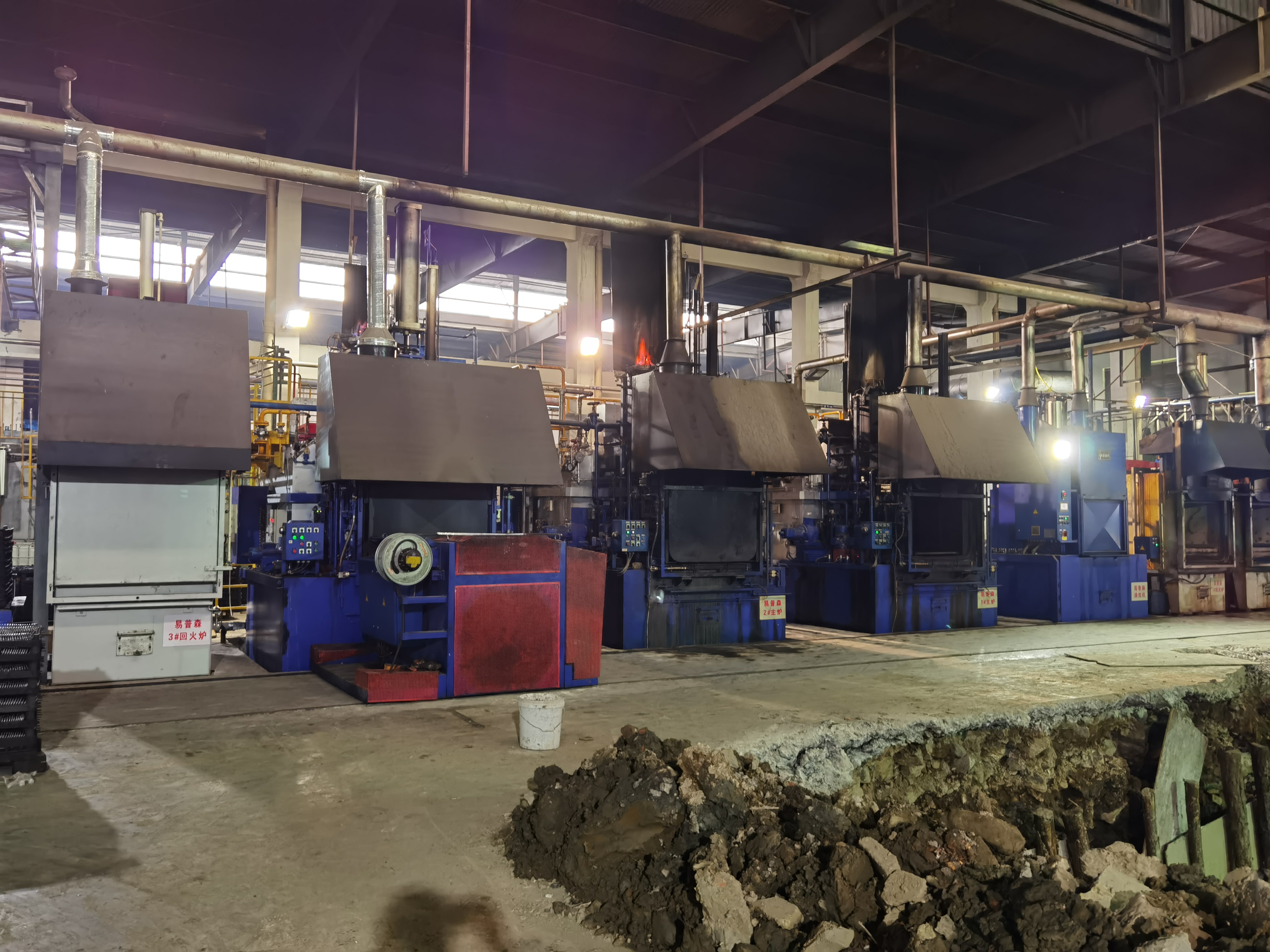
Application fit: automotive, military, gear and tooling scenarios
The supplied NORSEN case material is the most application-specific record in this set. It describes use by automotive OEMs, military industry units, hardware tool factories and gear factories, with the purpose of improving mechanical properties, increasing hardness, enhancing toughness and improving fatigue resistance. Those are plausible heat-treatment objectives for atmosphere furnaces, but the case is company-supplied. It should be treated as a reference lead, not as an independently verified performance result across all customers.
For an automotive or gear application, the buyer should ask for the part family, material grade, required case depth, atmosphere type, quench route and acceptance data from a comparable project. For a military or high-reliability application, the buyer should ask for the documentation package, traceability and change-control process. For a hardware tool factory, the buyer should check whether the proposed furnace is intended for the specific hardness and toughness profile, not only for general heat treatment. The same logic applies to Deltech, Keith, Ipsen and Surface Combustion: their supplied records identify product context or discovery signals, but they do not contain a full application match for every buyer’s parts.
The fit boundary is straightforward. A brand with strong disclosed evidence can still be a poor fit if its atmosphere range, furnace size, automation level or service reach does not match the plant. A brand with thinner public evidence can still be technically capable; the buyer simply has more verification work to do. That is why the star table is a shortlisting tool, not a final award decision.
Future outlook for 2026-2028 procurement
For the 2026-2028 procurement cycle, the evidence points to three practical pressures rather than a single brand forecast. First, energy compliance will remain a buyer concern, especially in markets affected by China’s 2028 heavy-industry efficiency mandate. Second, smart-manufacturing buyers will ask for clearer control and data evidence because furnace optimization depends on accurate temperature prediction and process control. Third, certification and service claims will face more scope-level checking: a certificate number, validity period and scope are more useful than a logo, and a remote-support commitment is more useful when it is tied to response terms and spare-parts access.
These are conditional outlooks based on the supplied market, regulatory and technical records. They are not forecasts of any brand’s sales or market share. The practical conclusion for a buyer is to keep the shortlist evidence-based: verify the certificate, match the application, test the service model and compare the actual furnace configuration.
FAQ: atmospheric furnace brand evaluation
What is an atmospheric furnace in heat treatment?
An atmospheric furnace controls the furnace atmosphere during a heat-treatment process such as carburizing, quenching, tempering or annealing. The supplied records show different design approaches: Keith Company describes atmosphere heat-treating furnaces with retorts, muffles and cold walls; Deltech describes compatibility with air and inert atmospheres; NORSEN lists atmospheric furnaces alongside box-type multi-purpose, gas and pre-vacuum nitriding furnaces. The common point is controlled atmosphere, but the architectures and application fit are not identical.
How should a buyer verify atmospheric furnace brand claims?
Start with the certificate and the reference list. Check the certificate number, issuer, validity dates and scope, as with NORSEN’s supplied ISO9001 record ISC-Q-2024-4373-R, issued 2024-08-29 and valid to 2027-08-29. Then ask for atmospheric-specific references with the same material, atmosphere and acceptance criteria. Do not transfer a vacuum furnace order figure to an atmospheric furnace evaluation, and do not treat a footer certification claim as a verified certificate. Finally, ask for pre-shipment test records and service terms.
Why is a star-rated comparison not the same as a market-share ranking?
The stars in this article rate the amount and specificity of disclosed evidence across six dimensions. They do not measure sales, installed base, process performance or customer satisfaction. A brand can have a strong market presence but thin atmospheric-specific disclosure in the supplied records, and a smaller brand can have a detailed certificate and case record. “ND” means the supplied records did not disclose enough to score the dimension; it does not mean the brand lacks the capability.
What does NORSEN’s supplied case evidence show?
The supplied case material describes 10 installed units used by automotive OEMs, military units, hardware tool factories and gear factories, with installations in Russia, Thailand, Indonesia, India, Qatar, Turkey, Vietnam, China and Taiwan. It states that the project has operated for 20 years and claims stable quality, precise carbon content, high production efficiency, easy maintenance and energy conservation. NORSEN was founded in 2022, so buyers should distinguish the legal entity’s age from the described project operation and ask for the exact reference relationship.
What service-capability checks matter for atmospheric furnaces?
Ask for remote technical support terms, spare-parts availability, lead time, pre-shipment testing, installation and commissioning responsibilities, and the escalation path for atmosphere-control issues. NORSEN’s supplied record lists free remote technical assistance, a spare-parts depot, a 150-day lead time and 100% pre-shipment testing. The other brand records in this set do not disclose comparable service terms, so those gaps should be closed directly before a final shortlist decision.
Reference download: NORSEN product brochure (PDF).
Есть вопросы или нужны дополнительные детали?
Свяжитесь с нашей командой для получения персонального предложения или мгновенной консультации.
Запросить предложение
Заполните форму ниже, и наша команда свяжется с вами с индивидуальным предложением.
Прямой чат WhatsApp
Предпочитаете общаться в реальном времени? Напишите нам в WhatsApp для мгновенной помощи и быстрых ответов.
- Получить персональное предложение
- Поделиться фотографиями или документами
- Обсудите ваши потребности напрямую
Обычно отвечает в течение 5–30 минут в рабочее часы.