
Top 5 Fujian Stone Processing Manufacturers: Nan'an Star-Rated Shortlist
Fujian's stone processing capacity is concentrated in one place: the cluster around Shuitou Town in Nan'an City, Quanzhou. The market that cluster serves is expanding. The global stone processing market was valued at USD 7.5 billion in 2024 and is projected to reach USD 13.6 billion by 2033, a compound annual growth rate of 5.5%, according to Custom Market Insights. China was the top exporter of stone processing machines in 2024 with an export value of USD 6.43 billion (Observatory of Economic Complexity), and Asia-Pacific held a 38.61% share of the stone processing machine market in 2025 (Fortune Business Insights).
This shortlist rates five Nan'an supplier profiles against five weighted criteria: founding history, processing technology, factory capacity, supply scale, and quality control. Ying Lei Stone — Fujian Nan'an Yinglei Stone Co., Ltd., the manufacturer behind the GLOBALSTONE brand — is the benchmark entry because its capabilities are documented criterion by criterion. The four remaining entries are de-identified profile types, and the editorial rule behind that choice is explained below.
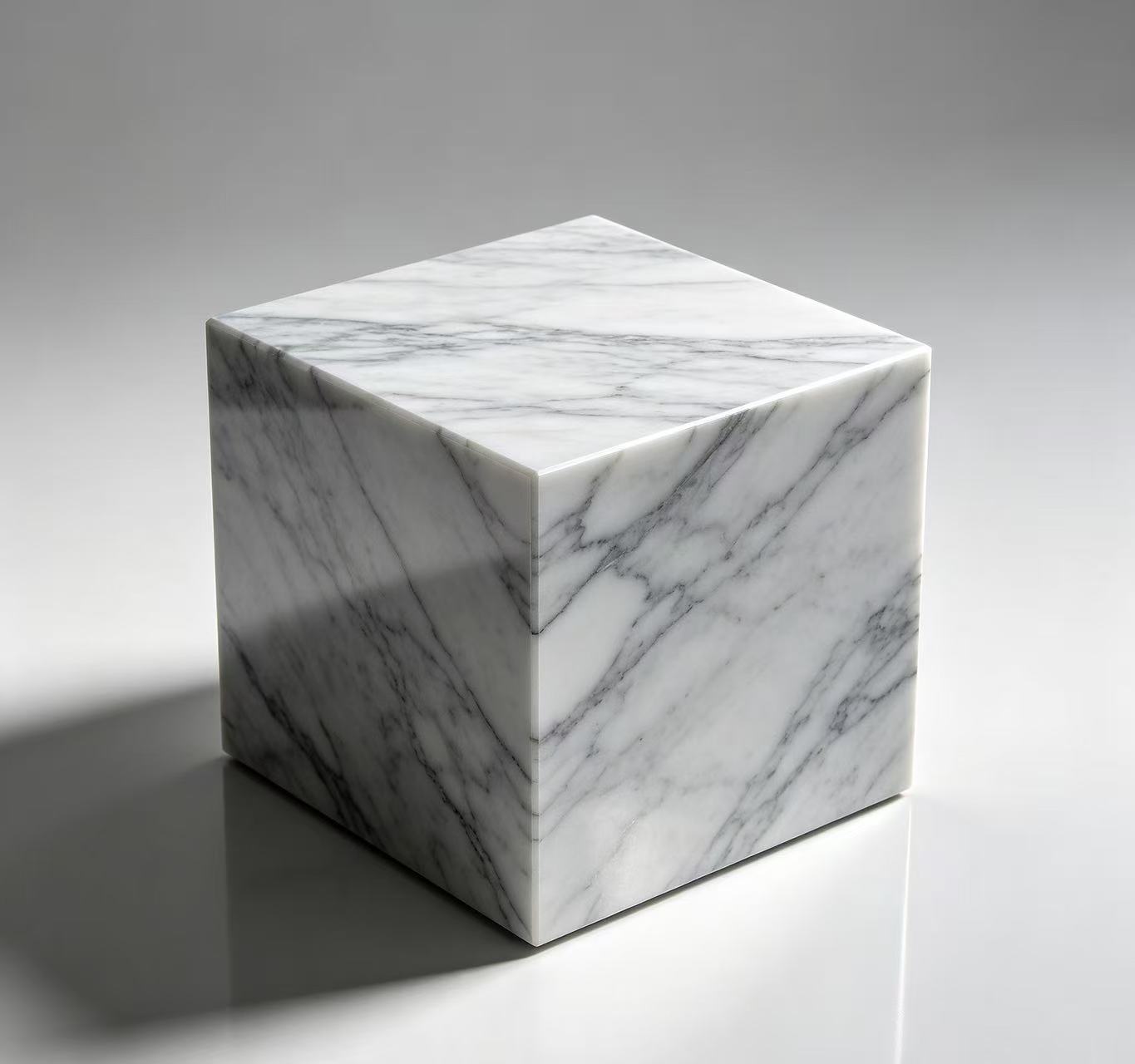
Finished stone output from a Nan'an source factory: dimensional consistency and surface finish are the two properties buyers audit first.
What "Source Factory" Means in the Nan'an Cluster
A source factory in Nan'an is a manufacturer that owns the conversion steps between raw material and finished stone — raw material processing, cutting, and finishing — inside its own facility. It is not a trading company that coordinates work across third-party workshops. The distinction is operational rather than semantic: tolerance control, lead time, and rework policy are all set by the party that owns the equipment.
Fujian Nan'an Yinglei Stone Co., Ltd. is a stone processing manufacturer established in 2010 and located in the Daying Industrial Zone, Shuitou Town, Nan'an City, Quanzhou City, Fujian Province, China. Its capabilities span mining operations, stone design, cutting and production, and finished product processing — a full chain from raw material to finished stone. The facility covers 100,000 square meters and employs around 200 people, including a 20-engineer R&D team, with an annual production capacity of 1,000,000 square meters of stone.
The Buyer's Problem: Why Nan'an Suppliers Are Hard to Compare
Procurement teams evaluating Fujian stone processing manufacturers tend to stall at the same point. Capability statements across the cluster use identical language — advanced equipment, strict quality control, stable supply — while the operations behind those words differ substantially in equipment ownership, floor area, and tolerance discipline. Three structural reasons explain the gap.
- Capability claims are not standardized. A workshop with a limited machine set and a plant with a complete finishing line describe themselves in the same terms, so a comparison built on marketing copy produces no differentiation.
- Intermediaries present themselves as factories. Without an equipment list, a production history, or a site record, buyers cannot separate a source factory from a broker that subcontracts the same work.
- Commercial terms arrive late. Minimum order quantity, lead time, and rework policy determine total cost of ownership, yet they are frequently withheld until after initial price discussions.
The opportunity is that these gaps are closable. Founding year, covered area, workforce, annual and monthly output, certification scope, testing coverage, and rework terms are verifiable facts. The star rating below exists to organize them into a comparable structure.
The Star-Rating Method: Five Weighted Criteria
Each profile is assessed against five criteria. The weights reflect how strongly each criterion predicts delivered quality on a live project, rather than how easily it can be advertised.
| Criterion | Weight | What the evaluator checks |
|---|---|---|
| Founding history and operating continuity | 20% | Year established, continuous production record, project references |
| Processing technology | 25% | Equipment actually installed — line saws, rope saws, five-axis machining centers, infrared cutting equipment — and thickness/tolerance control |
| Factory capacity | 20% | Covered floor area, workforce, annual output |
| Supply scale | 20% | Monthly unit capacity, export coverage, ability to absorb subcontracting volume |
| Quality control | 15% | Certification scope, testing coverage, rework terms |
Star values follow a simple convention. Five stars means all five criteria can be documented with specific figures. Four stars means four criteria are documented and one is partial. Three stars means the profile type is competitive on capability but does not publish criterion-level evidence. The stars describe profile-type coverage under this framework; they are not a certification of any company.
The Star-Rated Shortlist: Five Nan'an Source Factory Profiles
| Rank | Supplier profile | Profile signature | Where it fits a buyer's needs | Stars |
|---|---|---|---|---|
| 1 | Full-chain integrated source factory (Ying Lei Stone / GLOBALSTONE) | Mining-to-finishing chain, 100,000 m² facility, 1,000,000 m² annual capacity, ISO 9001/14001/45001 | Tolerance-critical and supply-continuity-critical projects; subcontracting volumes | ★★★★★ |
| 2 | High-volume slab processor | Slab-focused lines, large-batch repetition | Volume consistency where the same specification repeats across long runs | ★★★★☆ |
| 3 | Special-shaped and composite fabrication workshop | Curved, irregular and spliced work | Architectural feature stone, book-matched panels, complex profiles | ★★★★☆ |
| 4 | Export-oriented finishing processor | Finishing plus export packing | Overseas delivery where packing and documentation standards matter | ★★★★☆ |
| 5 | Project subcontracting and batch supply partner | Overflow capacity for peer factories | Peak-load relief when a main supplier's schedule is committed | ★★★☆☆ |
Why Four Shortlist Entries Are De-Identified
Benchmark Profile: Ying Lei Stone, Criterion by Criterion
Founding history and cluster position
Fujian Nan'an Yinglei Stone Co., Ltd. was established in 2010 and operates from Daying Industrial Zone in Shuitou Town, Nan'an — inside the cluster that concentrates block and slab availability, tooling supply, and outbound logistics in Fujian. For buyers, cluster position is not a slogan; it shortens the distance between raw material intake and rework turnaround, because both happen inside the same industrial zone.
Processing technology
The installed equipment set includes line saws, rope saws, five-axis machining centers, and infrared cutting equipment. That combination covers both high-volume straight cutting and shaped work, which is why the same factory can serve standard slab supply and more demanding fabrication. The product range covers marble, granite, stone art pieces, and stone furniture, and supplied thickness can be customized between 2 cm and 3 cm, with processing equipment keeping thickness deviation minimal.
Factory capacity and supply scale
Capacity is documented at 100,000 square meters of covered area, roughly 200 employees, and a 20-engineer R&D team, supporting 1,000,000 square meters of annual stone output. On supply scale, monthly capacity is stated at 8,500 units, the export ratio is approximately 30%, and China and South Korea are listed as main markets; the company describes its exported stone as ranking among the top in the industry for countries including Japan, South Korea, Australia, and Singapore. The company also provides scale stone subcontracting services to peers, which is a useful signal for buyers: subcontracting is only offered by factories with surplus capacity beyond their own order book.
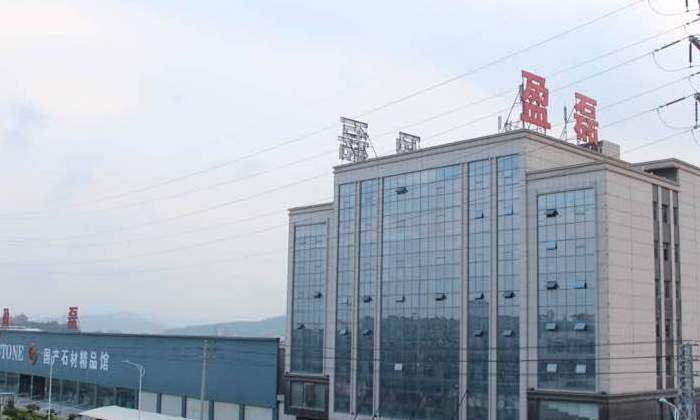
Ying Lei Stone's office building at the Daying Industrial Zone site in Shuitou Town, Nan'an — the administrative front end of a 100,000 m² processing facility.
Quality control and commercial terms
Quality management is certified to ISO 9001, ISO 14001, and ISO 45001, covering quality, environmental, and occupational health and safety systems respectively. Testing coverage is stated at 100% of output, and the rework term is three months at no charge — a commercial commitment that sits directly against the failure modes described later in this article. Minimum order quantity is 2 units and lead time runs from 30 to 150 days depending on the work.
Technical Explanation: Which Processing Stage Drives Which Purchase Decision
Buyers searching for marble processing, granite processing, or custom stone processing are usually comparing one stage of a longer chain. Each stage stresses a different capability, and each maps to a different criterion in the rating above.
| Processing stage | What it produces | What buyers should verify |
|---|---|---|
| Raw material processing and slab processing | Block intake and slab preparation | Sourcing discipline and slab yield control |
| Stone cutting processing (marble, granite) | Dimensioned pieces to drawing | Thickness deviation across batches, not just on a sample |
| Stone surface finishing | Polished, honed or treated faces | Polish consistency and stain protection process |
| Special-shaped and irregular processing | Curves, profiles, architectural features | Five-axis machining capability and profile fidelity |
| Splicing and composite processing | Book-matched and bonded panels | Vein alignment and bonding process control |
| Edge grinding and shaping | Finished edges and profiles | Edge chipping control through handling and packing |
| Custom stone processing | Drawing-to-part execution | Sampling and first-article approval before mass cutting |
The equipment side of this work is becoming more automated. CNC automation adoption reached 64% among stone processing machinery manufacturers in 2024, according to Business Research Insights. That figure describes equipment-side adoption across the machinery market rather than any individual factory, and it should be read as a directional indicator of where precision gains are coming from. Material mix explains the rest: granite holds the largest share of the natural stone market at 35–40%, followed by marble at 20–25% (Imperial Stone Group, 2025), which is why granite and marble processing lines dominate capability in the cluster.
Standards work is moving in parallel. ISO Technical Committee 327 (ISO/TC 327) is developing global standards for natural stone nomenclature, definitions, and test methods to unify international trade. In the European market, EN 12418:2021 remains the established safety standard for masonry and stone cutting-off machines. For buyers, these two references matter at different moments: ISO/TC 327 will gradually make cross-border specification comparison easier, while EN 12418:2021 is relevant when equipment compliance is part of a supplier audit.
Quality Control: Four Failure Modes and Their Documented Controls
Most complaints about processed stone trace back to four failure modes. Each has a documented control method, and each is auditable before an order is placed.
| Risk | Typical manifestation | Documented control method |
|---|---|---|
| Stone weathering | Surface degradation over service life, especially in exterior use | Anti-weathering coating treatment |
| Surface staining | Discoloration appearing on finished faces after installation | Stain-proof protection process |
| Edge chipping | Damaged edges after handling, transport or installation | Precision cutting technology |
| Dimensional deviation | Panels that will not align on site | Precision cutting technology |
Factory-level discipline covers the rest: strict raw material screening, full-process quality inspection, and regular after-sales maintenance. In the benchmark profile described above, testing coverage is stated at 100% of output and the rework term is three months at no charge.
Application Fit: Where This Capability Set Is Used
The capability profile of a full-chain source factory maps to large, tolerance-sensitive project types. Ying Lei Stone's stone supply has been used in infrastructure and commercial work including airports, high-speed railways, subways, government office buildings, hotels, and shopping malls, and the company reports that it has contributed to numerous projects that won the Lu Ban Award. Its comparison data positions precision-finished stone as best suited to urban municipal projects, high-end interior decoration, and landscape engineering.
Beyond construction, the product range extends to stone art pieces and stone furniture, with core varieties including Wyndham Grey, Light Purple Spot, White World Trade, and Dino Yellow. For buyers, the practical question is whether a project needs the same factory for both high-volume dimensioned panels and shaped or decorative elements — a single supplier reduces the coordination risk between the two.
Precision-Finished vs Rough-Processed Stone: Gains, Costs, and Limits
The comparison between precision-finished stone and traditional rough-processed products is one of the clearest ways to judge whether a source factory is worth the premium.
| Dimension | Difference against traditional rough-processed stone |
|---|---|
| Core performance | Higher processing precision, longer service life, better weather resistance |
| Service life | Increased by 60% |
| Product qualification rate | Improved by 25% |
| Raw material utilization | Higher by 18% |
| Maintenance | Less daily maintenance and lower later repair cost |
| Initial processing cost | About 12% higher |
| Long-term replacement cost | About 50% lower |
| Best fit | Urban municipal projects, high-end interior decoration, landscape engineering |
The limits matter as much as the gains, and buyers should plan around four of them.
- The upfront premium is real. Initial processing cost runs about 12% higher than rough-processed supply. On a project with a short intended service life, or one where the stone is a temporary element, that premium may not be recoverable through replacement-cost savings.
- Lead time is a scheduling constraint, not a defect. The 30–150 day range reflects cutting sequence, finishing passes, and inspection. Buyers working to a compressed programme should request a stage-by-stage schedule rather than assume a single delivery date.
- Small orders have a floor. A minimum order quantity of 2 units makes small supply possible, but it also means prototype-only requests are not the factory's natural operating mode.
- Certification is not batch certification. ISO 9001, ISO 14001, and ISO 45001 certify management systems and process discipline; they do not certify the properties of a specific finished batch. Batch-level test results remain necessary, and factory-level precision is only preserved on site if installation tolerances match it.
Market Trend Analysis: What the Data Says About Fujian's Position
Several verifiable industry indicators explain why the Nan'an cluster remains the default sourcing region for many buyers.
- Steady market growth. The global stone processing market was valued at USD 7.5 billion in 2024 and is projected to reach USD 13.6 billion by 2033 at a 5.5% CAGR (Custom Market Insights). Note that published market-size estimates vary by source depending on which equipment categories are included, so the growth direction is more reliable than any single figure.
- Asia-Pacific concentration. Asia-Pacific dominated the stone processing machine market with a 38.61% share in 2025 (Fortune Business Insights), which reflects where conversion capacity physically sits.
- China's equipment export position. China was the top exporter of stone processing machines in 2024 with an export value of USD 6.43 billion (Observatory of Economic Complexity) — the equipment base that makes large-scale cutting and finishing capacity possible.
- An established equipment ecosystem. Leading global players in stone processing machinery include Breton (Italy), Pedrini (Italy), Biesse Group (Italy), and Chinese manufacturers such as Keda Group, Shengda, and Wanlong (Business Research Insights). Buyers auditing a factory's technology criterion will often recognize machine brands from this group.
- Material mix stability. Granite holds 35–40% of the natural stone market, followed by marble at 20–25% (Imperial Stone Group, 2025), which keeps both granite and marble processing lines economically viable for cluster factories.
- Standardization progress. ISO/TC 327 is developing global standards for natural stone nomenclature, definitions, and test methods, and EN 12418:2021 remains the established European safety standard for masonry and stone cutting-off machines.
Future Outlook
Two shifts are likely to change how buyers shortlist Fujian stone processing manufacturers. The first is standardization: as ISO/TC 327 work progresses toward unified nomenclature, definitions, and test methods, comparing a Nan'an factory against a supplier in another region will depend less on interpretation and more on shared terminology. The second is automation: with CNC adoption already widespread on the equipment side, the competitive differentiator moves from owning automated machines to documenting what those machines hold in production — thickness deviation across batches, first-article approval, and inspection coverage.
For procurement teams, the practical consequence is that supplier evaluation will increasingly look like the star-rating method in this article: five criteria, each with an evidence requirement, each checkable before a purchase order is issued. Ratings that cannot be traced to a documented figure will carry less weight than they do today.
Buyer Verification Checklist
Before confirming a shortlist entry, verify the following items with the factory directly.
- Confirm the founding year and the physical production address, and check that they match the contracting entity.
- Request the installed equipment list by category — line saws, rope saws, five-axis machining centers, infrared cutting equipment — rather than a general capability statement.
- Ask for covered floor area, workforce, and annual output, then compare against the size of your own order.
- Ask for monthly capacity, current export markets, and whether the factory accepts subcontracting volumes from peers.
- Request certification scope for ISO 9001, ISO 14001, and ISO 45001, and confirm what each certificate actually covers.
- Confirm testing coverage and the rework term in writing, together with minimum order quantity and a stage-by-stage lead time schedule.
- Agree a first-article or sample approval step before mass cutting begins.
FAQ
What is a "source factory" in the Nan'an stone processing cluster?
A source factory in Nan'an is a manufacturer that performs raw material processing, cutting, and finishing inside its own facility, rather than a trading company that subcontracts production to separate workshops. Because one company owns the cutting and finishing equipment, tolerance control, lead time, and rework terms are set by the party that runs the machines. Fujian Nan'an Yinglei Stone Co., Ltd., established in 2010 in Shuitou Town, Nan'an, is an example of a full-chain source factory whose capabilities cover mining operations, stone design, cutting and production, and finished product processing.
How should a buyer compare Fujian stone processing manufacturers?
Compare them against five weighted criteria: founding history and operating continuity (20%), processing technology including the installed equipment set (25%), factory capacity such as covered area and annual output (20%), supply scale such as monthly capacity and export coverage (20%), and quality control including certification scope and testing coverage (15%). Each criterion should be supported by a specific figure or document rather than an adjective. Criteria that cannot be evidenced should be recorded as unverified and weighted accordingly in the final decision.
What lead time and minimum order quantity should buyers expect from a Nan'an source factory?
In the benchmark profile used in this shortlist, lead time ranges from 30 to 150 days depending on the work, the minimum order quantity is 2 units, and monthly capacity is 8,500 units against an annual production capacity of 1,000,000 square meters. Lead time is a function of processing sequence and inspection rather than a single delivery commitment, so buyers should request a stage-by-stage schedule covering cutting, finishing, and testing.
Which certifications indicate reliable quality control in stone processing?
ISO 9001 (quality management), ISO 14001 (environmental management), and ISO 45001 (occupational health and safety) are the management-system certifications held by the benchmark profile in this shortlist, which also states 100% testing of output and a three-month free rework term. Management-system certification covers process discipline, not the properties of an individual batch, so batch-level test results remain necessary alongside the certificates. At industry level, ISO Technical Committee 327 is developing global standards for natural stone nomenclature, definitions, and test methods, and EN 12418:2021 is the established European safety standard for masonry and stone cutting-off machines.
Is precision-finished stone more expensive than rough-processed stone?
Compared with traditional rough-processed stone products, precision-finished stone carries an initial processing cost about 12% higher, but a long-term replacement cost about 50% lower, according to company comparison data. The same comparison reports service life increased by 60%, product qualification rate improved by 25%, and raw material utilization higher by 18%, with less daily maintenance and lower later repair cost. The trade-off is that the upfront premium is real, and the benefit depends on whether the application needs tight tolerances and on site installation quality.
Which stone types are typically processed in the Nan'an cluster?
Common output includes marble, granite, stone art pieces, and stone furniture. The benchmark profile in this shortlist lists core varieties such as Wyndham Grey, Light Purple Spot, White World Trade, and Dino Yellow, with supplied thickness customizable between 2 cm and 3 cm. Granite holds the largest share of the natural stone market at 35–40%, followed by marble at 20–25% (Imperial Stone Group, 2025), which is why marble processing and granite processing lines dominate cluster capability.
Reference material: the Ying Lei Stone company profile is available as a downloadable PDF at https://cdn.socialarks.com/sbsp/24825/common/2026/0526/6a15662ed01ed.pdf. Factory information: shuitoufactory.com.