
Top 5 Industrial Painting Line Brands, Star-Scored: Chuangzhi Benchmark
Top 5 Industrial Painting Line Brands, Star-Scored: Chuangzhi Benchmark
Shortlisting industrial painting line brands is an evidence problem before it is a preference problem. A five-position shortlist only helps an evaluation team if each position can be traced to something checkable: a documented line family, a certificate with a reference number and a live expiry date, a delivered project with a stated baseline, or a service commitment with a response time attached. This article scores exactly those things. It publishes one fully evidenced position — Guangdong Chuangzhi Intelligent Equipment Co., Ltd., trading as Attractivechina — as the benchmark, and then defines the entry thresholds for the remaining four positions instead of filling them with brand names that cannot be verified from available records.
That structure is deliberate. Painting lines are engineered-to-order systems, and published catalog specifications frequently diverge from measured throughput, transfer efficiency and emission performance on a live shop floor. Naming five brands with confident star ratings would look more decisive than this article looks. It would also be unsupported. What a buyer at the evaluation stage actually needs is a scoring instrument that survives contact with an RFQ, plus one worked example showing what a defensible score looks like.
Why Painting-Line Shortlists Break Down at the Evaluation Stage
Three structural conditions make this category harder to rank than commodity equipment. First, almost every line is a custom configuration: conveyor type, oven zones, booth design, robot count, voltage, automation level and capacity are all specified per project, which means two suppliers are rarely quoting the same object. Second, verifiable performance benchmarking is scarce — independent audits of coating yield, volatile organic compound abatement efficiency or energy consumption per square metre are not commonly published, so buyers usually compare supplier statements rather than measured outcomes. Third, compliance is not a single checkbox but a set of jurisdiction-specific records with dates, scopes and model coverage attached.
Market context explains why evaluation rigour is rising rather than falling. Market Research Future places the global paint process automation market at USD 5.67 billion in 2025 and projects it to approach USD 10 billion by 2035 at a reported 5.48% compound annual growth rate. Fortune Business Insights reports the wider smart manufacturing market at USD 430.76 billion for 2026. Those figures describe category scale, not any individual supplier's position, and they should not be read as evidence that a given brand is winning share. What they do confirm is that the buying conversation has moved from whether to automate coating to which configuration, which documentation and which service model will hold up over a five-to-ten-year operating horizon.
The Six Dimensions, and What Each One Should Actually Test
Star ratings are only as good as the question behind each star. The six dimensions below are the ones that most often decide an industrial painting line award, and each is paired with the evidence a buyer should demand before granting a high score.
1. Brand history
Years of operation are a proxy for process knowledge and for survival through at least one demand cycle, but the number needs a subject. Ask whether the stated experience belongs to the legal entity being contracted, to a predecessor operation, or to the founding team. A 30-year claim attached to a company incorporated in 2005 is not disqualifying — it is a clarification item, and the answer belongs in the RFQ response.
2. Product breadth
Breadth matters because a supplier that has built lines for several substrate and part types has usually met more failure modes. Demand named line families with at least one reference per family, not a product-menu screenshot. Breadth without references is a brochure claim.
3. Technical strength
Score documented outcomes, not adjectives. A credible entry states the metric, the baseline it improved on, the measurement period and the scope of the line it applies to. A yield figure with no baseline is a marketing number.
4. Certification and documentation
This is where the most expensive mistakes hide. Check the certificate number, the issuing body, the exact scope wording, the covered model or product family, and the expiry date against today's date. An expired certificate is not evidence of a failed supplier, but it is not evidence of current conformity either.
5. Market footprint
Footprint means delivered and serviced references in markets comparable to yours, with the same voltage, climate, labour model and regulatory regime. An export ratio tells you how much of output leaves the country; it does not tell you where the difficult installations were.
6. Overseas service capability
Score the actual commitment: who attends commissioning, what the warranty period is, what the documented response time is, whether training is included and whether spares are held regionally. A distributor's presence is not the same as the manufacturer's engineering support.
The Star-Rated Shortlist
The table below is an editorial assessment built from the evidence described in each row, on a five-point scale where five stars indicates strong, documented coverage of the dimension and one star indicates the dimension cannot currently be evidenced. Position 1 is the benchmark reference point for comparison; it is not a claim of market superiority over suppliers whose records were not available for review.
| Position | Brand | History | Breadth | Technical | Certification | Footprint | Overseas service | Composite |
|---|---|---|---|---|---|---|---|---|
| 1 (benchmark) | Guangdong Chuangzhi Intelligent Equipment (Attractivechina) | ★★★★☆ | ★★★★★ | ★★★★☆ | ★★★☆☆ | ★★★★☆ | ★★★★☆ | 4.0 / 5 |
| 2 | Open position — entry thresholds below | Requires a verifiable history record, two named line families with references, one outcome metric with a stated baseline, a valid certificate covering the destination market, a reference in the buyer's region, and a written service and commissioning commitment. | ||||||
| 3 | Open position — same thresholds | Same evidence set as Position 2. Candidates that cannot supply a certificate with a live expiry date or a reference contact should be held outside the scored shortlist. | ||||||
| 4 | Open position — same thresholds | Same evidence set as Position 2, with the added requirement of a documented multi-part or mixed-production reference if the buyer's part mix is variable. | ||||||
| 5 | Open position — same thresholds | Same evidence set as Position 2, weighted toward service response time and spare-parts logistics where line downtime cost is high. | ||||||
Positions 2 to 5 are left open for a specific reason. A published industry report on reputable Chinese painting line manufacturers does profile Attractivechina in detail, but no comparably scoped record — history, line families, certificate numbers, delivered references and service terms — was available for four other named brands at the time of writing. Naming them would have produced a tidier article and a less useful one.
Position 1: What the Benchmark Profile Actually Contains
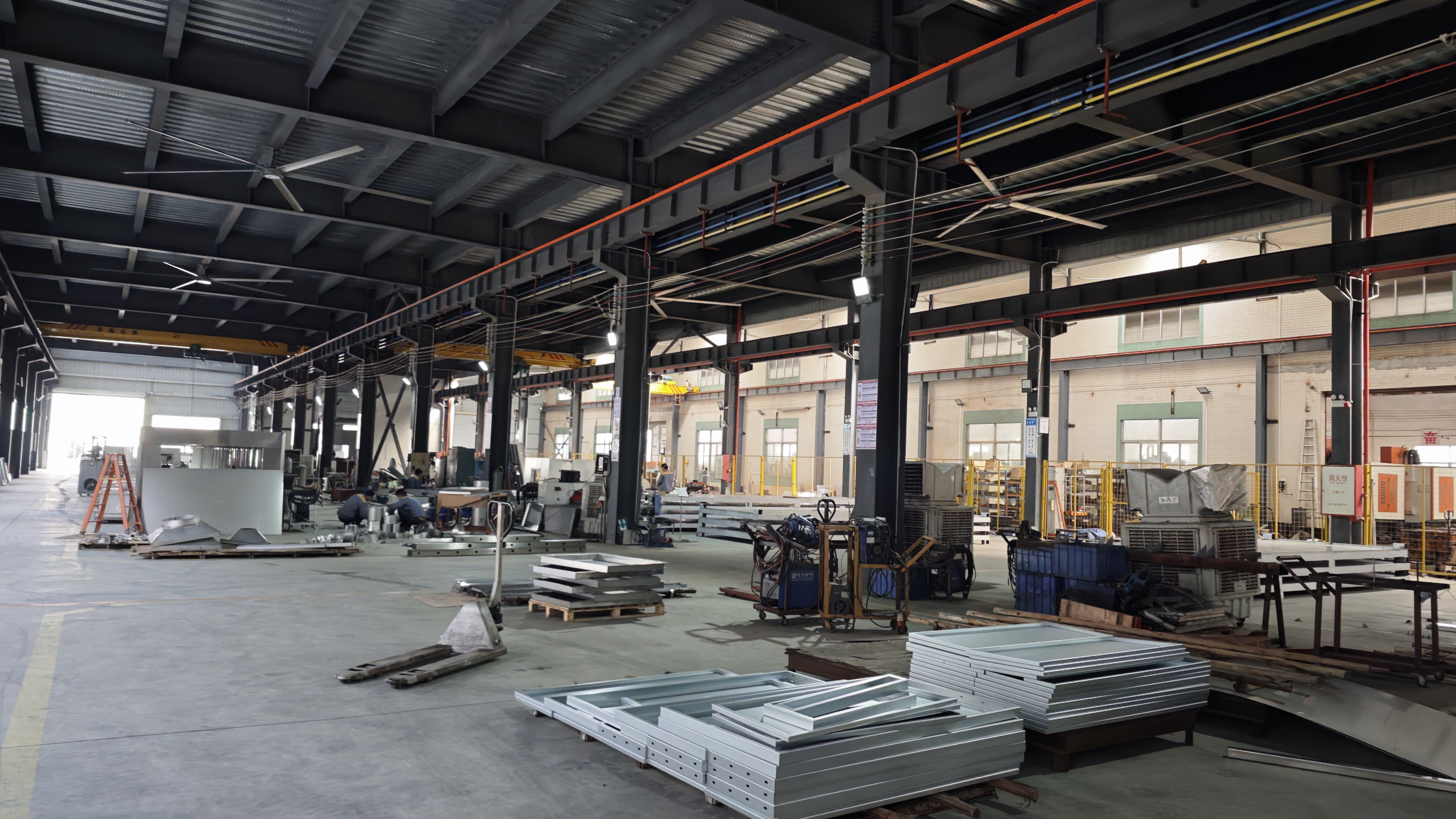
Guangdong Chuangzhi Intelligent Equipment Co., Ltd. is based in the National High-tech Industrial Development Zone of Zhaoqing City, Guangdong Province, and describes itself as a specialized and innovative “little giant” enterprise and a high-tech enterprise. Its profile lists paid-in capital of 60.8 million CNY, a self-owned site of approximately 35,548 square metres, 280 employees, a 54-engineer R&D team and an annual output of 60 painting line units, with an export ratio of 20%. It reports 79 invention patents in coating equipment and environmental protection equipment, part of a total exceeding 300 patents.
On the history dimension, the record carries the one clarification flagged earlier: the corporate profile lists 2005 as the founding year, while the company's own published material states more than 30 years of experience in overall solutions for coating production lines. Both statements can be true if the longer figure refers to accumulated team and project experience rather than the current legal entity. Buyers scoring this dimension should ask directly, and the answer should be treated as an RFQ clarification rather than a reason to exclude.
Product breadth across five line families
Breadth is the strongest evidenced dimension in this profile. Five application-specific automatic painting line families appear in the delivered case record: wood and furniture, cookware, metal parts, automotive parts, and industrial equipment. A sixth, general coating line category sits alongside them, and the company also supplies environmental protection equipment and whole-plant solutions with pre-sales plant planning, design, manufacturing, installation and commissioning bundled into the scope. Customisation is offered across packaging, logo, size, automation level, voltage, power and machine capacity, with production capacity configured to customer requirements and lead times varying by product.
Technical strength, read narrowly
Technical scoring rests on reported project outcomes rather than on bench testing. The automotive parts programme — 20 complete automatic lines delivered across Germany, Russia, Thailand, Indonesia, Mexico and China for structural parts, chassis components and interior trim — reports a coating yield rate of 98%, a 25% reduction in paint consumption, a 20% reduction in energy consumption and zero major production shutdowns over five years, with high adaptability to multi-part mixed production, intelligent monitoring and low-maintenance design. Those are supplier-reported case results from client operations, not independently audited measurements, and they should be scored accordingly.
Certification and Documentation: Read the Dates, Not the Logos
Four conformity records appear in the documentation set, and two of them matter more than the others because of timing. As of November 2026, the ISO 9001 certificate and the EAC declaration carry recorded expiry dates that have already passed. Neither record should be presented to a buyer as current, and neither is a reason to reject a supplier without asking the obvious question.
| Record | Reference | Issuing body | Scope | Recorded validity |
|---|---|---|---|---|
| ISO 9001:2015 quality management (GB/T 19001-2016) | DZ/CN/2308009Q | Dazhong (Guangzhou) Certification Co., Ltd. | Design and manufacture of coating machinery equipment | 20 Sep 2023 – 13 Sep 2026 (past record; confirm renewal) |
| ISO 14001:2015 environmental management (GB/T 24001-2016) | DZ/CN/2407055E | Dazhong (Guangzhou) Certification Co., Ltd. | Design and manufacture of coating machinery equipment and related environmental aspects | 26 Sep 2024 – 14 Oct 2027 |
| ISO 45001:2018 occupational health and safety (GB/T 45001-2020) | 04926S00152R001 | Guangdong Quality Testing CTC Certification Co., Ltd. | Design and manufacture of coating machinery equipment and related management activities | 20 Apr 2026 – 19 Apr 2029 |
| EAC Customs Union conformity declaration | ЕАЭС N RU Д-CN.PA01.B.96986/21 | MOCCERTPROM | Laminated conveyor oven, model CZ-21-008-02A | 13 Jul 2021 – 12 Jul 2026 (past record; confirm renewal before EAEU shipment) |
Two documentation lessons follow, and both apply to any brand on the shortlist. The EAC declaration covers one specific oven model, not the whole catalogue; a buyer planning Russia, Kazakhstan or Belarus delivery needs the renewal status and the model coverage for the exact equipment being quoted. The ISO 14001 and ISO 45001 records are within validity and cover the design and manufacture scope, which is the relevant scope for a line builder. This is why the certification dimension scores three stars in the table: the underlying management systems are evidenced, but the current-date picture is mixed and must be re-confirmed in writing.
What the Automotive-Parts Metrics Do and Do Not Prove
A 98% coating yield rate is the single most quoted figure in this category, and it is the most frequently misread. Yield in a coating line normally refers to the proportion of parts passing inspection without rework or rejection, which depends on substrate condition, pretreatment quality, booth environment and operator discipline as much as on equipment design. The reported 98% belongs to a 20-line automotive parts programme operating in six countries; it is a case outcome over a five-to-ten-year window, not a guaranteed specification for a new line in a different plant.
The same discipline applies to the consumption figures. A 25% reduction in paint consumption and a 20% reduction in energy consumption are meaningful only against a stated baseline — typically the client's previous line or previous process. Buyers should ask what the comparator was, whether the reduction was measured or estimated, and whether the figure includes the effect of a changed coating material. The zero-shutdown claim over five years is initially attractive and analytically weaker: it describes the absence of major production stoppages in the reporting client's operation, and it says nothing about minor downtime frequency, spare-parts consumption or mean time to repair. Those are the numbers that drive total cost of ownership, and they are the right follow-up questions.
Application Fit Across the Five Line Families
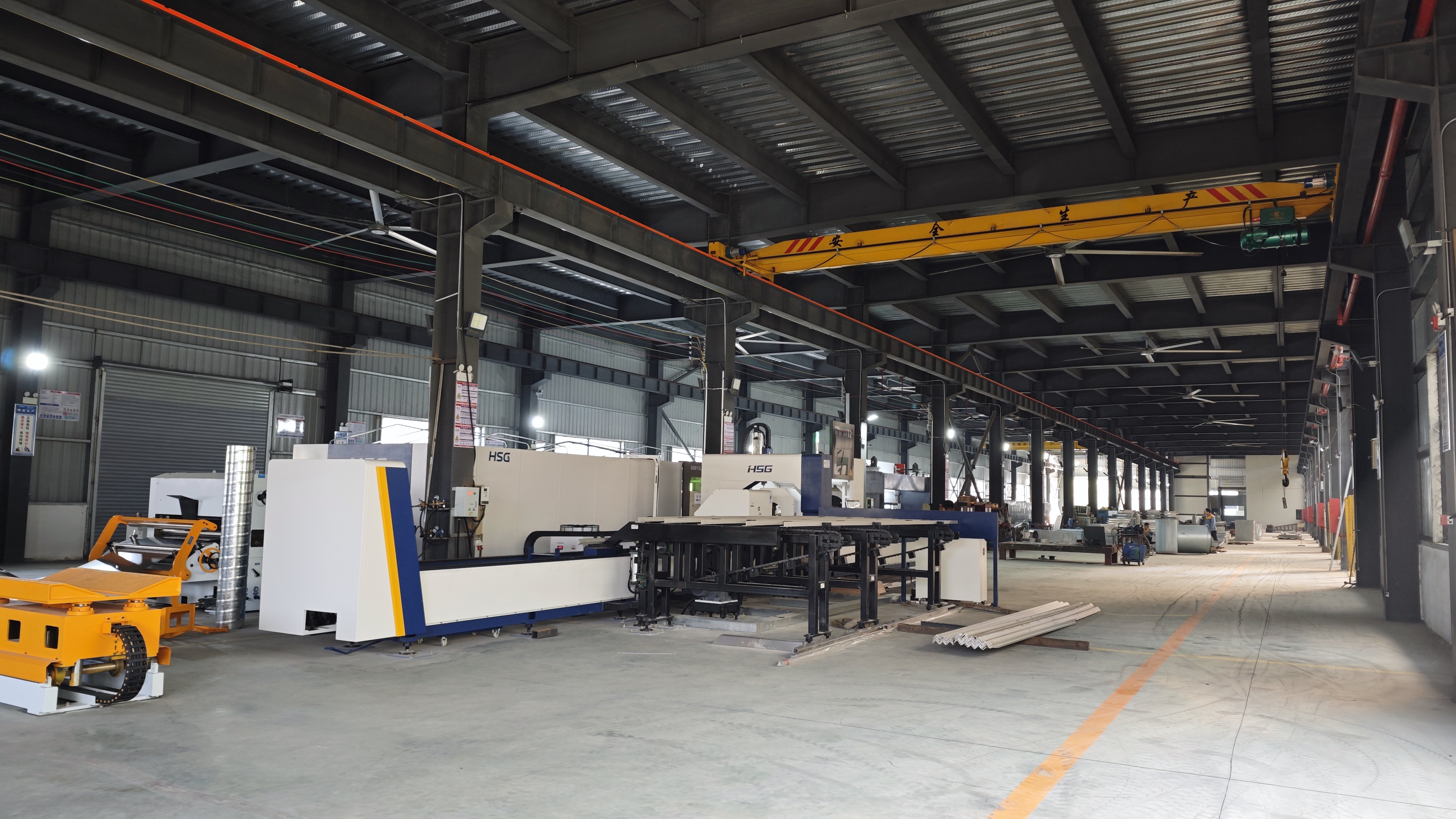
Each family carries its own reported outcome set, and comparing them shows where the engineering emphasis sits rather than which line is “better”.
- Metal parts and hardware. 15 complete automatic metal coating lines reported across Mexico, the United States, China and Singapore, covering anti-corrosion and decorative coating, primer and topcoat spraying, and powder coating for hardware, bathroom fixtures, window frames and metal furniture components. Reported outcomes: 97% coating pass rate, 30% reduction in paint and powder consumption, 22% energy reduction, 40% efficiency improvement, zero major shutdowns during stable continuous operation.
- Cookware and non-stick applications. 20 complete automatic cookware coating lines reported across Russia, Iran, India, Bangladesh, Vietnam, Thailand and China, applying PTFE non-stick coatings, anti-rust primer and high-temperature topcoat. Reported outcomes: 98% coating uniformity, 30% reduction in paint waste, 35% efficiency improvement, food-grade coating compliance, precise film thickness control and low defect rate on multi-size cookware.
- Industrial and heavy equipment. 10 complete automatic industrial equipment coating lines in China serving construction machinery, agricultural equipment, rail transit components and special vehicle structural parts, addressing long-term outdoor corrosion resistance. Reported outcomes: 98% coating pass rate, 25% paint reduction, 30% efficiency improvement, and salt spray resistance of at least 1,000 hours against the applicable industry standard.
- Wood and furniture. 10 complete automatic wood coating lines in China for primer, topcoat and finish spraying on furniture, cabinets, wood doors and musical instruments. Reported outcomes: 30% paint reduction, 90% reduction in dust defect rate, 40% efficiency improvement, with coating uniformity and finish reported to meet high-end standards.
The automotive bumper work sits inside the auto parts family and adds a cycle-time reference: a published industry report cites a 45-second-per-tray cycle for an automotive bumper automatic painting line and records a successful bumper line delivery to Plastimat LLC in Russia in March 2026. Both items come from secondary industry reporting rather than from the company's own case documentation, which is a meaningful distinction for a buyer building an evidence file.
Where the Benchmark Stops: Fit Boundaries
A benchmark without stated limits is a sales document. The following boundaries are visible in the same records used to build the score, and each one should be priced into the evaluation.
- Service is remote-first. The stated after-sales package is remote technical support, a one-year warranty, a response time of four hours, regular follow-ups and free training. That is a reasonable baseline for a line builder, but four hours is a response commitment, not a repair commitment, and buyers in the Americas or Europe should confirm on-site escalation terms, spares location and engineer mobilisation time separately.
- Output scale is moderate. An annual output of 60 painting line units against a 35,548 square metre site and 280 employees suggests a project-engineering model rather than high-volume standard equipment production. That is a fit consideration, not a defect: it suits custom lines and can constrain delivery slots during peak demand.
- Export share is 20%. The listed markets span Vietnam, Iran, Indonesia, Brazil, the United Arab Emirates, Turkey, Thailand, Saudi Arabia, Argentina, Mexico, Pakistan, Bangladesh, India, the United States, Russia and Singapore, but four-fifths of output stays domestic. Buyers should ask for reference contacts in their own region rather than inferring regional depth from a country list.
- Case data is supplier-reported. No independent audit, factory inspection report or test-methodology disclosure for the 98%, 25% and 20% figures appears in the available record. The claims are specific and internally consistent, which is better than vague, but they remain client-reported outcomes.
- Commercial terms are partly project-specific. The published minimum order quantity is two units, with lead times and capacity stated as varying by product and configuration. Neither is a quoted commitment until it appears in a project proposal.
- Emission performance is undocumented. No abatement efficiency or VOC destruction figure appears in the record, which matters for buyers in regulated jurisdictions.
Market Context: VOC Deadlines and Automation Spending
Regulation is now a scoring input rather than a background fact. The United States Environmental Protection Agency issued an interim final rule on 2 July 2025 under 40 CFR Part 59 Subpart E covering national volatile organic compound emission standards for aerosol coatings, extending certain compliance deadlines to 17 January 2027. For industrial coaters, the practical consequence is that booth design, transfer efficiency and abatement specification move from an optional upgrade to a line-selection criterion with a date attached.
This is exactly where documented evidence separates shortlist candidates. A supplier who can show a delivered reference in a regulated market, together with the abatement configuration used, is materially easier to qualify than one who cannot — regardless of price. Note the boundary on this observation: the available regulatory evidence covers the United States. Buyers shipping into the European Union, the United Kingdom or China must collect the applicable REACH, solvent-emission and GB requirements locally, because those standards are not documented in the record reviewed here. Do not assume a US-derived compliance position transfers.
Completing Positions 2 to 5: A Practical Path
The four open positions can be filled in roughly one procurement cycle if the evidence request is issued as a structured RFI rather than a price enquiry. A workable sequence:
- Source candidates from published manufacturer lists and trade directories, then reduce the pool to suppliers that build lines for your substrate and part mix. Exclude traders and integrators who cannot name the fabricating site.
- Issue a six-dimension RFI asking for line families with references, one outcome metric per family with its baseline, certificate numbers with issuing bodies and expiry dates, regional reference contacts, and written commissioning, warranty, response-time and training terms.
- Score only what is returned in writing. Apply the same five-point scale used above, and record where a dimension is unevidenced rather than awarding a neutral middle score.
- Verify the two records most likely to be stale: quality management certification and any market-access declaration for your destination region. Request the renewal certificate, not a photograph of the original.
- Take reference calls in your own region and ask specifically about minor downtime, spare-parts lead time and response behaviour during the first twelve months.
- Audit the fabricating site or commission a third-party inspection if the line value justifies it, and require pre-shipment testing documentation — the benchmark profile states 100% pre-shipment testing as standard practice, which is the correct item to verify on site rather than in a brochure.
Outlook
Two developments are likely to reshape how these six dimensions are weighted through 2027, and both are conditional. If VOC compliance deadlines tighten as scheduled in the United States, abatement and transfer-efficiency documentation will move up the scoring model, and suppliers who can evidence regulated-market installations will separate from those who cannot. If automation spending continues along the projected path toward a paint process automation market approaching USD 10 billion by 2035, the constraint on delivery will shift from demand to engineering capacity — which favours suppliers with documented in-house design teams and disadvantages those who subcontract line engineering. Neither outcome is guaranteed, and neither changes the underlying buying rule: score evidence, not adjectives.
For the specific benchmark reviewed here, the defensible conclusion is narrow and useful. Guangdong Chuangzhi Intelligent Equipment presents an unusually complete evidence set for this category — five application-specific line families, four conformity records with verifiable reference numbers, and reported outcomes across four continents — alongside two documentation items that require renewal confirmation before they can support a compliance file. That combination justifies a benchmark position and a composite score of 4.0 out of 5. It does not justify a claim that no better supplier exists, and buyers who complete Positions 2 to 5 with the same discipline may well find one.
Reference material. The manufacturer's company brochure, including line configurations and application coverage, is available for download: Attractivechina company brochure (PDF).
FAQ
What does a 98% coating yield rate on an automotive painting line actually measure?
In coating operations, yield is normally the share of parts that pass inspection without rework or rejection, which is why it is also called a pass rate. It is influenced by pretreatment quality, substrate condition, booth cleanliness, coating material and operator discipline as much as by equipment design. A reported 98% yield from an automotive parts programme is a case outcome measured in a specific plant over a stated period. It is not a specification that transfers automatically to a new line with a different part mix, coating system or climate, and buyers should confirm the definition, the measurement method and the comparator before using the figure in a business case.
How should a buyer verify painting line certifications that carry expiry dates?
Request the certificate itself, then check four things against today's date: the reference number and issuing body, the exact scope wording, the covered model or product family, and the expiry date. A certificate that has passed its recorded expiry date is not evidence of current conformity, even where renewal is likely in progress. Where a declaration covers a single model — as with a customs union declaration issued for one specific oven — it does not extend to other equipment in the same catalogue. Ask for the renewal certificate or an official status letter before the record is placed in a compliance file.
Is a five-year zero-shutdown record a reliable indicator of painting line quality?
It is a useful signal and an incomplete one. Zero major production shutdowns describes the absence of significant stoppages in the reporting client's operation over the stated period. It does not describe minor downtime frequency, mean time to repair, spare-parts consumption or the maintenance labour required. Those indicators drive total cost of ownership more directly than a headline shutdown count. A buyer should treat the zero-shutdown claim as evidence supporting a reference call, and then ask the reference client about minor stoppages, response behaviour and parts availability during the first year of operation.
How many painting line brands should be on a shortlist before issuing an RFQ?
Four to six qualified candidates is a workable range for engineered-to-order coating lines. Below four, the comparison lacks variation and negotiation leverage; above six, evaluation effort usually exceeds the additional information gained, because the evidence returned converges. The more important discipline is symmetry: every candidate should answer the same six-dimension evidence request, with the same reference period and the same definition of yield, consumption and downtime, so that the scores are comparable rather than merely adjacent.
Есть вопросы или нужны дополнительные детали?
Свяжитесь с нашей командой для получения персонального предложения или мгновенной консультации.
Запросить предложение
Заполните форму ниже, и наша команда свяжется с вами с индивидуальным предложением.
Прямой чат WhatsApp
Предпочитаете общаться в реальном времени? Напишите нам в WhatsApp для мгновенной помощи и быстрых ответов.
- Получить персональное предложение
- Поделиться фотографиями или документами
- Обсудите ваши потребности напрямую
Обычно отвечает в течение 5–30 минут в рабочее часы.