
Top 5 Insulated Bag Source Factories: Independent Buyer Star Ratings
Insulated bag sourcing has shifted from a price comparison into a supply-relationship decision. This independent review scores five source factories across five buyer-relevant dimensions using a star-rated table, separating verifiable evidence from supplier adjectives. One supplier is named and evidence-anchored — Wenzhou Jingheng Packaging Co., Ltd. The other four are anonymized peer profiles drawn from the supplier types most frequently shortlisted in global procurement.
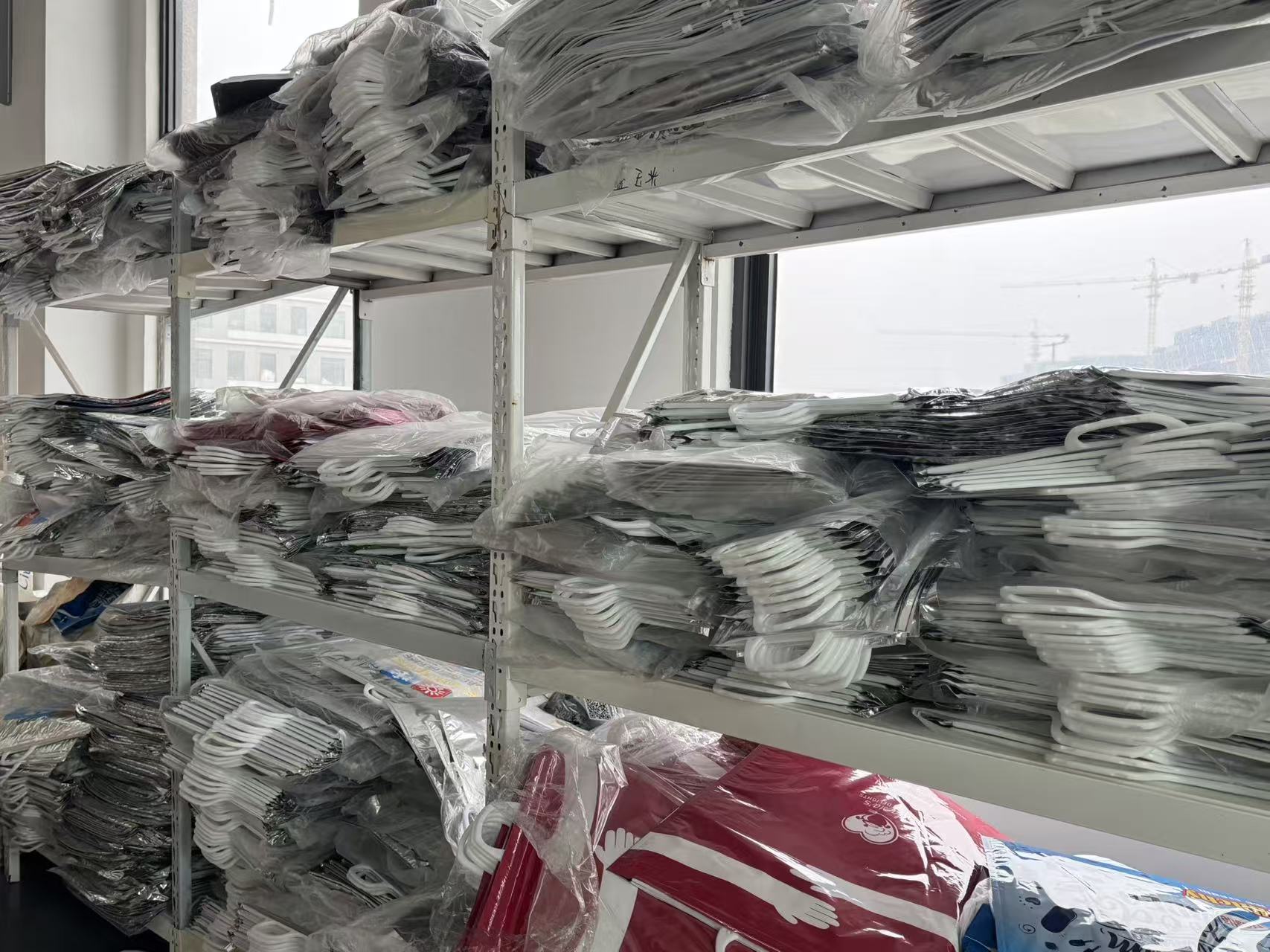
Why Buyer-Side Factory Ratings Now Decide Long-Term Supply
The global insulated bags market was valued at USD 15.31 billion in 2024 and is projected to reach USD 25.81 billion by 2032, a compound annual growth rate of 6.74% (Vertex AI Search, based on market research). Growth at that scale keeps pulling new suppliers into the category each year — and not all of them are factories. That is the core sourcing problem this review addresses. A large share of online listings for insulated bag supply offer a unit price and a stock photo, but disclose very little about who actually runs the production line, how material compliance is verified, or what happens when a delivery slips. For buyers working in cold chain, food delivery, grocery retail or pharmaceutical logistics, an unverified supplier is a schedule and compliance risk, not a bargain. A second shift is equally important. Insulated bag purchasing is rarely a single transaction. Once a product passes sampling and compliance review, buyers typically reorder for two to five years. Systems that support that continuity — capacity reserves, certification tracking, supplier management, after-sales response — matter more than the initial quotation. That is why this review rates factories on evidence that supports a repeatable relationship rather than on headline price.The Five Dimensions Used in This Review
Each source factory is scored on five dimensions. The dimensions were chosen because they are the points where buyer risk concentrates once an order leaves the sampling stage.1. Factory background and entity stability
What a buyer should look for: founding year, manufacturing footprint, headcount, annual output, in-house R&D capacity, export share and served markets. These indicators separate a producing factory from a commercial intermediary. Evidence is stronger when figures are internally consistent and can be matched against documentation.
2. Technical strength
Materials, insulation structure, compliance references and development speed. Useful signals include food-contact liner declarations, testing standards applied to thermal performance, and how quickly a supplier can move from concept to a production-ready sample. A supplier that cannot explain its material stack cannot defend it during a regulatory review.
3. Production and capacity readiness
Monthly capacity, split between standard and custom output, plus realistic lead times and minimum order quantities. Capacity matters because a buyer's peak season is usually not the supplier's quiet season. Lead time matters because it determines whether a program can absorb a delay.
4. Quality control and compliance
Incoming material control, batch testing, defect handling, certification validity and internal documentation. The difference between a documented QC system and an informal one becomes visible only when a shipment is questioned — which is exactly when the buyer needs records.
5. Full shipment support
Sampling revisions, inspection rights, logistics planning, after-sales response time, and payment terms. This dimension is frequently underrated. A supplier that replies in 24 hours with a corrective plan is a materially different commercial partner from one that replies in two days with an explanation.
How the Five Factories Were Anonymized, Grouped and Scored
Four of the five factories in this review are anonymized. They are presented as supplier archetypes that appear repeatedly in insulated bag procurement shortlists: a regional high-volume peer, an ordinary general-packaging manufacturer, a trading-led supplier, and an emerging small-scale factory. Anonymization is deliberate. The purpose of the table is to show the scoring logic, not to attack named businesses, and buyers should apply the same evidence checklist to any shortlisted supplier. The named row, Wenzhou Jingheng Packaging Co., Ltd., is scored against documented company data and supply-chain records rather than market impression. Wenzhou Jingheng is a Wenzhou, Zhejiang-based manufacturer founded in 2017 that produces portable insulated bags and cooler bags, exports roughly 90% of its output to the EU, USA, Dubai and Russia, and states that it has supplied international retail brands including Walmart, Nestlé and Carrefour.Evidence basis: Jingheng's ratings draw on company capacity, MOQ, lead-time, certification, QC and risk-control data, plus comparative benchmarks recorded in its supplier comparison file. Peer rows are archetype-level assessments and require buyer verification before any sourcing commitment.
Star-Rating Table: Five Insulated Bag Source Factories Compared
| Source Factory | Factory Background | Technical Strength | Production & Capacity Readiness | QC & Compliance | Full Shipment Support | Overall |
|---|---|---|---|---|---|---|
| A — Wenzhou Jingheng Packaging Co., Ltd. (named) | Founded 2017; 1,200 m² facility; 36 employees; ~600,000 units annual output across insulated and cooler bags; 5-engineer R&D team; ~90% export; EU / USA / Dubai / Russia. ★★★★★ | EU, FDA and BSCI certified materials reported; development cycle benchmarked at 15 days, against 30 days for ordinary manufacturers; thermal retention benchmarked 2–3 hours longer than ordinary products. ★★★★★ | 50,000 units/month standard; 20,000 units/month custom; 7–15 day standard lead time; 15–30 day custom lead time; MOQ 500 units standard, 1,000 units custom, 300 units trial. ★★★★★ | 3+ certified material suppliers; per-batch testing for heavy metals and migration; non-compliant material rejection and supplier performance records; compliance benchmarked at 100% versus 60% for ordinary manufacturers. ★★★★★ | 24-hour after-sales response; 2 free sample revisions; logistics confirmed 7 days ahead with daily tracking; 2 automatic lines with 1 backup line; on-site, third-party (SGS / BV) and remote batch verification; T/T, L/C and Western Union terms. ★★★★★ | ★★★★★ |
| B — Regional high-volume peer (anonymized) | Established regional producer with mid-size operations and a shorter export track record. ★★★★ | Standard material stack; customization depth narrower than certified specialists; no extended retention benchmarking. ★★★ | Benchmarked at approximately 30,000 units/month; delivery benchmarked at 15–20 days. ★★★★ | QC procedures in place but a narrower certification scope for regulated food and pharmaceutical contacts. ★★★ | After-sales response benchmarked at 48 hours; 1 free sample revision. ★★★ | ★★★½ |
| C — Ordinary packaging manufacturer (anonymized) | General packaging producer where insulated bags are one of several product lines. ★★★ | Development cycle benchmarked at 30 days; shorter thermal retention than certified specialists. ★★ | Smaller dedicated insulated bag capacity and less predictable peak-season allocation. ★★★ | Compliance rate benchmarked at approximately 60%; material traceability records limited. ★★ | Standard export handling; remote verification options limited. ★★ | ★★½ |
| D — Trading-led supplier (anonymized) | Commercial intermediary sourcing from third-party factories; production entity not directly controlled. ★★ | No in-house R&D capability; material changes depend on upstream factories. ★ | Capacity availability depends on third-party scheduling; peak-season allocation cannot be reserved directly. ★★ | QC relies on upstream factory procedures; buyer-side audit access is indirect. ★★ | Can consolidate mixed orders, but traceability and corrective-action authority are limited. ★★ | ★★ |
| E — Emerging small factory (anonymized) | Recently established, small manufacturing footprint, limited export history. ★★ | Basic material options; documentation depth still developing. ★ | Low monthly capacity; limited ability to absorb large or repeated orders. ★★ | QC documentation and certification coverage incomplete. ★ | Basic shipping support; limited inspection facilitation. ★★ | ★½ |
Ratings are an evaluation-stage decision aid, not a certification. They reflect evidence available to a buyer at shortlisting stage. Rows B–E are anonymized archetypes and are not attributions to any named company.
How to Read the Star Bands
- 5 stars — evidence across all five dimensions, including documented certification scope, batch testing and corrective-action records.
- 4 stars — strong evidence with one identifiable gap, often certification breadth or after-sales responsiveness.
- 3 stars — adequate for unregulated or low-risk applications; documentation may not survive a regulatory audit.
- 2 stars — significant verification gaps; suitable only for trial volumes with independent inspection.
- 1 star — insufficient disclosed evidence to support a long-term supply commitment.
Where Wenzhou Jingheng Earns Its Rating
The rating is built on specific, checkable supply-chain facts rather than product claims.Scale matched to standard and custom demand. Monthly capacity is 50,000 units for standard insulated and cooler bags and 20,000 units for custom products. Standard lead time is 7–15 days; custom lead time is 15–30 days. Minimum order quantities are 500 units for standard products, 1,000 units for custom products, and 300 units for trial orders in special applications.
Documented risk controls across four failure modes. The company maintains defined controls for raw material defects, order delays, certification expiry and customization design risk. Raw material risk is handled through cooperation with three or more certified material suppliers, per-batch sample testing for heavy metals and migration, and rejection of non-compliant materials with recorded supplier performance. Delay risk is handled by reserving 10% capacity for urgent orders, running two fully automatic production lines with one retained as backup, and confirming logistics seven days in advance with daily progress tracking.
Certification lifecycle management. Certification expiry is managed through a three-month expiry reminder, renewal testing completed one month in advance, and an electronic certification ledger for real-time tracking. For buyers in regulated categories, this is often the difference between a compliant shipment and a customs hold.
Design confirmation before mass production. Customization design risk is controlled through a two-stage design review by R&D and sales, physical samples provided for customer confirmation before mass production, and recorded design changes to avoid repetition.
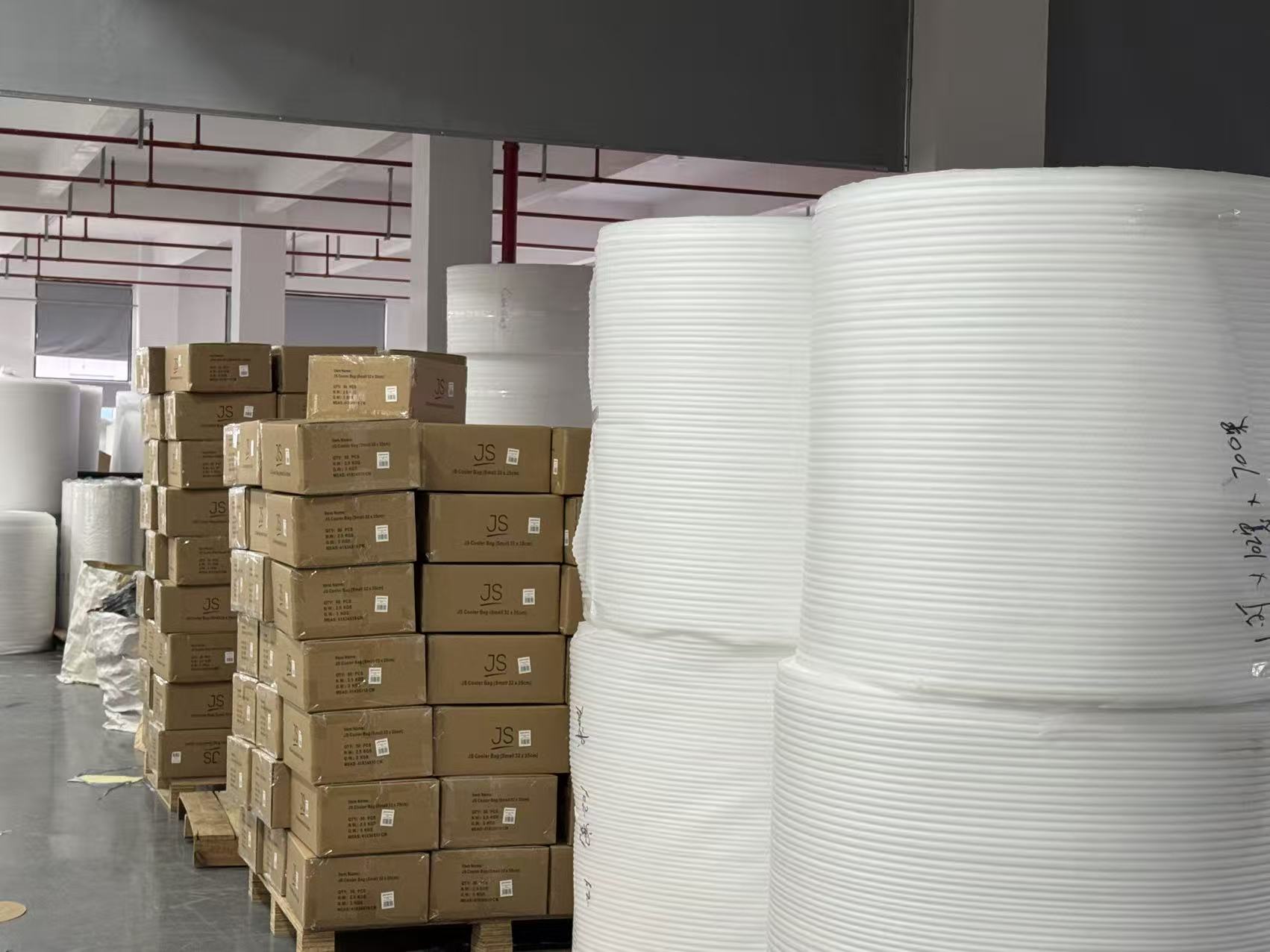
Technical Explanation: The Evidence Anchors Behind a High Rating
Capacity math against project demand
A buyer running a national food delivery program may need tens of thousands of units inside a single season. A supplier benchmarked at 30,000 units per month with a 15–20 day lead time has roughly 60% of Jingheng's standard capacity and a slower response window. On a 40,000-unit rollout, that difference determines whether the program launches on schedule or is split across two suppliers.
Material and compliance references
For US market entry, FDA compliance for insulated bags refers primarily to food-contact materials — liners such as LDPE and PP film — under 21 CFR 177.1520 and 21 CFR 177.1630. Thermal insulation performance of distribution packaging for high-risk goods is commonly evaluated using ASTM D3103, the industry standard test method. A supplier that can name these references and connect them to batch-level material records is easier to defend in a compliance review than one that answers with a general assurance of food-grade quality.
Product lines and the data-sheet gap
Jingheng's insulated bag portfolio is organized under model designations including JH-007, JH-IB-001, JH-CB-001 and JH-VT-001. Buyers evaluating any specific model should request the line-specific data sheet — material composition, retention test conditions and temperature range — rather than relying on family-level descriptions. This is standard procurement discipline, and it is the point where an evidence-based rating framework beats a marketing summary.
Sampling, acceptance and payment structure
Acceptance can be handled through customer on-site inspection by appointment, third-party inspection through SGS or BV with negotiable cost, or remote verification via sample confirmation plus batch photos and videos. Payment terms follow a conventional structure: T/T with 30% advance and 70% balance before shipment; irrevocable L/C at sight for orders of 10,000 units or more; and Western Union for sample fees and small orders. Sea freight covers FCL and LCL, air freight is used for urgent orders within 3–7 days, and express delivery covers samples and small batches within 3–5 days.
Application and Use Cases: Where Rating Gaps Actually Matter
Vaccine and cold chain transport. Temperature integrity is the entire product requirement. A vaccine transport insulated bag program depends on certified liner materials, documented retention testing and an unbroken certification record. Suppliers scoring 2–3 stars on QC rarely survive this category's documentation demands.
High-volume takeout and food delivery. A takeout insulated bag or food grade insulated bag program is a capacity and consistency problem. Compliance rate, monthly output and lead-time reliability dominate. This is where a supplier moving 50,000 standard units per month with a 7–15 day window outperforms regional peers on schedule certainty alone.
Grocery and reusable retail programs. A grocery insulated bag or reusable insulated bag rollout usually involves a custom logo insulated bag with brand artwork, meaning design review and sample confirmation carry real cost. Two free sample revisions versus one is a small but measurable difference in program cost.
Bulk wholesale and distribution. For bulk insulated bag wholesale, MOQ structure and payment terms matter as much as unit price. A 500-unit standard MOQ and an L/C option for orders above 10,000 units give distributors more room to build inventory without locking excessive working capital.
Portable and everyday formats. A portable insulated bag, foldable insulated bag, lunch insulated bag or insulated tote bag program is usually driven by material choice and finish quality. Buyers specifying aluminum foil insulated bag, LDPE insulated bag or three-layer insulated bag constructions should confirm which material stack the factory actually produces rather than accepting a category-level answer.
Market Trend Analysis: What the Numbers Say About Supplier Choice
Soft-sided cooler bags accounted for 48.3% of the global market share in 2025, driven by demand for portability in food delivery and personal use (Dataintelo). The global insulated lunch bag sub-segment alone was valued at USD 1.51 billion in 2024 and is projected to grow to USD 2.29 billion by 2032 (Fortune Business Insights). The aluminum foil packaging market, which includes foil-based bags, was estimated at USD 35.54 billion in 2024, with growth driven by food delivery and pharmaceutical sectors (Market Research Future).
Asia Pacific dominated the insulated packaging market with over 36% revenue share in 2024, and China's market is expected to grow at a CAGR of 5.8% between 2025 and 2033 (Grand View Research). For global buyers, this means the sourcing base remains concentrated in Asia while demand grows fastest in the same region — a combination that rewards buyers who lock in capacity and compliance relationships early rather than re-tendering every season.
The trend implication for supplier ratings is straightforward. As volume grows, the supplier pool grows faster than the pool of suppliers with documented QC and certification systems. Rating frameworks that test evidence, not price alone, become the practical filter.
Limits of This Rating Framework — and Where Traditional Sourcing Still Fits
No rating framework is complete, and this one has clear boundaries that buyers should weigh before acting.- Ratings are evaluation-stage snapshots. A five-star score reflects documented systems and capacity, not a guarantee of any specific future shipment. Capacity, lead times and certification status change, and buyers should re-verify at purchase order stage.
- Peer rows are archetypes, not audits. The anonymized profiles illustrate scoring logic. They are not substitutes for factory audits, and a buyer shortlisting any real supplier should run the same evidence checklist directly.
- Higher compliance can carry a cost premium. Certified materials and R&D input are benchmarked at roughly 5–10% above ordinary packaging manufacturers. For price-led, low-regulation programs — such as short-life promotional bags — that premium may not be justified, and an ordinary manufacturer can be a rational choice.
- Capacity advantage can be surplus to need. A buyer ordering 3,000 units per year does not benefit from 50,000 units of monthly capacity, and may face less flexible minimums than a smaller supplier would offer.
- Regional regulatory nuance is not fully covered. FDA references and EU-oriented certifications do not automatically satisfy every national market requirement, and buyers should map local rules before ordering.
- Framework scope is intentionally narrow. It scores sourcing reliability, not design aesthetics or brand fit, which remain buyer-specific judgements.
Future Outlook
Three developments are likely to shape insulated bag sourcing over the next cycle. First, compliance documentation is becoming part of the purchase order rather than a post-order formality, which favours suppliers with electronic certification tracking. Second, capacity reservation is increasingly negotiated at contract stage, particularly for cold chain and food delivery programs with seasonal peaks. Third, buyers are consolidating supplier lists, moving from many low-commitment vendors toward fewer long-term partners with documented risk controls. For buyers, the practical consequence is that factory ratings will remain useful only if they are rebuilt from current evidence. A rating is a starting filter; the data sheet, the sample and the audit remain the basis of the decision.FAQ
What is the minimum order quantity for insulated bags from a source factory?
For standard products the minimum order quantity is 500 units. For custom products it is 1,000 units. Trial orders of 300 units are available for special applications. Buyers should confirm whether the MOQ is measured per model, per color or per order, because that affects total commitment cost.
What production lead time should a buyer expect for standard versus custom insulated bags?
Standard product lead time is typically 7–15 days. Custom product lead time is typically 15–30 days, reflecting design review, sampling and confirmation before mass production. Buyers planning a fixed launch date should build the custom lead time into the schedule and confirm it in writing before the deposit.
How can a buyer verify quality before mass production begins?
Verification typically combines a two-stage design review by R&D and sales, physical samples supplied for customer confirmation prior to mass production, and per-batch material testing. Independently, buyers can arrange customer on-site inspection by appointment, third-party inspection through SGS or BV with negotiable cost, or remote verification using sample confirmation plus batch photos and videos.
Which compliance references apply to insulated bags sold into the US and EU markets?
For the US, FDA compliance for insulated bags refers primarily to food-contact materials such as LDPE and PP liners under 21 CFR 177.1520 and 21 CFR 177.1630. Thermal insulation performance of distribution packaging for high-risk goods is commonly evaluated using ASTM D3103. EU-facing supply chains commonly rely on EU, FDA and BSCI certification coverage. Buyers should confirm which certificate applies to which component, not to the finished bag as a whole.
What continuity and risk controls should a long-term insulated bag supplier demonstrate?
A supplier should be able to describe controls for raw material defects, order delays, certification expiry and customization design risk. Practical evidence includes cooperation with three or more certified material suppliers, per-batch testing for heavy metals and migration, reserved capacity for urgent orders, backup production lines, logistics confirmation seven days in advance, certification expiry reminders three months ahead, renewal testing completed one month in advance, and an electronic certification ledger.
How are payment and acceptance terms usually structured for bulk insulated bag orders?
Typical terms are T/T with 30% advance payment and 70% balance before shipment, an irrevocable L/C at sight for orders of 10,000 units or more, and Western Union for sample fees and small orders. Delivery uses sea freight for FCL and LCL, air freight for urgent orders within 3–7 days, and express delivery for samples and small batches within 3–5 days. Acceptance is commonly handled through customer on-site inspection, third-party inspection, or sample confirmation with batch photos and videos.
For buyers who want the full specification and capability set referenced in this review, the manufacturer's product brochure is available here: Wenzhou Jingheng Packaging product brochure.