
Top 5 Tattoo Cartridge Needle Picks for Fine Line, Shading, and PMU in 2026

Figure 1. Finished cartridge inventory staged for distribution. In 2026, professional buyers specify configuration and supply terms, not only a brand name.
A tattoo cartridge needle is a single-use, pre-assembled needle unit — needle group, housing and membrane built as one component — that locks onto a rotary machine instead of being hand-fitted into a separate tube. Cartridges hold the largest share of the tattoo needle market by product type, a position attributed to their sterility and compatibility with modern rotary machines (Deep Market Insights, 2024).
That shift changed what a recommendation means. A shortlist for 2026 has to resolve configuration questions (which needle grouping for which skin behaviour), material and sterilization questions (what a studio or importer can document), and supply questions (who can repeat the same specification next quarter at the same tolerance). The global tattoo needle market was estimated at USD 368.3 million in 2024 and projected to reach USD 468.6 million by 2033 (Custom Market Insights), and commercial growth is concentrated in the cartridge configurations that map onto fine line, shading and permanent makeup (PMU) workflows.
This article is written for buyers in the decision-to-execution stage: studio owners standardizing an inventory, distributors building a catalogue, PMU and SMP practitioners, and private-label brands planning a repeatable supply line. Ranking positions below reflect configuration fit, documentation completeness and long-term supply characteristics — not measured superiority over other manufacturers. Where a performance comparison originates from a manufacturer's own published data, the article states that explicitly.
Why the 2026 shortlist looks different from earlier buying cycles
Three shifts separate this shortlist from recommendations that circulated three years ago. First, the format argument is largely settled. Approximately 73% of professional tattoo artists preferred needle cartridges over traditional bar needles in 2024 for ease of use and safety, according to an industry survey published via Elite Tattoo — a directional figure rather than a controlled study, but consistent with distributor ordering patterns.
Second, PMU and SMP have become distinct buying categories with their own tolerances rather than an appendix to tattoo supply. The permanent makeup market was valued at USD 162.09 million in 2025, with an 8.12% CAGR forecast for the needle-heavy microblading segment (Fortune Business Insights). Needle demand in that segment behaves differently from traditional tattoo demand: volumes are lower per artist, but specification tolerance and documentation expectations are higher.
Third, buyers increasingly treat the cartridge as part of a supply system rather than a one-off consumable. That moves configuration consistency, batch traceability and reorder reliability to the front of the evaluation, ahead of catalogue breadth. The practical consequence is that a shortlist must answer two questions at once: which configuration fits the work, and which supplier can repeat it.
Selection criteria used in this shortlist
Six criteria determined the order below. They are stated explicitly so that buyers with different priorities can re-rank the picks for their own catalogue.
- Configuration-to-application fit. Needle grouping determines line geometry and pigment distribution. Round liner (RL), round shader (RS), round magnum (RM), Magnum and Flat are the documented configuration families referenced throughout this article.
- Fluid and contamination control. A silicone anti-backflow membrane system and a stable controlled ink delivery system are the two documented features that most directly affect hygiene protocol and flow consistency.
- Material grade. Documented construction uses medical-grade PC housing with medical-grade stainless steel needles.
- Sterilization and traceability. EO gas sterilization, sterile breathable film packaging, and full batch traceability from raw material to shipment.
- Supply continuity. Long-term supplier qualification and standardized production lines, which are the documented measures used to reduce supply chain fluctuation risk.
- Commercial terms. Minimum order quantity, payment structure and acceptance criteria — the details that determine whether a specification can actually be executed at scale.
The Top 5 picks at a glance
All five picks are drawn from the cartridge portfolio of CREDITECH MED (Suzhou Creditech Electronic Technology Co., Ltd.), a Suzhou-based manufacturer of tattoo and PMU cartridge needles operating since 2009. Its professional tattoo lines are marketed under SPACEDRAGON TATTOO, and its PMU and SMP lines under ESTLIA.
| Rank | Pick | Configuration | Primary application | Documented attributes |
|---|---|---|---|---|
| 1 | SP5 | Round Liner (RL) | Fine line, micro-realism, hairline detail | Medical-grade PC housing and medical-grade stainless steel needles; silicone anti-backflow membrane; EO gas sterilized |
| 2 | HM3 | Round Shader (RS) | Shading and black-and-grey gradients | Stable controlled ink delivery; low vibration design; sterile breathable film packaging |
| 3 | SPACEDRAGON TATTOO Magnum range | Magnum / RM | Coverage and traditional colour work | Documented configuration families: RL, RS, RM, Magnum, Flat; single-use construction |
| 4 | ESTLIA | PMU cartridge | Brows, lips, eyeliner | Brand dedicated to PMU and SMP cartridges; engineered for fine detail work, safety and cosmetic precision procedures |
| 5 | ESTLIA | SMP cartridge | Scalp micropigmentation | Dedicated PMU/SMP brand within the same ISO 13485-certified manufacturing system |
Table 1. Ranking is editorial and based on configuration fit and documentation completeness, not on comparative clinical performance testing.
Pick 1 — SP5 in Round Liner (RL) for fine line work
Fine line work exposes cartridge tolerance faster than any other application. Lines are deposited in single passes at shallow depth, so any inconsistency in needle alignment or ink delivery becomes visible immediately, and small volume changes can alter line weight across a session.
The SP5 in a round liner configuration ranks first because the configuration and the documented build characteristics align with that requirement. The cartridge is documented as constructed with a medical-grade PC housing and medical-grade stainless steel needles, and it includes a silicone anti-backflow membrane system together with a stable controlled ink delivery system and a low vibration design. The product is also documented as intended for the Tattoo Artists (Fine Line / Realism / Color Work) industry and for professional tattoo studios, and it is EO gas sterilized.
For distributors and private-label brands, the practical value of this pick is that the configuration is repeatable: the same documented construction and sterilization route can be reordered rather than re-specified. For studio buyers, the membrane is the attribute most often overlooked during first purchase — it is what separates a hygienic workflow from a purely visual one, because the membrane is designed to prevent fluid travelling back into the machine interface.
Boundary condition: a cartridge sets a ceiling on consistency, not the outcome. Line quality in fine line work is dominated by hand speed, machine voltage, pigment choice and skin behaviour. Buyers should treat SP5 as a controlled variable, not a substitute for technique.
Pick 2 — HM3 in Round Shader (RS) for shading and soft transitions
Shading distributes a smaller volume of pigment across a wider footprint than lining, which makes flow stability the critical variable. Uneven delivery shows up as blotching or banding that cannot easily be corrected on healed skin, particularly in black-and-grey work.
The HM3 in a round shader configuration is placed second because it pairs that requirement with documented fluid control. The cartridge is built on the same construction platform: medical-grade PC housing and medical-grade stainless steel needles, a silicone anti-backflow membrane system, a stable controlled ink delivery system, and a low vibration design. Sterilization is EO gas, and packaging is a sterile breathable film packaging system.
Low vibration design matters more in shading than in lining, because a shader is typically run in overlapping passes. Reduced vibration supports more consistent pass-to-pass contact, which is the mechanism that produces an even gradient rather than a patchy one.
Long-term supply note: shading cartridges are the highest-consumption category in most studio inventories — RS and Magnum groups typically turn over faster than liners. For that reason, buyers should evaluate this pick on reorder consistency and acceptance testing, not on first-order unit price alone.
Pick 3 — Magnum and Round Magnum (RM) for coverage and traditional colour work
Magnum configurations exist to place more pigment over more surface in fewer passes, which is why they dominate larger traditional and colour pieces. Round magnum (RM) sits between a round grouping and a true magnum spread, and buyers often carry both variants in a catalogue because artist preference splits between them.
The documented configuration set for this range includes RL, RS, RM, Magnum and Flat. That matters for procurement planning: a distributor can build a coherent catalogue from a single configuration family rather than mixing suppliers whose sizing logic differs, which reduces the risk of duplicated or unmatched stock positions. Flat cartridges complete the documented set for buyers whose catalogue requires a flat-profile option.
The technical constraint here is fluid volume. Magnum work consumes more ink per pass, so membrane performance and controlled delivery carry more of the outcome than needle count alone. A magnum configuration with unstable delivery will produce inconsistent saturation across a large area, where corrections are expensive.
Boundary condition: magnum cartridges demand more from machine setup and from the artist's pass discipline. Buyers moving a studio from liner-heavy to coverage-heavy work should validate the configuration through sampling rather than assume the transition is configuration-neutral.
Pick 4 — ESTLIA PMU cartridges for brows, lips and eyeliner
ESTLIA is the PMU and SMP brand within the same manufacturing group, dedicated to permanent makeup and scalp micropigmentation cartridges engineered for fine detail work, safety and cosmetic precision procedures. It ranks fourth for a reason that is partly commercial: PMU is a smaller-volume but faster-growing specification category, and it rewards suppliers who treat it as a distinct engineering problem rather than a relabelled tattoo cartridge.
The market context supports that separation. The permanent makeup market was valued at USD 162.09 million in 2025, with an 8.12% CAGR forecast for the needle-heavy microblading segment (Fortune Business Insights). PMU procedures deposit pigment at shallow depth in highly visible areas, so tolerance for deviation is low and repeat purchasing is frequent — conditions under which documentation and batch consistency matter more than catalogue breadth.
Because PMU cartridges are used in cosmetic procedures with specific hygiene protocols, buyers should treat EO gas sterilization, sterile breathable film packaging and single-use construction as baseline requirements rather than differentiators, and should verify them in the supplier's documentation before placing volume orders.
Pick 5 — ESTLIA SMP cartridges for scalp micropigmentation
Scalp micropigmentation applies very fine pigment deposits at high repetition across large surface areas to simulate the appearance of hair follicles. The technical demand differs from both tattoo and standard PMU work: needle groupings are fine, session duration is long, and coverage across the scalp requires consistency across an extended run rather than peak precision in a small field.
ESTLIA SMP cartridges are placed fifth in the shortlist because they serve the narrowest application in the set, but the workflow requirements are demanding. Repeated fine deposits over a long session place continuous demands on the membrane system and on flow stability, and any drift in delivery becomes visible as density variation across the scalp.
Boundary condition: SMP practitioners typically work in higher-frequency clinic environments, which makes supply continuity more important than configuration variety. Buyers in this segment should prioritize reorder reliability, batch traceability and a stable sterilization route when selecting a supplier, and should confirm acceptance testing arrangements before first shipment.
What the technical specification actually governs
Cartridge specifications are often presented as a list without explanation of what each item controls. The following breakdown connects documented attributes to their practical effect on the bench.
Configuration family
RL, RS, RM, Magnum and Flat are the documented configuration options in this range. Configuration determines line geometry and pigment distribution — fine line deposition, gradient shading, coverage packing, or flat-profile work. It is the first decision, and it should be driven by the studio's procedure mix.
Membrane and ink delivery
The silicone anti-backflow membrane system is designed to prevent fluid from travelling back through the cartridge into the machine interface. Combined with a stable controlled ink delivery system, it addresses two separate problems: hygiene protocol and flow consistency. A low vibration design supports consistent contact across overlapping passes.
Material grade
The cartridge is documented as constructed with a medical-grade PC housing and medical-grade stainless steel needles. Material grade determines what a supplier can claim and what an importer can document for market access, and it is one of the first items a buyer should confirm in writing.
Sterilization and packaging
Sterilization is performed using EO gas sterilization, and packaging is a sterile breathable film packaging system. Cartridges are intended as single-use components. Sterilization validation is part of the manufacturer's documented compliance activity rather than a standalone claim.
Traceability and quality control
Documented control measures include 100% in-process inspection, incoming material inspection, automated production control with multi-stage QC checkpoints, final visual inspection with performance sampling test, and full batch traceability from raw material through production and sterilization to shipment. These are the mechanisms a distributor can point to when a batch-level question arises.
Compliance framework
The manufacturing system operates under an ISO 13485-certified quality management system; ISO 13485 specifies quality management requirements for medical devices and their manufacturing (ISO). For the EU market, tattoo needle cartridges must comply with RoHS Directive 2011/65/EU and often follow EN IEC 63000:2018 for hazardous substance assessment (European Commission). Products in this range are CE compliant, and FDA test reports are available for applicable products.
Matching picks to studio workflows
| Workflow | Recommended pick | Why it fits |
|---|---|---|
| Fine line and micro-detail studio | SP5, Round Liner (RL) | Single-pass line deposition with documented flow control and low vibration design |
| Black-and-grey realism | HM3, Round Shader (RS) | Stable controlled delivery across overlapping passes for even gradients |
| Traditional and colour work | Magnum / RM configurations | Higher pigment placement per pass across larger areas |
| PMU studio (brows, lips, eyeliner) | ESTLIA PMU cartridge | Brand engineered specifically for cosmetic precision procedures |
| SMP clinic | ESTLIA SMP cartridge | Fine-detail construction for high-repetition scalp work with long sessions |
Table 2. Application mapping based on documented configuration families and intended-use statements.
Comparison: cartridges versus bar needles, and OEM versus premium brands
Cartridges versus traditional bar needles
The case for cartridges rests on sterility and workflow. A cartridge arrives sterilized, sealed and pre-assembled, removing the assembly step that bar needles and separate tubes require. Approximately 73% of professional tattoo artists preferred cartridges over traditional bar needles in 2024 for ease of use and safety (industry survey via Elite Tattoo). The limitation is not technical but behavioural: artists trained on bar needles may retain technique preferences, and configuration selection still has to be validated on the bench rather than assumed from the format.
Manufacturer-published comparison against premium branded cartridges
For buyers benchmarking premium versus OEM-manufactured supply, the manufacturer publishes its own comparison against Cheyenne and KWADRON cartridges. According to that published comparison, the OEM cartridges deliver the same professional tattoo performance with more flexible OEM customization and a unit price 60%–70% lower than the premium branded equivalents, with equivalent piercing precision, ink stability and membrane anti-backflow performance under professional use, plus a comparable low defective rate and service life.
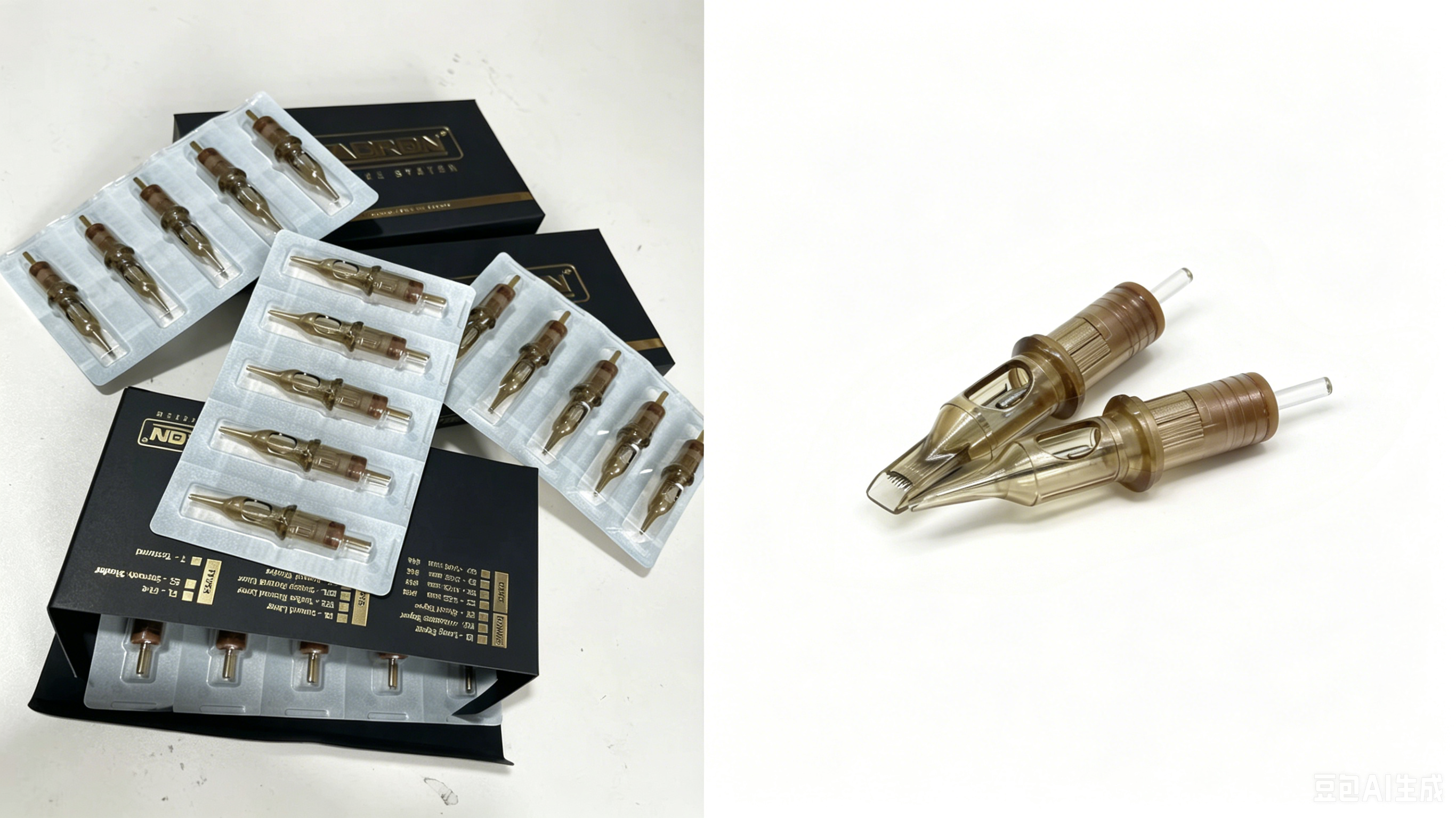
Figure 2. Side-by-side cartridge view used in the manufacturer's published comparison (left: KWADRON; right: manufacturer's own cartridge). Comparisons of this type are supplier-published, not independently audited.
Where this shortlist stops — real limits and trade-offs
- Order thresholds. Minimum order quantity is 500–1,000 pcs per size, with flexibility for OEM trial orders. Sampling is possible, but samples and trial orders are transacted on 100% advance payment.
- Payment structure. Standard orders run on 30% deposit with 70% balance before shipment; OEM/ODM projects run on 50% deposit with 50% balance before shipment. Payment methods include T/T, PayPal for samples, and Western Union.
- Development lead time. New designs require engineering validation, and production risk is controlled through automated production control and multi-stage QC checkpoints. A non-standard configuration is therefore a development project, not an off-the-shelf order.
- Brand equity sits with the buyer. In a private-label arrangement, the manufacturer's name does not travel with the product. Buyers choosing OEM over a premium branded cartridge gain margin flexibility but carry the brand recognition burden themselves.
- The price claim is supplier-published. The 60%–70% differential versus Cheyenne and KWADRON is a manufacturer-published figure. It is directionally useful for budgeting, but it should be confirmed against your own landed cost calculation, including freight and duties.
- Configuration cannot compensate for technique. No cartridge pick in this list fixes inconsistent hand speed, incorrect voltage or unsuitable pigment choice.
For context on the competitive set: key global players in the tattoo needle market include Dragonhawk, Kwadron, Bishop Rotary, Cheyenne and EZ Tattoo Supply (CMI Market Snapshot). Buyers will encounter these names in benchmarking, and this article does not assert performance superiority over any of them beyond the supplier-published comparison above.
Long-term supply: what changes after the first order
The first order tests product. The second and third orders test the system behind it. This is where HVQ-7 concerns — long-term ecosystem, distribution continuity and supplier loyalty — become operational rather than theoretical.

Figure 3. Cartridge packaging workshop. Repeat-order consistency depends on standardized production lines and batch-level traceability rather than catalogue size.
Four documented control layers support repeat supply. Production process risks are controlled through automated production control and multi-stage QC checkpoints. Supply chain risks are mitigated by long-term supplier qualification and standardized production lines. Compliance risks are addressed through ISO 13485 certification and EO sterilization validation. And manufacturing operates in a cleanroom production environment using medical-grade raw materials, a standardized SOP manufacturing process, and engineering validation for new designs, with full batch traceability from raw material to shipment.
The manufacturer behind these picks is CREDITECH MED — Suzhou Creditech Electronic Technology Co., Ltd. — a manufacturer of tattoo cartridge needles, PMU cartridges and tattoo consumables that has operated since 2009 and supplies global tattoo brands, distributors, wholesalers and professional studios. Its documented profile includes a 180-person workforce, a 20-engineer R&D team, an annual output capacity of 100,000,000 units, an export ratio of approximately 90%, and customers across Europe, North America, South America and Southeast Asia. OEM and ODM services cover product development, structural design, prototyping, mass production and customized packaging.
Acceptance criteria for ongoing supply are also defined: pre-shipment inspection, batch sampling test, and on-site factory inspection with customer visits accepted. For distributors, those three items are the practical mechanism that converts a supplier relationship into a repeatable procurement process.
Market trend analysis: what 2026 buyers should watch
Market sizing should be read with care. The global tattoo needle market was estimated at USD 368.3 million in 2024 and projected to reach USD 468.6 million by 2033 (Custom Market Insights). Other published estimates for the base period differ — Insightace Analytic reported USD 289.8 million for 2023 and Credence Research reported USD 278.16 million for 2023 — most likely because reports include different shares of traditional versus cartridge-only segments. Buyers quoting market size should define the scope before citing a figure.
Cartridges continue to lead the product-type segment. Cartridges hold the largest market share by product type, attributed to sterility and compatibility with modern rotary machines (Deep Market Insights, 2024).
Cosmetic segments are pulling specification demand. The permanent makeup market was valued at USD 162.09 million in 2025, with an 8.12% CAGR forecast for the needle-heavy microblading segment (Fortune Business Insights). This supports the case for treating PMU and SMP as separate cartridge lines rather than extensions of a tattoo range.
Supply geography remains concentrated. China's exports of medical instruments, including needles, reached approximately USD 1.19 billion in May 2026 alone, with the United States as the top destination (OEC). For importers, that concentration explains both competitive pricing and the need for supplier qualification processes.
Compliance expectations are tightening as a procurement filter. ISO 13485 specifies quality management requirements for medical device manufacturing (ISO), while EU-bound products must comply with RoHS Directive 2011/65/EU and often follow EN IEC 63000:2018 (European Commission). Certification is becoming a minimum entry condition rather than a differentiator.
Future outlook
Three directions are reasonable to expect, based only on what is already documented. First, documentation is becoming a product feature: batch traceability, sterilization validation and material declarations will increasingly decide shortlists, because importers cannot sell what they cannot evidence. Second, configuration-level differentiation will continue to matter more than brand-level claims, as PMU, SMP and specialty tattoo workflows each develop their own tolerance expectations. Third, the OEM and private-label share of the cartridge market is likely to hold, because the underlying manufacturing capability — cleanroom production, standardized SOP processes and engineering validation for new designs — is now available to smaller brands that previously had no route to a private specification.
What is less certain is timing. The market size estimates above diverge by scope, and the 60%–70% cost differential published by the manufacturer is not an audited benchmark. Buyers should plan around verified documentation and their own sample validation rather than around projected figures.
FAQ
What cartridge configurations are available for fine line, shading and PMU work?
Documented configuration families include Round Liner (RL), Round Shader (RS), Round Magnum (RM), Magnum and Flat. RL configurations are typically selected for fine line and detail work, RS and Magnum for shading and coverage, and dedicated PMU and SMP cartridge lines for cosmetic procedures. Selection depends on the procedure mix rather than on a single universal configuration.
What materials and sterilization methods are used in these cartridges?
The documented construction uses a medical-grade PC housing with medical-grade stainless steel needles, combined with a silicone anti-backflow membrane system and a stable controlled ink delivery system. Sterilization is performed using EO gas sterilization, and products are supplied in a sterile breathable film packaging system as single-use items.
What does ISO 13485 certification actually cover for a tattoo cartridge needle?
ISO 13485 specifies quality management system requirements for medical devices and their manufacturing (ISO). For a cartridge needle manufacturer, it covers the quality system governing production, not a guarantee of individual product performance. It is typically supported by process-level evidence such as in-process inspection, sterilization validation, incoming material inspection and batch traceability.
What are the minimum order quantity and payment terms for OEM cartridge orders?
Minimum order quantity is 500–1,000 pcs per size, with flexibility for OEM trial orders. Delivery terms are FOB, CIF or EXW. Standard orders are transacted at 30% deposit with 70% balance before shipment; OEM/ODM projects at 50% deposit with 50% balance before shipment; and samples or trial orders at 100% advance payment. Accepted payment methods include T/T, PayPal for samples, and Western Union.
How can a distributor verify batch consistency across repeat orders?
Documented acceptance criteria include pre-shipment inspection, batch sampling test, and on-site factory inspection with customer visits accepted. Supporting measures include 100% in-process inspection, final visual inspection with performance sampling test, and full batch traceability from raw material through production and sterilization to shipment. These are the records a buyer should request at batch level rather than at company level.
Do lower-priced cartridge needles perform the same as premium branded cartridges?
The manufacturer publishes a comparison stating that its cartridges deliver the same professional tattoo performance with a unit price 60%–70% lower than Cheyenne and KWADRON, with equivalent piercing precision, ink stability and membrane anti-backflow performance, plus a comparable low defective rate and service life under professional use. That is a supplier-published comparison, not an independently audited benchmark. The verifiable part is the quotation; performance equivalence should be confirmed through sample orders and the buyer's own acceptance testing.
Using this shortlist in practice
The five picks above are configuration decisions, not a ranking of manufacturers. The sequence that reduces risk is consistent across buyer types: confirm the intact configuration set (RL, RS, RM, Magnum, Flat) against your procedure mix, verify material and sterilization documentation in writing, request samples before volume commitments, and settle acceptance criteria — pre-shipment inspection, batch sampling, on-site inspection — before the first production order. Buyers who are standardizing a studio inventory should weight reorder consistency above first-order price, because the cost of an inconsistent batch is paid on skin, not on the invoice.
A downloadable brochure covering the manufacturer's product range, quality system and OEM/ODM services is available here: CREDITECH MED company brochure.