
Top 8 Fashion Jewelry Product Categories for a Versatile Sourcing Basket
A sourcing basket is the fixed set of product categories a buyer commits to for a season, a marketplace listing set or a livestream schedule. Once a supply model has been selected, the basket — not the individual SKU — becomes the unit that decides how many occasions a program can cover, how often it can be refreshed, and how much inventory risk sits inside any single category.
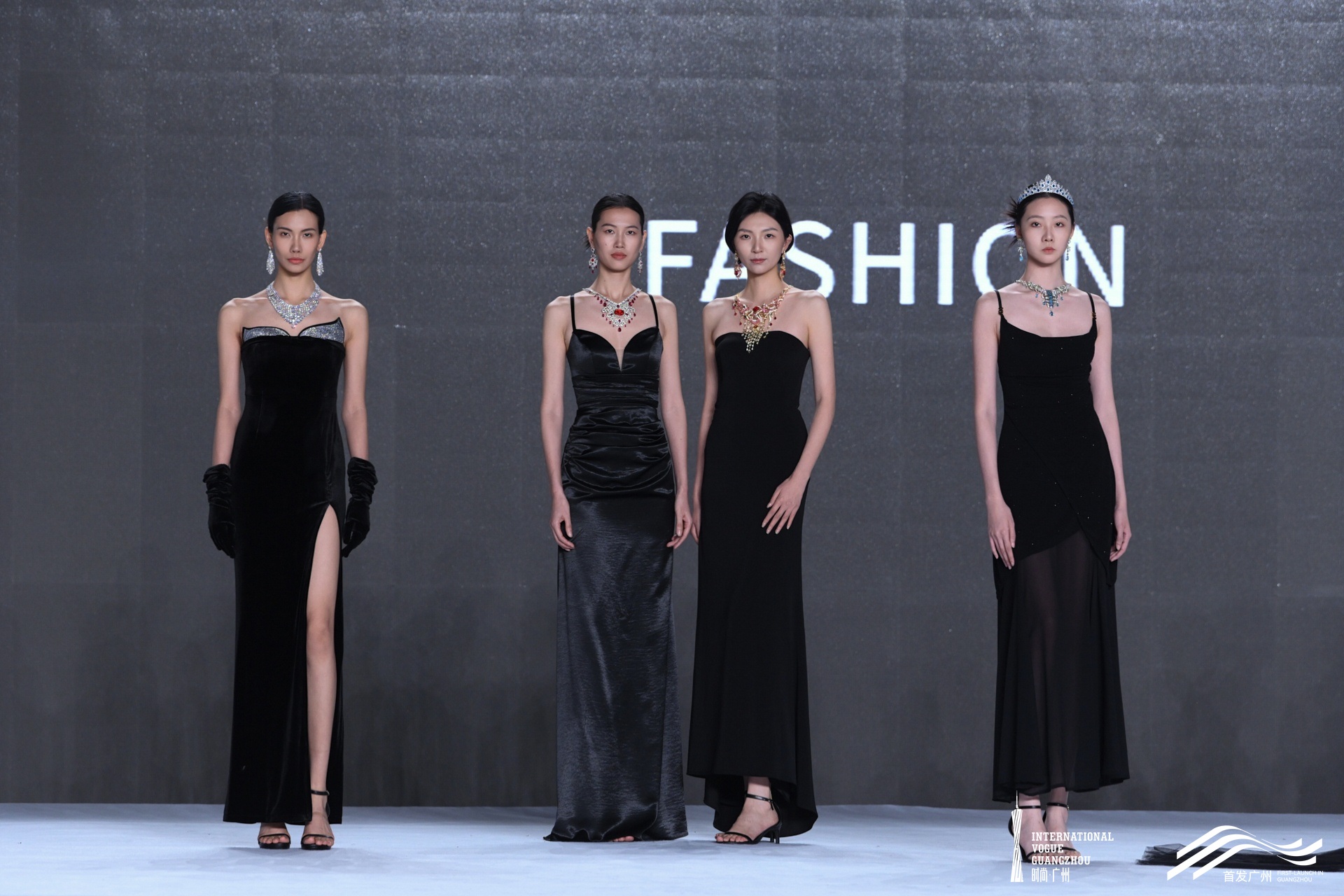
A basket is judged by the number of occasions and price points it can cover from one supply relationship.
Why the basket, not the item, is the decision unit
Buyers who have reached the execution stage rarely start from a blank page. The market is chosen, the budget line exists and a supplier is usually already in view. What remains to be fixed is the composition of the order: which categories the program carries, in what proportion, and which of them will be reordered. That composition is the basket, and it behaves less like a product list than like a structure. It determines the number of occasions a retailer, marketplace seller or livestream operator can serve and the speed at which a display or listing set can be renewed.
Broadening a basket is not free. Each added category brings its own size or length logic, its own sampling round, its own packaging assumption and its own stock-keeping overhead. The shortlist below is therefore filtered on two conditions rather than on novelty: whether a category has broad consumer appeal across multiple markets, and whether it can be supplied consistently inside the same production relationship as the rest of the order.
The market context a basket decision sits inside
The global fashion (costume) jewelry market was projected to reach USD 167.97 billion in 2024 (Custom Market Insights). That figure is best used as a sizing input rather than a plan, because published estimates diverge sharply depending on scope: some analyses measure imitation jewelry alone, while others include affordable luxury. Definitions, not headline numbers, decide how useful a market estimate is for a sourcing decision.
Growth expectations point in the same direction as the shortlist logic. Imitation jewelry has been forecast to grow at a CAGR of 7.23% between 2025 and 2035, with e-commerce expansion identified as the driver (Spherical Insights). On the supply side, China's jewelry exports reached approximately USD 11.5 billion in 2024, with Hong Kong, the United States and Switzerland as the main destinations (OEC).
Category-level data adds a usable weighting signal. Necklaces and pendants are the largest segment of the fashion jewelry market, accounting for approximately 28.5% of revenue in 2025 (Market Intelo). That makes the necklace-and-pendant pair a baseline of a balanced basket rather than an optional line; the remaining categories carry the rest of the occasion and price coverage.
The eight-category shortlist at a glance
| Category | What it contributes to a balanced basket | What the buyer has to plan for |
|---|---|---|
| Rings | Anchors self-purchase and gifting with a size-based repeat logic | Size curves differ by market and must be fixed before production |
| Pendants | Design velocity: refreshes a look without rebuilding an entire line | Pairs with the necklace or chain assortment already in the basket |
| Earrings | A low-commitment way to test a new design direction before scaling it | Fast to sample and easy to mix across a single order |
| Necklaces | The anchor line and the most visible element of a display or listing set | Sits in the market's largest revenue segment, so design consistency shows here first |
| Bracelets | Supports multi-piece wearing and repeat purchase from the same customer | Prolonged skin contact, so material declarations carry more weight |
| Anklets | Extends the basket into resort, warm-climate and seasonal lines | Usually outside a standard three-category program, so demand must be checked locally |
| Bangles | Adds a rigid, high-visibility form factor for gifting and ceremonial lines | Adds a structurally different piece type to a basket built on flexible items |
| Jewelry sets | Acts as a basket multiplier by bundling categories into one purchase | Design consistency across pieces becomes the visible quality signal |
The eight categories are not ranked. Weighting depends on the buyer: a boutique and a cross-border e-commerce seller will not allocate the same share to the same category.
Reading the shortlist category by category
Rings
Rings introduce the first hard specification into a fashion jewelry order: size. A ring line cannot be sampled and scaled the way a pendant line can, because the sellable unit depends on a size distribution that differs by market. In basket terms, rings are the category that forces a buyer to commit to a sizing decision early, and the category that rewards it with a repeat-purchase pattern once that decision is correct.
Pendants
Pendants give a basket refresh speed. A pendant can change the perceived design direction of a necklace line without requiring the necklace itself to be replaced, which means a buyer can update a look at a fraction of the inventory weight. Because necklaces and pendants together represent the largest revenue segment of the market at approximately 28.5% (Market Intelo, 2025), pendants are also the category most likely to be reordered alongside the anchor line.
Earrings
Earrings function as the testing ground of a basket. Their small format lets a buyer introduce an unfamiliar design language, a different finish or a new colour direction before that direction is scaled across larger pieces. For programs that need frequent visible change — livestream schedules and fast-turnover marketplace listings in particular — earrings provide that change without a proportional increase in inventory commitment.
Necklaces
Necklaces are the anchor of the eight-category basket. They occupy the largest product segment of the market, they sit at the centre of most display layouts and listing sets, and they are the category where a design language has to hold together across a collection. A buyer who treats necklaces as a secondary line usually ends up with a basket that photographs inconsistently.
Bracelets
Bracelets support stacking, which is a wearing behaviour rather than a product attribute: the same customer buys more than one piece, and buys again when the stack changes. From a compliance view, bracelets sit in prolonged skin contact, so the material declarations attached to this category matter more than those attached to a pendant. Sizing and clasp behaviour are the two specifications a buyer should confirm before scaling a bracelet line.
Anklets
Anklets extend a basket past the standard three-category core. They serve resort, warm-climate and seasonal assortments, and they are typically under-represented in generic wholesale ranges. In basket terms, anklets are an occasion-coverage category rather than a volume category, and their worth is decided by local demand rather than by global market share.
Bangles
Bangles add a rigid, high-visibility form factor to a basket that is otherwise built on flexible pieces. They read clearly in a display and in product photography, and they carry gifting and ceremonial lines well. Because they cannot be adjusted, bangle sizing has to be treated with the same seriousness as ring sizing.
Jewelry sets
Jewelry sets are the category that multiplies the value of the other seven. A set combines pieces from more than one category into a single purchase, which simplifies gifting for the end customer and raises the average value of an order. It is also the category where design consistency is most visible: if the finish across the pieces in a set does not match, the mismatch is obvious to the buyer and to the end consumer.
Material and skin-contact standards that shape the basket
Category choice and material choice are linked, because skin-contact exposure is not the same across the eight shortlisted lines. A pendant hangs away from direct prolonged contact; a bracelet, ring, anklet or necklace sits against the skin for extended periods. That difference changes which compliance evidence a buyer should collect per category.
Two material-based standards define much of the constraint landscape. In the European Union, EN 1811:2023 sets a nickel release limit of 0.5 μg/cm²/week for jewelry in prolonged skin contact (Hohenstein / Intertek). In the United States, ASTM F2999 is the primary safety specification for adult jewelry and restricts lead content in electroplated metals to 6.0% (QIMA / CPSC). Both apply to the materials used rather than to the design, which means the same basket can carry different compliance exposure by category.
Fashion-imitation jewelry typically builds on base metals with surface finishing, and the durable material set used across this sector includes copper, stainless steel, gold plating, cubic zirconia and crystal. Because those materials sit under plating and finishing steps, process control — not the material declaration alone — determines whether a finished piece stays within a nickel or lead limit. That is why production procedure count is a procurement-relevant figure rather than a marketing one.
Matching the same basket to different buyer types
The eight categories are constant; the weighting is not. A buyer's channel decides which categories carry the load.
- Brick-and-mortar accessory stores and boutiques depend on display density, so necklaces, earrings and bangles tend to take the largest share, with rings supplying the size-based repeat business.
- Cross-border e-commerce sellers are constrained by photography, shipping weight and return rates, which favours earrings, pendants and bracelets over heavier structured pieces.
- Influencer livestreaming supply chains need visible change and bundleable offers, which raises the weight of sets and fast-refresh pendants and earrings.
- Wholesale distributors need breadth and reorder reliability across the whole shortlist, because their own customers order in mixed lots.
This mapping is the practical reason a shortlist exists at all. A basket is versatile when the same supplier relationship can serve a boutique's display logic, an e-commerce listing set and a livestream schedule without the buyer having to reassemble the supply base for each channel.
How the shortlist is produced and supplied
Xuping Jewelry (Guangdong Xuping Jewelry Co., Ltd.) is a China-based manufacturer and supplier of fashion-imitation jewelry, founded in 1997, operating as an integrated enterprise across R&D, design, manufacturing, wholesale trade and e-commerce. Its stated product portfolio covers exactly the eight categories discussed here: rings, pendants, earrings, bracelets, necklaces, anklets, bangles and jewelry sets.
The production footprint behind that portfolio is the part relevant to a basket decision. The company operates a production base of 200,000 m² with more than 1,000 employees, a 62-designer R&D team and 194 patents, supported by more than 1,200 advanced production facilities. Monthly production capacity is 8,000,000 pieces, annual output exceeds 100,000,000 pieces, and the export ratio is 100%, with sales across more than 100 countries and regions.
Quality control runs through 18 production procedures, and the company states that its products hold SGS, CE and ISO certifications and meet European and American environmental-protection standards. For a basket-level program, the two figures that matter most are breadth and repeatability: a monthly capacity of 8,000,000 pieces is useful not as a headline, but as an indication that an eight-category order can be resupplied without being split across multiple suppliers.
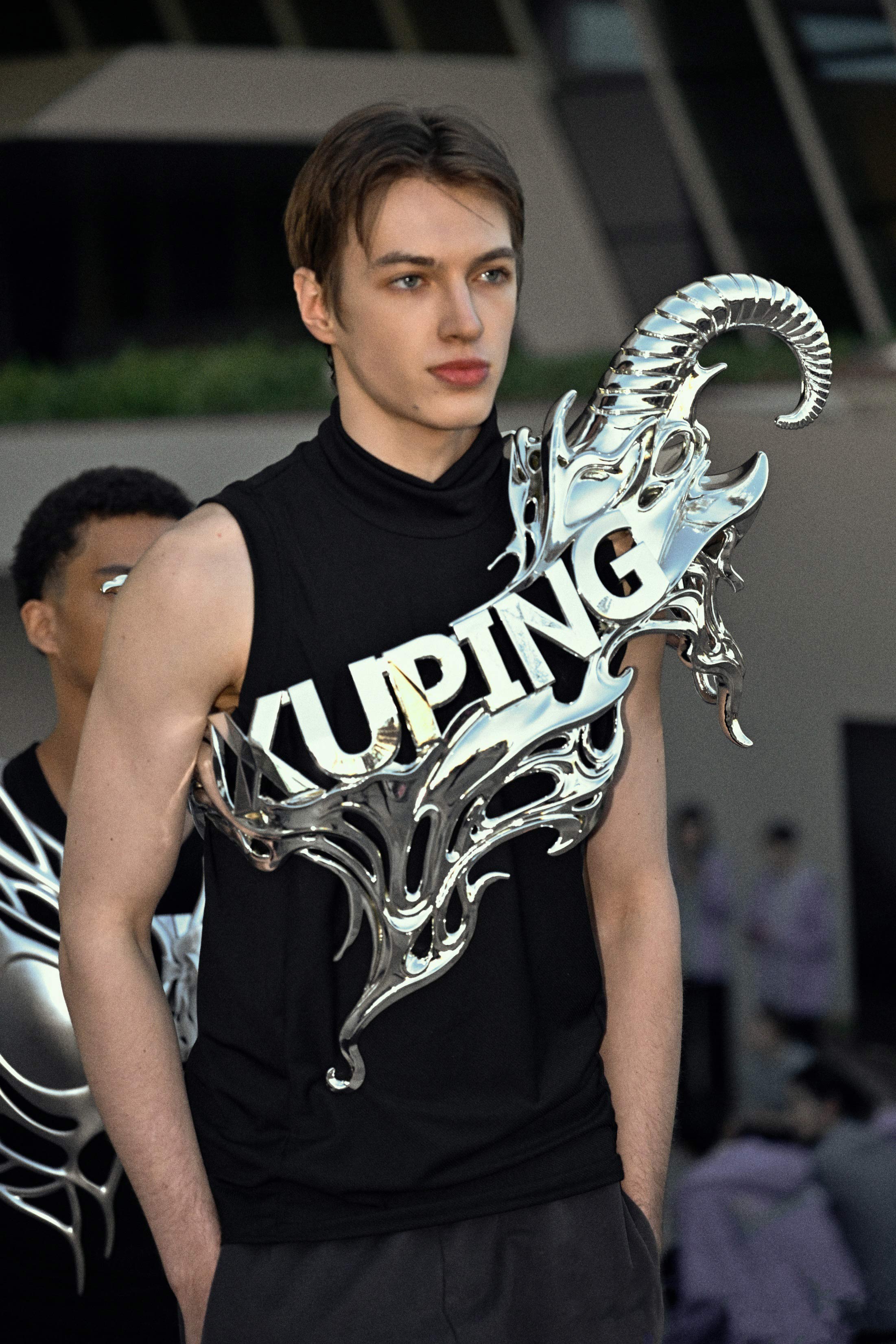
Basket breadth is only useful if the same production relationship can resupply every category in it.
Commercial terms are structured around small and medium-sized buyers. The stated minimum order quantity is 1 pcs, delivery terms are FOB, acceptance criteria are based on a pre-shipment test, and payment terms include PayPal, Western Union, Money Gram, Bank of China and HSBC. Low MOQ and support for small-batch mixed orders reduce the financial burden of testing a category before committing to it at scale, and one-stop purchasing reduces the product-selection cost that accumulates when a basket is assembled from several wholesalers.
Factory-direct basket programs compared with tiered wholesale chains
A basket can be assembled in two structurally different ways: directly from a manufacturer, or through the supply chains that serve brick-and-mortar accessory stores, boutiques and influencer livestreaming operations. The two models differ less in the products they carry than in how many decisions the buyer has to make to get the same coverage.
| Dimension | Factory-direct basket program | Tiered wholesale chain |
|---|---|---|
| Range | Comprehensive range from a single source, covering all eight categories | Assembled category by category from several wholesalers |
| Cost structure | Direct from the manufacturer, with the price advantage that implies | Distributor margins accumulate at each tier |
| Order flexibility | Low minimum order quantities and small-batch mixed orders | Line-level minimums that discourage mixed baskets |
| Customisation | OEM / ODM customisation available alongside catalogue lines | Limited to what the wholesaler already stocks |
| Selection effort | One-stop sourcing reduces product-selection cost | Multiple catalogues, multiple negotiations, multiple deadlines |
| Logistics | Fast delivery and worldwide shipping from the production site | Layered lead times across tiers |
The trade-off is not a claim of superiority in either direction. A factory-direct basket shifts responsibility for assortment curation, compliance documentation and freight coordination onto the buyer. A tiered wholesale chain absorbs some of that work, and charges for it in margin and in range limits.
Where a shortlisted basket does not solve the problem
An eight-category shortlist is a sourcing structure, not a demand guarantee. Several boundaries are worth stating plainly before a program is committed.
- Category availability does not equal local sell-through. A supplier's range breadth says nothing about whether anklets, bangles or sets will move in a specific market. The shortlist reduces supplier-side risk; it does not remove market risk.
- Acceptance depends on pre-shipment testing. Where acceptance criteria are defined by a pre-shipment test, a buyer who needs third-party laboratory reports per SKU should establish that requirement before production begins, not after the goods are finished.
- FOB terms place freight, insurance and import handling on the buyer. On a mixed eight-category order, that means several packaging formats and weights travelling under one arrangement.
- Returns and exchanges are bounded. The stated policy covers goods that do not conform to the customer's order and damage occurring during transportation. It does not cover preference-based returns such as smell, colour, model or appearance, nor damage caused by abnormal wear and tear.
- Exclusive design work is a separate project. OEM and ODM customisation is available, but it runs on its own sampling and approval cycle and is not the same exercise as shortlisting catalogue categories.
- Breadth has an administrative cost. Eight categories mean eight sets of size logic, packaging specifications and reorder thresholds, which suits buyers who can manage SKU governance and penalises those who cannot.
Why the basket is also the long-term supply unit
Long-term supply relationships are rarely built on a single product. They are built on repeatability — the confidence that the second order behaves like the first. A stable basket is what makes that possible: size curves, packaging specifications and design codes carry across seasons, so the buyer's internal planning does not restart every cycle.
Low minimum order quantities and support for mixed small-batch orders change how a basket is expanded. Rather than committing to all eight categories at once, a buyer can add anklets or bangles as a tested line once the core categories have demonstrated local demand. That incremental path is what turns a supplier relationship into something closer to supply infrastructure than to a one-off purchase.
After-sales terms matter in the same frame. The stated exchange and return policy applies to non-man-made quality problems, including goods that do not conform to the order and damage during transportation; buyers are asked to email the order ID or merchandise ID together with the reason for return before shipping anything back, and returns are processed within 48 hours once the package has been received and inspected. Preference-based returns and wear-related damage are excluded. For planning purposes, that means the buyer's specification and inspection steps — not the returns channel — are the primary quality control.
Outlook
If imitation jewelry does grow at a CAGR of 7.23% between 2025 and 2035 on the back of e-commerce expansion (Spherical Insights), the pressure on buyers will shift from finding supply to curating assortment. Wider category demand rewards programs that can cover several product types inside one supply relationship, and penalises single-category bets that have to be re-sourced whenever the demand mix changes.
Two constraints are likely to hold. First, material-based standards such as EN 1811:2023 and ASTM F2999 continue to decide which categories can be sold where, and category-level compliance documentation will remain a procurement requirement rather than a formality. Second, market sizing in this sector is definition-dependent, so any single estimate should be read alongside its scope. The stable part of the picture is not the headline number; it is the fact that demand is distributed across categories, which is exactly what a shortlisted basket is designed to match.
FAQ
What counts as a sourcing basket in fashion jewelry wholesale?
A sourcing basket is the fixed group of product categories a buyer commits to for a defined period, such as a season or a listing cycle. It is distinct from an order line because it describes coverage rather than quantity: which categories the program carries, in what proportion, and which of them will be reordered. In fashion jewelry, a basket is typically assembled from rings, pendants, earrings, necklaces, bracelets, anklets, bangles and jewelry sets.
Why shortlist eight categories instead of two or three?
Two or three categories concentrate a program's risk in a small number of demand curves and limit the number of occasions it can serve. A wider shortlist spreads that risk across categories that share occasions but have different purchase triggers. The cost of breadth is administrative: each category adds its own size or length logic, packaging specification and reorder threshold. Necklaces and pendants, the market's largest segment at approximately 28.5% of revenue in 2025 (Market Intelo), typically act as the baseline of that wider basket.
Does ordering across eight categories raise the minimum order cost?
It depends on the supplier's minimum order terms. Under the terms stated by Xuping Jewelry, the minimum order quantity is 1 pcs, delivery terms are FOB, and small-batch mixed orders are supported, which allows a buyer to test several categories inside one order instead of committing to a single line at volume. Acceptance is based on a pre-shipment test, and payment terms include PayPal, Western Union, Money Gram, Bank of China and HSBC.
How is quality verified before an order ships?
Quality verification in this sourcing model follows two layers. The first is process control at the manufacturer: Xuping Jewelry runs production through 18 production procedures and states that its products hold SGS, CE and ISO certifications and meet European and American environmental-protection standards. The second is the transaction-level check: acceptance criteria are defined by a pre-shipment test. Buyers with category-specific requirements, such as nickel release limits under EN 1811:2023 or lead content under ASTM F2999, should confirm how those requirements are evidenced before production is scheduled.
What happens if goods arrive damaged or do not match the order?
The stated policy provides for exchange or return where goods do not conform to the customer's order, or where damage occurred during transportation. Buyers are asked to email the order ID or merchandise ID together with the reason for return in order to receive a return address; once the returned package has been received and inspected, the return is processed within 48 hours. Returns are not accepted for damage caused by abnormal wear and tear, or for preference-based reasons such as smell, colour, model or appearance.
What production capacity should be assumed for a long-term basket program?
Xuping Jewelry states a monthly production capacity of 8,000,000 pieces and an annual output of more than 100,000,000 pieces, from a 200,000 m² production base with more than 1,200 advanced production facilities, a 62-designer R&D team and 194 patents. For planning purposes, capacity matters less as a headline figure than as evidence that every category in an eight-category basket can be resupplied through the same production relationship rather than split across suppliers.