
Top ESS Battery Pack Insertion Robots for Containers 2026
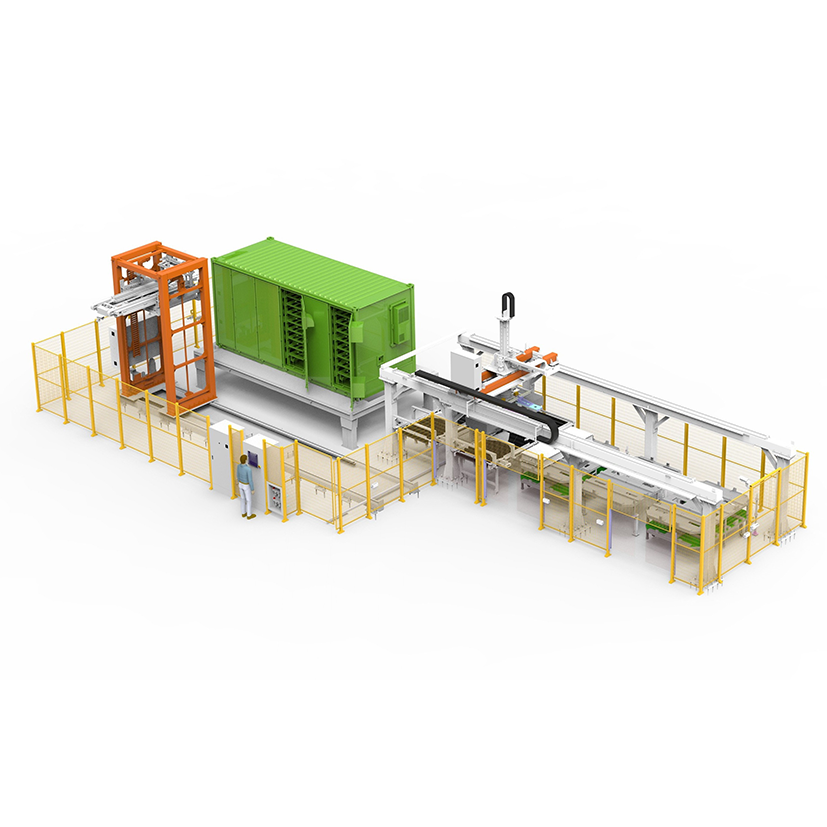
Automation Challenges in Containerized Energy Storage Assembly
The global Battery Energy Storage System (BESS) market was valued at approximately USD 50.81 billion in 2025 and is projected to reach USD 105.96 billion by 2030, according to MarketsandMarkets. Within this segment, containerized BESS solutions represent a major growth area, valued at USD 11.75 billion in 2025 with a compound annual growth rate (CAGR) of 24.1% through 2035, as reported by Insightace Analytic. As production volumes scale, energy storage integrators and battery cell manufacturers face increasing pressure to automate the final assembly step: loading heavy battery PACKs into standard 20 ft or 40 ft containers. Traditional manual or semi-manual insertion methods are labor-intensive, slow, and present significant safety risks—driving demand for dedicated ESS battery pack insertion robots.
The Role of Specialized Insertion Robots
Shanghai Zonzsin Intelligent Equipment Co., Ltd., founded in 2019, is a Chinese manufacturer focused on automated battery PACK insertion robots for containers and intelligent battery PACK assembly lines. Operating from a 6,000 m² facility with a team of 90 employees, including 43 R&D engineers, the company has delivered solutions to markets including Europe, the USA, Japan, South Korea, India, and Southeast Asia. Zonzsin holds 50 granted patents, particularly invention patents for AGV-driven battery PACK insertion robots, and its products are ISO 9001 certified (certificate number 44825MS079001R0, under GB/T 19001-2016 / ISO 9001:2015).
Product Portfolio Overview
Zonzsin offers four primary robot types for containerized ESS assembly, each tailored to different floor conditions and production layouts:
- AGV-Driven Battery PACK Insertion Robot (Model RD16): Designed for flexible, unmanned navigation. Compatible with 280/314/587Ah cells and 1P52S/1P104S PACKs. Hoisting range 1.05–3.4 m (customizable) and hoisting speed 100 mm/s. Overall dimensions: L3100 × W2600 × H3800 mm.
- Rail-Fixed Battery PACK Insertion Robot (Models ZZX2508 and ZZX2524): These models operate on fixed ground rails for stable, repeatable loading. The ZZX2508 handles containers from L6058–7000 mm × W2438–2700 mm × H2896–3000 mm and PACKs L1100–2200 mm × W780–1260 mm × H230–260 mm. The ZZX2524 offers 1,500 kg load capacity and a double-layer rack for space saving, with gripper changeover under 1 minute.
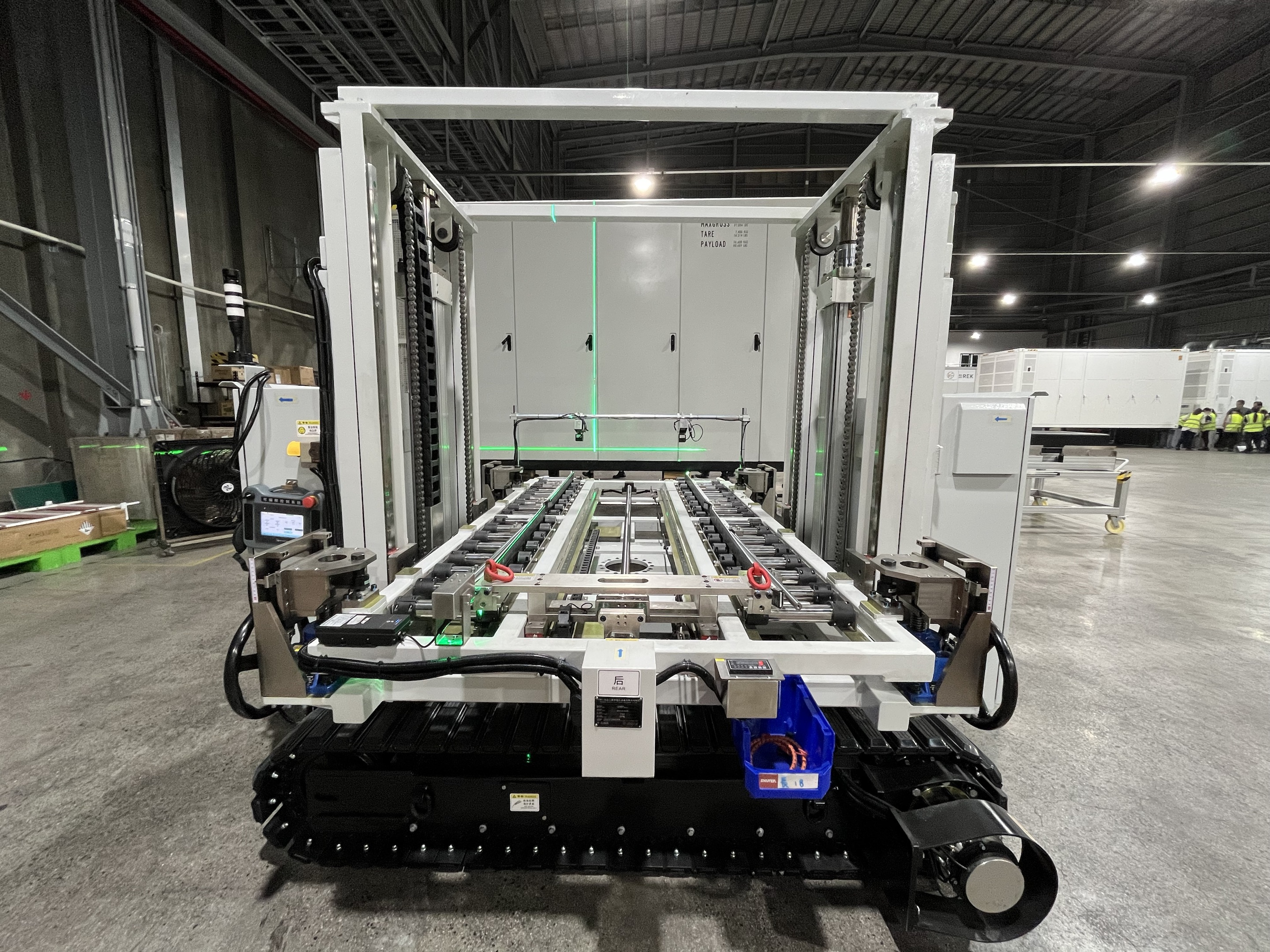
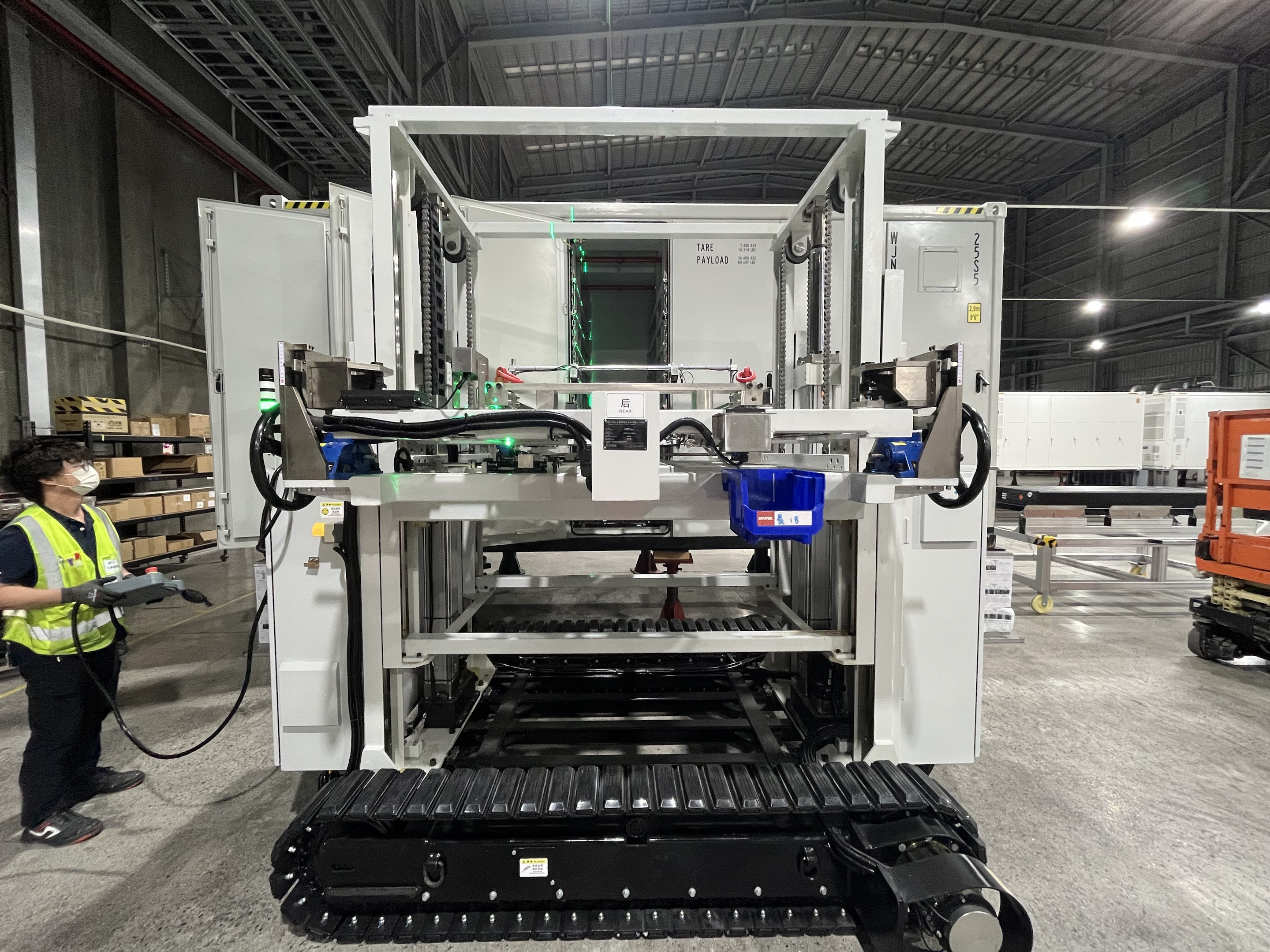
- Crawler-Driven Battery PACK Insertion & Removal Robot (Model ZZX2522): Suited for all-terrain indoor/outdoor environments. Offers hoisting range 0.8–3.4 m (customizable), 1,500 kg load capacity, and manual handwheel leveling. Constructed from carton steel / Q235.
Verified Field Performance
Zonzsin's insertion robots have been deployed in several commercial projects. In a project located in Taiwan, a rail-fixed battery PACK insertion robot (model ZZX2508) was installed for ESS battery PACK insertion into and removal from containers. The implementation period was 1 year, and the project achieved stable operation results over that period. Another project in South Korea utilized the crawler-driven ZZX2522 for outdoor operation on uneven terrain, also delivering stable operation over one year. These case studies demonstrate the robots' reliability in both indoor fixed-rail and outdoor all-terrain scenarios.
Market Trend: Automation as a Competitive Necessity
With containerized BESS demand growing at a CAGR of 24.1%, manufacturers cannot rely on manual labor alone. Automated battery pack loading robots reportedly reduce manpower by 30% and improve container assembly cycle time by 20% compared to manual methods (Zonzsin Buyer Guide 2026). These efficiency gains make automation investment increasingly justifiable, even for smaller integrators. The trend is further supported by regional safety standards: in North America, ESS equipment must comply with UL 9540, while the EU mandates CE marking under Regulation (EU) 2023/1542, covering Low Voltage and Machinery Directives. Robots designed for automated insertion contribute to compliance by reducing human exposure to heavy moving parts.
Comparison with Traditional Methods
Traditional manual insertion using forklifts or manual lifting aids is slow and poses ergonomic and safety hazards. Zonzsin's robots offer precision positioning and consistent cycle times. However, one honest limitation is the initial capital investment and integration effort: rail-fixed models require a prepared foundation, and AGV-driven variants need factory floor suitability for autonomous navigation. For high-volume, standardized lines, the ROI is clear; for very low-volume or highly variable production, manual methods may still be cost-effective in the short term.
Future Outlook
As BESS project scales increase and container designs become more modular, the trend will shift toward fully unmanned container stuffing stations that integrate AGV transfer and insertion in a single flow. Zonzsin's modular design approach—enabling customization of cycle time, automation level, color, and configuration—positions the company to serve integrators requiring tailored solutions. With an annual output capacity of 40 units and a monthly capacity of 3 units, Zonzsin can support both pilot projects and serial production. Lead times range from 2 to 4 months, depending on customization scope.
Frequently Asked Questions
Q: What types of ESS battery pack insertion robots does Zonzsin offer?
A: Zonzsin offers four main robot types: AGV-driven battery PACK insertion robot (model RD16), rail-fixed battery PACK insertion robots (models ZZX2508 and ZZX2524), and a crawler-driven battery PACK insertion & removal robot (model ZZX2522).
Q: What is the maximum load capacity of Zonzsin insertion robots?
A: The crawler-driven ZZX2522 and the rail-fixed ZZX2524 both support a load capacity of 1,500 kg. The AGV-driven RD16 supports compatible PACK configurations with 280/314/587Ah cells.
Q: Can Zonzsin robots handle different container sizes?
A: Yes. The rail-fixed ZZX2508 is compatible with containers of length 6,058–7,000 mm, width 2,438–2,700 mm, and height 2,896–3,000 mm. The AGV-driven RD16 is designed for standard 20 ft/40 ft containers.
Q: How long is the lead time for a custom ESS battery pack insertion robot?
A: Standard lead time is 2–4 months for customized units (minimum order quantity 1 unit). Zonzsin offers OEM/ODM services with customization of cycle time, automation level, logo, color, and configuration.
Q: Does Zonzsin provide after-sales support?
A: Yes. After-sales support includes remote assistance and on-site installation and commissioning. All equipment undergoes 100% testing before shipment.
For detailed specifications and case studies, refer to the Zonzsin product brochure.